Why do people use the same body to walk, run, swim and move? The key lies in the cooperation of muscles and bones.
The bone determines the shape of the body, and the muscles provide the strength needed for movement. In the face of different tasks, muscles also change softness and strength: speed and width are required when running, and higher stiffness is required when weighing heavier.
It is difficult for robots to have this flexibility.
In order to change the shape of the body, variant robots typically require a grinding machine or a specialized rebuilding device; in order to really move, more motors and drivers are added. The more functional, the more complex the structure is.
Recently, a team from Tsinghua University and Beijing Aerospace University, inspired by the biomechanical skeletal system, developed a programmable, dynamically adjustable artificial skeletal skeletal actuator.
Based on this system, the team created two robots: one weighing only 1.8 grams, which can switch between quadruped and humanoid states; the other, designed to resemble a honey bag, weighs 6.4 grams, which can crawl on the ground, carry objects, float on the water, and slide the wing membrane.
Musculoskeletal actuators with programmable morphology and tunable dynamics published in the peer-reviewed journal Science Advances.

The first author of the paper was Xu Zhengwei, a professor of communication at Tsinghua University's School of Astronautical and Astronautical Engineering. The research team came from the Laboratory of Applied Mechanics at Tsinghua University's Department of Engineering Mechanics, the National Laboratory of Flexibility Electronic Technology, the Mechano-X Institute at Tsinghua University and the Beijing Aerospace University's School of Energy and Dynamics Engineering.
01.
Bones are responsible for muscle development and muscles are responsible for muscle development.
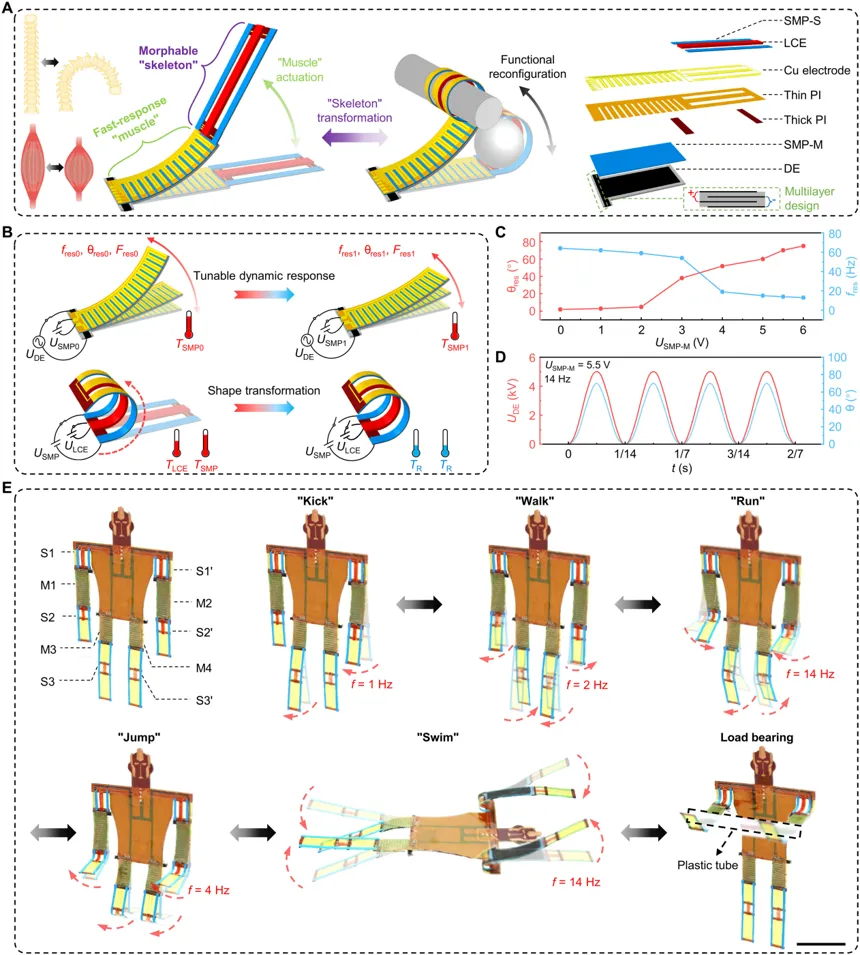
The set of actuators consists of two parts linked together: a shape-shifting bone module and a rigidity-adjustable muscle module.
Bone modules use liquid crystal elasticity and shape-memory polymers. After electrical heating, the material drives the structure to bend; after stopping heating and cooling, the bone becomes hard again, fixing the body to the desired shape.
As a result, robots can continuously change body shapes and remain in multiple intermediate configurations.
Muscle modules are composed of multi-layered polymers of methane, hydroxide, hydroxide, hydrochloride, hydrochloride, hydrochloride, hydrochloride, hydrochloride, hydrochloride, hydrochloride, hydrochloride, hydrochloride, hydrochloride, and hydrochloride. These polymers are responsible for rapid, cyclic movement, and form-memory polymers are responsible for regulating overall muscle hardness. The two sets of electrical signals can be independently controlled, allowing researchers to change the shape of the bone, muscle softness, vibration frequency, and drive width, respectively.
Simply put, bones determine how the body grows, and muscles determine how the body moves.
Experiments showed that when the thermal voltage of the muscle module increased from 0 volts to 5.5 volts, the material gradually softened, its resonance frequency dropped from 64 Hz to 14 Hz, and the resonance curve angle increased by about 2.5° to 75°.
This group of data corresponds to a more intuitive result: muscles become softer, greater range of motion; muscles become harder, less range of motion, and stronger carrying and transmitting capacities.
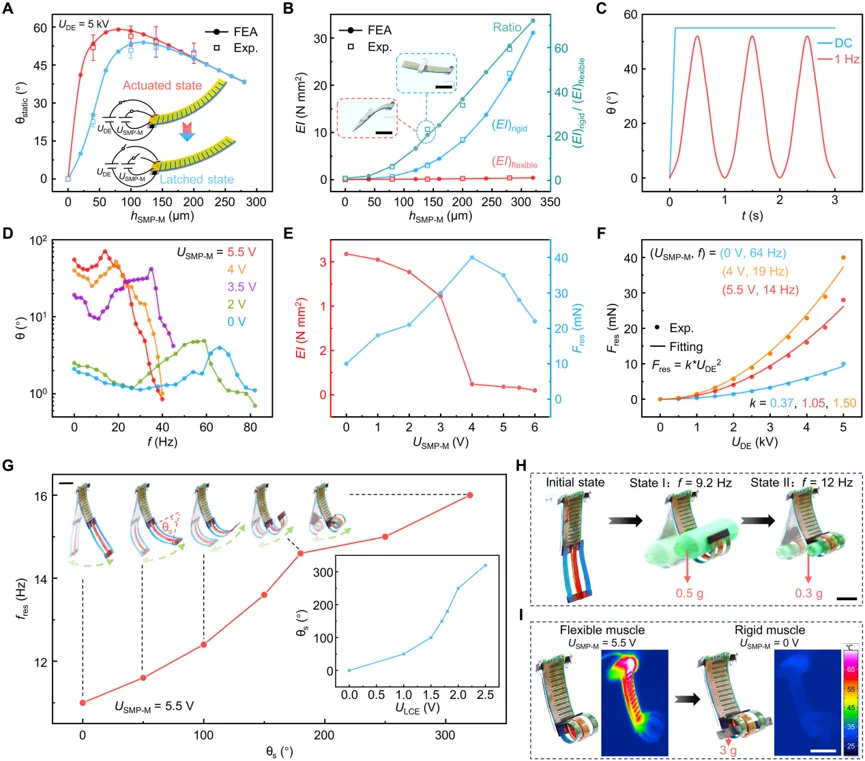
This also means that robots can redistribute performance depending on the task. When they need to move quickly, they can soften the muscles; when they need to move objects, they can switch to a high-rigidity state.
Furthermore, by changing the number, connectivity, and spatial layout of the bone and muscle modules, the team also constructed life-sustaining movements such as cones, ostriches, and monkeys to complete tail, tail, tail swing, and tail tip vibrations, respectively.

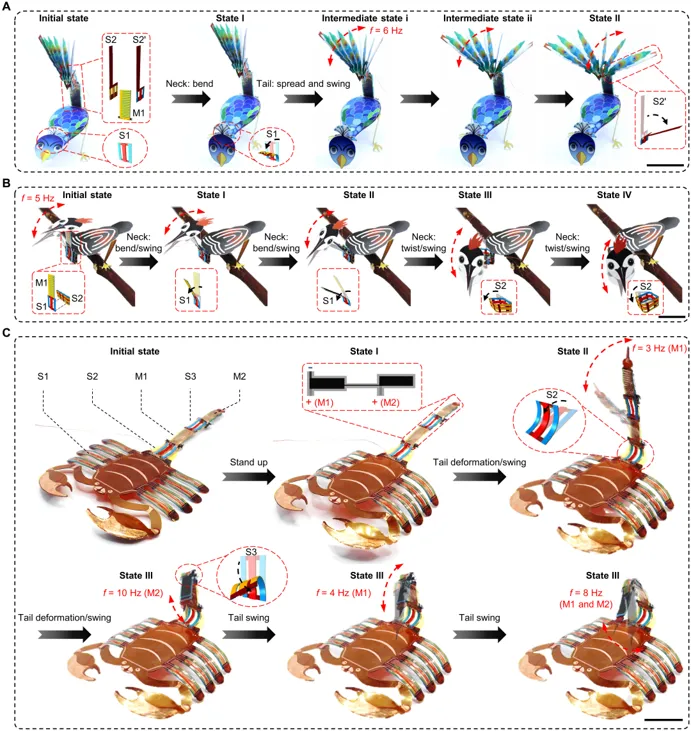
Therefore, this study shows not only a driving material, but also a set of synthetic skeletal modules that can be combined and expanded.
Once the module-level capabilities were established, the team further incorporated this set of skeletal muscles into the robot to verify whether the body function could be rearranged with the change in body shape.
02.
He stood up in the shape of a man.
The answer first appears on a 1.8g-weight micro robot.
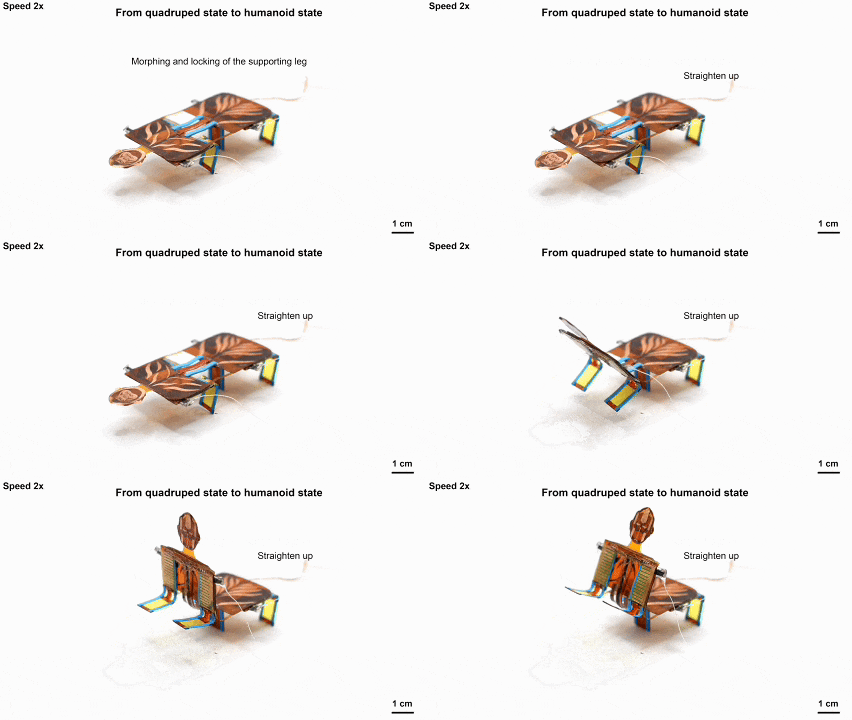
In this robot, the musculoskeletal system demonstrates an interesting ability: it initially approaches a flat structure by changing body shape and redistributing limb function. After receiving a control signal, it can first become a quadriplegic robot, then stand up further and switch to a man-made state.
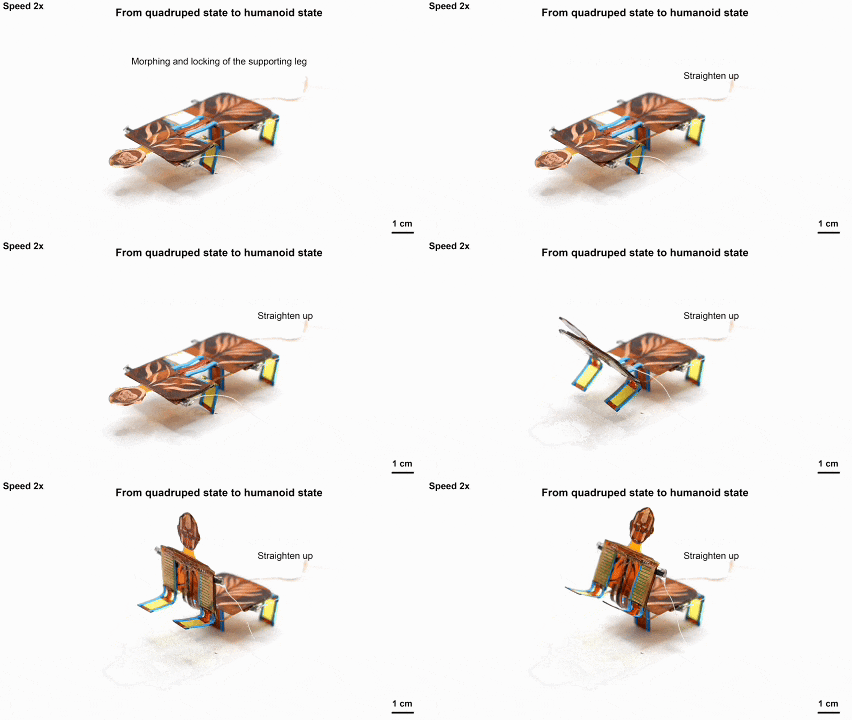
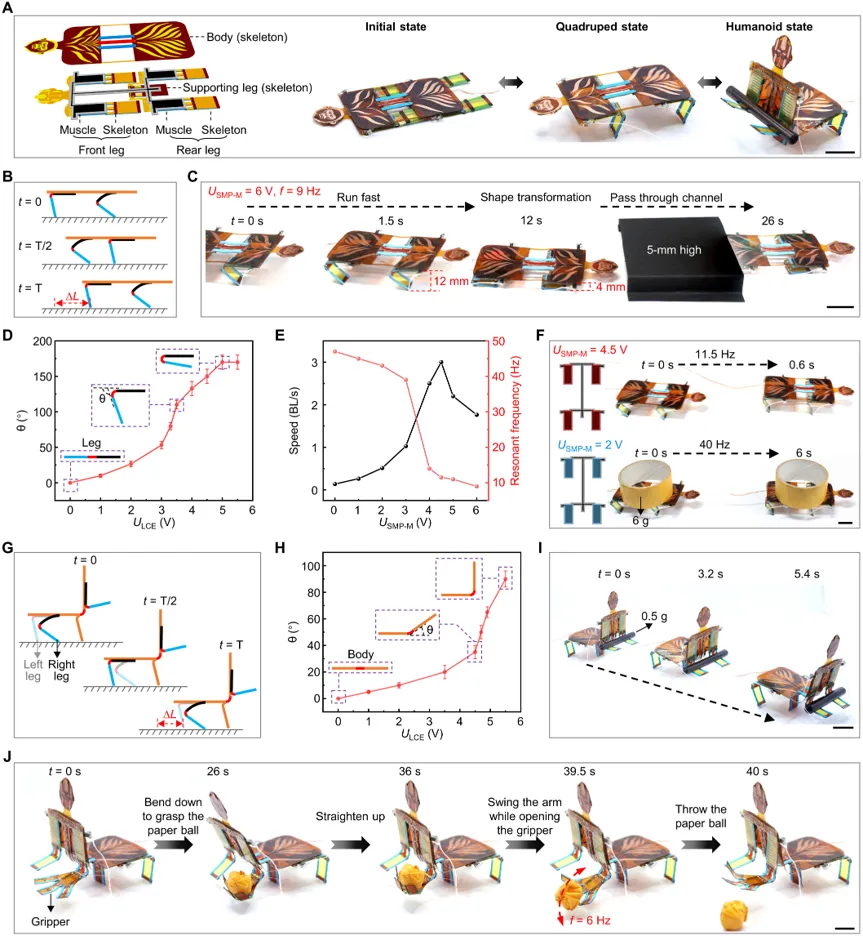
In a quadruped structure, the robot's front and back legs alternate in vibration, pushing the body forward to crawl. By adjusting the curvature of the leg bone, it can also actively depress the body, passing through a narrow passageway only 5 mm high.
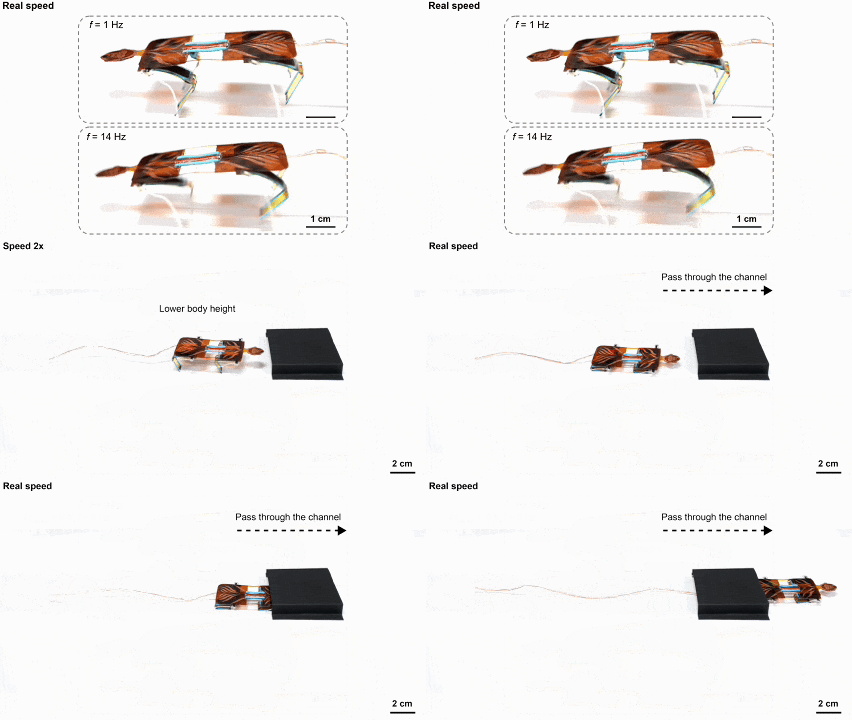
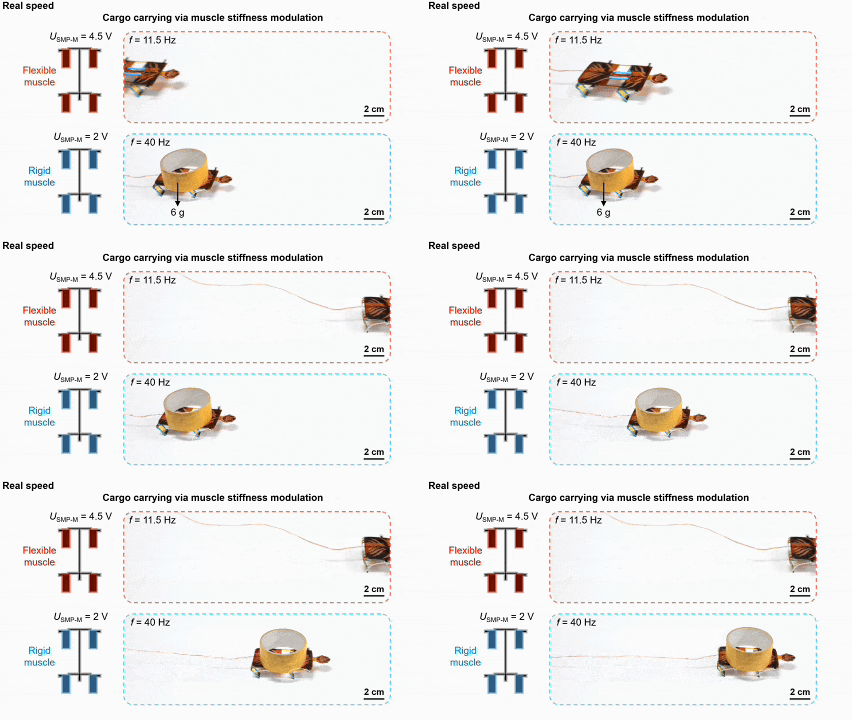
At low rigidity, the robot can move at a maximum speed of 3 knots per second; it can harden muscles when it needs to be transported. At high rigidity, the 1.8 g small guy is capable of carrying 6 g of load, three times his own weight.
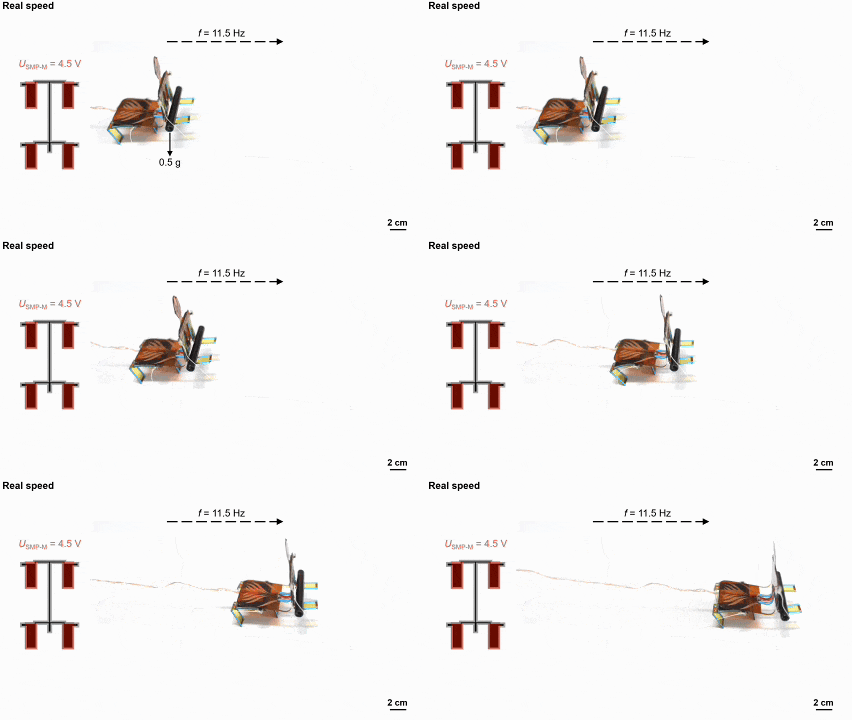
When the robot stood up further, it was used to support and move its forelimbs away from the ground, which could be used to manipulate objects.
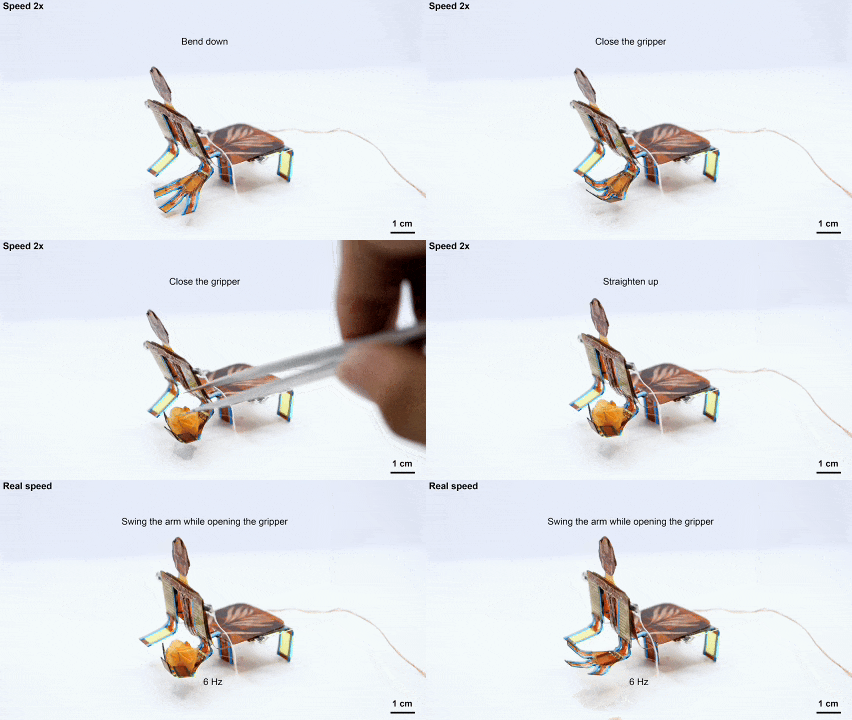
The researchers added a claw module at the end of their forelimbs. The robot was able to bend down and grab a paper ball, stand up again, and throw the paper ball out by swinging its arms and opening its claw.
It's not just the appearance that changes from a quadruped to a mannequin.
The quadruped state has more support points, suitable for rapid movement and crossing low space; after standing, the robot sacrifices some stability, in return for a pair of forelimbs that can be grabbed and transported. It begins to rearrange its body according to the task.
03.
6.4 grams of machine honey bags with a wingspan across the water and air
In order to get the robot out of the cable, the team also developed a wireless micro-robot similar to a honey bag.
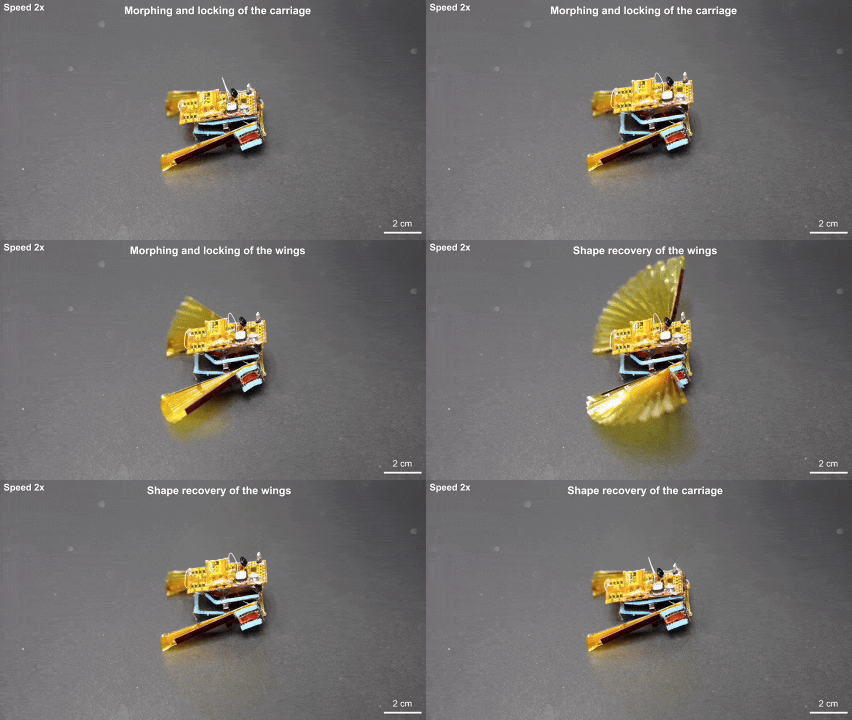
The size of the robot is about 5 cm x 2 cm x 1.5 cm, with a total mass of 6.4 g. It has integrated muscle-driven modules, expendable wing membranes, adjustable loaders, micro lithium batteries and wireless control circuits.
Of these, only 1.04 grams of control circuits can convert the input of a 3.7-volt lithium-ion battery to a low- to medium-frequency high-pressure waveform of up to about 9.5 kV, providing a driving signal for the intermediate electromagnetic resistance. Using infrared remote control, researchers can regulate the robot's bone shape, muscle stiffness and motion frequency, respectively.
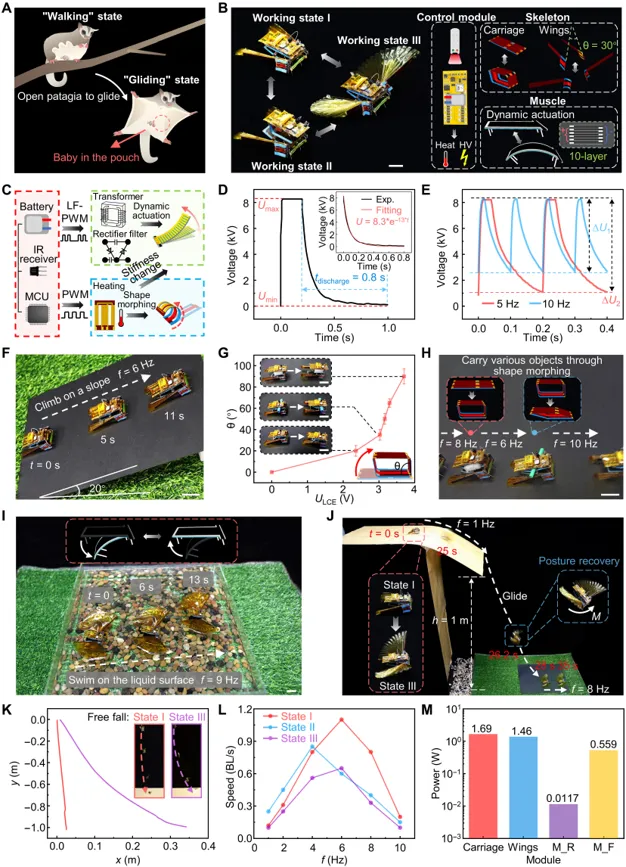
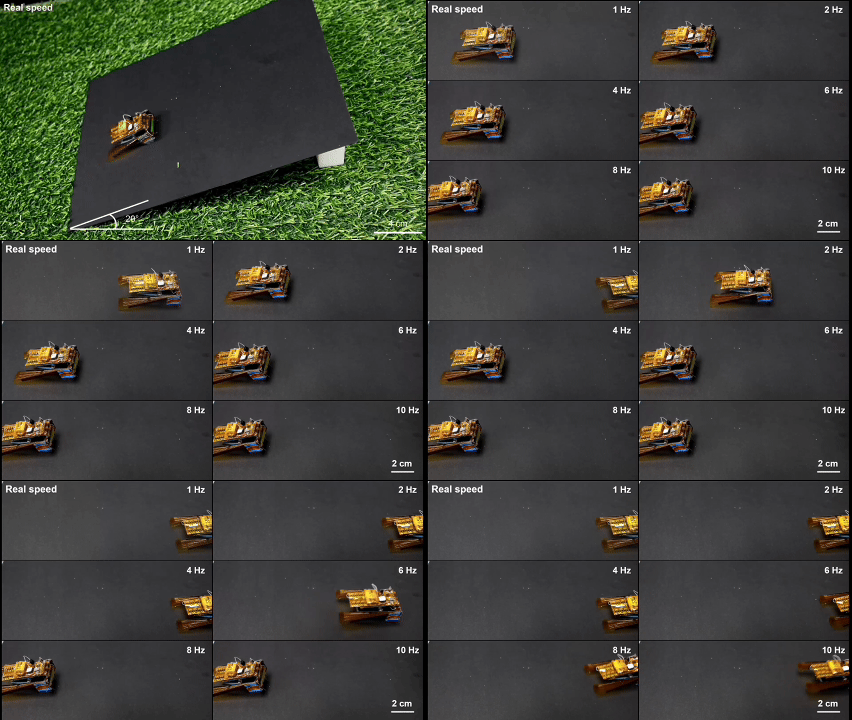
In a crowded state, the robot uses muscular vibration and uneven friction in the legs to move in front of the ground, reaching a maximum speed of 1.1 knots per second and climbing up a slope of 20°.
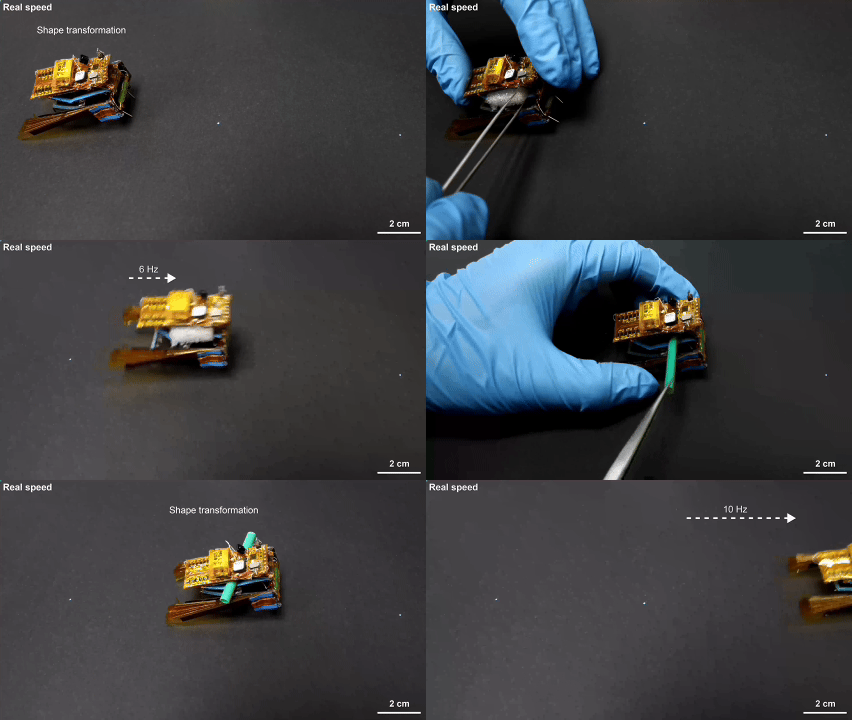
When the load is unfolded, it can wrap up objects of different shapes such as paper tubes, plastic tubes and bubble blocks. When the muscle is in a state of high density, the maximum load reaches 3.6 g.
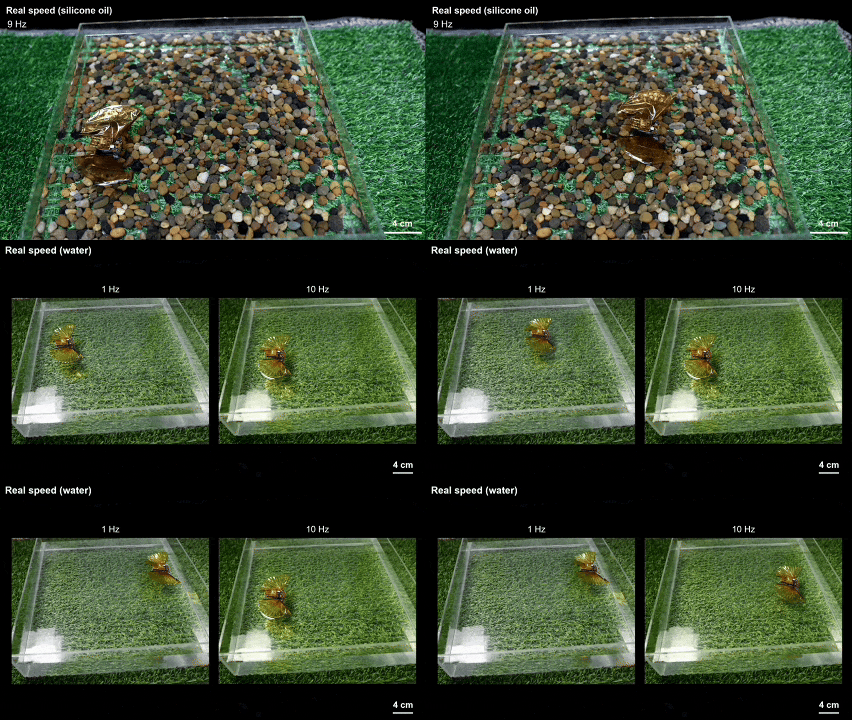
Continuing to unfold on both sides of the wing membrane, the robot can float on the surface of water or crude oil, and rely on vibrational forward motion. On the surface of the water, its maximum speed is about 0.37 beats per second.
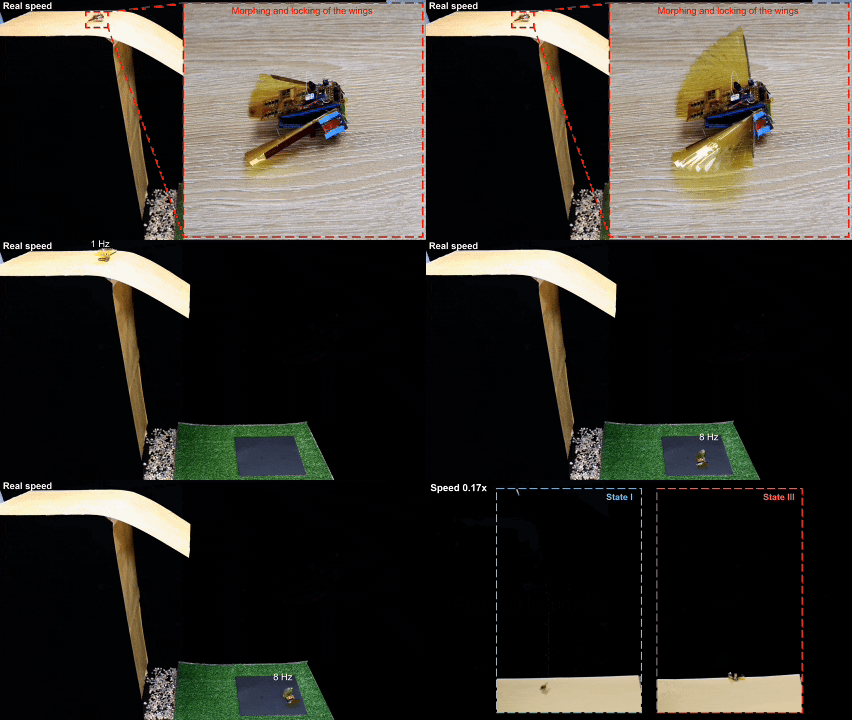
The same wing membrane reaches the air and becomes a sliding wing.
When the robot descends from a high altitude, the upward-spreading wing membrane can generate lift, which helps it adjust its posture, reduce its drop speed and slow its landing. After landing, the robot can continue to switch to ground motion without the need for artificial reassembly.
In terms of energy consumption, it takes less than 3.5% of the capacity of the battery to open the load box and open the wingspan. Under the conditions of high power consumption of muscle modules, the system maintains a continuous running time of about 20 minutes.
04.
Robots are starting to rebuild their bodies according to their mission.
When crawling, moving, floating, and sliding are all pressed into a 6.4-gram body, the question that the study really wants to answer arises: How can micro-robots do more with fewer performers by rebuilding themselves?
Large robots can expand their functionality by adding motors, pumps, and mechanical joints. After the size is reduced to a few centimeters, mass is compressed to a few grams, this path becomes increasingly difficult. With each addition of an executor, the robot has to pay for weight, energy, and control resources.
The idea behind skeletal actuators is that the bones are responsible for changing and locking the shape, and that the muscles are responsible for regulating fast movement and stiffness. The same set of drive systems can be switched between tasks depending on speed, range of motion, output power and carrying capacity.
Currently, the system is still in the research and verification phase.
Bone deformation depends on the electrical heating process, the speed is relatively slow; the long-term reliability and electrical insulation performance of the conductive body still needs to be improved; the output range of man-made high-voltage circuits is also further optimized. Wireless robots rely mainly on artificial remote control and have not yet formed a complete loop of environmental perception and autonomous decision making.
The team also proposed that sensors such as inertia, optics and pressure could be further integrated in the future, allowing robots to actively select body composition, muscle stiffness and motion frequency based on their state and external environment.
By then, the micro-robot's ability to adapt to the environment may no longer depend on how many moves it has prepared. It can decide on the spot whether to get off the ground, get up to work, or open its wing membrane and slide to the next landing point.