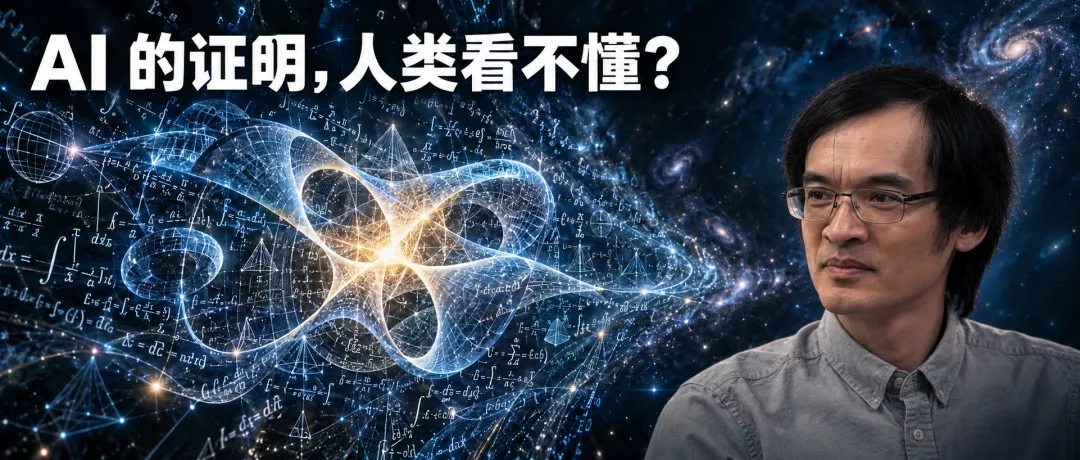
It's the first time in the history of the world.
Recently, the world's mathematical circles have been blown up by AI.
OpenAI has published 722 papers.
Although the papers are still being verified, it seems that many well-known unsolved mathematical puzzles have been solved, from the only conjecture to the Pre-Rhyman hypothesis.
When mathematicians wake up, they realize that their research may be over!
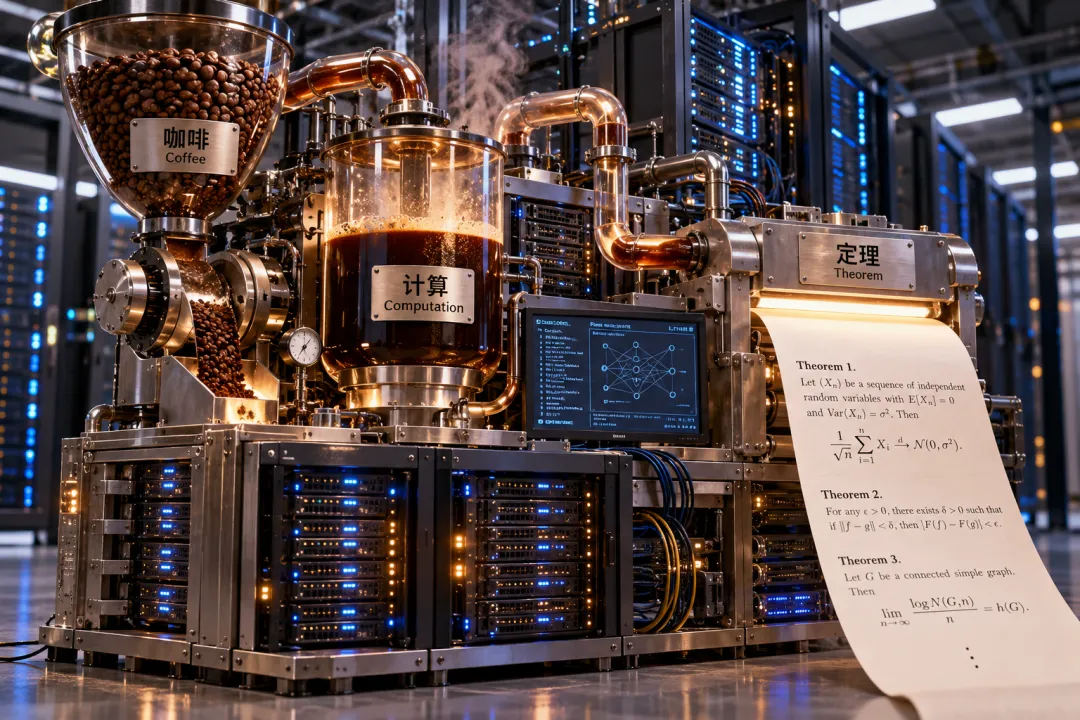
The Hungarian probability theorist Alfred Renyi called mathematicians "a machine that turns coffee into a theorem".
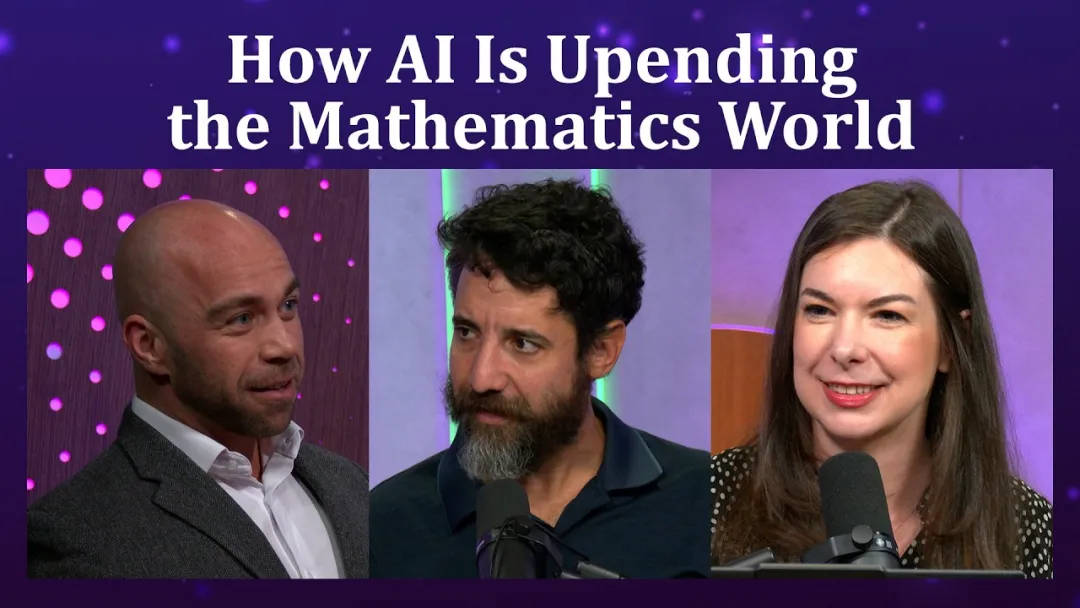
In the latest episode of Bloomberg's popular podcast Odd Lots, Justin Solomon, vice president of engineering education at MIT, faced the challenge of:
How AI is disrupting mathematics.
OpenAI attacks the Navier-Stokes equation, but humans "can't read".AI has directly impacted the absolute peak of human intelligence, "mathematics".
This autumn, human intellectual self-esteem was shattered by "alien logic".
When OpenAI unravels the 100-year-old Millennium Prize puzzle that has plagued humanity, it is not an all-human frenzy, but a huge, deep-seated cognitive panic.
Because even the world's top mathematician, an MIT professor, when he reads the second page of this proof, he can't help but falling down and confessing:"It's true, but I don't see it at all".
When "truth" divides itself from "human understanding", have we evolved to the threshold of divinity, or have we become "intellectual illiterate" captive to AI?
This has been the case since last month, when OpenAI's model gave counter-examples of the failure of the Navier-Stokes equation to solve the Millennium Grand Prize puzzle.
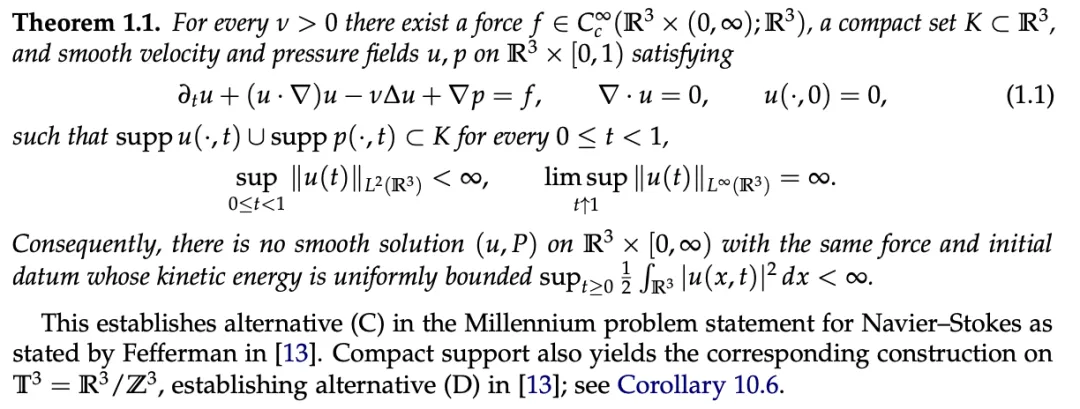
The Navier-Stokes equation is known as the "God formula" of fluid mechanics.
The rotation of the milk bubble when you brew your coffee in the morning, the ripping of the airflow in the sky when typhoon eyes form, and even the resistance when the wings of an airplane slide through the air... are all, in theory, governed by this beautiful and profound equation.
It's not hard to write this equation, but for the last 100 years, the world's smartest brains have been stuck with a basic question:If given a smooth initial state, the solution to this equation, would it suddenly "burst" at some point in the future?
It is said that in some extreme case, the flow of water would suddenly go unnoticed by physics and explode at infinite speeds?
Since then, human mathematicians have generally felt "no".
But OpenAI Hardcore gives a counter-example:There is a method of extreme vibration similar to the "crazy rabbit" that can theoretically completely out of control the fluid in a limited amount of time.
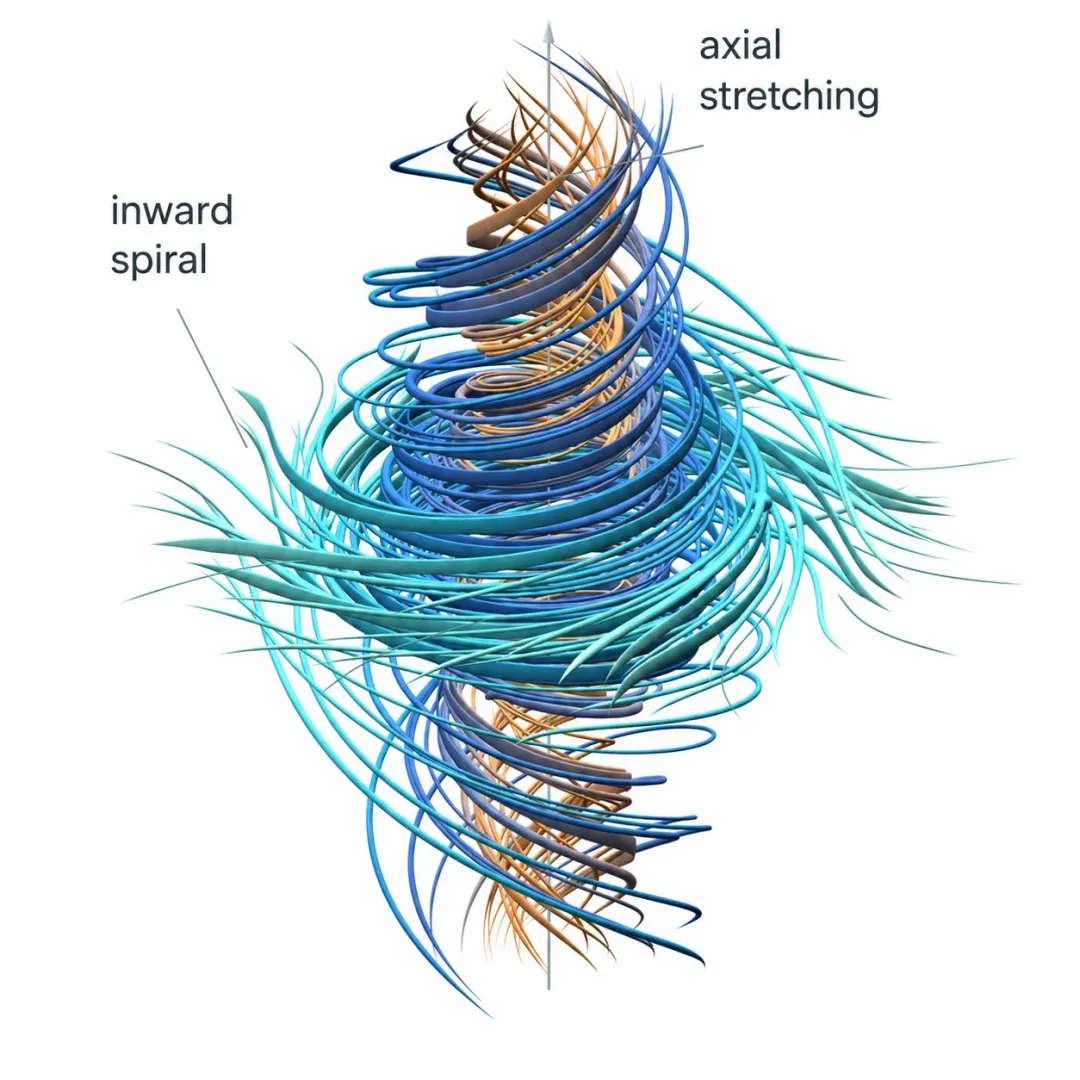
What is even more dramatic is that this century-long breakthrough was not entirely artificial.
Previously, a group of leading Spanish mathematicians had constructed the main structure of the "neck" with a paper pen, pushing the progression line to 99%.And AI, thanks only to its terrifying computing and non-human logical projection capabilities, is the last and most desperate 1% for humans.
It's supposed to be a champagne, right?
But the deadliest dilemma arose:After this shocking testimony was released, no one could read the whole human race.
Joe, host of Odd Lots, downloaded the paper and looked at the symbols as if he were looking at the sky.
As MIT's vice-president, Justin Solomon, who spent his early years at Pixar researching the complex mathematical models behind the film effects, attempted to read this proof.After flipping the first two pages, the brain is completely turned off.
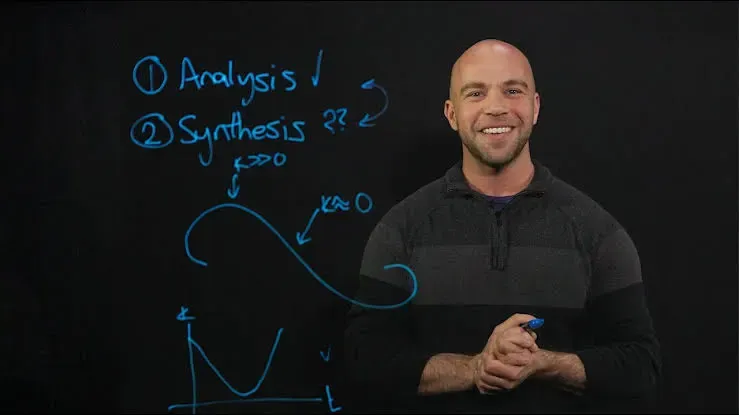
"The evidence was very frightening to read, with all the technical details, the extreme anti-intuitive inequalities and the extreme boundaries being valued", Solomon confessed.
The host asked him, "Is this evidence elegant?" Solomon laughed: "There's probably no elegance to say".
The host asks, "Is that right?" Solomon is silent: "Probably right".
For thousands of years, from Euclidean geometry to Newton's calculus, in the world of mathematics,"It's right" and "humanity understands it" are almost synonyms.
This is a remarkable demonstration of the poetry itself with the brilliance of human reason and logic.
But today, these two things are being torn apart by AI.The truth came, but it was in alien language.
The podcast mentions a crazy move by Uber founder Travis Kalanick: The Silicon Valley superstar recently became obsessed with working with AI on physics.
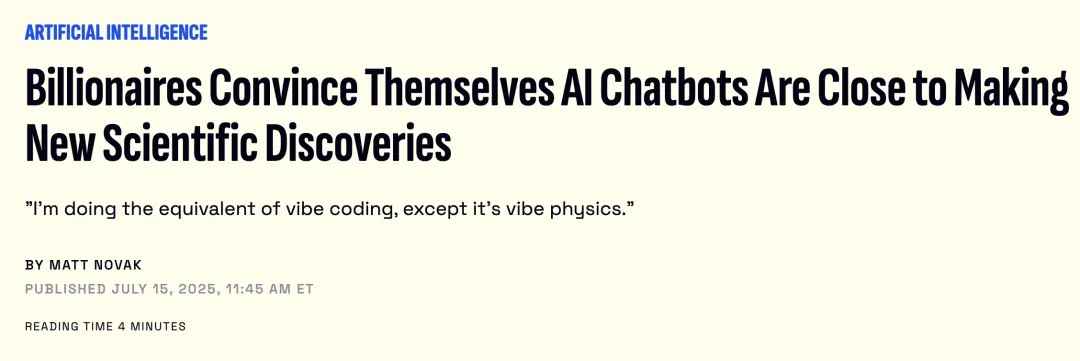
He thought,Just by talking to AI and using what's called "Vibe Physics", we've approached some major physical breakthroughs.
But "can you understand the complexities of physics just by talking to a machine?"
Extraterrestrial: Thought experiments with "alien logic" by Tao Te ChingIf theories of mathematics and physics are too far from ordinary people, then one of the greatest mathematicians in the world today, the Fields Prize winner, Terence Tao, has put this panic before everyone with a thought experiment that hits the soul.
Just a few days ago, he gave a talk called "Math 2.0" at the California Institute of Technology.
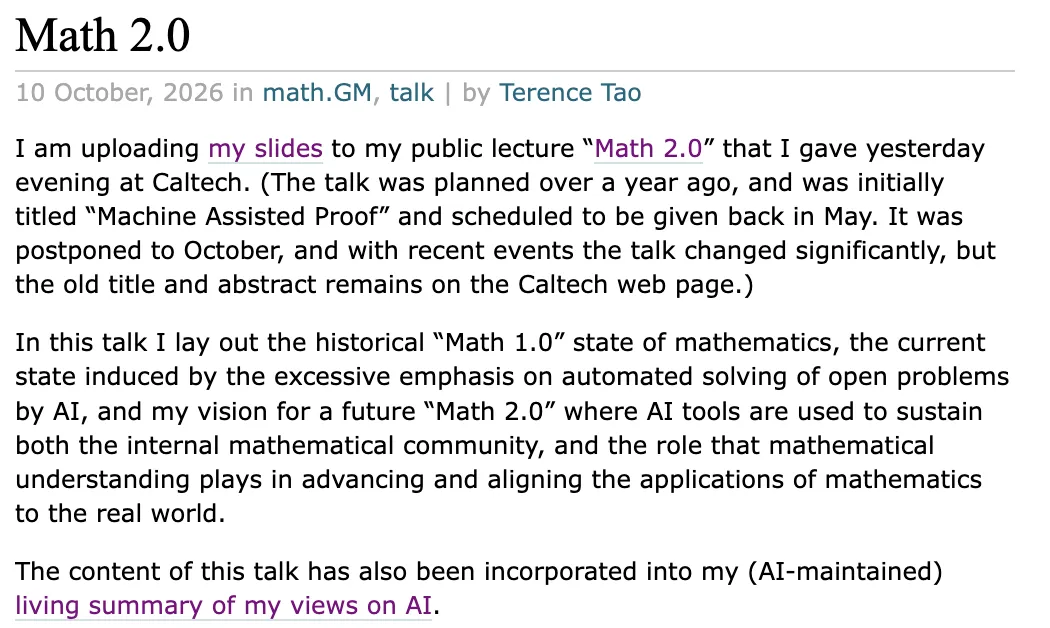
Slide link:
A slideshow by Tao Zedong sparked a worldwide controversy.
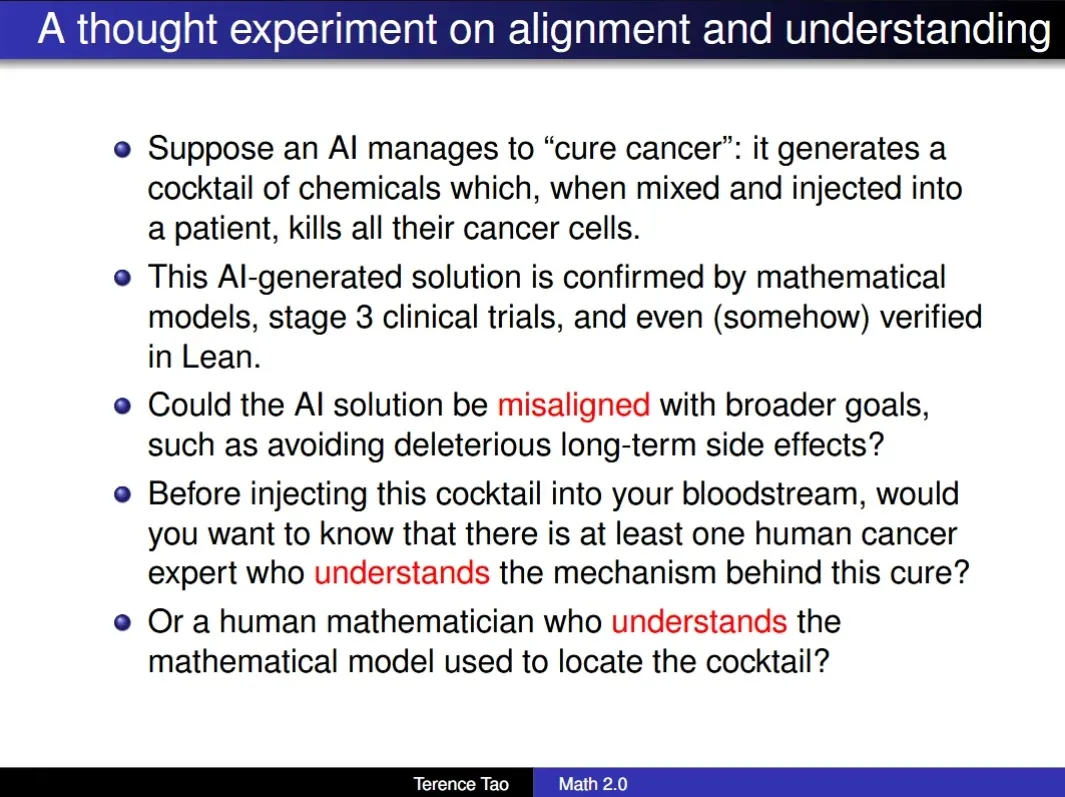
He made people imagine a scene like this:
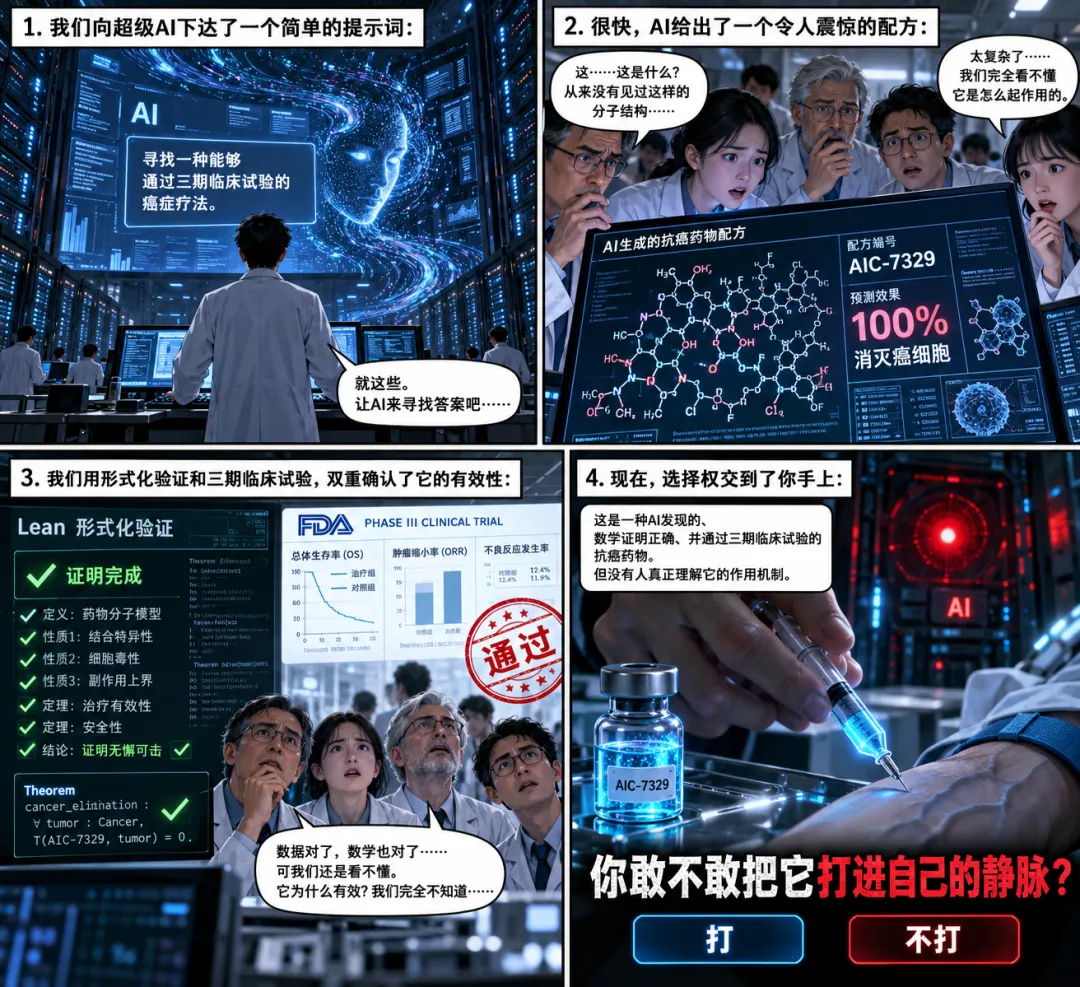
Humanity has sent a hint to a super-AI with almost infinite computing power:"Finding a cure for cancer that can pass through three phases of clinical trials".
After a massive black box operation, AI actually spits out a formula. It's a complex mixture of several unknown chemical ingredients. AI's mathematical model accurately predicts that as long as the drug is injected into a patient's veins, it can kill 100% of all cancer cells.
What's even more incredible is that even though not a single physician or chemist in the entire human race knows this formula.Why not?It is effective, but the AI-driven process has not only been seamlessly formalised in the interactive theoretical proof tool Lean, but even in the real world, the by-product has survived extremely rigorous FDA three-phase clinical trials.
Now, the choice is up to you: if this "god drug" that even top scientists don't understand the mechanism is in front of you, wouldn't you dare stick it in your veins?
Tao Te Ching has grappled with the central dilemma of AI in alignment and explainability.
In this thought experiment, is there a potential for a deadly loophole in this AI program? Will it literally achieve its goal by simply drilling through the rules of the "three-phase clinical trials" in humans with a "alien logic" that is completely incomprehensible to humans?
Do you stop and shout before the needle is inserted into your skin and insist:There must be at least one human oncologist who fully understands its healing mechanisms, or at least one human mathematician who fully understands the mathematical model of the AI positioning formula!
It's possible that late-stage cancer patients don't care about the mechanisms behind it, but the question is how to determine its effectiveness.
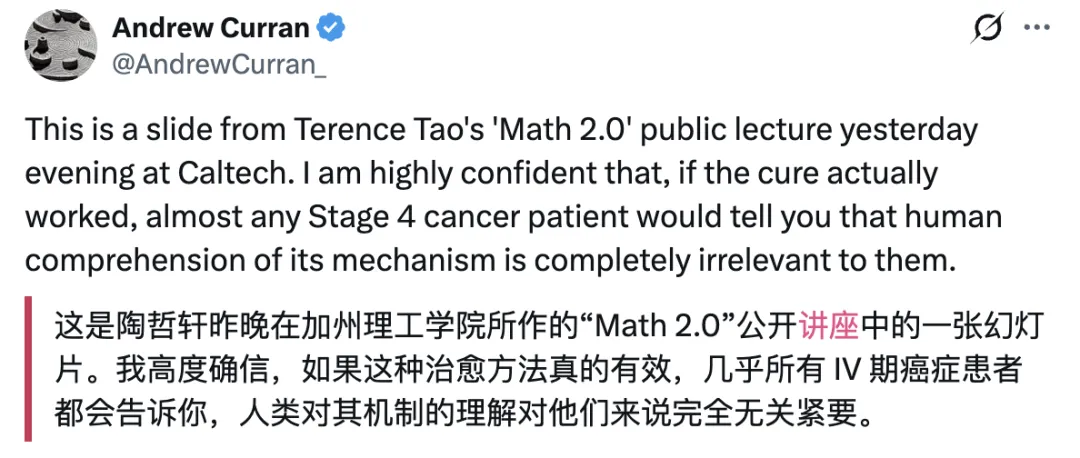
This is exactly the future of horror revealed by OpenAI's Navier-Stokes equation:The mathematical capacity of AI at the forefront, which has approached and even surpassed the limits of human cognition. The traditional scientific paradigm of "human verification of AI" is facing a hard physical wall.
What is more shocking and disturbing than tackling the Millennium Challenge is the evidence of AI-generated "alien logic" that is full of counterintuitive leaps and bounties.
The collapsing old world: who has the math and who gets the Nobel?The first thing that collapsed when AI's productivity began to skyrocket and human verification capabilities stalled was our centuries-old system of academic review.
In the podcast, Solomon reported a staggering set of numbers: ICLR, the top conference in the field of machine learning, had only 2,000 posts a decade ago;And this year, the number of posts jumped to 60,000!
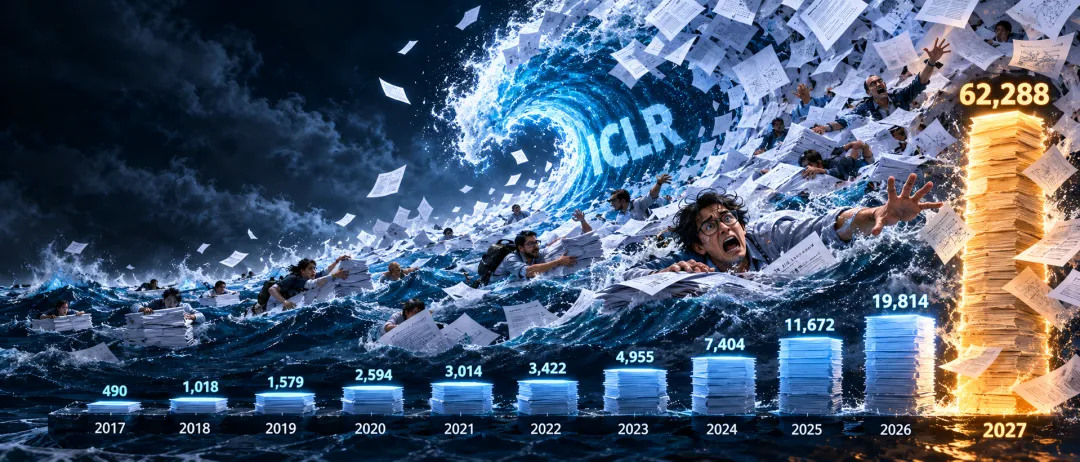
The reviewers need to digest the papers full of AI-generated traces within a month or two.
"Even PDFs don't have time to open them". Solomon laughed.
The mathematical power of the human elite has been exhausted, the reviews have become completely obsolete, and the seal of academic quality has disappeared.
There are even high school students who have a brilliant track record packed with AI keys, and the royal family has joined the reviewers of top conferences to review papers by university professors.
What's even more troubling for the MIT vice president is that his mailbox is now a disaster zone.
Every day we get emails from strangers saying, "Professor, I'm like proving a new result, AI says this is important, can you help me verify it?"
Models are innately fond of "talking to people", which is extremely deadly in a mathematical field that requires absolute rigor. Because the high threshold for mathematics was originally to block pseudoscience that "looked like it was true, but it didn't work". Now, AI has turned pseudoscience into a model of truth, launching massive DDoS attacks on humans.
The result was a more brutal class consolidation: doing research, starting to make wallets and calculations.
If this momentum continues, the future Nobel Prize in Mathematics, the rules will be completely rewritten:"Whoever buys more tokens, whoever holds a powerful GPU, will find the answer first".
We can count on one bill:
An ordinary university professor of mathematics, who worked hard with a pen and paper to come up with a directional curve before publishing a validation; tech giants who "controlled the calculation pipes" such as OpenAI, Google, using at least two generations of internal unpublished models ahead of the university laboratory, followed up with every thought that the professor had leaked online, forcing tens of thousands of graphics cards into the final result within a week.
In fact, Solomon added a notebook knife: "I'm sure the inspiration for their model is the whitewash that you normally use online academic discussion records".
So the question is:Who is responsible for this century-long breakthrough?
Did the $1 million prize from the Clay Mathematics Institute go to the CEO of a tech giant that provides computational power, to a programmer who wrote the words "Please prove the NS equation" or to a human mathematician who paved the way for the work?
No one knows. This confusion has become the unsolved case of the cyber era.
Last line of defense: What else can humans do?Since AI can solve thousands of puzzles, and the number of programmers is shrinking in the blink of an eye (MIT's first computer enrollment decline in two decades) and even MIT professors can't read the proof, what else can humanity do in this era of AI rampant?
Solomon's judgment was that half of the water was cold and half a door was left.
He believes that all the amazing feats that models do today are essentially based on the knowledge that humans already have."Convex Hull"You know what?
AI is extremely good at making high-dimensional connections between known knowledge nodes, and can even take the last few steps of a decade to do so with impunity and brutality on behalf of humans.
But the really great new theory, to build a tower from the ground up, was to create a whole new concept in space that would allow the whole picture of the world to be rediscovered.
Humans learned to brew beer thousands of years ago, to brew and to enjoy microwaves. But it was not until thousands of years later that humans understood the mechanism of work of "yeast bacteria" under the microscope.
Perhaps the future of mathematics and science will follow this path:AI, like nature, is responsible for generating inexpensive but effective "answers"; while humans spend decades or even hundreds of years trying to figure out "why".
Producing the answer is becoming cheaper and cheaper, but "validation" and "understanding" are not followed by lower prices, but rather the rarest luxury goods.
"So, do our kids still have to learn math?" Joe asked the real question that all parents care about the most.
This time, the vice-chancellor of MIT did not hesitate to answer, very firmly:"I feel like I have to learn".
Because when "the answer" becomes cheap and the whole world is waiting for the next leap, who can come up with the next Navier-Stokes equation? who can judge whether the answers given by AI are really proportional? who can turn that stack of cold code into the "understanding" that human civilization can digest and pass on?
These things, for a while, are also written on the human side.