“ The average person makes a lot of money from mining equipment.
On August 25, Figure launched a crowdsourced data platform, Index. What it does is it lets ordinary people take homework videos, arrange shelves, spare meals, and repair, earn money by uploading time, and then send these first-person videos to Helix models for training. Not long ago, Figure officially gave a set of figures. The Index has received 16 million videos from 108 countries, has 264,000 downloads per week, has 440,000 subscribers, has paid creators $1,500 a year, and has promised to invest $1 billion in data and computing in the future.
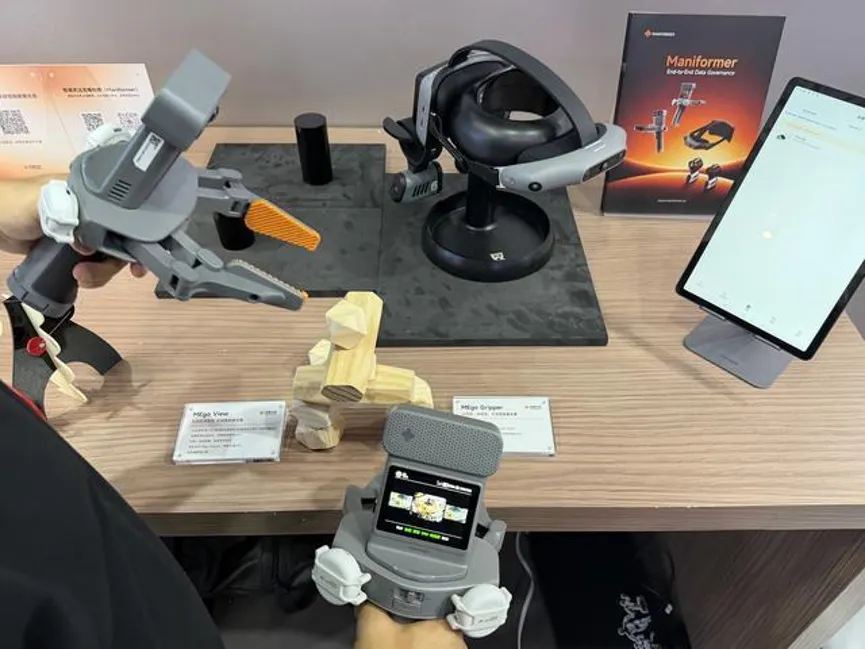
In China, bee technology has also officially launched "Beetle", the industry's first all-in-one, high-quality physical AI data crowdsourcing service platform designed to build the world's largest intelligent data collection network. The MEGO numerical data collection equipment (View/Gripper) + Beetle's APP + MEGO Engine data engine is capable of capturing nodes, covering more than 99 percent of real-world workplace scenarios, and enabling the recruitment of millions of robot trainers.
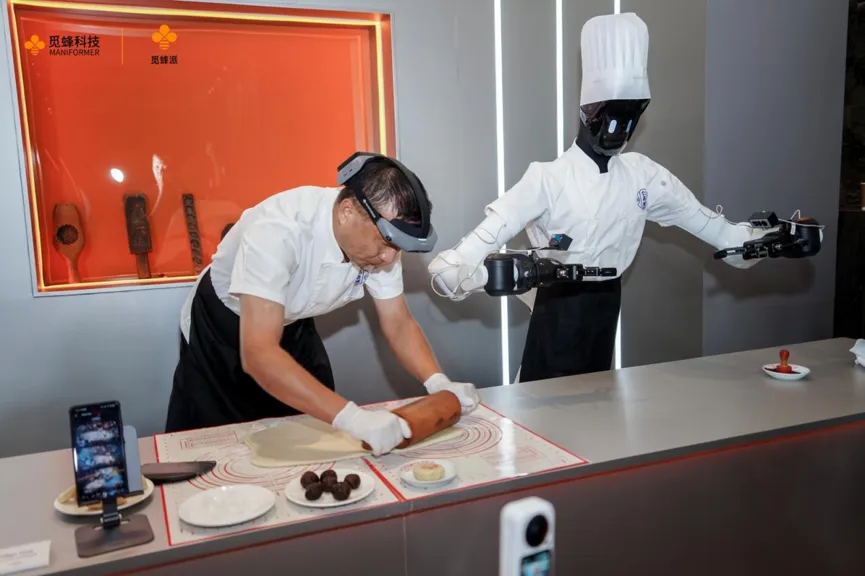
We went to Shanghai Pudong, where we saw a megaphone they just downloaded from the bee tech factory, and we took it home. To be honest, I thought it was a walk in the park, and I didn't think about it for five hours, but I actually made $78, and I figured out a question that has been bothering me for a long time: how do robots really learn to work?
01.
How did you make the 78 bucks?
What I got was a device called the MEgo View. The headpiece resembles a lightweight motion camera, with five cameras capable of capturing more than 300 degrees of vision, specifically recording first-person perspective action data.
Installation? It's much simpler than I thought. There are no wires, no base stations, no computers on the back.
Then I downloaded an app in the app store and opened an app called the Beehive App, picked out a close-up role, and then went on to do more than 20 homework tasks in the mission hall: plank, scrub the table, arrange things, make tea... it's all everyday household chores.
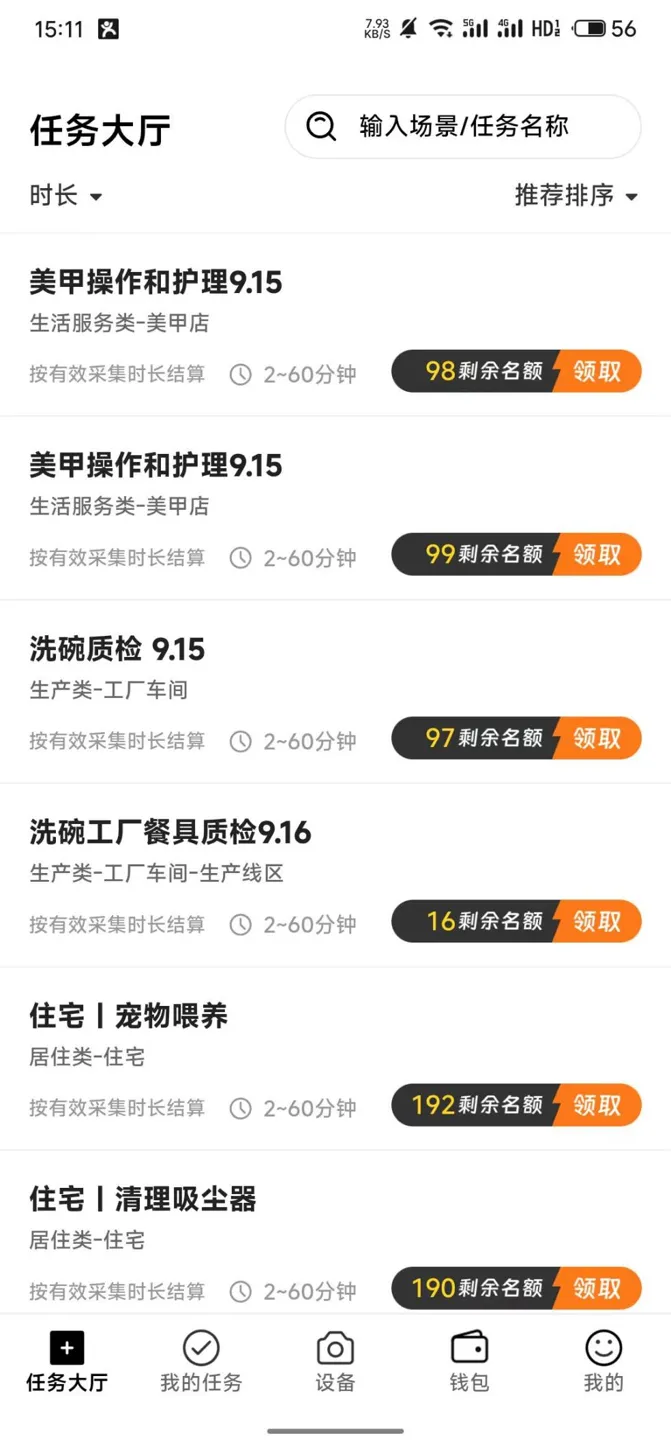
You can take what you can once, and then the app clicks to start the collection, and the device simultaneously clicks on the button to start the collection, and the system automatically records the video of you completing these tasks.
Five hours later, after the APP showed the task audit, I earned $78, and then signed a flexible employment agreement, trying to collect payments, seconds to pay.
To be honest, 15 blocks per hour is not very high.
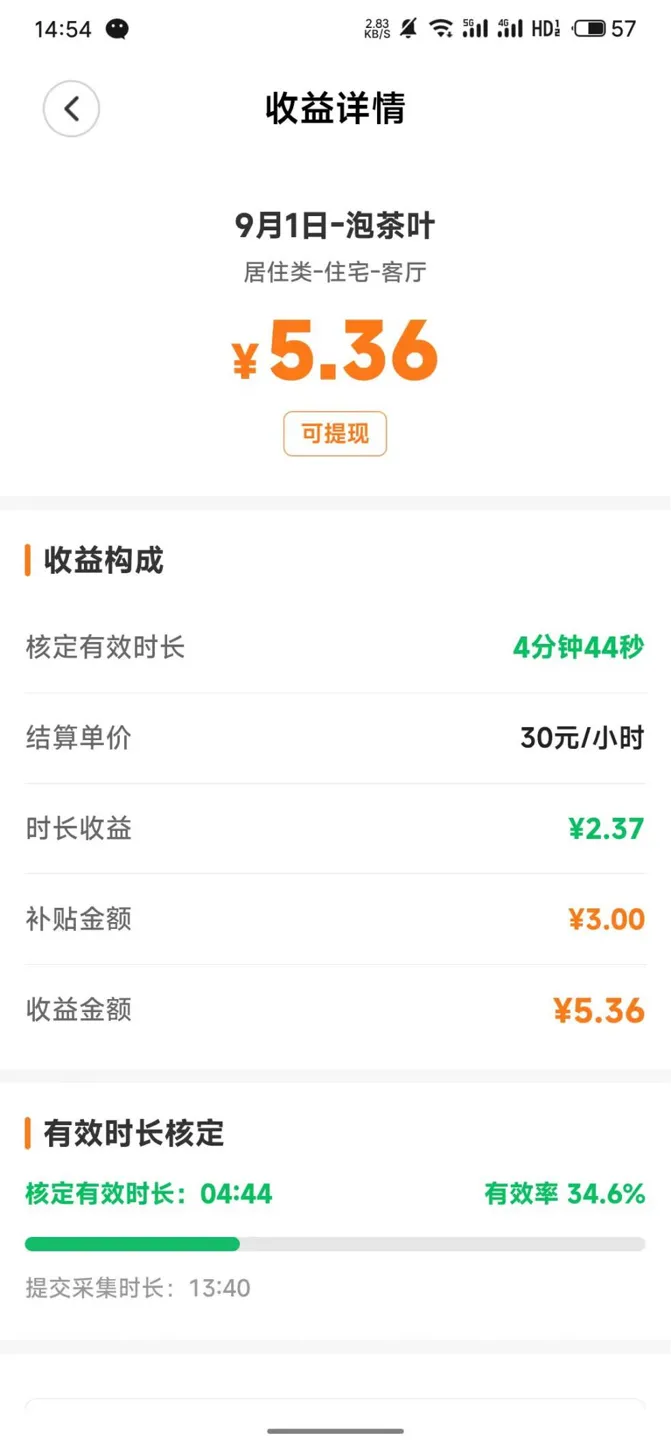
This is also due to the fact that I stole a cup of tea, for example, I took the task of brewing tea, mainly in the process of brewing tea myself, by the way, bring equipment, brew myself, occasionally the first cup of tea, inevitably some movements are excess, in the middle there is still a stagnation, but like this, 15 minutes of brewing down, I also have almost 5 minutes of effective time, according to the 30 minutes / hour price code, I earned 5.36 yuan.
It is understood that during the one-month forecast, Beekeeping registered 20,000 users and generated a cumulative of 13,000 collection assignment submissions. The first participants came from different ages and occupations, who would convert their daily labor and professional skills into robot training data.
The other was a five-minute sweep of the ground, where I had a 100% success rate because I was looking at the ground, and the standard of cleaning was consistent.
But when I learned the logic behind it, I thought it was a bit interesting.
02.
Why would anyone want to spend money on your homework?
This is a problem that all robotics companies have: there is not enough data.
You might think AI isn't so great right now. ChatGPT knows everything. But you know what makes language models so great is that there are literature forums, news outlets, novels, encyclopedias all over the internet.
To learn how to rub a tablecloth, a robot needs to see: how to hold a tablecloth, how much energy to use, in which direction to rub it, how to turn it when it meets the corner of the table, where to rub the tablecloth...
This knowledge is not available on the Internet.
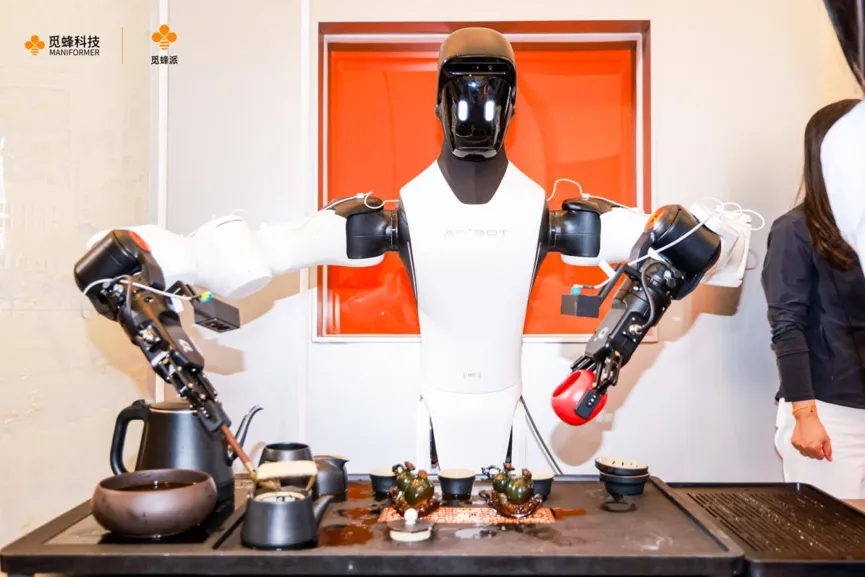
What was previously the solution? Set up a laboratory for operators to wear gear and do the movements over and over again. A worker works for 8 hours, effective data may be only for 1 hour.
The idea behind bees is the opposite: you show your house to the machine and you do your normal work.
In the dining room, the maid wipes the table; cleans the drawer; you make me tea at home, do the housework, these movements are the data itself. The device is put on your head and can be recorded quietly, without interrupting you, without asking you to do standard movements.
I was particularly impressed by the words spoken at the event by the chairman of Honey Bee Technology, Yang Qing, who said that in the future, robots will be able to really work, people will be able to learn how to do it, and the data in the real environment will be the teaching material.
And I spent five hours writing lessons for robots.
It currently covers 22 scenarios, with more than 5,000 missions and more than 50,000 real-world environments, including logistics, warehousing, housing, education, retirement care, catering, retail, public services, office, automotive services, healthcare, construction, transportation, agricultural production, transportation, and general operations, as well as specialized tasks such as installation, environmental repair and care, which can provide data for robots to train in dynamic controls, precise movements, continuous process execution, risk assessment, and safety interfaces.
03.
After 78 bucks, a whole system you haven't seen.
You might be wondering, if I do housework, record videos, robots can learn?
Of course, it's not that simple. The raw data is like a bunch of scattered puzzle pieces that someone has to piece together into a complete puzzle.
The first step is time alignment. The device I'm wearing on my head, if the time is not aligned, or if it stops in the middle of a task like this, which causes my hand to reach out for two seconds before the screen is cut, the data is gone. But the bee synchronizes the wireless time to within 0.5 milliseconds, hundreds of times faster than the blink of an eye, which makes my data very efficient.
The second step is the translation of the movements. The system breaks down my movements into a language that the robot can understand. For example, a teapot is a long task, and it is automatically broken down into the movements and order of these atoms. The position of the hand, the spatial trajectory, the situation of the movements are all extracted.
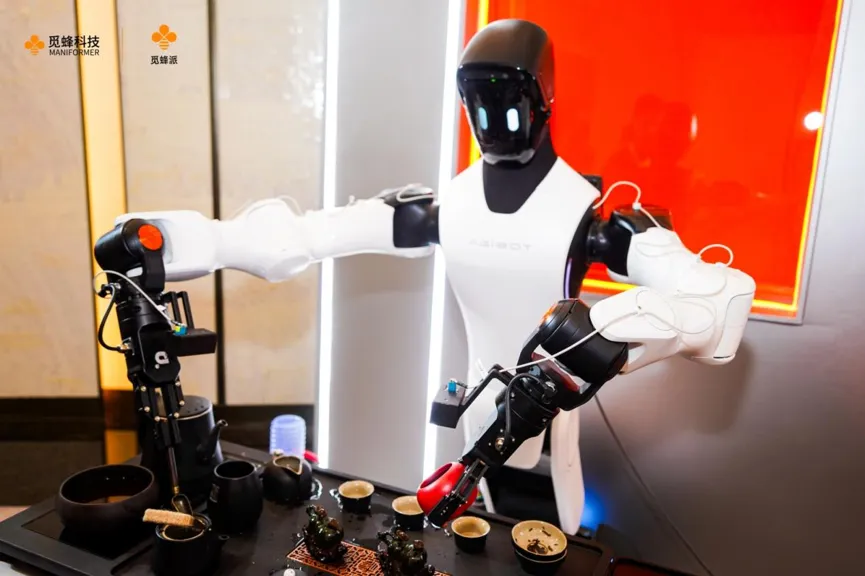
The third step is quality grading. Not all data is equally valuable in experience and in our interactions with bees. The system scores each data into four categories: action standards, which are used to teach robots to imitate; action rich but not very standard, which is used for pre-training; action that is problematic or even fails, which is also useful, which teaches robots to recognize errors; and particularly rare scenarios, which are used to test a robot's ability to generalize.
In their opinion, each data has its purpose, and the key is to know what it can do. Therefore, at the conference, the Bees also announced the launch of a multi-billion dollar subsidy program that covers collection tasks, equipment policies, offline services and insurance guarantees. Between September 23 and October 22, 2026, the Bees sent a discount on the use of equipment and eligible users could benefit from credit-free policies.
04.
I'm curious about a few questions, and by the way, I asked them.
In the course of the experiment, I specifically tested several drilling rig scenes.
I've tried to stop halfway and then continue. The system will automatically judge whether this is the continuation of the same task or the beginning of a new one. But to be honest, if it breaks down too much, a complete bubble tea can be cut in two, affecting subsequent use, and the value of the task data drops. This may be an engineering problem that must be solved in a crowdsourced model.
In addition, the data matching of the tea bubble scene has yet to be improved, and I noticed that the same is true of the tea bubble, and in the process of experimenting with this set of devices, I do not use the same tools, rhythm of action, location of the water tank, and irrigation, and I also have redundant actions such as incense burning and enjoying tea.
I've found that the system recognizes waterfall as a general atomic skill, but if your movements and standard processes are too bad, they may not match the predefined skill pool. And the lighting of the home environment, the steam shade, the glass reflection, from the point of view of the final data collection, are also natural difficulties in optical collection.
From what we learn, big model companies, robotics companies, scientific research institutions are the core buyers; manufacturers like Jindong, Tencent and others need this data to train smarter robots in the scene.
05.
What does this have to do with ordinary people?
You might be thinking: I'm not a robot anymore, what's that got to do with me?
I've learned that bees are pushing a model called crowdsourcing. Simply put, anyone, as long as they want, can become a data collector. In this model, anyone can become a robot trainer, even if they don't program, don't understand robots, don't care, cook, arrange shelves to order to collect data, get income.
Community retirees, retirees, cyclists, network drivers... you do your job, the equipment helps you record, the platform pays according to the effective data.
It's like an extrovert rider, a net rider, anyone can come and participate and turn their skills, time and experience into something that can be quantified.
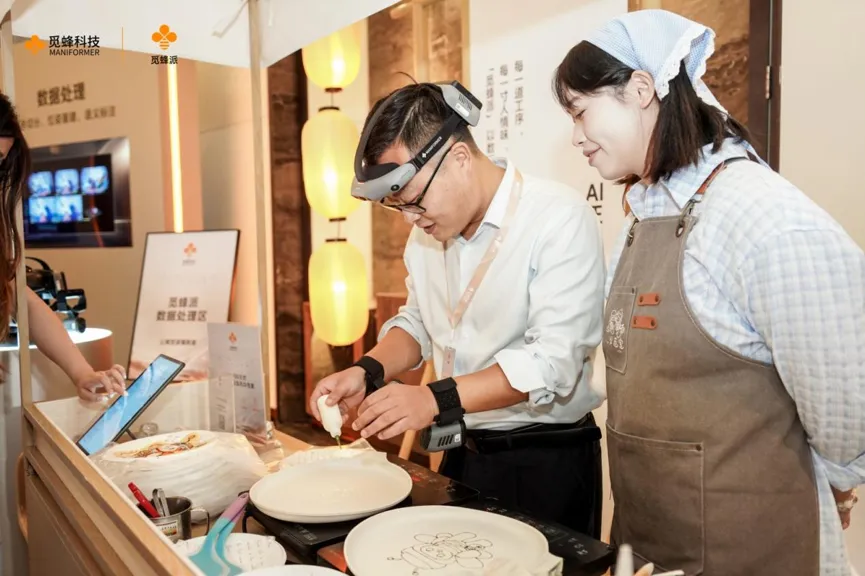
What does this mean? It means that your skills in cooking, cleaning, repairing, craftsmanship, which were not previously seen, could be turned into income in the future. It means a whole new way to create flexible jobs. It means that when tens of millions of ordinary people contribute data to their daily work, the robot's teaching materials are really thick enough.
In my view, 5 hours, 78 yuan, is not a high income right now. But I feel that it is a growing data production network.
Today, 20,000 bee devices have gone offline and millions of hours of data have been stored. Bees say that tens of millions, hundreds of billions of hours of data are just the beginning to get to real physical AI.
But more importantly, the starting point is open. It's not just a few companies in the lab, it's getting everyone involved. You scrub a table, I pour a cup of tea, he repairs a plumbing, these seemingly ordinary everyday things are turning into robots. Moreover, bee technology is laying the foundation for the next generation of data by launching the Beehive Data Co-Creation Campaign.
This means that the thicker the material, the closer the day robots learn to work.