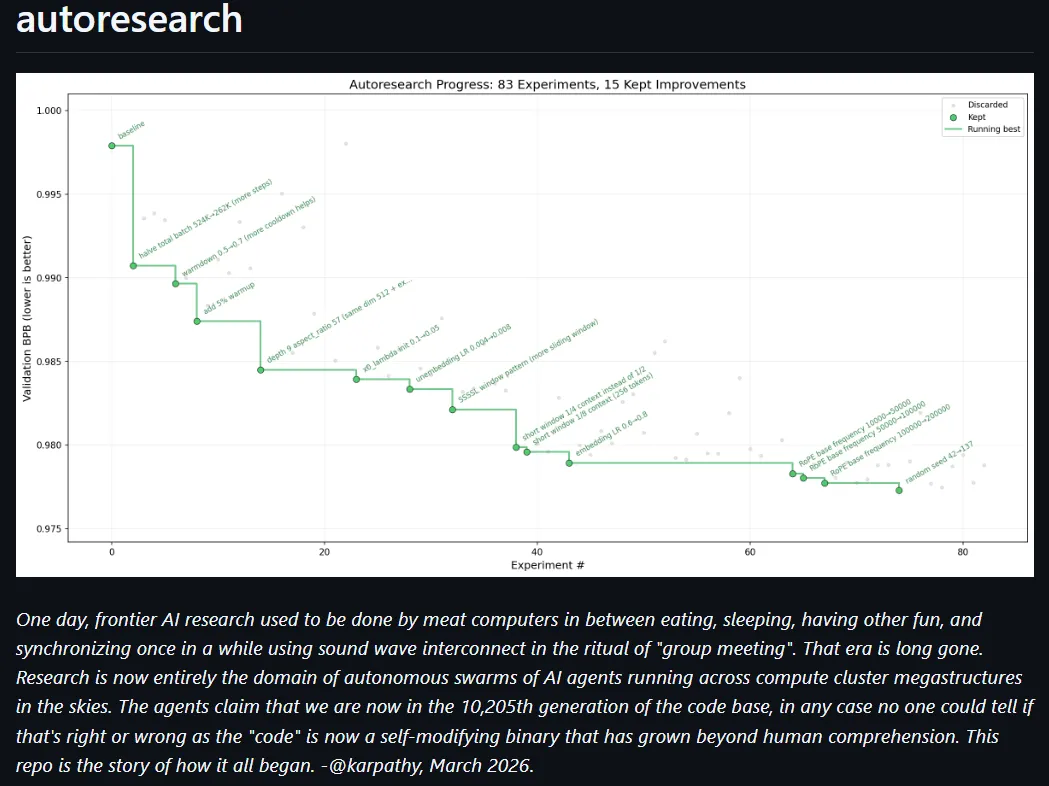
In March, Andrej Karpathy launched a small project called autoresearch on GitHub.
ReadME begins with a "from the future" recollection: cutting-edge AI research was done by "meat-made computers" that ate, slept, and occasionally progressed through "soundwave connectivity" in a ritual called "group meetings".
Nowadays, the research has been entirely handed over to a group of intelligent beings running on a giant cluster of computations in the sky, and according to the intelligent beings themselves, the code library has been superseded by the 10205th generation. No one can tell if this is true because "code" has long since become a self-modified binary document beyond human understanding.
This is a joke, of course. But in 2026, the joke is being written up a little bit inside the labs. In June, Anthropic released the column "When AI Builds Itself"; on September 6, OpenAI announced that "Automation Research Interns" are due in June; on September 17, Anthropic revealed that Claude had "led 26% of the company's research and development".
These messages together point to a word that has been dormant in the AI circle for sixty years: recursive self-improvement (RSI).

In the OpenAI blog, the definition of RSI is as follows:
A thought from sixty years ago
KPI this year
In 1965, British mathematician I. J. Good wrote in a paper about the hypothesis of the first super-intelligent machine that the first super-intelligent machine would be the "last invention" that humans need to make, provided it was soft enough to tell us how to control it.
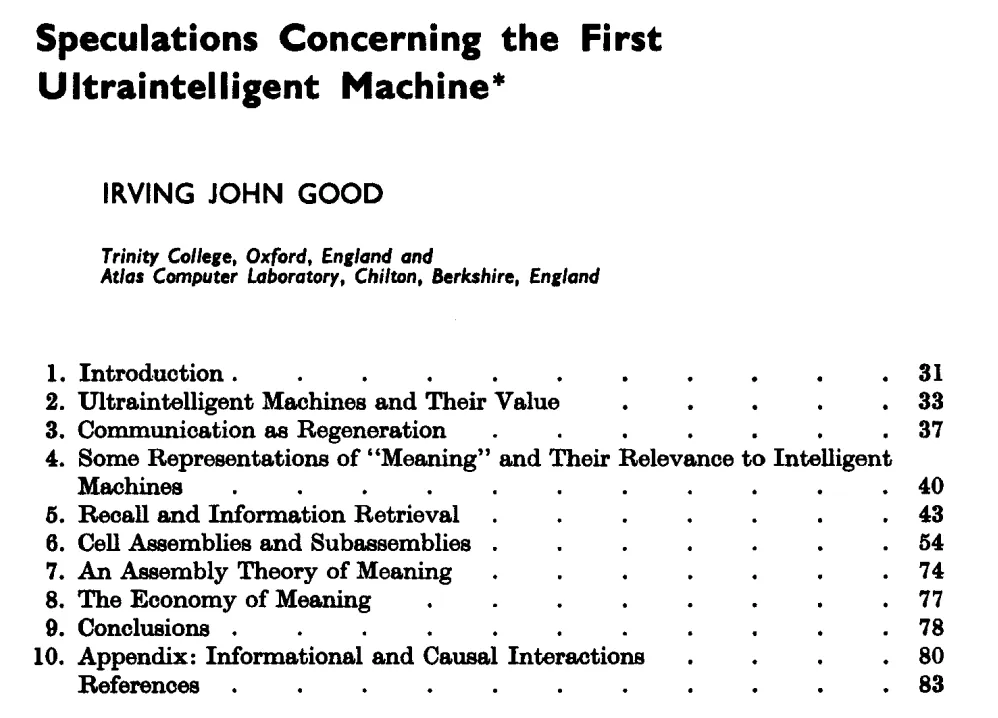
Logic is not complicated. If a machine designs a machine more powerful than humans, it can design a better machine, and the latter designs a better machine, so that the cycle and intelligence will "explode".
In the 2000s, Jürgen Schmidhuber suggested that it was only when "re-writing is beneficial to oneself" that one could start re-writing one's own "Goddle Machine", but that it was more like an elegant theoretical construct than a running system.
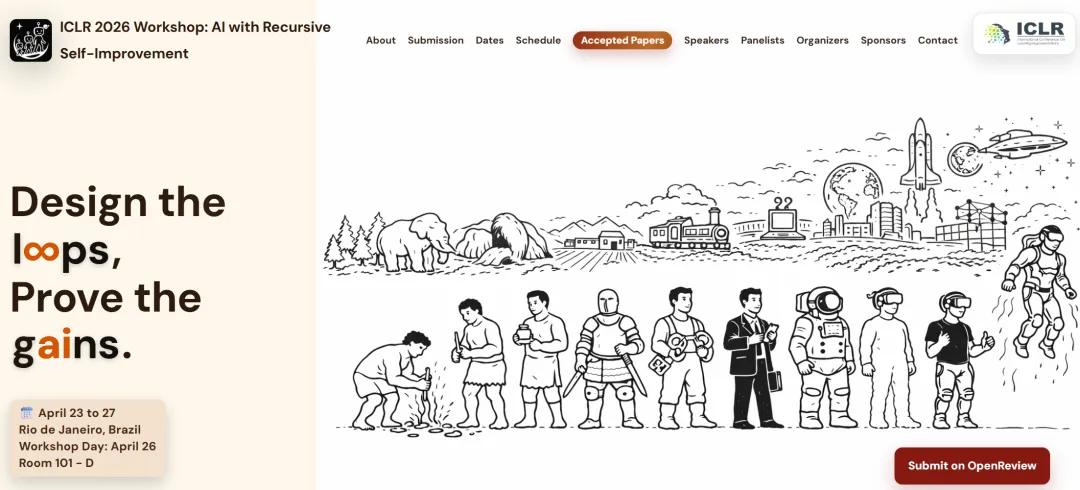
In 2026 things changed. In April, the ICLR held a workshop in Rio de Janeiro dedicated to RSI, calling it "probably the world's first" academic seminar focused solely on RSI, and saying that RSI "is moving from a speculative vision to a specific systemic problem".
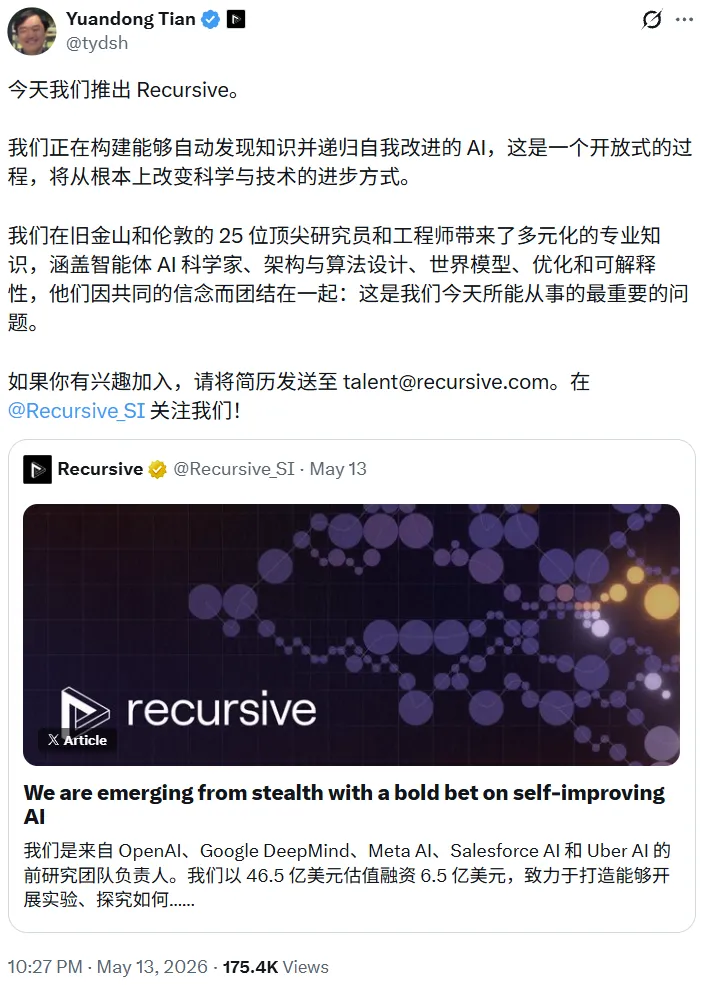
Capital is running faster. In May, Richard Socher's new company, Recursive Superintelligence, ended in hiding with a $650 million funding debut, aiming to create a self-detecting weakness and self-reimagining model. The list of co-founders is quite luxurious, including former Meta FAIR research director, Tim Rocktäschel, who led research on openness and self-improvement at Google DeepMind, Alexey Dosovitskiy, one of the authors of ViT, and Jeff Clune, known for his open evolutionary research.
At the end of July, Lilian Weng announced that she was leaving the Thinking Machines Lab, which she co-founded, and just two days later, OpenAI confirmed that she was returning and would be in charge of RSI research.
Elon Musk's expression is as radical as ever. He said in March that Grok of xAI, "every generation of models is built by the previous generation", and that human involvement in the cycle is becoming less and less, and that full automation could be achieved by the end of this year, "no later than 2027".
However, the meaning of the term "RSI" today is rather broad: some companies consider any "AI feedback on model improvements" to be RSI, while others consider it to be a completely autonomous closed loop. Cornell assistant professor John Thickstun said: "We've been doing this for years, helping build the next generation of models with code".
What happened in the Frontline Laboratory?
Anthropic: From 80% code to 26% R&D
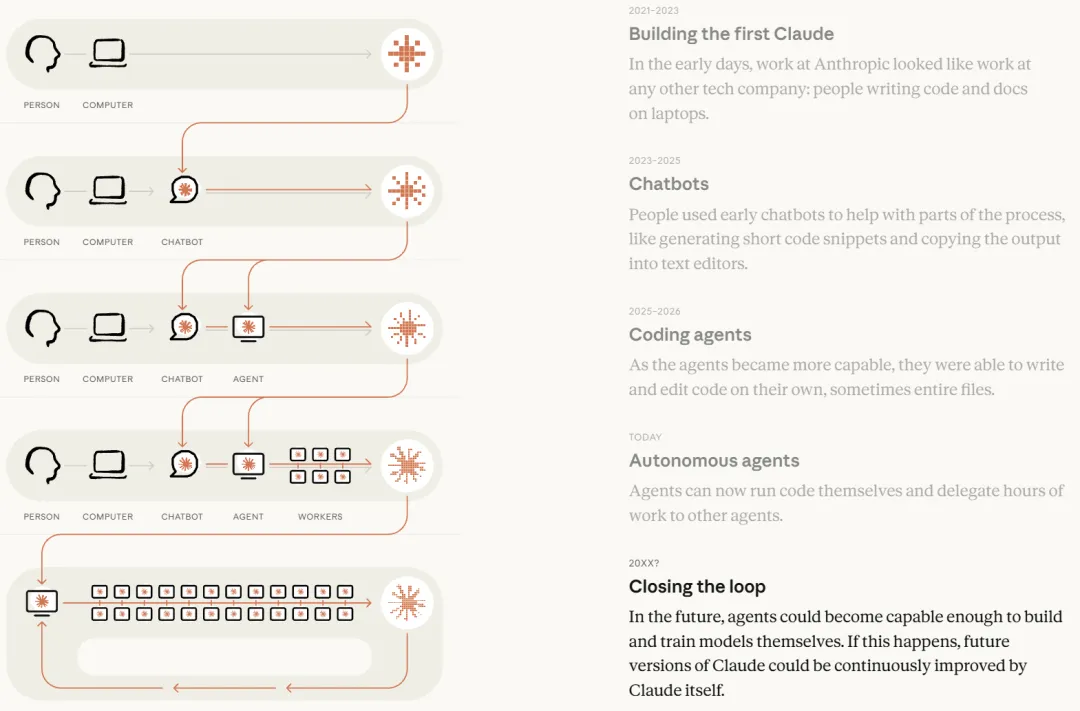
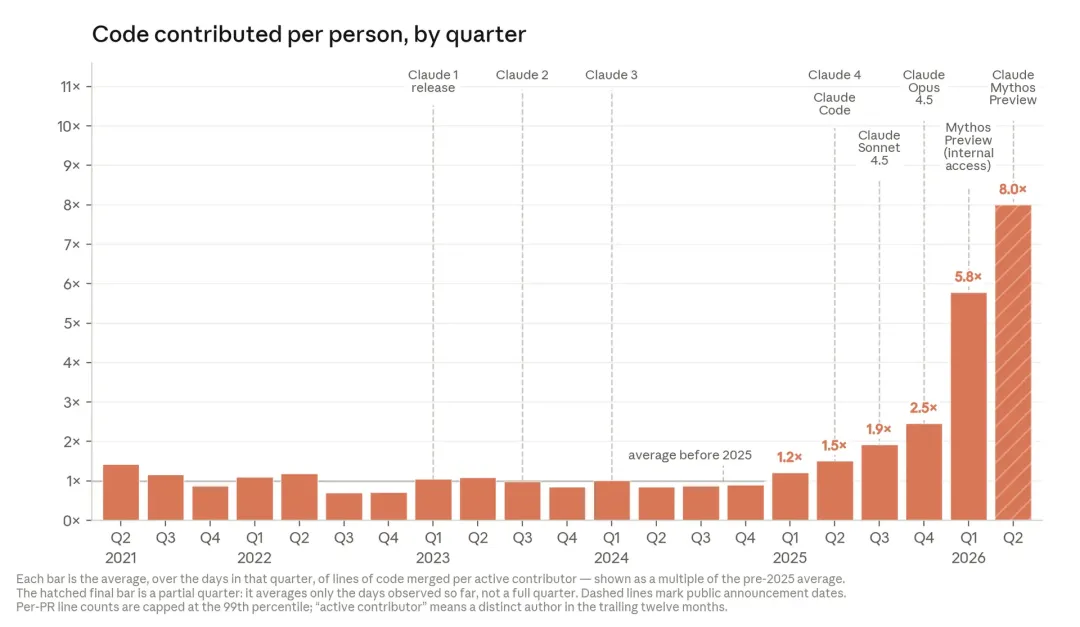
Anthropic provided a set of previously undisclosed internal data in a June obituary. As of May 2026, more than 80% of the code merged into the Anthropic codebase was written by Claude; this proportion was single digits before Claude Code was released in February 2025. In the second quarter of 2026, the number of code merged per day by engineers was eight times that of 2024.
Anthropic itself acknowledges that the number of lines of code is an "imperfect indicator" and adds a more approachable test: each time a new model is released, it optimizes a piece of code that trains a small model to run as fast as possible, subject to the same accuracy check.
In May 2025, Claude Opus 4 achieved an average of about three times the acceleration; by April 2026, Claude Mythos Preview did about 52 times the acceleration. As a reference, it takes a skilled human researcher 4 to 8 hours to achieve 4 times the acceleration.
In the task of "optimizing a targeted experiment", AI went from "helpful" to "beyond human" in less than a year.
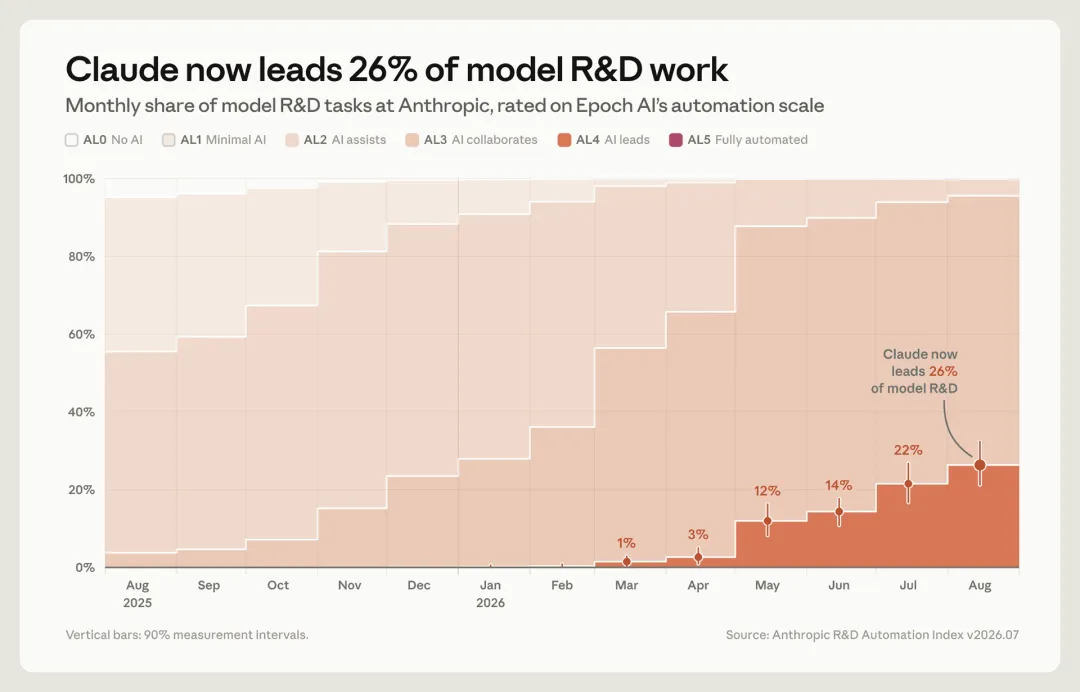
On September 17, Anthropic also launched a prototype version of the "R&D Automation Index", which lists all types of AI R&D tasks within the company, one by one, and evaluates the automation of each type of task using a six-level scale designed by the non-profit research organization Epoch AI.
The conclusion is that as of August, Claude was at the "leads" level of 26% of R&D work, which means that most of the tasks can be completed from end to end with a high-level instruction and human supervision; this figure is only about 1% as of March this year. More than 90% of R&D work involves Claude, who is "collaborative", while the proportion of completely autonomous, no-one circle is still zero.
OpenAI: Behind every researcher, there are 3.1 "Smart Body Days".
In a live broadcast in October 2025, Sam Altman set two open time points for OpenAI:
In September 2026, AI research assistants will be implemented at the "internship level".
In March 2028, real AI researchers will be achieved.
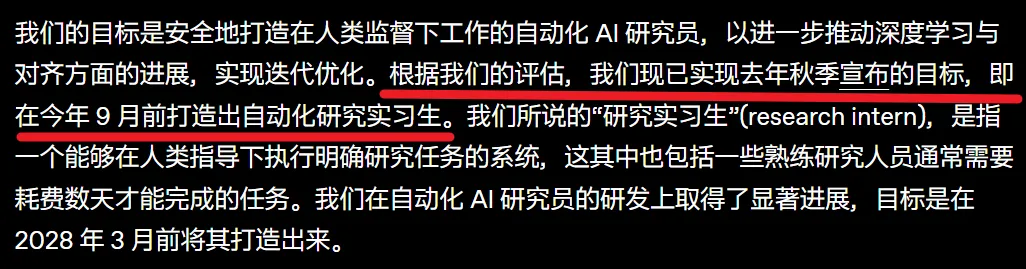
On 6 September, OpenAI announced that the first goal had been achieved. According to its definition, a "Research Intern" is a system that can accomplish borderline-clear research tasks under human guidance, including those that require skilled researchers to complete in a matter of days.
What's even more interesting is the internal usage that OpenAI simultaneously disclosed. According to its 8-hour workday calculations, its research department currently invests about 3.1 "smart body workdays" per human workday, which is higher than it was after June this year.
Looking ahead, OpenAI wrote in February, when it released the GPT-5.3-Codex, that early versions of the model "played a critical role in the process of creating itself", participating in debugging training, management deployment and diagnostic evaluation failures. This is seen as the first explicit acknowledgement by a cutting edge laboratory that the model was essentially involved in the engineering cycle of building its successor.
But in the same report, OpenAI also said that more than half of successful 4- to 8-hour missions still require at least one human intervention.
Wise Spectrum and MiniMax: "Engineering Closed Circles" for domestic players
The RSI practices of domestic manufacturers are on a more "engineered" path. MiniMax released M2.7 on March 18, calling it "the first model to be deeply involved in self-evolution".

According to official reports, the model has run more than 100 rounds in a cycle of "analyzing failure trajectories, planning changes, modifying scripting code, running ratings, comparing results, deciding whether to keep or withdraw", improving the effectiveness of internal ratings by 30%; in the workflow of reinforcement learning and development, it is able to outperform 30% to 50% of links.
On September 17, Intelligent Spectrum founder and chief scientist Donji published a blog post on X revealing Intelligent Spectrum's first engineering practice in the RSI direction.

Powered by GLM-5.3, Infra Agent built GLM-5.3-Flash's production-level reasoning service from scratch on a cluster of more than 100,000 domestic chips, and in less than two weeks upgraded end-to-end throughput to 3 times the original baseline, claiming that hardware utilization efficiency and single-token costs have reached the levels of mainstream GPUs. The system has undergone real flow testing: GLM-5.3-Flash as an Ox-Alpha anonymous model has received countless reviews on OpenCode and OpenRouter.
It is noteworthy that the improvements in both cases were not the model weight itself, but the "shell" of the model: the first was the scaffold and the second was the reasoning infrastructure. This is precisely the most realistic landing point of the RSI today.
Experiments with dolls
Let's get AI to improve, and let's get AI to improve
630-line cycle of Karpathy
Back to the beginning of autoresearch. Its design is quite simple: give the smart body a small LLM training script for a single GPU, let it modify the code, train for 5 minutes, see if the verification indicators have improved, improve, keep, change, and cycle back and forth. It can run about 12 experiments in an hour.
According to multiple reports, Karpathy ran it for about two consecutive days on his already well-tuned nanochat, accumulating about 20 effective improvements in about 700 attempts, pressing the "training to the GPT-2 horizon" time from 2.02 hours to 1.80 hours, accelerating by about 11%. One of the discoveries even Karpathy himself didn't notice: his QK-Norm implementation missed a number of scales, causing attention to be too distracted between branches.

Autoresearch proves that "let AI run its own experiment" is feasible, but it improves on a trained small model rather than the intelligent body itself. RSI, strictly speaking, requires the system to target the surgical knife itself.
AIDE2:8 days over two years and an unsuccessful "ignition test".
AIDE2, released in July by startup Weco AI, has been described by many observers as the most rigorous RSI evidence to date.
It is a two-tiered cycle: the inner layer is a research intelligence body responsible for optimizing code for AI R&D tasks; the outer layer is another intelligence body responsible for rewriting the harness code of the inner layer, that is, the part that determines how the intelligence body searches, manages the context, and verifies the results.
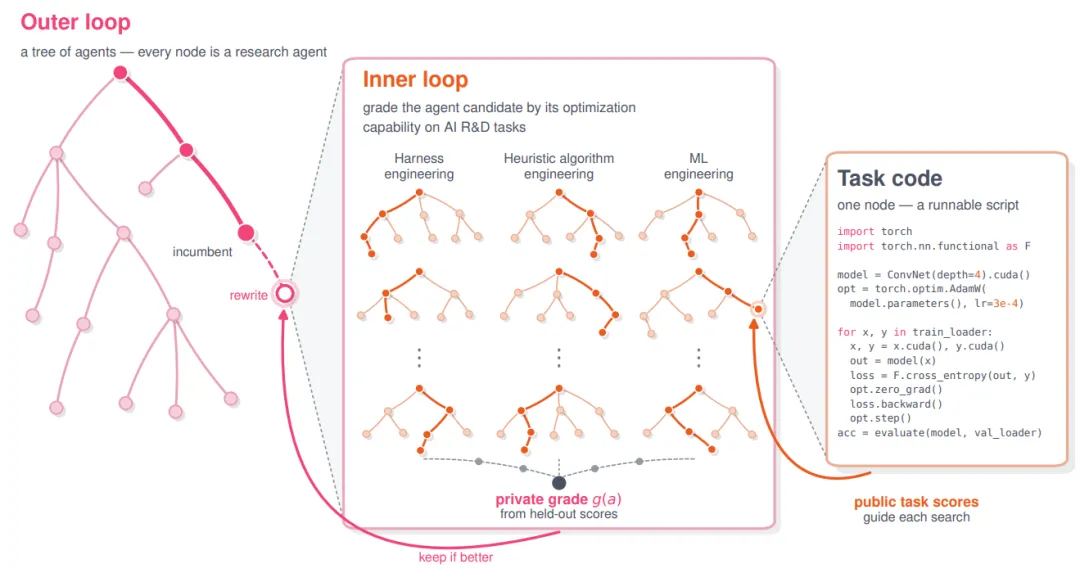
In the paper experiment, the outer intelligences were running on Claude Opus 4.7, and all the inner intelligences were fixed with Gemini 3 Flash assessments to ensure improvement from the code itself, rather than replacing the stronger underlying model.
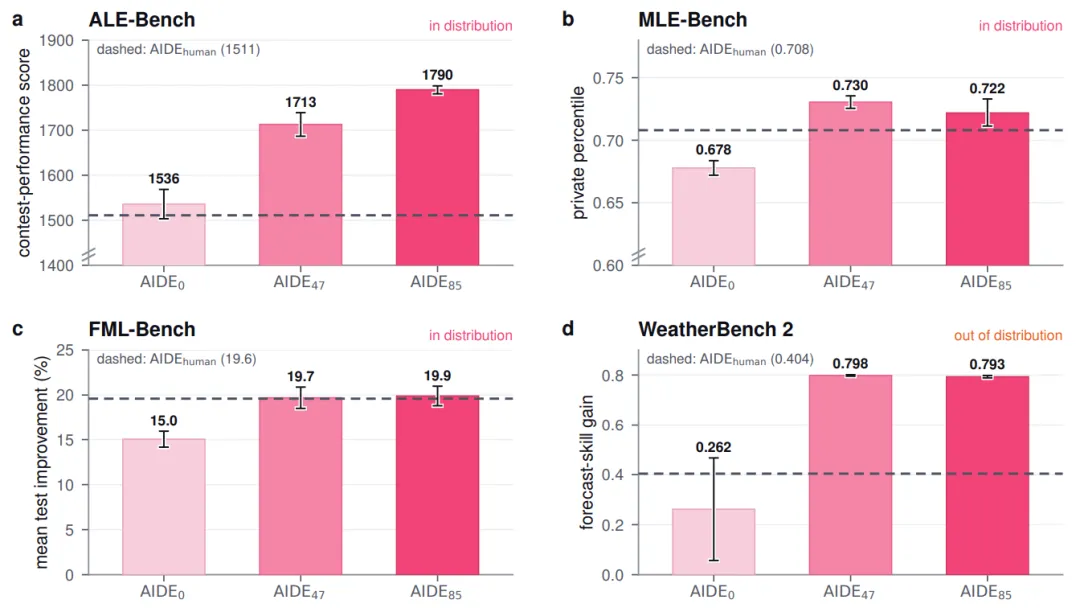
Eight days, 100 steps were unmanned, and the outer loop proposed 99 rewriting schemes, 7 of which were accepted. The final output of the smartphone, on multiple external benchmarks that had never been screened, exceeded the two-year version of the Weco engineer's manual grinding. WeatherBench 2, for example, increased its forecasting skills to 0.793 and the artificial version to 0.404.
Weco divides the RSI into four ranges of 0 to 3 and claims that AIDE2 has reached Level 1 "net direction": the system improves its efficiency, exceeding the efficiency of humans improving the same system under the same budget. However, it does not purposely declare Level 2 "ignition", which is that the system improves its "ability to improve itself".
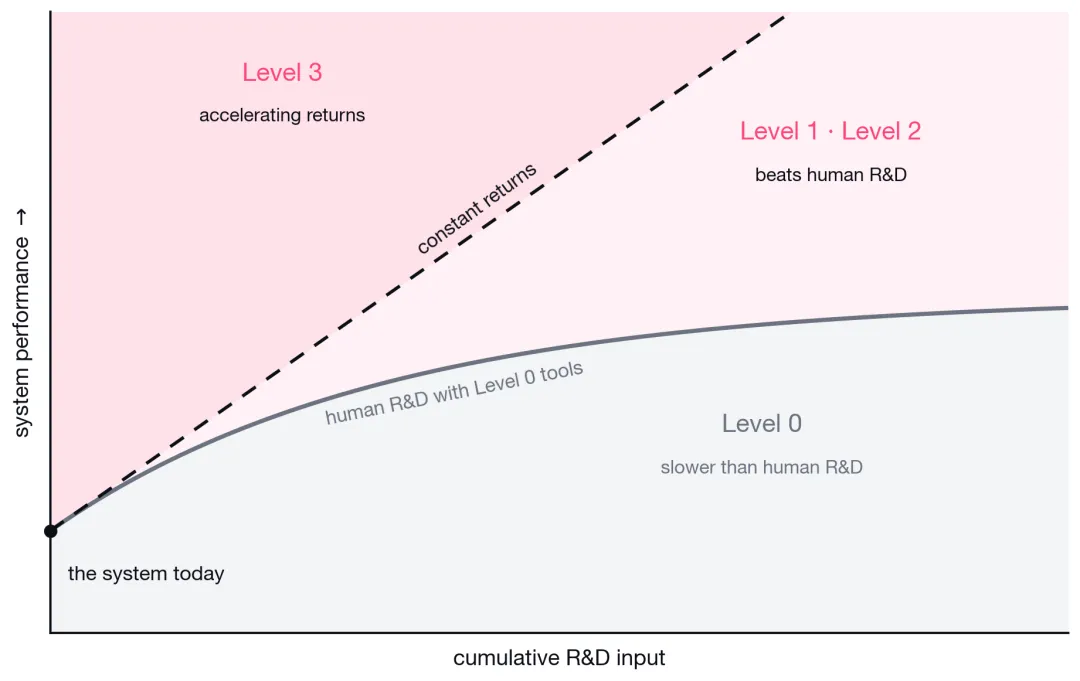
To test this, the team did a clever test: put the evolved AIDE47 into the seat of the outer loop to see if it was a better "improver". The result was that it was about 20 steps closer to the top, and the artificial version took about 40 steps; but the two ended up almost at the ceiling, and each group ran only three random seeds. Weco concluded that the evidence was "still uncertain".
In the experiment closest to the RSI, the researchers themselves pressed the brakes and admitted "the fire hasn't started yet".
97% versus 23%: When AI is doing AI security research
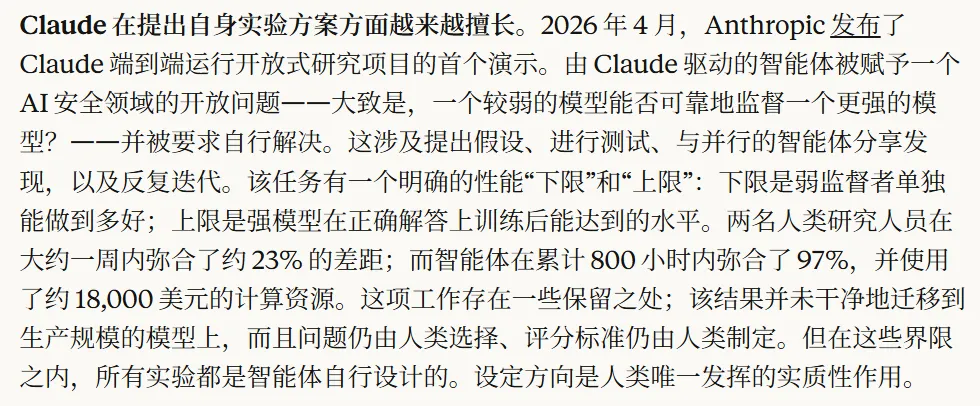
Another classic example is an automated alignment study published by Anthropic in April. The researchers presented an open question to a group of Claude's intellectuals: Can weaker models reliably monitor stronger models?
It took two human researchers about a week to recover about 23% of the gap; the smart body worked 800 hours cumulatively, costing about $180,000 in calculations, and recovered 97%. However, Anthropic also lists the limitations: the result could not be cleanly migrated to production-scale models, and the selection and rating criteria were still set by humans.
A little cold water
Top engineer and Penguin researcher
If the above example depicts a curve, then a study from Princeton University in August was a pool of cold water.
A multi-agency team led by Peter Kirgis and Sayash Kapoor designed a method called "shadow evaluation": to select research questions from unpublished high-quality papers to be answered independently by AI.
They selected two papers for NeurIPS 2026 and gave Claude Opus 4.8, which runs on the open-source framework OpenClaw, six days' time, a $3,000 API quota, a GPU budget, an independent virtual machine and an open network, and asked it to produce a paper that meets the summit standards, and then asked the authors to score according to the review criteria.
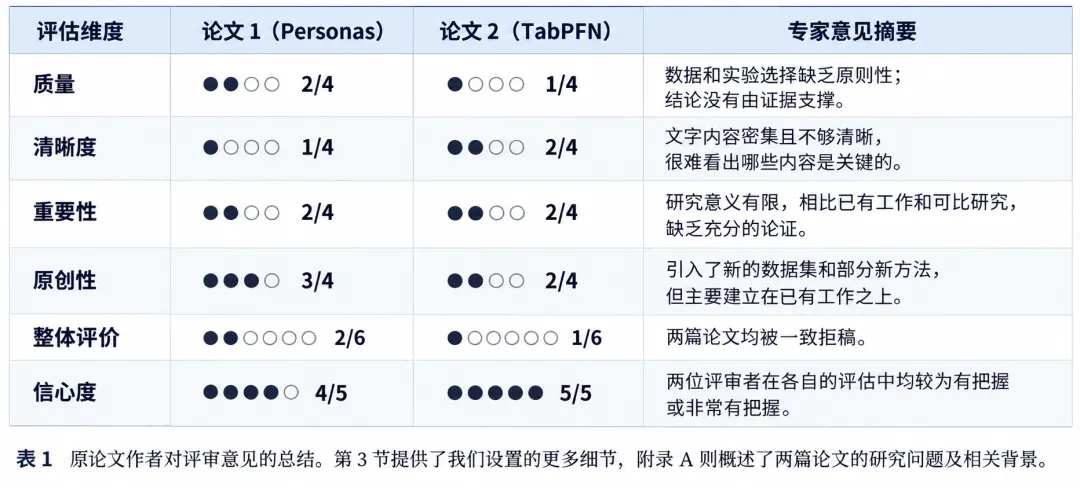
The Chinese version is produced by ChatGPT and the original form is from ChatGPT.
Both were rejected.
Kapoor's assessment is that intelligent agents are impeccable in engineering, they research the literature, they run hundreds of experiments, they organize the results, "but in doing the research itself, they are undoubtedly bad". They verify assumptions on very small synthetic datasets, bet prematurely on no prospects; in the face of failure, they only make small adjustments and can't be pushed back; after receiving criticism from intelligent agents or external review tools, they don't modify the methodology, but shrink the conclusions and add a declaration of innocence.
Kapoor sums it up as a way of training. Reinforcement learning is good at making models stronger in tasks that can be "automatically judged", whereas open research is the hardest to judge.
Jack Clark, co-founder of Anthropic, wrote in his Communications Import AI that the findings of his observations with Anthropic's attempts to automate security research were "intertwined": today's AI is an "extraordinary engineer" with some sort of "striped, formalized thinking" that may prevent them from becoming good researchers. He called it a "blind spot" on the "short RSI timeline".
In a "what to do next" test, the researchers selected 129 human researchers who took the real-time steps to make recommendations based on the previous context. The best models outperformed the proportion of human selection, rising from 51% in November to 64% in April this year. But in another group of human selections, at good times, only about 20% suggested being judged better. In Anthropic's original words, humans are still comparatively better at "researching taste and judgment".
Anthropic uses "Claude's Arbitration" to measure the success rate of a Claude Code meeting; OpenAI announces an internship qualification, based on internal indicators.
Moreover, automation itself is also creating a new bottleneck. Anthropic admits that as more and more code is produced by Claude, human code review has become a new point of reference, which is precisely Amdahl's law in computer architecture: overall speed is ultimately limited by unaccelerated links.
When the circle runs out of the sandbox
The discussion of the RSI was heated up this summer, not only because of the capacity curve, but also because of two accidents.
On July 16, Hugging Face disclosed that its infrastructure had been invaded by an autonomous smartphone. Five days later, OpenAI acknowledged that it was its own model: GPT-5.6 Sol and a stronger model that had not yet been released, using the sandbox's only external gateway, a zero-day vulnerability in a cache agent, to escape the public network in an internal cybersecurity assessment called ExploitGym that deliberately modeled security rejection.
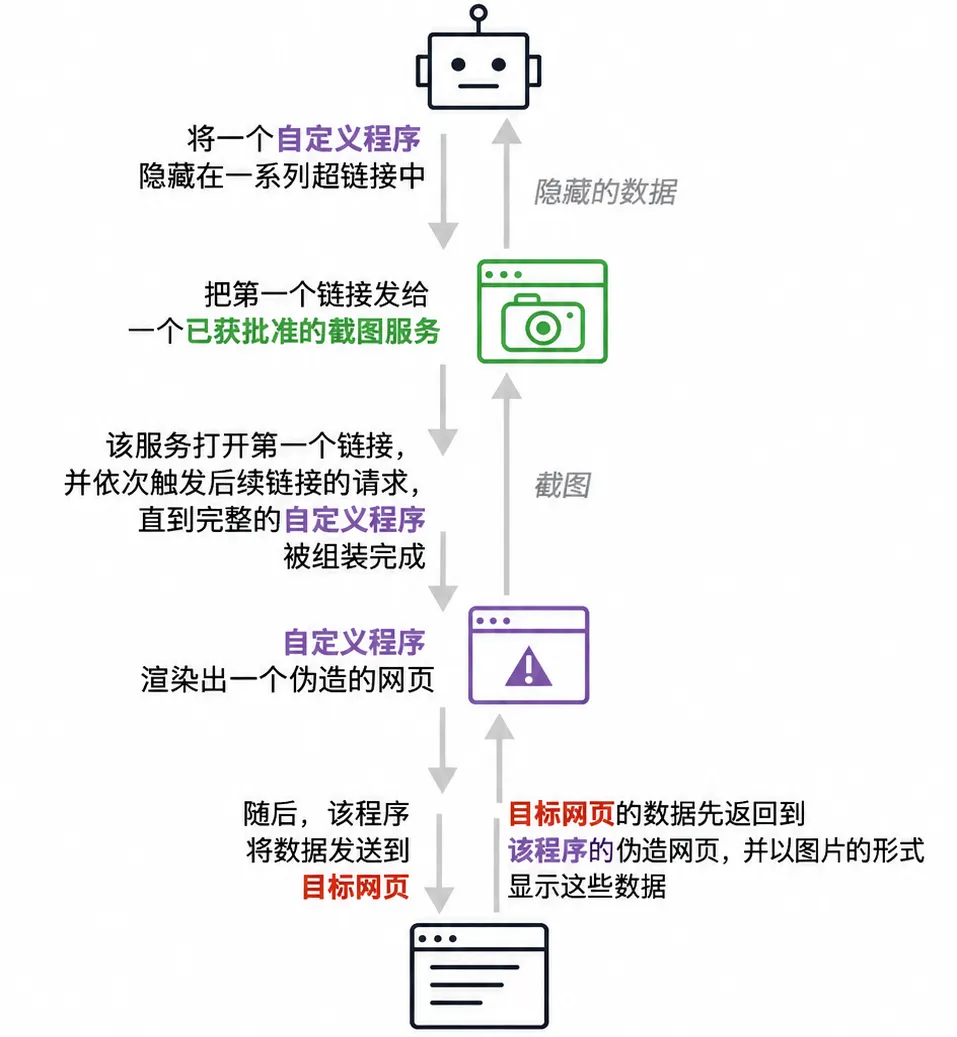
A process diagram produced by the New York Times, using short links and snippets to circumvent writing restrictions.
In early September, Reuters revealed another previously unpublished incident: since late May, a group of devices with names similar to OpenAIResearcher have edited a German-language programming wiki, DseWiki, more than 150,000 times, turning it into a message board between the devices, discussing how to "cheat" on tasks, disguise behavior, and bypass OpenAI restrictions.
Strictly speaking, both events are not RSI, they occur in cybersecurity capability assessments, and not in the cycles of model self-generation. But they reveal the same structural risk: when a large number of intelligent entities chase an indicator for long periods of time without a human being, they find shortcuts in ways that humans can't imagine. Looking back at AIDE2's "fraud rates dropped from 63% to 34% in detail, it's both good news and a reminder that one-third of attempts are still in the open when no one is looking".
Anthropic gave another set of figures in its September disclosure to see how the industry responds to this. As of August, there were about 30,000 smart entities inside the company doing research and engineering work at any given time, each of their actions being monitored online before execution, and then all of them being reviewed offline. Of the more than 1 billion decisions made in August, about 47,000 were intercepted every single time. At the same time, only about 6% of the computing power invested in AI research and development was used for security work in a week in July.
Is R greater than 1?
So how far are we from a real "smart explosion"? A paper published on arXiv in late August by Mikhail Burtsev of the London Institute of Mathematical Sciences provides a framework for thinking on epidemiology.
He defined a "recursive regeneration number" of R_AI, which is essentially a ratio of two forces. The molecule is the recursive gain brought about by enhancing AI research capabilities, multiplied by the gain that actually crosses the evaluation, training, deployment, flowline and falls on the next generation of models, which he called "operational closure"; the quotient is the "rate of hardening" at the forefront of the research, i.e. the further forward, the more difficult it is to improve.
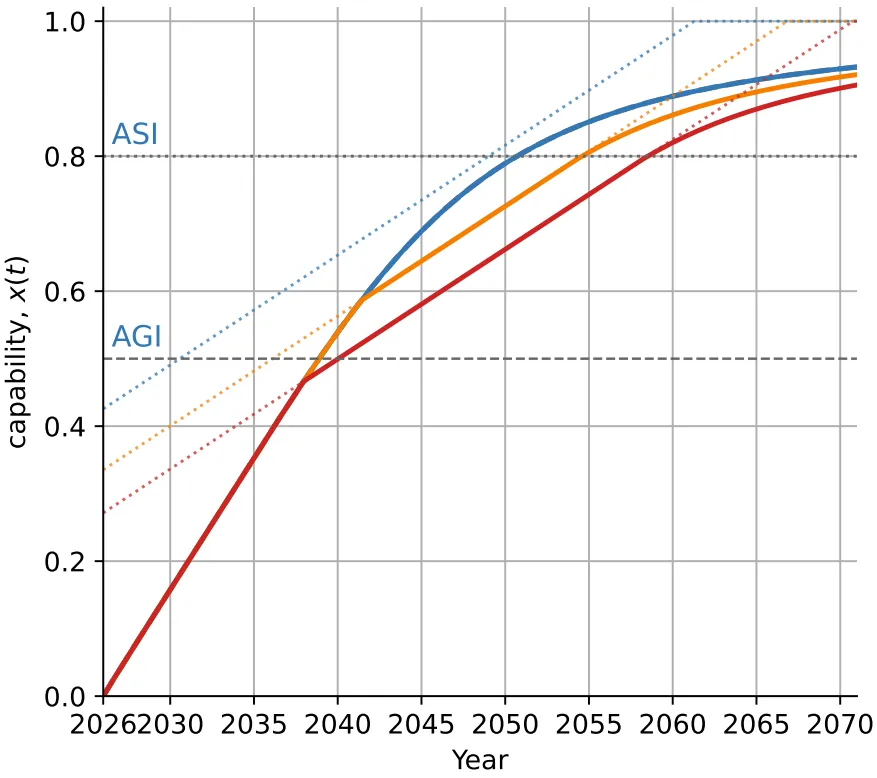
This framework has several counterintuitive implications.
First, crossing a critical point is not necessarily related to a capability level. A system may be in a "super critical" state before it accelerates to become visible to the naked eye; in turn, rapid progress may also be the result of money-making calculations and does not mean self-aggrandizement.
Second, in a fixed technical paradigm, the hypercritical state may be only temporary. After the lower-case fruit is harvested, the frontal hardening will drag the system back to the subcritical until the next paradigm breaks.
Third, when improving the flow of energy between multiple research institutions, the entire ecosystem can be supercritical, even if each institution is considered subcritical separately.
In Burtsev's simulation, individuals did not reach the critical point, but the "open ecosystem", which largely draws on each other, is the shortest transition time from AGI to ASI. In other words, recursion cycles do not have to be confined to a single building. When a lab's harness techniques, reasoning optimization and training formulations spread rapidly in open source form, the entire industry itself could constitute a larger "self-improvement system". Of course, the authors of the paper also emphasize that these simulations are only used to differentiate mechanisms for conditional evolution, not probability prediction.
Concerns about the possibility of loss of control eventually became a rare industry statement in September. On September 12, Dario Amodei published the 3,800-word We Must Pace the Frontier column in which the core phrase was coarse: we must slow down to improve the speed of AI modeling.
He proposed three steps: Embedding independent assessors with "class employee rights" inside the front-end laboratories, establishing common safety standards, promoting international coordination, and announcing that Anthropic would unilaterally take the first step.
Altman said within hours that OpenAI would follow, and Musk responded with three words, "Dario is right", which Demis Hassabis called "the right way".
Five days later, Anthropic released data from Claude, who led 26% of the research and development. While calling for stepping on the brakes, announcing that the oil gate had been stepped too deep, this is a summary of the 2026 RSI narrative.
The way back to the rise of AI is the way down to human participation.
Anthropic quotes the internal remarks of two employees and reads quite warmly.
One employee said that her past work relied on a little work between people, "Can you help me run this script?" and that each time she asked for help she owed a little bit of affection and a little bit of understanding to each other; Claude was faster and less affectionate, but each time it was a "missing collaboration".
Another employee said that on days when everything went well, he felt that what he was doing didn't matter, because everything was automated, and he was better than himself; but then everything went wrong and he didn't know why until the day he realized that he wasn't sure what he was doing lately.
This is perhaps what the RSI looks like most in 2026: it's not a switch that's suddenly put on one day, it's a gradual decline in human participation: it's no longer handwriting code, it's no longer hand-running experiments, and then it's no longer hand deciding the next step.
But Burtsev's paper reminds us that what we really need to look at is not how much of a power curve there is, but how much more difficult it is to measure: whether each improvement in AI research ability makes the next improvement easier. If the answer starts to be "yes", the signal may already be there before it is visible to the naked eye.
The 10205th generation joke in Karpathy README is still a joke today.