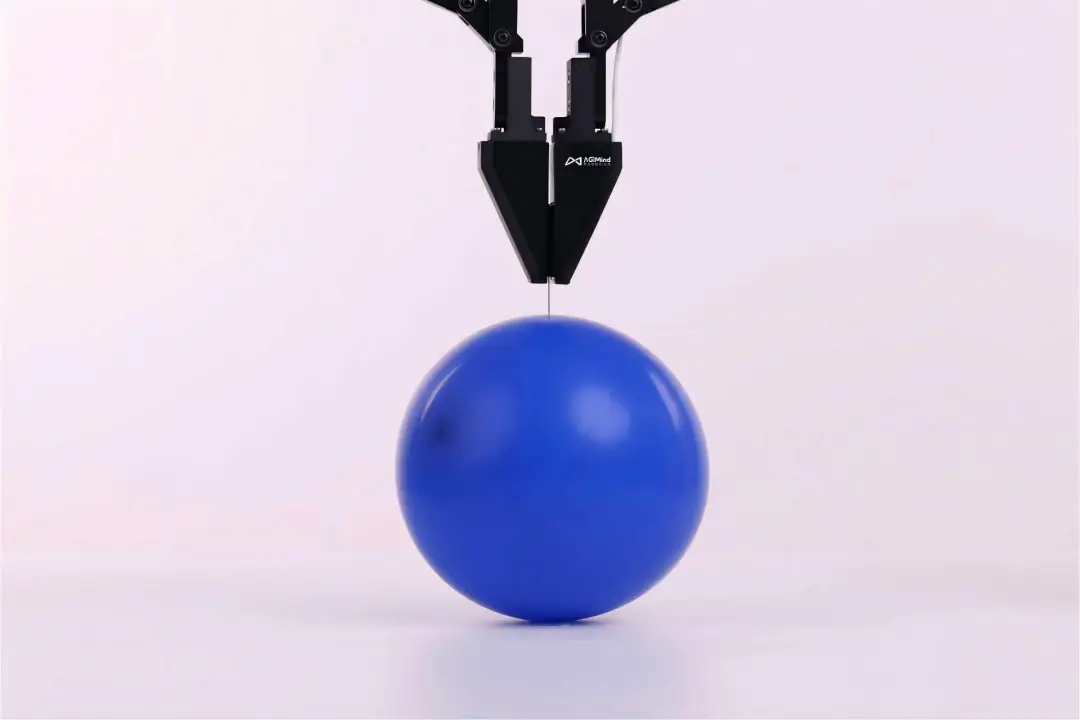
“ In the year 2026, the senses will be out of reach.
Recently, the Robotics Conference learned that the intelligent enterprise-inspired robot AGIMind Robotics announced the completion of its tens of millions of yuan angel round of financing, with investors including renowned investment firms such as Power Capital, Co-op Innovation Investments, and Ji-Jin Consulting as a financial advisor.
This round of financing will focus primarily on production line construction and mass production capacity optimization, as well as research and development of touch intelligent systems. The company has launched the Lux series of visual touch sensors and achieved large-scale deliveries, on the basis of which it has further expanded the application scenario of touch sensing products.
01.
What's the 20x gap in touch data?
The field of touch has become the cradle of capital. According to the Robotics Forum statistics are incomplete. Since 2026, the new funding in the field of touch perception has exceeded 10 billion yuan, and capital is paying for a common judgment: the robot scene is landing, and touch is an inescapable link.
The market is easy to calculate because one smart hand requires about 13 to 15 touch sensors, touch sensors and torque sensors combined to account for 20% of the cost of a human robot's body. The penetration rate of commercialised human touch sensors has increased from 20% at the beginning of 2025 to more than 60%. Apart from hardware, the data gap is more worthy of attention.
Touch is important because it cannot be acquired from the Internet in its entirety like visual language, and can only be generated in real physical interactions; and physical AI must be provided with material to truly understand physical interactions in the real world. For example, an analysis by the IEEE Robotics and Automation Society in September 2026 noted that touch sensor data differ fundamentally in characteristics from image data typically trained by VLA models, as vision provides continuous high-bandwidth image streams, while touch data is highly sparse in the time dimension and highly localized in the space dimension.For this purpose, the team of Trevor Darrell, a professor at the University of California, Berkeley, designed a specialized touch expert sub-model that runs at four times the speed of a motion expert to achieve real-time force control feedback, with an average success rate of about 65% on 12 precision operation missions, close to twice that of a pure-vision VLA model. In other words, the value of touch data depends not on its hours, but on the density of physical interaction information contained in the unit data.
New trends in this area of touch also suggest that under the guise of a capital-intensive inflow, a deeper industry problem is emerging: what kind of touch data is the physical AI that is really needed in complex physical interactions?
According to the founder of inspiration robots Zhang Yao, the era of intelligent body, the ability to perform robotic tasks, largely depends on precise touch perception and power control. While the improvement of the robot's operational capabilities, first of all, requires high information density, multi-mode, engineering stability and miniaturized products, inspiration robots developed the lux series of visual touch sensors, and consolidated this differentiation technology route of tightness, which may be the key to quickly acquiring capital recognition.
02.
Concentration field, identical energy sources: new routes are emerging?
In order to understand the unique path of inspirational robotics technology, we need to understand the underlying logic of visual touch sensors.
The basic principle of visual touch sensors is to capture shape-shifting images of elastic bodies under pressure with a microscopic camera, and then to reverse-push contact information through an algorithm. MIT's GelSight laid the foundation for this path in 2009, and development over the next decade focused mainly on the elastic body material, optical structure and algorithm optimization levels.
However, since 2009, the basic architecture of the industry has not changed fundamentally. The developers of visual touch sensors have not made substantial breakthroughs in both underlying hardware and core algorithms, and the core components of CMOS image sensors are dominated by a few international giants, with fewer than 10 of them providing CMOS autonomously domestically. At the algorithmic level, mature tools in the three major areas of vision, ResNet, U-Net, and optical flow are widely replicated for touch data processing, but visual touch has made almost no pioneering contributions to the visual system at the algorithmic level.
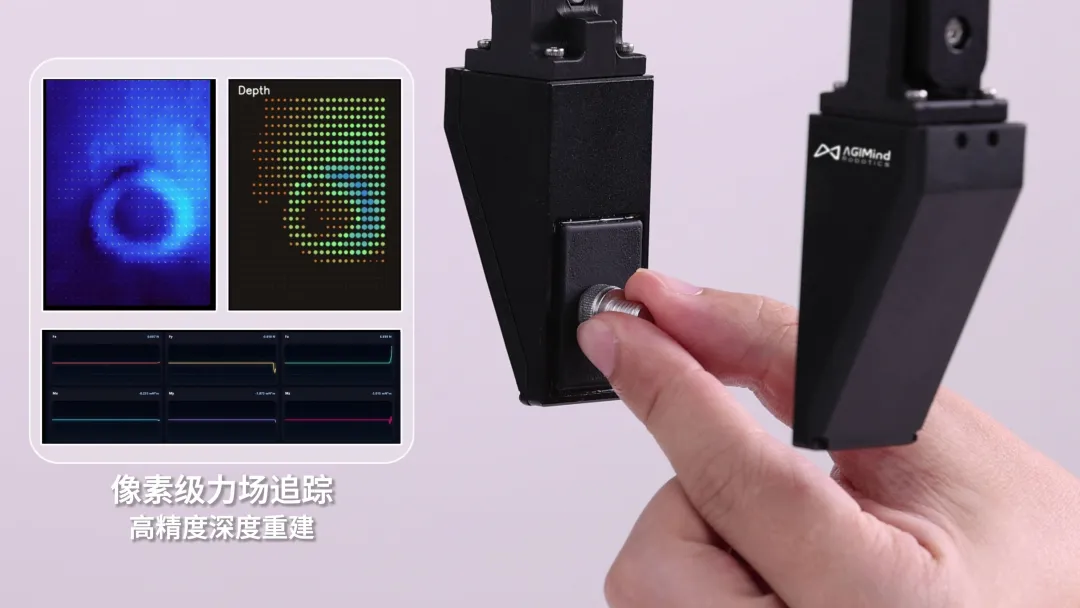
In terms of the path of tactile needs of physically intelligent, inspirational robotics founder Zhang Xiaozhou's judgments are straightforward. He believes that geometric reconstruction answers what objects look like, and that robots most need to know how much force they are applying, whether the force distribution is even, whether the contact surface is sliding. The former is the visual force, while the latter is the value that touch is irreplaceable.Inspirational robots are based on a self-developed ultra-micro imaging system that compresses the overall thickness of the sensor to 5mm, with a power field tracking resolution of more than 100,000 points per square centimeter, and simultaneously calculates the force, shape, slippage and gesture from the same image to form original multi-mode tactile data.

The main difference between these systems is that they come in a single mode, with the output being a high-resolution contact surface image, while the density field system produces a complete physical interaction state description, with the distribution of forces, gradients, slippage trends, and contact postures encoded simultaneously in the same image resolution to provide more complete tactile information for subsequent data acquisition skills learning and precise operations.
In other words, the density field path is not written in a clearer way than in a filter, but is essentially an attempt to redefine the form of the data product that a touch sensor produces by upgrading it from a photo filter of a contact surface to a filter of a complete physical interaction state describing a filter.
The White Tiger-VTouch dataset released in January 2026 by the National Local Co-Operative Robotics Innovation Center provides a side print to this technological direction. The dataset covers more than 60,000 minutes of real interaction data, with visual touch data accounting for 57%, covering more than 260 contact-intensive tasks. The data shows that 68% of tasks receive a more complete, continuous contact status description after the introduction of visual touch perception, providing a direct increase in precise operation and failure recovery.
This also demonstrates that the intrinsic value of the tactile data for the body model lies not in more, but in a more complete description of the distribution, changes and trends of the force in the contact process, and that the tactile data of the silicon mass pump will have a longer-term barrier value than the quantity of silicon pump, indicating the need for the power source line to be identical.
03.
Based on research and development background and industrial experience
Inspirational robots are believed to be the first team to research and apply visual touch sensing technology in the Asia-Pacific region. Their team launched visual touch sensing research in 2016 and pioneered the application of visual touch sensors to robotic agility scenarios in 2019, achieving touch-based world interaction signal prediction and feedback control.
Dr. Zhang Yaoz, founder and CEO of Inspirational Robotics, graduated from the Hong Kong University of Science and Technology with a degree in robotics and a bachelor's degree in precision instrumentation from the University of Science and Technology of China, worked as a senior AI researcher at Tencent, leading the research and development of large-scale data pipelines and AI models, and later as a researcher at the National Laboratory.
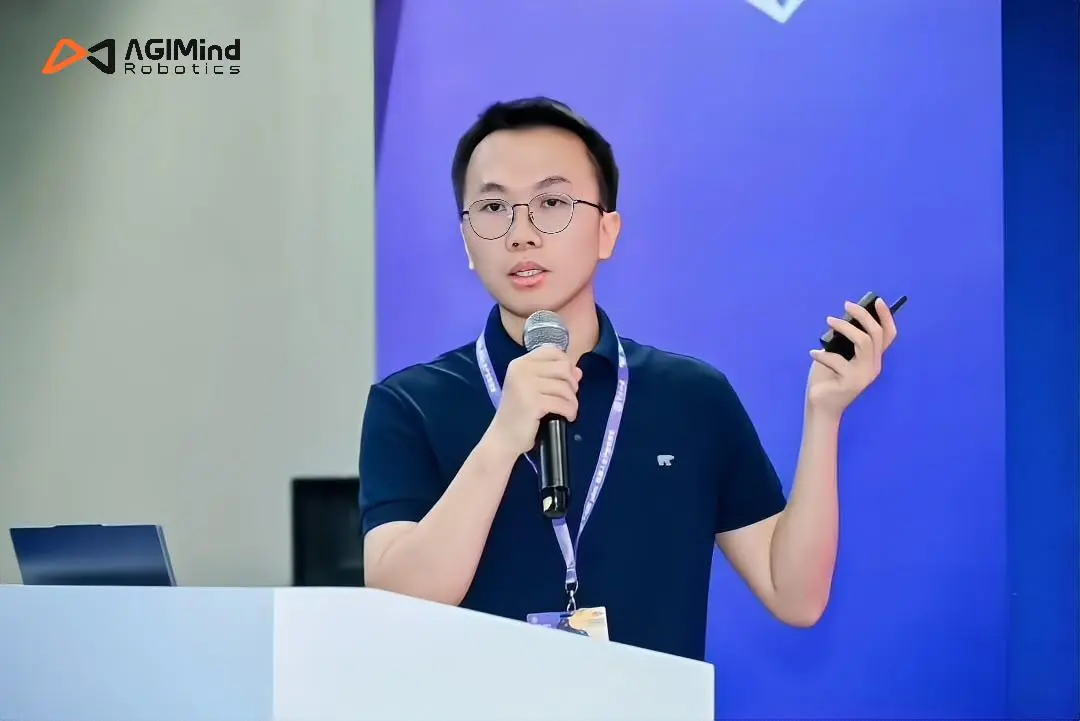
The core team of the company also brings together members from renowned institutions at home and abroad, such as University of Hong Kong, University of China, University of South Korea, and EPFL, with industry experience from leading technology companies such as Tencent and Obi-Wan Kenobi, with leading R&D and commercialisation capabilities. At the same time, the team has established long-term cooperation mechanisms with top universities at home and abroad, continuously advancing cutting-edge touch intelligence technologies and applications.
04.
This is the first time I've seen this.
Inspirational robots are truly worthy of attention because they try to demonstrate that they can do extreme things in this dimension of mechanical information density, which is itself an engineering ability that can be reconstructed.
The lux series of visual touch sensors have three shapes.
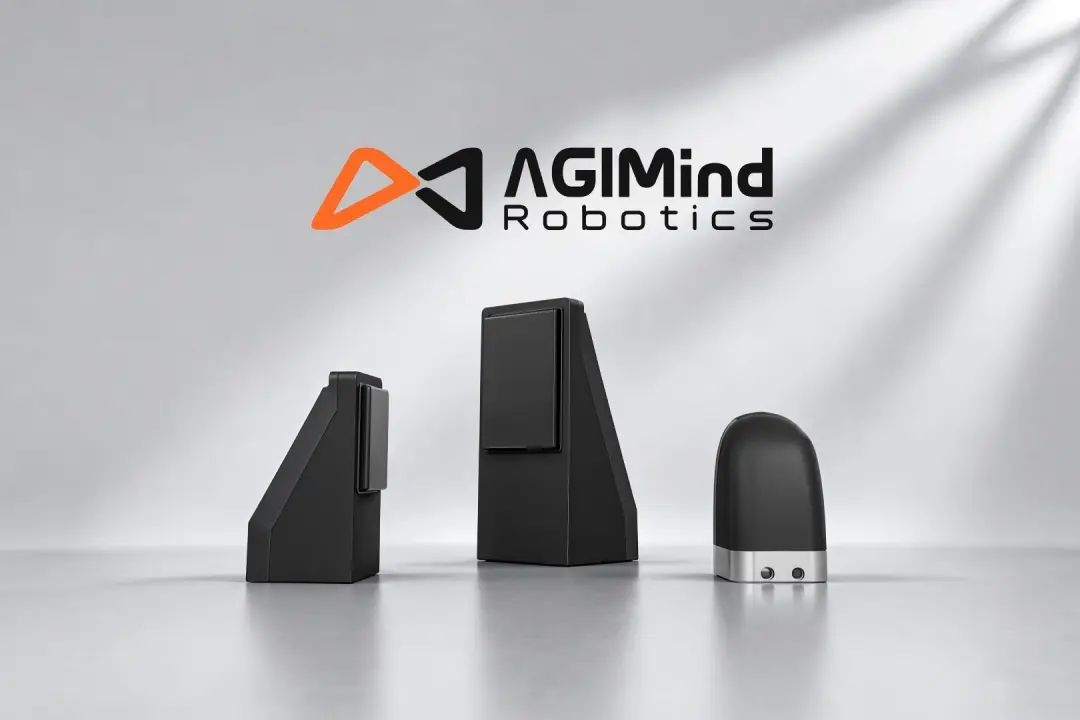
The AM-TV L is a general-purpose shaft for mainstream electrical clutch and industrial production lines, sensing an area of 34×24mm, 50N full size, 0.01N accuracy, and can withstand more than 5 million continuous pressure tests.
The AM-TV S compact is oriented towards a narrow claw and narrow space, compressed to 41x19.6x24mm in size, but retains full 50N magnitude and synchronous field sensing capability.
The AM-TV R curved fingertips are designed for the delicate fingertips, measuring 33.9 x 20 x 16 mm. The three shapes cover the main scenes from the industrial production line to the delicate hand operation, while the product matrix is supported by a unified perceptual system.
Technical philosophy behind the engineering parameters is different from that of conventional touch programs. Conventional compressive or capacitance touch sensors produce a mechanical signal of a single magnitude, i.e. the direction of the force or value of the force, and the density of information is limited to the physical emission density of the sensing units. The visual touch program bypasses this limitation through optical imaging, while the density field path of inspirational robots pushes the information carrying capacity of optical paths to a new quantitative level.

There is a quantitative difference between a sensor with a single power output and a sensor with a three-dimensional power field output of 100,000 points, in which the amount of data information accumulated in unit time varies quantitatively. The former is accumulated by the size of the force, while the latter is accumulated by the state of complete physical contact. The latter is significantly higher when training large-body models to understand the physical laws of gravity, friction, and deformation.
This increase in information density ultimately refers to the value of touch data as a material for intelligent training. One of the investors in inspired robots co-founded the innovation initiative, and the overview of this logic is straightforward: high-precision touch data is the lifeblood of the model generation with a large body.
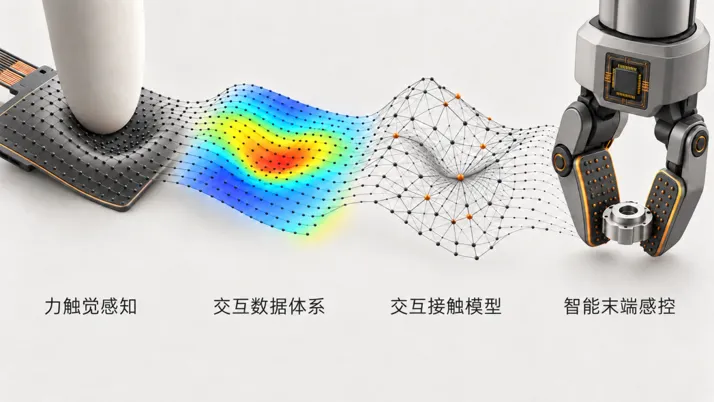
Inspiration robots' business landscape also follows this logic, extending from sensors to numerical systems, data pipelines and touch-intelligent systems, inspiration robots are revolving around touch perception, data construction, model training, and control deployment.
05.
Can data quality become a new barrier?
Returning to a larger industry perspective. The current competition on the touch sensor track is shifting from the more sensitive ones to the ones that can accumulate higher-quality physical interaction data. Data infrastructure is becoming the second battlefield for touch sensor companies.
Inspirational robots have chosen different stations along this path. It's not trying to compete on sensor shipments, it's a game of scale driven by cost and capacity; nor is it trying to compete on data scales, it's a game of volume driven by collection capacity and capital investment.
It turns out that when physically intelligent models begin to truly understand gravity, friction, and the transformation of these physical laws, the importance of higher-quality, tactile data that can be effectively studied by the model and that can restore interaction forces will be far beyond imagining.
In the process of being physically intelligent from the point of view of the mouse to the point of understanding the mouse, the industry really needs more sensors, or better touch data, the answer to the question is already obvious.