Recently, the 2026 Nobel Prize in Chemistry has revealed that Henri B. Kagan, Kenso Soai, won the prize for their discovery of nonlinear effects and self-catalysis in asymmetric organic synthesis.
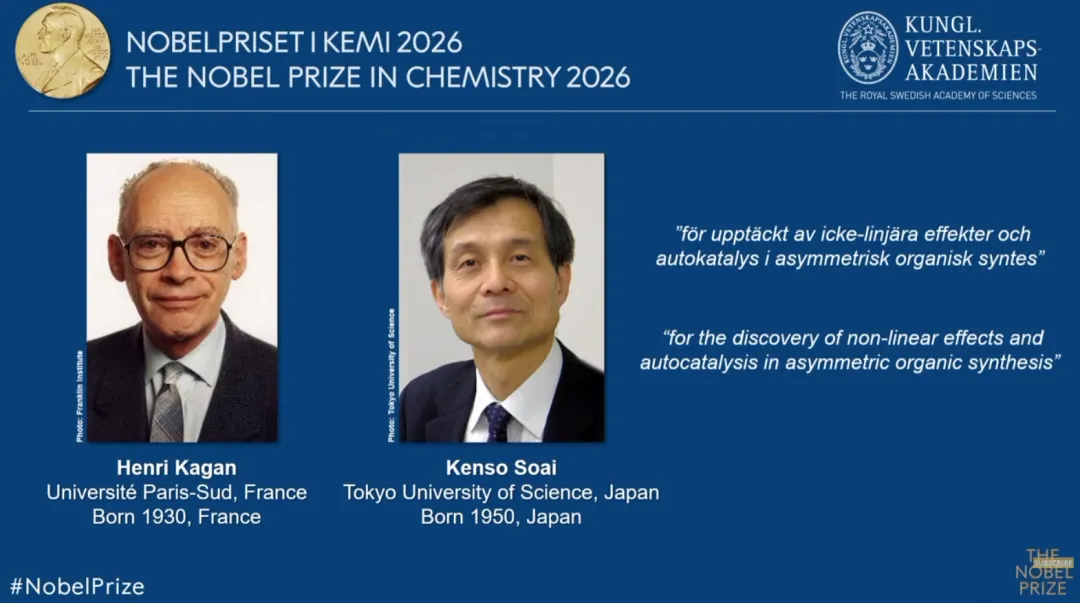
Henri B. Kagan, born in France in 1930, received his Ph.D. from the Académie française in 1960 and was a professor at the University of the South of Paris, France, where he is now professor emeritus.
Kenso Soai, born in Hiroshima, Japan in 1950, received his Ph.D. from the University of Tokyo in Japan in 1979 and is now professor emeritus at the Tokyo University of Technology.
Together, the two researchers point to a question that has plagued the chemistry community for more than a century: Why do chemical reactions prefer a particular type of mirror molecule?
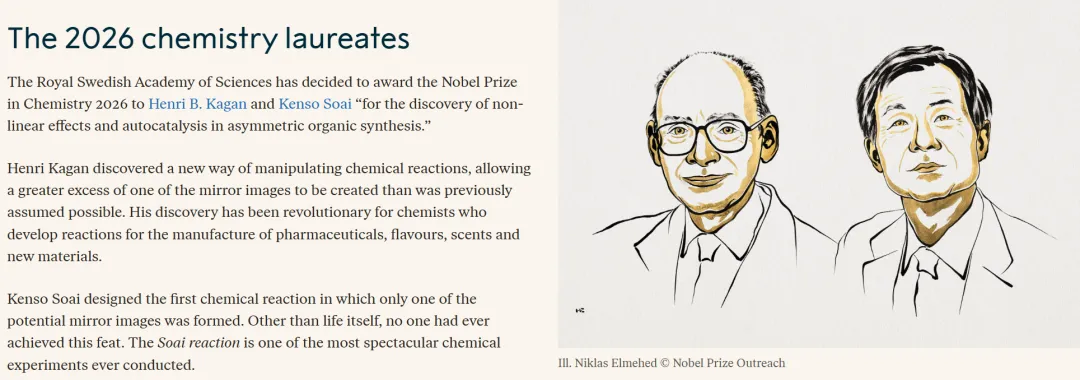
Henri Kagan discovered a new method of controlling chemical reactions that enabled the reaction to produce a type of mirror molecule at a higher rate than previously thought possible, i.e. to achieve a higher enantiomeric excess. This discovery revolutionized the field of chemistry, particularly driving the development of chemical reactions for the manufacture of drugs, perfumes, spices and new materials.
Kenso Soai designed the first chemical reaction capable of producing only one possible mirror molecule. In addition to the life system itself, this has never been achieved before. The Soai reaction is therefore considered one of the most remarkable chemical experiments ever undertaken.
Why does life have only one hand?
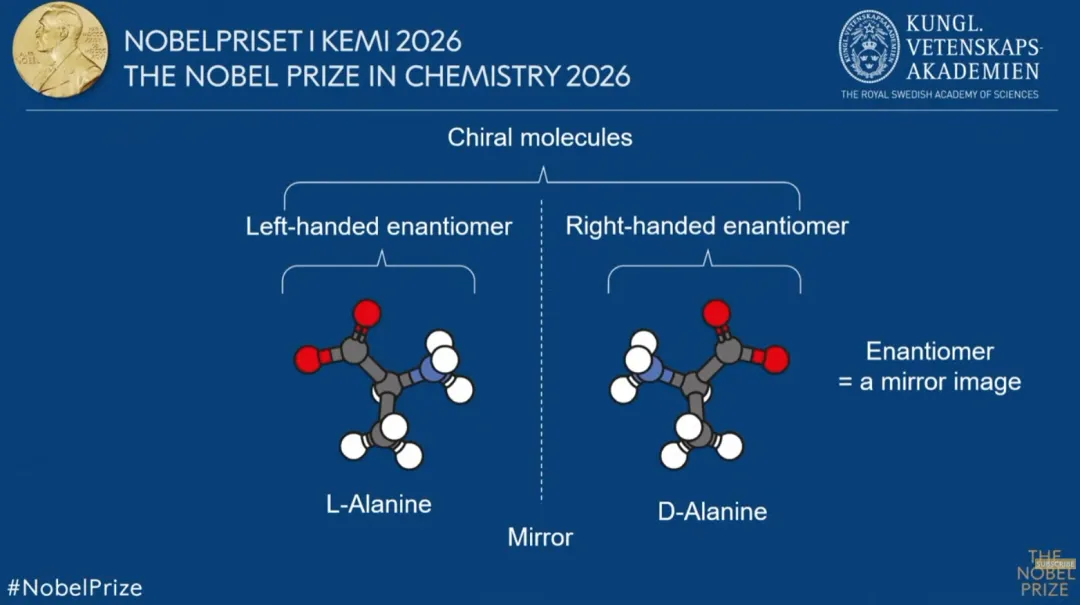
Like many molecules and human hands, there are two forms that mirror each other but cannot be reconciled, chemically called "manual". This is the case with amino acids, but almost only one of them makes up our body's proteins. This is called homochirality, which is derived from the Greek word "identical" and "hand".
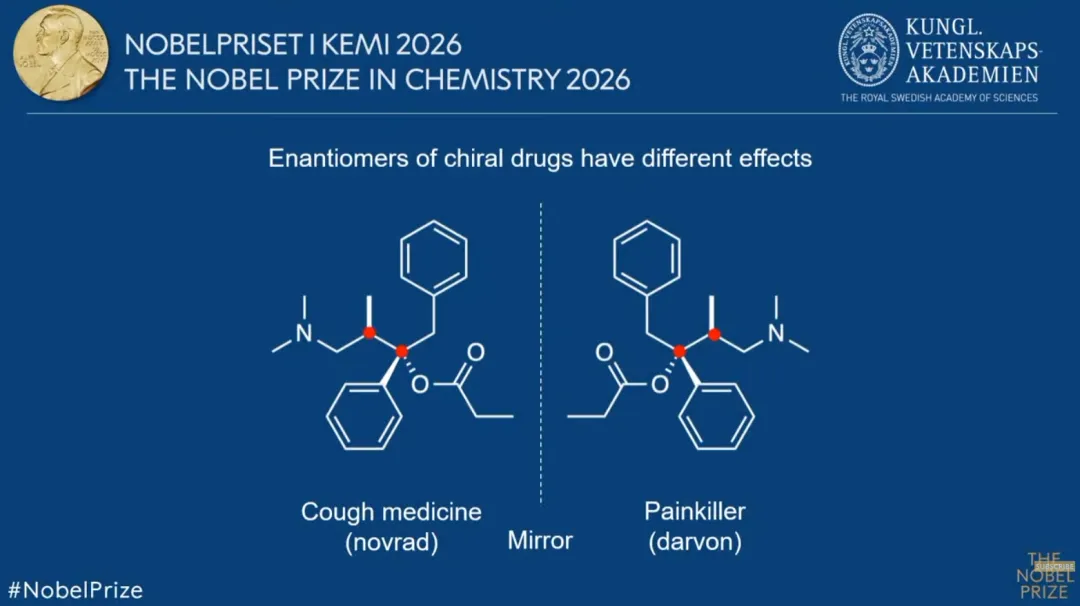
The problem is that the reaction of chemists in the test tube is almost always half-produced by two mirrors. Since Bassard's discovery of molecular manipulation in the mid-19th century, "where did the uniformity of life come from" has remained unresolved. It is not just a philosophical question: in drug development, often only one mirror molecule produces the expected effect, and the other may be ineffective or even harmful.
In 1953, the British physicist Charles Frank proposed a theoretical hypothesis that if the product of a reaction could catalyze the production of molecules "with their own hands" while suppressing the mirror molecules, the initial small deviation could be amplified one way or the other and eventually reversed.
In a press release, Heiner Linke, chairman of the Nobel Committee for Chemistry, said that Kagan's answer to the 100-year-old chemical puzzle of how homosexuality came about was "amazing".
Henri Kagan: 25 years of delay in recognition
Kagan was born in Boulogne-Billancourt, a western suburb of Paris. In 1954, he graduated from the Sorbonne University and the Paris Higher School of Chemistry, then studied for a doctorate at the Académie française under Jean Jacques and then under Alain Horeau.
In 1967, Kagan established his own research group at the Faculty of Medicine of the University of Paris, where he remained for most of his academic career, and was promoted to associate professor in 1973 and to professor in 1999. The archives of the Eleventh University of Paris were merged with those of the Université Paris-Saclay (IUF) in 2020 and now list him under the name Université Paris-Saclay.
Prior to receiving the Nobel Prize, Kagan was already a "textbook figure" in organic chemistry. In 1971, he reported a breakthrough in catalytic asymmetric synthesis: his design of the double helix coupler DIOP with a C2 symmetric structure, which later inspired a large number of analogous couplers that were widely used in actual catalytic processes. In 1980, his team found a method for preparing biphenyls in temperate conditions, a reagent often referred to directly in synthetic chemistry as the "Kagan reagent".
2001 was the most sophisticated year of Kagan's career. In January of that year, the Israel Wolf Foundation awarded the Wolf Prize for Chemistry simultaneously to Kagan and Barry Sharpless, on the grounds that the three individuals independently promoted the advancement of molecular hand synthesis. In October, the Nobel Prize in Chemistry was also awarded to asymmetric catalysis, but the winners were William Knowles and Sharpless, Kagan was not among them.
Kagan's name actually appeared in the Nobel Prize-winning official Cop material of that year: when introducing Knowles' work on asymmetrical calcination, the committee wrote that Horner, Kagan, Morrison and Bosnich etc. soon afterwards achieved similar results. This expression caused a great deal of discontent in the French chemistry community. French chemist Didier Astruc wrote a column in the Nobel Peace Prize, entitled "The Nobel Prize in Chemistry was stolen, and the Nobel Prize should be awarded to the first discoverer".
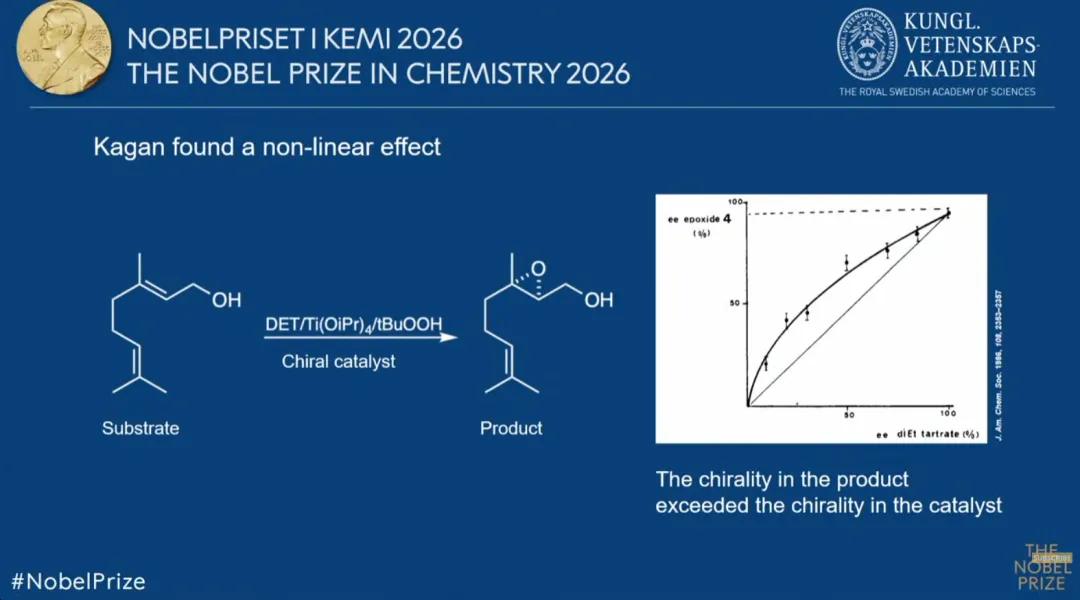
Twenty-five years later, Kagan's reason for winning the prize was not the subject of controversy that year, but another discovery he made in 1986. The dramatic finding was that the discovery was precisely the result of Sharpless's reaction. In a paper published that year in the Journal of the American Chemical Society (JACS), Kagan and collaborators such as Agami found that the optical purity of the product in the Sharpless asymmetric oxidation reaction was higher than the optical purity of the hand-held composite; the opposite was true in another hydrogen-catalyzed sulfur-oxide reaction.
According to common sense, the catalyst is "how pure" and the product is "how pure", and the two should be linearly related. Kagan notes that the reason for off-linearity is that the catalyst molecules bind to each other: combinations of homogenous and heterogenous combinations are different, and if the combinations of "left-hand mixtures" are not very active, it is equivalent to locking the impurities, while the remaining catalysts are more "pure".
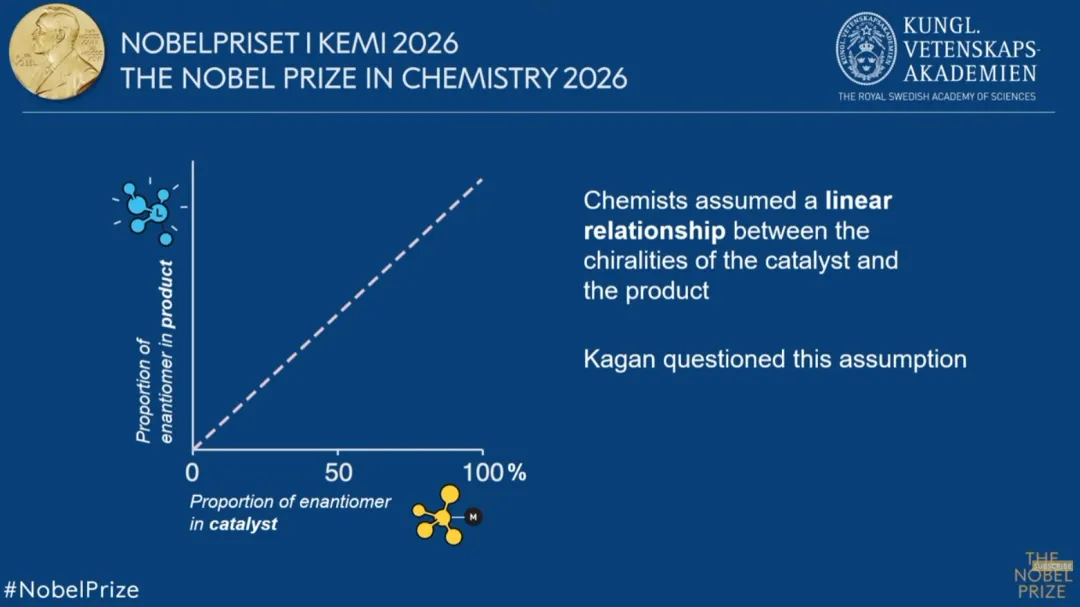
To this end, he established a mathematical model in which nonlinear effects became an independent field of study in chemistry and introduced the discussion of "asymmetric amplification" in the origin of life.
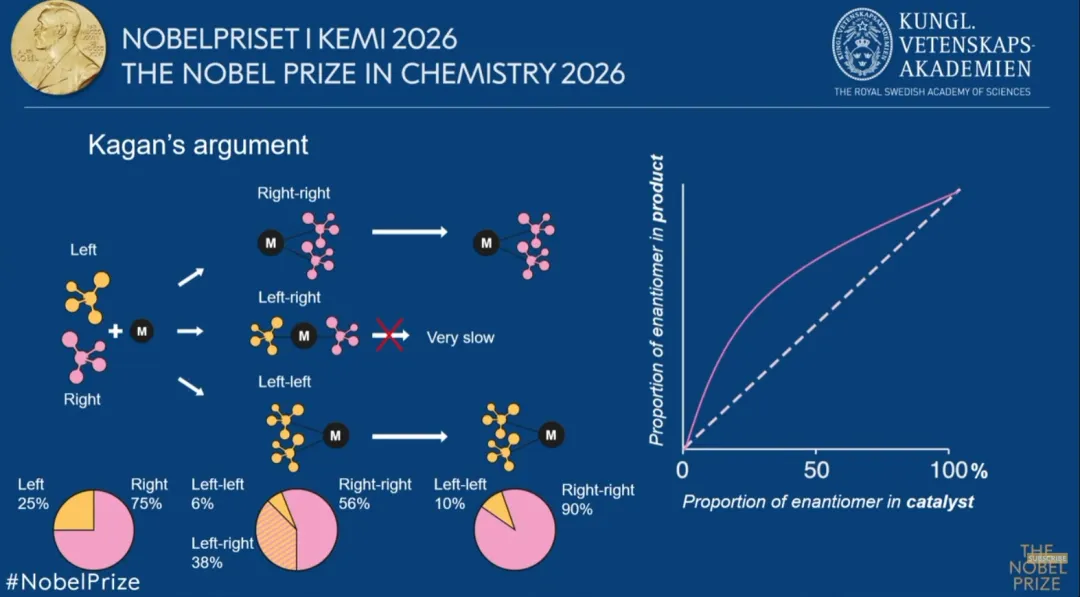
The vitality of this set of theories was subsequently well documented. The Kagan team predicted a more extreme scenario, the "superpositive nonlinear effect", in a 1994 paper; it was first observed in an experiment 26 years later, in 2020, by French chemist Stéphane Bellemin-Laponnaz and others.
Since then, Kagan has been honored with a handwriting medal in 1998, the first Nobel Peace Prize in 2002 and the Bower Prize for Scientific Achievement in 2005 from Franklin Institute. Franklin Institute's introduction states that after his retirement, Kagan is still active in lecturing around the world and enjoys mentoring young chemists. The French Chemical Society now names a doctoral thesis award in his name.
Constitution 3: A molecule that "copies itself"
If Kagan explains why "pure" catalysts can produce "purer" products, the Kagan constitution pushes this amplification to the extreme.
Teruaki Mukaiyama was born on May 3, 1950 in Anhui County, Japan, graduated from an affiliated high school at Hiroshima University in 1969, from the Department of Chemistry at Tokyo University of Physics in 1974, and earned a Ph.D. in Physics at Tokyo University in 1979. One of the authors specifically noted that Teruaki Mukaiyama was the second author of an early paper on the asymmetric addition of organic metal reagents in Mukaiyama.
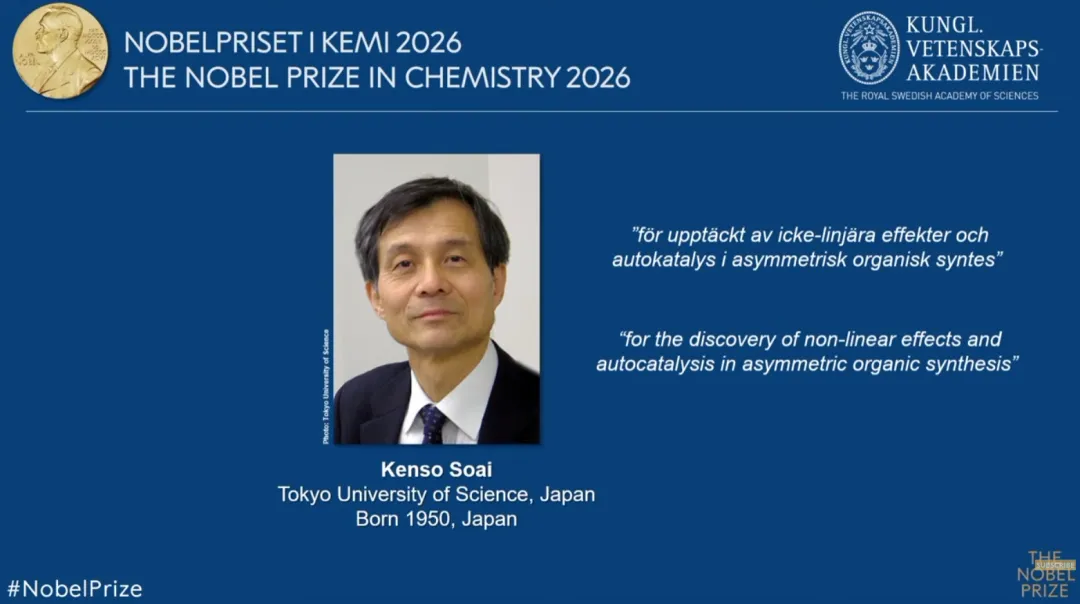
After completing his Ph.D., he went to the University of North Carolina at Chapel Hill in the United States, where he did post-doctoral work in stereochemistry under Ernest Eliel. In 1981, he returned to Japan and became a lecturer at Tokyo Institute of Technology, where he was promoted to associate professor in 1986 and professor in 1991.
In 1995, a team of three scientists published work on the soai reaction, which was later called the "soai reaction". In this reaction, the 5-methane and 2-hydroxychloroquine reactions produce a manual soanol, which itself can act as a catalyst, specifically catalyzing the production of molecules of the same hand. The more products, the more catalysts, the greater the manual advantage that rolls like a snowball.
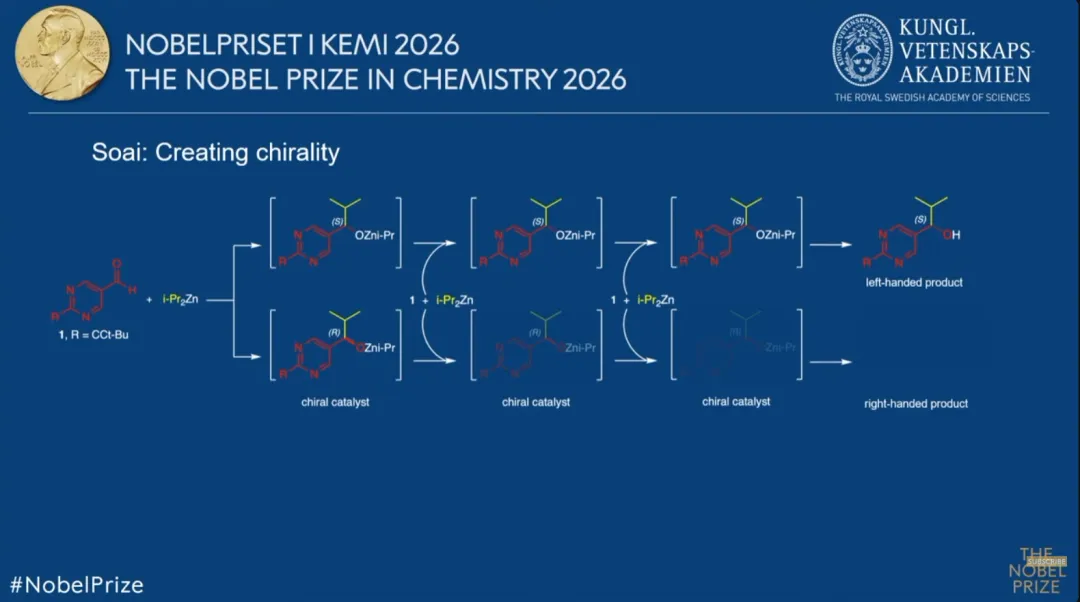
In an abstract from a study by a team at the University of Illinois, Scott Denmark, the authors write that even if the optical purity of the catalyst starts at less than five percentage points below 100,000 points, only three rounds of reactions can produce an almost single-handed product.
In 1995, he designed the first "possibly synthetic" reaction; in 2003, he actually did it, producing only one of two mirrors in the reaction. In the same year, the team published a paper in the Journal of Asymmetric Arsenic, with the headline pointing directly to the completion of asymmetric synthesis under the condition of "adding no handy substances". The Japanese Chemical Society also wrote in 2011 when it awarded him the 63rd Japan Chemical Society Prize that he had first achieved absolute asymmetric synthesis without the use of handy sources. In subsequent experiments, different batches of reactions were "reversed to one side" respectively, but eventually reversed left-handed or right-handed, between batches, which is a typical absence of spontaneous self-development.
The team also used this reaction to test various hypotheses about man-made origins, such as whether quartz crystals or round polarized light could provide the initial point of asymmetry.
However, the fusion reaction has not completely closed the problem. Its mechanism has been debated continuously since its 1995 report. An article in the June 2022 Chemistry Review is still discussing "one reaction, two mechanisms?" In addition, such an organic fusion reaction cannot be carried out in the water phase, so it is unlikely that it was the reaction that actually occurred on primordial Earth, and the search for similar reactions closer to the previous life environment is still an open topic.
He is a recipient of the 2005 Handsome Medal, the 2012 Purple Heart Medal, the 2023 Medal of Honor and the 2025 Japan Baccalaureate Award. He has been a visiting professor at the Paris Higher School of Physical and Chemical Engineering (2001), the University of Kyushu (2005), the University of Taneda (2007 to 2010), the University of Strasbourg (2008) and the University of Jilin (2010 to 2015).
Two people, one line
Taking the two winners together, it turns out that their work is biting together. Before the fusion reaction, Kagan had proposed the concept of nonlinear effects, which is considered one of the important theoretical premises for the emergence of the fusion reaction. Later, when explaining why the fusion reaction is so strongly amplified, Donna Blackmond, a chemist at Scripps Institution in the United States, first borrowed Kagan's ML2 model and inferred that the catalysts that actually work are homogeneous polymers.
The trajectories of the two also intersect. Kagan received the Handmade Medal in 1998, and Constitus III received the same award seven years later; Constitus III received the same award in 2001, the same year that Kagan was a visiting professor in Paris.
It is noteworthy that the language of the Nobel Committee is quite restrained: they say that we now know how homosexuality "can" emerge, rather than claiming that life originated in this way. The prize is primarily a confirmation of a chemical mechanism, but also provides the basis for highly selective synthetic pathways in the field of pharmaceuticals.
According to Chemistry World's pre-release statistics, the Nobel Prize in Chemistry has been awarded 117 times and 200 times. The prize for each prize has been increased to 12 million Swedish kronor this year. Kagan, 95, is likely to become the second oldest winner in the history of the prize after John Goodenough, who won in 2019 at the age of 97.
Twenty-five years ago, the French chemistry community disliked Kagan; twenty-five years later, he was on the podium with another discovery. This may also be a sign of a nonlinear effect: an individual's academic influence is not always proportional to the outcome of a year's selection.