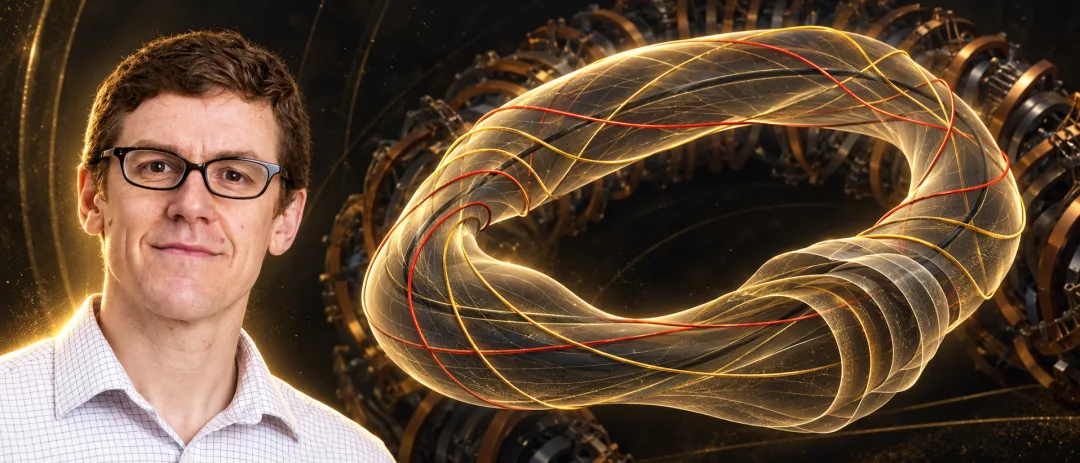
It's the first time in the history of the world.
The GPT-6 Astra solved a 59-year-old nuclear fusion problem in 20 minutes and 34 seconds.
The physicist who asked the question just blew it at the end of the cue:
You've solved a lot of the problem of open schooling, so I know you can do it if you stick with it!
Then, ChatGPT came back, an exact explanation that no one had written for 59 years.

Astra's first family of solutions: a layer of magnetic surfaces fused together, and the two red and yellow lines are magnetic lines
Recently, it exploded on X.
A Kyoto University graduate student in nuclear fusion commented that the era of AI and human discovery of new science has really begun!

This is a conjecture left by plasma physicist Harold Grad in 1967.
He also claimed that without symmetry, there would be no smooth three-dimensional plasma balance.
The path of the simulator in nuclear fusion has been suspended for 59 years.
In late September, just a day after the first two papers were published, it was overturned together. In this tribal contradiction, both tribes were found by Astra.
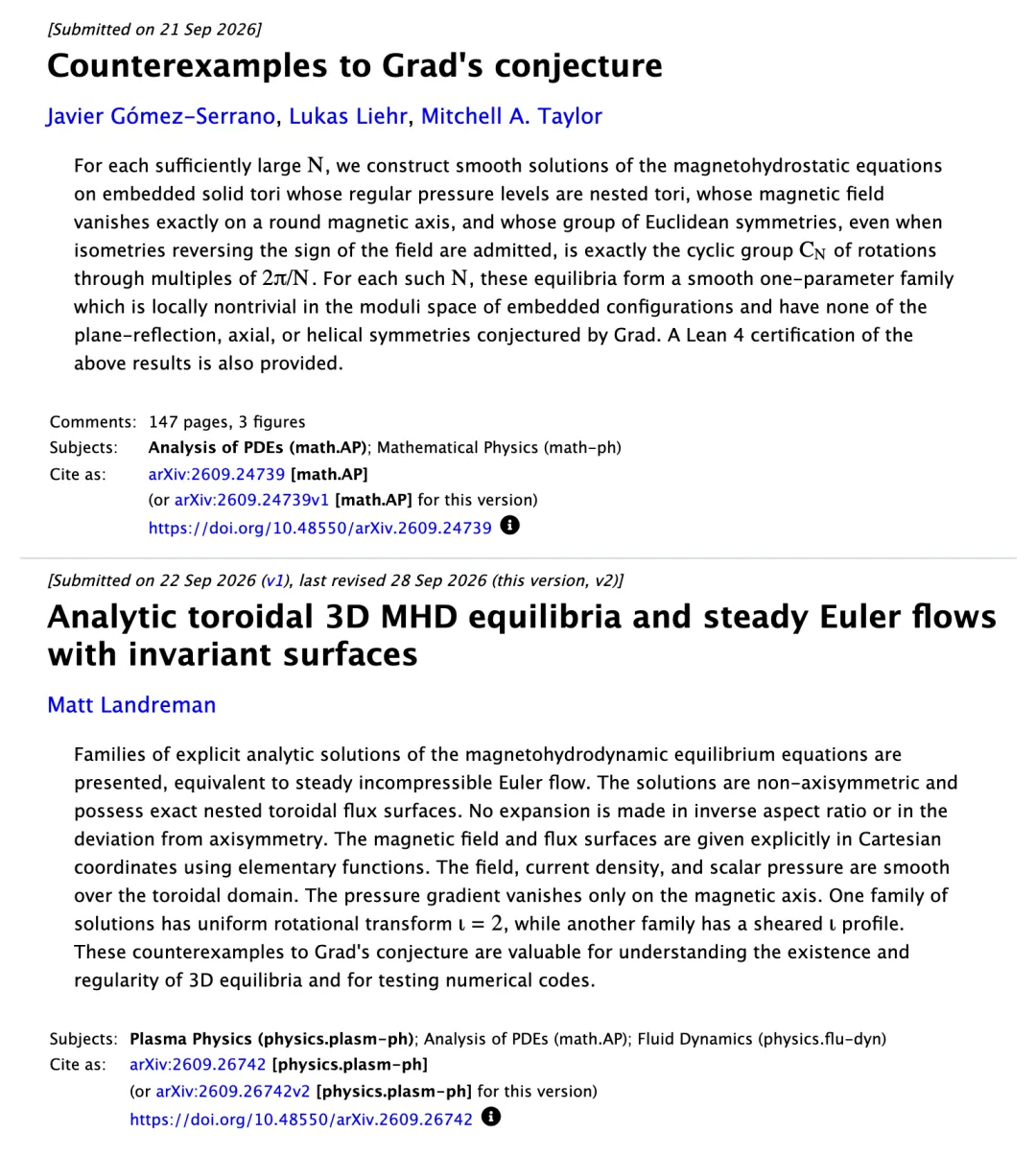
Two days later, Astra handed over a 59-year-old unwritten bi-ethnic solution.
At 6:44 a.m. on September 10, Matt Landreman, a plasma physicist at the University of Maryland, sent a tip to the GPT-6 Astra Pro.

What he wanted was for Astra to design a magnetic lathe that would close the plasma, and that would have to be asymmetrical.
The magnetic field must have a layered layer of embedded magnetic surfaces, like onions; the scattering must be zero, i.e. the magnetic field cannot emerge or disappear in space; when the magnetic field travels along the doughnut, it must also rotate around the intersecting circle, like a pear, and the number of spins, which physicists call "spin transformation", is written as yi.
Finally, the entire magnetic shell must also satisfy the MHD (Magnetic Fluid Mechanics) force balance, which compensates for the pressure of the plasma to the shell and the force of the magnetic field.
He also noted in particular that i should not be an integer, but this is not a hard requirement.
He even gave three ideas for making a rotational shift, for twisting the magnetic axis, for turning the intersection, or for running a current along the magnetic axis.
Writing the last two sentences, he changed his tone, like a drummer to a late-night doctoral student.
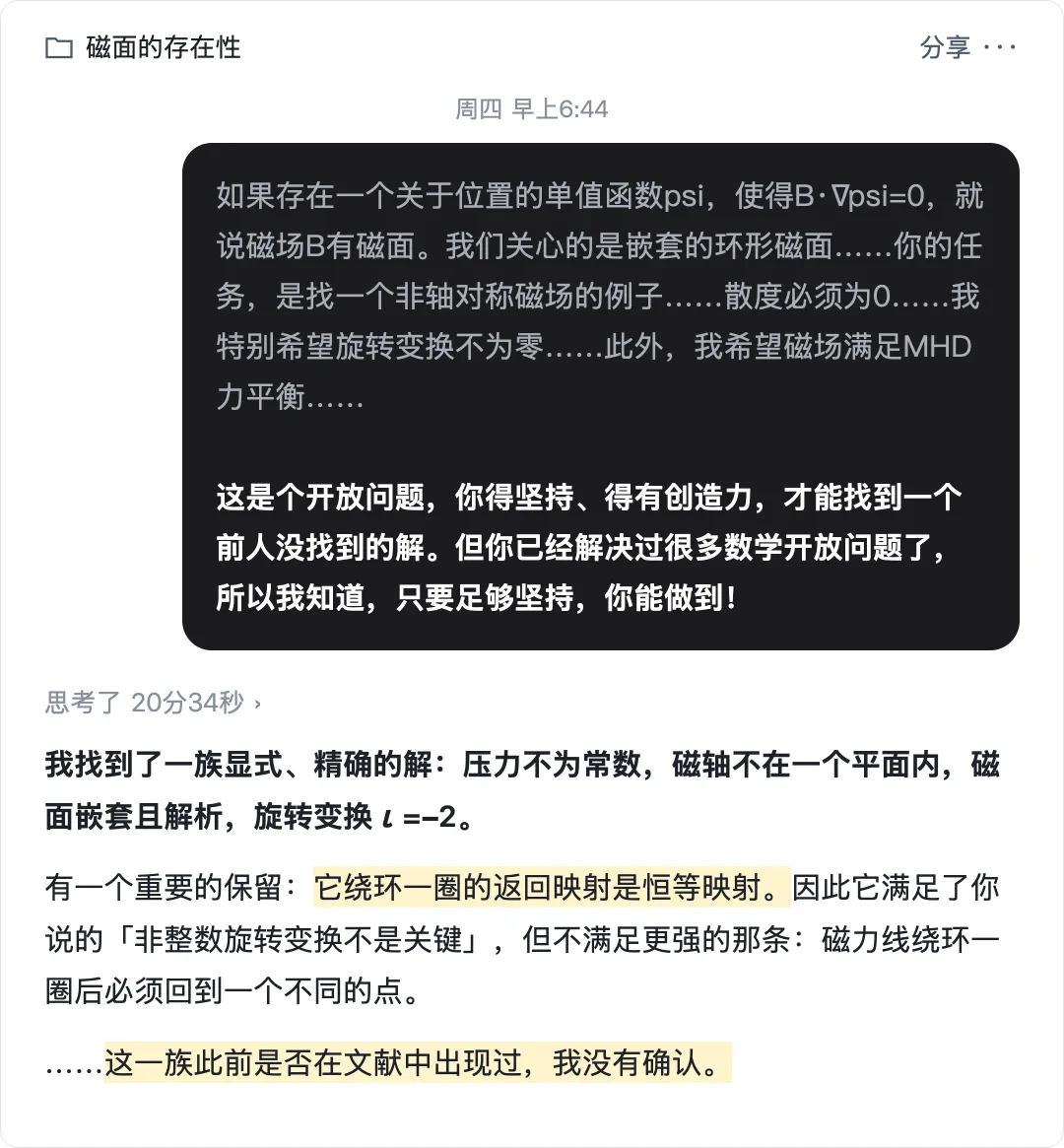
The first sentence of Astra's turnaround is:
I found an explicit, precise answer to the question.
The hardness conditions of Landreman are satisfied.
Pressure is not a constant, it varies from one layer to another; a layer of embedded magnetic surfaces can also be written with precise formulas.
Right in the middle, the root of the magnetic axis is tilted downward, a non-plane curve; the doughnut circle is rounded, with different shapes and no axis symmetry.
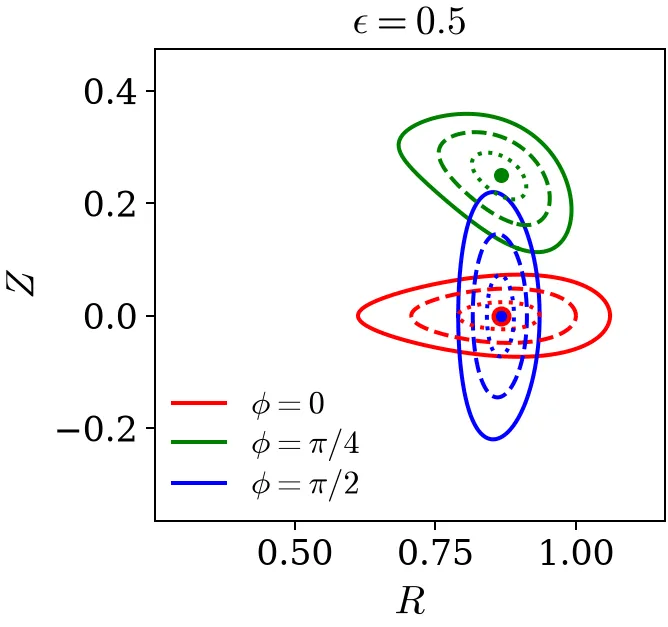
Cut off the first triangle, the three positions have different cross-sectional shapes, and the magnetic axis moves up and down.
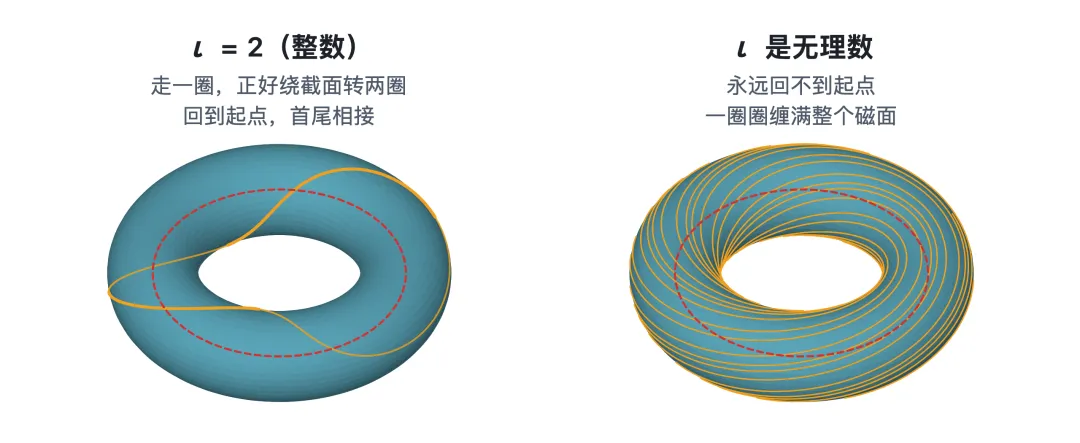
Then, it actively switches the shortboard. This family of spin transformations i is an integer, the magnetic line goes around the doughnut doughnut a circle, turns the two whole circles around the intersection, and then returns to the starting point, closing at the end.
In its own words, the return mapping around a circle is a constant mapping.
Landreman had said in his introduction that x is not an integer but a fraction, so the family solved the problem. But what he wanted more in his mind was that x is an irrational number, the magnetic line never returns to the starting point and finally fills a circle and a circle on the magnetic surface.
At 4:05 p.m. the next day, Landreman took the family away from the annex, this time taking the addition.
In this case, i must be non-integer, preferably irrational, so that the magnetic lines never intersect at the end.
This time, Astra thought for 33 minutes and 37 seconds, and the first round came back with the phrase "didn't do it".
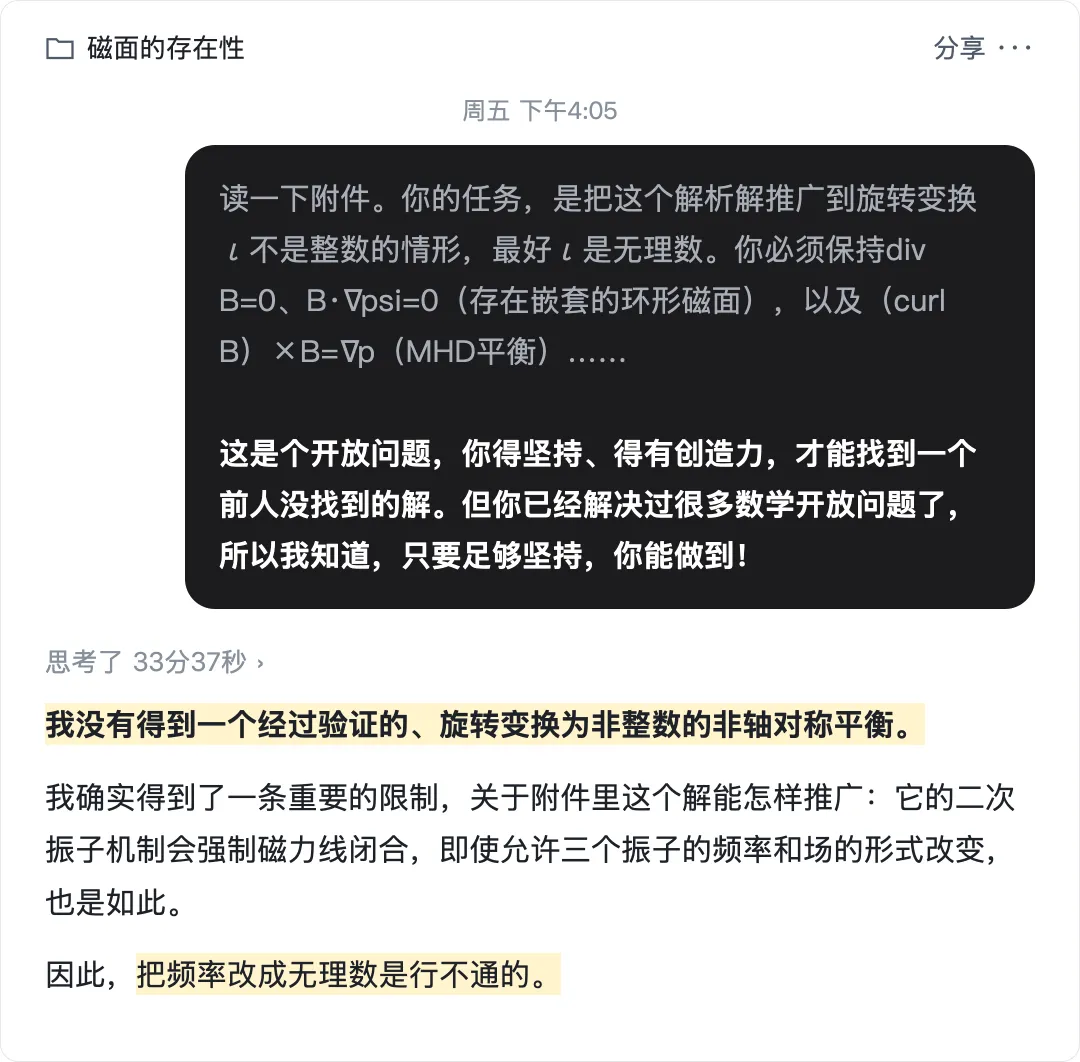
But it didn't come back empty-handed, it proved a limitation.
The first family of solutions is a set of "secondary axes" constructed where the magnetic line moves in three directions along x, y, z, like a spring axis with three frequencies of 1, 1, 2, respectively.
Regardless of the frequency and parameters, these three frequencies are locked into integers, i is always an integer, and the magnetic line finally closes.
That is to say, on the basis of first-generation understanding, modification cannot proceed from the root.
In the same dialogue, it then changed a set of constructions and delivered a second tribal solution.
This time, with changes in the magnetic field, physicists have called it magnetic shear, and almost every layer of the magnetic field has an irrational number.
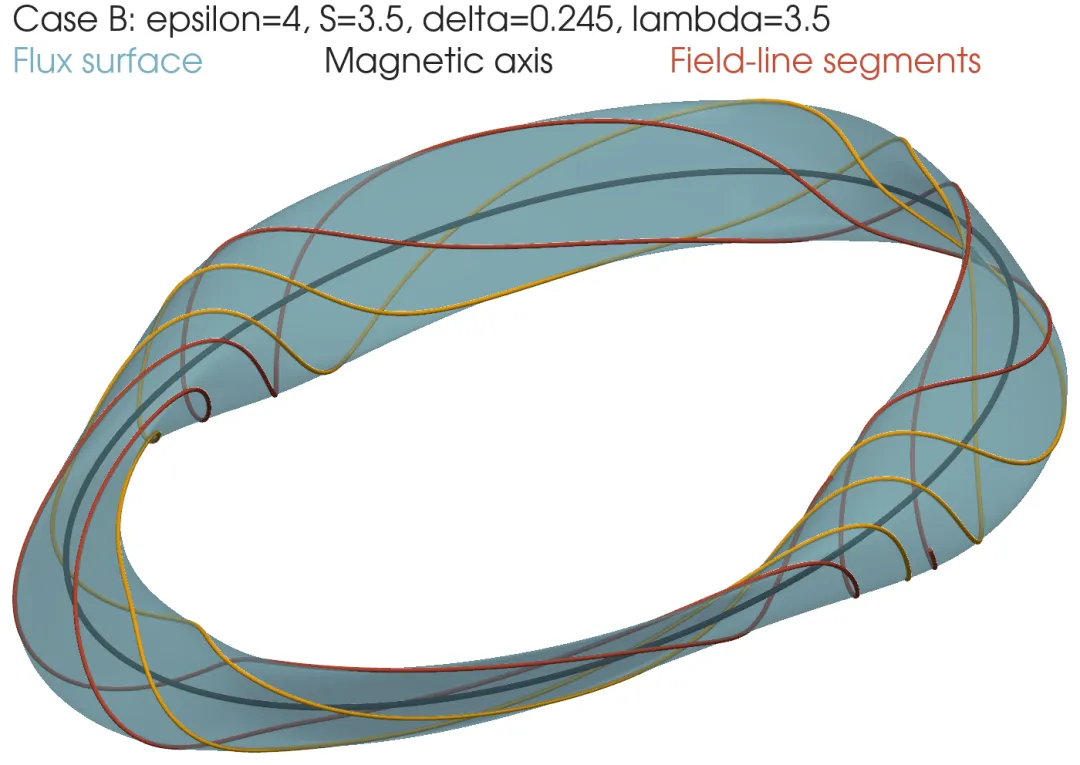
Second tribe: the magnetic side is twisted, and the red and yellow are the magnetic lines
Before rolling, it also performed its own test calculations, switching the equation in at 1202 points, checking for errors with 64-bit automated differential analysis, and converting it into a four-stage finite differential independent verification.
At 8:27 p.m., Landreman asked for two more details.
The first is that the magnetic axis is not a flat curve; the second is that the vacuum rotation transform is not non-zero, that is, that only the outer wires depend on the plasma's own current, and the magnetic wire will not rotate around the intersection.
After 11 minutes, Astra gave her answer.
The magnetic axis lies on a plane and is elliptical; the vacuum rotation varies slightly, but it is not really zero.
In two days, Astra surrendered the two tribes. The remaining ten days were human lives.
He used the sympathetic equilibrium solver DESC, solved the two families once more, and pushed the equations one by one with SymPy and Mathematica.
On 22 September, the paper was posted on arXiv, beginning with a thank you note:
These solutions were discovered using the AI model GPT-6 Astra Pro, which also drafted part of the paper. All equations were manually confirmed by the authors.

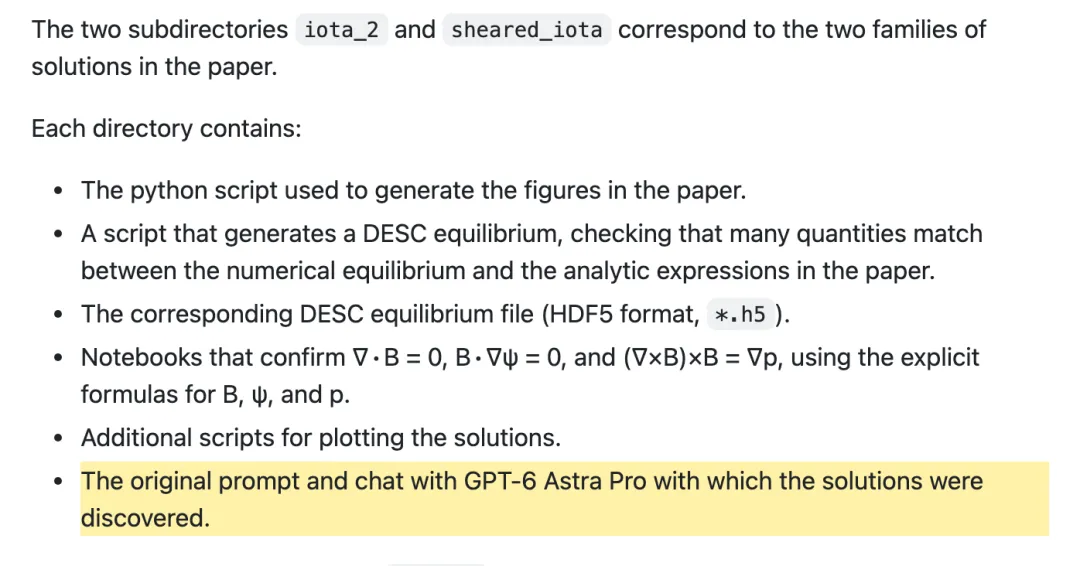
He also exported the three conversations into a PDF, along with the verification scripts, and put them together in the GitHub repository.
It is not uncommon for this type of paper to be open to the public, even if the original suggestion is not.
Grad's assertion that the simulator has been suspended for 59 years
Nuclear fusion is about putting hundreds of billions of degrees of plasma in a doughnut-shaped magnetic cage.
The ideal magnetic coating is a set of layers of embedded magnetic surfaces, like onions. Magnetic wires are attached to each of those layers of magnetic surfaces around a circle, with the pressure dropping down a layer from the center to the outside.
The force exerted by the proton is offset by the magnetic field, which physicists call the MHD equilibrium.
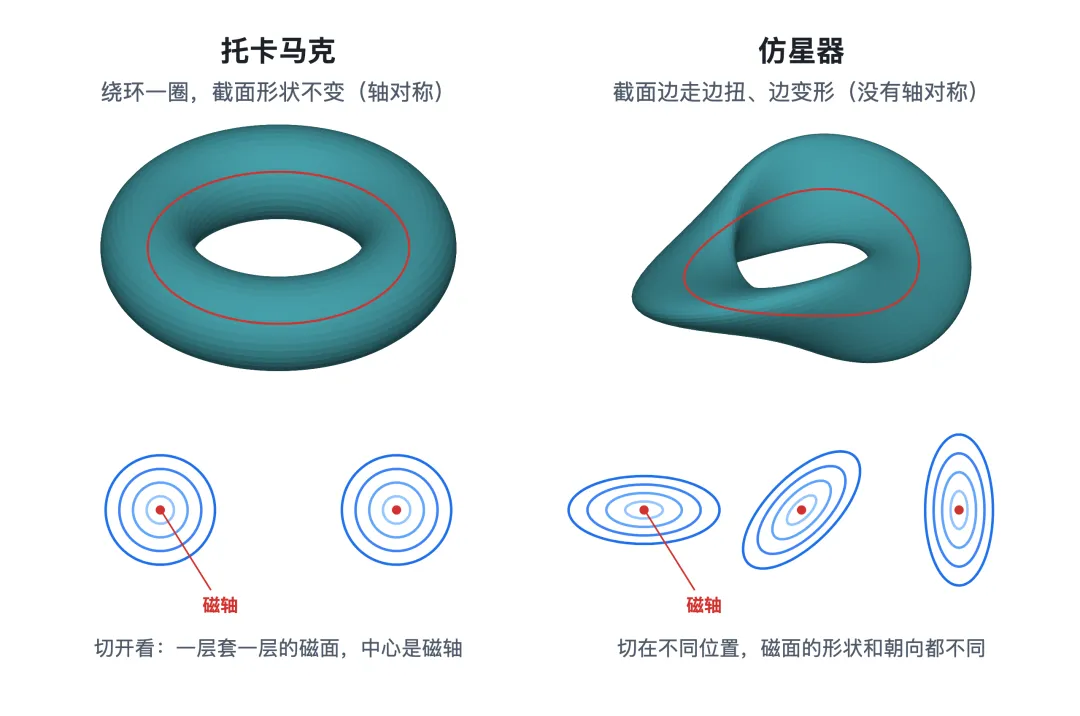
Tokamak (e.g. ITER and EAST in China) is axially symmetrical, rounded in a circle, with an unchanging cross-sectional shape. This equilibrium results in a two-dimensional Grad-Shafranov equation, understood even decades ago.
Grad, named after the equation, is the one who later came up with the idea.
Star simulators (such as the German Wendelstein 7-X) take a different path, using a twisted wire loop to create a magnetic field that is deliberately asymmetrical.
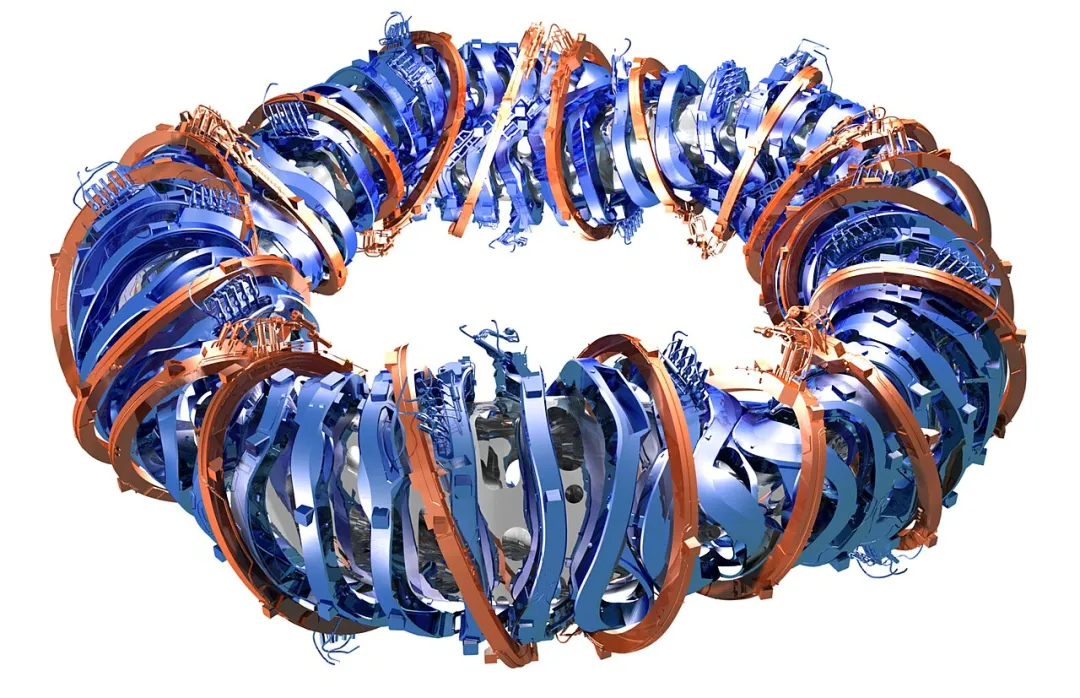
Wendelstein's 7-X magnet, the blue one, is a non-flat circle that twists and turns.
The problem is this asymmetry.
In 1967, Harold Grad of the Courant Institute at New York University published a paper in the journal Physics of Fluids, writing a judgment:
We think it's unlikely that there will be a general type of slippery pressure ring equilibrium.
In 1985, he took a step further, claiming that there were no smoothly dependent solutions except for symmetry, i.e. that asymmetric solutions existed by chance and could only be isolated zeroes.
The paper's title refers to the theory and application of the simple ring-shaped plasma balance of non-existent ions.
That's the equivalent of saying that the perfect magnetic field you're trying to create, strictly speaking, may not exist at all.
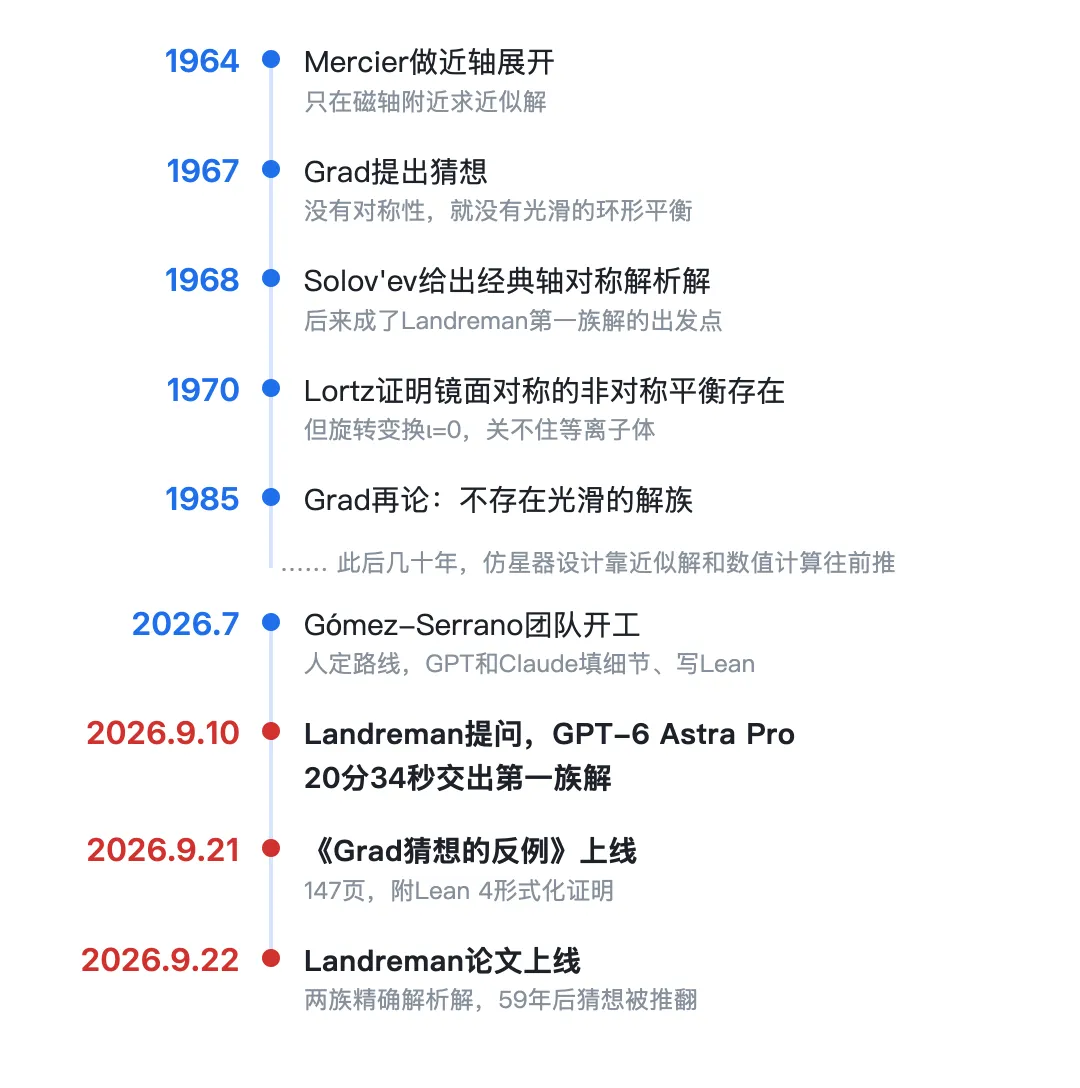
In the decades that followed, simulators were similarly designed, built, and relied on approximate solutions and computational numerical calculations. The equilibrium that was calculated, whether it was real or hypothetical, was that no one could pack a ticket.
There are two main categories from recent attempts to answer rigorously.
One class is near-axis displacement, where the approximate solution is calculated only near the magnetic axis and not far from the magnetic axis.
The other category is the 1970 proof by physicist Lortz, that a symmetrical asymmetrical equilibrium does exist, but that the spin transformation i is zero, and that the magnetic line does not rotate around the intersection and cannot close the proton; and that he only proves that it exists without being able to explain it.
And the Landraman tribes have filled in the gaps.
They are rigorously formed throughout the doughnut, not just near the magnetic axis; i is not zero, the magnetic lines actually rotate at the intersection; and the formula can be written directly on paper.
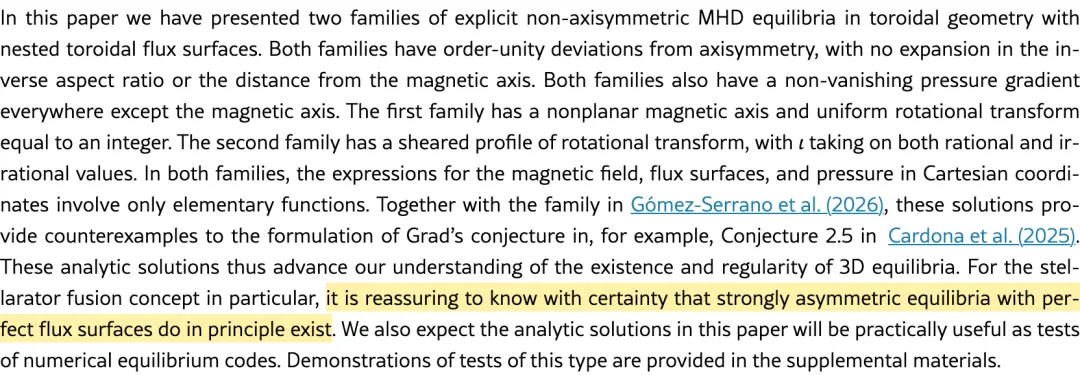
Magnetic fields, magnetic surfaces and pressures are all written with primary functions, which are the most basic formulas such as square roots, triangle functions. The entire region is smooth, with the pressure on the magnetic axis being the highest, and the pressure gradient is zero on the magnetic axis.
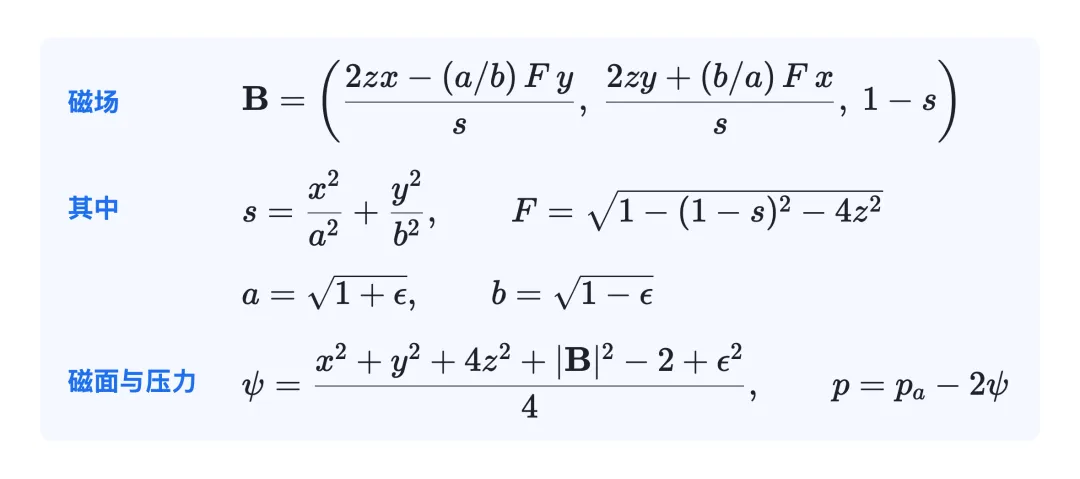
Landreman himself wrote at the end of the paper:
It's reassuring to know that this strongly asymmetrical, perfectly balanced magnetic field exists as a principle for stellar fusion.
The next day, mathematicians with GPT and Claude overturned it.
Just the day before Landreman's paper was published, on 21 September, another paper was posted with a straightforward title, a counter-example of what J.Grad had guessed.
The authors are Javier Gómez-Serrano from Brown University, Mitchell Taylor from Oxford University and Lukas Liehr from the University of Bahrain in Israel.
Gómez-Serrano has previously worked with DeepMind to find oddities in fluid equations using AI, the familiar face of the AI mathematical circle.
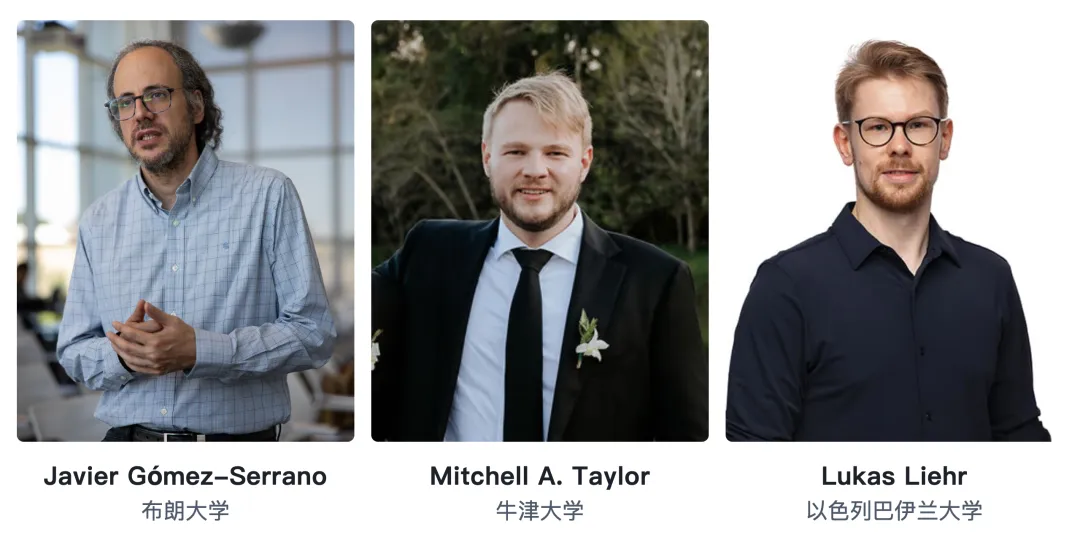
They followed a purely mathematical path, with the main tool being the Nash-Moser iteration of hardcore analysis, a 147-page paper.
The equilibrium they created is the size of a flower ring of N. The center axis is rotated at 360° N, and the shape is reconnected once, without any other symmetry. Mathematically, this is called the symmetric group exactly as the cyclic group C_N, where N can take any sufficiently large integer.
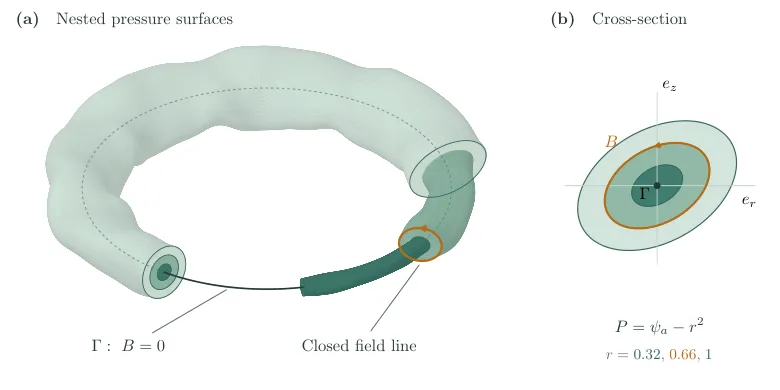
The balance the Gómez-Serrano team constructed: the pressure side of the nest, a closed magnetic line and a magnetic shaft
Grad's judgment at the time was that the smooth balance had to be at least the same as the axis symmetry, the mirror symmetry, the spiral symmetry.
More importantly, these balances can be continuously transformed by a single parameter to form a whole family. In 1985, Grad asserted that "there is no smooth dissolution family", which was also overturned.
In addition, the main results were accompanied by a set of Lean 4 formalized proofs.
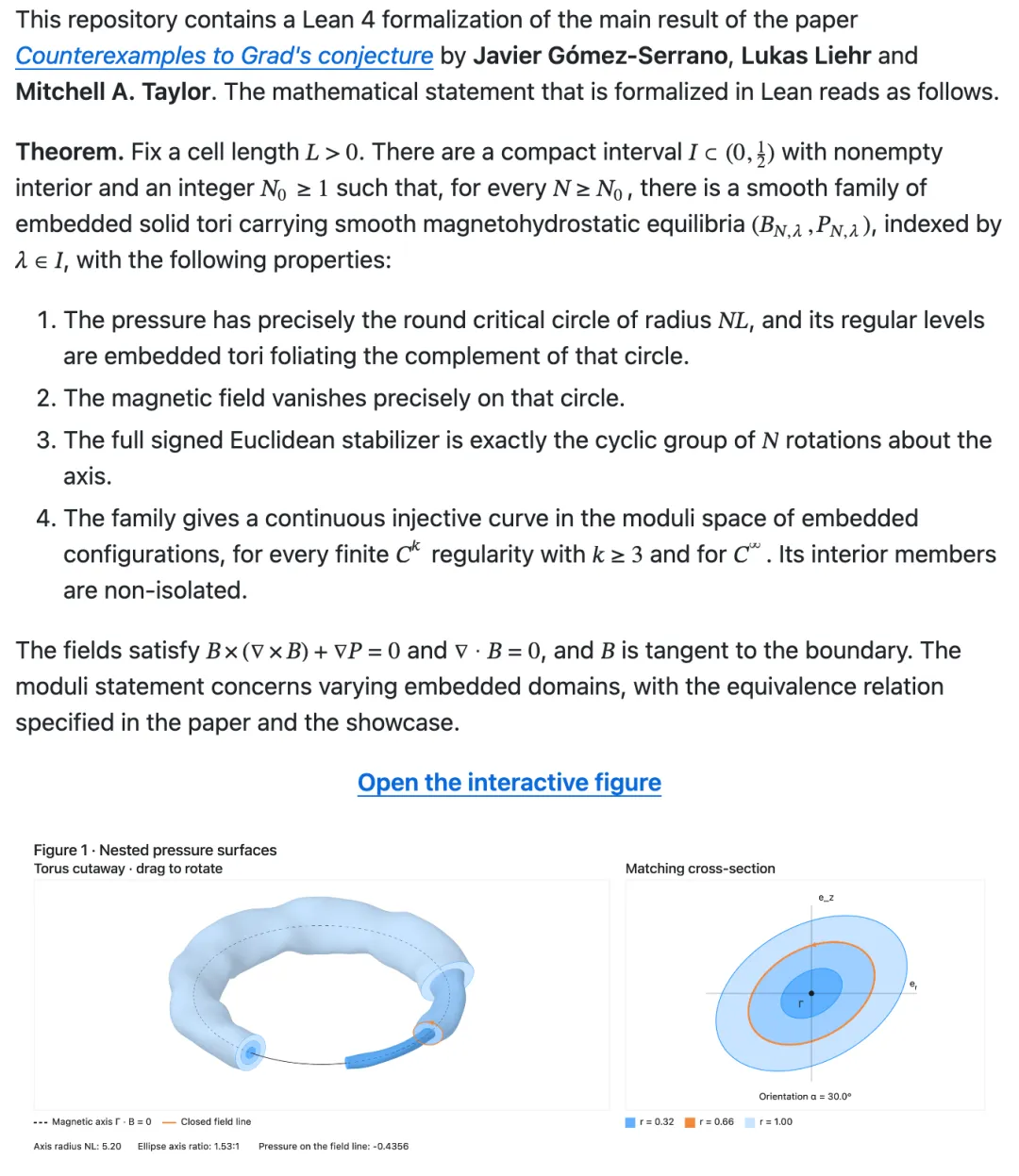
The first page of the Lean Warehouse, with the main principles of formalization at the top, and the interaction chart below.
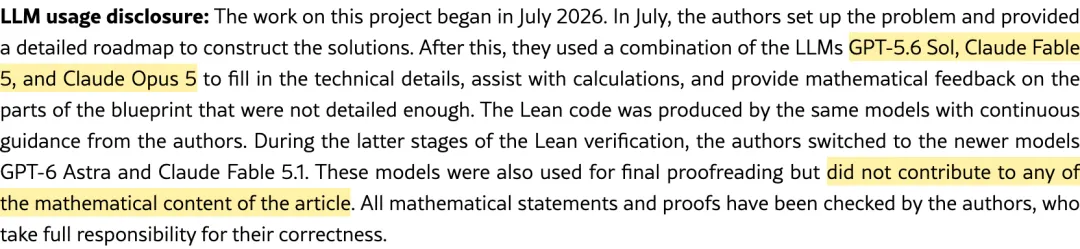
The paper contains a special introduction to how the 147 pages were written.
The project started in July. The three authors first put together the problems themselves, drew a detailed construction roadmap, and handed over the remaining details to the larger model.
GPT-5.6 Sol, Claude Fable 5 and Claude Opus 5 are on the line, where the roadmap is not well written, where they fill in the technical details, help calculate, pick up the mathematical troubles.
By the end of Lean's verification, they had replaced the updated GPT-6 Astra and Claude Fable 5.1 with final calibration.
In this way, a 59-year-old puzzle was overturned by two papers over the next week with the help of AI.
The next to be overthrown, probably in physics.
A month ago, OpenAI announced that it had run 88 hours with 10,000 Agents, solving the thousand-year puzzle of the Navi-Stokes equation.
This time, it was just a physicist, a dialog box and 20 minutes.
Landreman has also made all the suggestions public and anyone can ask questions.
The paper ran for more than a week, and Przemek Chojecki, a mathematician in AI mathematics, threw the results to GPT-6 Astra and Opus 5.5, and dug up more counterexamples.
These new solutions have not yet been validated by Lean and peer-reviewed. However, as soon as the tribe's findings were made public, they were already being digged down with AI.
Next, more and more physicists, like Landreman, will hang decades-old problems in their drawers and throw them away.AI。
This time, it's nuclear fusion. The next time, it could be materials, objects, or any of the equations that have been roughly solved over decades.