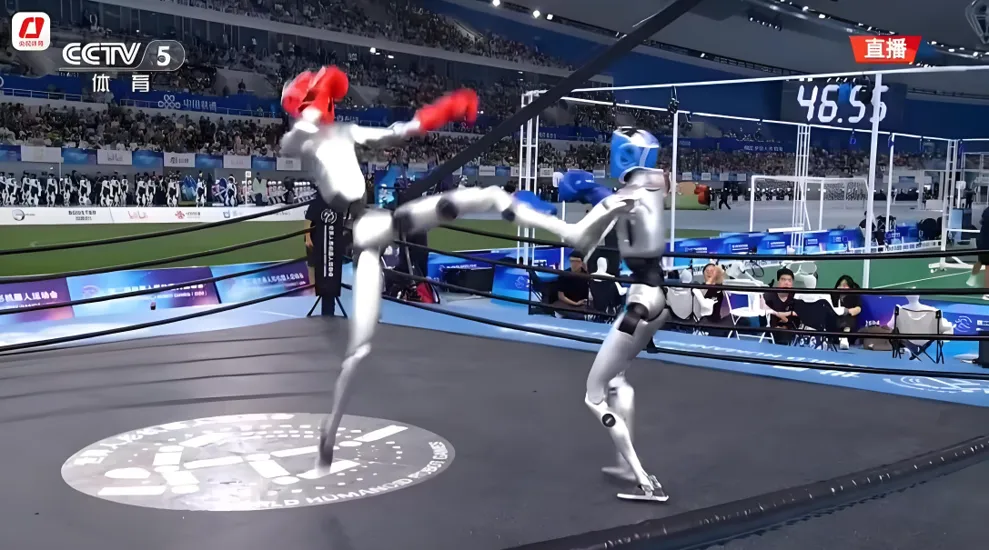
“ The iPhone moment in the robotics industry is already on the racetrack.
In 2026, for example, Supermen of Glory Lightning, U-tree, did not actually hold a separate conference, but simply put it into a robot competition, making its public debut and quickly gaining popularity all over the internet. According to the Robot Workshop's incomplete statistics, from April to the end of September, the robot competition spanned five major cities, forming five racing systems, with a total of more than 2,200 robots participating.
In April, the world's first human-shaped robotic half marathon was held in Beijing, where more than 100 robotic teams competed against 120,000 human runners, with the champion robot running the full distance in 50 minutes and 26 seconds.
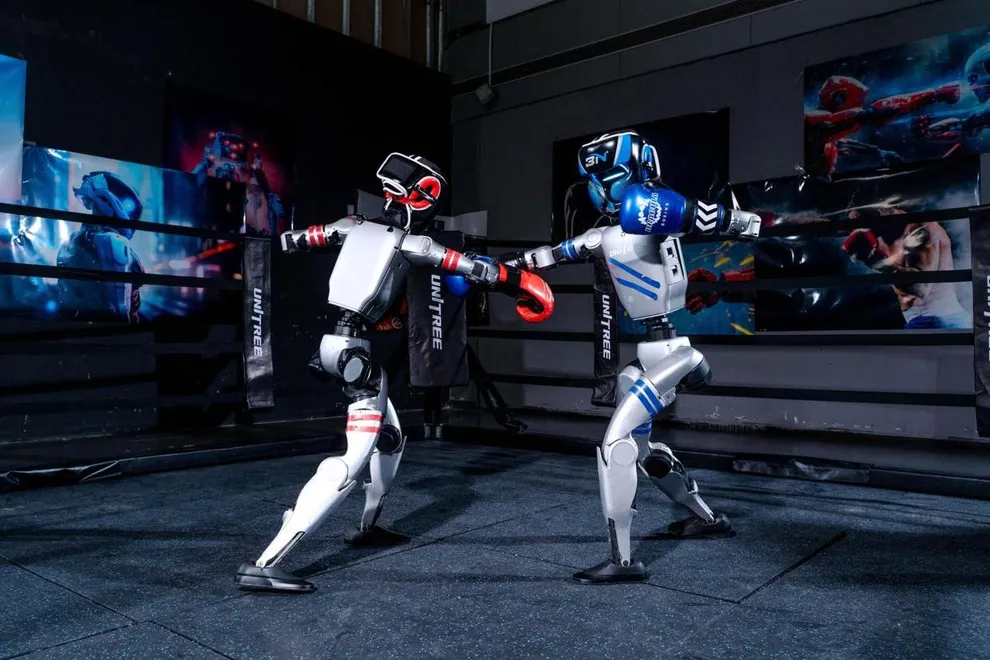
In July, the world's first human-shaped robot wrestling league, URKL, was unveiled in Shenzhen. The robot is 1.73 meters tall, weighs 75 kilograms, and the champion prize is a pure gold belt, with a prize pool of 14 million yuan.
In August, at the National Speed Skating Hall in Beijing's Sunrise District, at the 2nd World Female Robot Games, 2056 robots competed in the same event, expanding the event from its first 19 to 50.
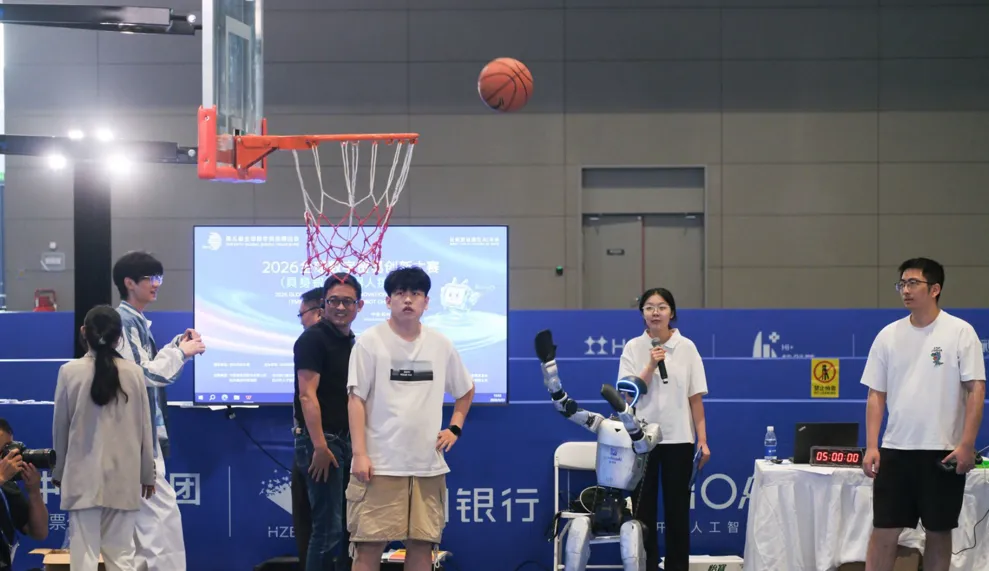
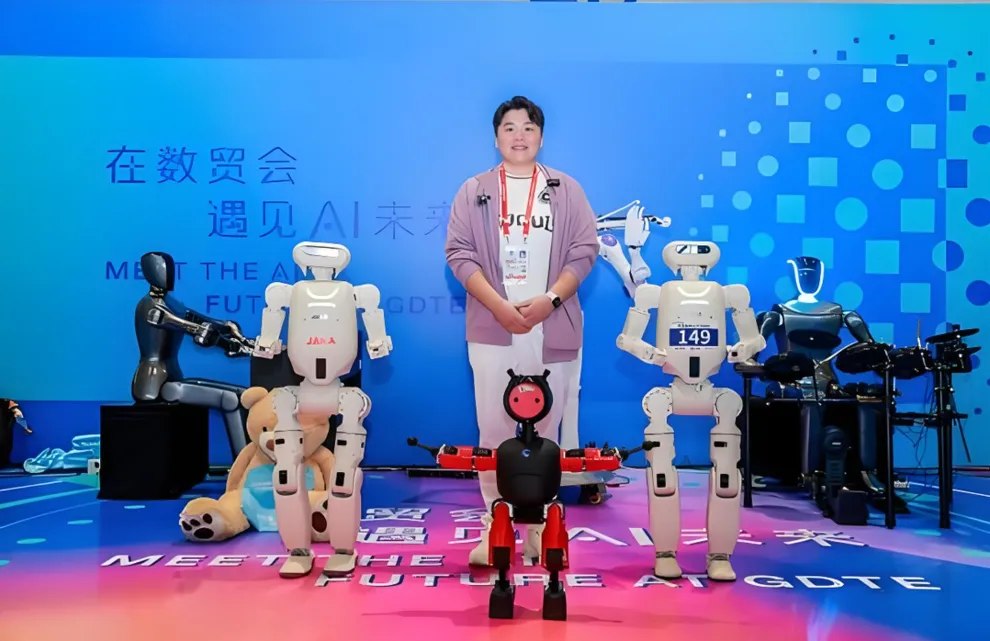
On 23 September, at the 2026 Global Digital Trade Innovation Challenge in Hangzhou, more than a hundred teams from universities and tech companies participated, setting up 14 official events, such as the sprint, football, point shooting, 6-hour backstroke, and pioneering the field of manned spaceflight.
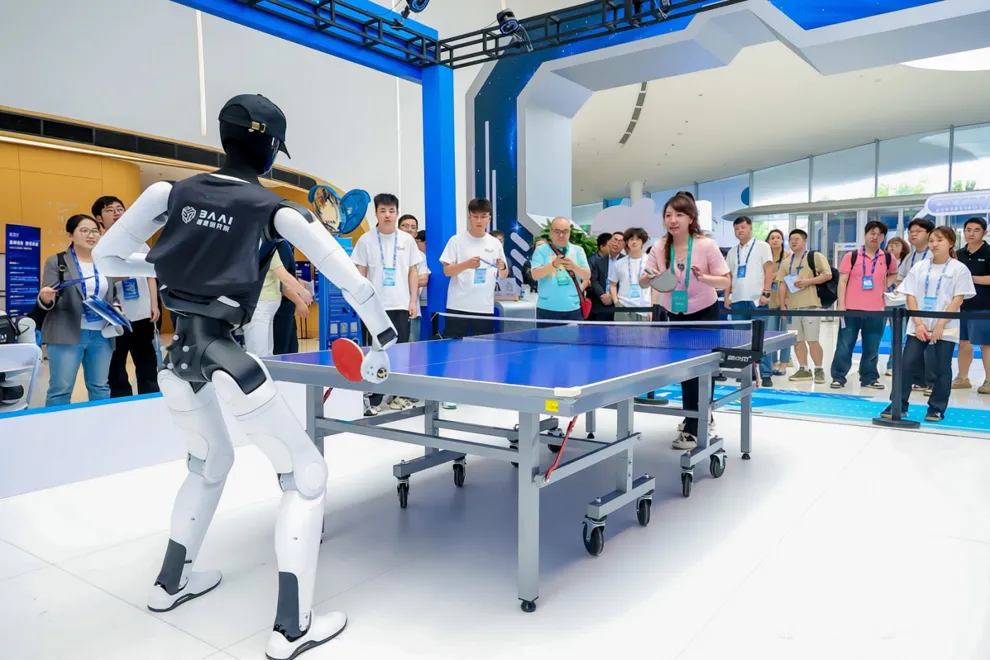
On September 29, the first Chongqing Robotics Games were held in Chongqing, Chongqing. Thirty robots were on the same deck, and ping-pong robots could hit more than 800 consecutive times.
The five incidents, which began to move people's eyes away from factories, from homes, from logistics warehouses, saw a lesser-discussed fact. It was suddenly discovered that the real tarmac of the robotics industry may have first appeared in stadiums, theme parks, and city squares.
More competitions, more prizes, more developers, and more robots are starting to make the iPhone moment real-time.
01.
The three sets of literary journeys suddenly became the biggest racetrack ever.
The landing list of China's robotics industry, which originally revolved around two scenarios. The industrial scene was factory, warehouse, electrical inspection. The commercial scene was guided, welcoming, cleaning.
Both scenes have run out of real orders in the last two years. Recently, news broke that a cleaning robot in Hangzhou collectively took 500 million yuan in hand orders between 2024 and 2026, and more than 100 were shipped to public toilets.
But both industrial and commercial scenarios are facing the same dilemma in 2026: factory demands for stability, household demands for safety and price, and both scenarios are unfriendly to a leading robot enterprise that has not yet mass-produced.
A robot company sells a robot for 500,000 yuan to a factory, and the factory has to settle the bill. A robot for 500,000 yuan, back in this five-year cycle, is equivalent to buying a long-term debt.
The market for home robots is more difficult. For a Chinese family, tens of thousands of yuan of humanoid robots are not consumption, they are decision making. The decision cycle is long, the repurchase rate is low, the window is small, and the playability and safety are not what most people expect.
Between May and September 2026, companies found a third race track in the same place. Beijing also hosted the world's first human-shaped robot half marathon; the world's first human-shaped robot wrestling league in Shenzhen; the Beijing National Speed Skating Hall hosted the second World Human-shaped Robot Games; the 2026 Global Digital Trade Innovation Tournament in Hangzhou; and the Grand Crossing in Chongqing hosted the first Chongqing Robotics Tournament.
The real estate of the robotics industry, from factories and homes, has shifted to three sets of literary travels. Not only are there more and more new faces in the enterprise, new models of robots appearing, but the form of competition has expanded from robot to human-to-human interaction.
02.
Why literary tourism is the biggest race track
The three sets of literary journeys did not arise out of thin air. It arose from three real needs.
The first is the need for local governments to integrate "technology + sports + tourism". In 2026 local government procurement materials, these three sets are fixed terminology. A city to get the label of a "physical smart industrial base" requires not only the registration of a few leading companies, but also a large city to participate democratically, more media willing to report, and a leader to shine a spotlight.
Traditional sports events (marathons, basketball leagues) are crowded and new entrants are difficult to stand out. Putting robots in traditional sports events is equivalent to adding a new protagonist to the old ones. For example, the first Chongqing Robotics Games were jointly organized by the Chongqing City Sports Department, Chongqing University, Chongqing City Grand Junction People's Government.
The second requirement is that robotics companies need a demonstration ground for "controllable + audience + dissemination".
Factory demonstration robots have four problems. One is that the factory doesn't let it shoot; the core process is confidential; the second is that there is no audience; the workers are watching but they don't cry; the third is that they can't broadcast; the production line is not a red card point; and the fourth is that they can't show multiple products at once; one robot does one thing.
Sports venues have just solved four puzzles: one is that the event allows shooting, without fear of confidentiality; two is that the venue has more spectators, a sports event has thousands of people, the traffic of 2026 Global Digital Trade Innovation Contesters in Hangzhou has reached tens of thousands; three are that there is short video dissemination, because robot wrestling is naturally a traffic; four are that dozens of products can be displayed at a time; 30 events are that of 30 products, and businesses are more willing to participate in them.
The product director of a leading robotics company told me the truth at the end of August when he said, "You can't hear a single sound, you can't hear 100 machines coming from the factory, you can run 10 cars on the track, you can crash one, you can play a star card, you can play a ball with your kids and you can search the Internet".
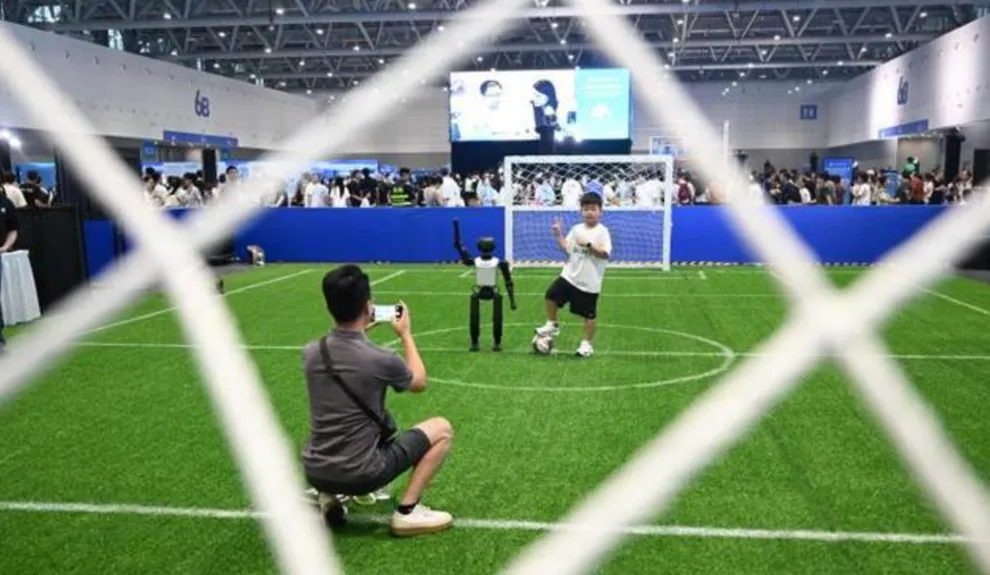
The third requirement is that urban tourism needs new hotspots.
For example, the recently created "World's first large body-smart theme park" by Xiaoyuan, whose predecessor, the Yonge Long Ship Park, was the space theme when it opened in 2024. On September 24, 2026, it was transformed into a body-smart theme.
The story before the renovation was "Space Theme Park" and after the renovation was "Robot Theme Park". The first was a carrier that became popular in the 90s, and the second was the most sought-after label in 2026 in Chinese urban literature.
03.
The robot's iPhone is on the runway.
If you look back at the events of the last six months, you will see three digits showing a leap in the index.
From the first to the second edition, the number of teams increased by 138%, the number of robots doubled, and the event expanded from 19 to 50. The second edition, which closed in August 2026, saw 2056 robots competing simultaneously, with multiple tournament records updated continuously.
The half-horse championship was held in Beijing in April 2026 in a time of 50 minutes and 26 seconds. In a year, the robot moved the half-horse record from "running three kilometers" to "running 21 kilometers".
Following the unveiling of URKL in Shenzhen's Yangtze Cultural Center, the Global Final Champion Award is a purely gold belt, with a prize pool of up to 14 million yuan. This is the first "purely gold belt" award in the robotics industry in 2026.
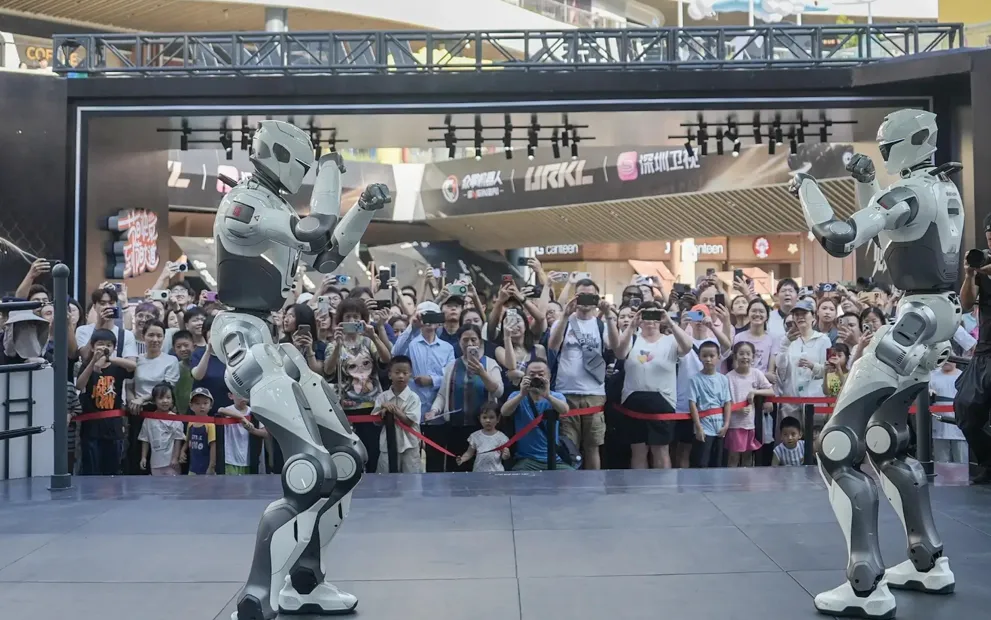
More than 300 robots from Yogin Long are real items, 100 public toilet cleaning robots from Hangzhou are real items from the World Trade Center, and 30 robots from the Chongqing Grand Transit Stadium are real items.
Putting these four numbers together, we'll see one underestimated fact: the iPhone in the robotics industry may not be on the screen, not in the factory, not on the runway.
The app runs on the phone screen, the production line runs in the factory, and the robot runs on the runway.
The icon of the iPhone era is a single-generation product that replaces the previous generation in a normal scenario.
The way robots replace previous generations of products, not factories that replace workers, but sports that replace traditional roles, has made human-machine interaction a more widespread traffic code.
A humanoid robot doesn't run track in a stadium to see it work, it replaces the previous five traditional roles of "athletes + actors + manners + interpretation + bands".
A robot isn't a robot on duty, it's the four traditional roles "actor + interactive NPC + guide + salesman" before the robot replaces it.
The real KPI for the first stage of the robotics industry is not factory shipments, but role replacement rates in the literature travel scene, and potential traffic.
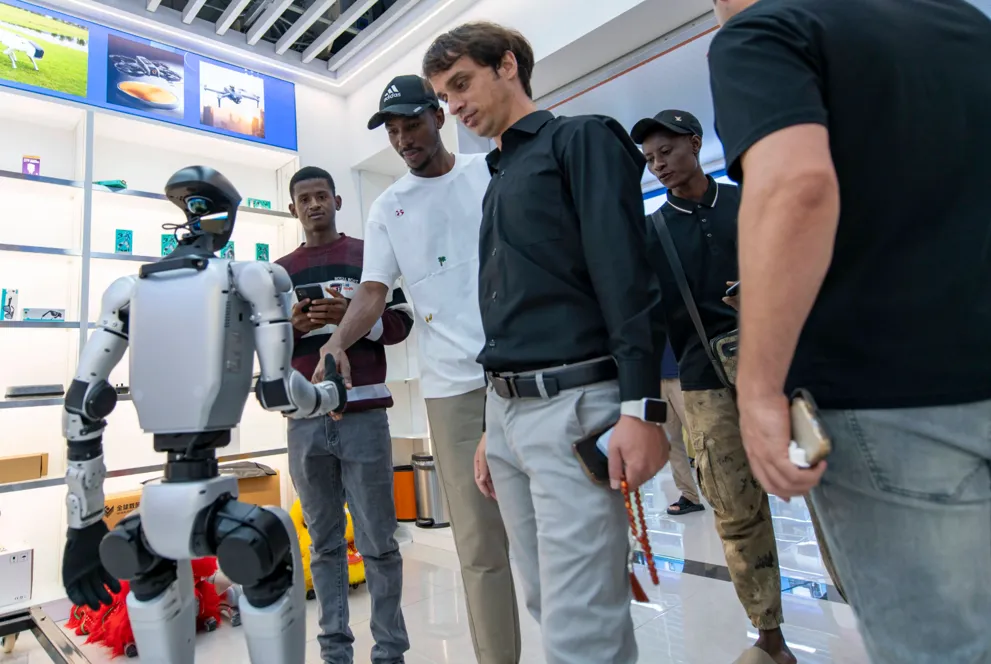
Earlier, at the 2026 Global Digital Trade Innovation Competition, hosted by the Robotics Workshop, I was struck by a statement from a media friend who said, "There are probably more people who haven't held hands with robots now than those who haven't been on a plane".
04.
Industry observed that the three sets of literary bands are either temporary or long-term
There's a real problem here, the three sets of literary brigades are either a temporary landing place for the robotics industry or a long-term scenario.
In the short term, the three sets are the only commercialization scenarios for robotics.
The industrial scene is too cold for a leading robot company that has not yet mass-produced. The domestic scene is too sensitive to a public price. The overseas scene is not too far away from the recognition of a Chinese robot brand.
It is the only "controllable + audience + disseminable + real delivery" scenario in the robotics industry in 2026.
In the medium term, the three sets are the paths that the robotics industry must follow to build user awareness.
The factory scene is unseen. The home scene is blocked by prices. The overseas scene is blocked by brands. The physical scene is the only one that allows ordinary people to "see the robot with their own eyes". One person runs to the scene to watch the robot run, fight, hit, and the next time he browses the robot video, it stops for 3 seconds instead of 1 second.
In the long run, the three sets are the early supply chain for real shipments.
One of the leading companies is deploying 300 robots in Yokohama, which is equivalent to verifying four industry-level capabilities: "Robot stability + robot durability + robot maintenance costs + robot multi-machine collaboration" in one park at the same time.
A cleaning robot runs for two years across multiple robot miles, the equivalent of one million kilometers in a real environment.
The real role of the three sets of textbooks is a combination of three sets of industrial-level training sites for the robotics industry + user-cognitive training sites + business model training sites.
05.
The robot industry is truly "sports-industrialised".
There is another layer of value in the three sets of textbooks, which solves a real problem for the robotics industry.
The real problem is that robots that don't walk learn to race first. This state is called "sports industrialization".
In 2026 there are at least two sets of technologies in China's robotics industry that have not been switched off. One is that the hand can't stabilize the eggs.
These are two real problems that the industrial scene does not want to deal with.
There are three sets of wishes: sports have racetracks, spectators, referees, prizes, scenes, traffic, and a collection of fall videos. These are free test packages that industry and family scenes are unwilling to give.
One of the top robotics companies in the world, whose engineers told me the truth at the end of August, said, "Our smart hands didn't get the chance to grab the parts in the factory, but they got the chance to be seen all over the internet at a sporting event. This free test is worth more than any conference".
The three sets of textbooks are not the ultimate scenario for the robotics industry, but it will inevitably be a transitional scenario for the robotics industry from lab to factory.
Transition scenarios are characterized by repetition, underestimation, bonuses and rewards, as well as more developers and integrators. These teams, who close their eyes to the end of this type of transition scenarios, go back to the factory and look at the virtual tour, and think that the virtual tour is the cheapest training ground in the robotics industry.
An industry that can't mass-produce, that can't really break the cycle, it's not about the density of the event, it's about how many cars it ran, how many times it fell, how many times it was seen all over the web in the transition scene.
06.
Ends, runways, racetracks, runways
The robot industry is the first to land on the real track, not in factories, not in homes, but on the runway.
The robot half-horse is running, the humanoid robot proves that it can run 21 kilometers, and China is leading the way to become the world leader.
At the URKL Robot Fighting Ground, the 1.73m 75kg kick-off caused a worldwide sensation, and the $14 million prize pool made global developers foolish.
In the World Robot Games, 2056 robots, 50 events, surpassing humans has become history.
In the 2026 World Digital Trade Innovation Competition, the human-machine arena competition attracted tens of thousands of views across the internet.
It is the world's first body-smart theme park and attracts visitors from around the world.
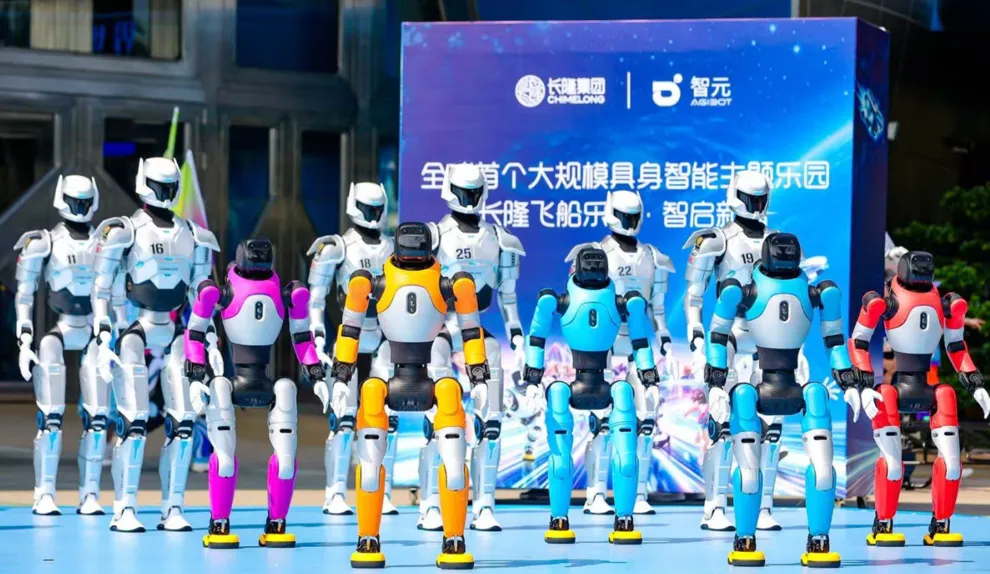
These scenarios occurred at the same time in China in 2026, not by chance, which is the real stage of China's robotics industry.
This stage is still a real problem. The robot is still a long way from reaching thousands of homes, but it can be seen with the naked eye, a state called "sports industrialization", a duplicate of the MiG-4 rifle.
Over 300 robots were actually shipped, over 100 cleaner robots were actually shipped, and a very capable development team was trained to complete a piece of technical shortboard.
This stage is truly conscious. When a regular citizen goes to a sports venue to watch a 10-minute robot, the next time they browse a robot video, the market education of the entire industry begins to run out.
An industry that moves from the lab to the factory must have a transition scene in the middle, a runway, a race track, an arena, which is the real scene of the robotics industry in 2026 and is worth pioneering for.