It doesn't seem that strange.
Just at the key juncture of Anthropic's IPO, several key clients began to tighten the use of Claude simultaneously.
According to The Information, both Meta and Microsoft are reducing employee reliance on Claude and encouraging developers to shift more towards their own AI tools and models.
Among them, Meta had previously used Claude Code to develop Muse, but after the launch of Muse, the number of active users of Claude Code dropped from 60,000 to 30,000, decreased by 50%, and began replacing it with its own Muse Code.
Microsoft has cut its internal Claude spending by more than 33 percent, cutting the monthly Token budget for individual employees directly from $100,000 to $10,000, while allowing Copilot to automatically route requests to cheaper models.

Within Meta, Claude Code users are directly upside down.
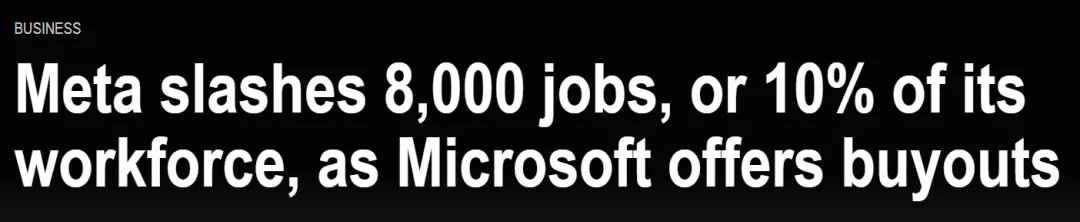
Within Meta, Claude Code users were directly upset, partly due to the layoffs that took place this spring. Meta cut about 10% of its 78,000 employees.
But more importantly, Meta is actively guiding employees from Claude Code to their own AI programming tools.
Meta has established its own system of AI programming products.
Muse Code, which uses Meta's own model, is classified as a competitor to Claude Code. In August, Meta began testing Muse Code on external customers. According to internal data obtained by The Information, the product recently had more than 6,000 employee users within Meta.
Another AI programming tool for internal use is MetaCode, which has over 30,000 users.
In other words, when Claude Code's internal users dropped from 60,000 to 30,000, Meta's own AI coding tool was quickly replacing it.
There is a more realistic question behind this: money.
An internal memo from Meta in June this year showed that spending on AI tools internally alone has grown to billions of dollars this year.
Claude Code was Meta's most popular third-party programming tool at the time. According to data obtained by The Information, Meta spent more than $105 million on Claude Code over the past 28 days.
The cost scale can be imagined as it continues at this rate.
Microsoft has also started cutting Claude's $1 billion bills a year.
Earlier this year, Microsoft employees used Claude to grow rapidly.
As of May this year, the company's internal estimates, including the Claude model in Claude Code, Copilot, and the Anthropic model for cybersecurity scanning, show that annual employee spending on Anthropic technology has grown to at least $1 billion.
Microsoft subsequently cut this budget level by more than a third.
On the one hand, controlling the costs of AI, and on the other hand, wanting employees to use Microsoft's own products more.
Microsoft began reducing subscriptions to Claude Code and required employees to use Claude as much as possible via GitHub Copilot.
GitHub Copilot itself allows developers to choose from different models, but its automated mode will in most cases be prioritized to the OpenAI model. For Microsoft, there is a special economic burden here. Due to the commercial partnership between Microsoft and OpenAI, shifting more internal workloads to the OpenAI model can reduce the cost of the model that Microsoft actually needs to pay.
Jay Parikh, the head of Microsoft Developer Tools, also mentioned in an internal memo in August that departments have started managing their own Token budgets this fiscal year and need to continually optimize the way models are used.
Microsoft and Meta are cutting Claude, but Anthropic says the impact is small.
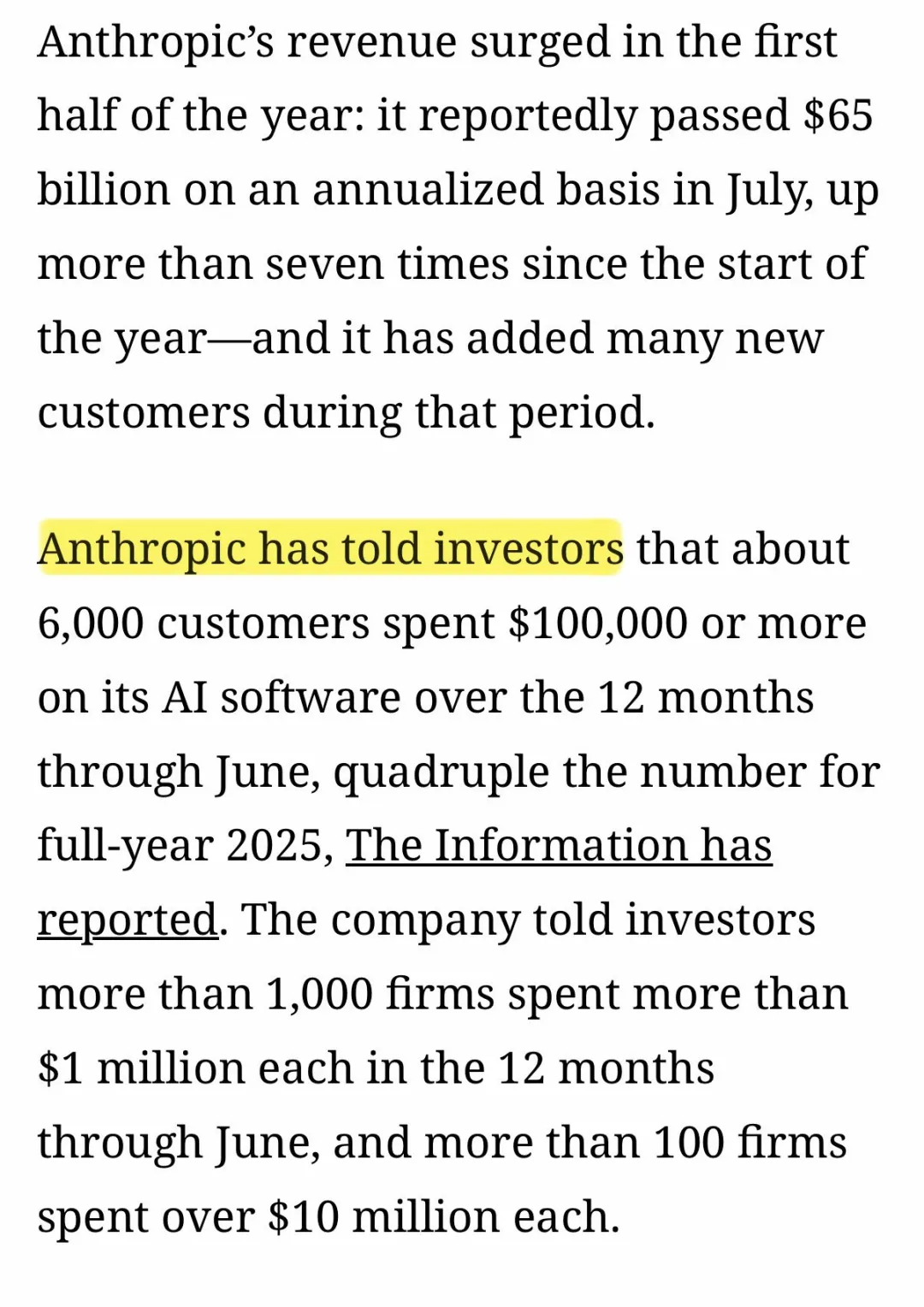
Anthropic's message to investors is this: Since January this year, Anthropic's annual recurring revenue (ARR) has grown by about 7 times, from about $9 billion to $65 billion.
Currently, about 6,000 enterprise customers spend more than $100,000 a year on Claude, a four-fold increase from last year; at the same time, more than 100 large enterprise customers spend more than $10 million a year on Claude.
While Microsoft did cut spending on Claude internally by about 33%, it still pays about $670 million annually to Anthropic. At the same time, Microsoft's use of Claude for external customers continues to grow.
While Meta has cut its internal Claude Code user base by 50%, it still pays Anthropic about $105 million a month.
As for the two clients that contributed 25% of Anthropic's revenue, that's 2025 data. At the time, Anthropic's total annual revenue was only $4.6 billion, and the two clients combined contributed about $1.1 billion.
Today, the $1.1 billion represents less than 2 percent of Anthropic's current annual turnover.