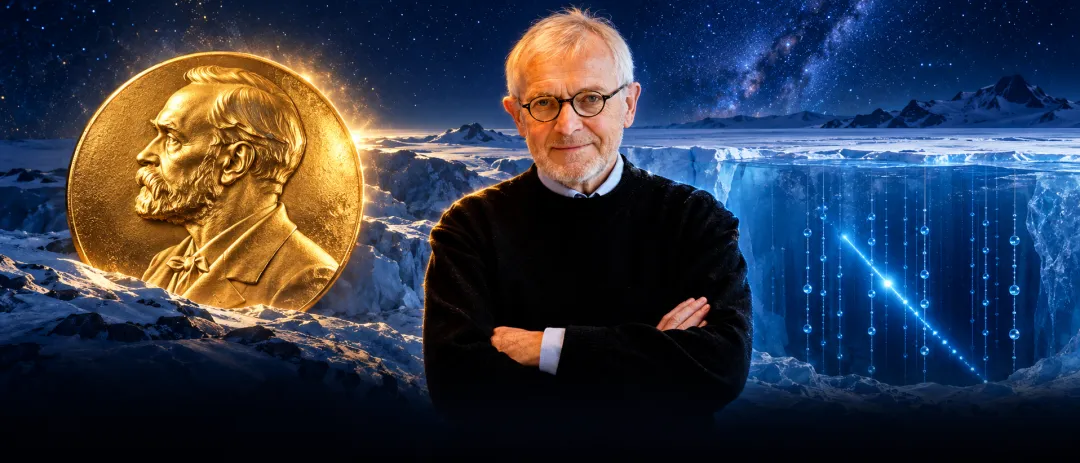
It's the first time in the history of the world.
The Nobel Prize in Physics for 2026 has just been announced!
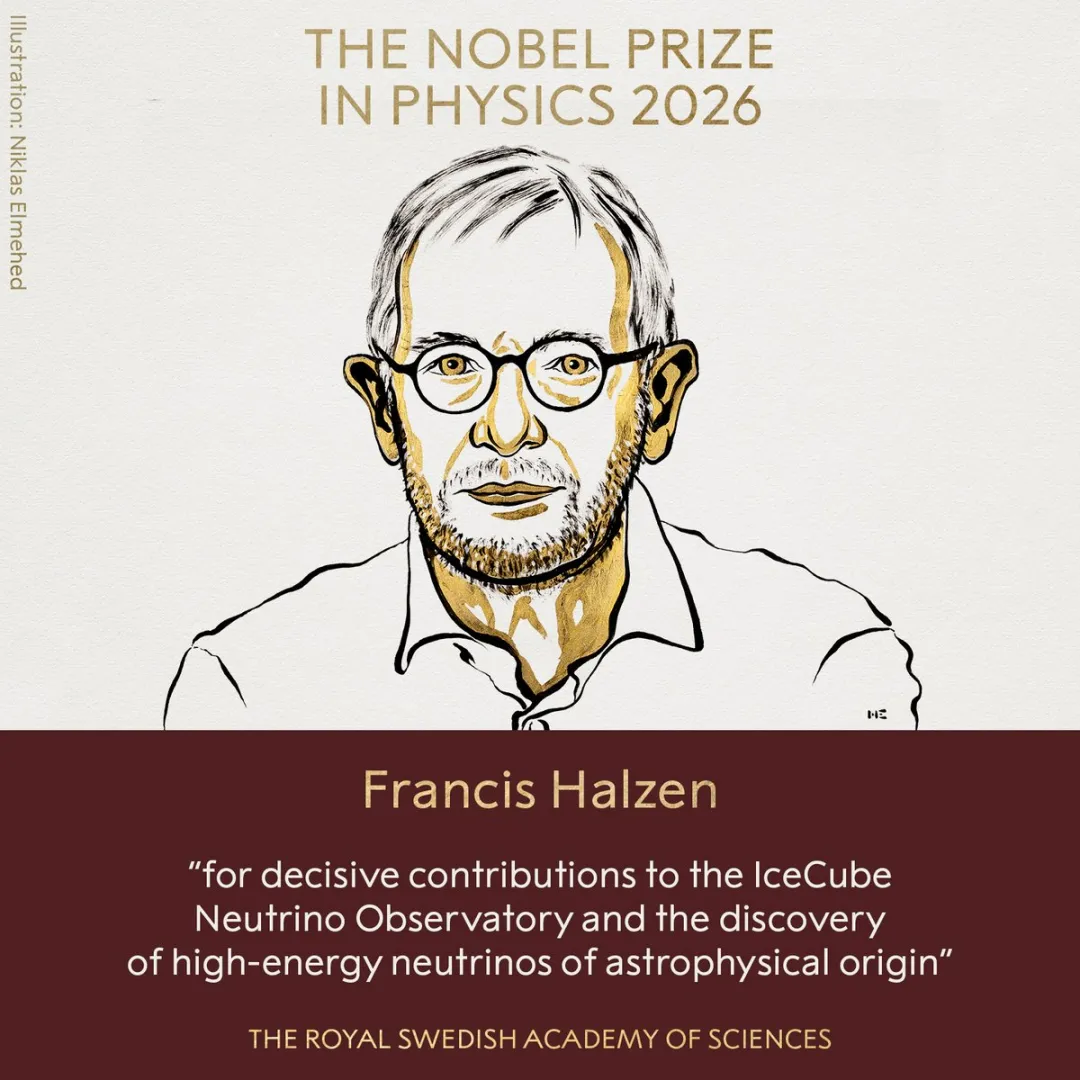
Francis Halzen, a Belgian-born theoretical physicist and professor at the University of Wisconsin-Madison, has won the Nobel Prize alone.
The reason for the award was in recognition of his "decisive contribution to the microscopic astronomy of the ice cube, and the discovery of high-energy microscopes from the physical sources of the celestial body".
12 million Swedish kronor prize, all for him!
The two Chinese physicists who won the Nobel Prize for Physics before the race, Liu Xiaobo and Liu Xiaobo, were unable to do so.
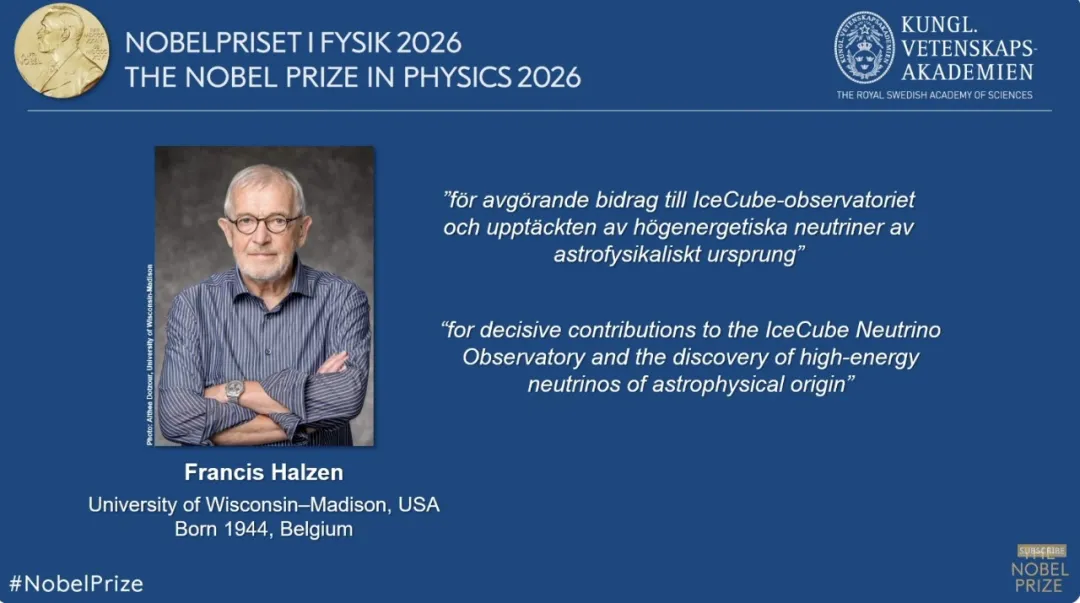
The prize is awarded in full to a theoretical physicist who has been called "crazy" by all.
The last time the Physics Prize was awarded to a single person was in 1992.
Because 38 years ago, he came up with a crazy, incredible idea:
Go to the most bitterly despaired South Pole on Earth, drill a thousand-year-old glacier of 1 cubic kilometer, and turn it into a super telescope that captures mysterious particles deep in the universe!
He later recalled the experience and said very frankly: "I guess others must have thought of the same thing and then gave up. If I didn't know anything about the optical properties of natural ice at the time, I probably would have given up too".
Today, the concept has not only changed the dimensions of human observation of the universe, but has finally been elevated to the highest hall of fame in physics.
With the help of this deeply buried "ice cube", humans first confirmed:There are high-energy neutrons flying far beyond the solar system!
More interestingly, two years ago, the Nobel Prize in Physics was awarded to Hopfield and Hinton for their groundbreaking work in machine learning.
One of the most striking discoveries of this icy telescope, a neutron image of our galaxy, was extracted from mass data by machine learning.
First of all, we need to know the microbes in today's mainstream media.
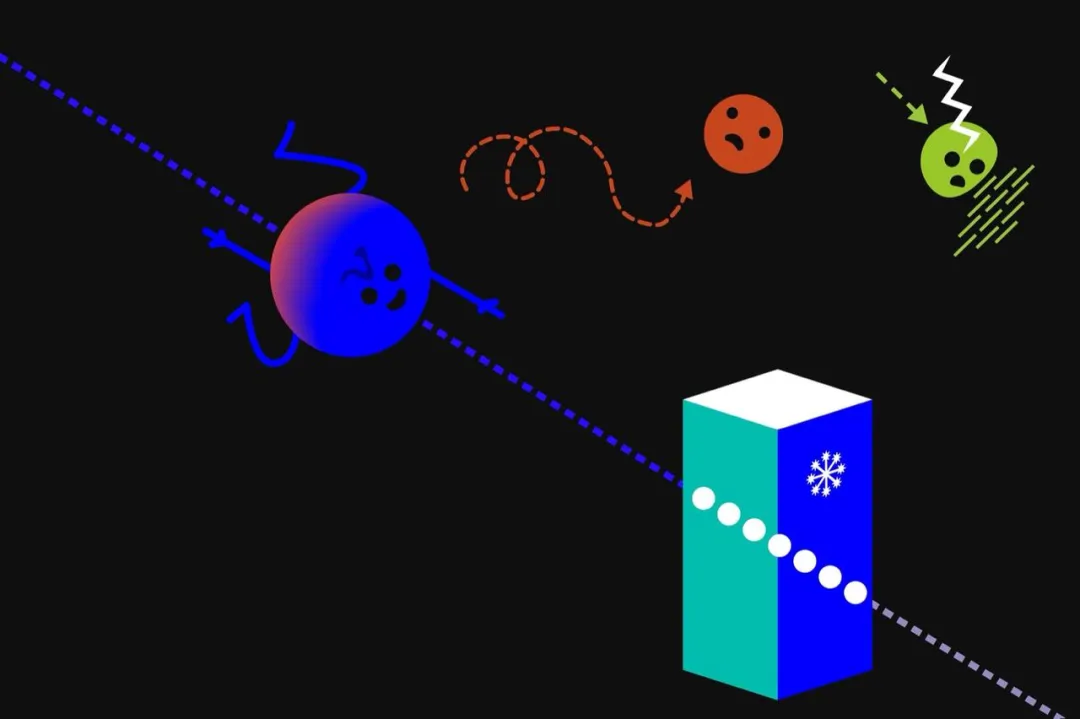
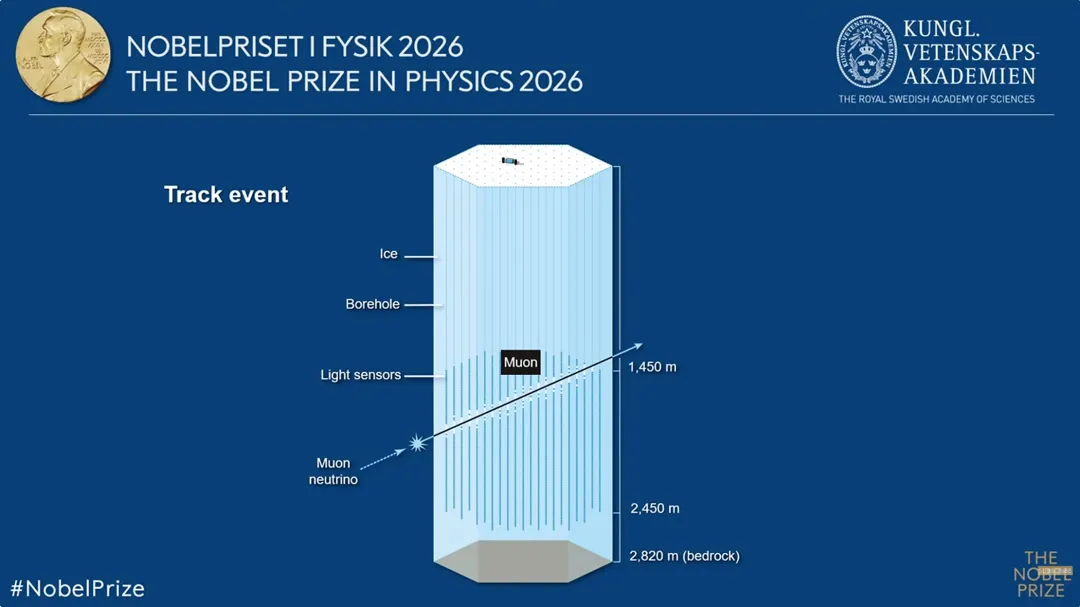
Official illustration of the Nobel Prize: Neutrophils fly along a straight line through Antarctic ice
It has no electrical charge, almost zero mass, and barely interacts with any substance. It's called the "ghost of the universe". Right now, there are about 65 billion neutrinos from the sun that are passing through your nails.
Why do scientists have to go looking for it? Because the neutron is the most perfect "messenger" in the universe.
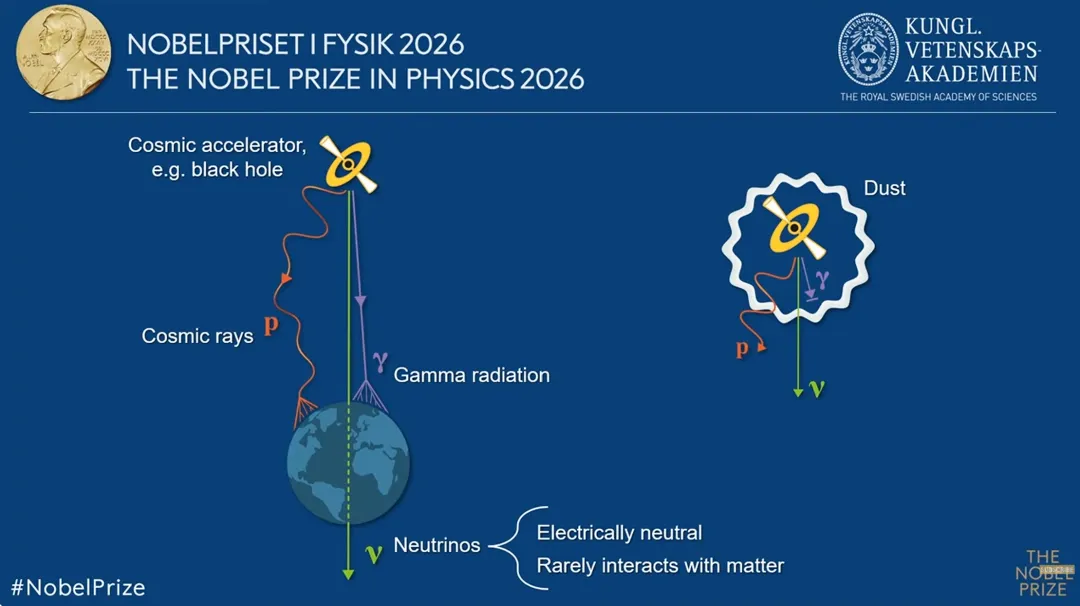
Unlike light and cosmic rays, it is not affected by a magnetic field and travels in an absolute straight line; at the same time, it has a very strong penetration force and is not blocked by any dust cloud or radiation.
Even at the edge of supermassive black holes deep in the cosmos, high-energy microorganisms can travel hundreds of millions of light-years in a straight line, sending the original message of cosmic extreme events to Earth.
If humans could capture these high-energy neutrons, it would be like having a pair of "through-eyes" that can see through the universe and allow humans to make "CT scans" of the universe.
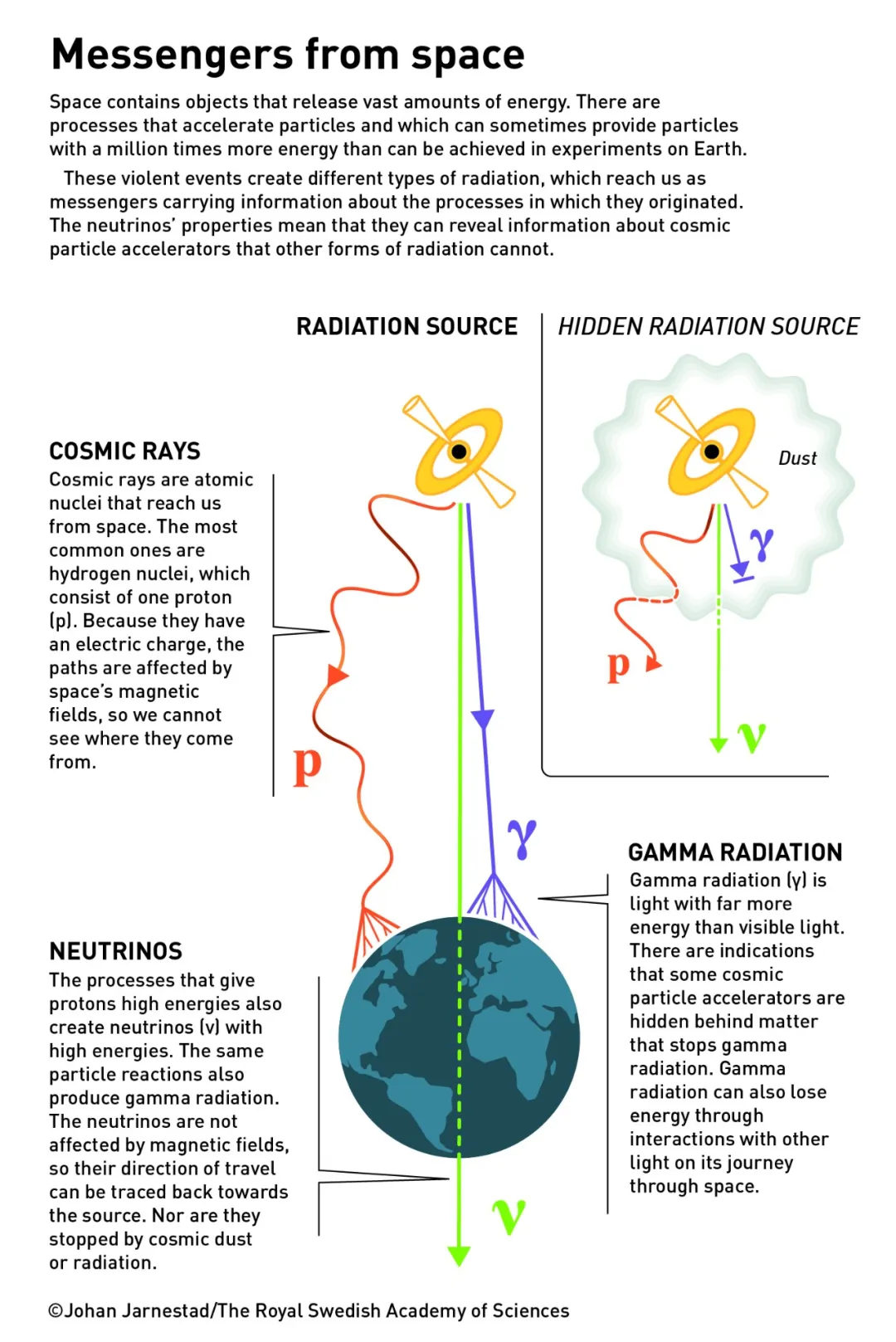
Cosmic rays are deflected by magnetic fields, gamma rays are blocked by dust, and microbes fly straight to Earth.
It's a crazy idea to ice up Antarctica!The problem is that it's too hard to catch.
The vast majority of neutrons pass directly through the detector. If the number of neutrons is large enough, and the detection medium we are prepared for is thick enough, there will always be so many neutrons that they "crash" the hydrogen atom.
If you want to make a collision like this, the detector would be too big to fail.
When high-energy neutrons collide sharply in the medium, they produce electrically charged particles (such as particles).
These electrically charged particles travel through the medium faster than the speed at which light propagates in the medium, producing a phenomenon similar to the "sound burst" optical phenomenon of Cherenkov radiation, which emits bright blue light.
As long as we put enough, sensitive enough optical sensors in an extremely dark environment to capture these blue lights, we can reverse the direction the neutrons are flying.
Initially, scientists wanted to use seawater as a medium. But deep-sea bioluminescence (e.g. watermelons) and natural radioactive materials produce a lot of noise.
This is the first time that Francis Halle has appeared on the stage.

Francis Halzen is 82 years old this year.
In the 1980s, while studying cosmic rays, he learned that Soviet scientists were planning to use radio receivers in Antarctica to capture microwave signals.
In his mind suddenly flashed a tremendous inspiration: Why should we fold into the sea and why not directly use Antarctic ice?
Antarctic ice sheets have their own unique advantages:
Big enoughThere are infinite layers of natural ice that fully satisfy the need to build a super-detector.
It's dark enough, pure enough.The depths of the ice sheet are absolute darkness, no radiant organisms, and no complex ocean currents.
The absolute stability of solids: Put the sensors in the ice and they will remain absolutely still forever, which is essential for accurate particle trajectory calculations.
In 1988, Harkin and colleague John G. Learned formally proposed the idea of building a microcosm observatory under the Antarctic ice sheet.
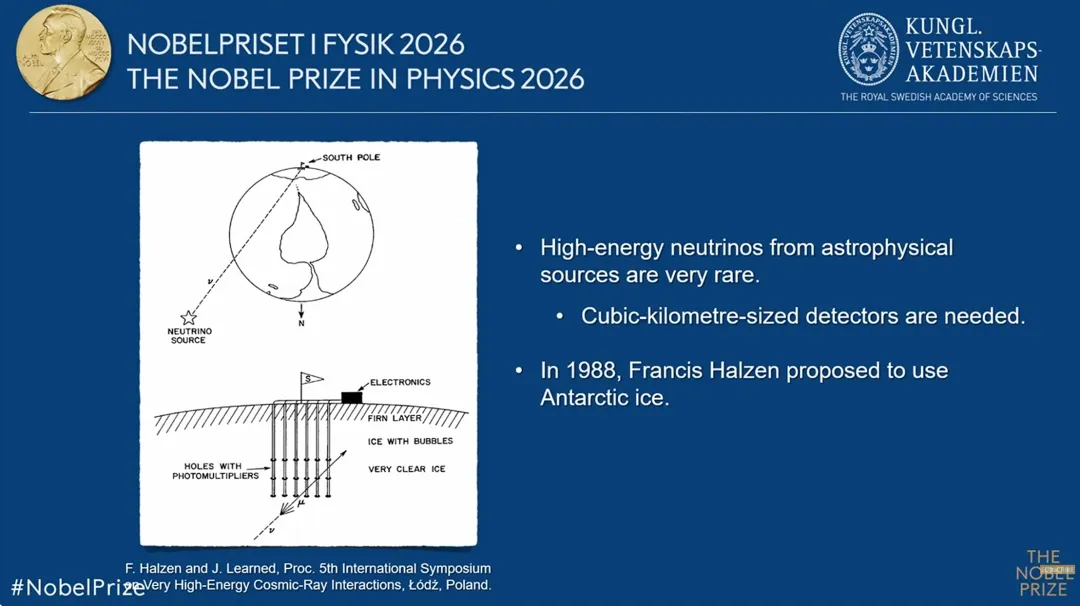
At first, the idea sounded like science fiction. But Harbin lobbied around and eventually pulled up a squad that began the era of the hardest nuclear "polar bearings" in human history.
One cubic kilometer of "ice cube" with a reverse light bulbIt's not that simple to build a tent at the Antarctic Observatory.
In 1993, the Harlem team began a preliminary test of the AMANDA project in Antarctica.
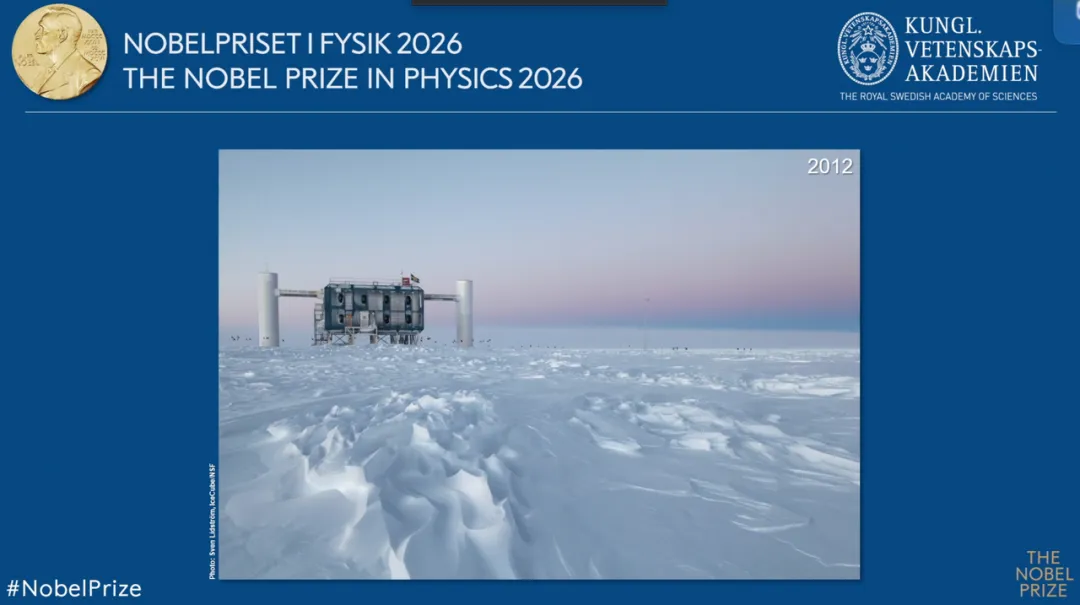
Initially, they faced a huge setback: the shallow ice was filled with bubbles and light could not pass out at all. But they did not give up, glaciologists note, the deeper they dug, the greater the pressure that would squeeze the bubbles into the ice sheet.
In fact, when they drilled below 1,400 meters, it was miraculous to see that the ice sheet here was extremely pure and transparent. The blue flashes produced by neutron collisions could penetrate hundreds of meters of ice without hindrance!
With the support of the National Science Foundation (NSF), construction of the Ice Cube officially began in 2004.
Engineers used a high-pressure hot water drill to melt a two-kilometer-deep vertical well in the cold Antarctic ice sheet.
Every time they drilled a well, they had to compete for a second, and before the well water could freeze again, they had to sink an ultra-long cable with an optical sensor to the bottom of the well.
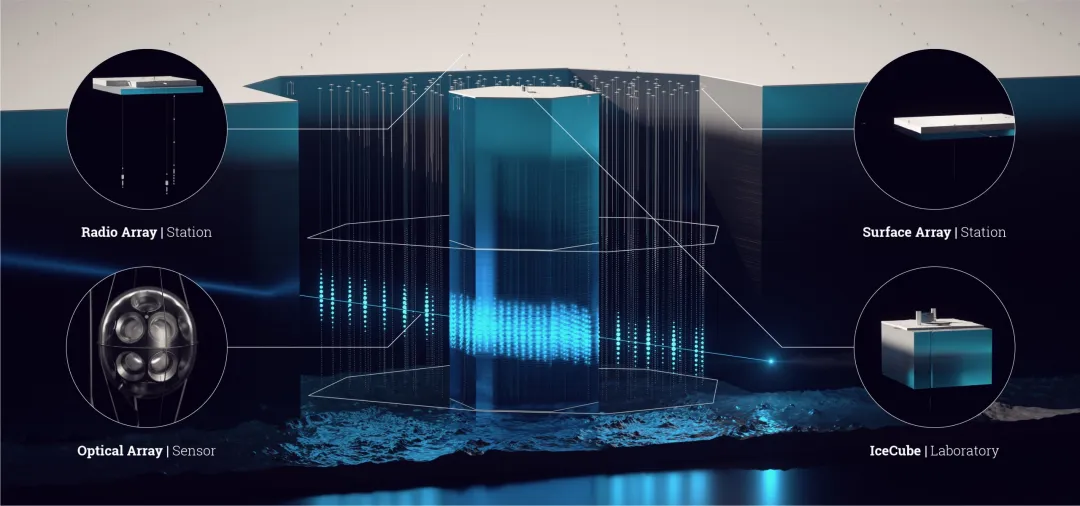
They put down 86 such cables; up to 5,160 spherical sensors were attached to the cable.
Harkin has humorously described these sensors as "reverse-functioning bulbs" that capture faint photons and convert them into electrical signals to be transmitted back to the surface.
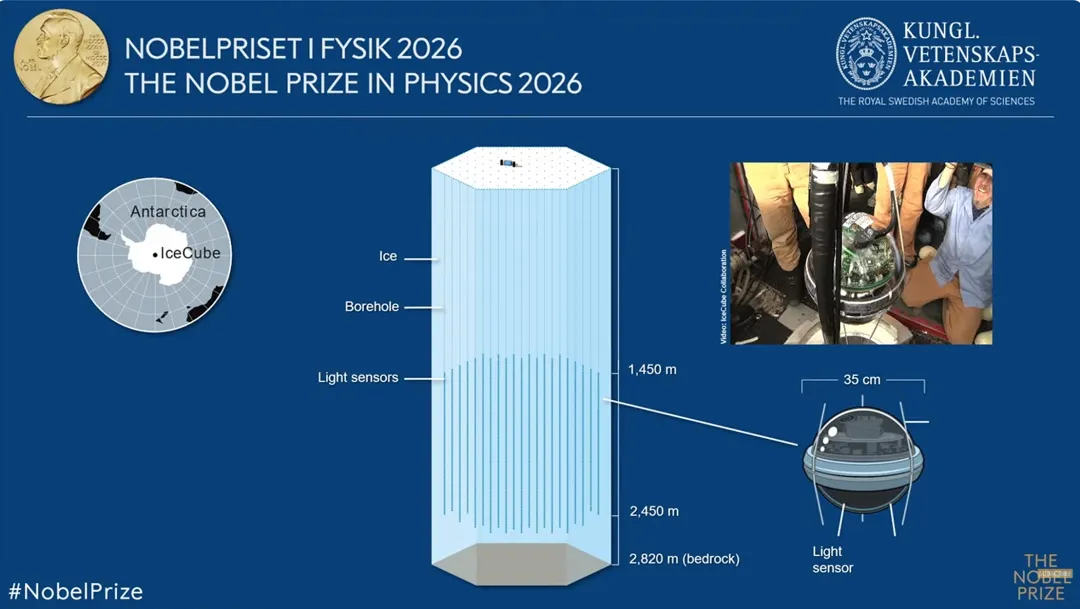
These cables are arranged in a huge hexagonal array, covering a depth of 1,450 meters to 2,450 meters. Scientists have circled an entire volume of 1 cubic kilometers of pure ice, known as the "ice cube", inside the Antarctic Ice Sheet.
In 2011, the world's largest telescope was officially shut down when the last cable was installed.
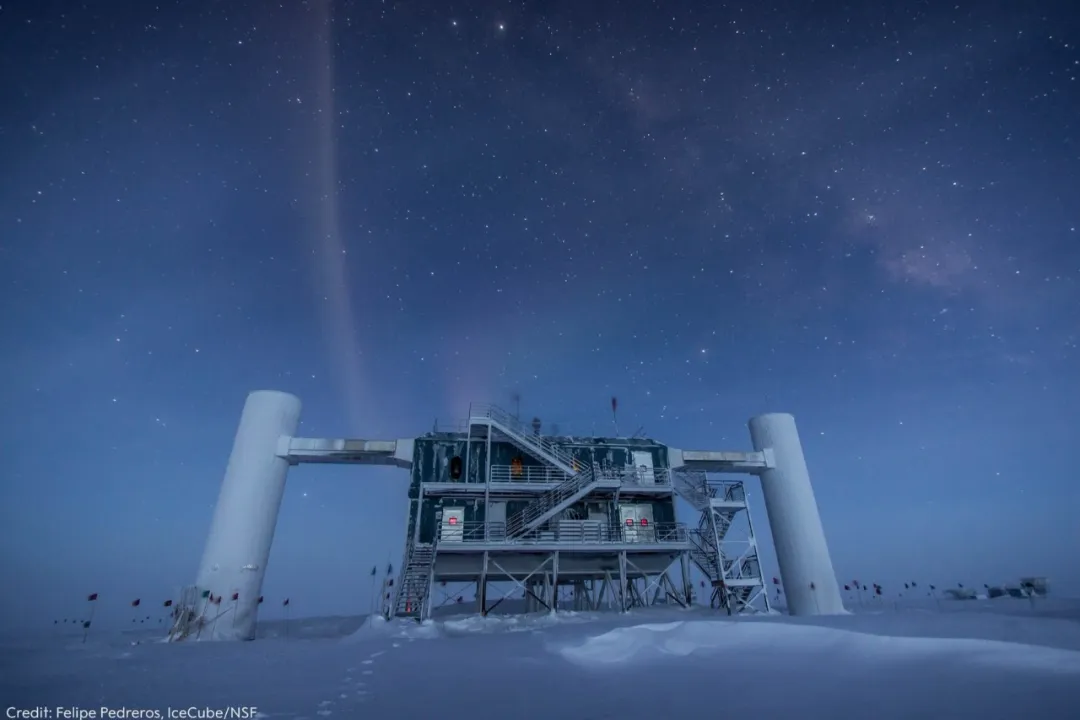
The ice cube laboratory at the South Pole collects all the signals under the ice and transmits them via satellite.
It does not look at the stars in the sky, but it is buried in the depths of the earth; it does not gather visible light, but it watches day and night to hear the voices of the spirits of the universe.
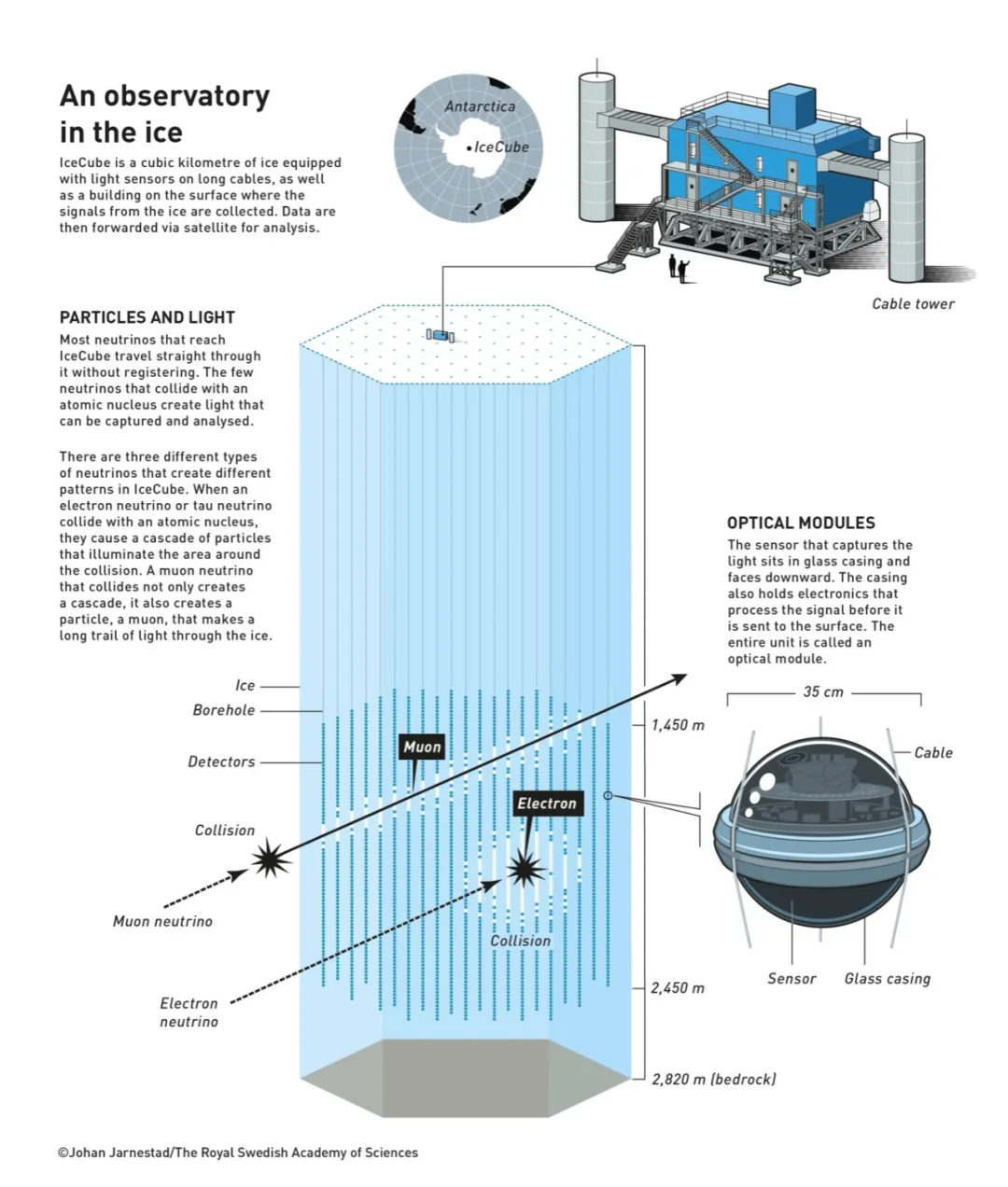
Ice cube diagram: A neutron strikes an atomic nucleus in ice, and the flashing light is recorded by a series of sensors.
Out of 100 million fake signals a day, 100 are real.Building a good telescope is just the beginning, and it's really hard to identify microns in the universe from the data.
Cosmic rays have penetrated the atmosphere above Antarctica, and more than 100 million particles per day are drilled into the ice and recorded by sensors.
The atmosphere also produces neutrons, with about 100,000 neutrons recorded annually by the ice cube, the vast majority of which are from the Earth's atmosphere.
According to theoretical expectations, only about 100 are actually from the depths of the universe a year.
A historic breakthrough came in 2013!
In 2013, the team searched for a higher-energy class of neutrons in two years of data and encountered two events with energies greater than 1PeV, 1.04PeV and 1.14PeV respectively. This was the first time humans had confirmed the discovery of a high-energy particle in astrophysics from outside the solar system.
After decades of interstellar hunting, it has finally paid off.
Following these two events-adjusted analytical methods, the team found 28 high-energy particles in the universe in the same batch of data. In 2014, statistical significance reached 5.7σ, excluding explanations for pure atmospheric sources.
On September 22, 2017, the ice cube captured a neutron of about 290 TeV and within a minute, an alert was sent around the world.
The world's telescopes immediately pointed at that coordinate, and the result was shockingly straightforward: there was a wildly explosive glowing variant (TXS 0506+056) at the center of an active galaxy with supermassive black holes!
For the first time in human history, high-energy neutrons have been linked to an exact source in the universe.
In 2022, the ice cube found 79 neutrinos in the direction of the active galaxy NGC 1068. The supermassive black hole was wrapped in thick gas and dust, and the detected gamma rays were weak and the neutrinos were released.
In 2023, the ice cube saw our own galaxy for the first time in the neutron.
Ice Cube, a collaborator at the Dortmund Industrial University in Germany, developed a machine-learning methodology that specifically triggers the "leveling" event of a neutron impact while reconstructing its direction and energy.
Using the new method, the conserved neutron events increased by more than a numerical scale, increasing the search sensitivity to three times that of the original. The team spelled out the galaxy with about 60,000 neutron events from 10 years of data.
Halzen said at the time:
Interestingly, unlike any other wavelength of light, the distant universe is brighter in the mid-microwave than the nearby sources in our galaxy.
Earlier this year, the Ice Cube used 12 years of data to push the galaxy's signal to 5.7σ. The galaxy thus became the first source of high-energy microorganisms to discover thresholds above 5σ.
In 2026, just prior to the announcement of the Nobel Prize, the Ice Cube team released a groundbreaking achievement: they finally saw clearly the high-energy neutron glow emitted by the galaxy itself!
The new era of "multi-missionaries" is being unleashed by our efforts.Today, the stubborn old man, who has been obsessed with capturing ghosts with ice since the 1980s, is finally entering his own coronation moment.
The chairman of the Nobel Prize in Physics, Mark Pearce, said:
The international team led by Francis Halzen has provided us with an incredible instrument. His tenacity and scientific vision paved the way for a whole new way of astronomy.
Yes, this is the beginning of the era of "multi-missionary astronomy".
Looking up at the stars today, we can not only "see" with light, "hear" with gravitational waves, but we can also "see" directly through the darkest core of the universe with high-energy microns captured by the ice cube.
Currently, an eight-fold expansion of Ice Cube Gen2 is being planned.
The Mediterranean, Pacific, and China's South China Sea-led "Heaven Plan" (TRIDENT), a global microbe capture network, is slowly opening up.
Right now, the 65 billion microbes that are passing through your fingernails, passing through the endless void, through the sand, straight to Earth.
And at the southernmost tip of the Earth, a group of romantic and crazy Earthmen, in the dark, pure ice of a cubic kilometer, open their eyes, just waiting for this multibillion-year surprise.
This is perhaps the most extreme romance of human exploration of the universe.
Let's pay tribute to the 2026 Nobel laureate in physics, Francis Harkin!