It's the first time in the history of the world.
Recently, the global AI video circle was shaken.
In the Artificial Analysis authoritative blind rating list, a black horse stands out.
The Utopai X, a first-of-its-kind video supermodel, earned the world's second-highest rating in the U.S. with an Elo rating of 1150±10.
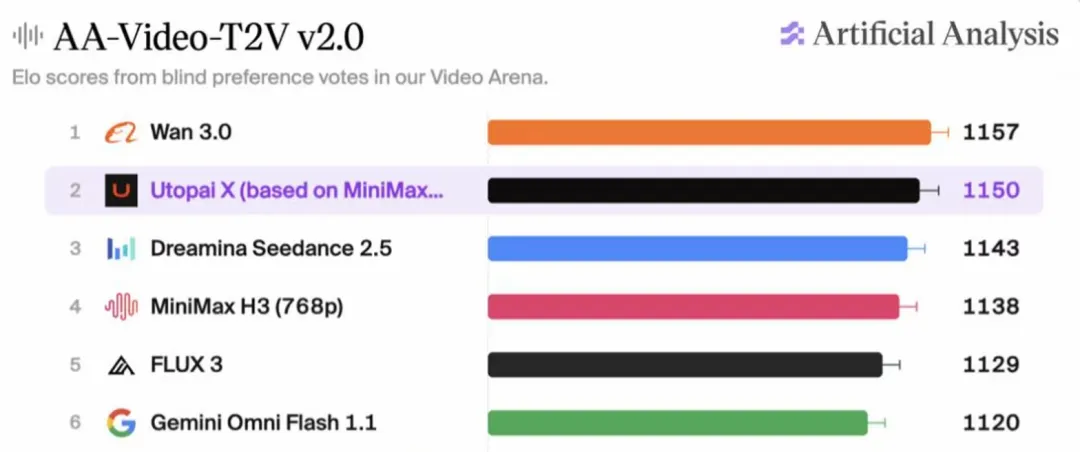
Not only that, but the Utopai X has topped the world rankings in both "Audio Sync" and "Physical Effects" indicators of extreme hardness, even higher than the up-and-coming Gemini Omni Flash 1.1 and Dreamina Seedance 2.5.
A stone raises a thousand waves. The result is incredible.
More shocking to the industry was its "origin" soundtrack, which was the first time a television company's customized model has been ranked number two on the AA list since its adoption of a blind rating mechanism.
It defeated many of Silicon Valley's deep-seated General AI laboratories, and its champion was Utopai Studios, described by Variety Entertainment as "the world's largest independent AI original video company".
According to Forbes, Utopai Studios is valued at $1 billion.

What kind of company is this, and why is it able to break the ice between the traditional film industry and AI technology?
Why can't a general model film a big screen?To understand the content of Utopai X in the Artificial Analysis AA list, one must first understand AA's "blind rating mechanism".
Unlike conventional large models, AA blind scores directly hide the video generated by the two sets of models from the brand's labels, and are voted purely visual preferences for output generated by the same cue words by real-world audiences and professional reviewers.
Here, everything is the real preference of the user, and only the actual texture of the image itself counts.
In A.A. blindness, the Utopai X was able to achieve the world's second, the first in the United States, and the key breakthrough was its extreme restoration to real physical laws.
In the past, AI videos have often misrepresented the laws of physics, bringing with them a sense of dream: space drift, structural collapse, optical distortion.

A standard 90-minute film containing about 1,000 to 1,500 footage.
Role consistency:The male protagonist's facial features and clothing must be identical when portrayed, depicted, viewed, run, cried.
Space consistency:The lens from the living room to the bedroom, the dimming of the light, the position of the prop must be in accordance with the physical logic and the requirements of the play.
Style consistency:Whether it's 3D animation or real-life writing, the entire film doesn't have a weird drift of painting between camera switches.
Hollywood is making AI movies, but the audience isn't buying the bill.
Because most of today's general video models, based on mass Internet data disclosure training, lack a continuous memory of "assets" and "scenes".
They are excellent "dream generators", but they are not qualified "scene cameras".
This also explains why Utopai customized video models.。
And why would a video company's customized model be able to suppress an AI factory on a professional scale?
The answer lies in its research and development path.
Utopai X, based on the MiniMax H3, underwent in-depth post-training. However, unlike the general laboratory tuning, Utopai replicated the demands of Hollywood's first line of video combat in model training.
On the AA list, Utopai X has demonstrated an astonishing single dominance:
Physical effects: ranked first in the world(Beyond Gemini Omni Flash 1.1 and Dreamina Seedance 2.5);
Audio sync: ranked first in the world(Beyond Gemini Omni Flash 1.1 and Dreamina Seedance 2.5);
Light Effect and Material Processing: Second in the WorldIt's the first time that I've ever been in a situation like this.
Camera control: second in the world(Only after Wan 3.0)
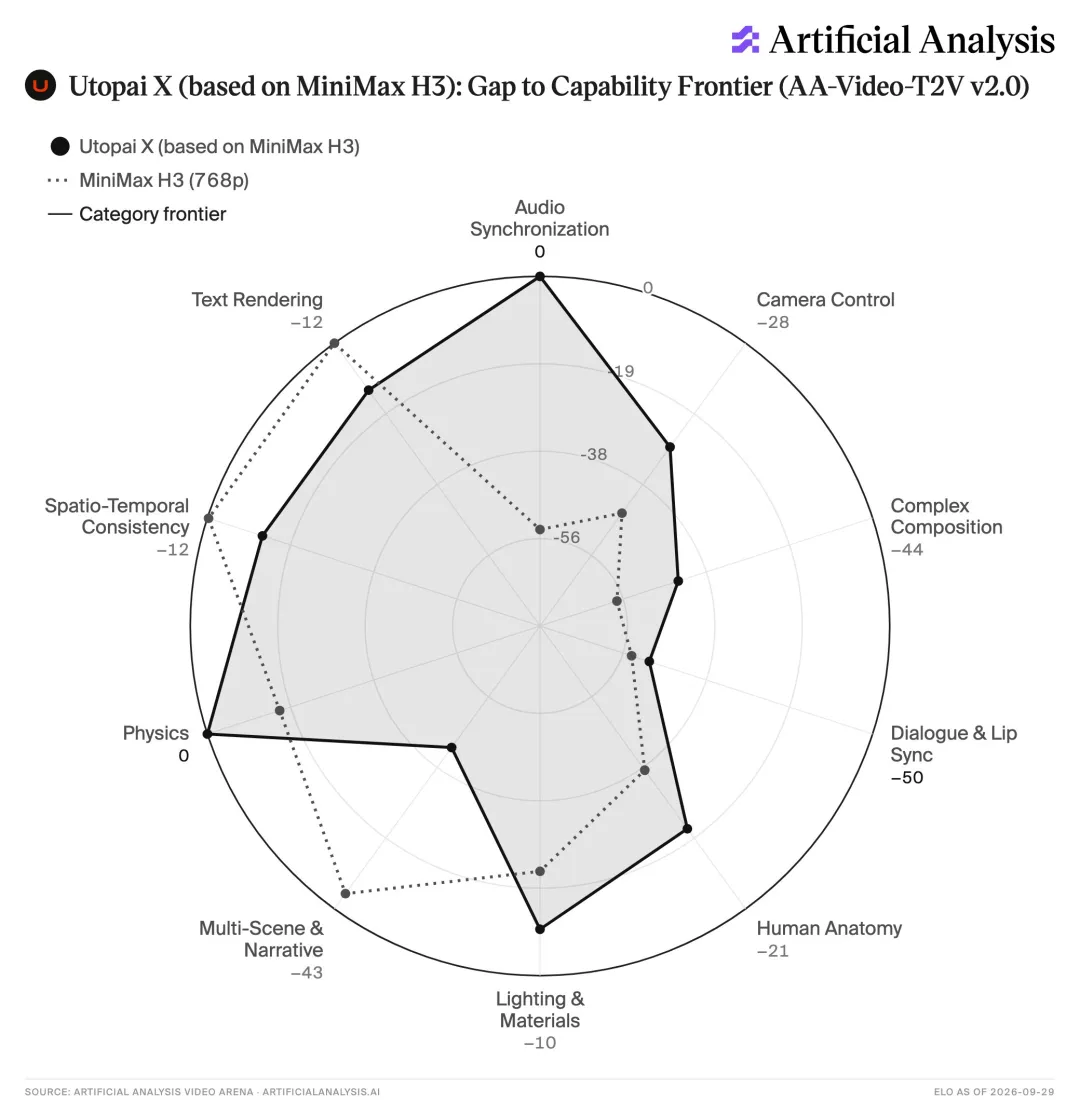
In the evaluation definition of Utopai X, its physics capabilities are comprehensive: mechanics, thermal effects, material interactions, material fracture and deformation, optical phenomena, causal relationships, and counterfactual physics.
In optical focusing and reflection, light penetrates fluid bodies and reflects off wavelength spots, or complex environmental variations on arched window glass, Utopai X is strictly followed by geometric optics and fluid mechanics.
In terms of collision and material deformation, whether it's the collapse of hard rock fragments or metal-induced cavity deformation, models can accurately represent inter-matter causal interactions, giving the image a solid sense of "quality and gravity".
While audio synchronization is the world's number one, AI has said goodbye to the "Murdue Age".
Utopai X achieved disruptive video and audio synthesis.
It fully covers the surround sound in the story, the background music and the emotional soundtrack, and the interaction of sounds inside and outside the picture.
When the glass in the picture shatters, the crisp impact is triggered simultaneously at milliseconds; when the camera shifts from the room to the whirlwind outside the window, the outer sound field produces precise trigonometric decay and resonance changes along the length of space. This directly raises AI video from mere "motion generation" to the height of "full-screen audiovisual narrative".
The effects of light and material have been tested with IMAX magnifying glasses.
In terms of shadow and material dimensions, Utopai X covers lighting effects, exposure levels, shadow processing, color temperature, textures, fabric dynamics, and hair coat dyes, saying goodbye to plastic.
And finally, the camera controls.
Cinema is the art of the moving image. Utopai X is able to accurately execute complex film-level frames, from the smooth push of large-scale aerial photography to the low-angle, low-resolution, and complex three-dimensional visual diffraction.
Moving and changing the landscape, through the strict synthesis of silk, really made "the camera moves with the director's consciousness".
This means that Utopai X has the best application scenes in text-converting video technology: first in social media and creator content, and second in cutting-edge technology, construction and real estate.
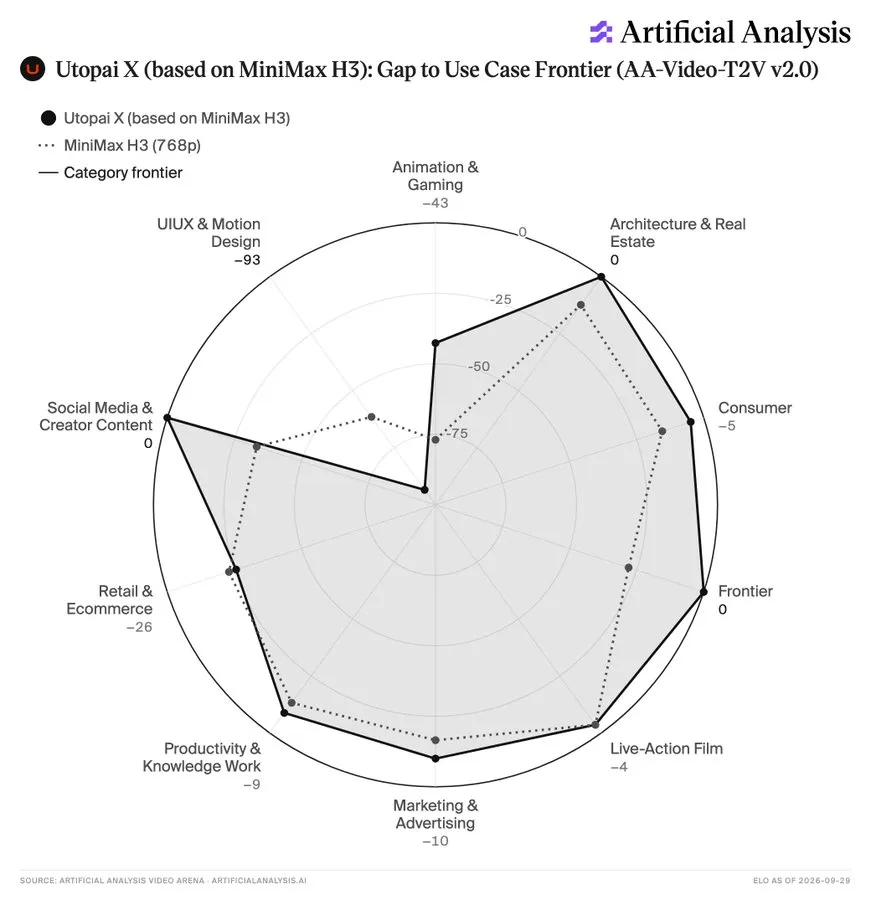
In the three areas of "social media and creator content", "advanced technology" and "building and real estate", Utopai X scarcely ranks first.
Why is a film company at the top of the list of AI videos?Utopai Studios' positioning is extremely tight: it is a story-driven film company rather than a modeling company.
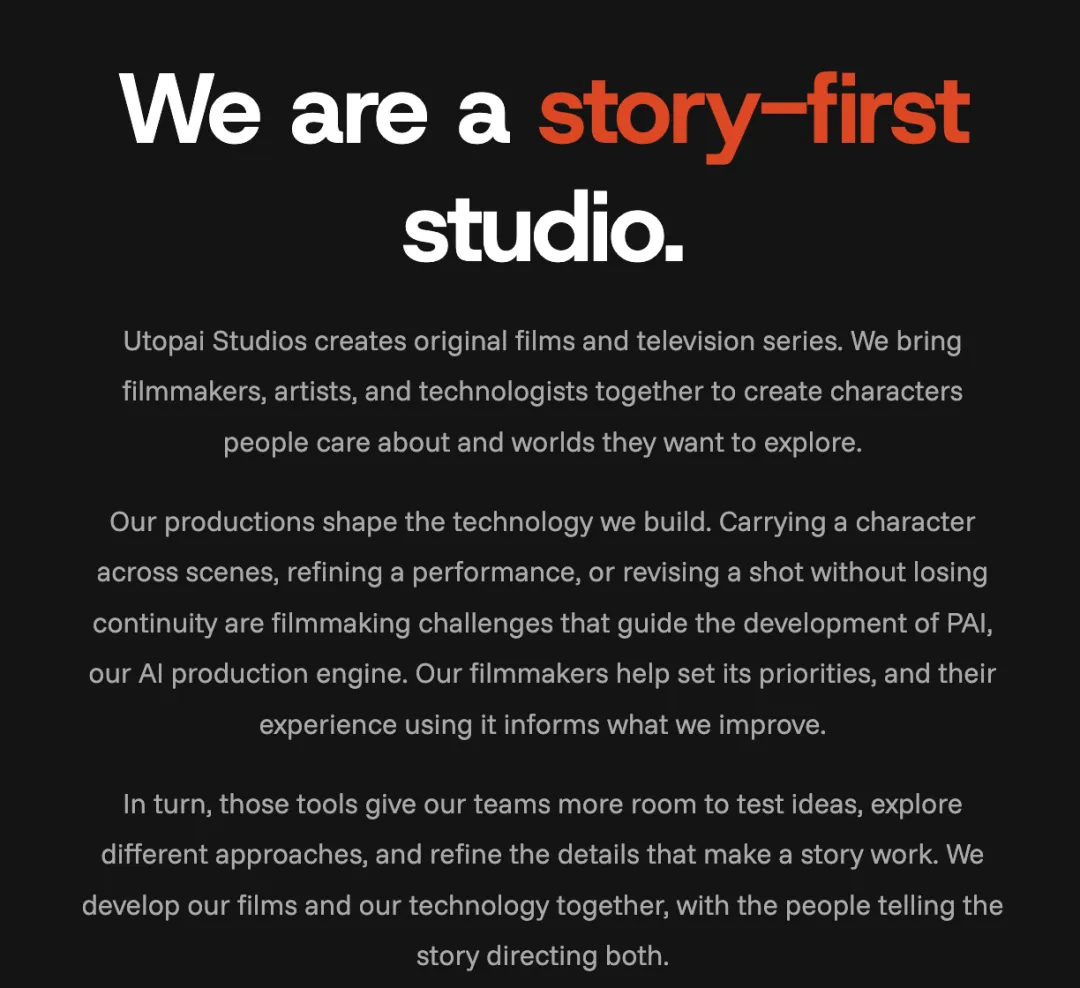
The phrase is particularly rare in today's creative circle of "AI supremacy".
Since the birth of cinema, from silent to audible, from black and white to color, from film to digital, and from CGI to visual effects, technical tools have been transformed countless times.
But no matter how evolved the camera and the rendering, it's a truly timeless story of vivid characters, complex humanity, and touching memories that will live on in the audience's memories.
For Utopai Studios, technology was never meant to replace filmmakers, but to empower them with new capabilities through AI to accelerate transformation, explore more creative possibilities, and bring complex creativity to the screen with greater control.
This concept is the core idea behind its customized video generation model Utopai X and its self-developed PAI.
The technical focus of Utopai X is on how to organize and control underlying model capabilities to serve professional video production.
PAI, developed independently by Utopai Studios, is a complete AI-based video production system, the core of which is that creative dominance is always in the hands of the creator. Where to cut, what to leave, how to change is entirely up to the director and the artist.
Utopai produces proprietary materials, including scripts, adopted character and scene designs, shot plans, and footage from one edition to the next. The value of these materials also includes the professional judgments recorded around them.
Directors, photographers and artists evaluate which versions can be used, which are not, and why. These decisions serve as training and evaluation signals for the research team.
Knowing what was chosen, why it was chosen, put feedback and specific production needs on the board, giving the team a better basis for judging which aspects of the model should be done better.
At Utopai, the "mark" and "feedback" to the model are the writers involved in the filming of the monster Slayer, the artistic direction of the former Pixar, and the veteran animators and directors familiar with the Hollywood pipeline.
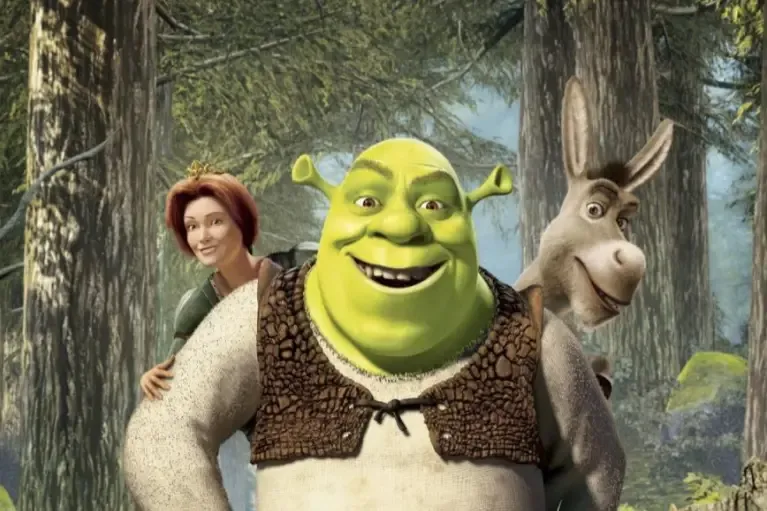
This "expert feedback" with a deep industrial base contains hundreds of thousands of times more gold than normal labels.
The Utopai research team also used an internal Elo ranking system to compare model output.
This process includes artificial preference evaluation and automatic voting by visual language models. Artists participate in artificial evaluation, contributing their judgments to the evaluation of the images generated.
These internal assessments support model development, while Artificial Analysis provides an independent comparison of human preferences based on blindness.
This is one of the reasons why they developed the model. The research team can learn from how images are used and evaluated, while the production team can compare the reasons for the initial request to evaluate the changes in the model.
That's why Utopai X won.
Its underlying computing might not be the huge Silicon Valley giant, but in its training data, hundreds of years of Hollywood film industry experience flows.
This is the real home of the big screen.The only criteria for testing a film company's color is always a work, and it must be a feature-length film that can be tested on the big screen and by global audiences.
Unlike AI short film experiments that only earn click-through rates on social networks, Utopai Studios set the main battlefield to be shown in court from the start.
Currently, the company has more than 20 projects in development and production, three of which have been officially closed for theatrical release worldwide in 2027.
Variety Entertainment rated it as "the world's largest independent AI live-action television company".
The wide range of themes, the difficulty of creating and the luxury of the behind-the-scenes lineup are enough to attract the attention of the traditional Hollywood industry:
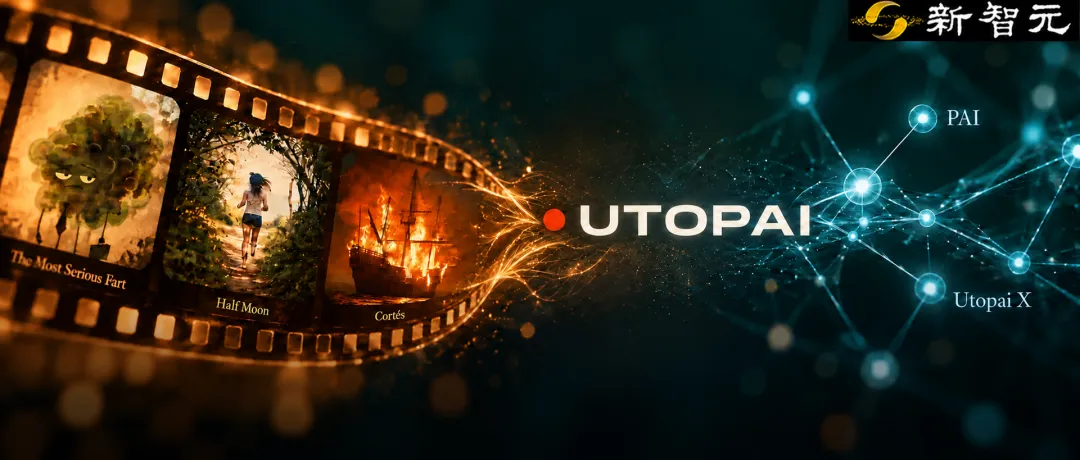
The first was The Most Serious Fart, an Oscar-nominated animated feature film starring Pixar.
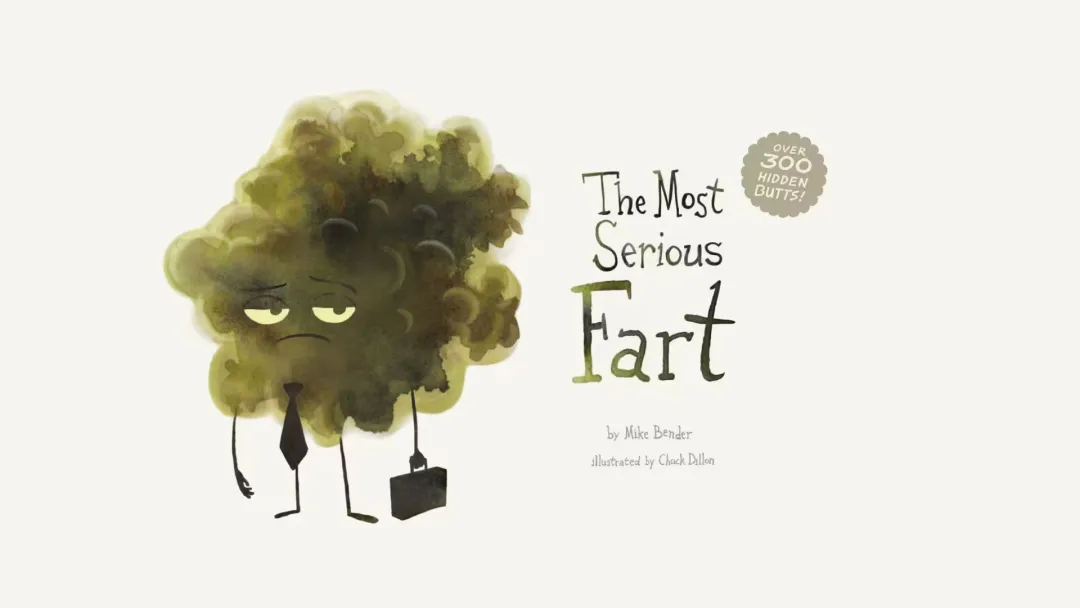
Set to hit theaters globally in the summer of 2027, the family-animated feature film is adapted from the New York Times best-selling children's book of 2023. It explores the universal theme of breaking stereotypes and self-acceptance with an extreme sense of humor and counter-plotting.
Even more astonishing is the artistic makeup behind the scenes, made up entirely of the Hollywood All-Star National Team:

When a group of Academy Award, Annie Award, and Emmy Award-winning Hall of Fame artists chose to rely entirely on Utopai's PAI system to produce an animated blockbuster, it sent a signal to the industry: AI has officially become the powerful extension of Hollywood's top master craftsmen.
The second part, the Korean edition of "Aunt's Love Letter", is a month and a half long.
It is a romantic drama film that will be released in theaters in 2027 and will be directed by Hyo-joo Yang, a well-known South Korean director who won the Silver Bear at the Berlin Film Festival.
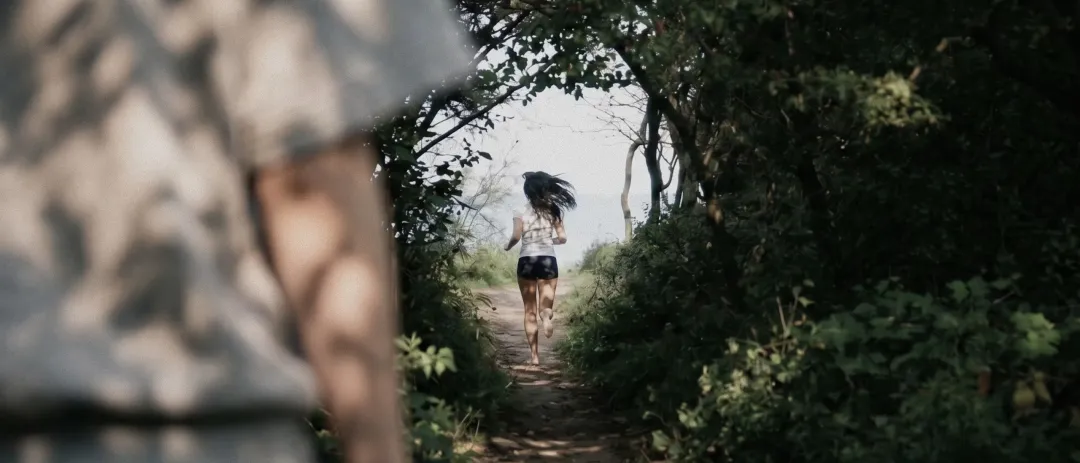
The film focuses deeply on a multicultural family living in Germany, with an extremely restrained, subtle touch, and presents the love and reconciliation between modern times that is obscured by silence and distance from life.
Utopai's use of self-developed technology in a documentary that relies heavily on micro-expressions and emotional tension is a testament to its technological philosophy: no matter how it is produced, the most worthy of being on the big screen is always the most genuine emotion in the story itself with human beings.
The last film in the series was the epic film The Curse of Cortés.

Written by Oscar-nominated screenwriter Nicholas Kazan, the historical epic film tells the story of the shocking collision of two enormous civilizations after Hernán Cortés entered the Aztec Empire in the 16th century.
The film is also set to open in theaters in 2027.
Under Hollywood's traditional production system, the themes of the trans-civilized history of the "green light black hole", the war between the two armies, the restoration of the fortress, the restoration of the magnificent old city, the extremely sensitive historical perspective and the cost of hundreds of millions of dollars of landscaping, have left countless traditional manufacturers in a state of disrepair.
Utopai's choice to tackle this giant work positively fully demonstrates the true value of its technological tools: AI's mission is not to replace, but to break the barrier to production, giving filmmakers the opportunity to bring back to their audiences the magnificent epics that once belonged to the big screen, at previously unbearable costs and on an unimaginable scale.
In addition, commercially, Utopai Studios' strategy for PAI is to collaborate with partners on high-quality AI for a long time.
One commercial example is a deep strategic partnership with Japanese mobile game and entertainment giant DeNA to create AI-assisted animation. DeNA is a Japanese entertainment industry benchmark and has teamed up with The PokemonCompany to create a number of top Pokémon mobile titles such as the Pokémon Trading Card Game Pocket Series.
This collaboration has a milestone in the industry: Utopai has become the world's first successful video company to fully integrate the AI production system into the traditional Japanese manga industry pipeline.
In China, the company announced a partnership with Warner Bros. in April this year to co-develop the syndicated action-drama series Xinjiang: The 500th Anniversary of Disappearance.
Real industry recognitionTrue recognition comes from mainstream buyers and top distributors.
For the mature film industry, the only way to complete a commercial shutdown is to access the global mainstream distribution network.
In this dimension, Utopai has acquired a very large number of industry backbooks.
It was directed by Hyun Park, President of Utopai APAC, former head of Studio Dragon Global Affairs at CJ ENM, South Korea, and Warner Bros. Korea, who served as executive producer of the film Bedford Park, which won the Special Jury Prize for American Dramatic Feature at the Sundance Film Festival.
Subsequently, the Hollywood Hall of Fame's art film distributor Sony Classics acquired the worldwide distribution rights to the film directly. This was the highest recognition of the international mainstream distribution system for Utopai's participation in artistic quality and industrial standards.
In the field of drama, the co-produced science fiction epic series Space Nation became the first AI backdrop series to reach a deal with traditional copyright buyers.
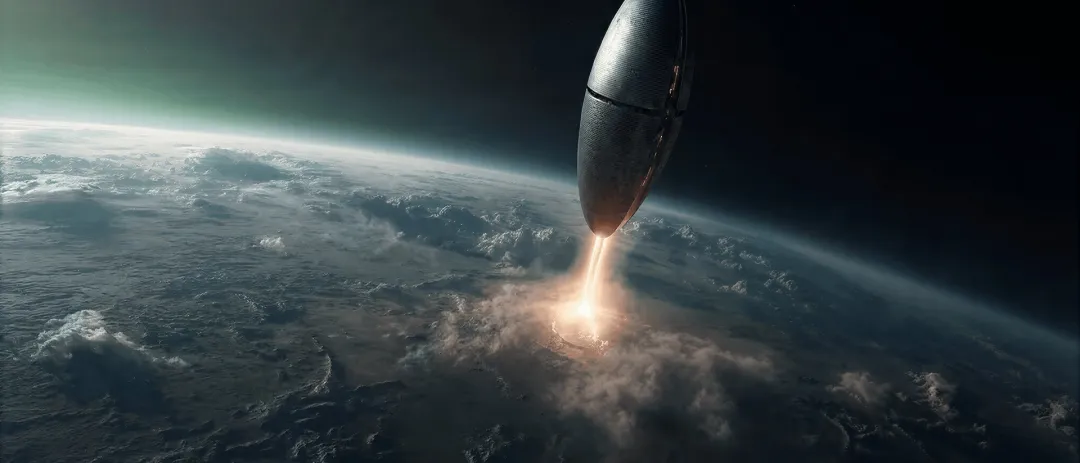
Globoplay, Brazil's largest media giant, and German TV stations have both purchased the distribution rights at normal market prices for traditional non-AI content.
According to Forbes, only two projects from the science fiction series Space Nation and the epic Cortés, with a potential combined pre-sale income of up to $110 million from copyright holders, were made available on a contract basis. Checks issued by mainstream traditional buyers announced the complete closure of global distribution verification.
Utopai Studios officially became the first AI film company to join the Writers Guild and Actors Guild of Hollywood.
It demonstrates to the global industry that Utopai is not a disruptor of rules, but a long-term builder of industry norms, respecting creators' rights and expanding artists' borders with technology.
Utopai's pan-entertainment touchstone is also accelerating its expansion into sports and trendy ecosystems, receiving strategic investment from Creative 7 under NBA Hall of Fame legend Cameron Anthony; working with NBA superstar James Harden to create AI animated shorts using PAI systems in conjunction.

From Hollywood's top producers to global sports icons, from the Japanese manga industry to the Eastern super-IP, Utopai demonstrates the enormously diverse stretch of a new generation of full-screen entertainment empire.
Let the imagination really get to the screenAccording to Kevin Chong, chief operating officer of Utopai Studios:
At Utopai Studios, we are building an entirely new model of filmmaking that provides creators with more ways to move ambitious creativity onto the big screen while always putting their creative intentions at the heart of every production link.
Blind Screening is the second largest in the world and the first in the United States, and Utopai X is just one step ahead of the technological evolutionary coordinate system.
Tackling the consistency problem, leading the way in introducing AI into the Japanese animation industry, obtaining acquisitions and verification from Sony Classics, Globoplay, German TV, and other major global distribution giants is evidence of its established industrial system.
But above all these hardcore indicators, the most moving thing is the initial reverence for the art of cinema.