This weekend, the vast majority of scholars were blocked by the new model of OpenAI.
Here's how it works: OpenAI has released an internal version of its next-generation major model, Astra, with 10 new findings in the fields of high-dimensional geometry, coding theory, group theory, computational circuit complexity, quantum complexity, cryptography, and top-value combinations.
Some of these problems have not achieved core progress for at least a decade, while others have been pending for decades. The results include constructing non-sofic groups, overturning Connes's rigidity conjecture, solving the three Erdős problems, and advancing recent vector problems closely related to post-quantum cryptography.
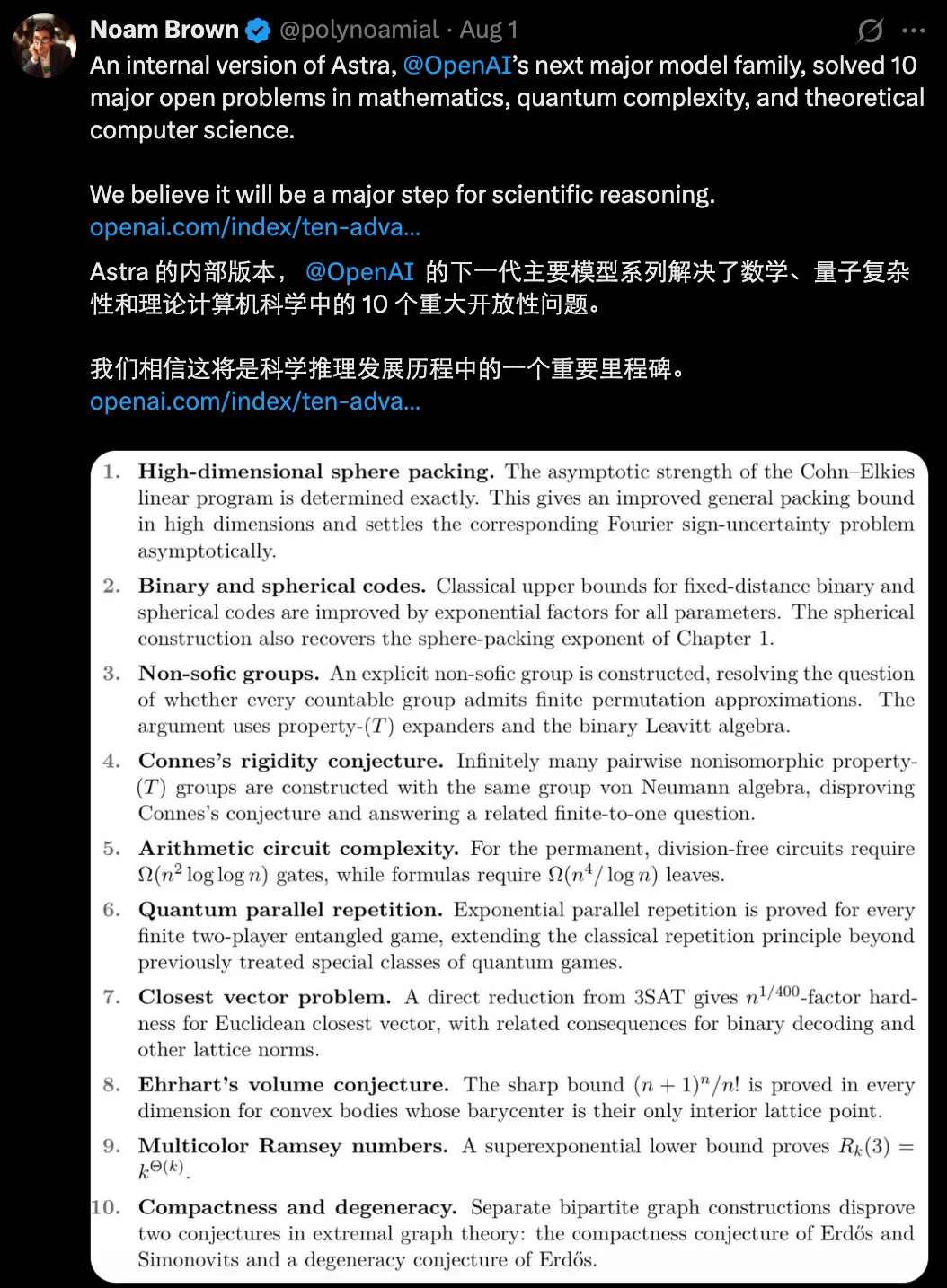
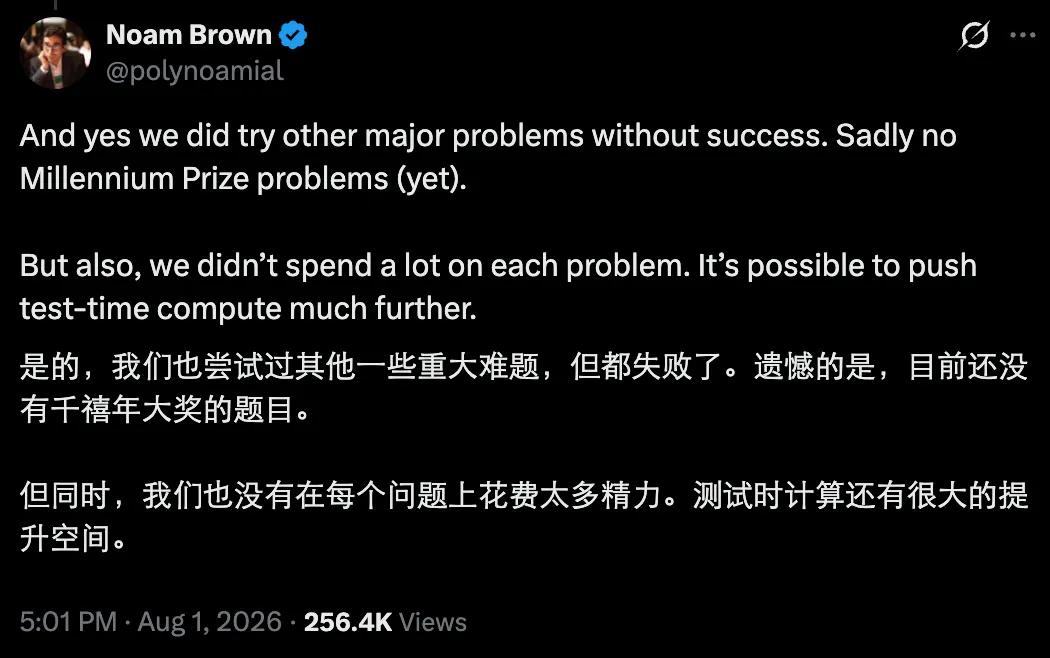
In return, OpenAI research scientist Noam Brown added: "We didn't spend too much energy on every problem, and there was a lot of room for improvement when we tested it". The so-called "not too much energy" refers to the fact that, according to the price calculation of the Sol API, the model looks for all the tokens used to solve the problem, which cost about $2,000, or an average of $200 per problem...
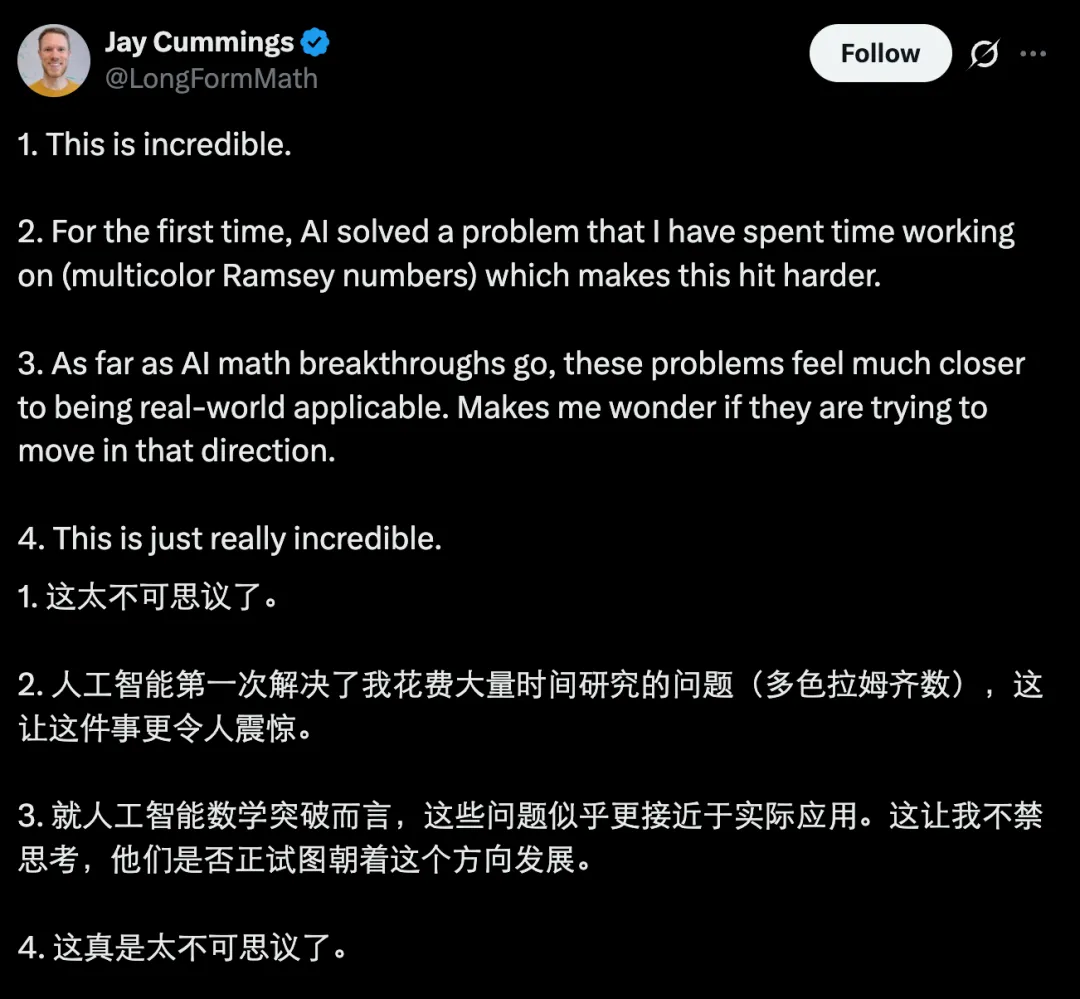
Jay Cummings, a mathematician who wrote the book Proofs: A Long-Form Mathematics Textbook, called it "incredible".
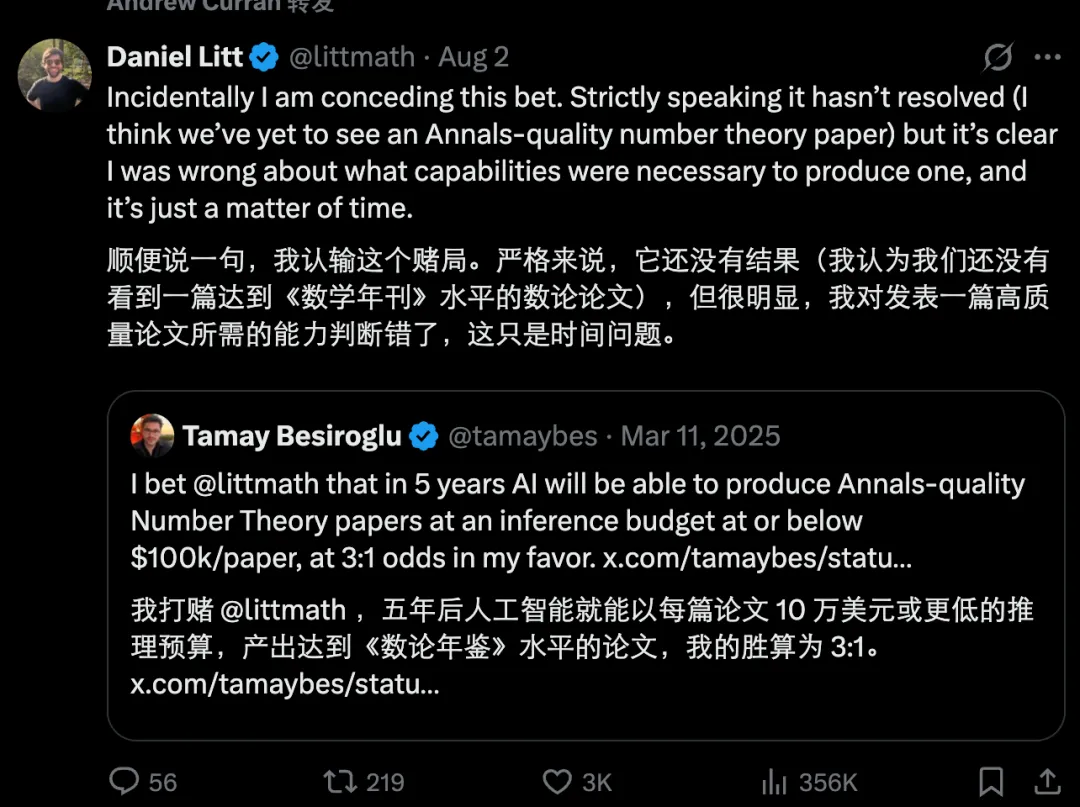
Daniel Litt, professor of mathematics at the University of Toronto, openly admitted that he had previously underestimated AI's capabilities and that it was only a matter of time before big models could publish mathematical-grade results that would make it to the top of the mathematical yearbook.
Some researchers are more sophisticated, excited by AI's accelerating scientific discovery, and confused by the fact that it's being shocked as a profession. One of the most frequently asked questions is: Is there no work left for mathematicians? Can humans continue to do mathematics?
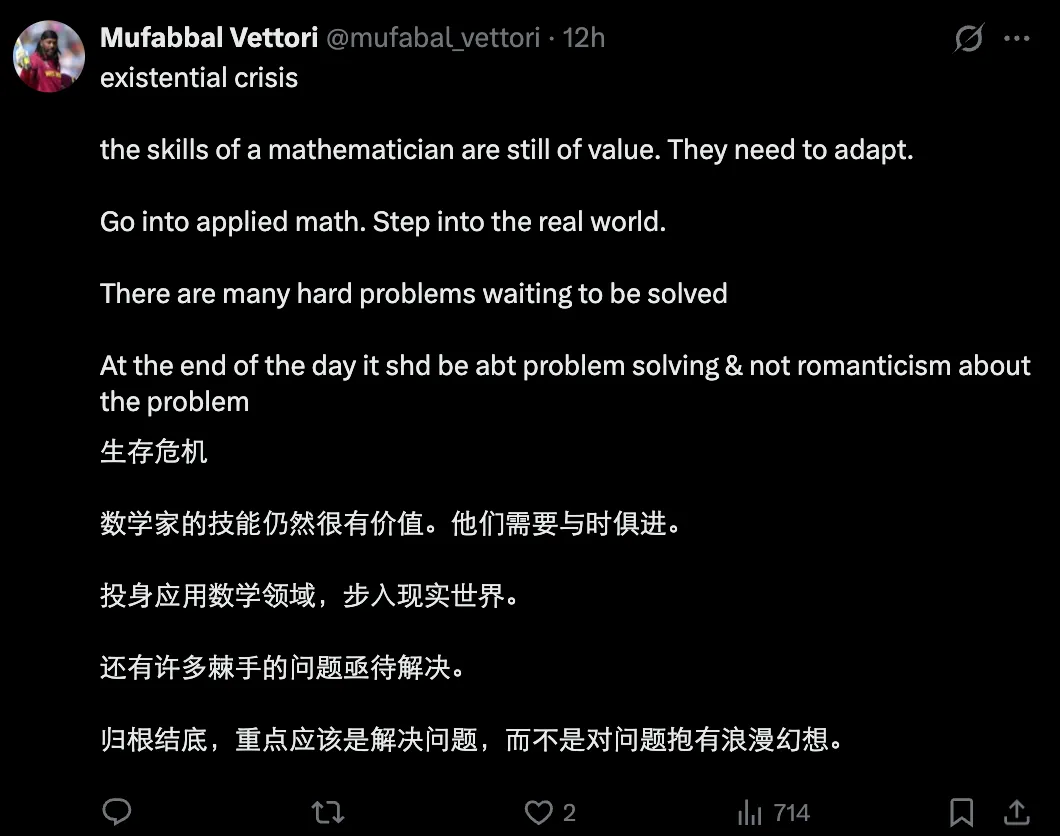
Regarding the first two questions, it has been argued that society needs mathematicians never to earn enough proofs per year, but to determine how many human mathematicians we need to preserve our right to judge, and then hand over proof work to them to dominate, which is precisely what keeps pure mathematics in an irreplaceable position. But it has also been argued that things are not so optimistic because mathematicians' salaries include theoretical proofs that when proof work is no longer scarce, only researchers who have the choice and judgement, or will face the continuing shrinking reality of existence.
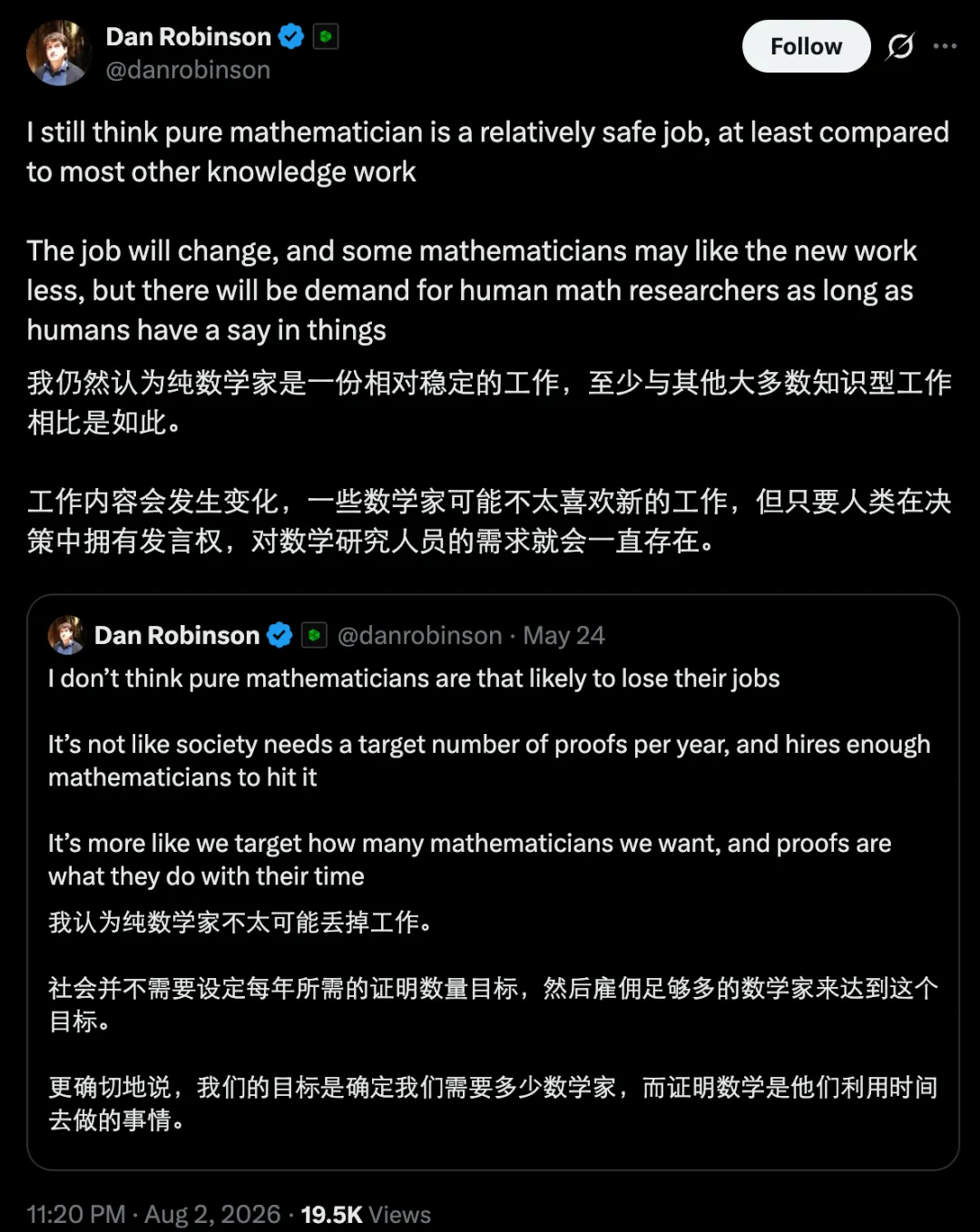
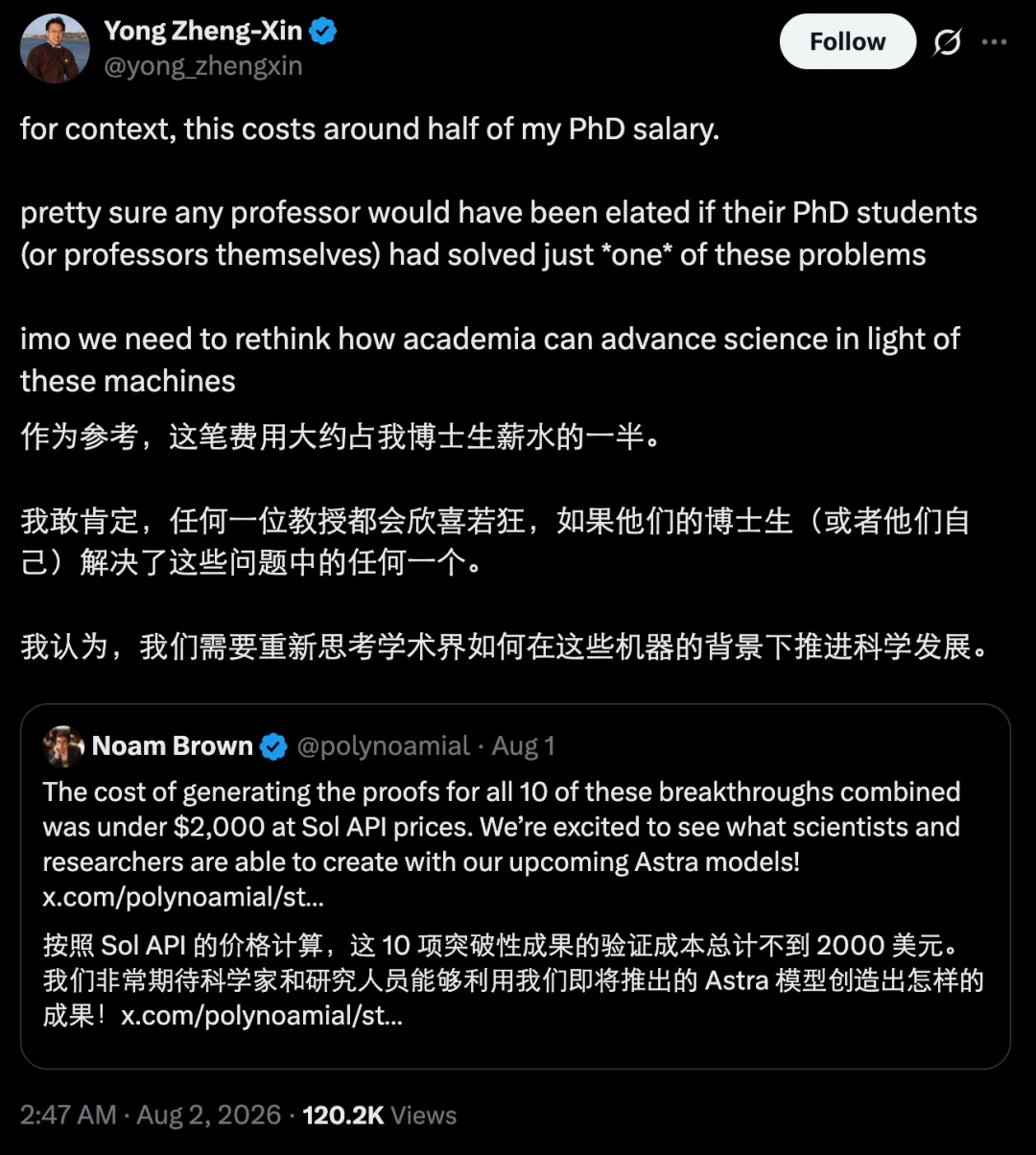
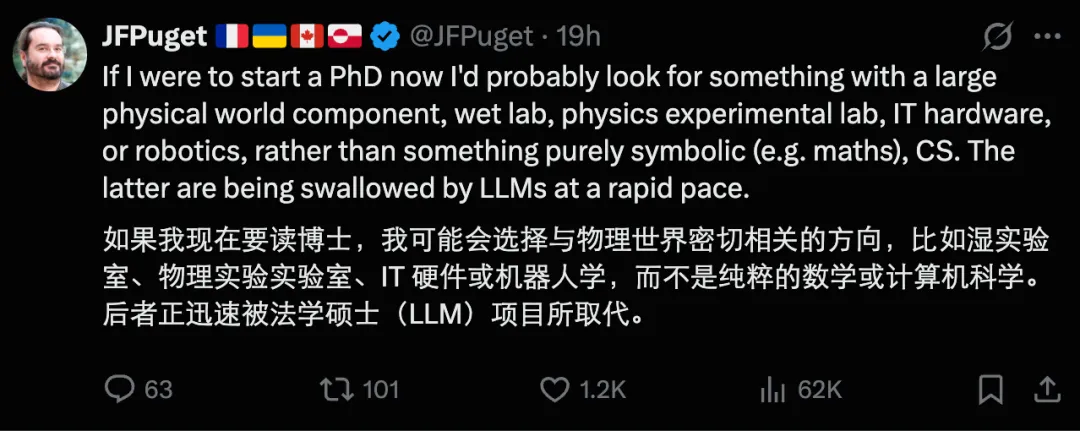
To address the third problem, six-time Kaggle Specialist, NVIDIA machine learning expert Jean-François Puget argues that there is a risk of continuing to choose a purely mathematical direction. He points out, with his own reading advice, that purely symbolic brain power is being rapidly swallowed up by LLM, and that in order to avoid the risk of being substituted, it is necessary to go in a deeper research direction bound up with physical entities.
A recent long post that sparked widespread controversy further revealed the deeper core of this psychological crisis among mathematicians.
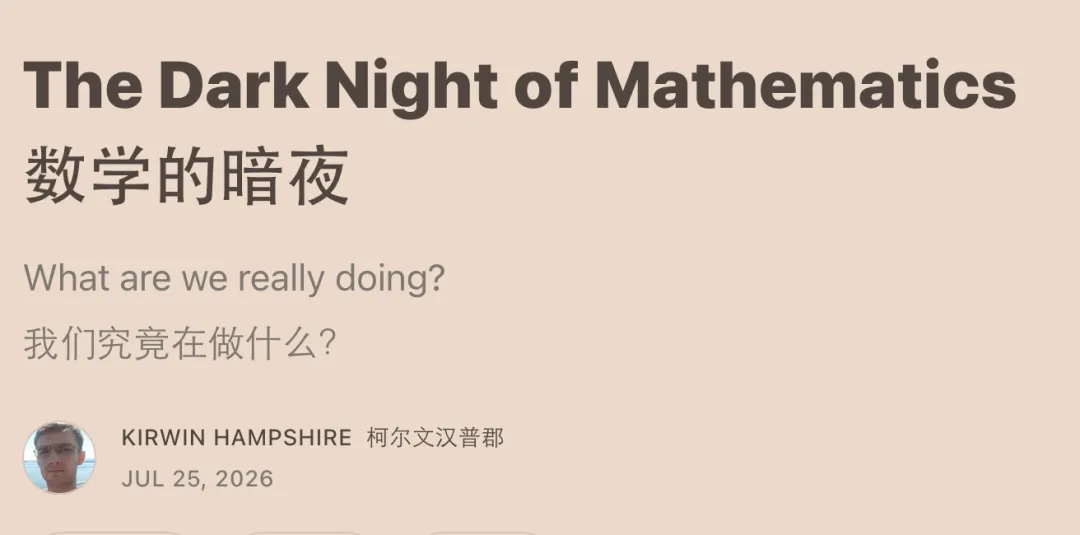
Kirwin Hampshire, a young mathematician, writes in his foreword that it is not AI that really makes itself collapse that will rob mathematicians of their work, but that the meaning of mathematics is likely to change. In his view, the most precious thing in mathematics is never to prove itself, but the process of discovering the unknown and creating new knowledge for the first time. It is this exploration that makes countless mathematicians feel a near-religious experience.
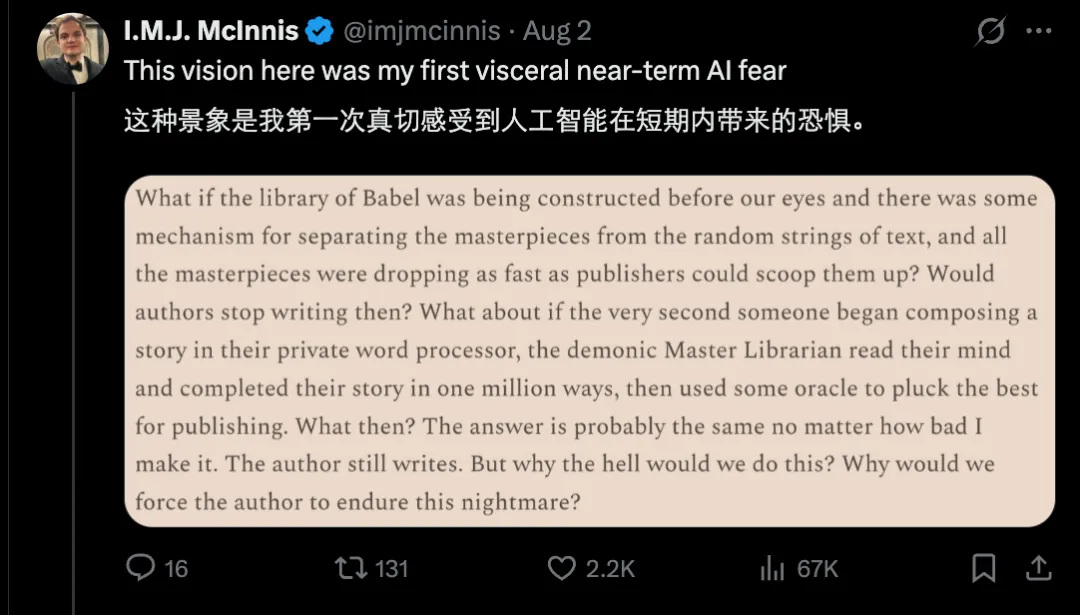
He argued that if any future problem, AI, could instantly provide a plethora of beautiful proofs, then humans could still learn mathematics, teach mathematics, and evaluate mathematics, but may never have the chance to truly "discover" mathematics. For this, he borrowed the parable of author Jorge Luis Borges from the bubbling library: if all the great novels that could be written in the world already existed, and AI could always pick out the best books for the first time, writers could of course still write, but the meaning of the work itself had inevitably changed.
Hampshire confessed that the change was not caused by professional anxiety but by a mental crisis. He was concerned that humanity was being deprived of its unique experience of exploring the unknown and touching the truth through mathematics for thousands of years.
It is said that this article made him feel for the first time the fear of AI in the short term.
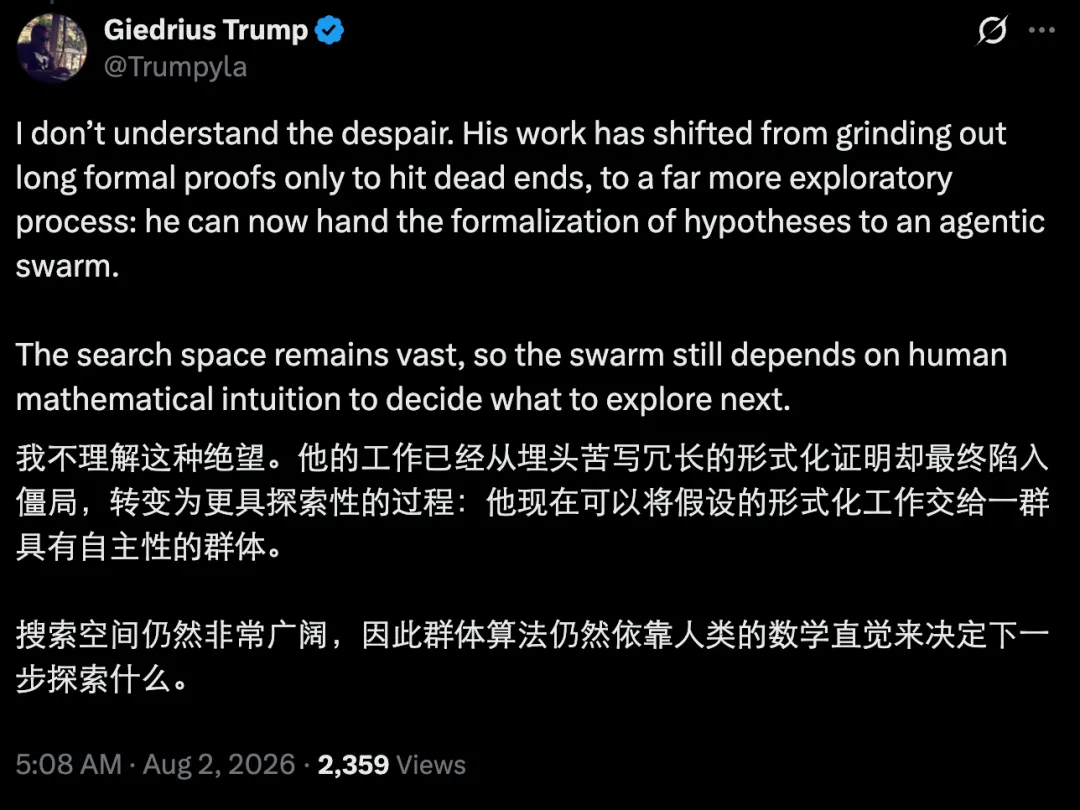
However, some say they don't understand this despair. In his view, AI is not about snatching the stage from the mathematicians, but about getting people out of the boring formalized mud and refocusing on the most precious instincts and directional judgments.
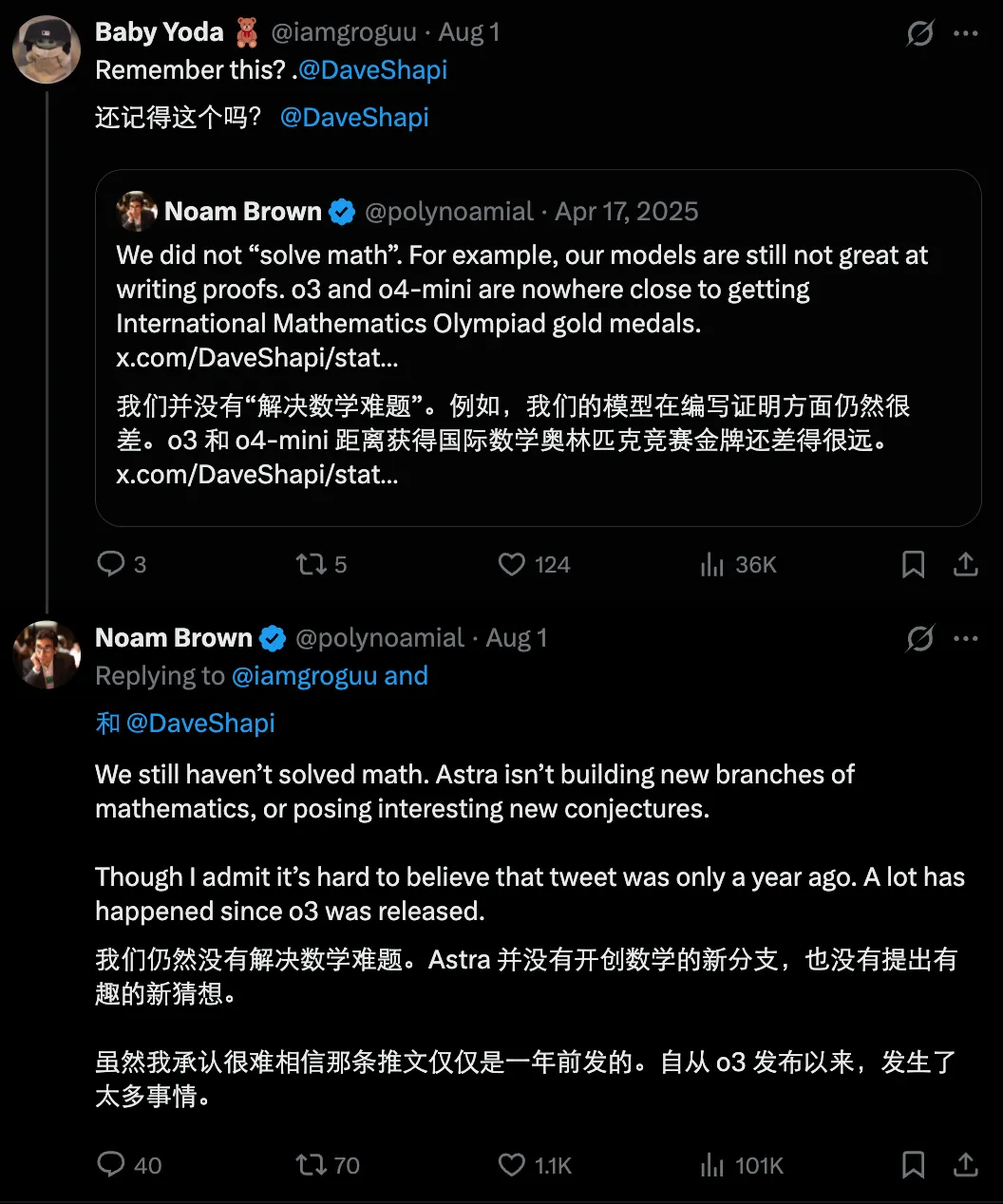
Noam Brown also said in response to other netizens that their AI did not solve mathematical problems, nor did they innovate in mathematical branches or come up with interesting new speculations.
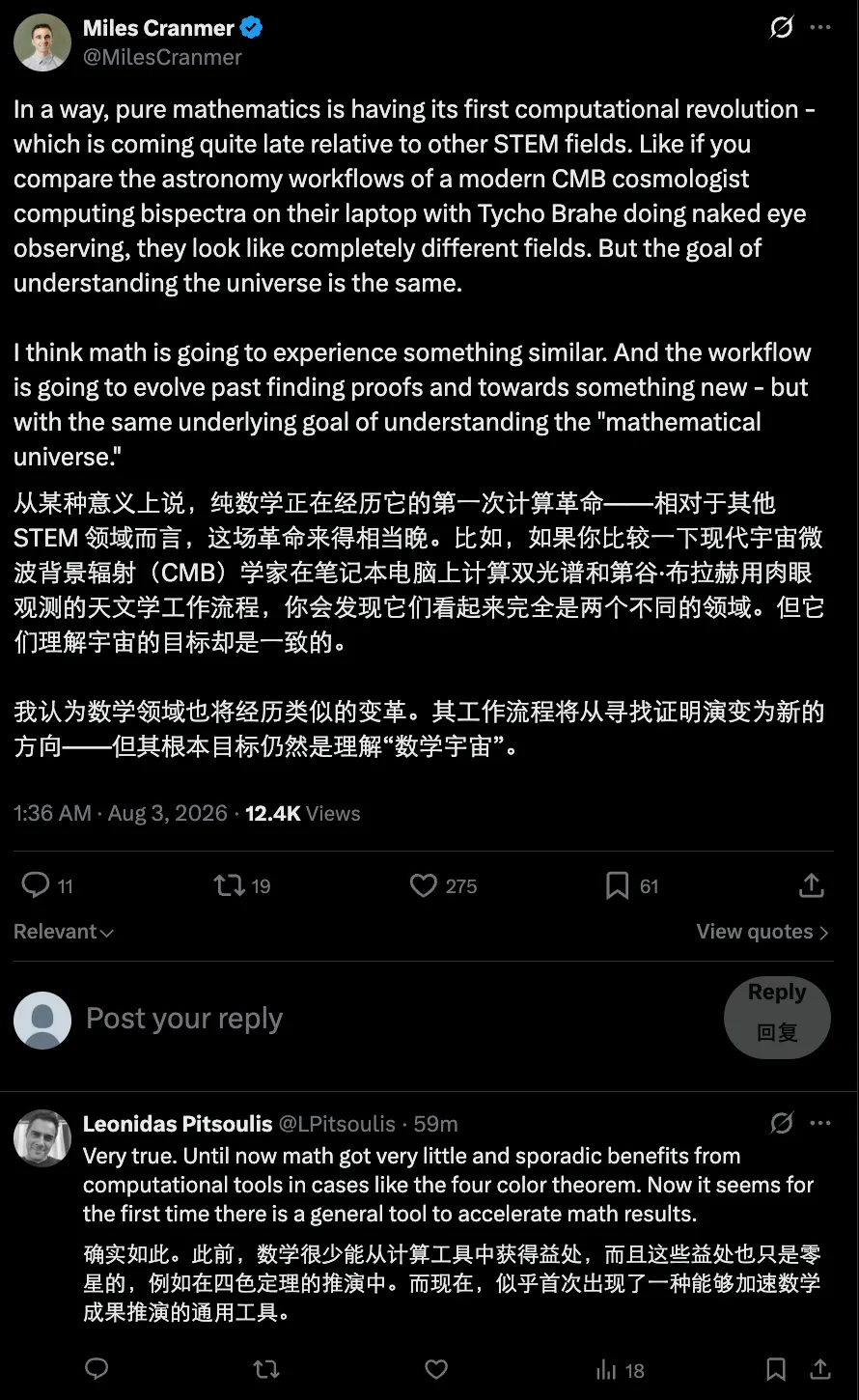
Others say that this was a late computational revolution that had already occurred in other fields, and that its fundamental goal remained unchanged and was to understand the fundamental laws of the universe.
Whatever the outcome, the ten results of Astra have irreversibly altered the tone of the discussion. It is no longer a question of whether AI can do mathematics, but rather "What is human mathematics after when AI can do it quite well?"
It's a question that other disciplines might think about in advance.
What do you think about that?