
It's the first time in the history of the world.
10 mathematical problems, 24 hours in reverse.
This weekend, OpenAI and Anthropic, two of the biggest AI giants, meet at the forefront of mathematics.
On August 1, OpenAI researcher Sébastien Bubeck announced that they had unpublished the next generation of the dominant model Astra, a breath of fresh air that proved 10 cutting-edge mathematical achievements, as well as 10 Lean certificates and 10 recapitulations of individual concepts.
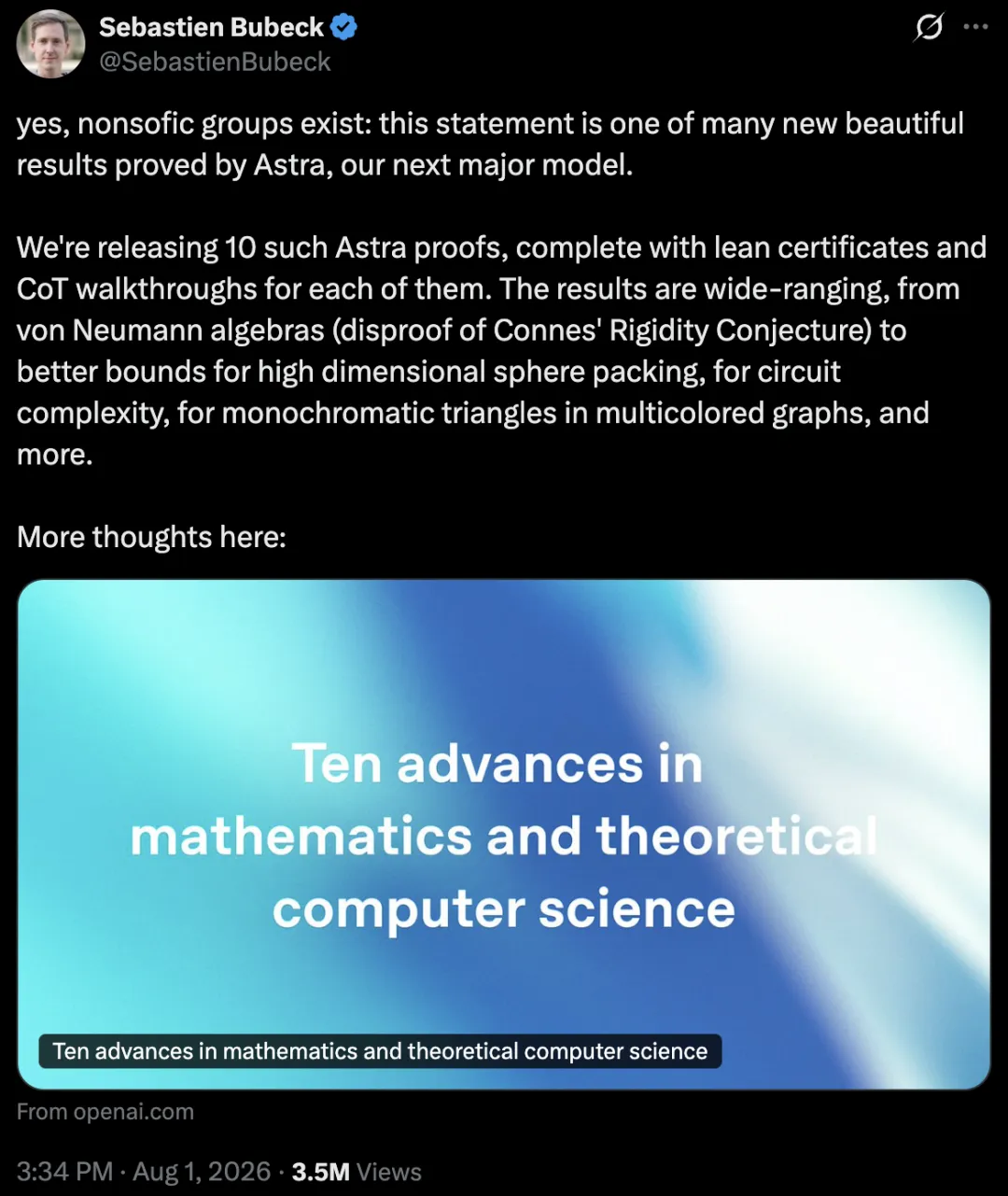
Don't underestimate these 10 questions.
Their main conclusions, which have not been pushed for at least a decade, often decades, are the open problem of the true value of goods.
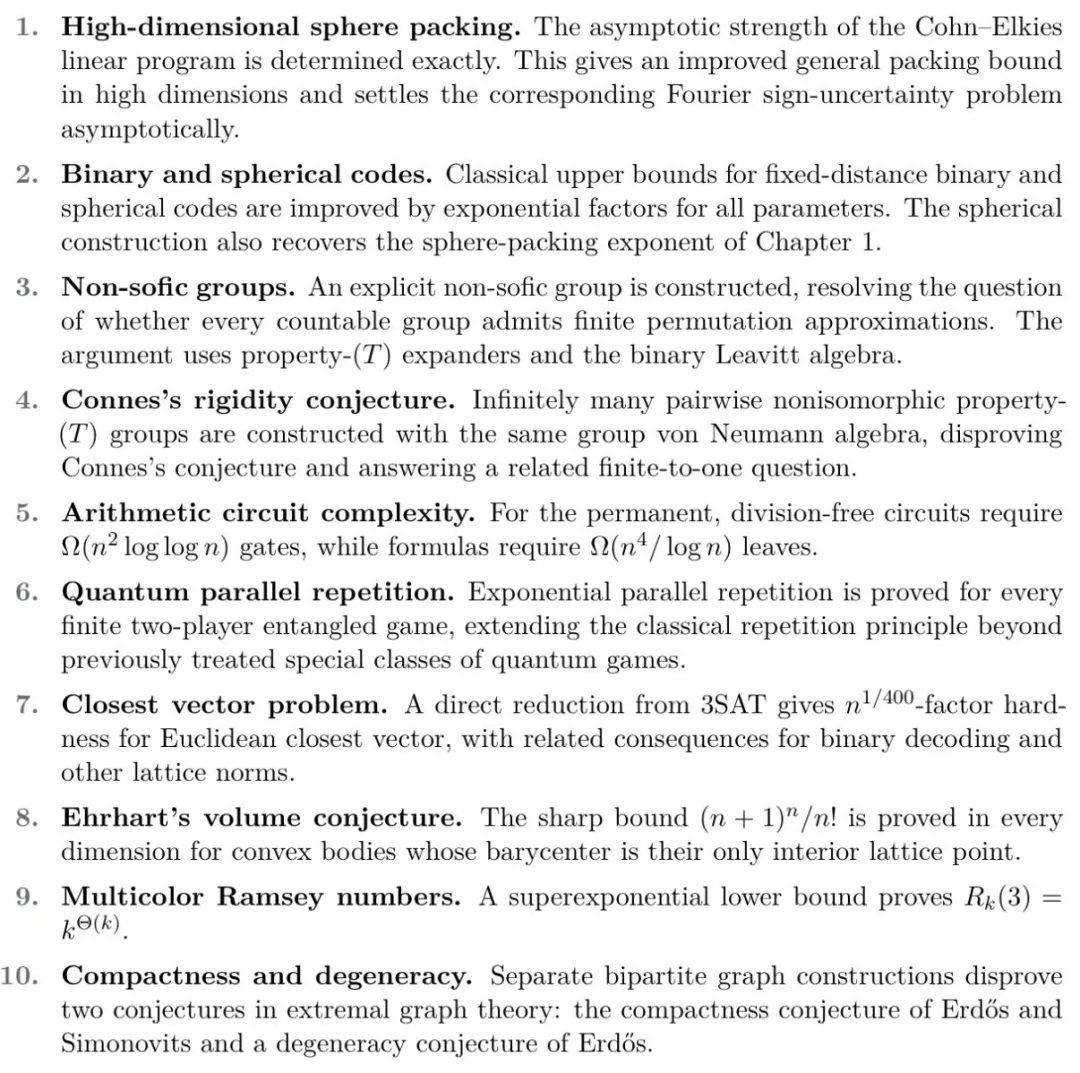
Though not the deepest puzzle in mathematics, each one is a hard bone.
Elliot Glazer, head of Epoch AI's FrontierMath, said: "This non-Sophical study is sure to make its way into the top journal Annals of Mathematics, recognized by the mathematical community".
Once these 10 puzzles were solved, the AI circle exploded and someone shouted, "The mathematical miracle has arrived".
This is the first time that anthropic has come to the attention of the world.
Less than 24 hours later, researcher Levent Alpöge responded to a post by Bubeck: "I'm halfway through with Fable".
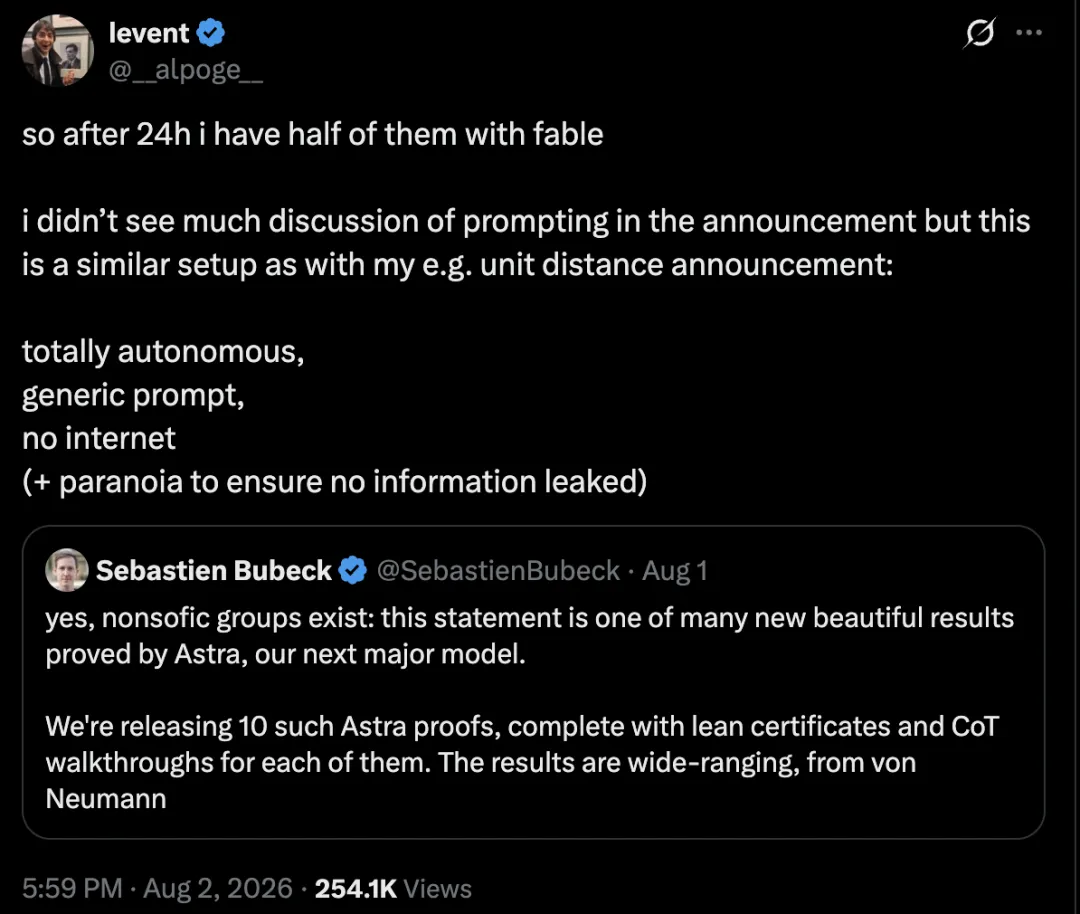
He then added that what he had done was the fourth, fifth, sixth, seventh, eighth, and fifth on the OpenAI list.
The experimental conditions, Levent says, are clean: completely autonomous, general prompts, completely wireless, and a special layer of protection is added to prevent OpenAI's solutions from leaking into context.
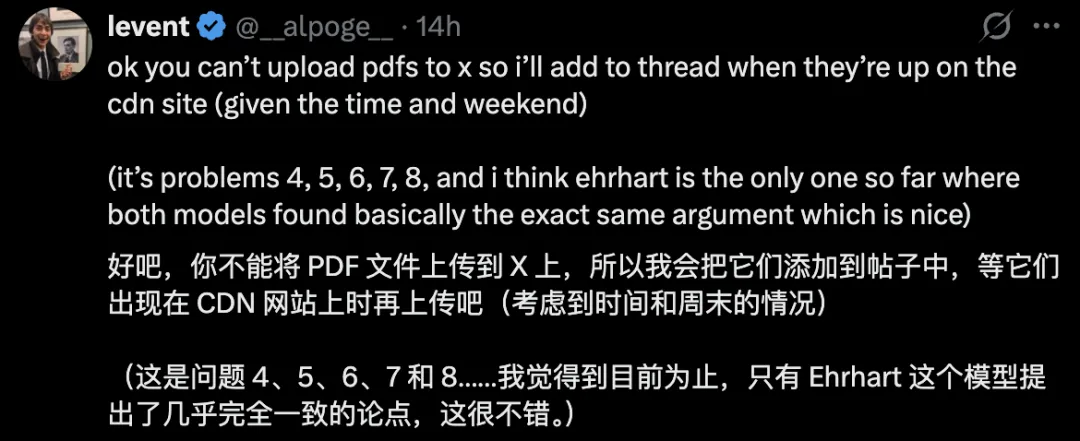
Of course, Levent has not yet released the full details of Fable's proof, and he says it will be uploaded.
But if it is confirmed, the scale of the incident will change:
OpenAI's first prototype with an unpublished model, the Astra, only lasted 24 hours. Fable, a model that Anthropic has long been open to the public, can be used by anyone.
It's a "mathematical first".There are only 24 hours left in storage.Chubby tweeted: "Publicly available Fable, restoring half the results of Astra".
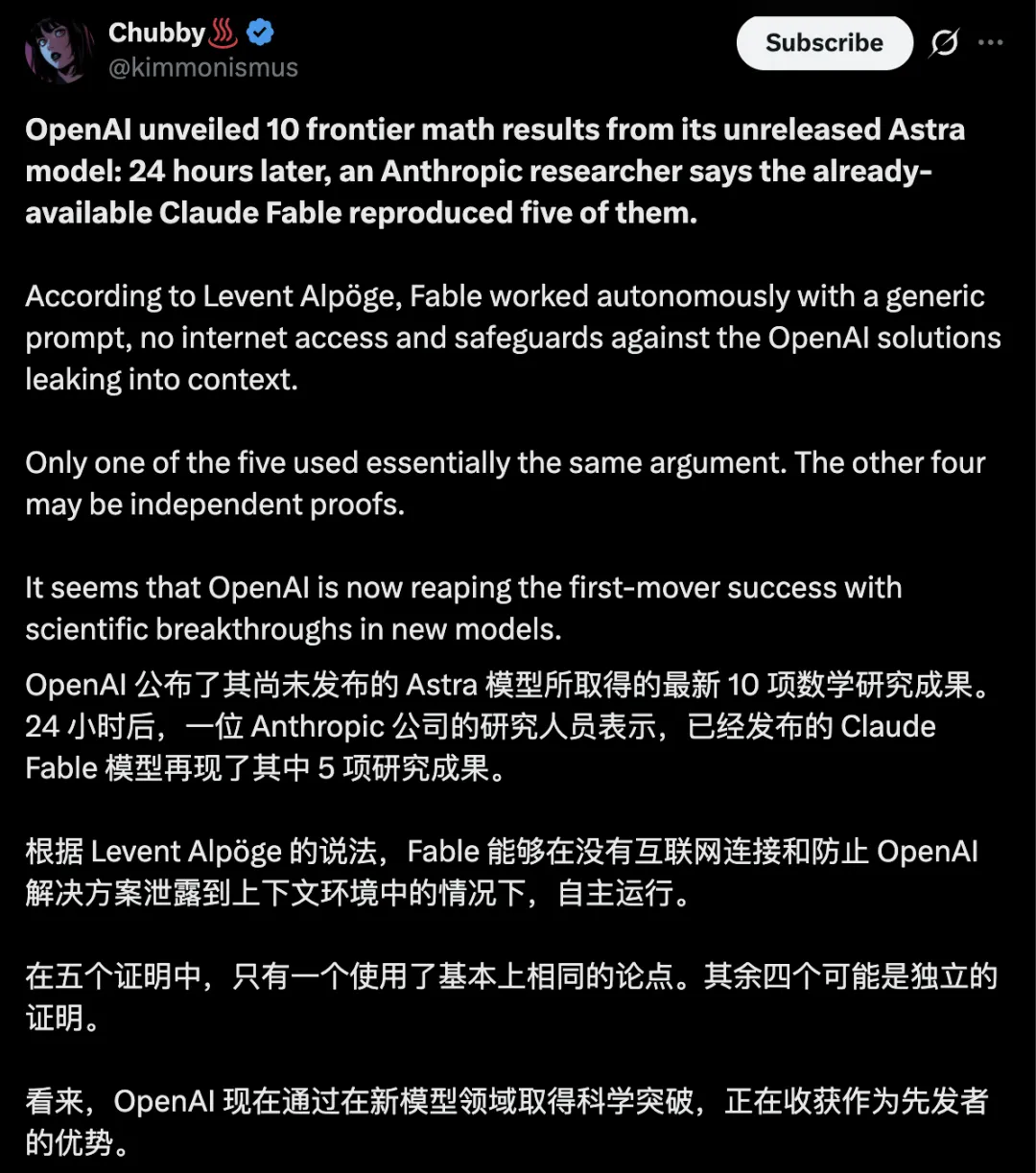
In the comments section, someone said: "Look, OpenAI has only gotten one first?"
In the past, the priority struggle for a mathematical result was usually on an annual basis.
Who thinks first, who testifies first, who publishes first, and there are long posts, reviews, and revisions in the middle.
Now that Astra has not been officially released, the results of its announcement, in just 24 hours, have been halved by an open model.
The initial gold content remains, but the shelf life is significantly shortened.
Several netizens have been shouting "mathematical oddities", and two AI giants have been beating themselves up.
$2,000 behindMore expensive bills.OpenAI also came up with a figure: finding these 10 solutions costs less than $2000.
According to researcher Noam Brown, it corresponds to finding the tokens needed for these solutions and then calculating them at the price of the Sol API.
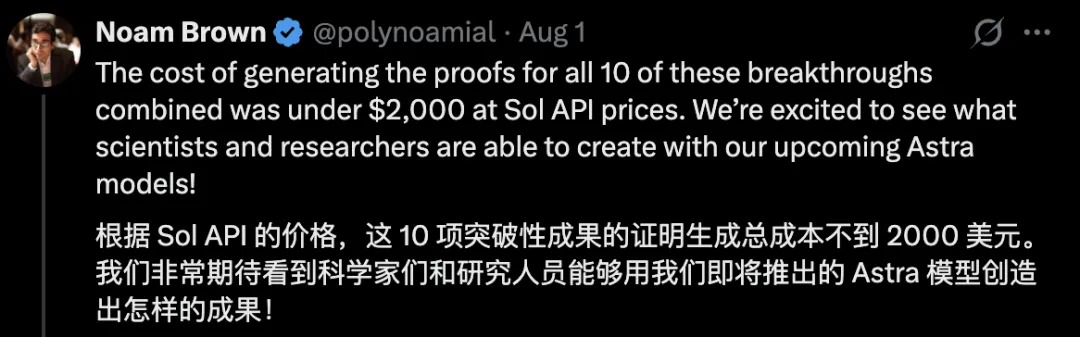
In other words, it's just the marginal reasoning cost of successfully running out of 10 solutions at the moment.
In addition to this, there is the training and development of Astra herself, the problems that have been tried and failed, the time that humans put their arguments together into 249 pages of papers, the cost of formalizing each proof into Lean, and finally the cost of being reviewed by outside mathematicians.
Noam himself admitted that they had tried other major problems, but none of them succeeded, and none of the Millennium Puzzles were solved.
In spite of this, the $2,000 is still the marginal cost of AI solving a front-end problem, hitting the ground.
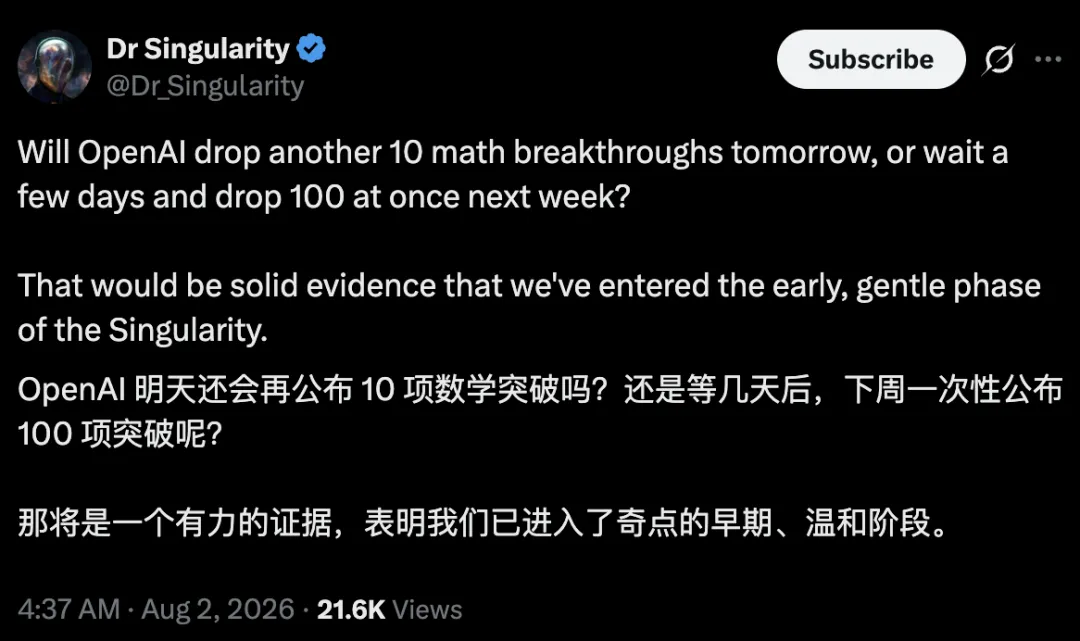
Some have even questioned whether OpenAI will announce 10 more mathematical breakthroughs tomorrow or wait until 100 next week.
Fable's reworking of the same issues as Astra is much more interesting than a regular publication list.
The list is based on the known answers: the topics and the standard answers are there, and the score is higher than the others.
In the absence of a network, the two models independently arrived at the same front-line conclusion, measuring something entirely different: whether the result is unreliable and cannot be reproduced independently.
It's more like peer review.
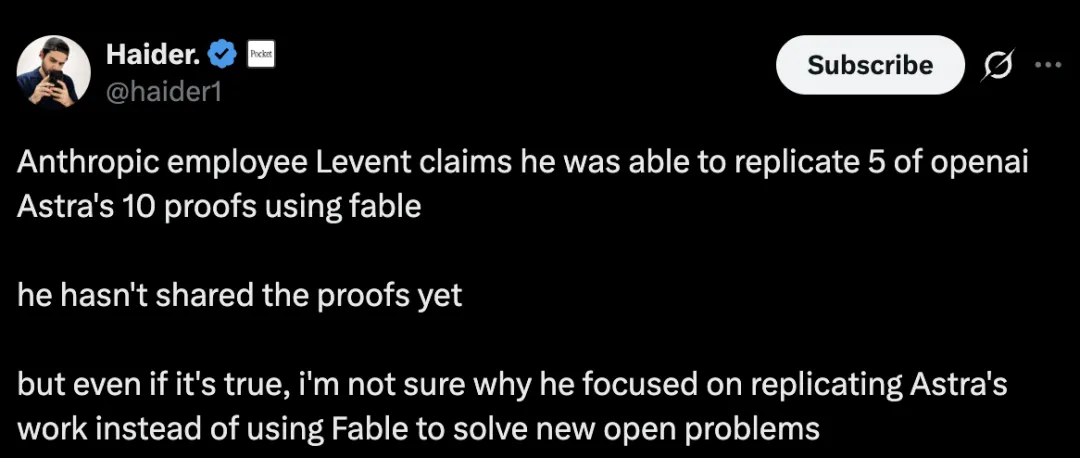
Currently, Levent has only "made a statement" on X, and has not released any PDFs, hints, full run logs, token costs or Lean certificates showing the 5 proofs.
Networker Haider asks: If it's true, why use Fable to recreate Astra instead of using it directly to solve new open problems?
In fact, Fable will not only boost Astra's heat, but it will also solve new problems.
In July, Levent gave a 3D counterexample of the Jacobian conjecture with Fable, and later wrote a special 7-page algebraic verification material to confirm that the explicit mapping did overturn 3D and higher-dimensional conjecture.
The results that the vast majority of people do not understandWho will accept?It is difficult for the vast majority of people to judge the significance of these 10 results.
As Ethan Mollick put it: "For almost everyone on Earth, it's not just beyond capacity, it's beyond comprehension". We can only trust professional mathematicians to tell us it's awesome.
Code, images, chats, where ordinary people can experience the power of AI.
But the existence of non-Sophical groups, the contradictions of Connes's rigid conjecture, the quantum parallel repeating theorem, are all things that only a very few experts understand.
The more AI is at the forefront of science, the more the public is able to rely on a long chain of trust rather than personal experience. This state of "not even amazement without amazement" is occurring in more and more fields simultaneously.
Mathematician Thomas Bloom points out that using mathematical theories accumulated over the centuries, mathematicians' own formalized systems to describe it simply as "AI replaces mathematicians" is not fair.
The criteria he gave was: Does this evidence teach us anything new about the issue?
So the real question is, when AI is able to produce cutting-edge mathematical proofs at low cost, in bulk, what are we going to measure its results with?
The answer may not be at the end of its output, but at the end of its acceptance: a proof can be read, verified, measured, and ultimately determined for its true value.
The most scarce ability is shifting from "proving" to "understanding and accepting evidence".
When AI is able to solve ten puzzles overnight, the real test is just beginning: the quicker it is, the more we can verify it.