
It's the first time in the history of the world.
At the start of the race on August 1, the course of the Agents was transformed once again.
Just today, Ali's "QwenWork" officially opened the tender.
It's an enterprise-grade Agent product that combines the three major products of Qoderwork, Mulerun, and Enlightenment.
It's not only clear-cutting individual work, it's killing the inside of the enterprise, it's pinpointing IM, it's seamlessly connecting the real databases and complex workflows that make the headlines.
What's even more exciting is that the latest flagship Qwen 3.8-Max, which is synchronized, has also been directly accessed by the QQ office, where you can experience the speed of fire.
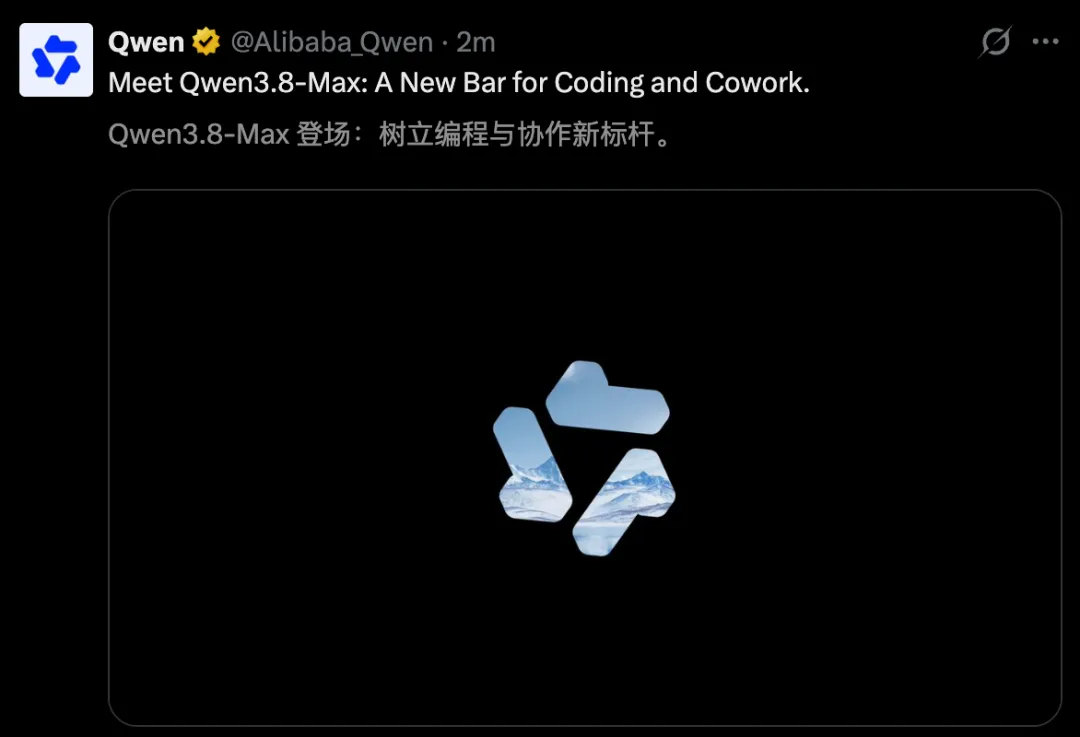
After the Qwen 3.8-Max launch, Ali's market capitalization has skyrocketed to $12.85 billion.
Currently, the web version and PC client have been opened, and the built-in access to PC terminals and mobile phones is also continuously open.
The "Ask the Office" is here.One-handed testingSo what's the experience with the "Ask My Office" like?
It's not just about generating, it's about making use of it.One thing that needs to come in, one thing that can be used out, is the central killer of the "Mill Ask Office".
First, it delivers the full development chain of the "HTML+ domain name+ database" directly, so that the demand is instantaneous.
In a nutshell, AI has created a web application that can access, share, and collect data -- without deployment, without domain name purchase, and without back-end.
The "Generation to Availability" section of "Generation to Availability" is included in the product, which is given to users by default by everyone.
For positions without a technical background, the absence of this section directly determines whether Agent's output is "material" or "finished".
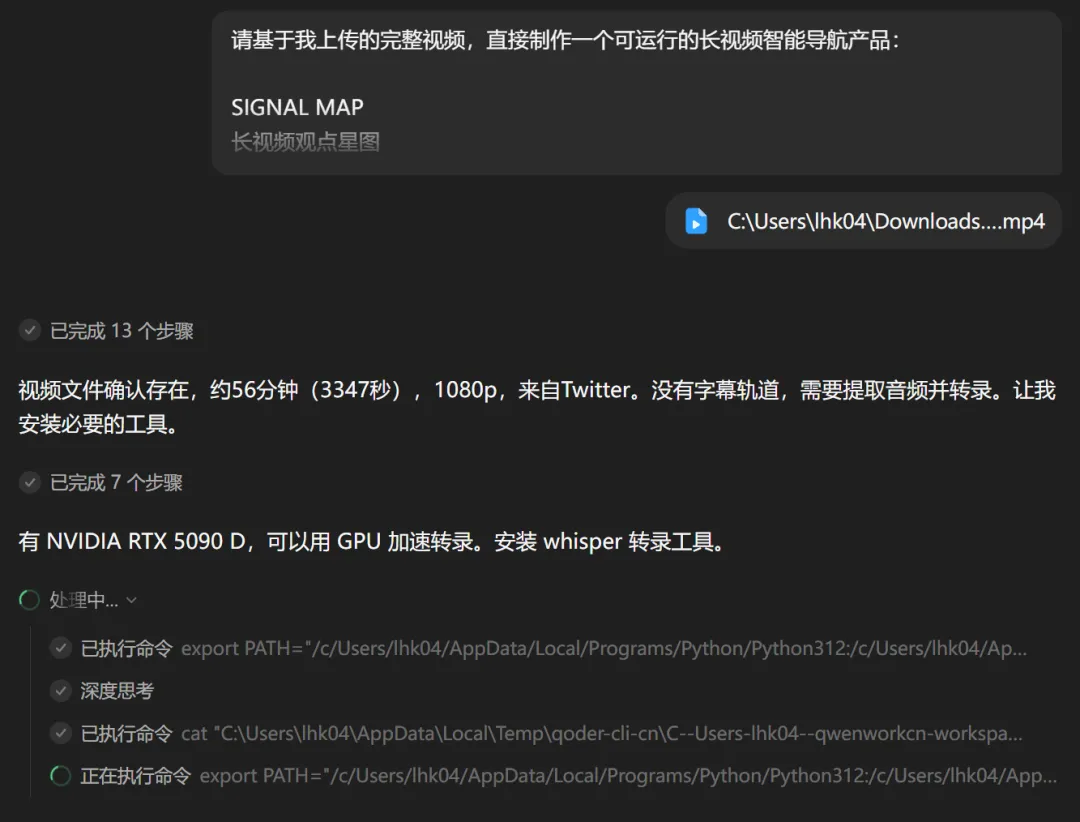
First, we threw it a recent interview with Sam Altman as host of Invest Like the Best, adding a list of requests: turn the entire video into an explorable, localizable, verifiable "view map".
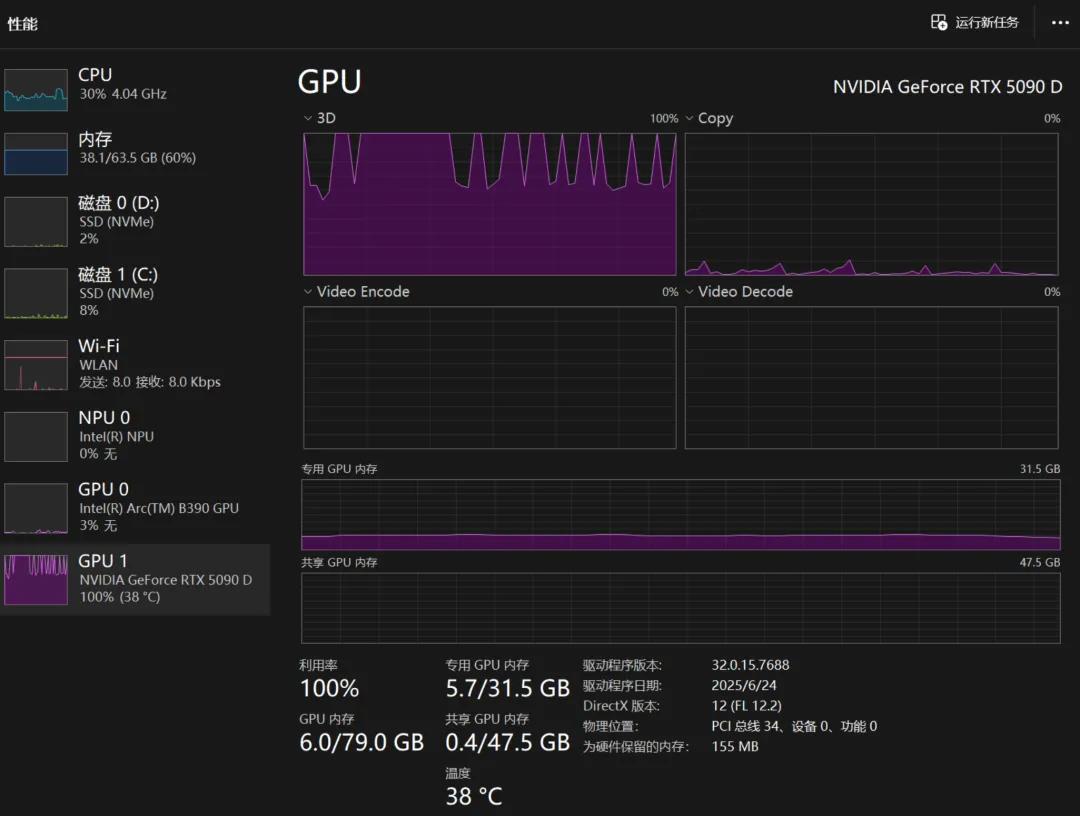
After the video was captured, it pulled out the soundtrack, installed a transcribed model, downloaded the CUDA library, and threw the live video directly onto the graphics card.
The next step is to analyze, build a station, start a service, and then turn on the acceptance page yourself.
  |  |
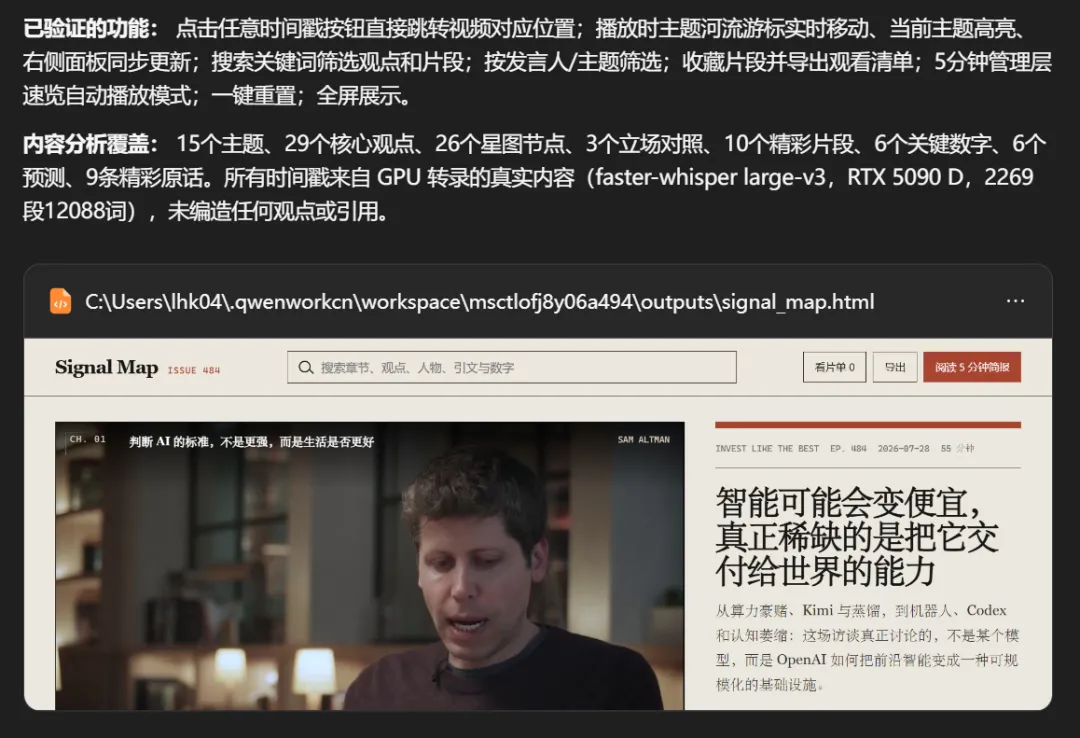
The return is, without exaggeration, like a magazine that can be "played".
The interview is divided into 15 chapters, each of which speaks to a conclusion and exchanges evidence. Pointing to any chapter, point of view or quote, the player jumps directly to that second.


The support should also be complete.
Controversial controversy aligns the views of both parties; selected clips select the ten most viewable ones for you; search boxes search for people, views and even figures that have appeared in interviews; clips that have been viewed can be inserted and exported with a single click.
If you're on time, there's also a "five-minute brief".
In the meantime, a video that could only be heard from beginning to end is now available for viewing.

Next, we're going to increase the intensity and let it work with Three.js as a demonstration of how the fan engine works.
In addition, the prompter word also adds the code, from pre-determination to self-examination, which is enough for thousands of words.

The entire specification book went in, and 1,200 lines of code were returned.
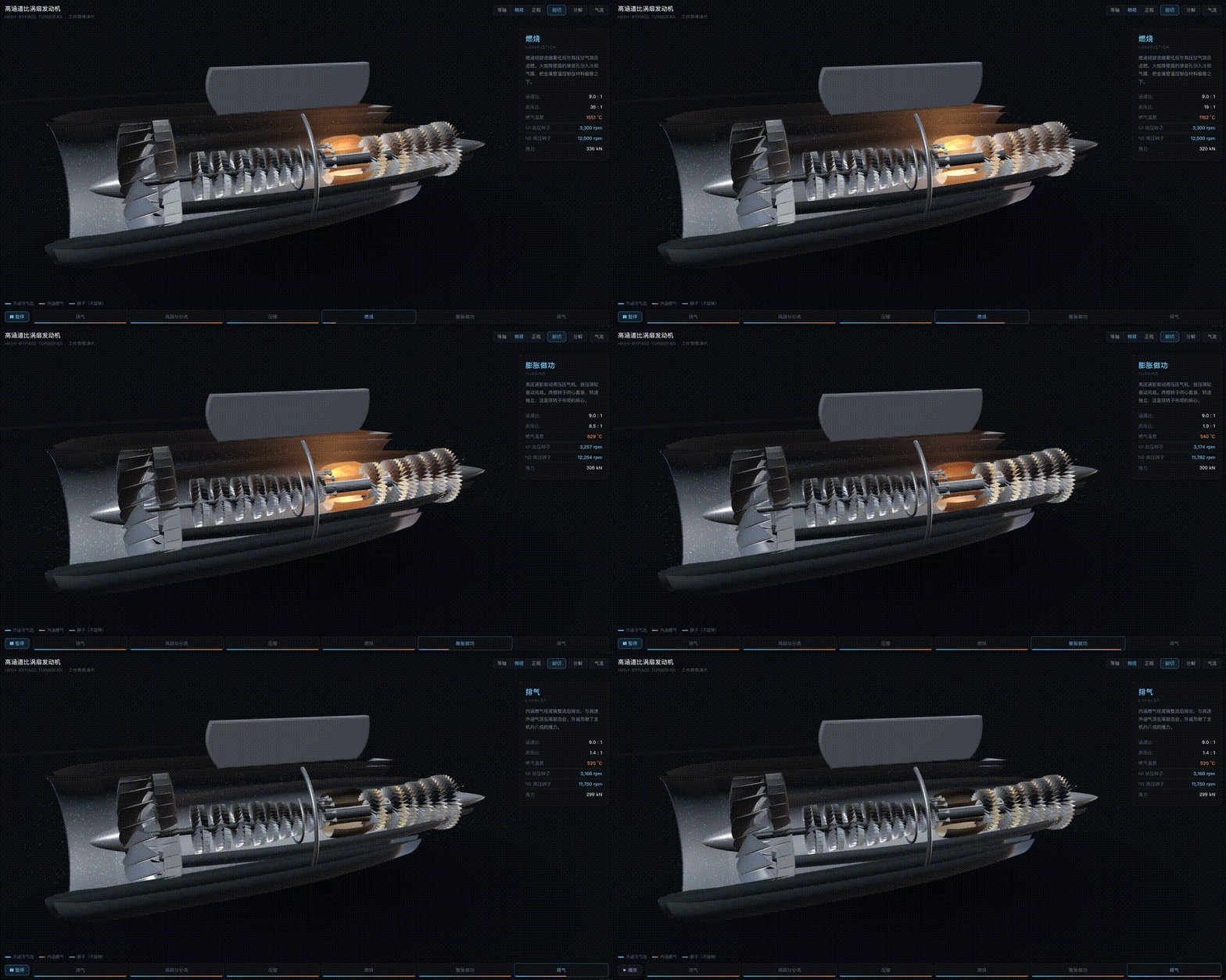
After the automatic turn on, the first look is the engine cut off, followed by the lipstick, the fan, the compressor, the combustion chamber, the wheels.
The online experience:

Press play, the fan turns, and the two rotors slowly, invertedly bite; the gas temperature burns all the way to 1650°C, and the thrust is full.
Thousands of airflow particles flooded into the intake chamber, pushing 90 percent of the air outwardly directly into the aircraft, drilling 10 percent into the core, burning from the cold blue to the white heat, and then leaking out of the tail jets.
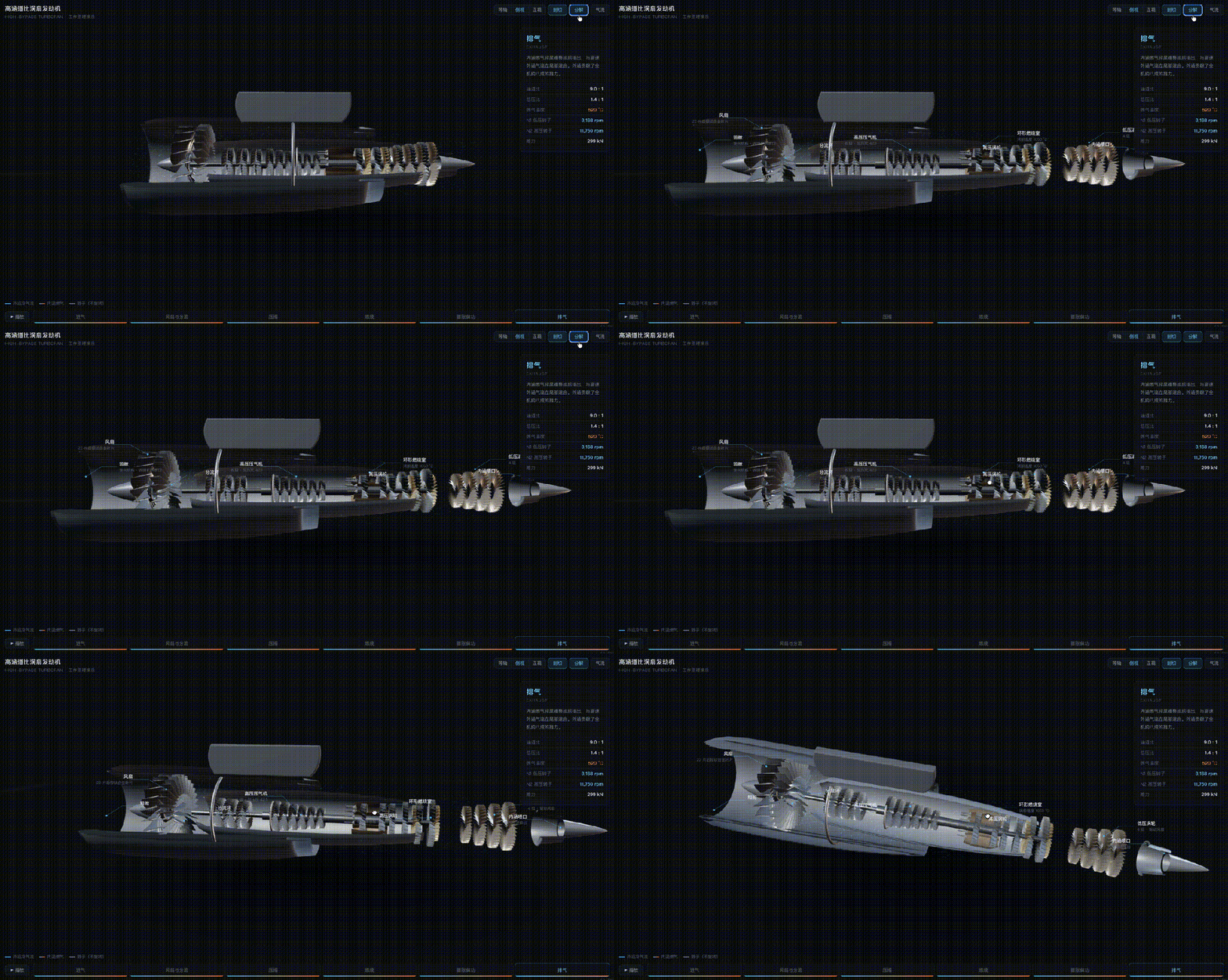
At the "breakdown" point, the entire engine is pulled along the axle line, with each component hanging on a traction line, which automatically evaporates between the labels.
The second is that multi-modal content is generated by one site.
The ability to generate documents, images, videos, and audio is all in the same Agent, from writing documents to mapping to making a line, without the need to switch tools in the middle.
The third is to generate and edit a single page of Office products directly into PPT, Word, Excel, and PDF.
If you wanted to finish a new product in the past, it would take a whole content team a few weeks to finish it.
And now, all this complicated process can be easily broken by just handing it over to the "Hundred Questions Office".
A detailed list of requirements, then sit down and wait for the AI to start working.
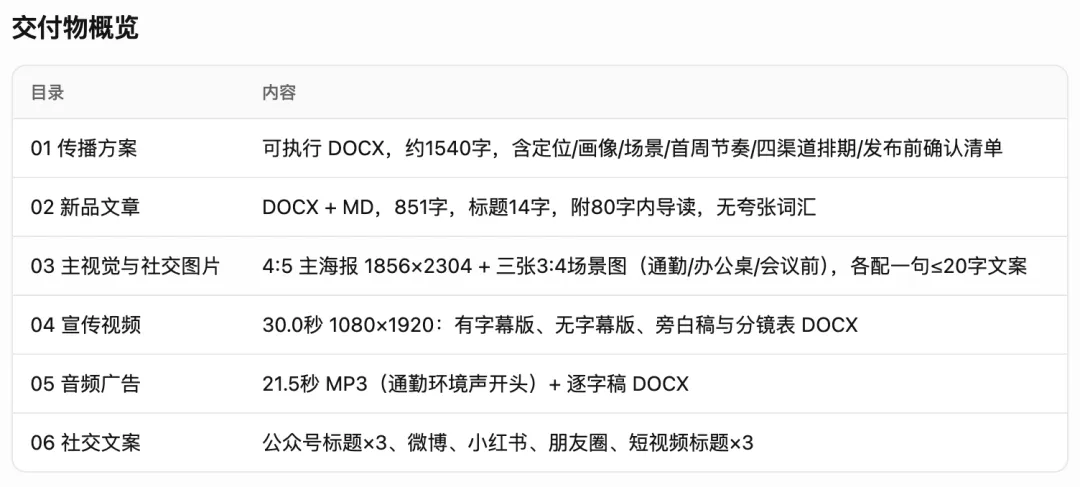
From publicity campaigns, pre-heat articles, to mainstream visual posters, spreadsheets, and highly textured promotional shorts, AI ultimately delivers everything at the click of a button.
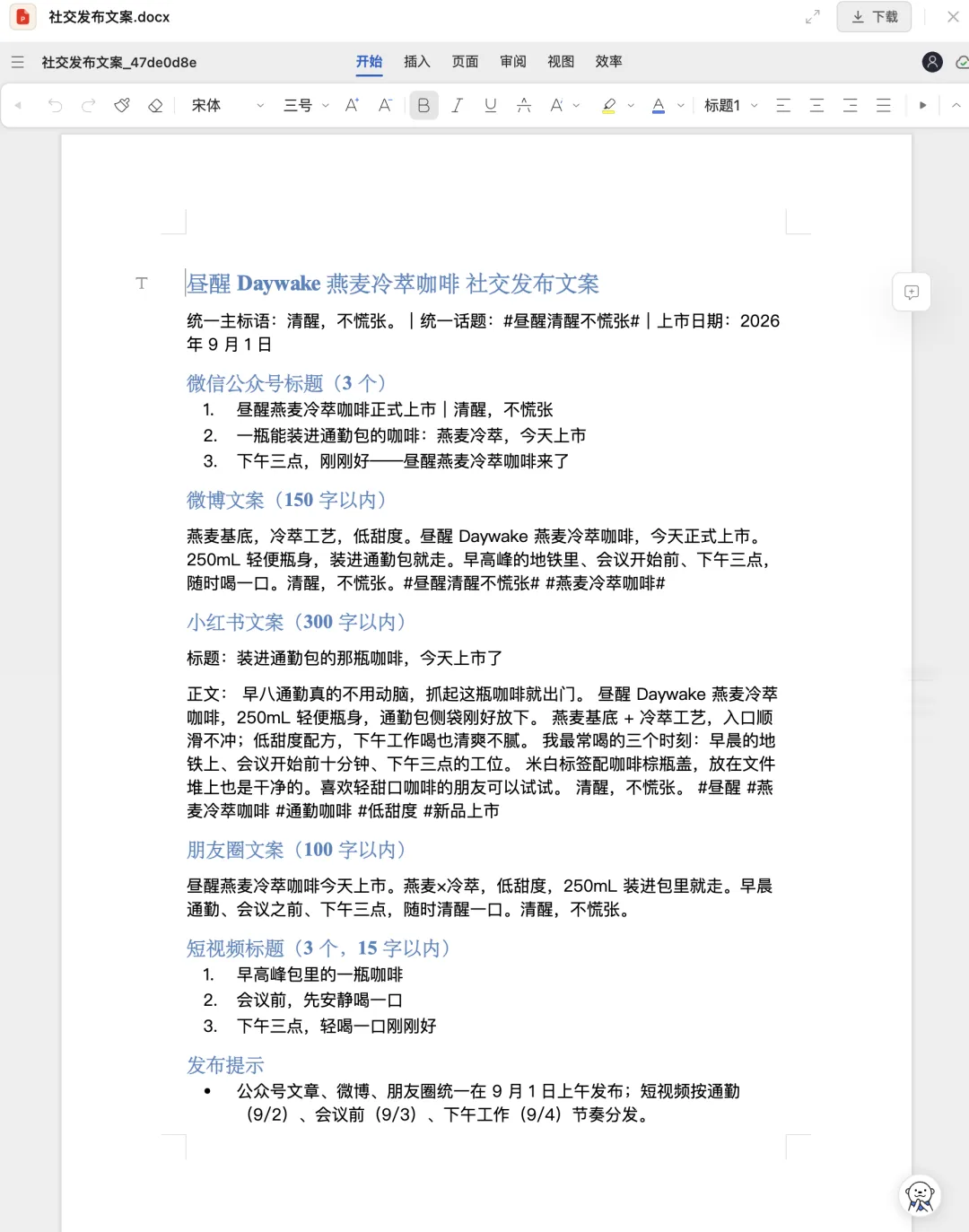
Opening a document document, you can see that AI is "careful" and fully accompanies the promotion of mainstream platforms such as WeChat, Weibo, and Little Red Book.
Not only that, the "Mill Question Office" also completed the multi-modal output capability in a single task.
The following are the main promotional visual posters, as well as three spreadsheets, with a concise and elegant design.
 |  |  |  |
Surprisingly, it was also able to quickly synthesize a high-quality 30-second promotional short film.
As you can see, Q&A justly redefines how work is done as a "super workstation".
But only with this layer, is it at most a more useful Agent. The real gap is the next layer.
Designed specifically for organizationsThe decision-making chains, approval flows, organizational structures and daily collaboration data of domestic companies are heavily embedded in IM platforms.
In a separate window, you can't see anything. If you want to use it, you have to insert a paragraph into the context; it gives a result, and you have to move another paragraph back.
In this regard, the route of the KIS office is to connect it in two directions with IMs such as Nails and Nails, which currently has access to 25 enterprise-level capacities.
It can read critical information in groups, process approval flows, manage schedules, documents, knowledge bases and emails, and push execution results directly back into groups.
Thus, an organization that is stuck in the nail-biting documentation, organizational relationships and workflow is transformed into an Agent's upper context.
Take a chestnut, and every weekend, you can throw the past week's meeting, To Do, OKR progress at it, and then summarize it into a document that is automatically archived into the enterprise knowledge base.
In addition, the most time-consuming tasks in the day-to-day operations of enterprises are often those that are "mechanical" routine tasks, such as periodic market monitoring, data collection and departmental reporting.
In addition, the "Kiss Office" can configure this type of repetition as a one-time, temporary, or fixed-interval task.
For example, set up an automated crawling of small red books at 9 a.m. every day, tweeting about AI Agents, generating trends briefings, and sending them to research groups.
Without the need for specialists and without the expense of cross-sectoral communication, the "Mill-Question Office" runs the complete loop from "data acquisition" to "consensus alignment" in the lightest possible way.
In the reality of the fragmentation of the SaaS ecosystem, the demand for private deployments and the heavy demands, this provides a viable solution for General Agent to do deep to B.
Personal experience becomes an asset of the companyThere is another design that is easily overlooked but more critical: organizational skill.
One of the partners interacted repeatedly with thousands of questions in the office, completing the first in the shop and completing the report.
After completion, the entire process is subdivided into "organizational-level skills" and shared with everyone.
Three weeks after receiving a similar case, the new assistant does not have to ask a senior lawyer directly to call the Skill and select an execution path to produce a report.
What this means is that an individual's experience becomes an asset of an organization.
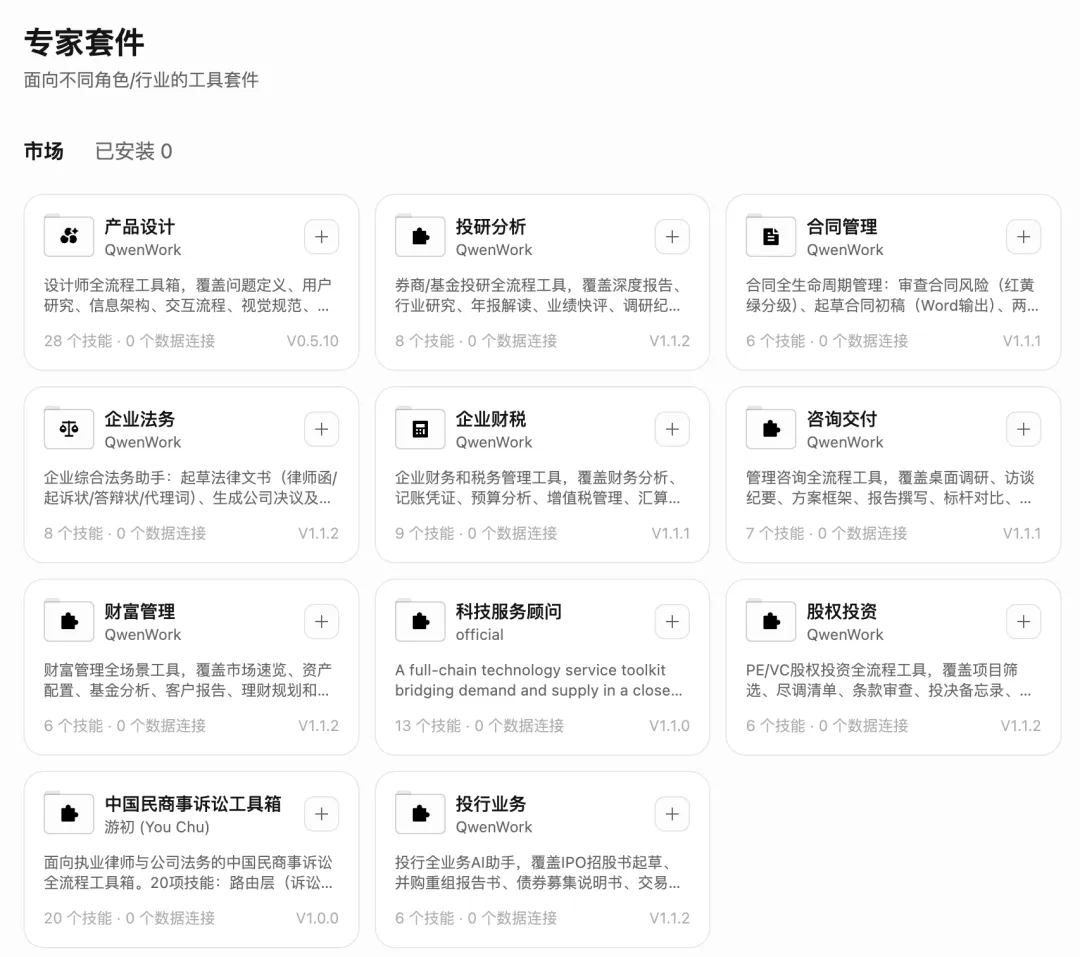
Over the course of the inquiry, the Expansion Center of the Thousand Questions Office has acquired 70+ single-point skills, a dozen expert suites covering investment research and analysis, equity investments, corporate law, contract management, corporate finance taxes.
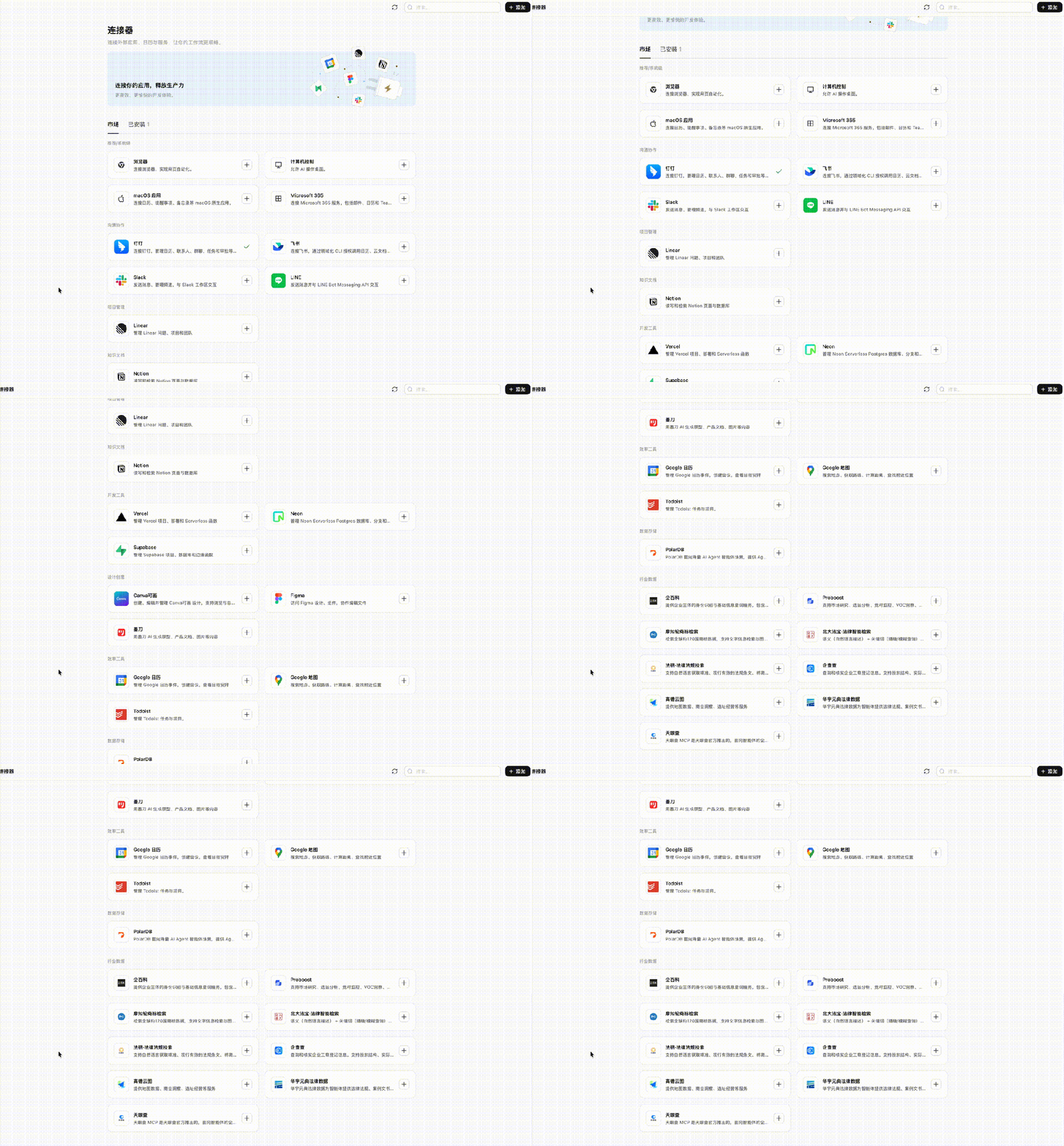
The "friendship circle" of connectors is also very rich, basically covering some of the tools we often use.
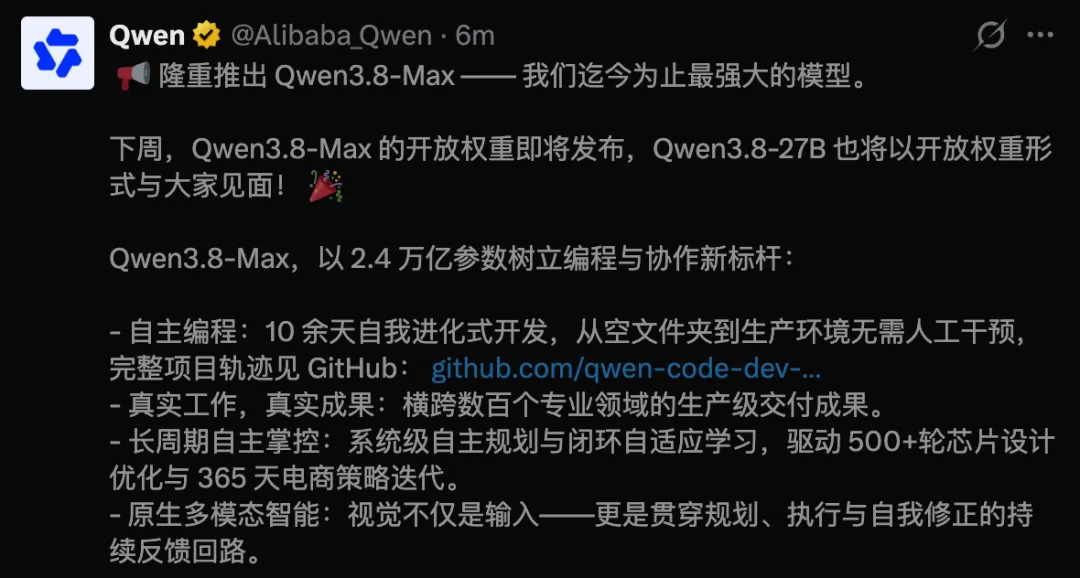
 The core core2.4 trillion parameters on the million level
In terms of product form, the most central layer is model and agent engineering design.
With the addition of the Qwen 3.8-Max buff, the "Mill Question Office" efficiency is straightforward.
Qwen 3.8-Max-Preview made its debut at WAIC last month.
As a native multimodal model for the Agent era, it demonstrates a level of world-leading model matching complex, multi-agent, long-range internal real-world tasks such as full-frame development, data analysis, Office workflow, and more.
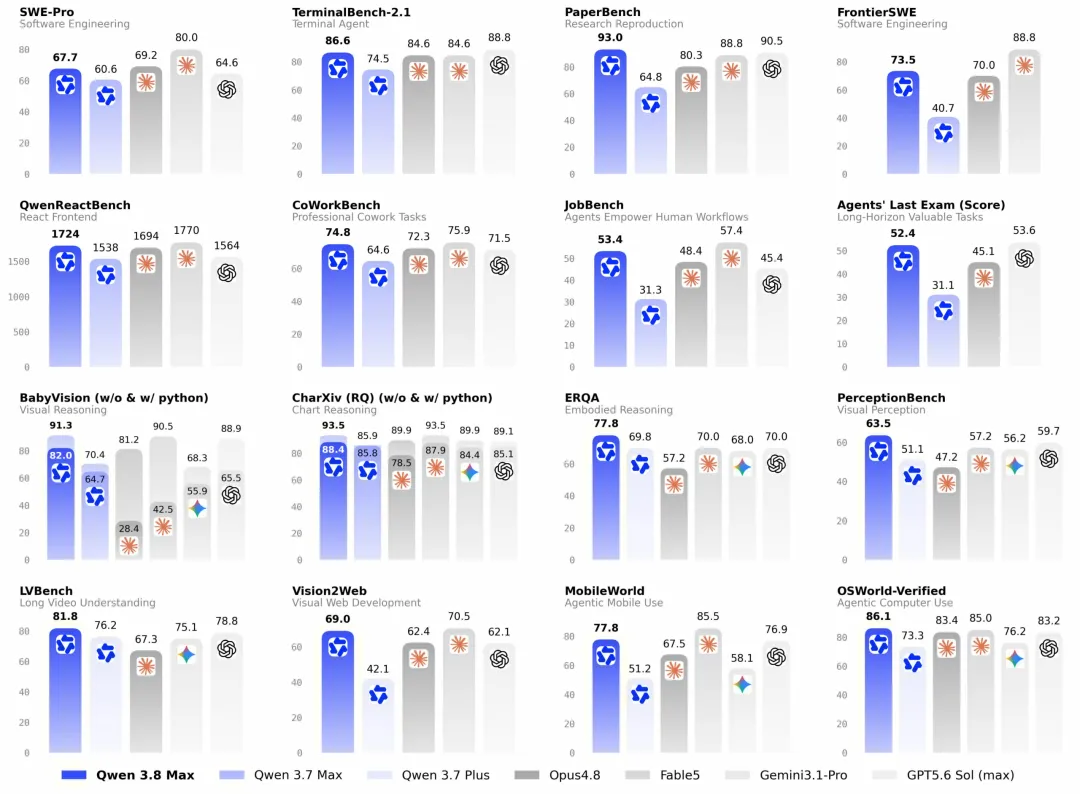
In the day-to-day workplace, three details accurately target the real pain points.
In the original 128K context, it expanded to 1 million tokens without loss.
A million-level context means an entire industry white paper, a complete set of contract volumes, a year's operating log, a complete set of code repositories for a large project that can be thrown in one-time, without cutting, without repeatedly throwing, without having to make a summary in the middle.
The most important task in the office is "incomplete" and the length of the context directly determines whether it is an assistant or an intern.
Long-range agent capabilities
A real delivery task often requires tens of hundreds of continuous calls to tools: read files, view data, draw diagrams, generate, validate, and modify.
The longer the link, the more likely it is to be broken.
Qwen 3.8-Max's ability to perform long-range, multi-tool, multi-agent tasks determines whether or not it can do it all at once.
This time, we made it big: from zero to a "thirty thousand music festival extreme weather emergency command center".
Thirty thousand spectators, six regions, heavy rains, blackouts, congestion, injuries, disruptions of communication. Users take on the role of commander-in-chief and deploy troops in 60 minutes of virtual time.
This is how the specific process is.
In the 8th minute, the radar detected rain clouds, in the 12th minute, the main stage began to rain, followed by power outages, injuries, communications interruptions, one after another.
The number of security, medical, and ambulance vehicles is also set in advance, and the area, map, data, and risk curve changes with it.
When the play is moved to a critical node, the screen stops and allows you to decide whether or not to postpone the sub-scenes, and the flow of people, injured people, and evacuation times change.
Wait 60 minutes and it will give you a summary report.
Multimodal natives
Qwen 3.8-Max can directly analyze PDF, HTML, Markdown without requiring prior conversion to plain text; it can perform image recognition, image-linking reasoning, and short video sequencing.
The original materials in the office were messed up, a whiteboard taken from a cell phone, a conference recording, a PDF sent by someone else.
The original meaning of polymorphism is that things can be thrown away as they were.
The "Mill-Question Office" model also offers three basic, advanced, and economic options, with different task weights and computational configurations.
You're a mature agent now.Should be able to work on their own.Over the past year, almost all mainstream agents have demonstrated the same thing: give a sentence, it dismantles a task, calls a tool, completes a process, delivers something.
The final point of the second half was how to integrate this capability into the real operation of a company.
Gartner predicts that by the end of 2027, more than 40 percent of Agentic AI projects will be cancelled due to uncontrolled costs, uncertain business values, and unmanageable risks.
Another more direct global survey from Alteryx found that only 23% of companies actually put AI pilots into production environments.
In the real workflow, there are three concrete ways.
The first way is to break the product chain.
For non-technical people, it's like reopening a project.
The second way is to crack tools.
One thing to do when you break it down into seven or eight pieces of software is to change it.
The third and most difficult of these is the lack of context in the organization.
It doesn't know who you're reporting to, it doesn't know the final conclusions that were discussed last week in the project group, it doesn't know where approval has gone, it doesn't know which templates in the knowledge base can be directly replicated. It knows you but it doesn't know the company behind you.
As a result, the vast majority of agents' ceilings are still "personal assistants": they can make one person run faster, but it's hard to make the whole organization turn faster.
It's not hard to see from the above that the target of the "Hundred Ask Office" is these three camps.
Starting today, try it yourself.In addition, from August 3 to August 9, users can earn 500-2000 points per day.
Members currently have unlimited access to the economic version of the model. The Qwen 3.8-Max, which went online on the same day, can also be accessed directly from the Q&A office.
It's hard to believe that the U1S1 "Mill Ask Office" announcement phase has already reached this stage.
There are still some areas that are not perfect, but not difficult to fix, hoping that the next version will be better used.
The official website address: