
It's the first time in the history of the world.
Just today, on DevDay 2026 that has just ended, OpenAI is throwing another big note: ChatGPT Space is a shared space for team members, ChatGPT, and Dots, a permanent AI-powered body, to work together.
Pages can collaborate on real-time editing, documents, chat records, and project contexts all live in the same "room", and AI is no longer just an individual private chatbot, but a "colleague" who can actually participate in team discussions, update documents, and assign tasks.
There is no such thing as an exclusive, domestic version of ChatGPT Space!
Recently, at the Hangzhou Cloud Games, Ali's Qoder smartphone platform launched the "Projects" and "Discussion" functionality and simultaneously released a customized smartphone with a team of smartphones!
This time around, it's no longer just a tool for personal efficiency, it's really about "working with people and agents" so that AI can be truly integrated into teamwork.
It's a way of writing code with AI.Why is teamwork so difficult?Recently, Cursor was hit by revenue from SpaceX, Claude Code went crazy in the terminal, and Devin Desktop plugged Autonomous Agent into the IDE. However, while everyone was writing code with AI, why didn't the entire team accelerate the project significantly?
The reason is that when AI landed in a real team collaboration scenario, it encountered a huge bottleneck: context rupture.
The most common method of collaboration is as follows: teams form a set of schemes around a need in flybooks, nail groups, or offline meetings. At the end of the discussion, each person returns to his or her job, pulls out the relevant parts of the meeting log, adds his or her own understanding, rearranges them into hints, and hands them to his or her agent.
After the agent spits out the code or test results, you have to copy and paste these products back into the workgroup and explain to others, "What my agent just did".
One study found that only 39 percent of the time spent working effectively in daily R&D is spent on "transporting information". When you think you're in charge of AI, you've become a "man-made API" between conference rooms, documents, terminals, and various agents, working to transport the context.
Is there a way to stop humans from being AI carriers?
Below, let's test how Qoder is reshaping organizational collaboration.
I'm going to say goodbye to the doll API.Let the discussion go back to the context of the task itselfThis time, Qoder's solution is to create a shared workspace that brings people, documents, code, and AI together in the same "room".
Real R&D has never been so easy: "Input Prompt, and then AI generates code". It's not a simple linear process, but it's filled with long drafts, discussions, overturns, and reconstructions.
Qoder's "project" and "discussion" observations: make collaboration happen in the workplace
In order to verify that this logic is not good enough, we simulated a real, titillating business scenario.
At 4 p.m. on Friday, the customer service team exploded. The system showed occasional recurring charge bugs, due to overtime re-testing of the customer, resulting in two requests for the same order.
The team needs to come up with a plan for "sexual transformation such as payment link bridges" before they go to work and land.
In the past, it took an emergency online meeting, someone to write a memoir, someone to build a Jira, and then to ask questions about AI.
Now, let's see how it works in Qoder like cloud water.
Step 1: Create an "Operation Command Room" with "Project".
Previously, we had completed the entire project, and after moving to Qoder, we immediately created an N-issue for this link modification, and then started a discussion on this issue.
Project name:Payment link reliability modification (prevention of recurring deductions)
Project objectives:To completely solve the problem of repeated deductions caused by customer re-testing, to provide solutions such as mortgages and landing.
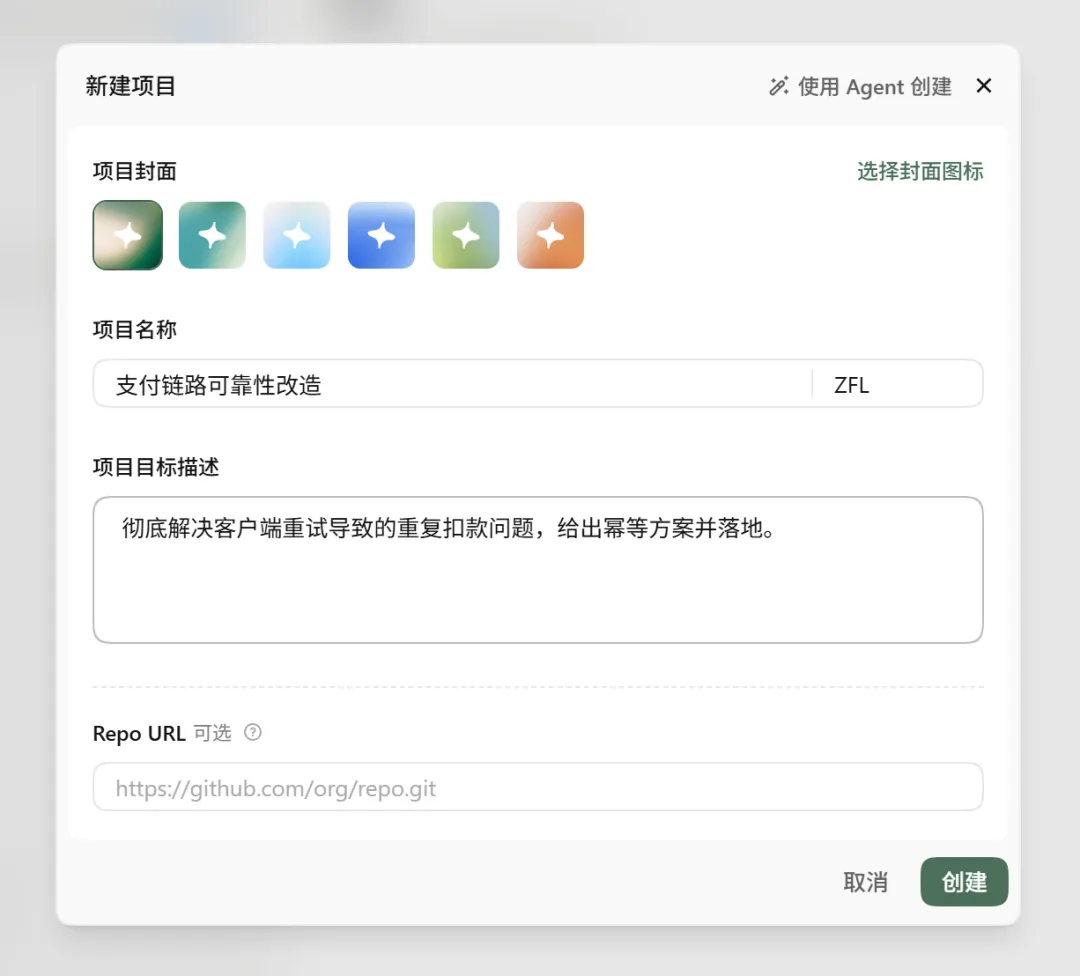
This "project" is by no means a simple sign. Its greatest value is "global context memory".
In the past, you've dragged people into the crowd, and you have to re-send the address of the code warehouse, the return log.
Now, as soon as colleagues and exclusive agents are brought into the project, they have all the background knowledge in an instant.
All the documents, all the historical decisions, are transparent to both sides of the plane.
Then I split this big goal into three issues.
1. Check the specific log chain for repeated deductions
2. Evaluation of projects and projects (Core)
3. Supplementing abnormal border regression use cases
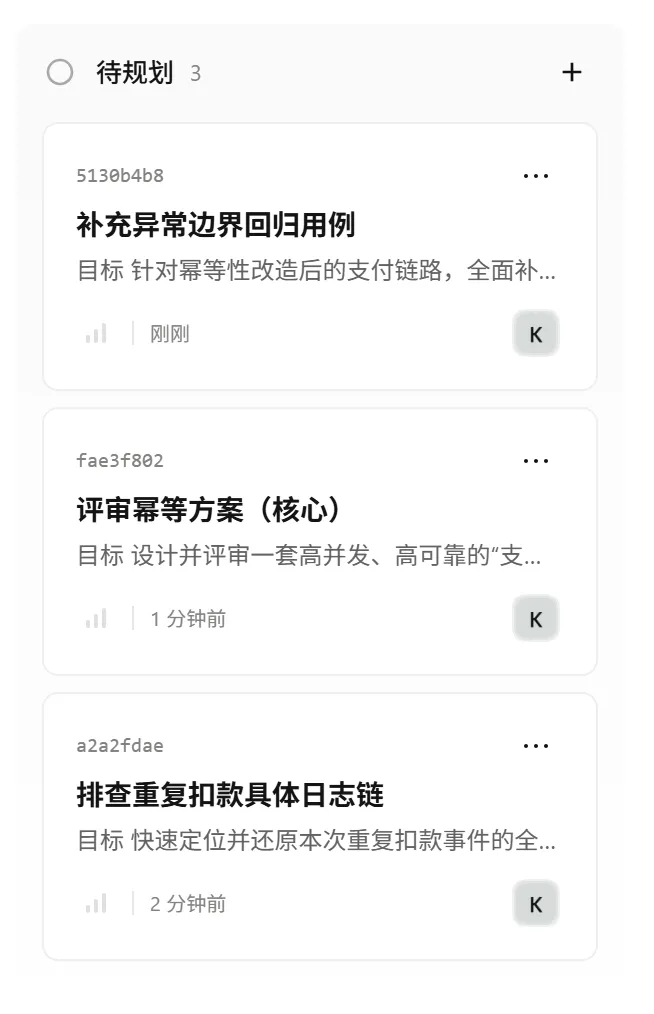
Step 2: Start the roundtable with "discussion"
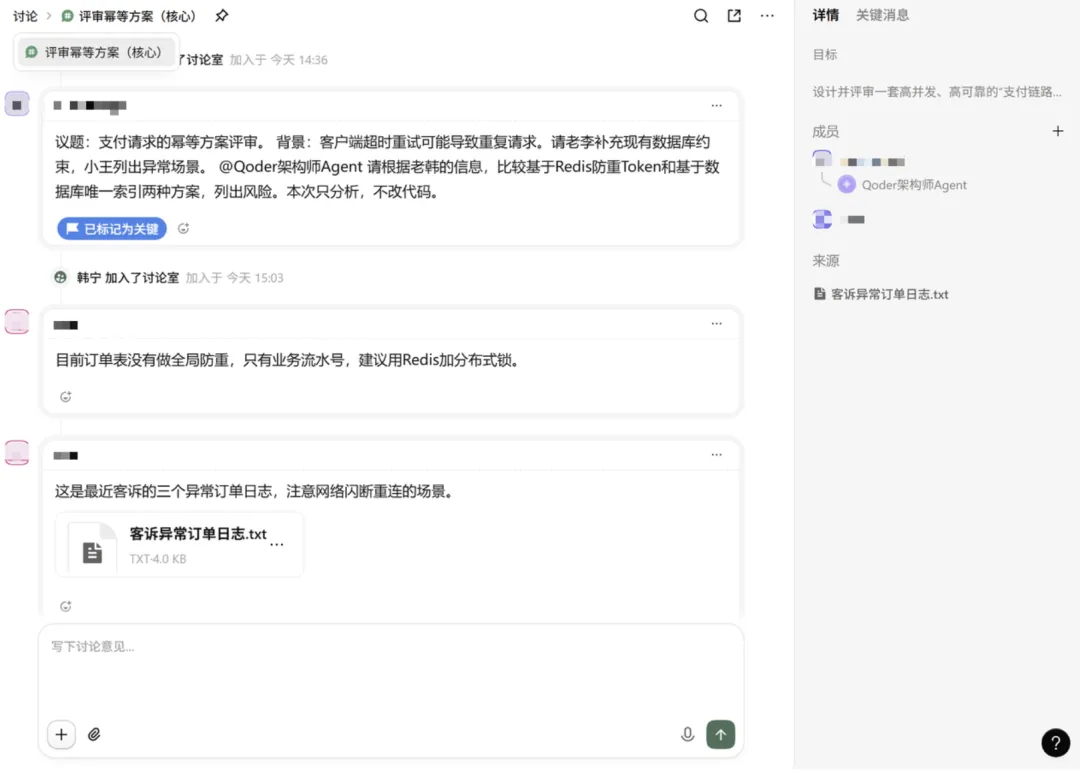
The hardest part is coming. Next, we'll start the discussion directly from the Issue of the "review-and-response program".
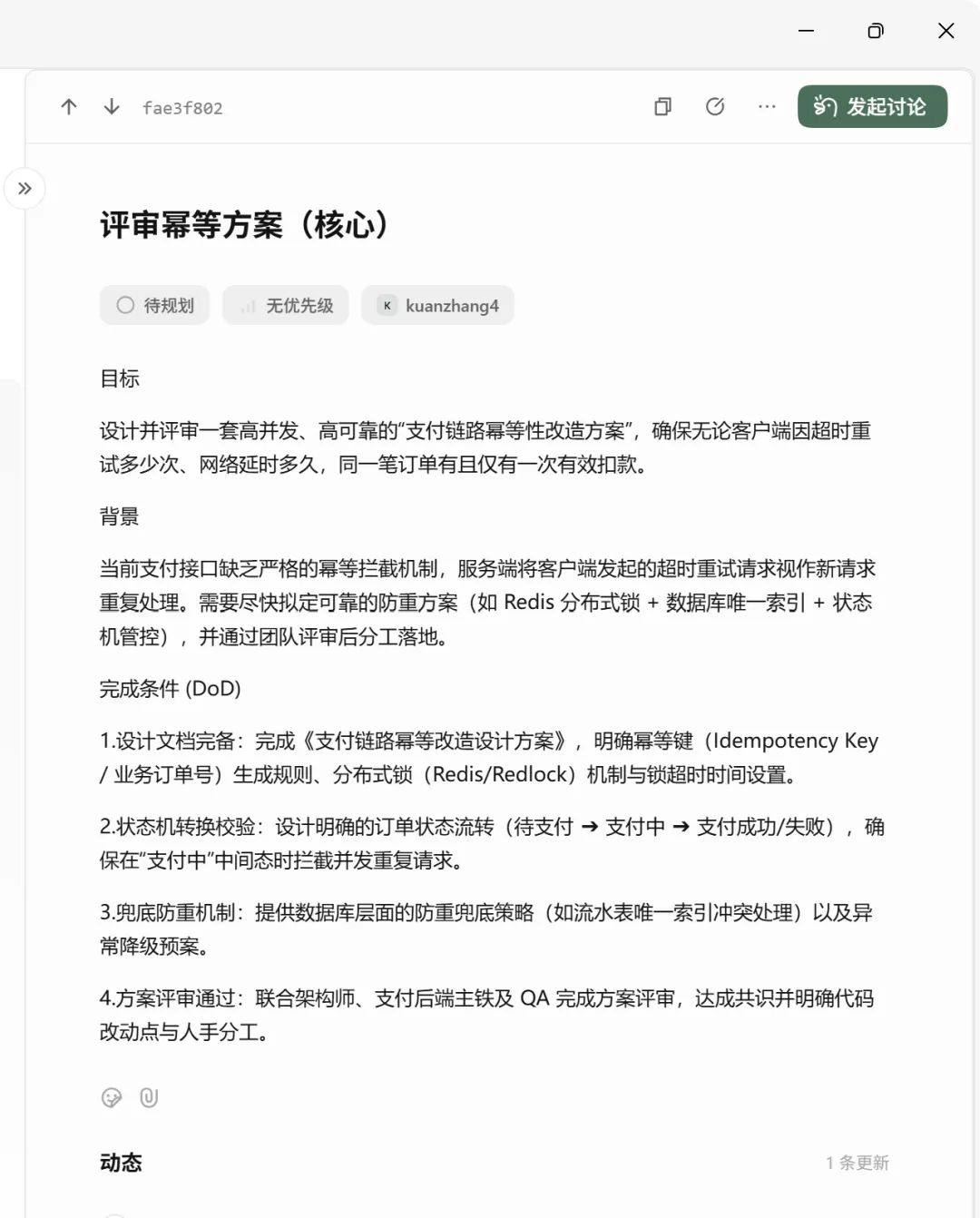
This is how I, the person in charge of the project, came into the discussion.
The key is that I was able to bring in the "Qoder Architect Agent" that the team had previously configured.
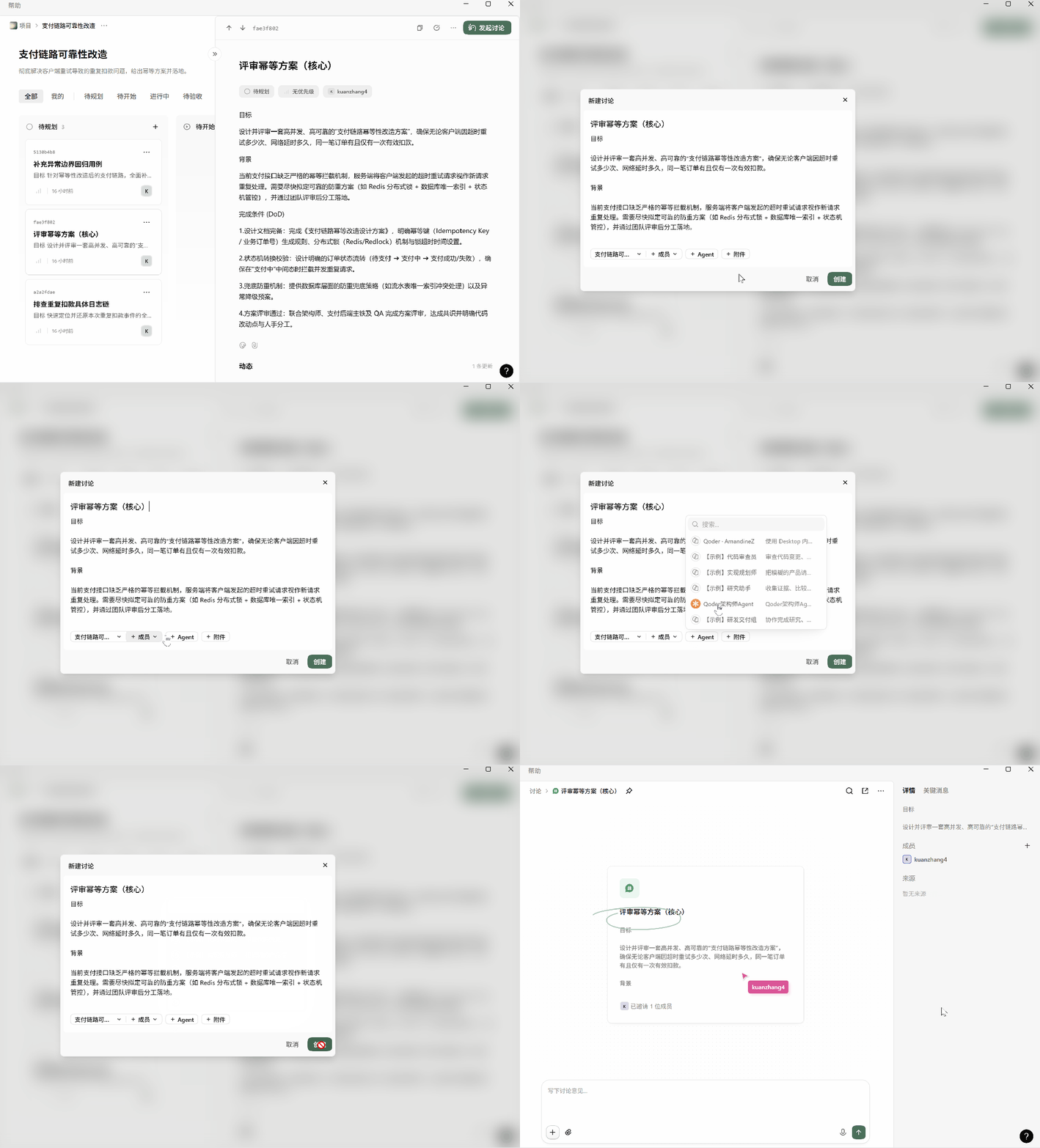
In the "discussion", the three of us, who are responsible for the project, then the elderly, then the elderly, then the elderly, then the elderly, then the elderly, then the elderly, then the elderly, then the elderly, then the elderly, then the elderly, then the elderly, then the elderly, then the elderly, then the elderly, then the elderly, then the elderly.
I put forward the theme: "Review of payment requests, re-testing of clients, re-request of requests".
Li added: "Note that there have been three unusual orders in recent lawsuits, and the scenes of network disruptions must be considered, and the volume is extremely high".
He said: "At the moment, the order list is not fully weighted, only business flood numbers, and I personally recommend using Redis with distributed locks, but am concerned about data consistency in extreme cases".
Just after the three of us collided fully, with a clear understanding of the business context and the risks involved, I got in touch with Qoder architect Agent in the group.
"@Qoder Architect Agent, please give best practice, based on the information provided by O'Han and O'Lee, to combine the current code library and compare the risks of two options based on Redis Weightlift Token and database-only indexing. This time, only analyze, not change the code".
Then the Qoder architect Agent came in!
It directly reads text attachments from Old Han and combines the code warehouse associated with the project.
After seven minutes of reflection, it gave a profound response.
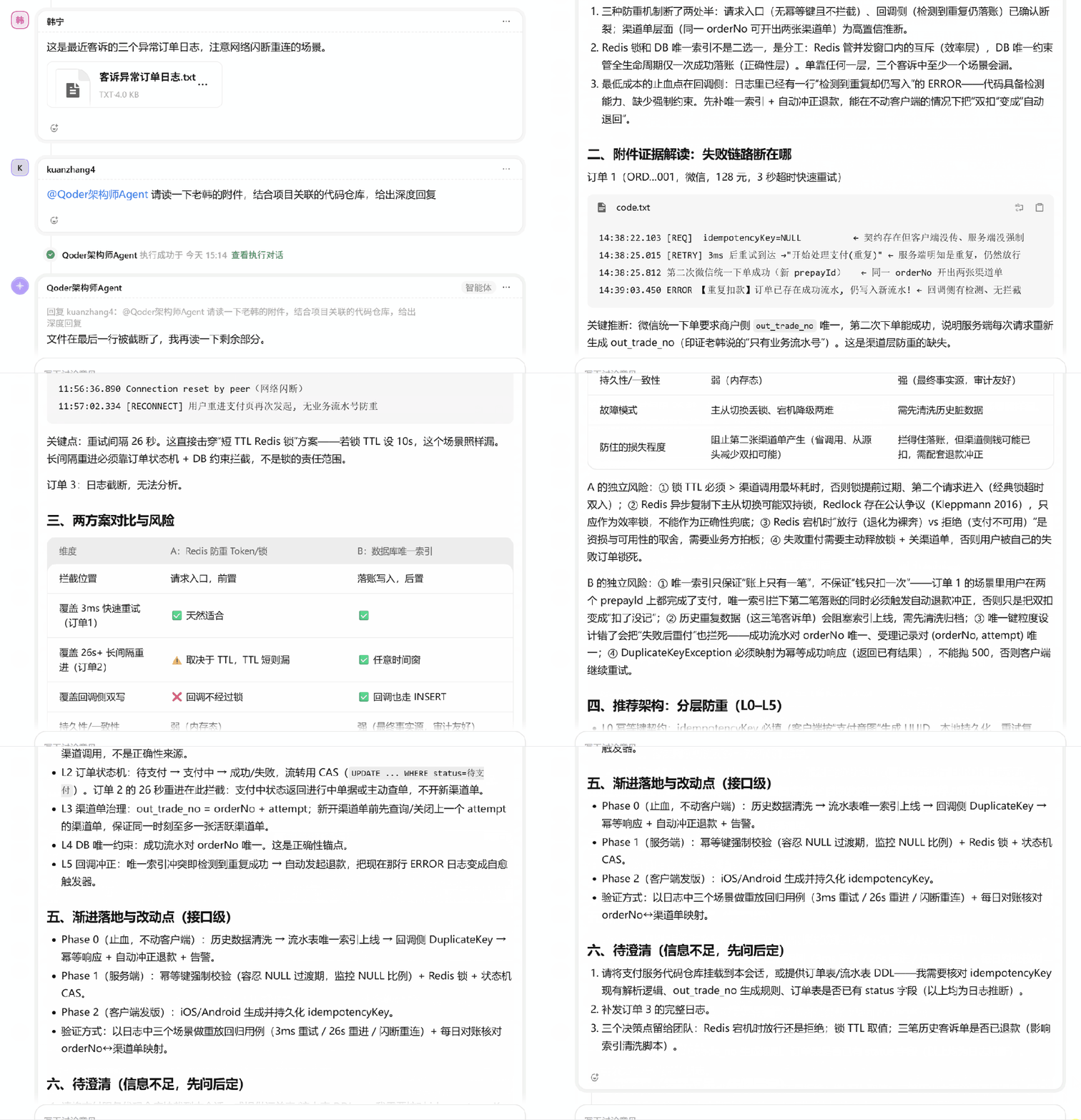
In the process, if I have any doubts about a sentence from the Agent, I can directly click on the "answer" to question the message.
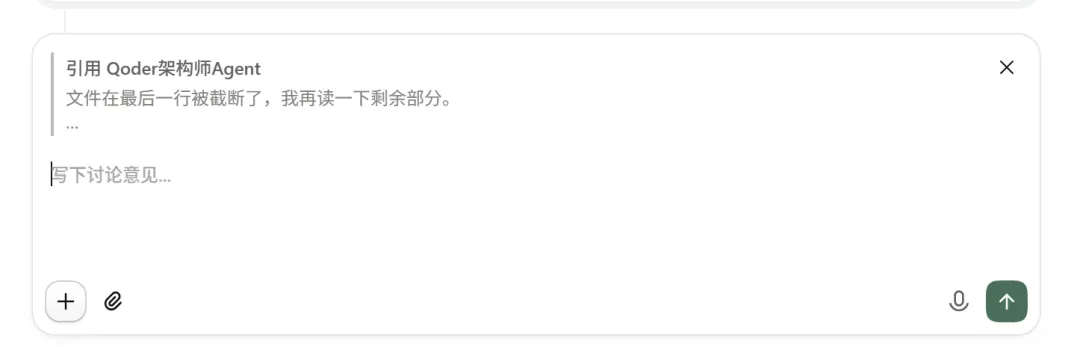
Step 3: A key message with a button to say goodbye to the skin.
Three individuals looked at Agent's report and unanimously decided to adopt the "database+Redis hybrid scheme".
In the past, people might have said "executed according to Schedule 2" and forgotten the details in a few days. But in Qoder, I chose this conclusion directly and clicked "marked as a critical message".
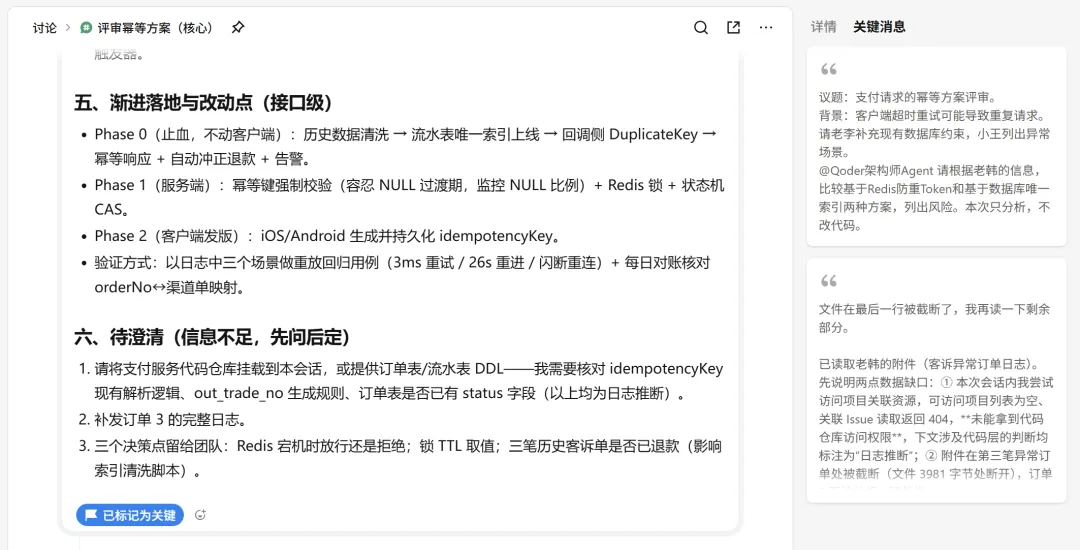
These marked key conclusions will automatically feed back to the original Issue, update the progress of the work, and serve as the absolute basis for the subsequent Agent executing the code. The entire process is unmatched.
The "Critical News" tag page on the right will focus on these findings. The most important thing is that these findings will automatically feed back to the original issue, automatically updating work progress!
To try it out, the real feeling is that Qoder's "discussion" completely wiped out "chat tool + task software + AI dialog box" in three days.
It allows discussion, decision-making and execution, completing a closed loop in the context of a work, and the entire workflow is unparalleled.
Custom Agents and Teams: Let Humans Take Control and Let AI RunIn order to test more sophisticated cross-sectoral collaboration, we have moved the scene back to the "post-disaster reconstruction" of this repeated withdrawal incident.
While the underlying bug against repeat withdrawals will be repaired as planned, the customer service team is still faced with a tricky question: how to deal with the hundreds of unusual orders that have already been repeat withdrawals yesterday?
So under the same "project", we re-created the Issue "Developing an Extraordinary Order Bulk Returns Tool" and brought the business side of small and mid-size operations into the current discussion group.
In the "discussion", business demand is directly generated by operating small businesses.
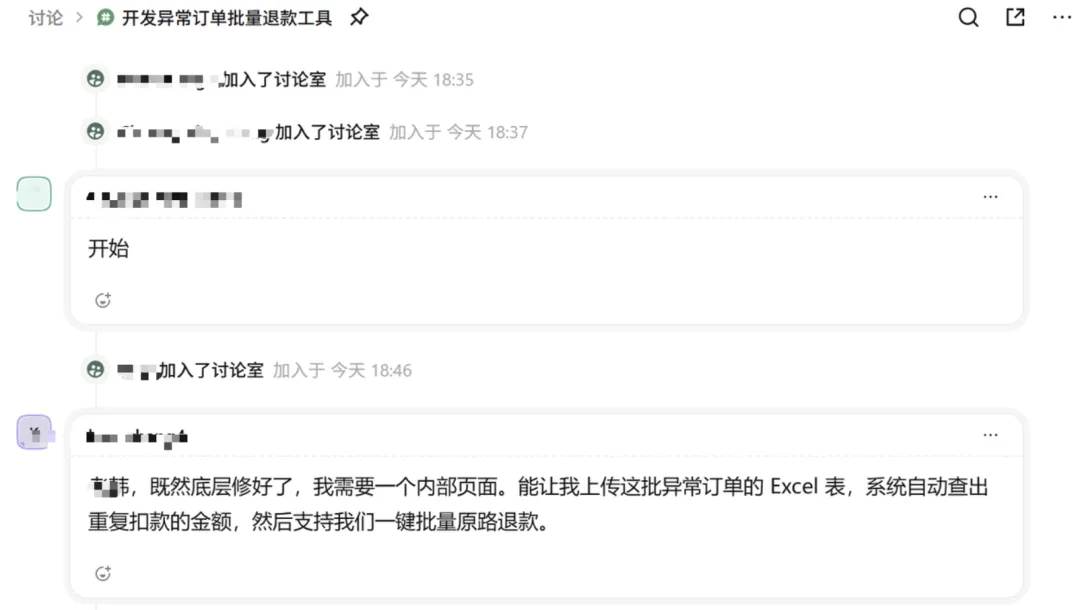
At the front end of the main force and at the rear end of the main force, old Han immediately followed suit, based on the newly established underlying architecture, implementing technical level control and mine control.
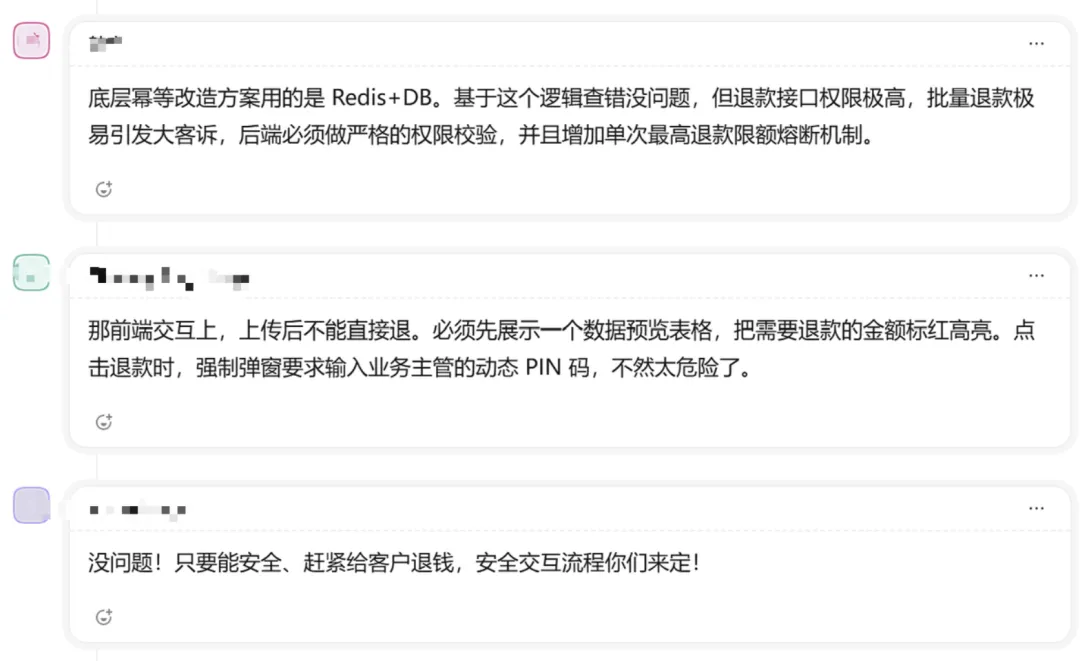
When the three individuals fully define the boundaries of business claims and technical security in discussions and mark "critical information" with a click, operations directly @ the back-end agent and front-end agent of the "full-fledged R&D agent team" pre-configured in the project.
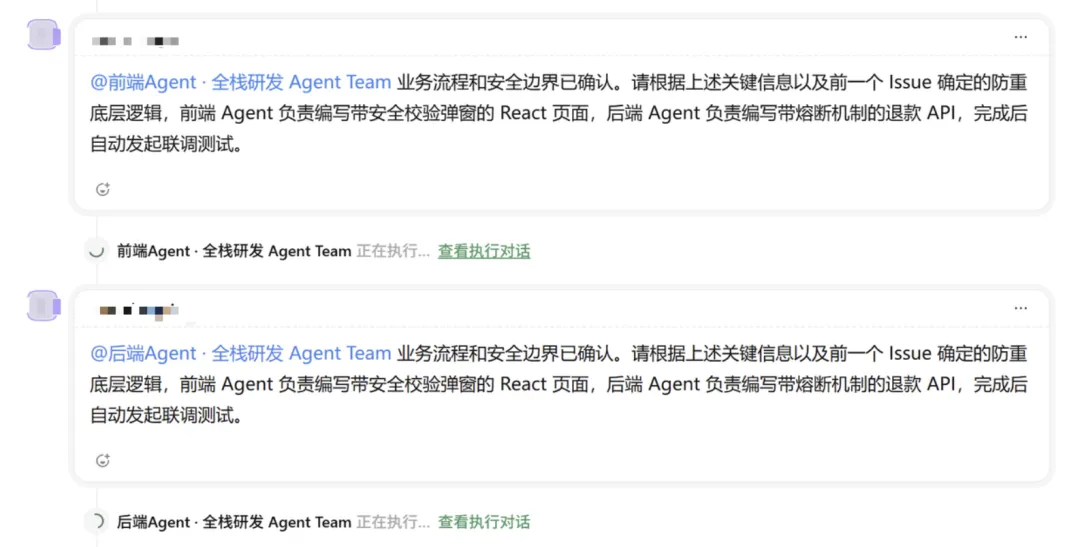
Next, humans just need to drink a cup of coffee, and look at the intelligence team in a newly confirmed, coherent and harmless context, where division of labor collaboration is done.
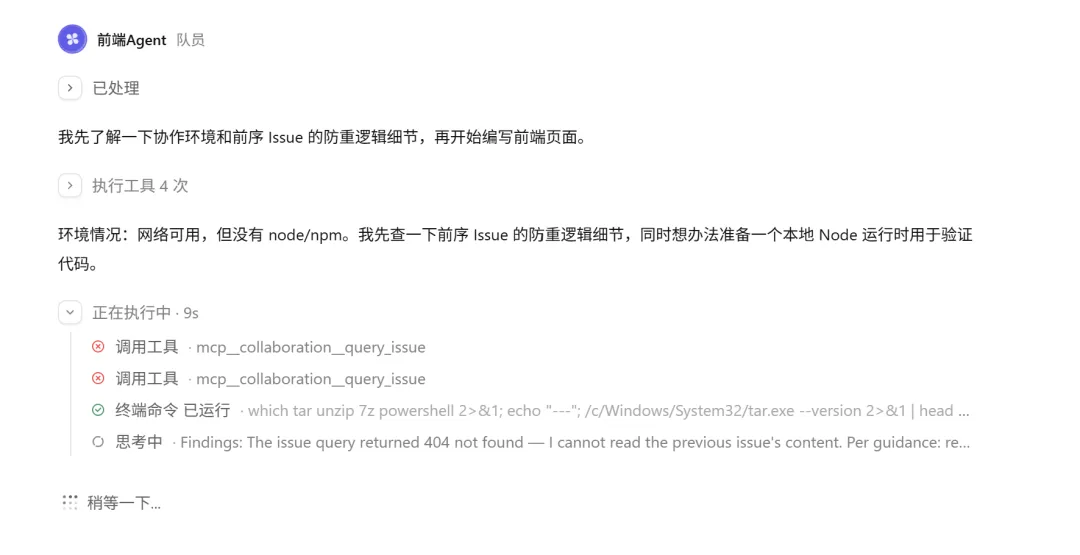
In this scenario, the business side addresses the needs, the programmers do the technical work to control the risks, and the intelligent team is responsible for scrolling the code.
There's no need to pull together, there's no need to write a thick PRD, there's no need to copy and paste background information between tools.
A new era of AI collaborationAfter experiencing this wave of Qoder updates, my biggest feeling was that the times have really changed.
A mixed collaborative network of multi-humans and multi-agents is rapidly evolving across the organization.
In future excellent R&D teams, the roles will still have their respective professional divisions, but the common information will no longer be cut off. The product will see the limitations of the technological realization, R&D will know the original intent behind the demand.
There will be a fundamental shift in the role of human beings: no longer to spend a lot of time tapping on the sample code, no longer to move background information back and forth between WeChat and IDE.
Humanity's core values will return to the highest dimensions of "definition issues", "decision-making" and "aesthetic control".
In the meantime, these features are available for Qoder subscriptions.
Obviously, teams that don't collaborate deeply with AI will be ruthlessly eliminated by teams that master AI collaboration.
Now it's time to think about how to give your team the "strongest worker" who works 24 hours a day!