It's a big one.
On the morning of September 30th, Beijing time, OpenAI held this year's DevDay in San Francisco, USA, and co-founder and CEO Sam Ottman personally took the stage.

GPT-6.1 Sol, the new $500-a-month Pro package, as well as all-weather smart body dots, were the highlights of the conference.
From the combination of new products, OpenAI is trying to move AI from a problem-solving tool to a work partner that can continue to execute tasks and engage in team collaboration: Sol reduces call costs, Ultrafast reduces wait times, dots take on long-term tasks, and Space becomes a space where people and intelligent agents work together.
GPT-6.1 Sol: One-fifth price of Astra, near capacity
The first is the new model GPT-6.1 Sol, which is now available to everyone.
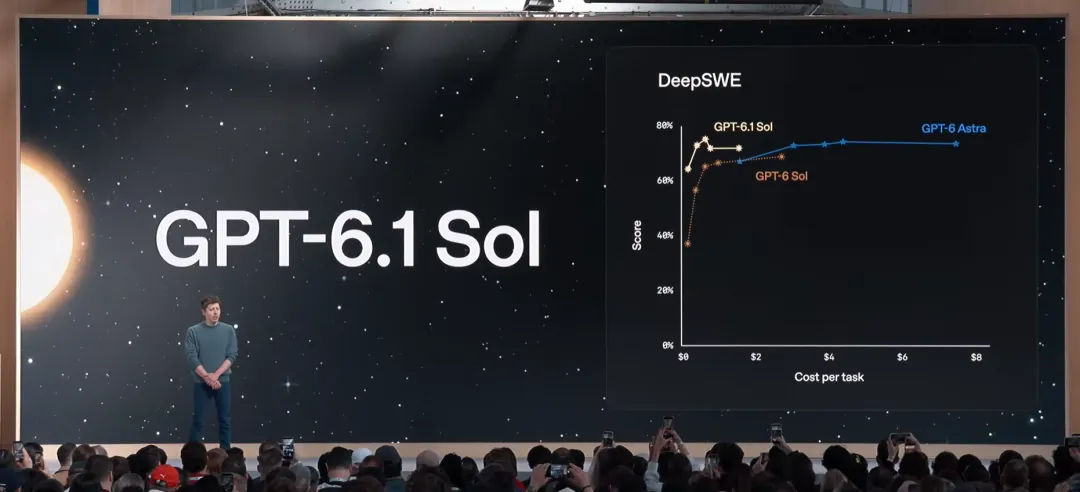
This first version is no longer the largest volume, but there is no need to worry about performance. OpenAI says that it is close to the GPT-6 Astra for tasks such as smart body programming, computer operations and professional work, while standard API inputs and outputs are one-fifth the price of Astra.
Autman said: "We think everyone will like this model, it's smarter than Astra in some ways, and it's going to be your daily mainstay".
The standard API price is calculated using the following context:
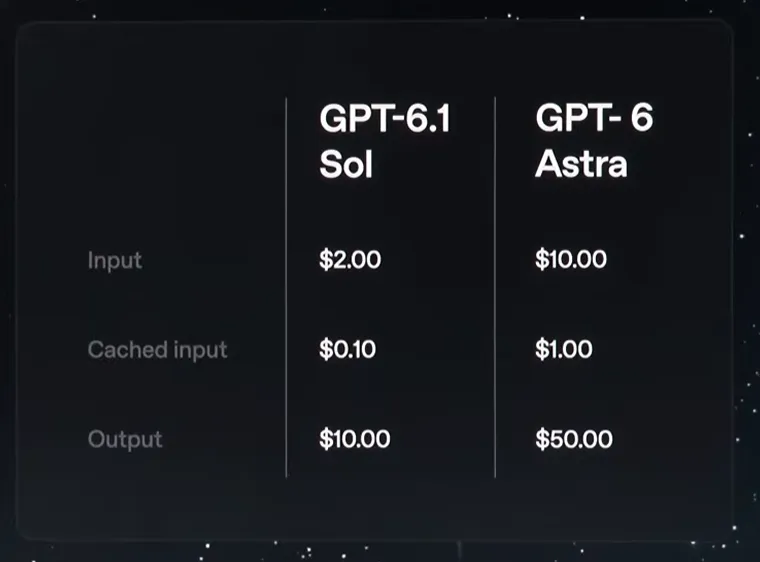
With only one tenth of Astra's cached inputs on Sol, the cost difference is particularly noteworthy for smart entities that repeatedly read the same project context, code library instructions or work data.
OpenAI gives two examples: in the sophisticated software engineering test DeepSWE v1.1 in a real code library, Sol achieved a performance equivalent to that of Astra, at about one-fifth of the cost; in the OSWorld 2.0 offline computer operation test, the performance under the highest reasoning intensity was 2.1 percentage points lower than that of Astra, at about one seventh of the cost of a single task.
Sol is available on ChatGPT Work, Codex and API, and normal Chat mode is not yet available; Ultrafast version of Sol is scheduled to launch in the coming days.
For developers, the appeal of this upgrade is that it requires multiple rounds of calls, a long-running workflow, and more tasks can be arranged within the original budget.
500 new knife packages a month, exclusive super acceleration
OpenAI adds a new $500-per-month Pro 500, giving individual Pro subscriptions $100, $200, $500 in three grades. A significant difference to the Pro 500 is the availability of Astra Ultrafast; in personal self-subscriptions, Ultrafast is only open to the $500-per-month grades, and users of $100 and $200 can't unlock it even if they buy extra credits.
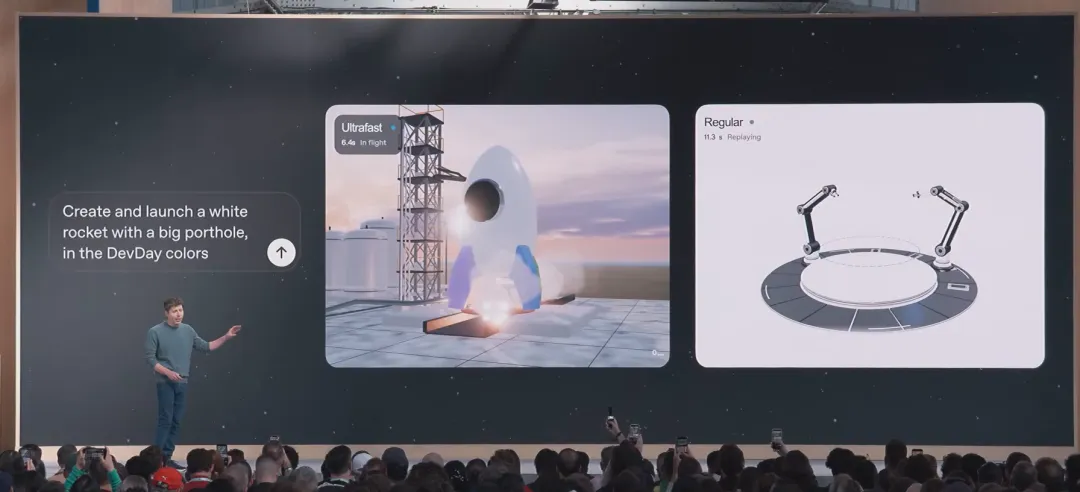
According to data released by the General Assembly, Astra Ultrafast generates tokens in Codex at a maximum speed of eight times the normal speed, with 300 tokens per second, as fast as DeepSeek V 4.1 Flash.
Of course, the price is also impressive. Previously, Astra's API Fast ranking was Cerebras' Wavelength AI Accelerator chip, with an official calibre of up to twice the speed, twice the standard price.
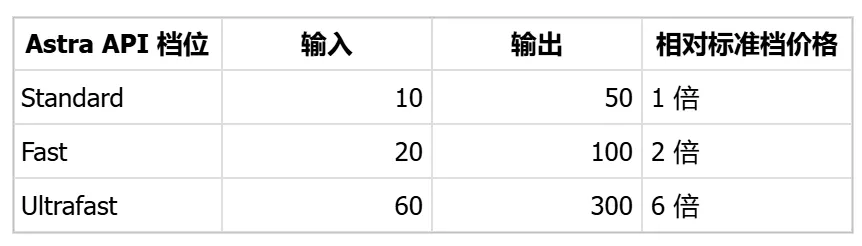
The "six-fold price" here is also not all-inclusive, as in Codex and Work, Ultrafast consumes eight times as much quantity as Standard, and six times the billing rate for buying points and corporate bulk payments. Fast also varies in quantity: 2.5 times the quantity for purchasing points and corporate bulk payments.
Therefore, the purchase of $500 is the right to use higher allowances and faster models. According to OpenAI, the allowance for the Pro 500 is 25 times that of the Plus, but Ultrafast will also consume these allowances faster.
Meanwhile, as Tibo says, the Pro 200 renews a new subscription at $200 per month, with prices unchanged and quotas reduced. Business Insider reports that its quotas have been adjusted from 20 times Plus to 10 times. The OpenAI Help Center confirms that users eligible for the transition can use the original quotas until October 29, 2026, when they can switch to lower quotas; this does not grant Ultrafast permission.
OpenAI is separating cost-sensitive daily tasks from high-intensity work that is willing to pay for speed. For professional users, whether a new package is worth buying will depend on the actual cost of waiting time in its work.
dots: Join the "all-weather individual body" competition
A few days after Meta's Muse, OpenAI also launched individual smart dots for continuous running scenarios. Both aimed at a rapidly warming demand: for AI to continue working after users leave the chat window.
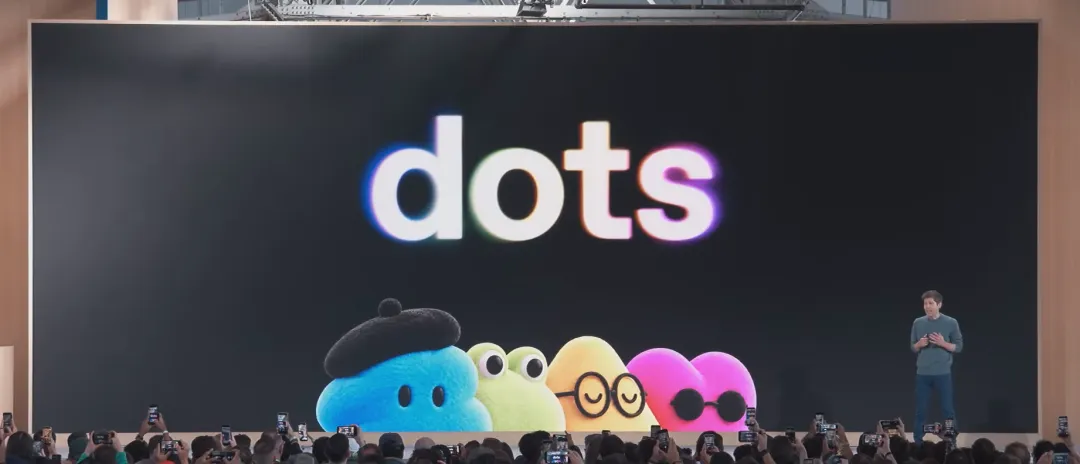
This OpenAI version of Muse has its own advantages: the dots are powered by the most powerful model GPT-6 Astra, the chat with the dot is not limited to ChatGPT, it has its own cloud computer and browser, and can connect to more than 4,000 applications. Users can communicate with it on the ChatGPT web, desktop and mobile phones, or via Slack, Microsoft Teams, or voice communications. OpenAI says that it will learn about user preferences from feedback.
In the official displayed application scenarios, the dot can continuously track customer feedback and prepare for code repair. This brings the individual's work relationship closer to a continuous assignment: the user gives it a goal that needs to be pushed repeatedly, then sees progress and results. The dot is also improving itself. OpenAI says that its own engineer's dots have been repairing dozens of bugs every day.
Since it is a continuously running intelligent body, there is a need for clear limits of authority. According to official documentation, the active background study of the dot is limited to reading only access to connected applications; when it comes to actions such as modifying data, sending messages, it follows user authorization and automatic review rules. Users can view activities, manage permissions, and set rules for execution behavior.
Starting today, the dots are available to Pro and Business Premium users who meet regional requirements; the enterprise, education and medical health work areas are open for testing by administrators. The first dot is free of charge, but it is assigned to Work or Codex's task to continue to consume according to the rules.
The all-weather smart body may be the next AI application to explode like ChatGPT, and the key to the competition is "whether or not it can move things forward reliably in the long run". Whether the task progress is clear, whether user correction is effective, and whether the interfaces between different applications are smooth, will affect the real value of the all-weather smart body.
Space, Pages, collaborative slides: co-edited by humans and intelligent organisms
If the dots solve the problem of continuous work, Space builds a productivity platform.
ChatGPT Space allows people, ChatGPT, codex, and dot to collaborate around the same set of information in the same space. Team members can edit, comment in real time, and participate via @references to ChatGPT or dot.
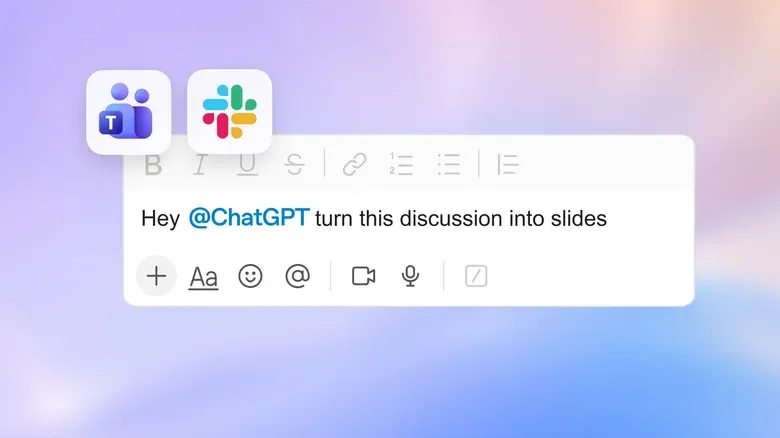
Pages is a document carrier. Users can directly edit text, forms, images, and other content, or select local paragraphs to be modified or supplemented by AI. Pages can also refer to chat, files, and other pages, and carry a task description, so that the document can be both the outcome of the work and the context in which the intelligent body performs the task.
This provides a more coherent way for team collaboration. For example, the editorial department can place interview records, background materials, and manuscripts in the same space, written by journalists, edit batches, and then have the smart body supplement or modify them based on shared information.
Collaborative slides are also in the planning stages of release, supporting collaborative editing with smart entities, and can be exported to PowerPoint and Google Slides, retaining format. Opening time needs to be distinguished: Space and Pages have been launched for Pro, Business, and Enterprise users, and collaborative slides are expected to be available in the coming weeks.
For OpenAI, putting information, tasks and end results into the same workspace has the opportunity to reduce the steps that users take to move information back and forth between chat windows and office software.
Decisions API: Using model capabilities to make clear choices
Recent decision-making model Jev is hot in the AI world, and OpenAI has come up with something to match it.
The Developer-oriented Decisions API focuses on a clearer category of tasks: making choices based on given information in predefined limited answers.
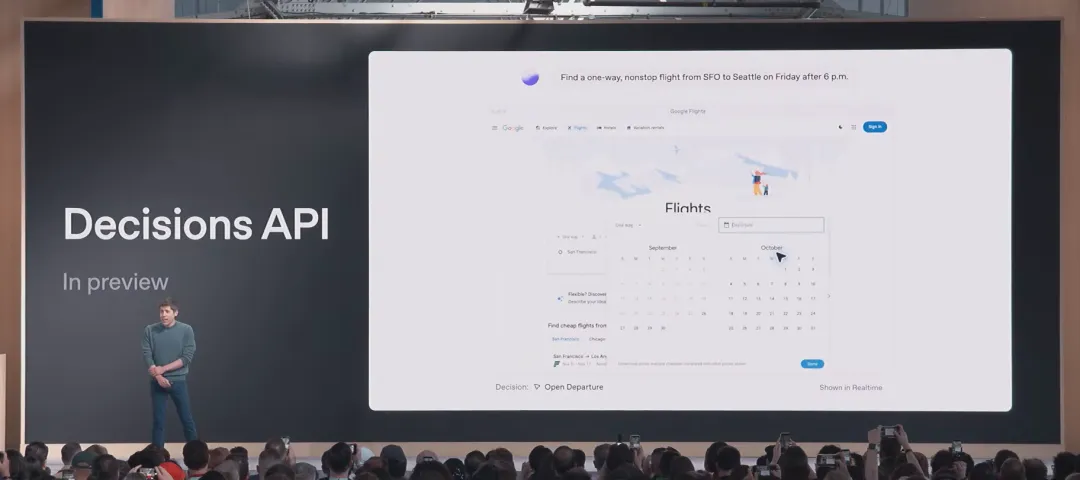
According to OpenAI, this interface is capable of using the Luna model. Developers provide context to text or images, and set up question and answer options; returning results can be used to classify content, request distributed streams, or determine the next move of an intelligent organism.
For example, a customer system can set up three options: "pre-sales, after-sales, man-made processing", depending on the user's message that decides the route to be transferred; a smartphone can also choose the next step between "continue searching, call tools, ask users". These are instructions for the use of the interface, not specific customer cases disclosed by the General Assembly.
For teams that have already identified business processes, this interface means that the model's judgement results are directly accessed into the process. Developers need to pay attention to whether the options are defined adequately, whether they are stable, and how the wrong results are handled.
The Decisions API is currently in the limited preview phase, and OpenAI plans to expand its opening in the coming days. The General Assembly review has not yet disclosed full pricing and delay commitments, and actual performance will still have to wait for further documentation and testing.
What is the meaning of this verse?
From a new generation of models to a continuously running intelligent body, to a shared workspace, DevDay 2026 presents a more complete set of working products.
Ottman announced that OpenAI had achieved the "AI Research Intern" goal set last year. Tejal Patwardhan, head of research, revealed that as of July this year, the large model had completed more than a third of the "one-day" research tasks without human intervention.
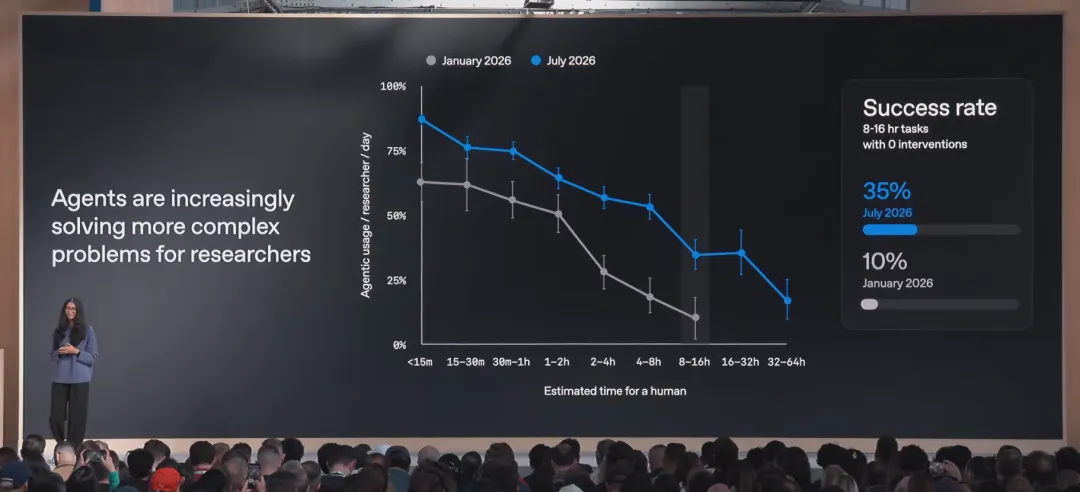
As a result, token usage is also continuing to skyrocket: as of mid-August, according to API pricing, the average daily usage of OpenAI researchers is estimated to be over $600, and the top 10% of token usage is over $7,000; according to runtime, the average working day for each individual class corresponds to 3.1 working days for smart entities. Ultrafast uses OpenAI itself regardless of external use.
Ottman said that the built-in execution capabilities of OpenAI are becoming part of an external platform.
Today, ChatGPT's weekly active users have reached 1.2 billion, making it a truly global app.
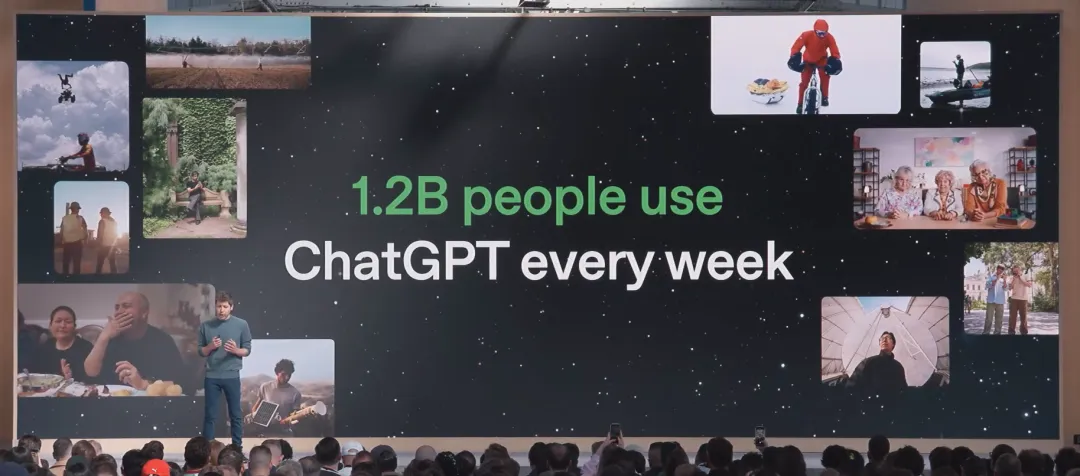
Ottman, however, disliked the definition of "AI is the new industrial revolution", saying that the best AI should not turn people into turbines in giant machines. There are parts of life that we can't and shouldn't automate. AI should give people more control over their lives and more tools to create, learn, discover and expand knowledge.
Dots can play this role, allowing you to take some of your attention back and not rely on your phone as much as before.
"I believe that if we do this right, the future will be more like a new renaissance".
Finally, on the site of the congress, an announcement was made of a re-allocation of benefits for global users.
References are given below: