After a period of silence, Manus founder and CEO Sean has returned with his latest product, Manus 2.0.
The official announcement says that Manus 2.0 is not a simple version update, it represents a whole new set of architectures, a whole new product format, and new capabilities built around a core issue: what should the next generation of Manus look like?
New infrastructure for more complex tasks
First, Manus 2.0 reconstructed the underlying Agent architecture, in which Cascade is the latest generation of Manus' self-developed Agent Harness.
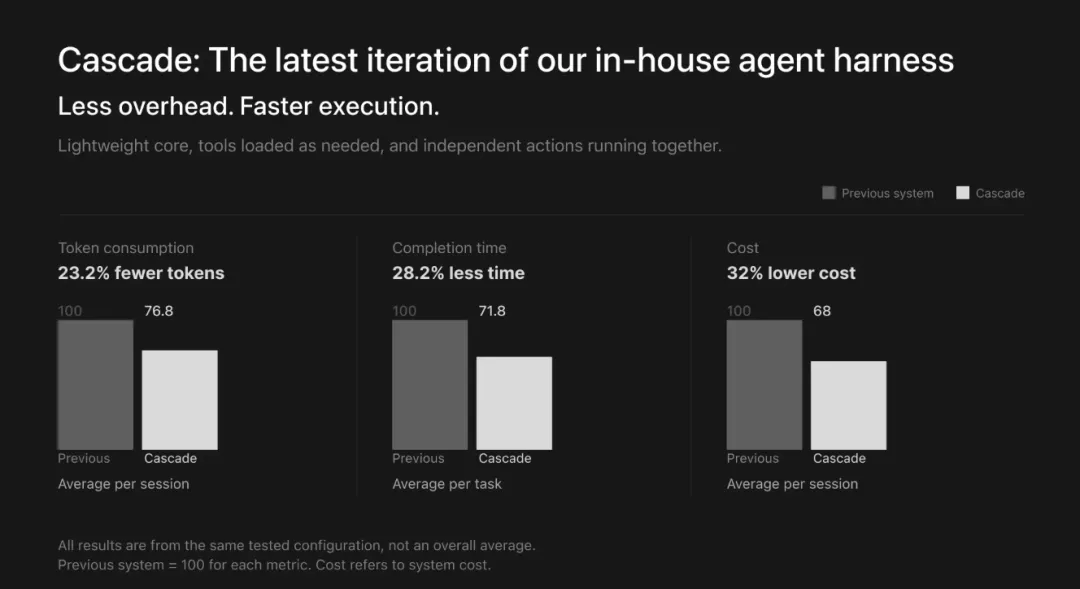
From an introductory point of view, Cascade will keep the project lightweight from the beginning, introducing professional capabilities only when the task is required. Whether it's briefing, web pages, video or automated processes, they will remain united in the same interconnected project.
The result is: better results, less waste.
The data shows that in an internal test configuration, compared to the previous generation of systems, Cascade is able to:
Token consumption decreased by 23.2%
Mission completion time reduced by 28.2%
Operating costs decreased by 32%
The change behind this is that Agent is no longer just a one-time conversation window, but has its own "work space".
Next up is Cloud Computer: When a project needs its own running space
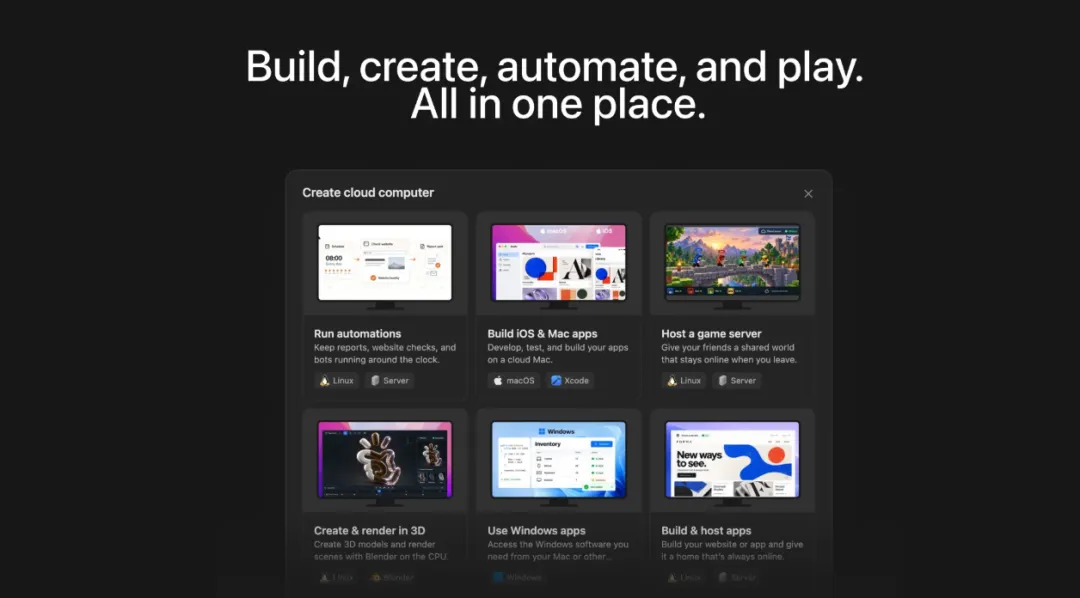
If the past AI Agent is like an assistant sitting in a chat box, then Manus 2.0 wants to turn it into a real online "digital employee".
One of the key capabilities is Cloud Computer, which provides an independent cloud operating environment for the project.
For example, in real-life work, some projects often exceed the limitations of a single device, a multiplayer game requires a continuously running server, and the game remains online even when your computer is turned off; an automated task requires an environment that runs around the clock.
In the past, users needed to prepare their own servers and configure environments, but now these tasks can be handed over to the infrastructure behind the Agent to complete, and Cloud Computer can provide an independent operating environment specifically for the project. It can serve as the server behind the game, the space for long-term operation of automated tasks, and thus become the permanent "home" of the project.
This means that the Agent's life cycle begins to change, and it no longer relies on the user to work after the computer is turned on, and it starts to have its own operating space.
In addition, there is an important upgrade, Automations: it triggers workflows from timely tasks to events.
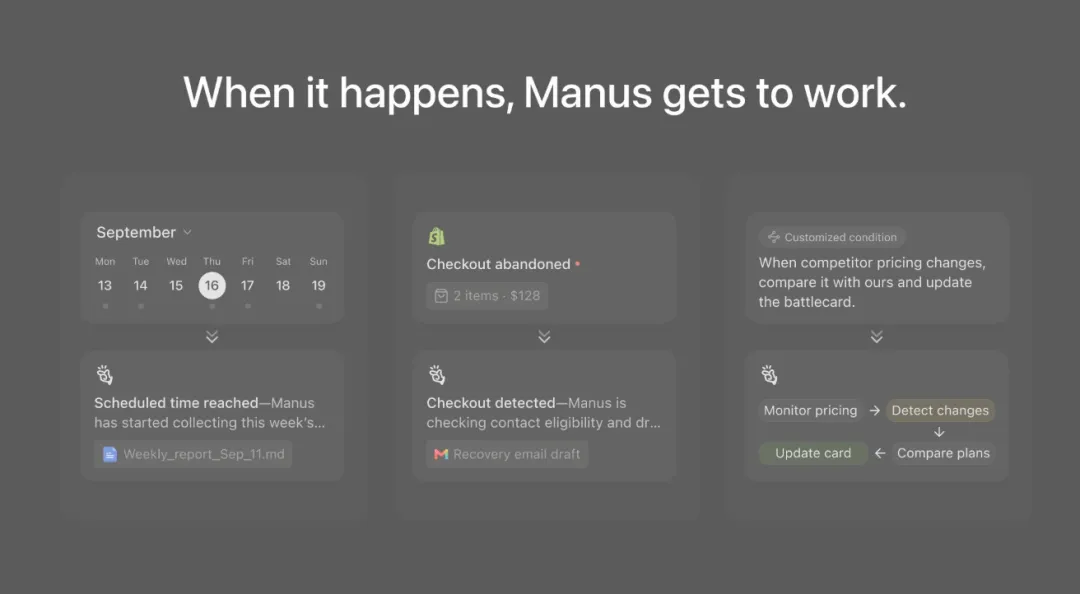
In the past, Scheduled Tasks (temporary tasks) often only allowed Manus to start tasks at a specified time, but now, with Automations (automation), tasks can also be triggered by external events.
These events can trigger Manus to execute tasks, such as receiving a new email, changing ad effects, new calendar events, Slack messages, Notion content updates, etc.
The official said that for the user, just telling Manus in one sentence: "What to look out for and what to do next" would automatically set up and run the entire workflow.
Manus Studio: From completing tasks to creating great works
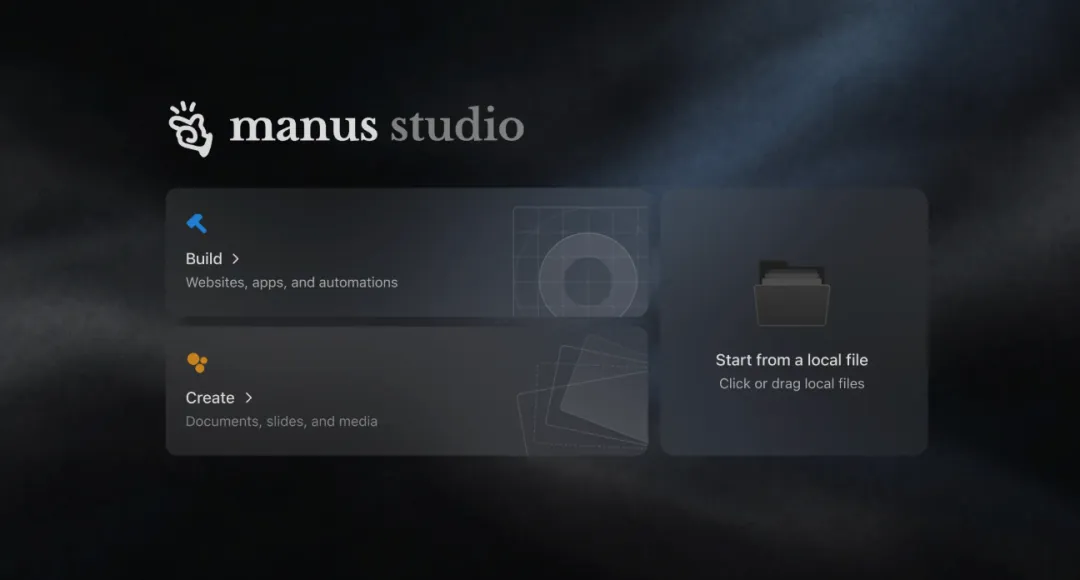
Another change was that with the release of Manus 2.0, the desktop application was upgraded to Manus Studio: a shared space for one person to work with AI.
Previously, often different types of work required different professional tools, but if each task was loaded with all the capabilities, the work would be slowed down and costly.
As a result, Manus Studio will only introduce the necessary capabilities depending on the needs of the project, so that Manus' context is always focused on current tasks.
In this update, the studio made a comprehensive upgrade for everyday work and professional creations, including documents, forms, PDFs, slides, websites, codes, games, videos, etc.
At the same time, Manus has introduced two completely new professional environments for video and gaming, both of which are more demanding:
Video Editor (video editor)
Game Dev (development of games)
Video Editor: First edition completed in minutes, final edition free to use
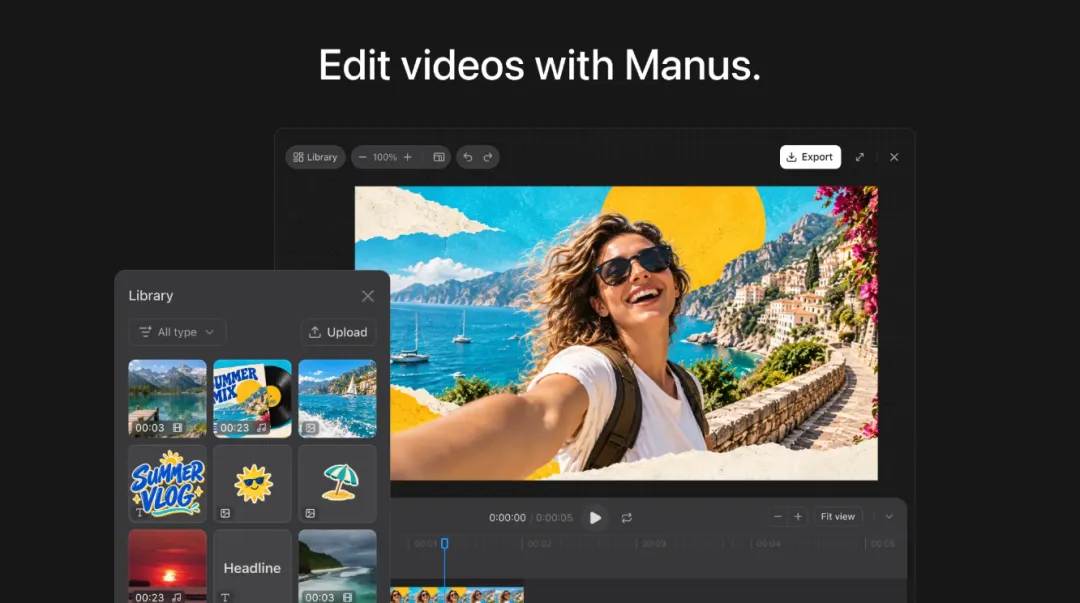
Let's say your product is on the air tomorrow, and Manus has completed a preliminary draft, and the overall effect is good. But you want to change your music to a more brand-friendly tune, using your own product material instead of an AI-generated video.
In traditional practice, this type of modification means rewriting the Prompt and then reproducing the entire video, while in Studio, Manus provides a timeline editing mode.
In other words, the video clips, images, text, animation, and audio in the video are presented as independent elements. This means that users can easily change the music, insert their own material, adjust the animation, and export it directly after the changes have been made.
Of course, the task can also be reassigned to Manus, telling it to optimize again, and it will continue to work on the basis of previous modifications.
Currently, Video Editor is focused primarily on 30-minute 60-second product ads, AI UGC content, data dynamic graphics, tutorials, Vlogs, and dynamic video.
Even "Little White", without any video editing experience, can do so.
In addition, it is worth noting that the Video Editor is also included in the Alchemy mode, where the user only needs to provide one idea, and Manus will take on creative guidance while combining video generation and code generation capabilities.
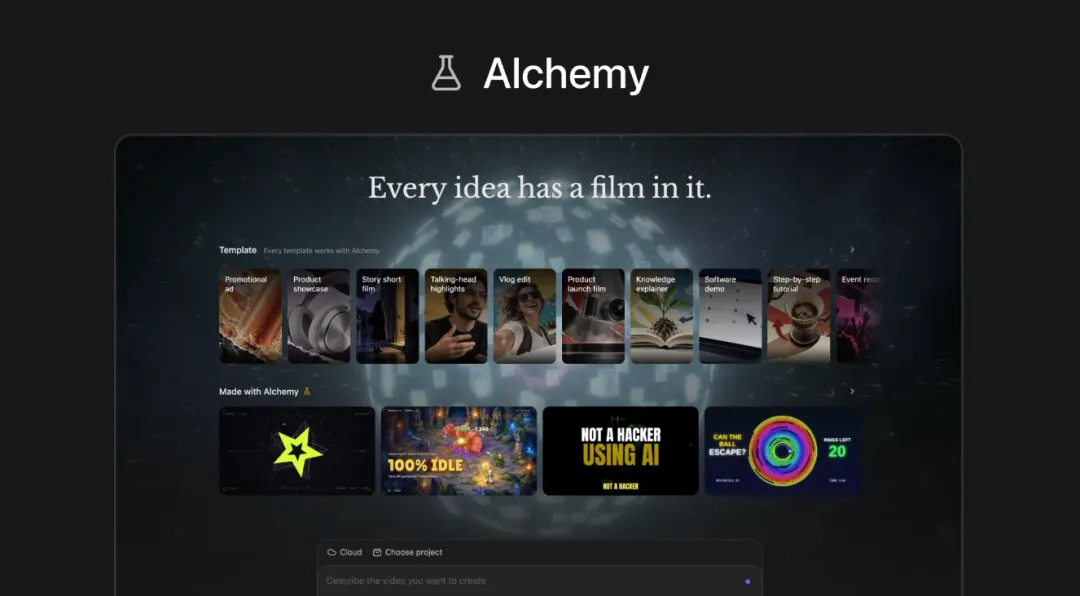
From the point of view of the work's presentation, the effect improved significantly: the creativity was richer, the visual details controlled more precisely, the dynamic effects were more fluid, the cutting pace more mature.
Therefore, for users, when there are high demands on quality, they can use the Alchemy model and still continue to fine-tune on the timeline.
Game Dev: game development
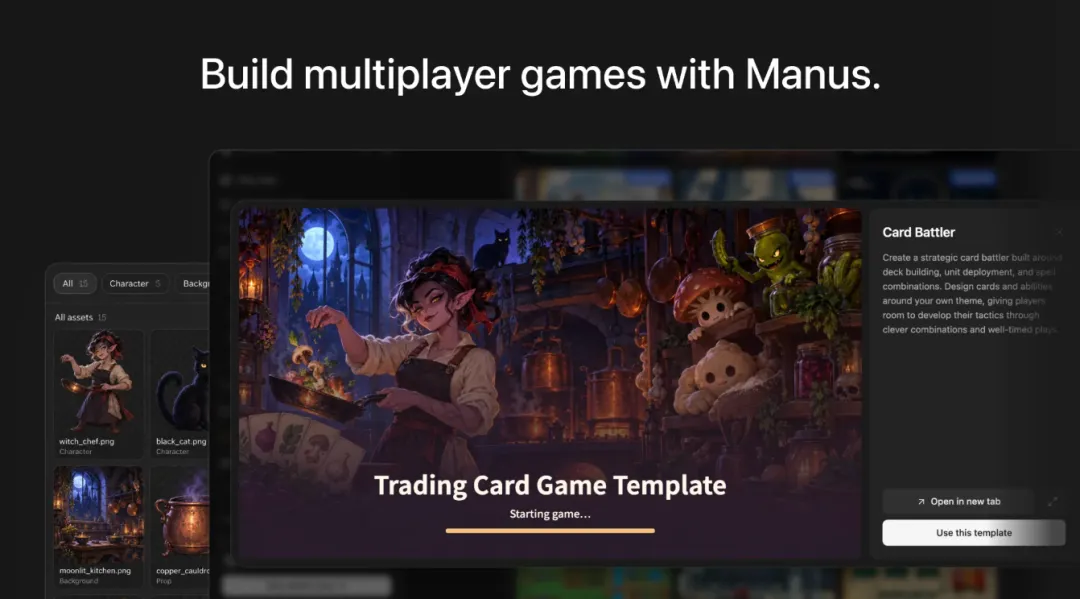
In the minds of most players, there is a game that they have been thinking about for years and wanting to make themselves.
Now, AI can help you make a "better" version, and Game Dev wants to help you make the version you really want in your mind.
Game Dev will collaborate with video, image, and programming models. In Max Ultra mode, it aims to simultaneously accommodate the game's visuals, playability, and hands-on experience. Users can start directly from a playable template and play their creations for the first time.
In the Edit panel, users can run games, manage content, modify code, and manually adjust character movements, artistic effects, and game scenes.
For example, if you think that a village should have silver hair instead of brown hair, you just have to select that village and then change the color of the hair, and the rest of the game will not be affected.
After the game is finished, it can be posted directly to a website.
Multi-player games are often the easiest place to get stuck with this type of project.
Multiplayer games require a server that is constantly online, accessible to all players, and this involves server hosting, network configuration, and follow-up maintenance. For most people who just want to play a game, this is obviously not something they intended to learn specifically.
Game Dev hopes to take over the work directly.
The entire multi-player configuration requires only a few clicks: Configure → Multiplayer → Select Cloud Computer → Buy one. That is, enter "Configuration", select "Multi-player Game", select a cloud computer and buy it, and hand over the rest of the work to Manus.
Currently, this capability can be used for racing cars, player combat, competitive games, and 3D games.
When friends join the game, the explorations and feedback they make during the game can continue to influence the next version of the game, so that the entire game continues to evolve after real players are involved.
Remote Control and Computer Use: One voice command to control your computer
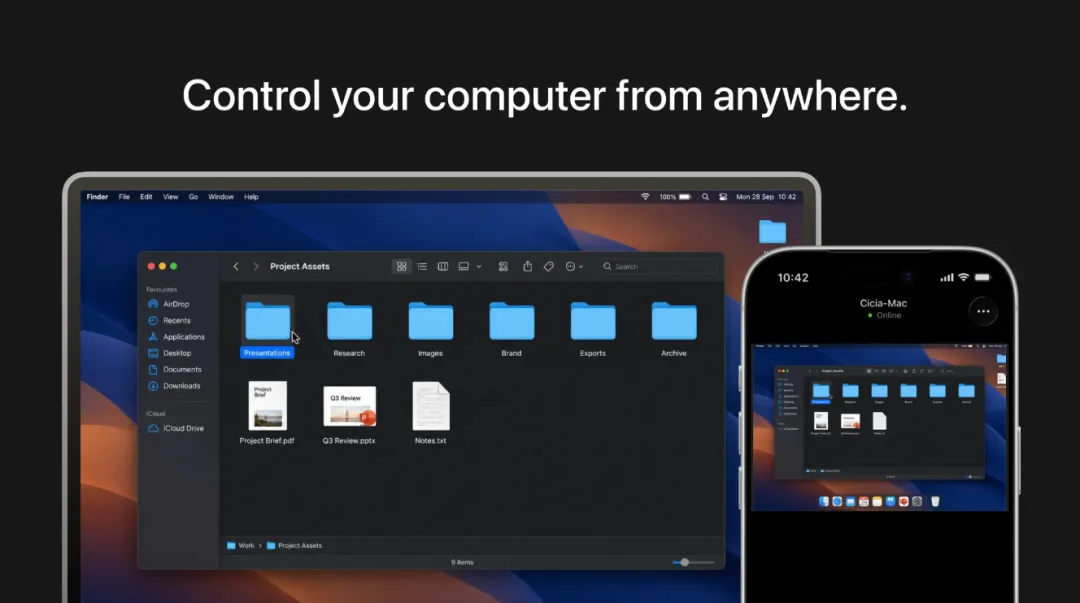
While traditional remote desktop applications allow you to access a computer through your phone, all the clicks and operations still need to be done by yourself in the face of a small cell phone screen. Now you can tell Manus directly what it needs and let it work for you.
For example, you're in a taxi and suddenly you need a presentation from your home computer. Just tell Manus to find the latest version from the project release folder and send it to you. During the whole process, you can also view the desktop in real time from your phone and see Manus complete the operation. If you need a PDF version, just say one more sentence.
This ability is based on Computer Use.
In sessions that are connected and authorized by the user, Manus performs tasks in a separate, visible workspace on the computer, using files, browsers, and applications that the user authorizes access to.
For example, when a user deals with other things, Manus can simultaneously test the application; that is, the user temporarily leaves the computer and it can continue to complete the task.
Cue: All new apps launched by Manus
Cue is an entirely new independent application launched by Manus, aimed at personal Agent scenes, available on mobile phones and desktops with the same infrastructure as Manus.
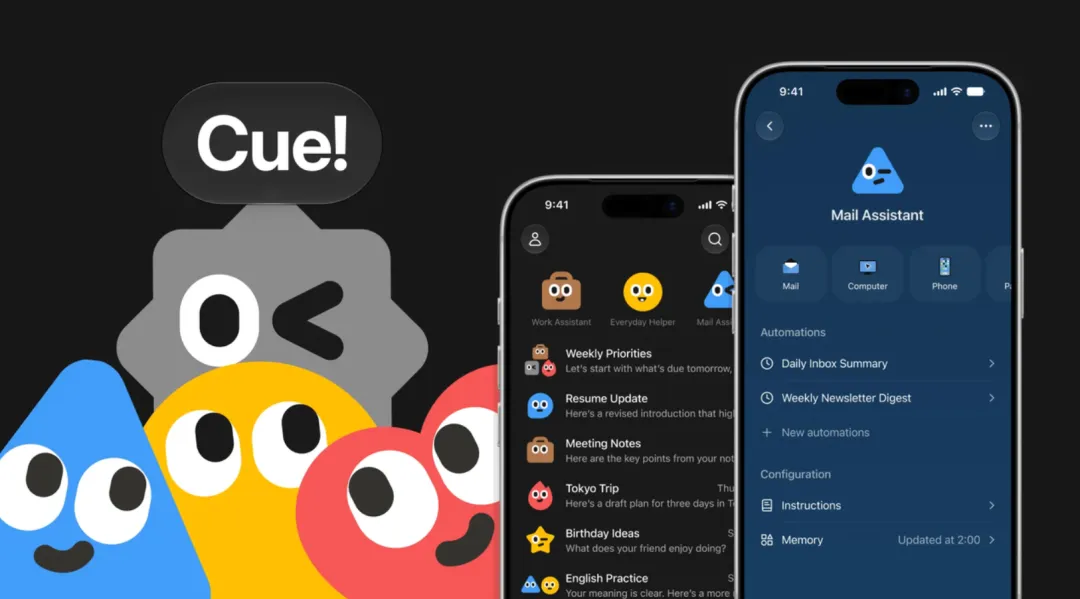
Just give Cue an instruction and Agent will start working.
Each agent has its own "identity". In the Cue, each agent has a separate email address, phone number, wallet, and computer.
This means that the Agent can send messages on its own, make payments within the budget set by the user, and perform the entire task independently in its own computer environment.
It can even take calls for users and leave a summary of content in the Cue after the call is over.
Creating an Agent Team: Users can also drag multiple Agents into the same group and set common goals for them, allowing different Agents to share tasks.
For example, in preparation for a New York conference, one agent may be asked to investigate the site, another agent may be asked to select a candidate list, and a third agent may be asked to produce a presentation.
During the entire process, the user is responsible for determining the direction and making the final decision.
Let the Agent take over the day-to-day services: Cue can also connect to the real services around the user.
For example, in a restaurant, a user can scan the two-dimensional code directly and have their agent help them with the meal or take their place in the queue instead.
In other words, what Cue wants to do is to give individual agents a more complete digital identity and execution capability and further access to everyday life scenes like payments, phone calls, catering.
Manus 2.0 is turning ideas into reality.
Manus 2.0 focuses on "after generation".
According to the official, the "Wow Moment" brought by AI in the past is more about the first time an idea becomes a reality; Manus 2.0 wants to continue to take over the process of subsequent modifications, improvements and interactions.
For example, the user can replace the songs in the generated content, add new product images, change the hair color of the game characters, or invite friends directly to join the games they create. At the same time, the agent can continue to work, preparing the answers in advance when the user picks up the phone again.
Manus wants to help people turn ideas into reality, and Manus 2.0 continues this commitment.
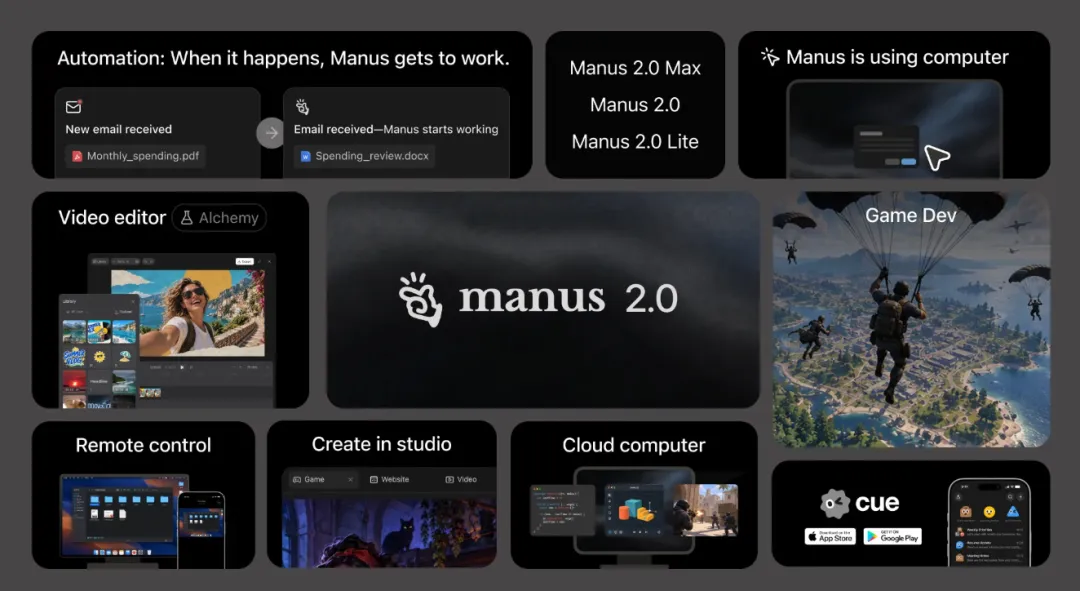
Now, Manus 2.0 is available on web, desktop and mobile devices.
Cue is currently available for web, desktop, and mobile versions, and iOS versions will be available after verification through the App Store.
Currently, Cue is still in the Early Access (early experience) phase, and users can use it for free with an invitation.
First-time users can apply for an experience with the MEETCUE invitation, limited in number, on a first-come, first-served basis. All successful users who qualify for the experience will also receive an additional invitation to share with others.
The link is as follows: