In fact, the competition for physical AI is extending from the human robot body to the edge chip and industrial field control, an article covering chip Edge CPU/NPU→ Machine Vision/Sensor Integration→ AI Runtime→ Robot Controller→Server/Motor Driven→ Industrial Equipment chip.
Recently, Anfoli has demonstrated a number of innovative solutions at the 2026 Anfoli Smart Technology Ecology Forum in Shenzhen, in response to this system-level proposition. From the AMD Ryzen P100 heterogeneous central computing platform with a single SoC integrated CPU, GPU and NPU, achieving a maximum of 80 TOPS of system computing power, to the NAIP MCX-A577-based electronic skin software for robotic touch interaction applications; from GaN robot joint server drives that rely heavily on 100kHz high-frequency switching characteristics, to the Swiss RZ/T2M and RA6T2 distributed lightweight software for EtherCAT to achieve a free high-altitude demonstration of these solutions, not isolated, but from synchronous control systems, but from physics to the implementation of sensory chain engineering around AI systems.
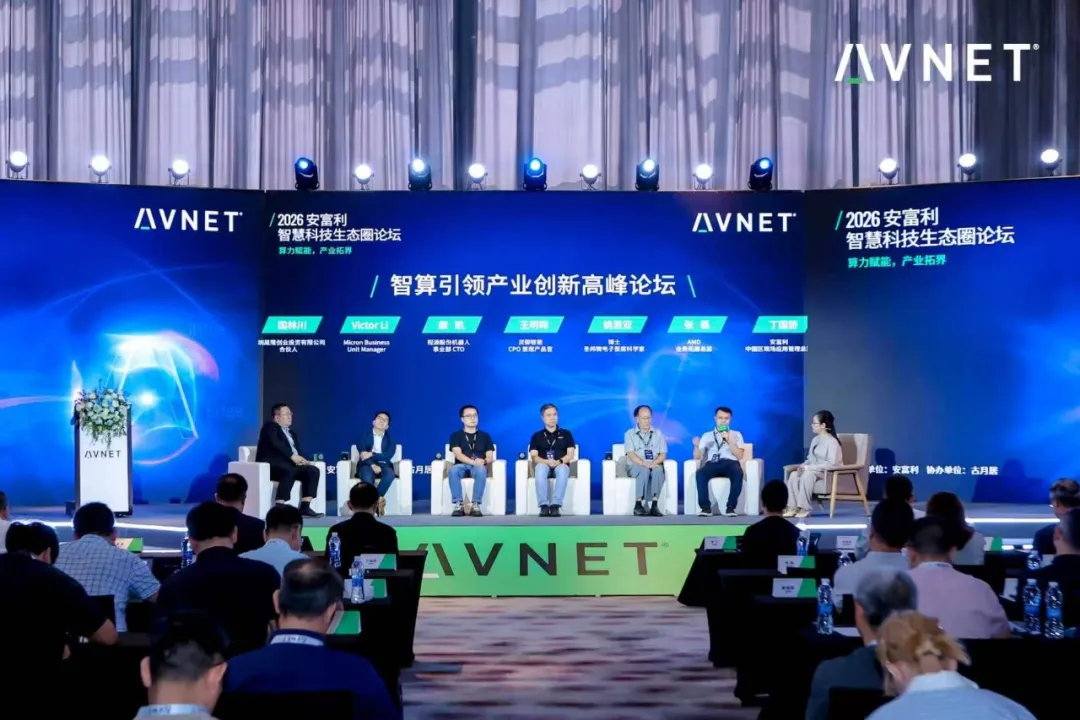
The 2026 Anfuli Smart Technology Ecosphere Forum is being held in Shenzhen
From technical selection to mass production delivery: redefining the role of Anfouli
The mass-production challenge of physical AI is essentially a system engineering problem: a robot OEM manufacturer must simultaneously deal with multi-dimensional technical problems such as chip selection, real-time control, AI reasoning, communication protocols, power management, sensor integration, and any one of these engineering failures can lead to mass-production failure.
This is the profound logic behind the transformation of the role of Anfuli. In the forum, the president of Anfuli Chinatown, Dongguan, pointed out that the competition in the AI industry is returning to its essence: who can really bring intelligent landing, who can empower thousands of industries at scale, who will be the pioneers in the next round of industrial change. Behind this, the test is not only a single technological breakthrough, but whether it can build on the foundation of computing power, the commercialization of physical AI and the application of AI innovation, the ability to collaborate systemically with the entire industrial ecosystem.
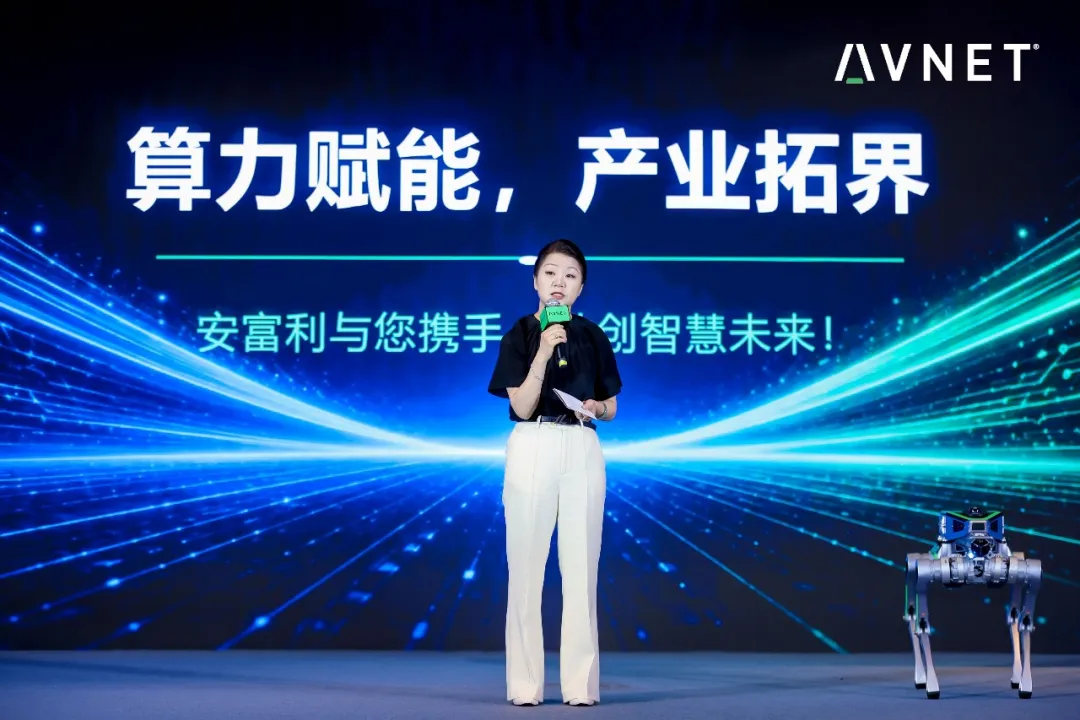
Ms. Dong-gu, President of Anfulei China District, speaks at the General Assembly
He illustrates this with the cross-scene application of ultra-wideband (UWB) technology: UWB technology was originally integrated into the CPD (Child Presence Detection) system of cars to detect whether children or pets were left behind when drivers left the car. We used the same technology to make robot tracking possible and then spread the same technology to different applications.
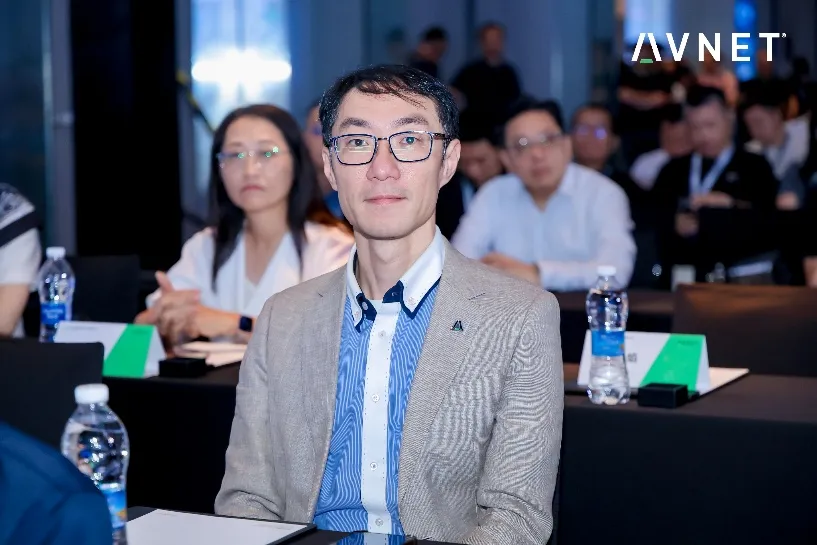
The Director of Engineering for the Anfuria Pacific Region, Wang Xiaojing
At the power architecture level, Wang emphasized the importance of the 48-volt system: with the improvement of robot load capacity, the design of the power architecture is directly related to system stability and durability performance, a seemingly basic engineering problem, which is precisely the link that should not be overlooked at the production stage.
Physical AI cannot be mass-produced on the ability of any enterprise. For example, an autonomous patrol robot platform developed jointly by Anfouli and Weston Robot, with an AMD-based AI embedded processor, performs AI tasks directly on-premises, provides AI algorithms up to 50 TOPS, supports 3D LiDAR SLAM navigation, and can run steadily in a GPS-free environment. This product has completed the entire process from development to deployment, for critical infrastructure scenarios such as manufacturing, energy, transportation, and logistics.
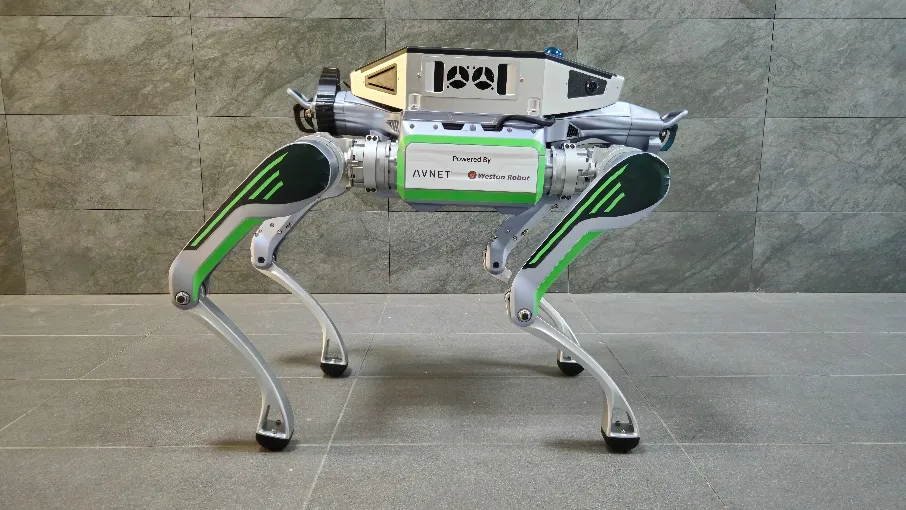
Anfoli is working with Weston Robot to launch autonomous reconnaissance robots
Anfoli offers advanced computing technology, eco-enabled and embedded AI solutions, partnered output of intelligent robots and autonomous system capabilities, combined advantages to help customers reduce implementation complexity and shorten product placement cycles.
In addition, Anfoli's recently established EMUS Laboratory with the University of Hong Kong (Emerging Microelectronics and Universal Computing Systems Laboratories), which integrates research capabilities, engineering expertise and global supply chain resources, focuses on edge AI, physical AI, robotics and high-performance computing, to support innovators in all processes from GPU computing resources to manufacturability assessment and supply chain support.
Anfoli's positioning is evolving from a traditional technology distributor to a system-level innovation empowerer in the era of physical AI. The value of this transformation will perhaps be seen more widely until the day robots actually enter the factory workshops, enter thousands of homes. And now, the engineering details that have been repeatedly discussed, such as the 48-volt power structure, EtherCAT synchronous control, and the IoT expansion of the electronic skin, are precisely the path to the most solid foundation of the future.
—END—
 Sign up for the 2026 Annual Meeting of High-Industry-Body Intelligent Robots! In August, LII delivered hundreds of robots, with more than 2,000 orders pending; FAO signed 10,000 orders with Malaysian Notion. Market Watch.