In the past, people rarely used "volume of work" to measure an AI.
A chatbot is called once, answers a question, and the task is usually over. It consumes how many tokens, occupies how much computing power, and is mostly encapsulated in a request. For users, a call basically corresponds to a calculation.
Agent changed the relationship.
Now, when you tell AI to "help me get this job done", it can first make a plan, then search for information, read files, call tools, operate software, check results; if it finds out where the problem is, it can go back to the previous steps and do it again.
This means that a task that in the past only responded to a single model call can now be broken down into dozens of steps or even longer execution chains. With each additional reasoning, tool call, new Token consumption and computation costs are superimposed on the back.
So, as the Agent begins to take on increasingly complex tasks, the way AI is measured is also changing: people are focused on not just answering how much computation it takes, but how many steps it takes to complete a task, how much computation it consumes.
Agent is moving AI from "answering a question" to "doing a job".
Recently, at the 2026 AI Computing Conference (AICC2026), IDC and Wave Information jointly released the 2026 China AI Computing Power Development Assessment Report (see below), which put Agent in a more central position this year than in previous years.
IDC's vice president, Zhou Zheng, said that this year's report was prepared more than six months after the launch, during which he interviewed a large number of companies and collected relevant data.
And these research data are revealing a bigger change in the Age of Agents.
The real explosion behind Agent 2.2 billion is Token.
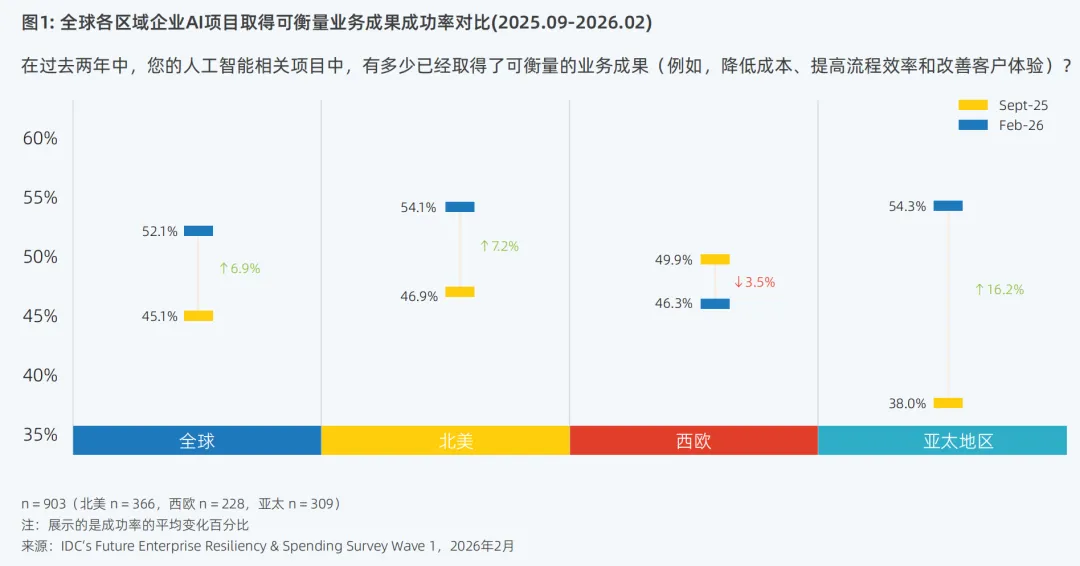
In 2026, 52.1% of AI projects globally achieved measurable business outcomes, a further improvement from 45.1% in September 2025. By 2031, IDC expects AI to create a cumulative global economic value of $22.5 trillion.
As Agent technology matures, enterprise AI procurement budgets will grow by about 20 percent.
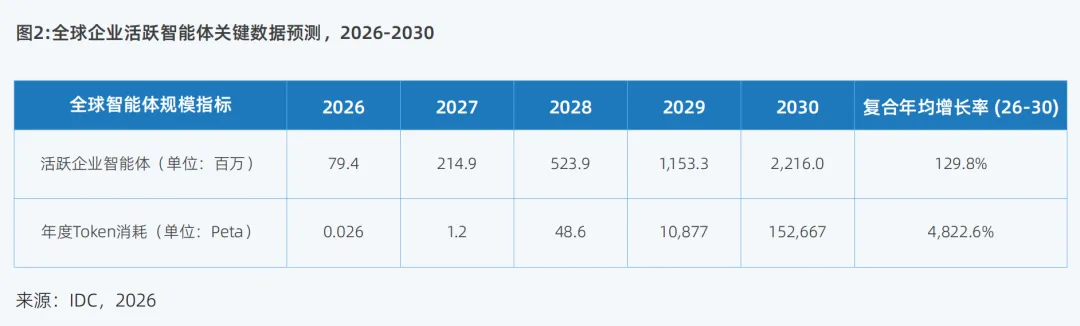
The Agency itself is in a phase of rapid expansion.
IDC expects the number of active global enterprise agents to grow from 79.4 million in 2026 to 22.16 billion in 2030, with a compound growth rate of 129.8%.
Compounded growth in global Token consumption over the same period is expected to reach 4822.6%, approximately 37 times the growth in active Agent numbers.
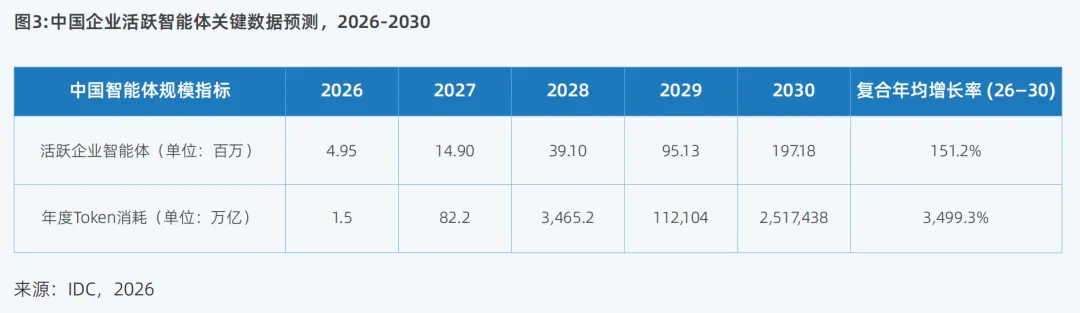
The combined growth rate for the number of active smartphones in China from 2026 to 2030 is 151.2%, and the combined growth rate for Token consumption over the same period is 3499.3%.
He said that the depth of the mission was more important than the number of agents.
In the past, AI primarily performed relatively simple tasks such as retrieval, generation, and is now entering multi-phase reasoning, tool calling, and cross-system collaboration. As tasks for Agents become increasingly complex, the Token consumption behind individual Agents is also increasing rapidly.
Therefore, the arithmetic growth brought about by Agent is not a linear relationship.
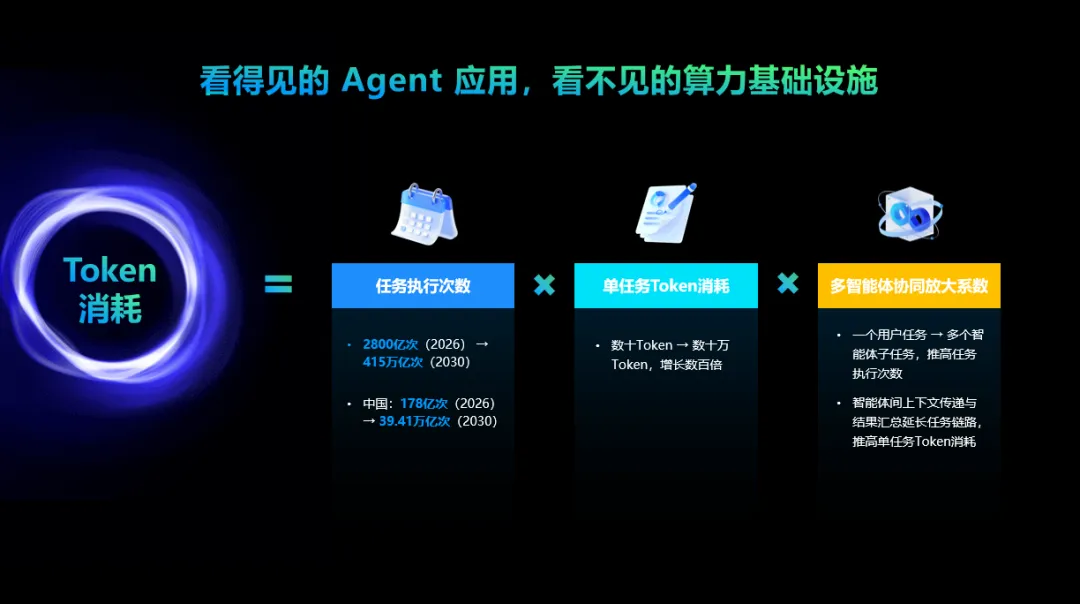
The report gives a formula: Total Token consumption = frequency of task execution × single-task Token consumption × multi-smart body synchronized amplification coefficient. These three factors are increasing simultaneously.
First, the number of times a task is executed.
Traditional large models typically require users to initiate requests. After an agent enters the business process, a large number of calls are automatically triggered by the task itself.
After a code agent receives a bug-repair instruction, it may be necessary to first read the code repository, search for relevant files, then modify the code, perform tests, read bugs, continue to repair. Once a user requests it, it has become multiple model and tool calls within the system.
The report forecasts that the number of global Agent annual missions will increase from 280 billion in 2026 to 415.07 trillion in 2030, while China will grow from 17.8 billion to 39.41 trillion.
The second change is the single-task Token consumption.
A simple query can only consume tens to hundreds of tokens, while a complex Agent task can continue to run in multiple steps.
It needs to load into context, plan tasks, call search, database, API, or code execution environments, and then read tools back to the results.
As the context window expands, model reasoning capacity increases, Token consumption for single tasks also grows from dozens of simple questions to tens of thousands of complex document analysis and hundreds of thousands of multi-cycle decision-making tasks.
The third change comes from multi-intelligent collaboration.
A complex task can be broken down into multiple Agent subtasks. One Agent performs searches, one Agent performs analysis, one Agent writes code, and one Agent is responsible for verification and synthesis.
The number of agents adds a layer of computation, passing on the context between the agents, exchanging results, and further extending the task chain. Thus, once a simple model was called, it was expanded into a growing computation tree.
After the superimposition of the three multiples, the most direct result is an increase in the slope of computational demand.
In 2025, China's smart computing scale is 1371.1 EFLOPS; in 2026, it is expected to reach 2576.5 EFLOPS, a growth rate of 87.9%; and by 2030, it will reach a further 10524.3 EFLOPS.
Meanwhile, China's smart computing complexity growth forecast for 2025-2030 has risen from 46.2% to 50.3%.[6]
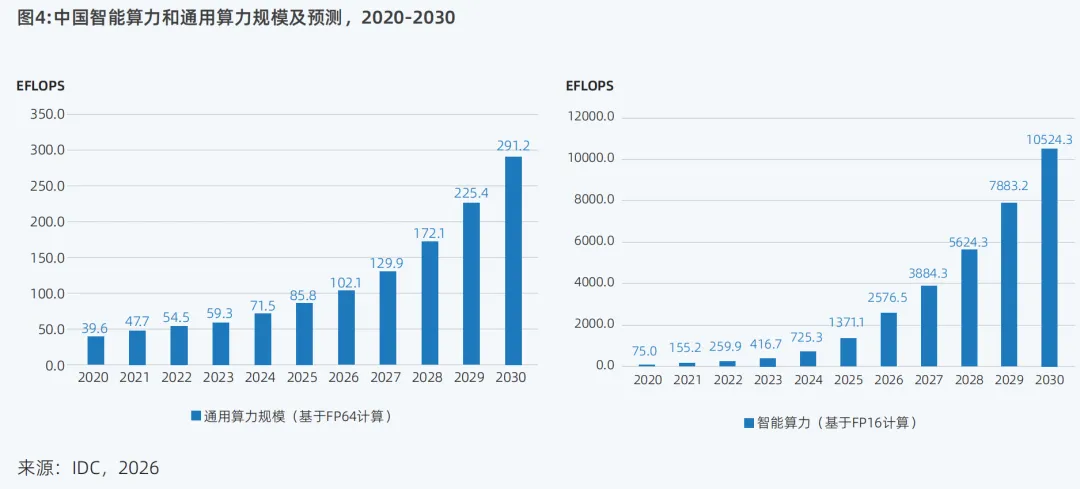
Agent is continuing to pull the demand curve upwards.
The problem is that agents in the digital world can be replicated faster than chips, power, and data centers in the physical world.
IDC forecasts that the global AI market will reach $1.25 trillion by 2030, roughly four times the size of 2025. China's AI market is expected to reach $51.5 billion by 2026, a growth of 37% compared to its peak of $15.1 billion by 2030.
Enterprises are also continuing to increase their inputs, with 97.3% of enterprises expecting to continue expanding their AI inputs, of which 37.7% need to significantly increase their reasoning and 29.3% need to continue to operate large-scale computing resources to support their operations.
But an interesting phenomenon emerged: investments were increasing rapidly, and computing was still not enough.
The report forecasts that global demand for AI computing will continue to decline from 79% in 2024 to a low of 71% in 2027 and only recover to around 77% by 2030.
More importantly, there is an absolute gap. The global AI computing gap is expected to grow from $38.9 billion in 2024 to $38.9 billion in 2030.
The reason for this is not complicated. The demand for the digital world can grow exponentially, but the manufacture of chips, HBMs, and server CPUs is constrained by real capacity.
The same is true for data centers. Before computing can take off, a number of problems such as machinery, electricity, heat dissipation, and networking need to be addressed, and the cycles of grid expansion and delivery of critical equipment are often much longer than the speed at which an Agent product goes from online to the user.
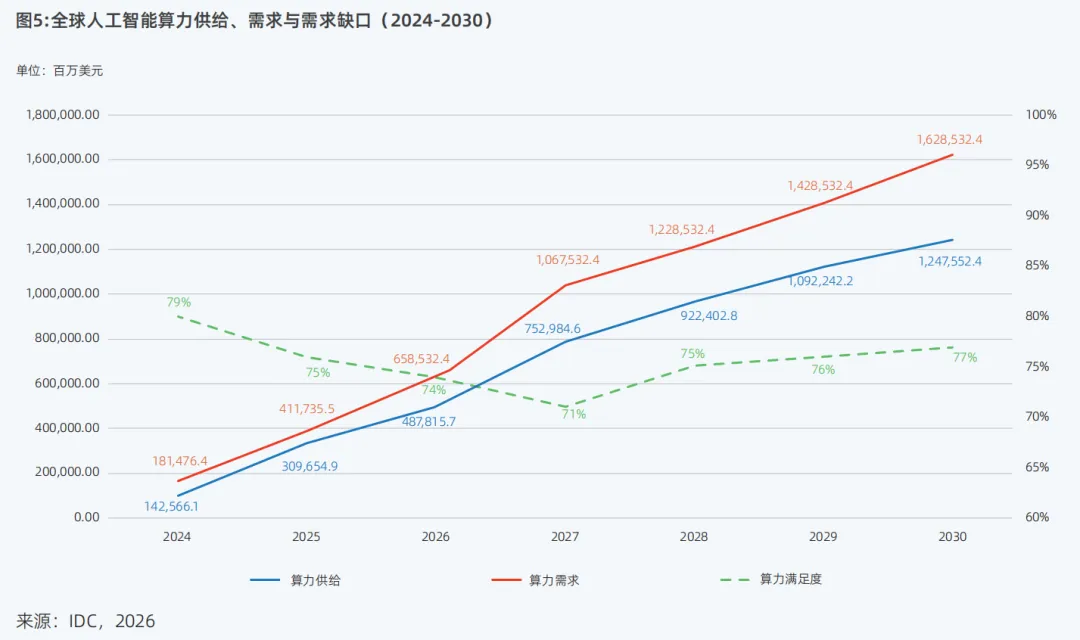
After not having enough math, the competition turns to how to use good math.
As demand for computing grows rapidly, supply and long-term gaps exist, AI Infra cannot rely solely on continuing to add hardware.
An agent is not a request to end a call, but a long-running, ongoing process of data interaction.
AI Infra also aims to optimize efficiency from single-point performance to complete tasks.
The report runs along computing, storage, networking, data center, terminal, model and agent frameworks, scheduling and MaaS, Token operating levels.
Compute evolves into a binary: stronger, but more so
At the computing level, Agent makes the separation of CPU and GPU clearer.
GPUs are primarily responsible for model reasoning and parallel computing; CPUs are more responsible for workflow compilation, tool calling, and state management. AI computing in the Agency era began to shift from GPU-centric to asymmetric resource collaboration such as CPU, GPU, and NPU.
As the number of Agents increases, the CPUs need to carry more and more workflow and state management tasks, and their importance increases significantly, the AI infrastructure evolves from GPU-centered to CPU-GPU synchronized.
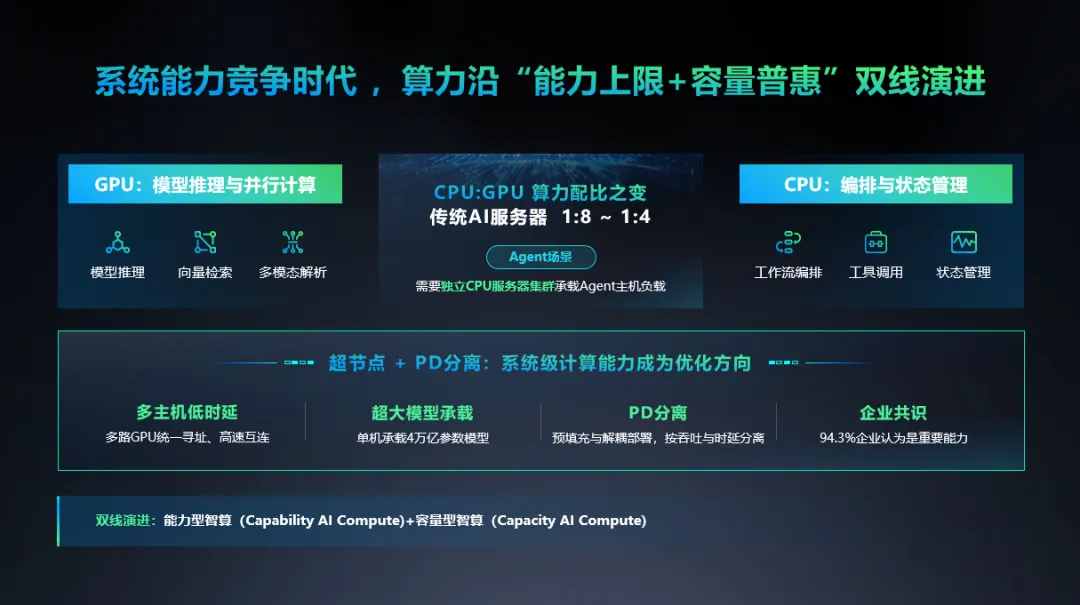
On this basis, the future of AI computing will evolve along two lines.
One is Capability AI Compute, a capacity-based computing.
As the scale of the model, context, and complexity of tasks continue to grow, single chips quickly touch physical boundaries. Computing competition is shifting from chip peak performance improvements to system-level capabilities. System-level innovations such as hypernodes, HBMs, high-speed connections, chiplets, and advanced packaging are needed to make more chips into a larger unified computing domain. The Scale-up architecture represented by hypernodes extends high-speed connectivity and unified memory addresses, enhances single model load capacity and complex task processing capabilities, and supports breaking the intellectual limit.
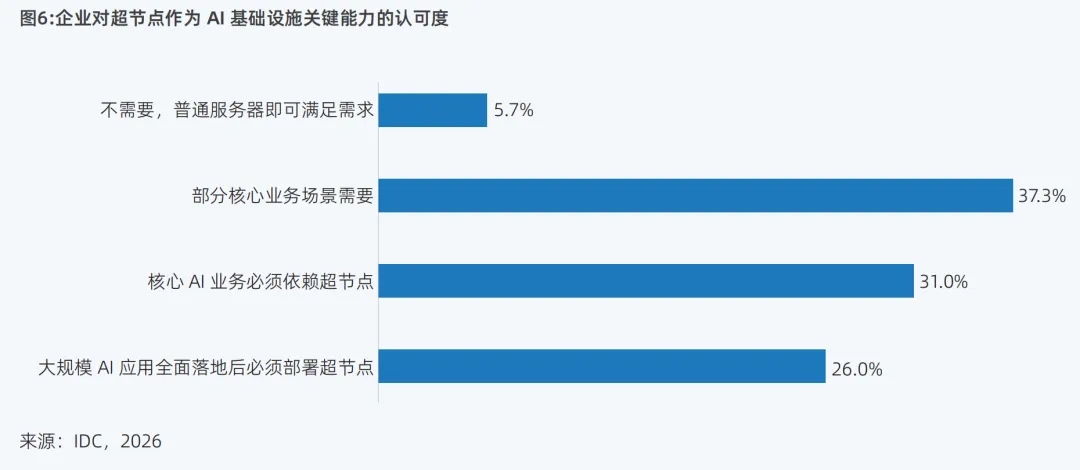
The other is Capacity AI Compute, a capacity-based computing.
As AI grows stronger, another question is how to make it cheaper, richer and more accessible to a wider audience.
The report focuses on prefill-decode separation, attention-FFN separation, encoder-prefill separation, draft-target separation, and multivariate collaboration, caching and scheduling optimization. This improves Token output efficiency, reduces unit Token costs and delivers full intelligence.
The change in Agent Infra goes beyond calculations
In addition to computing, other infrastructures also change in the long-link operation around the Agent.
From storing models and data to further assuming working memory, short-term memory, long-term memory, and organizational memory, KV Cache also began to move from one-time requests to cross-session replication:
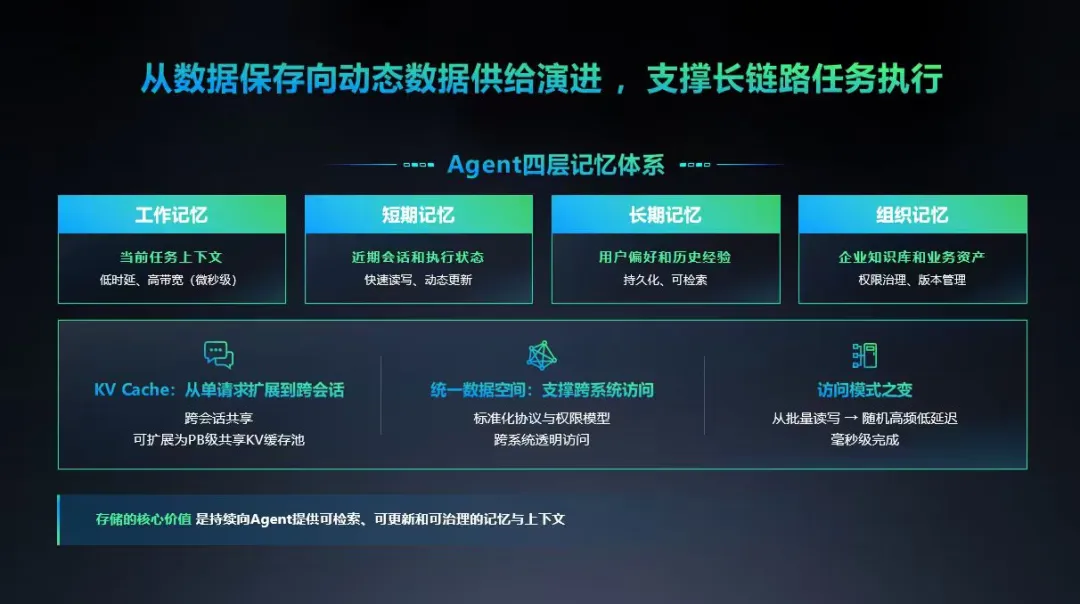
The network has shifted from focusing primarily on data connectivity and transmission efficiency to ensuring the normal functioning of the task chain. A single Agent task may span terminals, models, knowledge bases, enterprise systems, and external tools, and a peak delay or network disruption may lead to a complete task chain overtime.
Data centers need to cope with the high power density of Agent 7×24 hours of operation and high concurrent reasoning. As the power of the single cabinet evolves to more than 300 kW, the co-design of systems such as heat dissipation needs and computation, interconnection, and spatial layout, raw liquid cooling becomes the evolutionary direction of high heat dissipation in MW-class AI cabinets.
Terminals can also move from simple display results to Agent operating nodes. PCs, workstations, cars, robots, factory equipment, etc. can take on local reasoning, ultimately forming cloud, edge, end collaboration.
So Agent Infra isn't just buying more GPUs. It actually requires computing, storage, networking, data center and terminal changes.
The software layer also ranges from calling up models to managing tasks.
The Agent is also driving changes in the software infrastructure. A single model cannot meet all tasks, so it is necessary to select models based on task types, user intentions, delays and cost dynamics.
On top of the model, the Intelligent Body Framework is responsible for embedding model capabilities into the task execution process, converting one-time model output into sustained, stable, and controllable business execution capabilities through context management, tool calling, state maintenance, and task organizing.
The subject of the scheduling changes as well.
In the past, it was up to which GPU to run which tasks; in the Agents era, it was up to which models to call, where to run, what types of chips to use, and how to migrate and retest after failure.
MaaS also moves further from the model API to cover reasoning acceleration, model routing, workflow sorting and task-level platforms run by Agent.
Token is starting to be the middle ground for measuring smart productivity
In the past, infrastructure assessments used to look at FLOPS, GPU numbers, and PUE. But these metrics only tell how much resources enterprises have invested, and cannot directly tell how much intelligence these resources ultimately produce.
Token is the central unit of measurement for smart productivity.
If one agent consumes one million tokens to complete a very low-value task and another agent consumes only 100,000 tokens to complete a core business process, it makes no sense to simply compare the number of tokens.
Therefore, the report further emphasizes the need for Token operations to find a balance between interactivity and throughput and to adjust models, algorithms and scheduling strategies according to the dynamics of different business scenarios.
There was a noticeable gap in the end of the application, and the coding agent, the work agent, was the first to run.
Agent landings do not coincide, but first enter high-frequency, boundary clarity, and verifiable scenarios. Currently, there are clearly two main categories running ahead: Coding Agent and Work Agent.
Code generation and engineering aids run the fastest because the code is highly digitized, the task boundaries are clear, and the results can be verified directly by compilation and testing.
The logic of the Work Agent is similar. Office scenes such as documents, emails, schedules, meetings, knowledge bases, have been highly digitized in themselves, so it is easy for the Agent to extend from single-point capabilities such as writing, retrieving, meeting schedules, to continuous tasks such as mail processing, scheduling and document flow.
In contrast, traditional industries such as manufacturing, healthcare, which require cross-system collaboration or involve high-risk decision-making, have relatively slower landing speeds, actually entering core business and forming a 0% share of lead-reactive lead-optimized closures.
Another trend in education and research is that the current application maturity does not fully represent long-term industrial value.
The depth and scale of Agent applications in these industries has not yet reached the level of coding, office, and other fields, but due to the high level of knowledge density and the many professional judgments involved, it may still be an important direction in the long run for AI to reconstruct production methods.
Urban AI rankings are also starting to be rewritten by Agent
Beijing, Hangzhou and Shenzhen form a new first-tier team.
Of these, Beijing, which relies on an integrated computing industry chain, powerful large-scale model enterprises and AI application ecosystems, continues to rank first; Hangzhou, with its AI innovation enterprise cluster and Internet industry base, and continued development in areas such as large-scale models and physical intelligence, continues to rank second; Shenzhen is the biggest variable this year, surpassing Shanghai to third place.
The rise of Shenzhen is an illustration of how this round of urban competition has changed. It is based on AI servers, computing chips, and electronics manufacturing industries, and after the rapid growth of Agent, the company's continued expansion of models and applications, such as WorkBuddy, and mixtures, has further shaped the closure of applications from computing to Agent.
Shanghai, Guangzhou, Chengdu, Nanjing, Wuhan, Jinan, Suzhou are in the second tier.
Among them, Wuhan has re-entered the top 10 since 2018, forming an algorithmic + intelligent + supercalculative + edge algorithmic collaboration system; Jinan relies on China's algorithmic industrial ecosystem construction, and Shandong's first mobile cloud Token center has landed; Suzhou relies on light modules, precision manufacturing, and other capabilities to become an important node in the AI computing industry chain.
The biggest change behind this list is that the city-to-city comparison is no longer just about how much computing power there is, but also whether there are models, agents and industrial scenarios that continue to consume and transform these computing power.
As AI moves from training large models to continuous production of tokens, executing tasks, urban arithmetic competition has begun to move from a simple scale of arithmetic to an integrated competitive stage in the arithmetic and arithmetic industry.
Synopsis: Agents are rewriting everything about AI
Zhou Zhu said at the conference: "Agent is rewriting everything about AI".
AI will move from content generation to task execution, from single-question to long-link collaboration, and from a tool to a business unit responsible for producing tasks. Competition between enterprises will also move from whether to deploy AI, to whether to scale, secure, and manage Agent operations.
Modeling skills are still important, but running alone is not enough. Whoever can make more and more agents run faster, more stable, cheaper, while being safe, controllable, and manageable is more likely to put their growing computing power into real productivity.