
It's the first time in the history of the world.
The reasoning capabilities of large models are growing stronger, but a core problem remains unresolved when it comes to the task of really looking at graphs:
Is the model "looking at graph reasoning" or after looking at the graph over and over, continuing to guess mainly by text chains?
To address this issue, a research team from Emory University in the United States has proposedDecompose, Look, and Reason(DLR)And they'reEMNLP 2026 Main ConferenceReceived.
Address of the paper:https://arxiv.org/pdf/2604.07518
The goal of DLR is to mitigate the problem of "textual reasoning continues to expand, but visual evidence is gradually weakened" in the multi-modal Chain-of-Thought. Its core idea is intuitive: to make visual language models human-like and continuous in complex problems:
Decompose → Look → Reason
That is to say:First the problem is dismantled, then the "see" graph of the current sub-problem, and finally the reasoning is based on the visual evidence that has just been obtained.
Background of researchBottles of visual information in multimodal reasoning
The Visual Language Model (VLM) has been able to execute a longer chain of reasoning in visual questionnaires, understanding mathematical graphs, and cross-disciplinary multi-modal tasks.
However, unlike pure-text reasoning, polymorphic reasoning requires repeated interaction between discrete language sequences and high-dimensional continuous visual representations.
A key question is whether subsequent reasoning is still supported by adequate, accurate visual evidence after the model enters longer language CoT.
Methods have been developed along roughly three routes. The first type of text-only multimodal CoT compresses visual information into text descriptions, and then continues to reason mainly in language space; this leads to unavoidable loss of information.
The second type of interleaved CoT, or "thinking with images", introduces an image patch, bounding box, crop, zoom or external vision tool in the intermediate steps, which can enhance visual grounding, but also introduces additional tool calling costs and is limited by predefined operating space.
The third type of latent visual reasoning projects intermediate visual information into continuous embedded spaces, but existing methods often rely on local ROI/patch, or only one visual latent is injected into the entire reasoning chain.
The paper notes that local ROI is not always consistent with "the semantic evidence that current reasoning steps really need": it may contain too much unrelated context, or it may not cover cross-regional relationships, holistic layouts, or abstract vision concepts. At the same time, multi-step reasoning often requires models to examine different evidence at different stages, so single vision injections are difficult to support a complete reasoning trajectory.
Decompose silicon Look silicon Reason cycle
DLR describes a complex visual reasoning process as a trajectory consisting of several intermediate steps. The first step involves the text premise p (t), the continuous visual latent z (t) and the rational r (t) generated on the basis of the visual evidence, ultimately resulting in the answer a. Its core is the explicit combination of "the question that needs to be verified" and "the extraction of corresponding evidence from the image".
Decompose: dynamic generating premises that require visual verification:The VLM decides on the visual fact that needs to be confirmed and generates a clear premise or sub-question based on the context of the current rationale. The answer to this step is "what needs to be verified next".
Look: extract premise-conditioned visual latents:The visual grounder is conditioned by a hidden state at the premise end location to perform cross-attention on an image characteristic, producing a set of continuous visual latents. Unlike a fixed ROI or single patch, these latents can encode local details, cross-regional relationships, and non-local visual meanings.
Reason: Grounded rationale based on visual latent:VLM generates the rational of the current steps after injecting the visual latent, and thereby continues the next round of decomposition until the final answer is found. Thus, visual evidence is no longer just a one-time input at the beginning of reasoning, but is a dynamically updated condition of the entire reasoning trajectory.
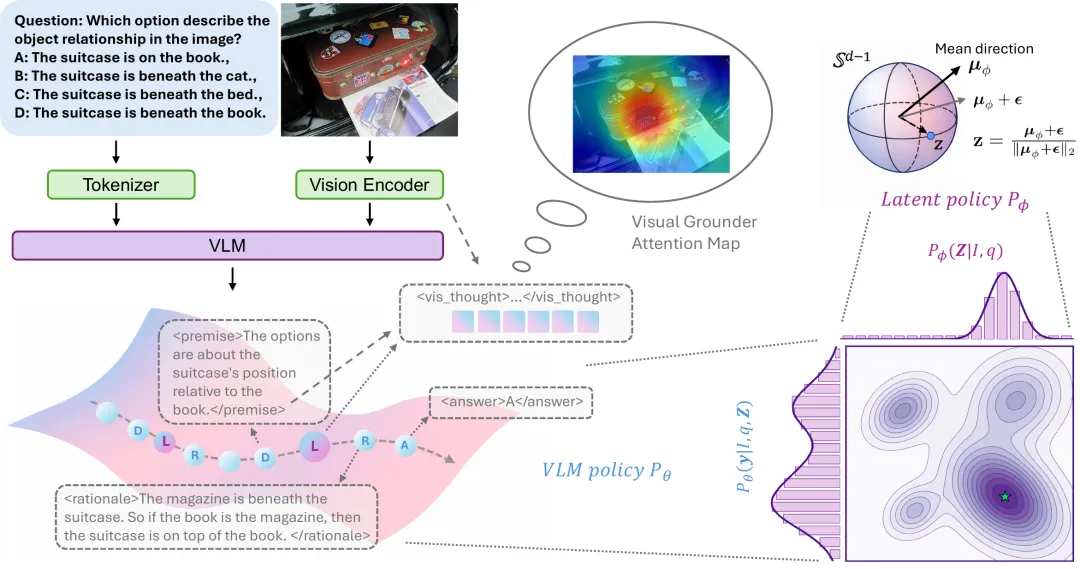
Figure 1: DLR overall framework. The VLM text strategy is responsible for generating premise and rationale; the visual grounder extracts continuous visual latent based on premise.
From the perspective of probability modeling, DLR integrates the text generation strategy Pθ with the visual latent strategy Pφ into the reasoning process.
More precise textual decomposition can provide more precise conditions for the visual grounder, while more task-related visual latents can in turn improve subsequent rationale, thus forming interdependent combined optimization processes.
Three Stages of TrainingFrom cross-modal alignment to continuous hidden space reinforcement learning
Stage I:Visual Grounder Pretraining
The first phase is freezing the VLM main stem, training the lightweight visual grounder. The model uses a set of learnable latent queries to conditionally extract image characteristics, and learns by two-way InfoNCE comparison to align the combined visual latent with the text semantics of the target response.
The role of this phase is to establish stable cross-modal initialization, enabling the latent to extract corresponding visual semantics under given text conditions.
Stage II:Supervised Fine-tuningThe second stage involves supervising the structured DLR trajectory of fine-tuned learning. Training samples explicitly contain structures such as <premise>, <vis_thought>, <rationale> and <answer>.
VLM learns when to come up with a new visual premise; the visual grounder generates a continuous latent based on the premise hidden state and gains gradients through subsequent rational and response language modeling losses.
SFT allows the DLR format of the model to be internalized, but latent extraction is still predominantly deterministic feature extraction, lacking explicit exploration.
Stage III:Reinforcement Finetuning for Continuous LatentsThe third phase will further extend reinforcement learning from discrete text tokens to continuous visual latency.
Standard GRPO can directly optimize the discrete strategies of text tokens, but the continuous latent lacks a natural token-level probability distribution. The DLR thus constructs a visual latent policy that explicitly calculates the density-to-importance ratio of the strategy and optimizes it in conjunction with the text policy.
Semantic exploration at the super-global level
Visual-language representations typically use cosine similarity to measure semantic similarity, so semantic information is often encoded in vector rather than dimensional directions. The paper considers visual representations to be semantic flows on a near-unit hypersphere and proposes the Spherical Gaussian Latent Policy (SGLP).

The visual grounder first predicts the L2-normalized mean direction μφ, joining the Gaussian perturbation near it, and then projecting the sampling results back to the unit hypersphere. This allows the focus of the exploration to be placed in the semantic direction, thus reducing the risk of mixing semantic variation with magnitude variation.
In the reinforcement phase, DLR is based on Dr. GRPO's group-relative advantage while optimizing text strategy and latent policy.
Experimental settings and main results
The experiment used Qwen3-VL-8B-Thinking as the backbone and assessed four visual-centric benchmarks: V* Bench (detail properties and spatial relationships), MathVista (visual mathematical reasoning), MMMU-Pro (interdisciplinary polymorphic reasoning) and MMStar (complete polymorphic ability).
To ensure fairness, open-source methods such as ICOT, LVR and PixelReasoner all fit into the same Qwen3-VL-8B-Thinking backbone.
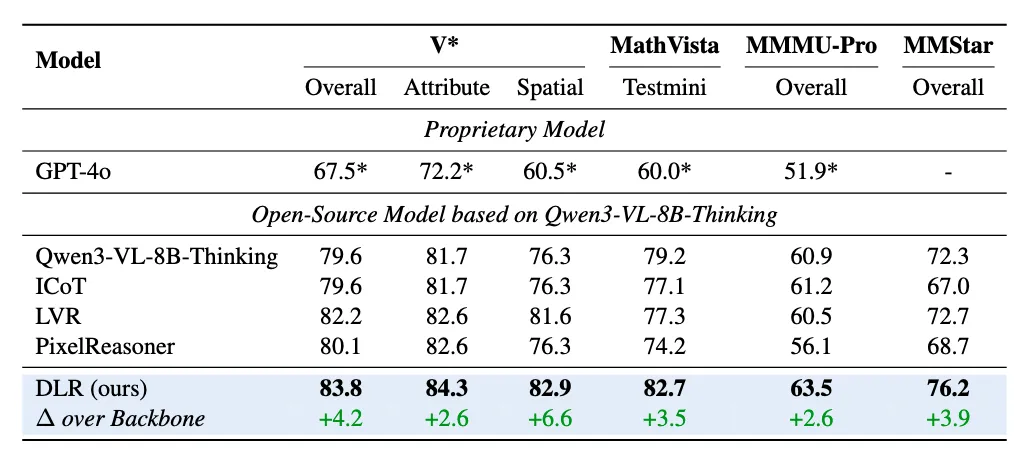
Table 1: Assessment of the main results.
The DLR has reached 83.8, 82.7, 63.5 and 76.2 on V*, MathVista, MMMU-Pro and MMStar respectively.
Compared to Qwen3-VL-8B-Thinkingbackbone, the corresponding improvement was +4.2, +3.5, +2.6 and +3.9 percentage points.
On MathVista, LVR has been upgraded from 77.3 to 82.7 in comparison to DLR. The paper attributes this advantage to multi-step premise-conditioned visual grounding: mathematical visual reasoning often requires models to repeatedly check charts, geometric relationships or local details, and accumulate evidence in the multi-step process, rather than relying on one-time latency representations.
Overall, the results suggest that, under the same backbone, embedding visual grounding explicitly into a multi-step reasoning trajectory can steadily improve multiple types of visual reasoning tasks.
Dissolution experiments: the role of latent policy optimization
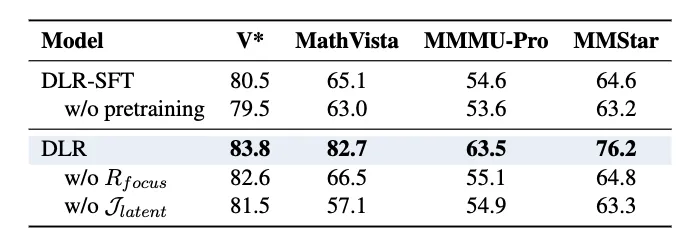
Table 2: The main components of DLR are dissolved.
The results of the merger showed that pretraining, focus reward and latent policy optimization both contributed to the final performance. The most notable of these was the latent policy objective: after removing Jlatent, MathVista dropped from 82.7 to 57.1 and V* from 83.8 to 81.5.[3]
The results show that deterministic visual representation learning on SFT alone makes it difficult to fully exploit the capabilities of implicit spatial reasoning, and explicit continuous latent exploration is an important part of this framework.
Faithfulness Analysis
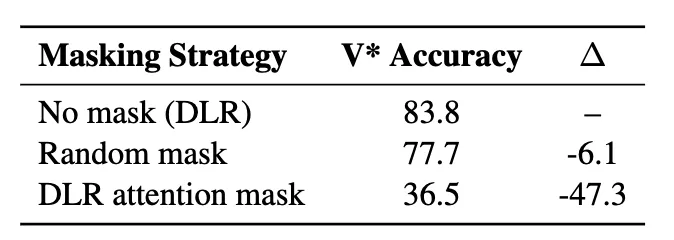
Table 3: Quantitative faithfulness analysis on the V*Bench
The V* accuracy decreased from 83.8 to 77.7 for the same number of regions of random shading; the accuracy decreased to 36.5 for the highest areas of DLR attention shading, a decrease of 47.3 percentage points.
The results of the intervention provided quantitative evidence for the functional correlation between the regions identified by the visual grounder and model predictions, rather than just the visualization of what "looks reasonable".
Case studies
The case in the paper further illustrates the overthinking that weak visual grounding may lead to.
In a graphing rule problem, Qwen3-VL-8B-Thinking baseline repeatedly attempts to count green sectors, check angular relationships and hierarchy rules, and repeatedly modify assumptions;
In the end, after generating 15,177 tokens, the wrong answer is still given.
DLR needs to verify the "relative position law of the green sector" and then obtain a visual latent based on the premise and generate a grounded rationale.
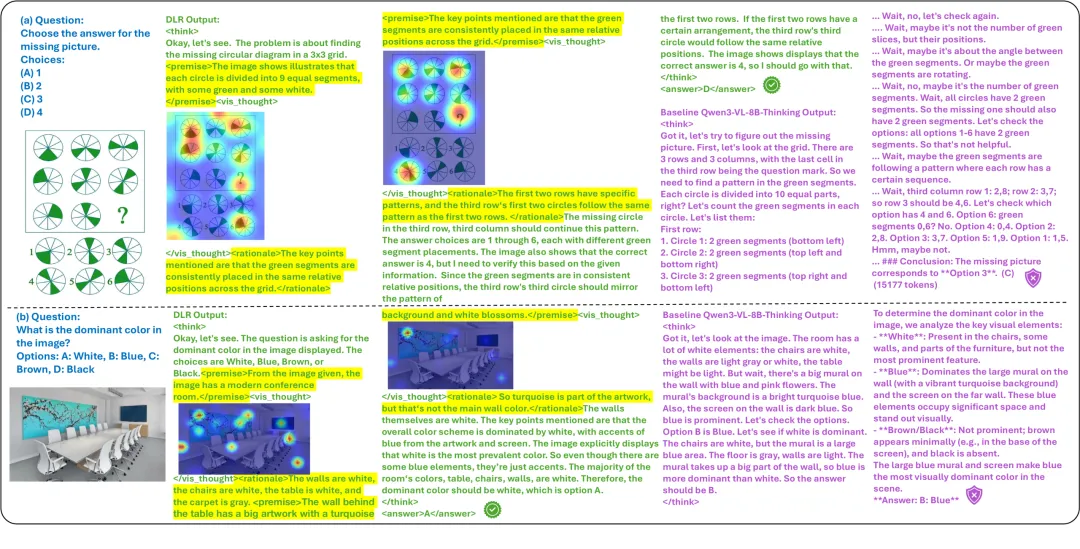
Figure 2: Comparison of DLR with Qwen3-VL-8B-Thinkingbackbone. The example above shows the reasoning of the graph rules, the example below shows the main color judgments; the thermal force graph corresponds to premise-conditioned visual grounding.
In another major color-judging case, the baseline was significantly influenced by large-area blue murals, which judged the main color of the room to be blue; the DLR's graded grounding was an integrated wall, table and overall layout, which ultimately judged white. The cross-attention heat map shown in the paper changed the focus area with the premise, which was consistent with the DLR's design of "re-acquiring task-related visual evidence every step".
Summary of major contributions
Decompose Look Reason is a multi-step visual reasoning framework that generates premises dynamically at each step and extracts corresponding premise-conditioned visual latents.
A three-stage training process is proposed that combines visual grounding's cross-modal alignment with pre-training, structured SFT and reinforcement learning.
Spherical Gaussian Latent Policy, which enables reinforcement learning to directly optimize continuous visual latent and update with text strategies.
System evaluation was carried out on V*, MathVista, MMMU-Pro and MMStar, and the role of the components was analyzed through meltdown, case study and faithfulness analysis.