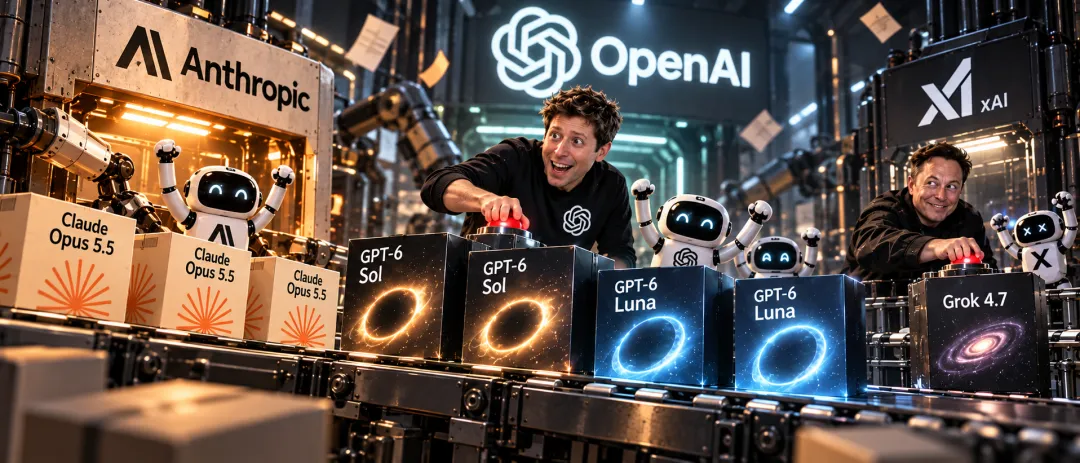
It's the first time in the history of the world.
It was so crazy that in just two days, four new models came out!
On the same day, Anthropic also put Claude Opus 5.5 on the table, 40% cheaper than the previous generation of hard drives. On September 22, a motion picture on X went crazy, with nearly a million views.
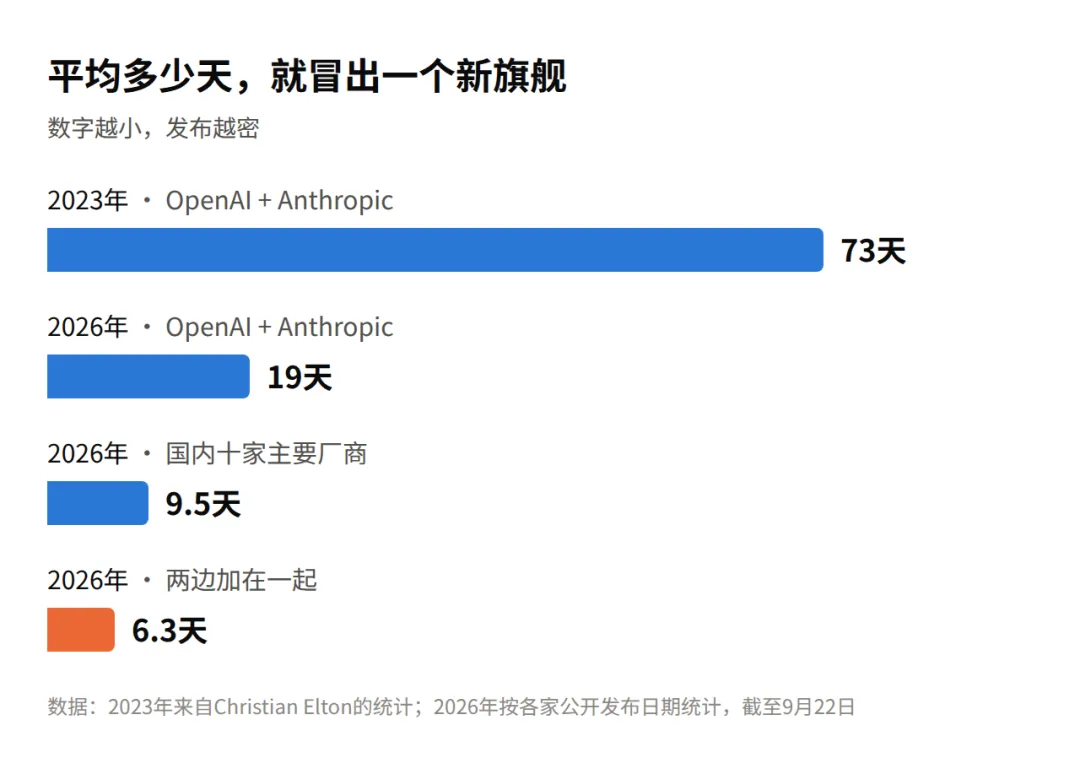
 In 2023, the big model was 73 days ahead, and by 2026 it was 18 days ahead. Starting with ChatGPT online, OpenAI and Anthropic had blown up 42 big models (the GPT-6 Sol and Luna were 44 at the time of launch). Hours later, Stability AI founder Emad Mostaque posted the image, adding a prediction: "As Alex says, at this rate, early next year is one every day".

The two giants are rolling out "Half Moon One".In fact, the "18-day change" figure is also conservative, as it only counts OpenAI and Anthropic. At the beginning of this year, until September 22, Anthropic sent eight flagship models, OpenAI sent six, 14 models stood for 265 days, an average of 19 days each. During the same period, ten major model manufacturers in the country sent at least 28 flags, an average of nine days each.
 Anthropic's acceleration is visible to the naked eye. In the first half of the year, it averaged 46 days for one model and pressed 26 days for the second half of the year. Opus 4.8 was on May 28, Opus 5 was on July 24, Opus 5.5 was on September 22. OpenAI walked the route of "Great Trick, then a Set Take Away". On September 3, GPT-6 Astra just blew up the entire web, and 19 days later, Sol and Luna followed.
 In a report, Anthropic responded that AI was already helping to create the next generation of AI. In February, less than 1% of independent AI-led research and development work was done by Claude, after almost a month of staging in May, 12%, in July, 22%, and in August, 26%.
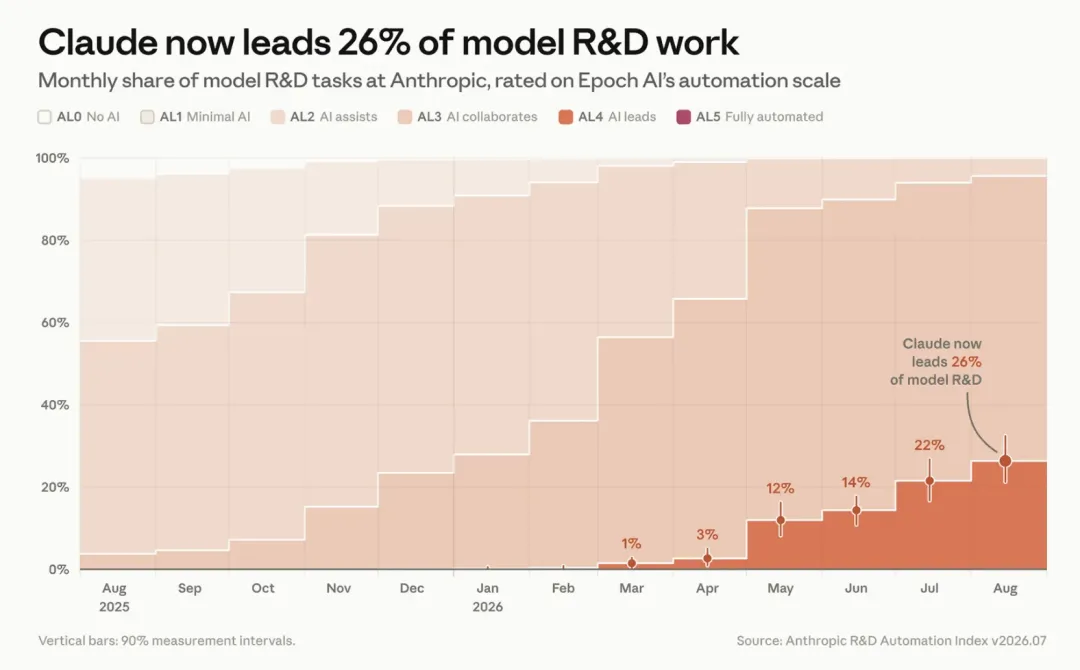 On the other hand, as of mid-August, the working days of AI entering the workforce were already 3.1 times that of human researchers (calculated at 8 hours per day). At Anthropic, a quarter of the live models have been delivered to Claude himself. The next model will only come one after the other.
 Google's Gemini 4 began "one of the most ambitious pre-trainings yet" in July, with the outside world generally pushing for its debut before the end of the year. At least two officials have announced the next generation of the flagship, with only one release date yet.
It's a hard-working "basics school".Two months of direct scrappingThe faster the big model runs, the more confused the downstream code writers are. You've been up all night at the end of July, and you've just moved the application to Opus 5, and the parameters are as smooth as a thread. Two months after Opus 5.5 was born, you're happy to change the interface, and part of it asks for a direct report.
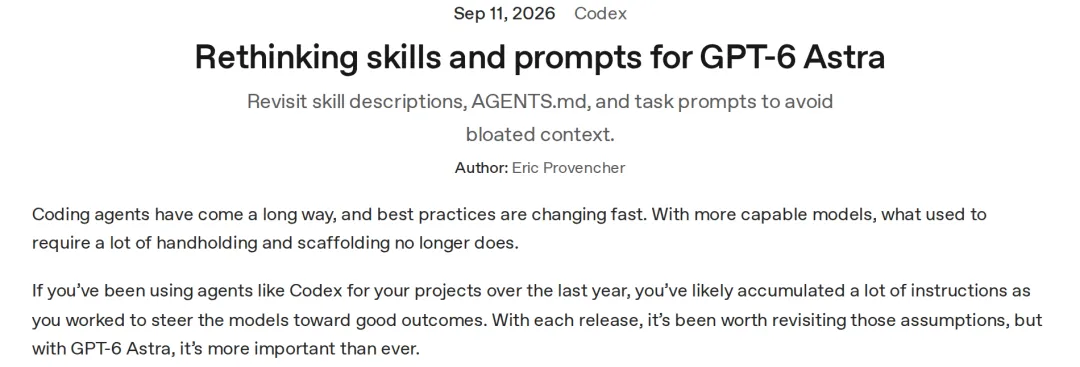 This is also the meaning of the Anthropic guide. The previous tip often adds the phrase "do check again", but Opus 5 already checks itself, which is not deleted, instead it checks too much. In Opus 5.5, in the chat scene, "answer before thinking carefully" this PUA terminology also suggests removal, removing replies quickly, and the quality does not decrease significantly.
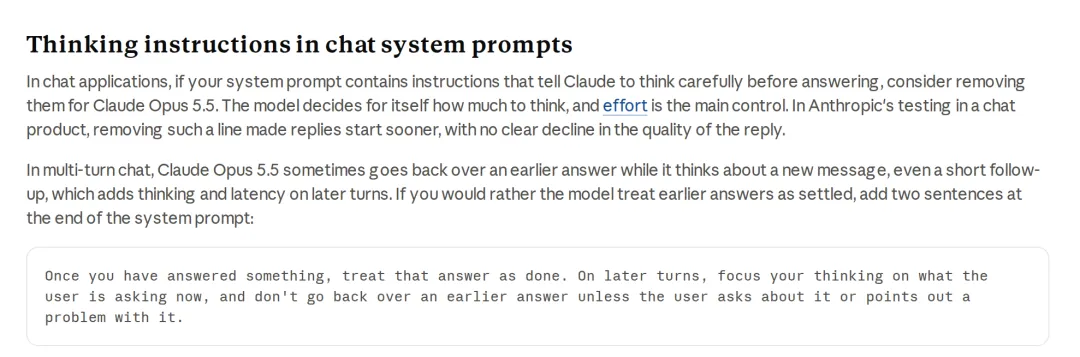 For this, the official recommendation is to run the effort test again, not to move the old settings of the Opus 5 directly. A set of hints and a set of hints, each generated with a layer of punctuation. A modified, billing differential. Anthropic's Lance Martin demonstrated in a video, an old hints written to Opus 4.8, costing 2.45 cents per unit of work, directly in exchange for Opus 5.5 is 2.02 cents; again, using official tools, the rate was drawn to 92.9%, and the cost was cut to 0.83 cents.
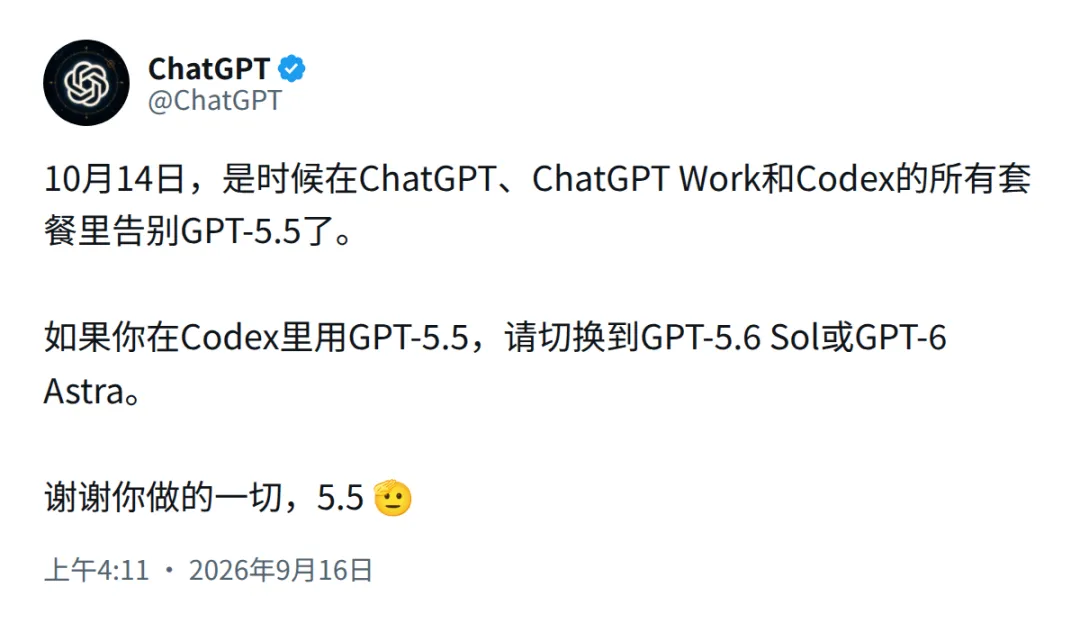
 In addition to these, the model itself is shortened. OpenAI has issued nine discontinuation announcements this year, involving more than 40 models and functions. Of these, GPT-5.5, which was launched on April 23 and will be phased out of ChatGPT and Codex on October 14, after less than half a year of service. Even OpenAI's own Evals rating platform will be shut down at the end of November.
It's a new test that's been running for six months.In March of this year, the so-called ARC-AGI-3, which examines AI as a non-core issue, went online. The Gemini 3.1 Pro, which was ranked first at the time, took only 0.37%, and humans were 100%. On September 3, GPT-6 Astra killed the exam, standard testing took 62.7%, and changed the specific framework directly to 99.9%. In 96 percent of cases, it uses fewer steps than humans. For the first time ever, the speed at which models change is far greater than the speed at which humans adapt to them.
RoboInd editorial channelResearch, robotics companies and market intelligence for cross-border sourcing.Explore the channel ↗
Share this
End of editorialExplore more from Global Robotics News ↗