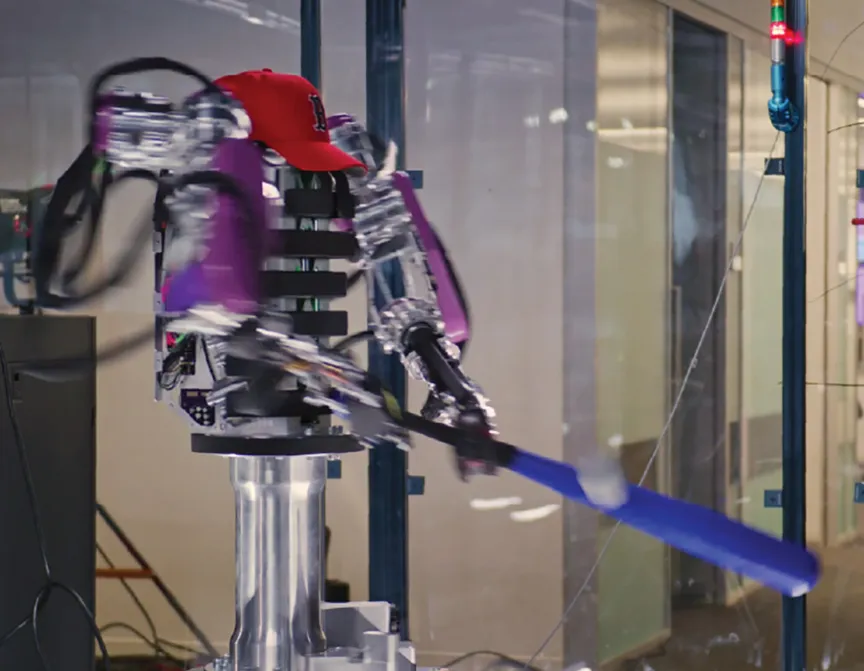
“ The fastest man-made robot to throw a balloon.
A tennis ball was thrown out by a robot with a single arm, reaching a speed of 30.8 m/s, or about 112 km/h.
Instead of a handcuff, it managed to catch a baseball flying out 7.3 meters, with the ball flying for less than 0.4 seconds in the air. It picked up the bat and adjusted the swing according to the position of the ball, hitting 27 balls 33 times in a set of tests.
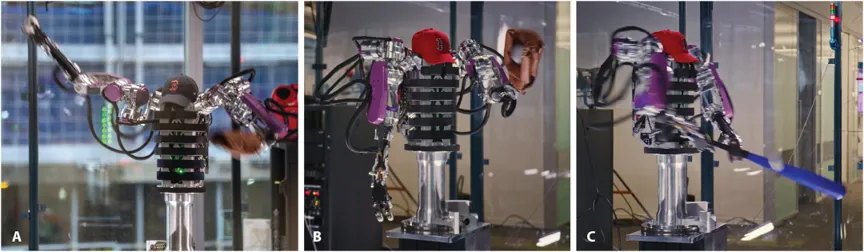
AthenaZero, who plays in the lab as a pitcher, catcher, and hitter.
Three dynamic operational tests by AthenaZero
Recently, the results of a team of researchers from the RAI Institute for Robotics and Artificial Intelligence appeared on the cover of the journal Science Robotics.
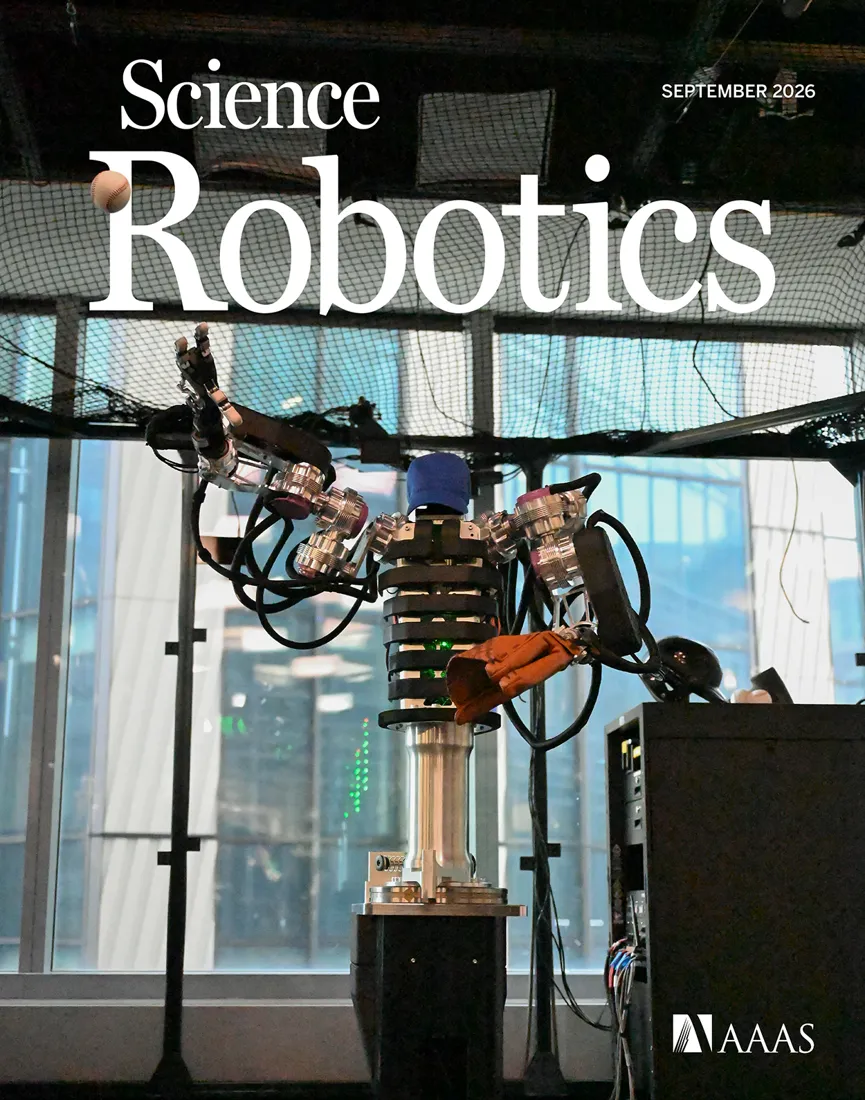
Throwing, taking, hitting looks like a baseball skill, but the back of it points to the same question: Can a mechanical arm have both explosive power and hold it in contact?
AthenaZero's idea was to reduce the inertia of the arm to make it easier to accelerate, slow down, and then to use a quick control to properly tighten the arm when it touches something.
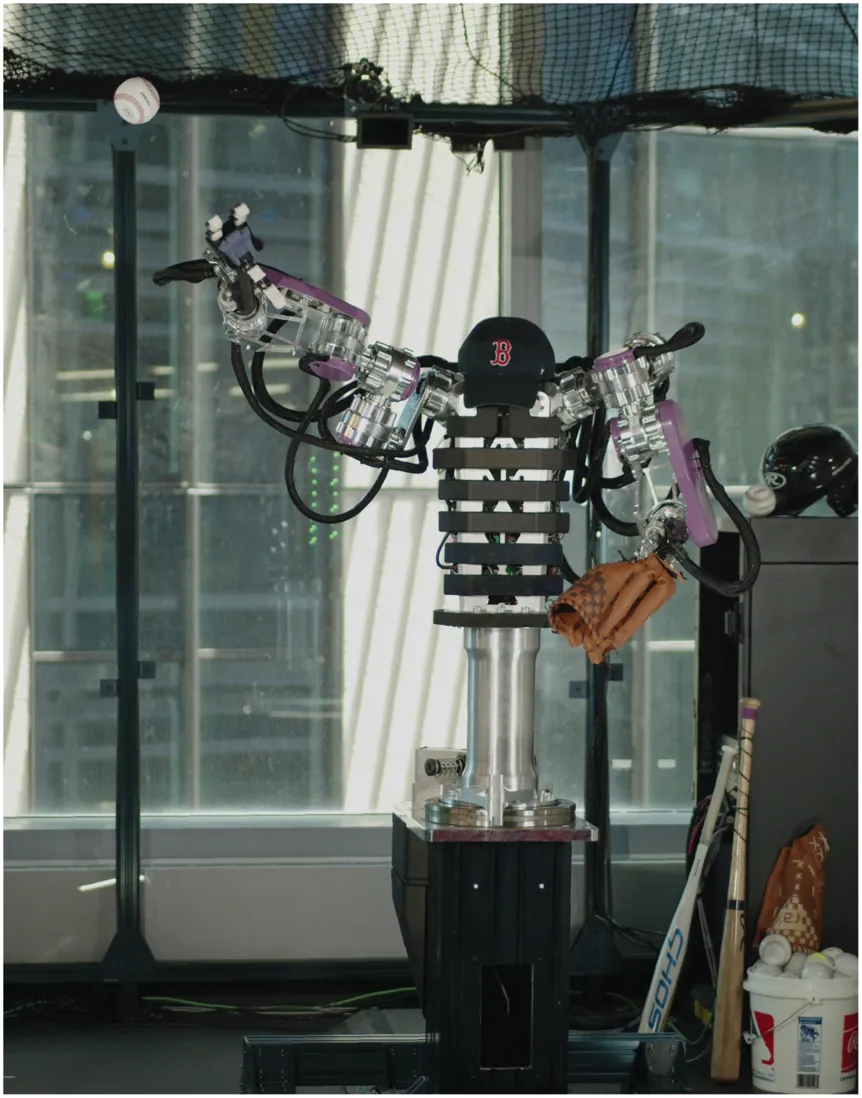
It's hard to come by in traditional designs, and the answer has to be found in the body of the mechanical arm.
01.
Why is it so hard to hit the ball with the mechanical arm?
This is a natural thing to do. Look at the landing point, stretch your hand forward, bounce forward when touching, and then hold the ball. For the mechanical arm, the difficulty may be hidden at the last moment when the hand is touched, and the ball is there, but the ball strikes the hand and bounces out.
There is a key indicator here: effective quality.
Effective weight is not the weight of putting a mechanical arm on a scale. You can imagine it as: in a certain position, push it in a certain direction, feeling how heavy it is, how difficult it is to be pushed. The same arm, stretched posture and curved posture, pushing feels different; pushing from the side and pushing from below, is not the same. So it is not a fixed value, but changes with posture and direction.
Many mechanical arms use high gear reduction to increase the speed of the engine's rotation to a greater output torque. However, the cost is, but the cost is, that the inertia of the engine's rotor will increase the torque of the torque by a reduction ratio of 80 tonnes per square inch, which will increase the inertia by 6,400 times.
As a result, the mechanical arm, although capable of reaching the ball's position with precision, appears particularly stiff at the moment of contact, making it easy to overturn small objects.
The software can plan in advance and adjust the response when contact is made, but compensation is limited. In particular, adjustments depend on contact force feedback to respond after contact is detected; the hardware's own inertia is already involved in the initial collision.
This is also the reason why AthenaZero chose to move away from the mechanical structure so the inertia that the controller needs to cope with is a little smaller.
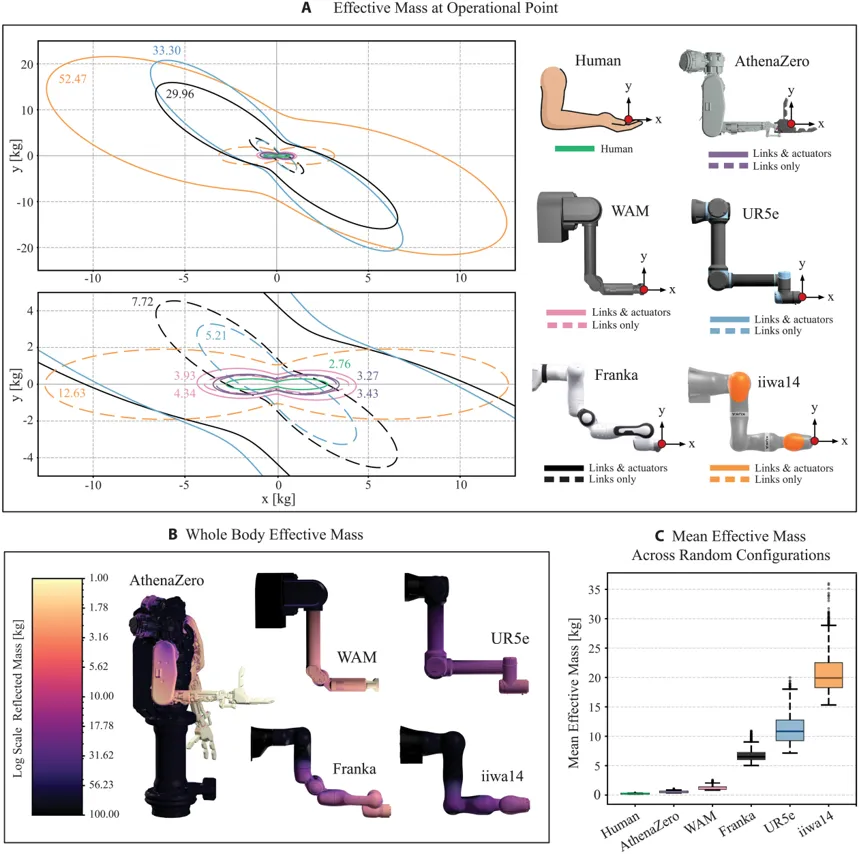
Effective mass contrast of different mechanical arms, resulting in changes in posture and direction of force.
02.
It's a great way to reduce the load on the mechanical arm so that it moves faster.
AthenaZero simulates a male human body, about 1.6 meters tall, 1.8 meters long, 0.44 meters wide at the shoulders, with two seven-degree mechanical arms and two six-degree mechanical arms, mounted on a fixed base. Its core modification is mainly two-step.
The first step is to use a drivetrain with lower deceleration rates.
The team used QDD to customize the motor with a low gear reduction ratio, as well as output torque and low reflective inertia. The shoulder and elbow joints had a 5×1 gear reduction ratio.
Low friction, high-efficiency propulsion also makes it easier for external forces to reverse drive the joints, improving the friction transparency of the force being transmitted. Once labeled, the system can estimate the torque being transmitted by the electrical current of the motor, saving the joint-level torque sensor; the palms of the hands and fingers still retain the touch sensor.
The second step is to move the heavy parts from the end of the arm to near the body.
Similarly, with a handle, close to the body and a straight arm, it's two things to turn around. The same goes for the mechanical arm, and the closer the weight is to the end, the easier it is to become a burden when moving quickly.
The AthenaZero rearranges the motor's position by means of means such as a belt, moving the wrist motor to near the elbow, putting the finger motor into the crankcase, and then remotely transmitting power via the wire rope.
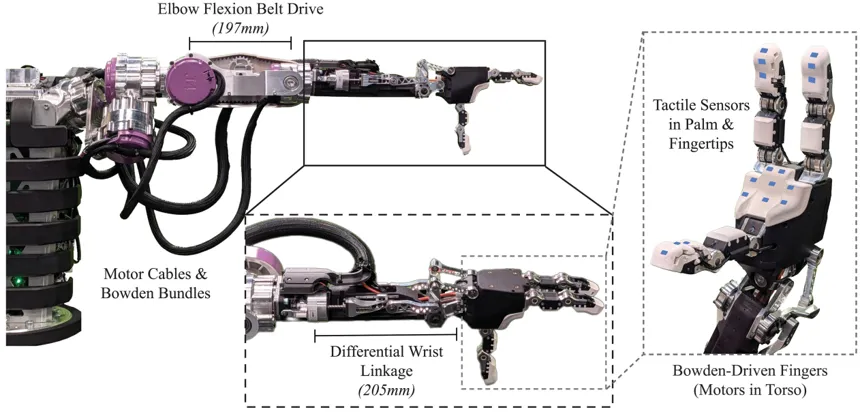
By remotely moving, rearranging the motor's position reduces the movement load at the far end of the mechanical arm.
The research team placed both mechanical arms in a gravity compensation mode, with 1 km of swinging brakes on the side of the wrist. AthenaZero measured an effective mass of about 0.83 kg, compared with Franka Research 3 of about 3.3 kg, with peak impact power of about 124 and 208 cows respectively.
This means that in this group of specific gestures and directions, the AthenaZero is more prone to being pushed and can still move forward when the swing touches it; when the swing touches the controlling mechanical arm, the swing bounces back. It reduces inertia and actually changes the result of the contact.
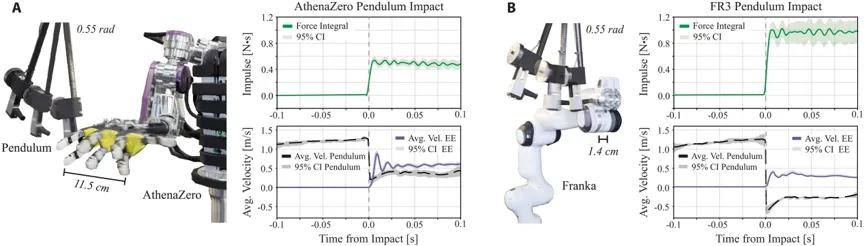
The two mechanical arms respond differently to the swinging shock.
03.
The same arms, both strong, will also receive.
The arm is fast enough to drive, buffer, and catch time. The team performs three missions: throwing, catching and hitting to test AthenaZero's dynamic operational capabilities. The experiments are conducted in a controlled area, where the ball is tracked by an external motion capture system at 240 Hz.
Playing: Playing fast, also throwing goal
In a single-arm configuration, AthenaZero threw the tennis at a top speed of 30.8 m/s. However, another problem arose after the speed was increased: the ball could slip out before the scheduled start time, affecting the accuracy of the throw.
The team subsequently lowered the pitching speed of the two-arms system, taking into account the time and landing point controls of the handset. When using baseball, the system was able to throw at 21.4 m/s and accurately to the target area of 7.3 m outside, 25 cm x 25 cm.
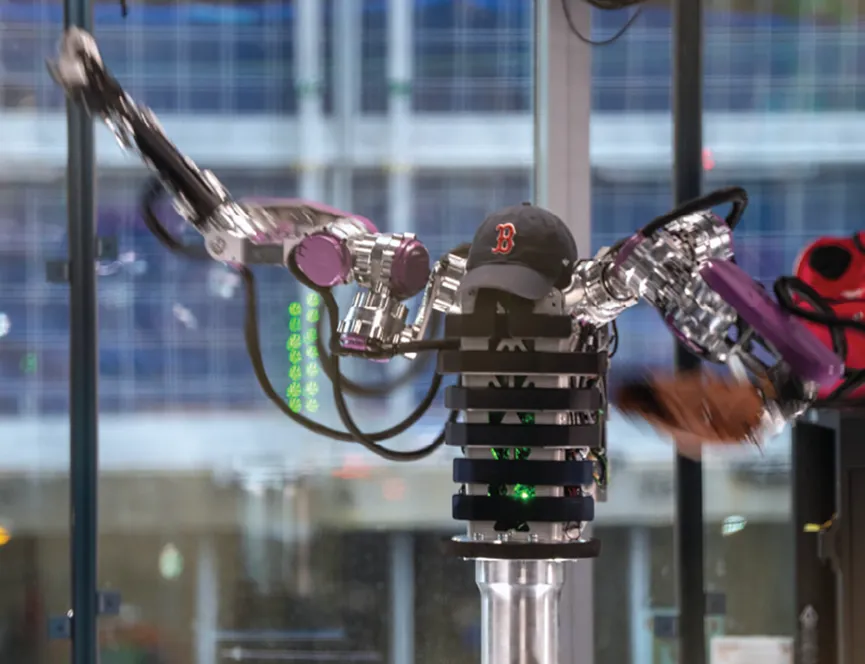
It's the first time I've ever been in a relationship with a woman.
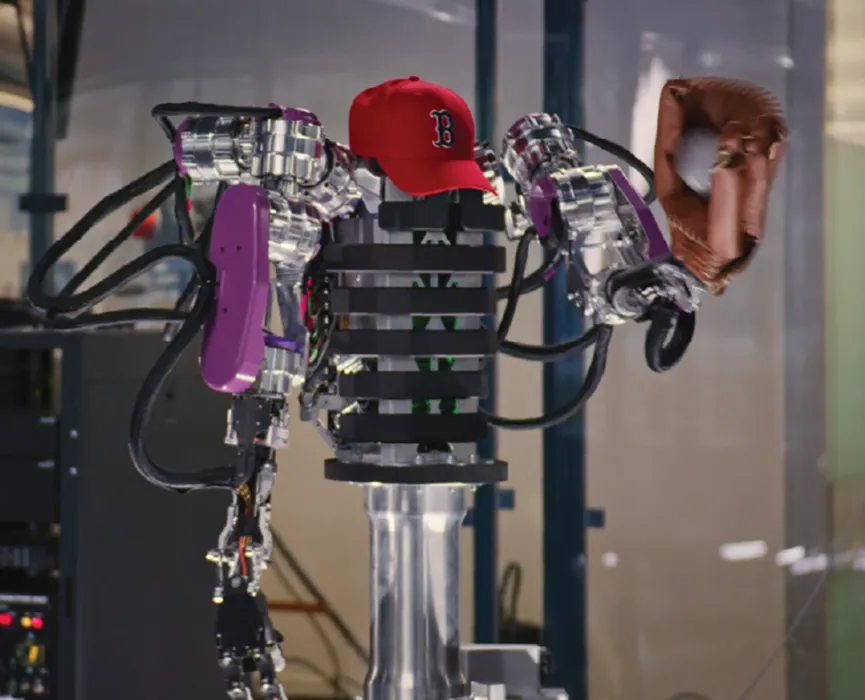
AthenaZero succeeded in catching a baseball outside of 7.3 meters at a speed of 18.3 meters per second, with a total time window of less than 4 seconds.
Arriving at the landing point is only the first step. When in contact, the arm must also hold the ball by resisting the control buffer shock. However, when approaching the maximum speed, the ball may still bounce in front of the thumb joint; at about 13.4 m/s, the landing point is more reliable.
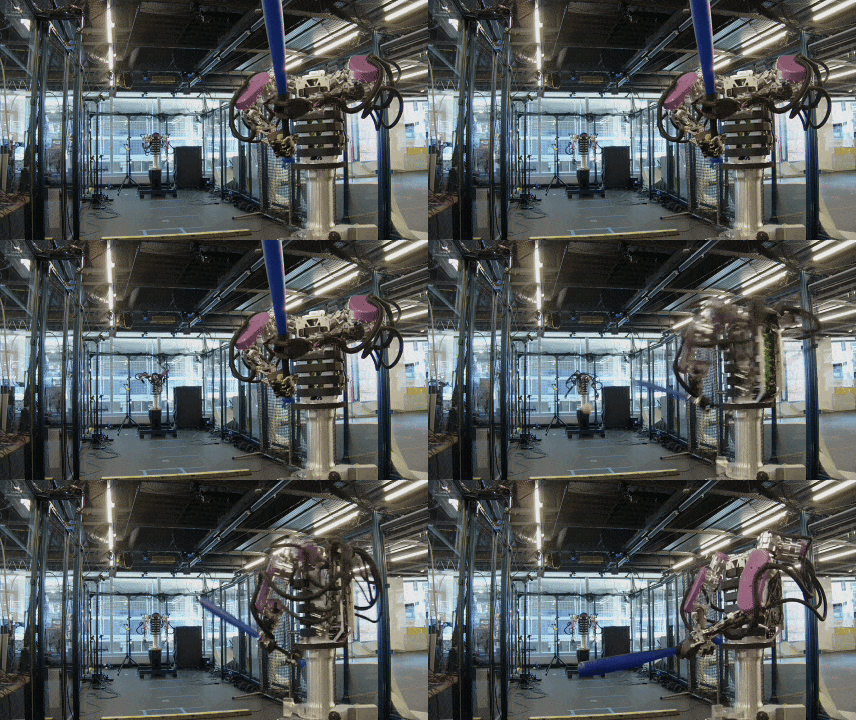
He batted.33 with the bat and hit 27 balls.
As described in the paper, in the setting of the experiment, swinging the bat sooner or later, about 2 milliseconds, may cause the ball to miss.
AthenaZero will continue to estimate the ball's position within the batting area, adjusting the course of the swing bar in real time. Facing the tennis ball outside at 7.3 meters, flying about 13.4 meters per second to the pre-determined hit area, it hit 27 balls in 33 swing bars, with a hit rate of about 82 percent.
During a continuous strike, the robot does not have to retrieve the bat every time; nor does it wave the bat for a ball that falls outside the pre-set hit zone.
Continuous Interaction: Taken and Re-transmitted
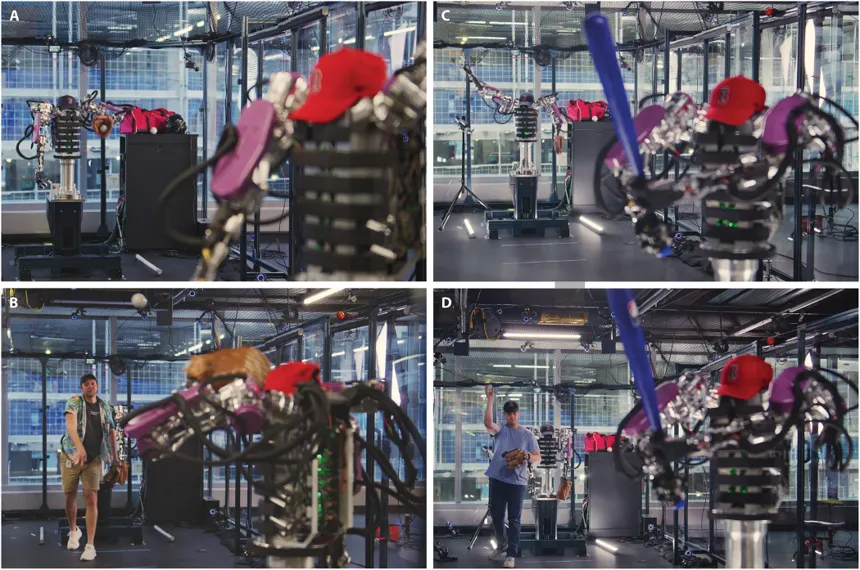
In addition to the single action, the team also allowed two robots to play the passing ball.
At about 13.4 m/s, the robot takes about 11 seconds to pass the ball from picking it up to throwing it again, with two robots completing a maximum of eight return passes. After replacing one of them with a human participant, it completes a maximum of 12 return passes.
From catching the ball, to passing it, to throwing it again, the two arms begin to combine different moves to cope with the changing position of the back of the ball each time they catch it.
04.
What is missing from these two flexible arms?
At the end of the game, AthenaZero has a more practical question: can she continue to work steadily?
It can swiftly swing its arms, but is not suitable for long stretched arms to hold heavy objects. Continuous static loads cause heating problems in the paper; at 1.8 kg load, the average end density is about 12 mm.
Moving the finger motor into the dryer also has the opposite effect. The transmission distance becomes longer, and friction limits the dynamic performance of the grip force and arm.
However, this group of baseball experiments also provided a new perspective on how to evaluate the mechanical arm. In the past, we often asked if it can lift multiple weights, position multiple points; when faced with a flying ball, whether it can adjust in time when it hits something unexpected; and whether it can quickly switch between power and retreat.
Real-world contact in assembly, delivery, and transportation also contains similar problems. AthenaZero provides a hardware route that is worth continuing to verify: through lower inertia and more direct force transfer, leaving more room for adjustment for the control algorithm.
When we expect robots to have more flexible hands, it's worth re-examining where the motor is placed, how much slower it is, and how the body responds to instant contact.