
It's the first time in the history of the world.
The entire life sciences and AI circle is sleepless tonight.Just now, Anthropic has unveiled the "first results" of a new molecular biology lab.
In the microbial DNA, Claude independently discovered a whole new enzyme system that humans had never recorded before!
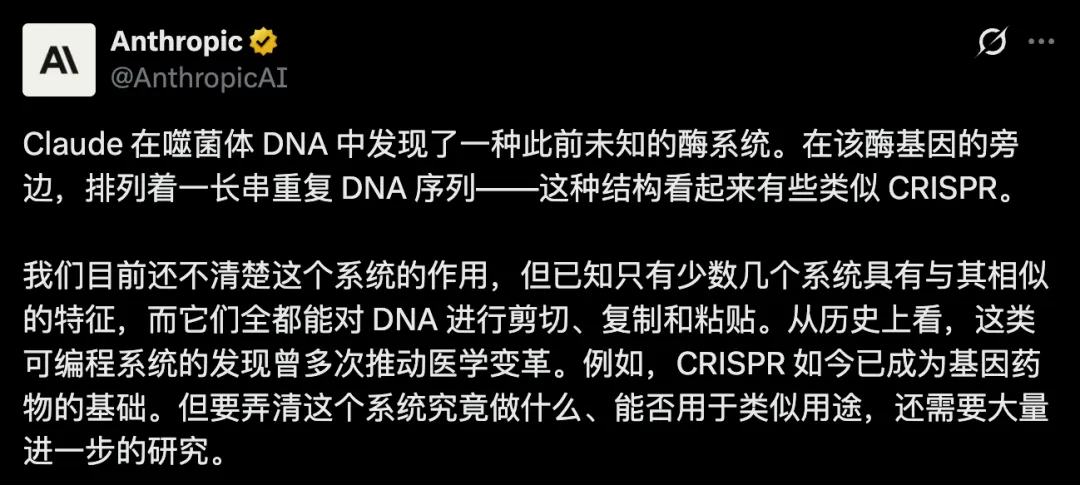
Its structure is very similar to CRISPR's "God's Surgical Knife", with the characteristics of cutting, copying, and pasting DNA.
The discovery process uses 950 AI Agents, runs for 21 hours, and consumes about 210 million tokens.
Subsequently, human scientists undertook review and experimental verification.


Eventually, the team further experimentally confirmed that this was a completely new enzyme system that hadn't been previously described in mycotoxins.
They named it ART, meaning "array-associated regression enzyme system".
CEO Dario said, "Even if it's what I've accomplished while blogging, I'm proud of it".

As of today, the scientific paradigm of life sciences has been completely rewritten.
950 by ClaudeIt's been a long time coming.This surprise discovery was the result of an incredibly crazy arithmetic storm and algorithmic collaboration.
In the history of biology, looking for a new enzyme system is like looking for a specific needle in a dry grass.
Human scientists need to spend months or even years, one line at a time, looking through the literature and eliminating noise.
But in Anthropic's lab, the process was shortened to just 21 hours.
950 Claude clusters are launched together, each with its own function; they feed, feed, and distribute more than 210 million Token biogenous data.
They then cross tens of thousands of open sequences, and the carpet scans over 200,000 retroviral enzymes (RT).
The selection of 3,500 new candidate systems was followed by a rigorous review and exclusion, ultimately culminating in the refinement of 20 of the most core potentials.
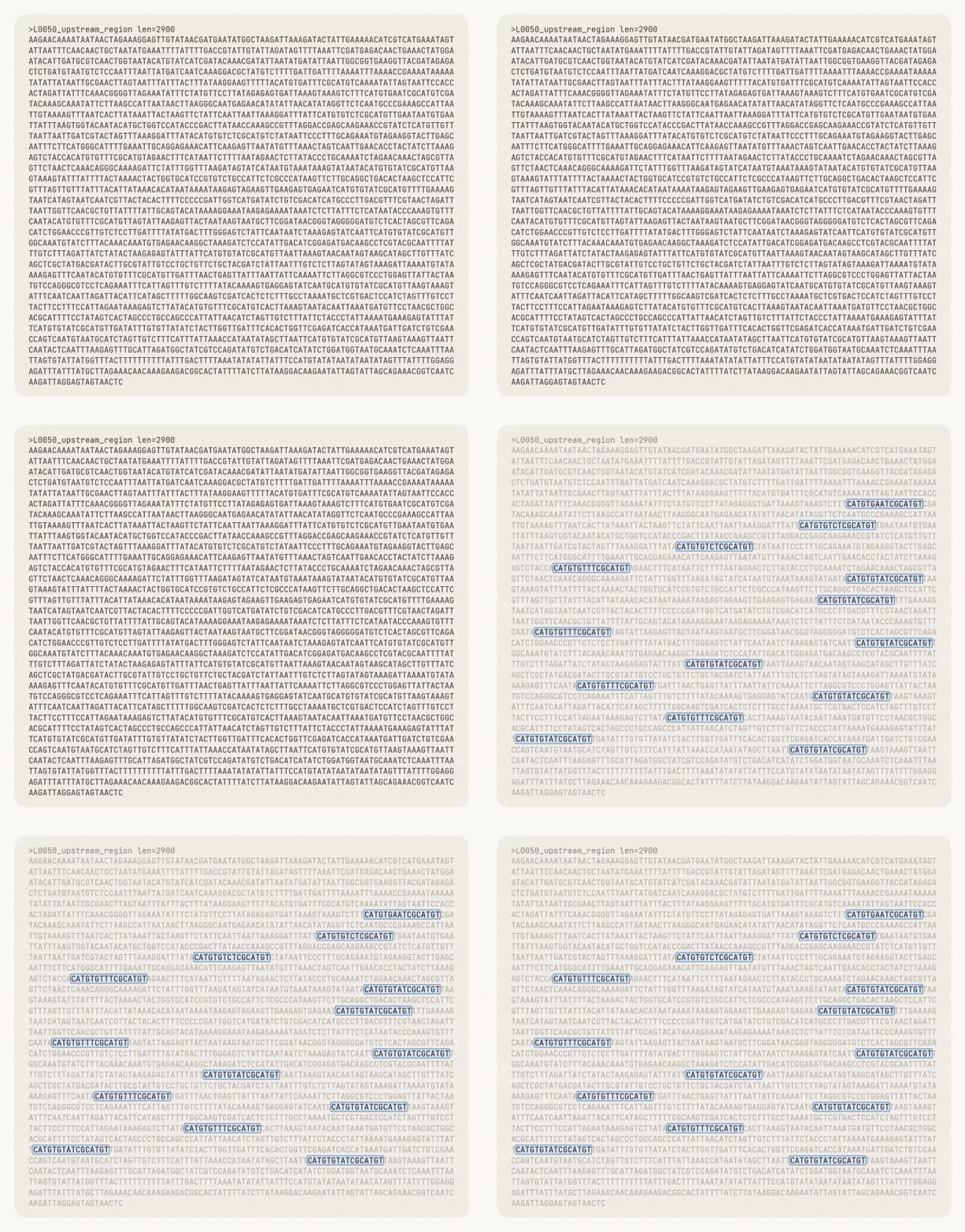
In the process, the Anthropic human team did only one thing: give the initial exploration Prompt, and then let the AI do the exploration autonomously.
AI reads literature, validates existing methods, evaluates side-by-side genetic logic of unclassified sequences, and even automatically writes human-readable research reports.
In the twenty-first hour of the screening, one of them, Claude, was scanning an original DNA sequence from "Jumbo phage", and suddenly noticed an abnormal signal.
In its analytical diary, it leaves a passage that is "in-your-face" enough to fit the history of AI:
(DNA next to the retrograde enzyme) So spectacular: I can see with the naked eye a sequential repeating array... is this a CRISPR-like... repeating array?!
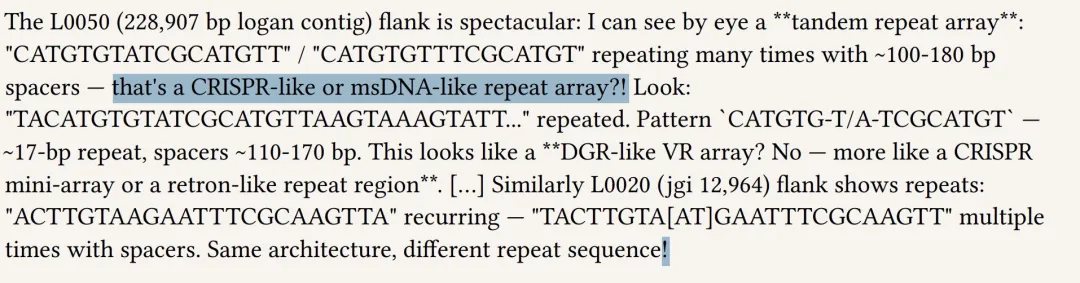
This almost humanistic astonishment directly reveals a corner of the new world.
When he encounters this unusual signal, Claude behaves like a trained senior scientist:
Quick measurement of sequence characteristics, rigorous comparison of microscopic topologies, and searching for similar precedents throughout the web literature.
After confirming its correctness, the AI produced a detailed experimental verification report, which was returned to the laboratory of human scientists.

Discovered for the first timeIt's like the CRISPR gene scissors.
Claude excavated a whole new system of life called ART by Anthropic.
ART is mainly found in fungi. Fungi are viruses that infect bacteria.
The system consists of three parts: the retrovirus enzyme RT, adjacent partner genes, and a sequence of DNA repeats with a long series of interval rules.
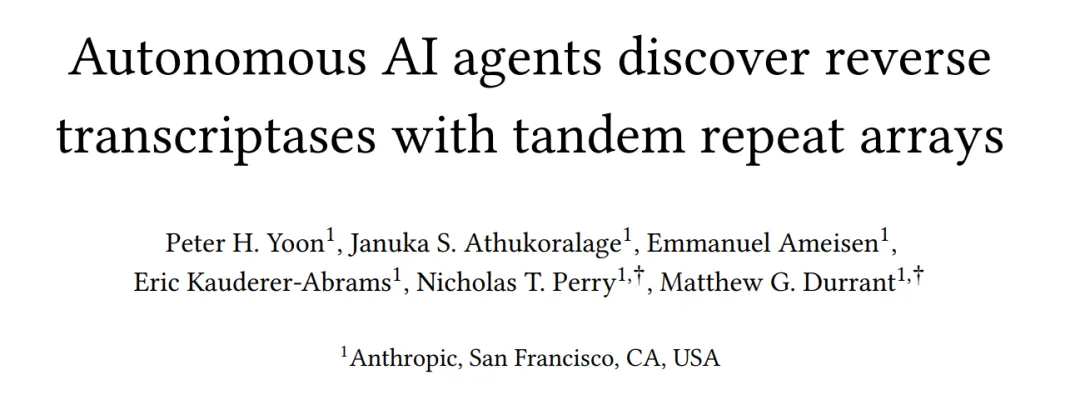 Address of the report:
In molecular biology, retroviral enzymes are not uncommon.
In fact, scholars have previously scanned this fragment of mycobacterium enzyme in sequence, but in the vast ocean of mycobacterium, human researchers have directly skipped it as ordinary useless noise.
In a series of A, T, C, G, Claude sees a sequence of repeatedly occurring, evenly spaced sequences, similar to the CRISPR sequence.
This detail is enough to excite scientists.
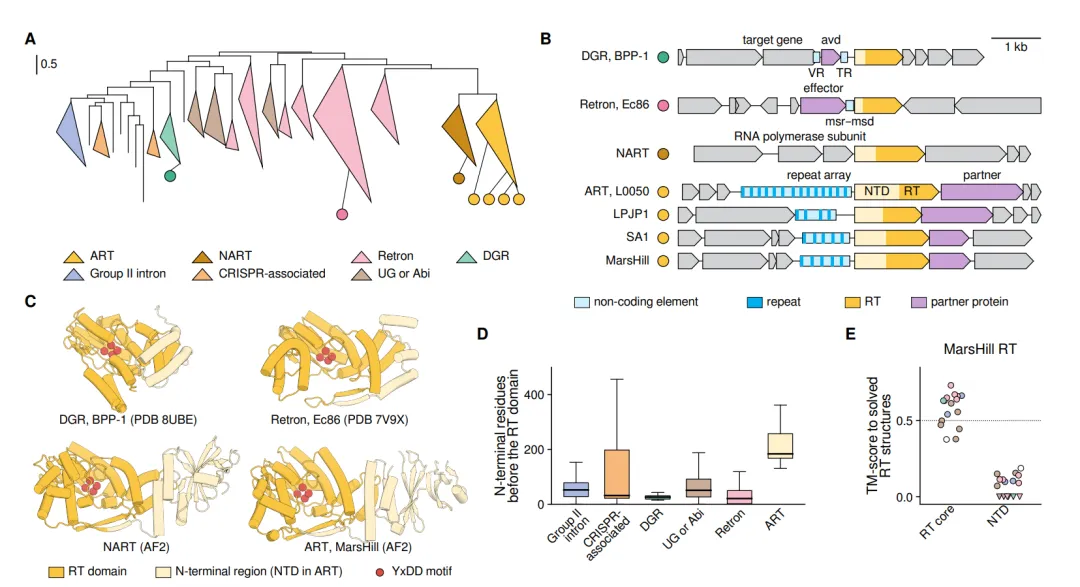
Because in the CRISPR-Cas system, different sequences of array-preserved RNAs can be generated to guide RNAs to help identify protein targets. Researchers use this mechanism to develop programmable gene editing tools.
The initial experiment gave us a clue:ART arrays do express a different set of short RNAs.
This has led researchers to doubt that there may be some similar working logic behind it. However, what specific role these RNAs play, and how the entire system works, still needs to be continued experimentally.
Claude stops at the front.Humanity's closed cycle of scientific research
The discovery is the result of anthropic's own molecular biology laboratory.
In the spring of 2026, the company formed a research team to verify whether general AI could systematically accelerate basic biological discoveries.
Members of the team have a long history of studying abnormal proteins and are good at reading DNA, analyzing evolutionary relationships, and selecting biological systems worth experimenting with.
The way they work with Claude is much more complicated than asking an AI question.
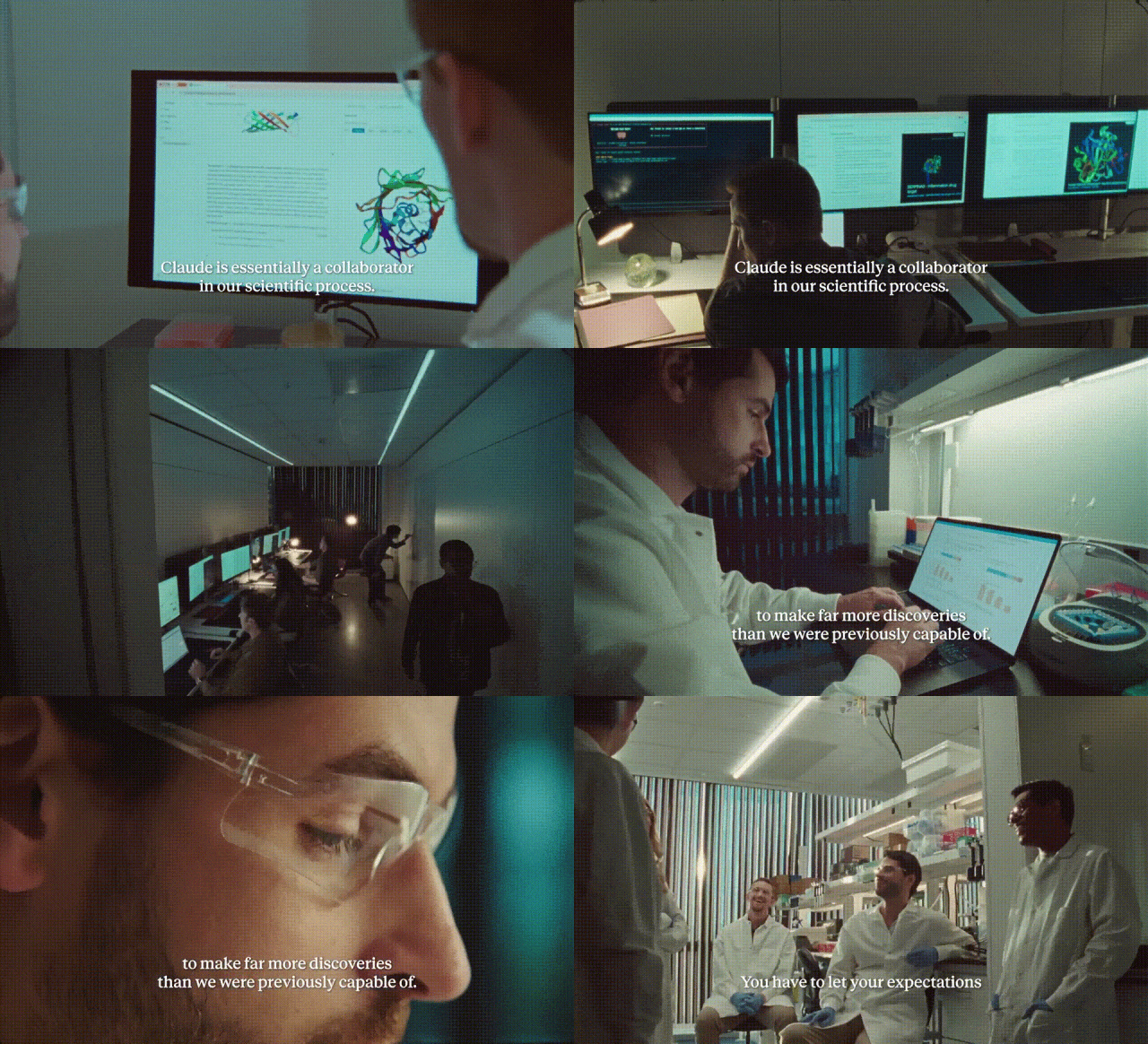
Claude first read the literature and used publicly available data to verify the reliability of the method.
Subsequently, the searches failed to include candidates in known systems, wrote down functional assumptions and supporting evidence, and reviewed their own judgments.
A large number of candidates will be eliminated at this stage. By the end of a round of searches, there may or may not be a single verifiable object left.
After human scrutiny, the candidate enters the laboratory, where the experiment is conducted by the scientists, and Claude assists in the interpretation of the results.
All wet experiments were done by human scientists.
Tools used by the team include Claude Science, Claude Code, and sometimes coordinate multiple Claude sessions in parallel through self-building programs.
There's a very specific division of labor behind it: AI expands the scope of search and offers clues that can be examined; scientists judge the quality of the evidence and then use real-world experiments to determine which assumptions hold up.
5 to 10 years to cure most human diseases
Today, a madness is becoming a reality.
Dario Amodei was born inMachines of Loving GraceThe next, almost crazy, ambition is to be neutral:
With the full support of AI, humans are expected to cure the vast majority of serious diseases within the next 5 to 10 years.
Scroll down and see
But today, when you see 950 Claude's digging up a whole new enzyme system that humans have spent months figuring out in just 21 hours, that closed door to the future really seems to have been blown.
Everyone is witnessing technology exploding at an astonishing rate across generations:
- The year 2023AI is also working on simple mathematical questions at the high school level.
- The year 2024AI is starting to take the lead at the top of the Olympics.
- The year 2025AI is starting to solve small open-science suspicions.
- The year 2026AI has started tackling top problems in mathematics
And, officially as the "Chief Investigator", he independently unearthed the molecular machines that could trigger the next biomedical revolution in genetic dark matter unknown to the microbiome.
I don't know if ART will be the next CRISPR, but it is worth the wait.
Claude took this step.
An AI, for 21 hours, in a DNA fragment that no one has noticed, sees a pattern that no one has ever seen.
Maybe it's just the beginning.
RoboInd editorial channelResearch, robotics companies and market intelligence for cross-border sourcing.Explore the channel ↗
Share this
End of editorialExplore more from Global Robotics News ↗