In the study of long-term robot manipulation, single models (such as visual language action models, Vision-Language-Action, VLA) have been extensively studied. However, single class models are difficult to cope with complex long-range tasks and sudden interference.
To this end, the Master's Degree in Intelligent Computing Laboratory at Shenzhen International Graduate School of Chinese University of Technology (MSICL), under the guidance of Prof. Li Shio and Prof. Chen Yan, has jointly launched a new multi-intelligent asymmetry and synergy framework, EMERGE-Policy. It breaks down the past technological breakdown studies, integrating models of different architectures and uses, such as VLA, WAM, world models, verifiers, etc., into a "multivariate toolkit" available for system calls.
The framework broke the traditional paradigm of "single policy decides everything" by working with the main agent, the sub-agent, and the Skill Library to answer the question of "what kind of architecture of intelligent systems do we need?"
The article is titled: EMERGE-Policy: A Rob ot Mind Emerges Beyond a Single Policy
Address of the paper:https://arxiv.org/abs/2608.29896v2
Website:
Code:
China's Intelligent Computing Laboratory said:
Breakdown: From single model to multi-model integrated body-intelligent systems
Annie Murphy Paul writes, "Thinking outside the brain means skillfully engaging entities external to our heads".
In past studies of physical intelligence, people have often sought to solve problems using a single "end-to-end model". However, single models often fail to be well-compatible when faced with complex long-range tasks, such as frequent low-level perceptual data processing, high-level planner contextual thinking, and fine-grained motion output, leading to logical confusion or cumulative error collapse.
EMERGE-Policy proposes a whole new paradigm of "physical intelligent systems": that intelligence should not be confined to a single model, but rather to asymmetrical processing tasks organized by the Graph Structure Agent, and that all types of specialized models should be "tools" for unified scheduling, allowing system-level intelligence to "emerge" in multi-component collaborative interactions.
Such systemic architecture and the way in which humans exercise intelligence coincide: people perceive the environment through visual modules (eyes) in their interaction with the environment, perform "skills" with their hands, imagine through the brain... different asymmetrical organs perform different types of skills.
A database of heterogeneous tools based on models such as VLA, WAM, World Models and Verifiers
The central breakthrough of EMERGE-Policy was the design of its Unified Skill Library, which no longer sees all of the mainstream operating models as competing alternatives to each other, but encapsulates them all as standardized tool interfaces and integrates them into the same intelligent system (see Figure 1).
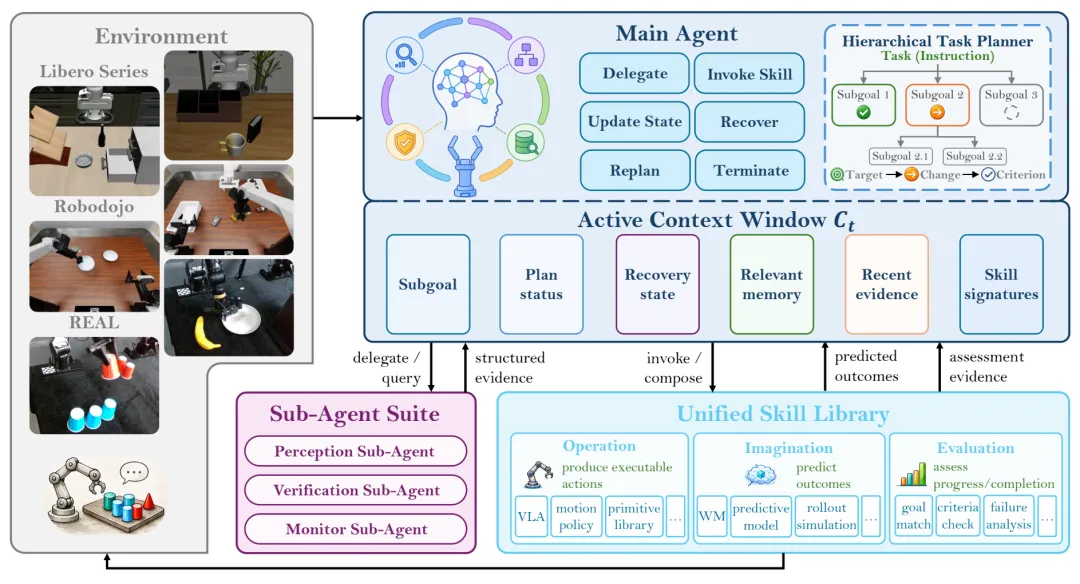
Figure 1: The overall structure of the EMERGE-Policy system and its coordinated components
As shown in Figure 1, Emerge-policy divides skills into three categories:
Operational Skills: VLA, motion planner and WAM. VLA (Vision-Language-Action) models: as a low-level visual-language-action mapping tool, focused on high-frequency, precise robotic endpoint trajectory and physical control generation (EMERGE-Policy uses pi_{0.5}).
Imagination and Prediction Skills: World Model introduces World Model (WM) (such as Cosmos Policy) into the toolchain. The system can call the world model as a "simulator" before actually performing the action, predicting the video state that may be generated in the future and achieving "want to do it again".
Evaluation & Verification Skills: Verifier Model integrates evaluation and verifier models, preconditions for pre-exercise pre-exercise pre-exercise pre-exercise pre-exercise pre-exercise pre-exercise pre-exercise pre-exercise pre-exercise pre-exercise pre-exercise pre-exercise pre-exercise pre-exercise pre-exercise pre-exercise pre-exercise pre-exercise pre-exercise pre-exercise pre-exercise pre-exercise pre-exercise pre-exercise pre-exercise pre-exercise pre-exercise pre-exercise pre-exercise pre-exercise pre-exercise pre-exercise pre-exercise pre-exercise pre-exercise pre-exercise pre-exercise pre-exercise pre-exercise pre-exercise pre-exercise pre-exercise pre-exercise pre-exercise pre-exercise pre-exercise pre-exercise pre-exercise pre-exercise pre-exercise pre-exercise and pre-exercise-exercise-exercise pre-exercise pre-exercise pre-exercise pre-exercise pre-exercise pre-exercise pre-exercise pre-exercise pre-exercise pre-exercise pre-exercise and pre-exercise pre-exercise-exercise pre-exercise pre-exercise pre-exercise pre-exercise pre-exercise pre-exercise pre-exercise pre-exercise pre-exercise pre-exercise pre-exercise and pre-exercise pre-exercise pre-exercise pre-exer and pre-exercise pre-pre-exercise pre-exercise pre-exercise pre-exercise-exer and pre-exercise pre-pre-exercise pre-exer-exercise pre-exer and pre-exer-exer-exer
The combination of imaginative skills and evaluation skills makes it possible for the operation process to take into account post-testing to better accomplish tasks, the mechanisms of which are as follows: 2.
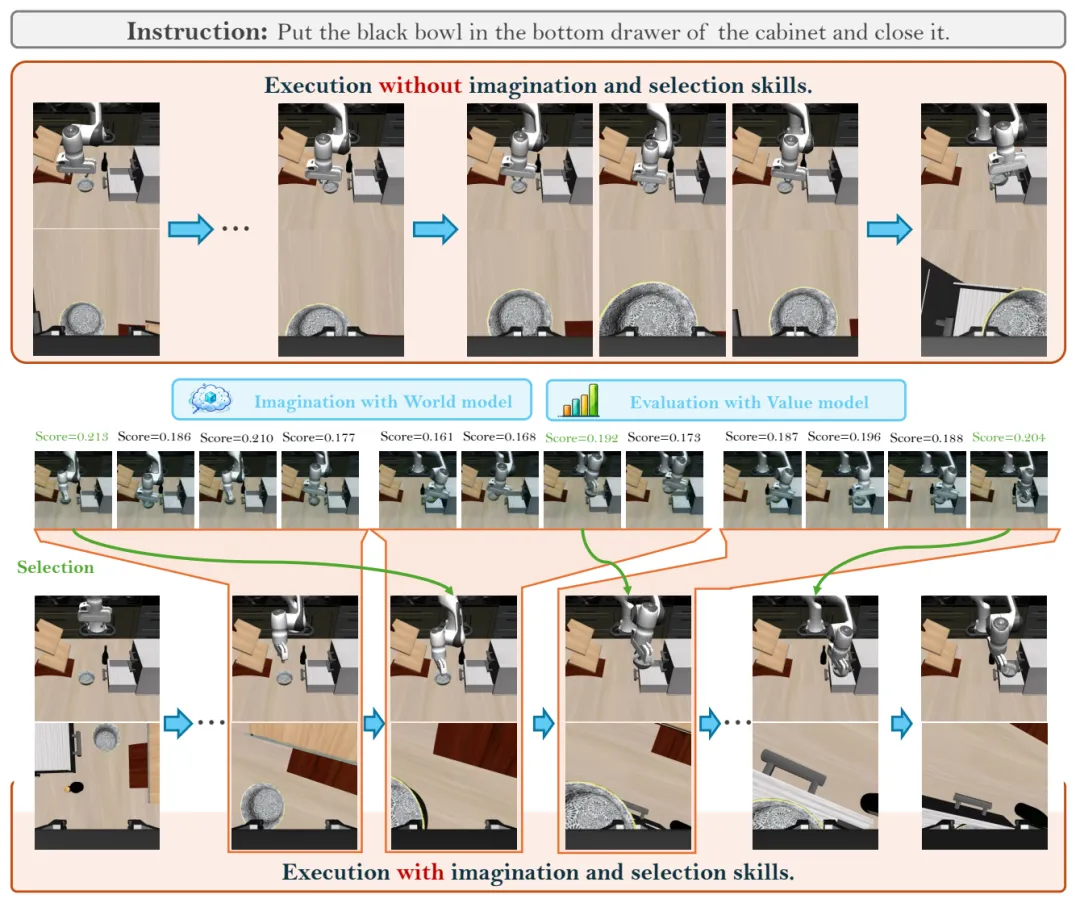
Figure 2: Action choices with imaginative and evaluative skills and non-imaginative assessments
System-level architecture: graphic structural scheduling of detailed work
In the history of large-scale model agent engineering paradigm changes, from prompt engineering to harness engineering to loop engineering, AI agents have begun designing relationships between multiple processes (often multiple loops) to determine who is ahead of who, who can go in parallel, and whose output is to whom.
(1) Main Agent: the decision-making and scheduling center
As shown in Figure 3, the main intelligence maintains the state of a global task, breaking down complex long-range tasks into sub-goals. Through hierarchical context engineering, the main agent shields redundant low-level sensing data, only calling the subagent and the toolkit through a structured interface.
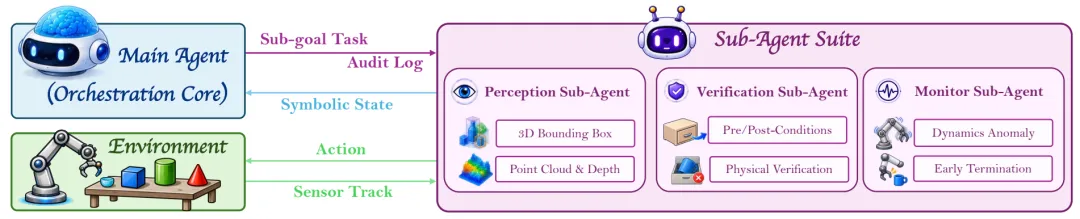
Figure 3: Coordination and feedback process of the main agent
(2) Characterized Sub-Agent: independent dedicated unit
The sub-intelligence operates in isolated contextual environments, assisting in the processing of high-density proprietary data.
Perception Sub-Agent: 3D boundary frames and spatial semantics for perceiving scenes;
Verification Sub-Agent: Call the verifier tool in real time to check the completion of the target;
Monitor Sub-Agent: Physical abnormalities in the process of monitoring execution.
(3) Three-tiered external memory and context management mechanisms
To ensure long-range tasks are not forgotten, the system introduces three layers of file memory (see Figure 4):
PLAN.md: record the task map and current progress;
HISTORY.md: Additional storing of historical observations and summaries of call tools;
MEMORY.md: Environmental facts with dynamic modification updates.
When the current context reaches the upper limit, the system automatically triggers Memory Integration compression history, ensuring that the system runs steadily in overtime sequences.
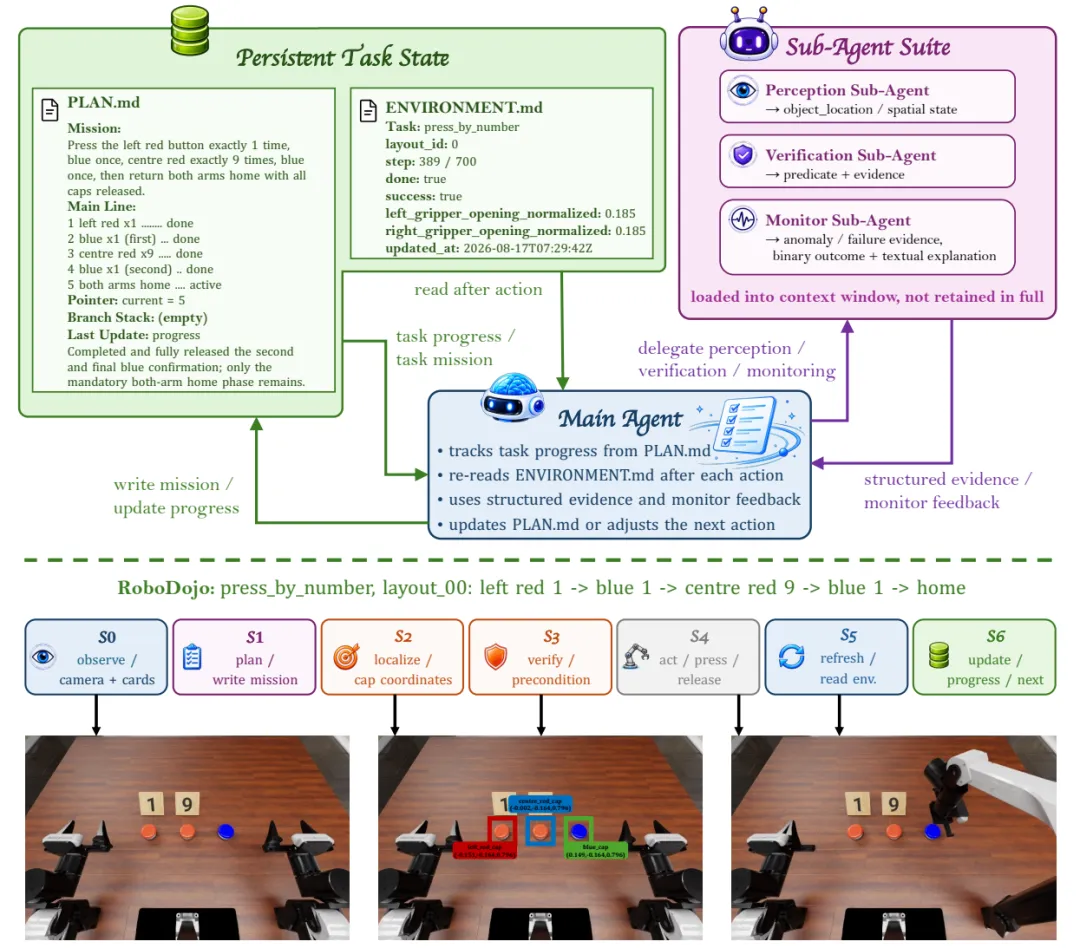
Figure 4: Three-layer memory and context management
Experimental results: Full refresh of Benchmark, real-time performance surprising
The EMERGE-Policy R&D team conducted a comprehensive evaluation of four widely used benchmarks and real robots on LIBERO, LIBERO-Plus, LIBERO-Pro and RoboDojo:
(1) In Standard LIBERO, EMERGE-Policy achieved an average success rate of 99.2% (above the baseline model of 0.7%) thanks to the use of Cosmos Policy as a world model skill for trajectory imaging and action selection; an average success rate of 98.8% (above the baseline 2.0%) after pi_{0.5} as an executive robot policy.
(2) In the LIBERO-Plus disruption test, EMERGE-Policy (w/ WM) achieved an ultra-high completion rate of 93.9%, a significant improvement of 11.7% over the single Cosmos Policy baseline.
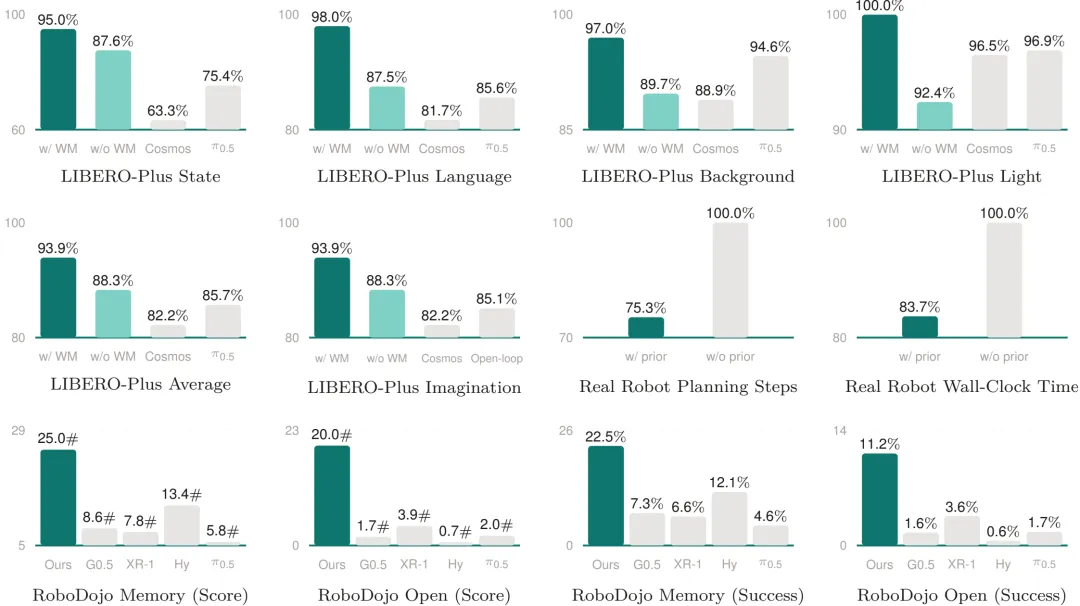
Figure 5: Difference between the different dimensions of the Libero, LIBERO-Plus, Robodojo and real-machine experiments
(3) In the RoboDojo-Sim test, which tested visual memory and long-range planning, EMERGE-Policy achieved an excellent score of 25.00/22.51% on the Memory dimension, while the Open dimension achieved a score of 19.98/11.20%, which far outperformed other models of the same type (see Table 1 and Figure 5).
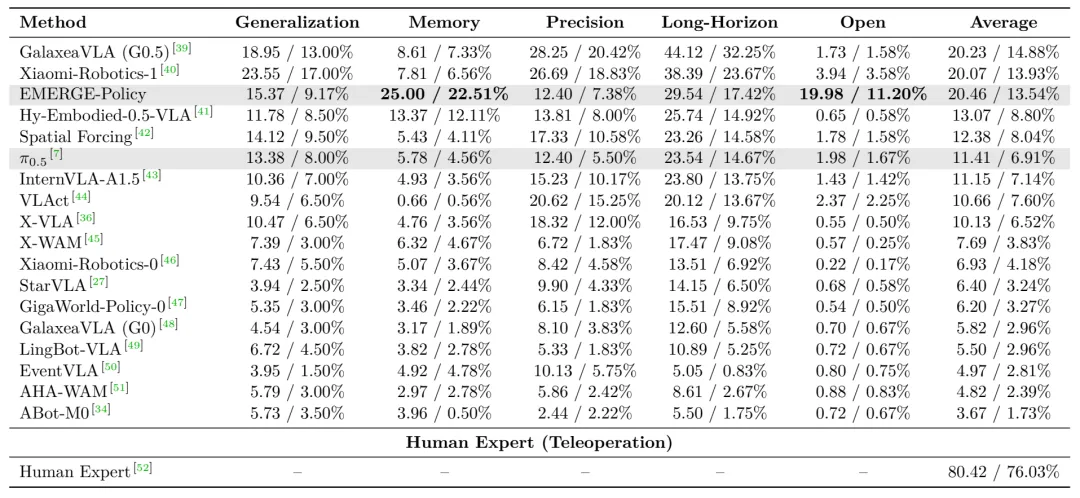
Table 1: EMERGE-Policy results on five RoboDojo-Sim capability dimensions. Each data report scores and success rates for five capability dimensions (%) and their average values.
The EMERGE-Policy team deployed a high-difficulty "Multi-layered Cup Stacking" task on the real machine arm (see real machine experiment video demonstration and Figure 6a).
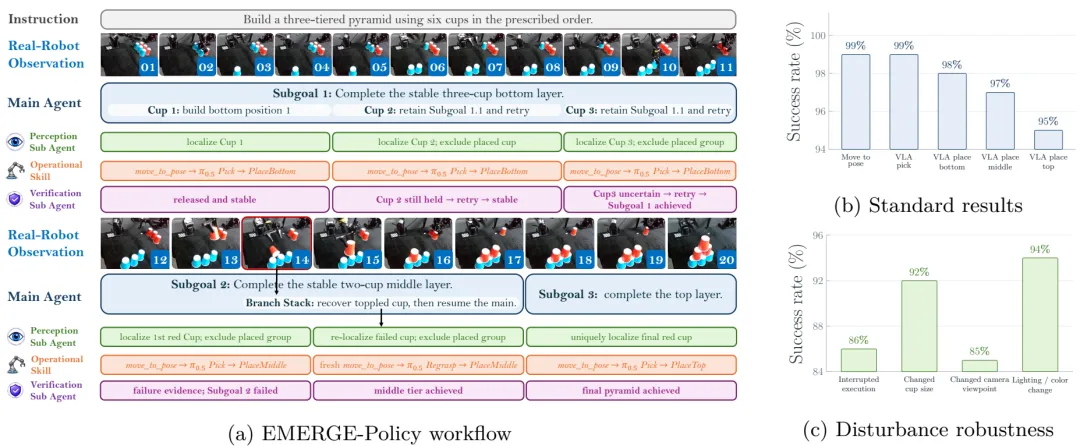
Figure 6: Real robot multi-layered paper cup overlay workflow and experimental results
High stability: In 100 standard machine experiments, the EMERGE-Policy intelligent system demonstrated extremely high completeness (see Figure 6b).
Strong resistance to interference: in the face of man-made disruption; disruption of the folded paper cups; changes in the size of the paper cups; 5%-15%; changes in color and camera angle; the system maintains a surprising success rate of 85%-94% with branch restoration and online reprogramming of the toolkit (see Figure 6c).
What is the meaning of this verse?
EMERGE-Policy has succeeded in opening a new path to the study of physical intelligence: we do not have to force a single model to do nothing, by decomposing VLA, WAM, world models and verifiers into synchronous tools, to unify the idea of structural mapping of multi-intelligent systems that can build highly adaptive, high-robot, fully-equipped intelligent systems.
The Intelligent Computing Laboratory team at Shenzhen International Graduate School of Tsinghua University is focused on pattern recognition, decision making, and physical intelligence research.
In the future, the team will further launch the EMERGE series of works that articulate the team concept of "how to make a modern system with physical intelligence" in the field of physical intelligence.