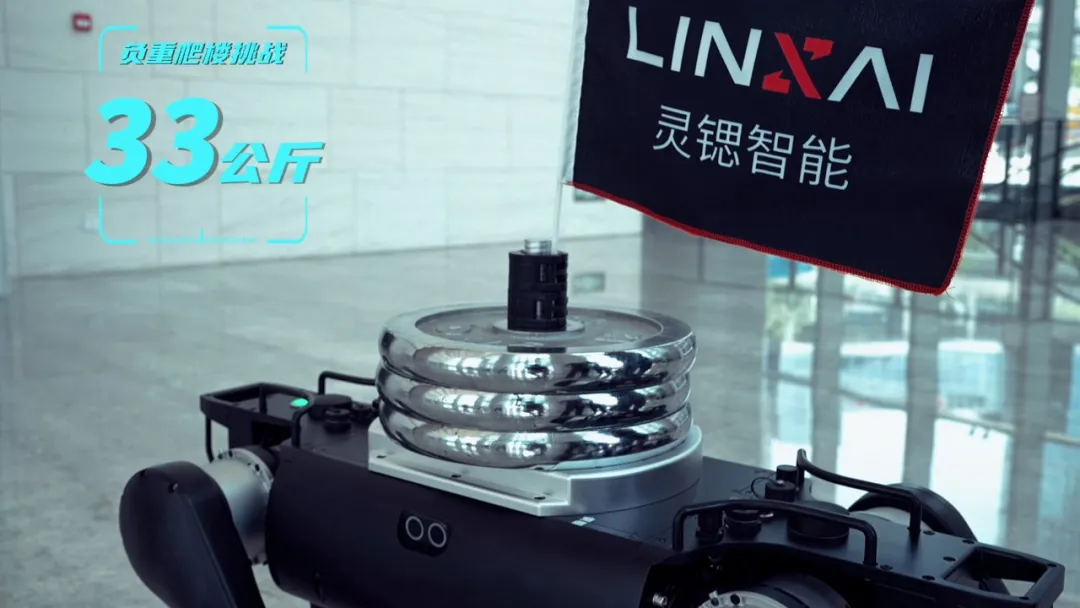
But the D30 is stuck.
Lin Liu, CEO and CTOIn the climax of this climb, he said: "Well, we chose to climb this scene based on thinking about the nature of robots. The biggest advantage of a robotic foot is its ability to break through, so we aim where it does best to challenge".
In other words, this climb is not about steering, but verifying the limits of a four-legged robot's ability to steer the steering wheel as the core of the steering wheel's ability to move the steering wheel, verifying that under extreme working conditions it cannot steadily steer the steering wheel.
Reversing the bottom of a false mirror
According to the product parameters table, the D30 engine is only about 36 kg with a continuous load rating of 30 kg and a standing instant load of up to 100 kg, but in the twin tower climbing test, it weighed only 33 kg.Load-to-weight ratio close to 1:1The D30 test data verified the high-level performance of the medium-sized aircraft in carrying capacity.
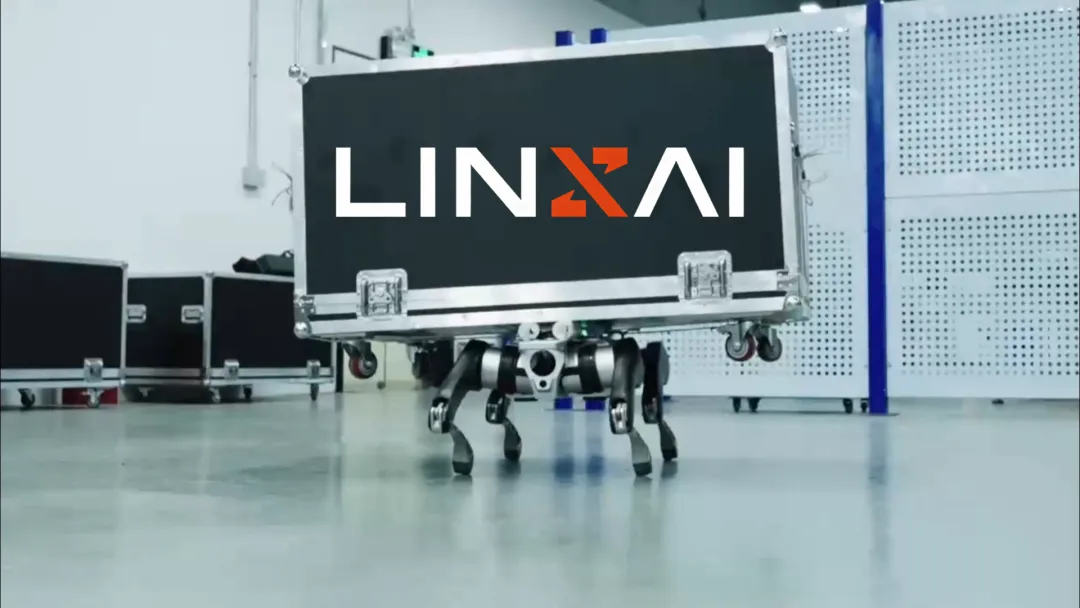
The highlights of this test are not a single load parameter, but the long-term high-load operation of medium-sized quadruped robots, complex road conditions, frequent switching of the overall stability, heat management and gesture control capabilities, which are highly suited to real high-level emergency operating scenarios.
Mr. Lin reveals one detail: the arguments that we are promoting abroad are generally relatively conservative.Reversed to a false flagThe test was carried out at 33 kg, known as 30 kg, which is uncommon in the industry.
How did the D30 become lightweight and heavyweight?
The answer was unexpected, and he first attributed it toIntegrating capacity of pumpsFor example, the accelerator is highly integrated with the motor, reducing the accelerator's weight by about 15%, thus improving joint lightweightness and torque density.
In addition to the integration capabilities,Fully self-developed joint modulesAt the same time, the D30 has high joint torque density and uses a large amount of lightweight materials to define the parameters of each joint according to overall needs. Based on this, the joint motor designed by the Intelligent Self-Controller of Links improved the torque by 30% under the same weight and the thermal efficiency by 40%.
This is not a compromise at the expense of reliability. In internal tests of durability and reliability, the D30 climbed stairs outdoors continuously for 200 hours with little damage to the hardware.And the foxes.Intelligent peopleThe design indicator is that this machine dog can work every day for up to an hour a day, at least for a year.
Stability and reliability take precedence over speed under complex load conditions, which is the core design logic of special-purpose robots.Therefore, during this climbing process, Lin Feng's intelligence did not emphasize the climbing speed of the D30, 33 kg loaded superimposed continuous climbing, road switching, very little body room for error, slow steady passage to avoid risks such as weight imbalance, slippage, overload of joints, adaptation to emergency rescue, safety patrol, reliable arrival, and stable operating gear, meeting the core requirements of special robot landing operation standards.
73 floors, not out of control
The hardest thing to do is to climb stairs, not to carry weight, but to walk steadily.
D30 on boardSelf-developed SVIP reinforcement learning algorithm:S represents LinxAI (LINXAI), V represents multi-modal AI environment perception (Vision), I represents adaptive sports intelligence (AI), and P represents integrated training and deployment platform (Platform).
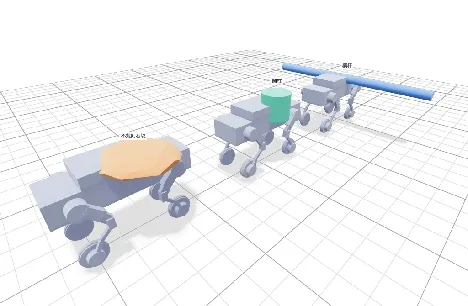
The logic behind this algorithm is:From perceiving the environment to understanding the terrainThe integration of deep vision, laser radar and body perception, including multi-mode sensor information, with AI environmental world models, continuous extraction of geographical structures, obstacle distribution and robot motion states, provides a reliable basis for stable control in complex scenarios.
The self-development training platform supports a variety of simulation environments such as lsaacGym, MuJoCo and others, covering large-scale parallel training, real-world simulation, load and rotation dynamic simulation, sensor degradation and complex process randomization. Combined with Real2Sim data calibration and Sim2Real model migration, it forms a complete loop from robotic assets, strategy training to real-world deployments.
In general, the traditional four-legged robot blind crawling program has two main pain points: easy to hit the empty staircase, easy to hit obstacles. The D30 systematically solves the above pain points through the SVIP algorithm, with each landing step being calculated in real time to calculate the weight deviation and load distribution, ensuring that gestures are always controllable during the entire crawling process.
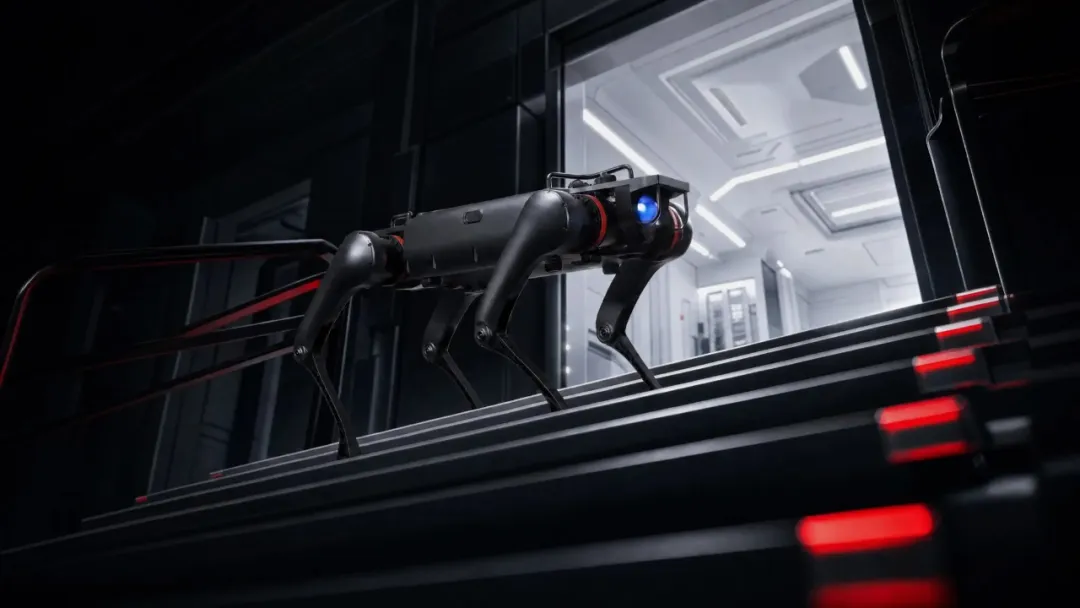
All the terrain, more than just the stairs.
Rising to the top of the Twin Towers proves the limitations of structural scenarios, but the actual operational scenarios are far more complex than stairs.
In high-rise building fires, security patrols, and emergency rescue situations, high-risk manned high-level operations are difficult, require robots to complete equipment detection, delivery, hazard screening, and so on, and the core pain points of such scenarios are carrying, long-distance, staircase and plane switching, and long-term continuous operation.
This climb used the original official evacuation staircase of the Star River Twin Towers, without any artificial optimization and modification of the staircase steps, the width of the passage, the ground conditions.The most realistic emergencies of super-high-rise buildings in complex environments。
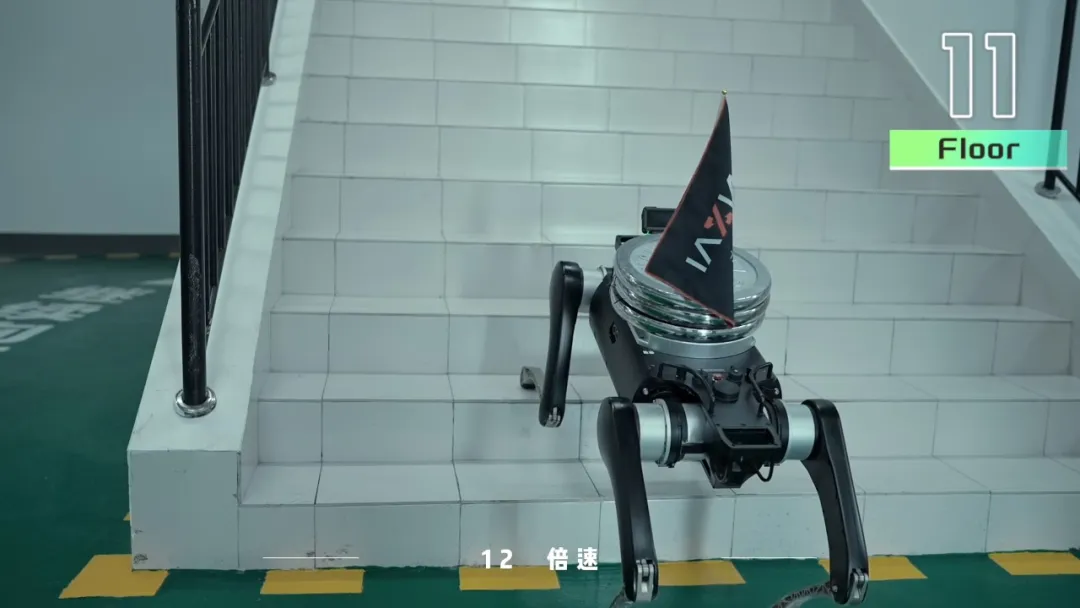
In contrast to static parameters testing in the laboratory, the core advantage of this test is that it verifies real super-high real-world conditions, continuous operation over long periods of time, and has a very strong commercial scenario reference value in terms of complex building and satellite conditions.
The 73-level ultra-high-level challenge, which aims to recreate real-world business conditions and verify the core capabilities of the prototype to adapt to high-rise building emergencies and security inspection scenarios.It provides real and effective engineering data support for the commercialization of products and the replacement of scenarios.
In addition, outdoor work often encounters landscapes such as high and unstable piles of debris, moist grassland, narrow woods, and the D30 series' performance on these landscapes is equally critical.
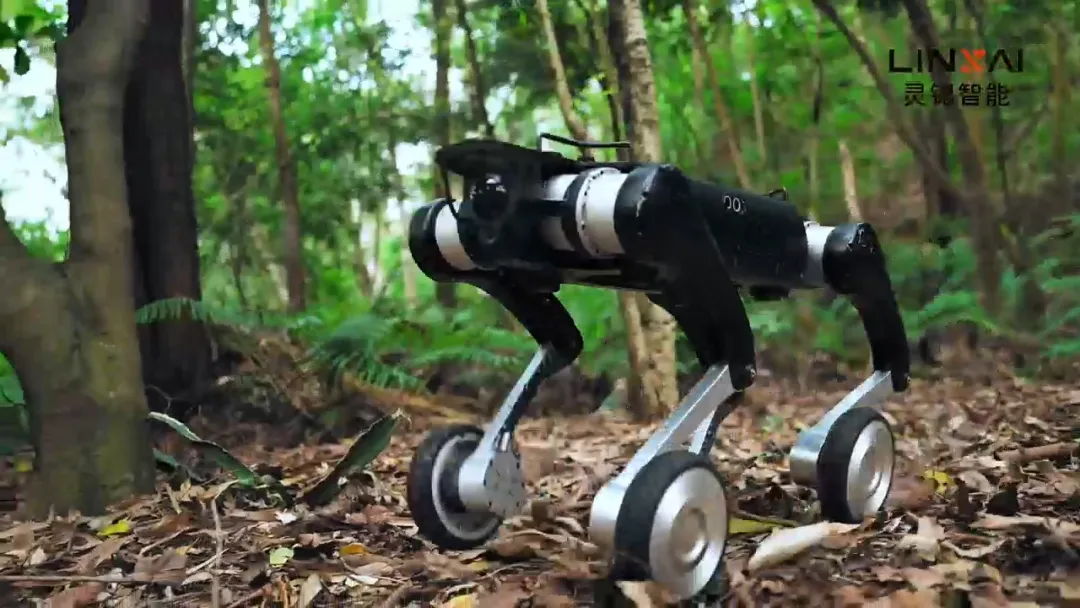
Self-developed joint module with reinforcement learning movement control, the D30 series crawls 45° slope, crosses 30 cm single level staircase, and recovers autonomously within 20 seconds after falling.
The D30 series achieves IP66 industrial dust-resistant water resistance, can operate steadily in a wide temperature range of 20°C to 55°C, with a water depth of up to 30 cm. The D30 series is configured with 936Wh of high capacity batteries, a load of 30 kg for 2.5 hours, an air load of 5.5 hours, supporting fast power switching.
Currently, the D30 series is in development.Electricity pipelines, radiation zones of nuclear power plants, petrochemical plants, public security patrolHe has been in stable service in more than 10 scenes.
From heavy to medium-sized, let's get robots into every industry
What is the biggest change in the development of the quadruped robot industry right now?
The answer to this question is:Robots are widely used in all industries.
This is in line with Lynch's mission to make robots truly enter every industry and replace the dangerously busy workforce of humans. In Lynch's view, quadrupeds are essentially a mobile platform, and the algorithm is now mature enough that when prices are rolled out to the range that customers are willing to use, it will greatly promote the large-scale application of quadrupeds.
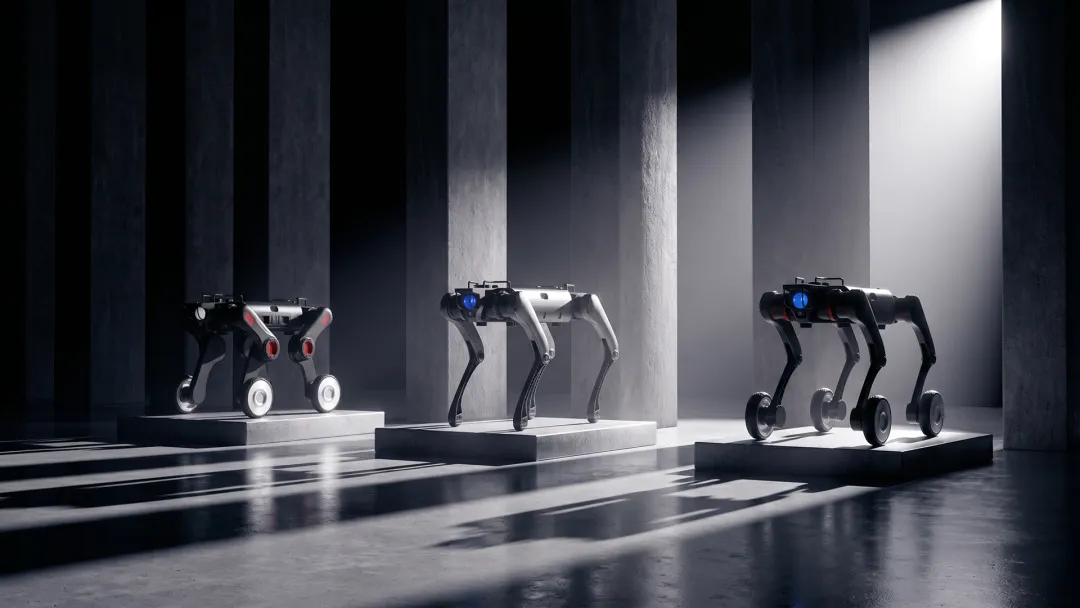
Lin Liu revealed that the D30 series can achieve highly competitive pricing, with pricing logic derived from the full-scale self-development, bulk opening and capacity improvement costs, which can cover the procurement budget of more industries.
And behind that is a complete system of products, the Intelligent Dynamics.A complete product matrix from the mid-range D30 series to the D50 series has been built.:
D30 seriesD30W, D30WS, D30W, D30WS, D30W, D30WS, D30W, D30W, D30W, D30W, D30W, D30WS, D30W, D30W, D30W, D30W, D30W, D30W, D30W, D30WS, D30W, D30W, D30W, D30W, D30W, D30W, D30W, D30W, D30W, D30W, D30W, D30W, D30W, D30W, D30W, D30W, D30W, D30W, D30W, D30W, D30W, D30W, D30W, D30W, D30W, D30W, D30W, D30W, D30W, D30W, D30W, D30W, D30W, D30W, D30W, D30W, D30W, D30W, D30W, D30W, D30W, D30W, D30W, D30W, D30W, D30W, D30W, D30W, D30W, D30W, D30W, D30W, D30W, D30W, D30W, D30W, D30W, D30W, D30W, D30W, D30W, D30W, D30W, D30W, D30W, D30W, D30W, D30W, D30W, D30W, D30W, D30W, D30W, D30W, D30W, D30W, D30W, and D30W, and D30W, and D30W, D30W, and D30W, and D30W, and D30W, and D30W, and D30W, and D30W, and D30W, and D30W, and D30W, and D30W, and D30W, and D30W, and D30W, and D30W, and D30W, and D30W, and D30W, and DW, and DW, and DW, and DW, are all are
D50 seriesThe long-range all-terrain quadruped robot operating platform, first introduced in 2024 for the Lenovo Smart, has a continuous load of 50 kg, an instant load of up to 100 kg or even 200 kg (D50WS version), an airborne life of about 8 hours. The product line also covers three configurations of foot, long-legged wheel, short-legged wheel, suitable for general industrial patrol, emergency reconnaissance search and rescue, and very narrow space operations.
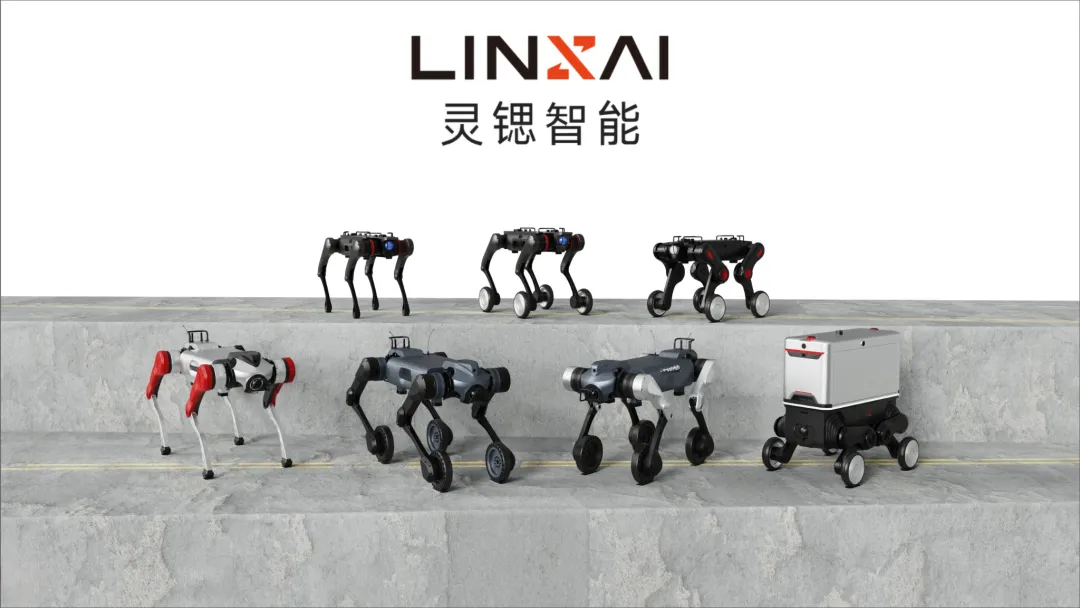
The entire range of products is equipped with 12 sets of M8 standard heavy-duty industrial holes, reserved for multiple types of sensors, mounted interfaces, supporting fast-integrated dual-photovoltaic imaging, gas monitoring modules, 3D laser scanning, and other equipment that can be adapted to multiple scenarios such as power surveys, petrochemical plants, park security, pipeline monitoring, etc.
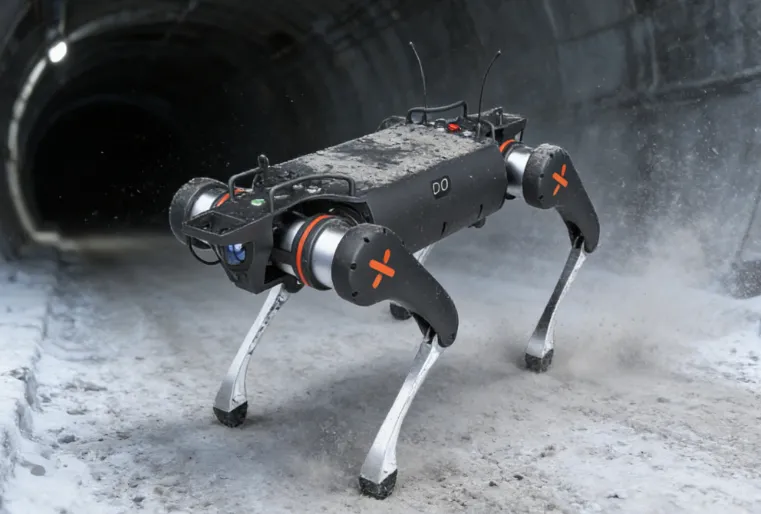
The strategy for AI can be summarized as:“1+1+N”Focus on a quad-foot robot chassis, build an open-scenes autonomous navigation capability for the last kilometre of the shuttle, solve the problem of quad-foot robot brain shuttle, and develop an industry ecosystem partner.
Relying on mature product systems, solid real-world landing experience, scalable commercial schemes, Linksy Intelligent continually empowers partners to expand markets, create value, and co-promote the widespread adoption of industry-level quadruped robots across industries. Today, Linksy Intelligent has been serving energy, fire, security, high-school, and high-value landing sites in public safety, electricity, petrochemical, fire, scientific research, and special operations.
Thank you.Kenyan technologyExternal bone robots provided to photographers to help photographers easily follow the D30 machine dog to climb the 73rd floor to the top.。