It's the first time in the history of the world.
Why are OpenAI and Anthropic spending so much money on chips?
On August 5, Anthroipic officially confirmed the formation of an in-house customized chip team to design specially reasoned chips for Claude.
Should all model manufacturers follow this new trend and integrate downstream into the industrial chain?
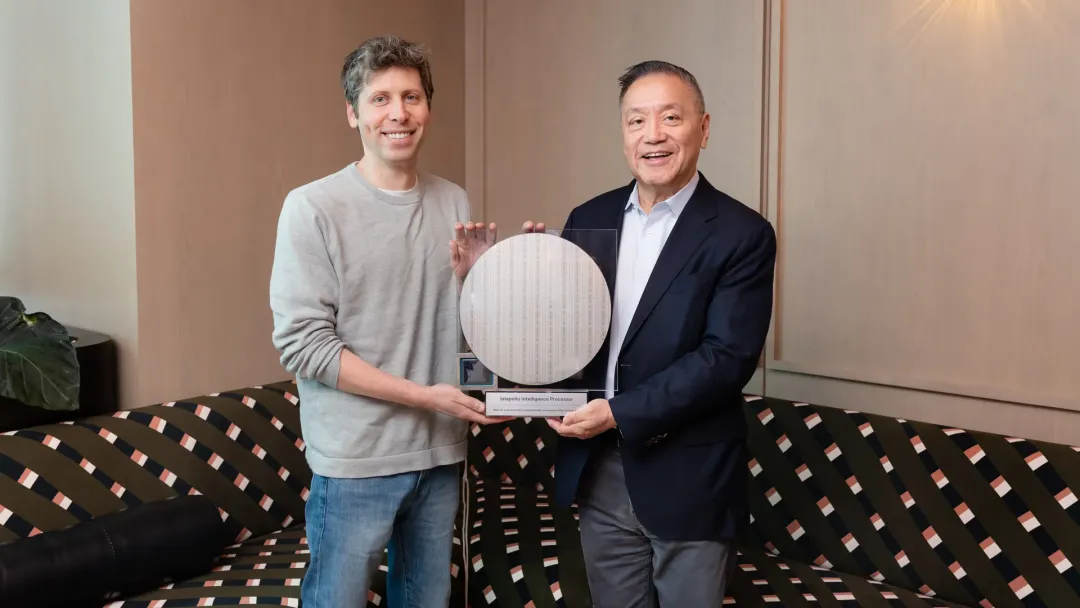
At the Hot Chips conference in late August, OpenAI announced a complete benchmark test for the self-developed Jalapeño chip: 700W power consumption, the GB200 of the NVIDIA 1200W and the GB300 of the 1400W, with 1.5 to 1.9 times higher power per watt, and 1.7 to 3.6 times lower end-to-end delay.
In the same week, Intel brought out its first mass-production reasoning accelerator after acquiring Groq, and Cerebras released a new generation of wavelength systems. Intel unveiled three chip architectures for Agentic AI.
Two weeks later, on September 8, Qualcomm and Amazon signed a $60 billion multi-generational customized logic chip collaboration.
Within three weeks, almost all of the top players turned their attention to the same thing: reasoning.
There's something behind these moves.Common logic: real application loads are reversing every layer of defining computing systems.
AI computing is now showing increasingly strong infrastructure attributes: whether the entire system can provide a stable, economical, scalable supply of intelligence is more important than the running score of any single chip.
At the same time, the situation in China is also different, with China having the world's largest white collar population and the world's largest demand for reasoning.
In the face of new trends in the demand for computational reasoning, what China needs to offer?
Agent has changed."What kind of calculation is right?"
In the past, AI reasoning was a one-time process where a user made a request, the model calculated the results, and the computing power was immediately released to serve the next user.
Agents work in a completely different way.
A single Agent task may include multiple rounds of reasoning, tool calls, memory retrieval, intermediate results checking and retesting after a failure, the entire process is a continuously running task chain, delaying gradual accumulation, the system must be online for a long time and recoverable while controlling costs.
The demand for arithmetic is still rising, but the bigger change is that the form of the load is completely different: from a one-time short request to a continuously running task chain, which poses different requirements for the arithmetic design of arithmetic.
This change is already written into the chip architecture.
Invidia has been using pre-filled pre-filled pre-filled pre-filled pre-filled pre-filled pre-filled pre-filled pre-filled pre-filled pre-filled pre-filled pre-filled pre-filled pre-filled pre-filled pre-filled pre-filled pre-filled pre-filled pre-filled pre-filled pre-filled pre-filled pre-filled pre-filled pre-filled pre-filled pre-filled pre-filled pre-filled pre-filled pre-filled pre-filled pre-filled pre-filled pre-filled pre-filled pre-filled pre-filled pre-filled pre-filled pre-filled pre-filled pre-filled pre-filled pre-filled pre-filled pre-d pre-filled pre-filled pre-filled pre-filled pre-filled pre-filled pre-filled pre-filled pre-filled pre-filled pre-filled pre-filled pre-filled pre-filled pre-filled pre-filled pre-filled pre-filled pre-filled pre-filled pre-filled pre-filled pre-filled pre-filled pre-filled pre-filled pre-filled pre-filled pre-filled pre-filled pre-filled pre-filled pre-fil-fil-fil-fil-fil-fil-fil-fil-fil-fil-fil-fil-fil-fil-fil-fil-fil-fil-fil-fil-fil-fil-fil-fil-fil-fil-fil-fil-fil-fil-fil-fil-fil-fil-fil-fil-fil-fil-fil-fil-fil-fil-fil-fil-fil-fil-fil-fil-fil-fil-fil-fil-fil-fil-fil-fil-fil-fil-fil-fil-fil-fil-fil-fil-fil-fil-fil-fil-fil-fil-fil-fil-fil-fil-fil-fil-fil-fil-fil-fil-fil-fil-fil-fil-fil-fil-fil-fil-fil-fil-
OpenAI demonstrates a different architectural decision on Hot Chips: it breaks down the reasoning process into three steps.
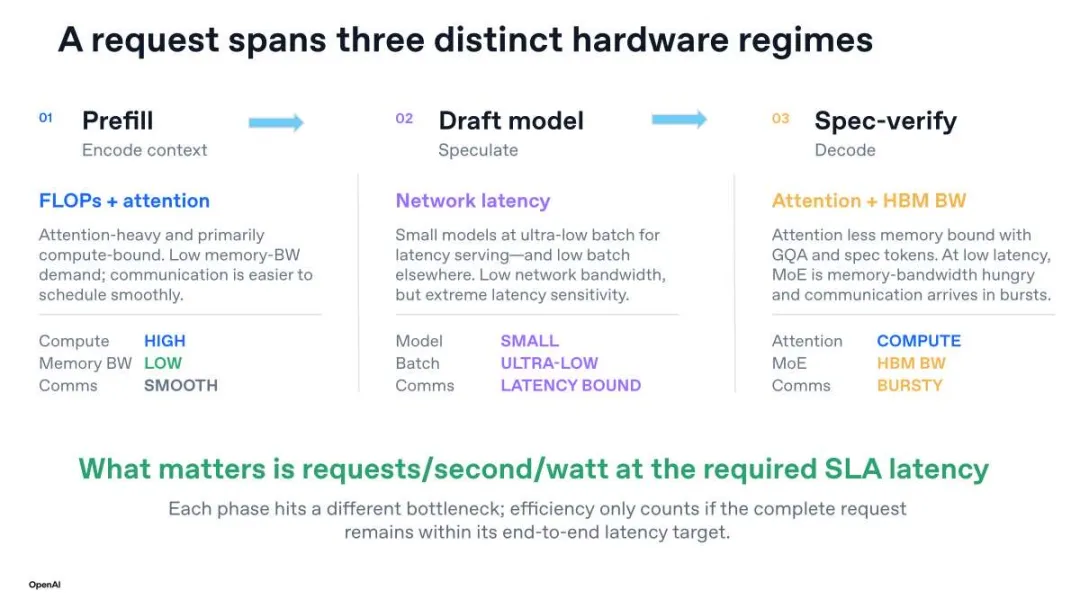
- The first step is pre-filled (prefilled) and computationally intensive.
- The second step is to generate a draft, make speculative sampling, and be extremely sensitive to delays.
- The third step is verification, which is bandwidth-intensive and accompanied by sudden MoE communication.
In three phases, different hardware bottles hit each other.
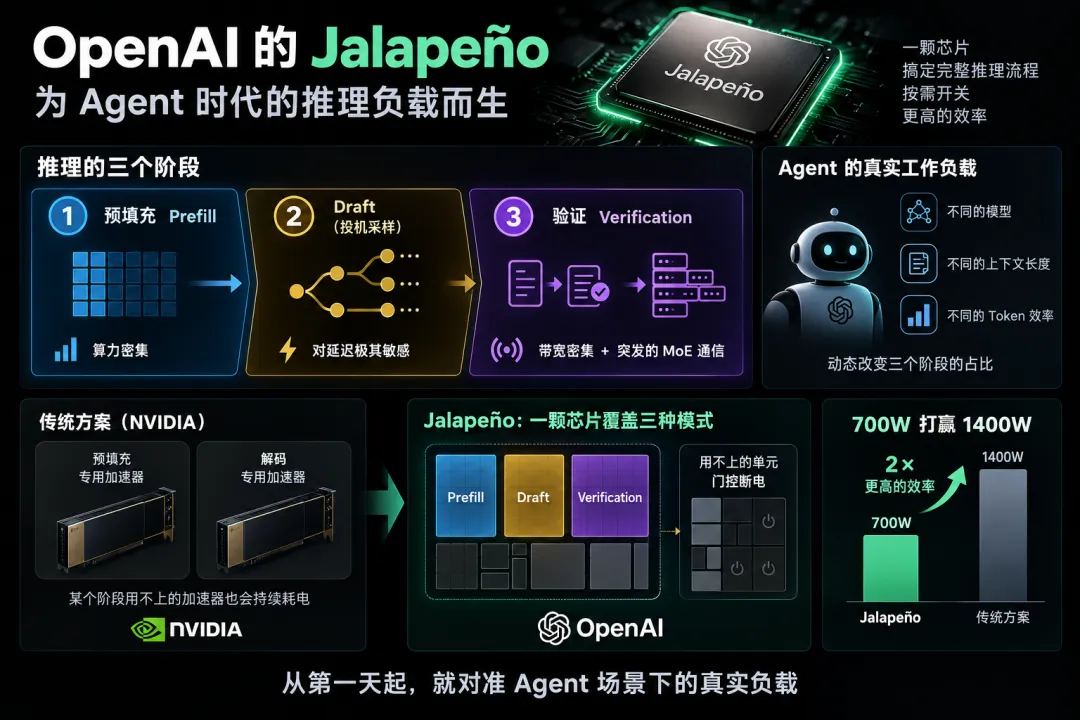
The reason for OpenAI's multi-step demolition comes from the real load of the Agent: different models and context lengths dynamically change the proportion of the three phases, and the dedicated accelerator consumes the same power when it's down.
Jalapeño opted for a chip covering three modes, where KV caches remain locally, disconnects directly from the uninterruptible computing unit, and adapts to changing load ratios using the same balanced architecture.
That's the bottom reason why 700W beat 1400W.
What is China going to talk about when the world moves vertically towards integration?The point of view goes back to China.
The advantages of China's AI industry are evident:
The richness of applications ranks first globally, from e-commerce, finance, education to government, and a large number of scenarios have begun to gain access to large models and smart entities.
There is no shortage of options for chip routes, teams working on RISC-V, Chiplet, memory synchronization, and various accelerator architectures.
The open source community and the developer ecosystem are equally active, and the domestic model has entered the first tier on multiple benchmarks.
But there is a real gap between these advantages: the cost of adaptation, migration and scheduling between different chips, between chips and systems, between systems and software is high.
A reasoning framework that runs on the A chip often requires a great deal of adaptation work to move to the B chip.
A set of system schemes that operate efficiently on a single system may encounter a completely different bottleneck when extended to clusters.
When all the world's leading companies are turning the whole thing upside down, China's multi-national routes will become fragmented if they fight each other.
The AICC 2026 AI computing conference, held on September 21 at the International Innovation Centre in Guangzhou, Beijing, has put this issue at the center of the agenda.
The conference was jointly organized by the Beijing City Development and Reform Commission, the Beijing City Departmental Commission, and the Guangdong City Science Board, with the support of several professional bodies and open-source communities across the upstream and downstream of AI computing.
The focus is not on which chip has the highest single indicator, but on each layer of AI computing: how chips, connections, storage, systems, frameworks, and calculators break down barriers and evolve in synergy.
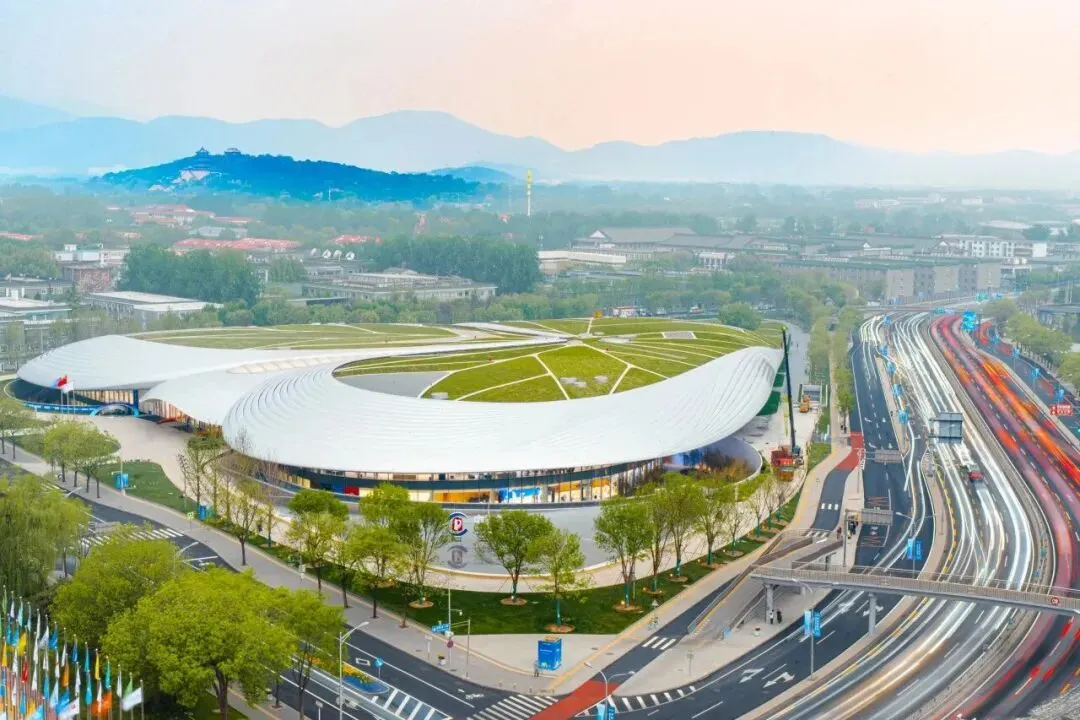
International Center for Innovation in Guangdong, China
Note one: People who make chips, people who make systems, and people who write frameworks for reasoning, are discussing the same load.
Academics from China University, IDC, Beijing Institute of Intelligent Studies, the North Pole Core, the Moor Line, the Qin Core, the Wave Information, and Dify, Fireworks, SGLang ranging from chip masters to open-source core authors to smart platforms, AICC 2026 has gathered nearly 60 reports that bring together the key forces of AI computing across the entire industry chain!
They will discuss:
- When an Agent moves from a single call to a continuous task chain, what kind of computing system does the next generation of AI need?
- How does a new architecture like chiplet break through a complex load bottleneck?
- As the number of chip routes increases, how do we get into the same system and form a whole capability?
- How do we synchronize hardware routes, how do we synchronize software, and how do different chips form scalable system capabilities?
.....
In fact, behind the Big Forum, the Group of Seven is an industry problem that has not yet formed a unified answer.
7 Major thematic forums gathered from around the world.AI chips, tokens, factories, open supernodes, big models, AI software chips, AI work, intelligent, all-encompassing computing in the age of Agent!
It looks like there are seven technical directions, but the backdrop corresponds to a series of ongoing industry debates.
- The next generation of architectures, such as the Beijing Open Source Chip Institute and the Chip Forum jointly hosted by Intel, Aridamo Academy, Moore Strings, and MIT Computing, were discussed.
- The CSDN-hosted Token Factory Forum, Fireworks, PPIO, and other teams dismantled the commercial closure of the rational supply chain.
- Open hypernode forums hosted by OCTC to discuss the baseline standards of domestic AI hardware, such as Intelligent Cloud, Wave Information, and more.
- Corporate organizations such as the Big Model Forum hosted by Datawhale, the Shanghai AI Laboratory, and OPBMB are participating, focusing on model architecture innovation and computational evolution;
- The AI Infra forum, led by core supporters of SGLang, discusses the infrastructure reconstruction of big model reasoning;
- The Forum on Physical Intelligence, hosted by the Institute of Physical Intelligence in Qingdao, addresses the critical issues of human and robotic coexistence.
- The AI Work Forum hosted by Datawhale, with teams from Dify, Memory Volumes, Penguin Star Wars, and Comcast discussing the evolution of the intelligent world from technological innovation to enterprise-level settings.
Note 3: China's AI graph will also open a new observation window
In addition to the technical routes, AICC 2026 will also reveal a highly anticipated industry map.
The first research report in the industry focused on Agent Infrastructure, China's AI Computing Power Development Assessment Report 2026, will be released at the convention site and will announce the ranking of AI computing cities in China.
In addition to Hangzhou, which is probably the most prominent, what new first-class cities and even second- and third-class cities have emerged?
The full agenda of the two-dimensional subscription code is below, with a limited number of free guest tickets available to the esteemed New Thought readers):

Slide up and down to see what's great
OpenAI has completed a generation of chips in nine months, and a second and third generation is on the way.
At this rate, the global model of reasoning chips could be fundamentally typified within two to three years.
The value of AICC 2026 is not to foresee a single technical route, but to allow the different routes to be discussed in the face of real loads and real industrial demands, rather than in turn undermining their suitability.
Reference: AICC 2026 Conference on Artificial Intelligence Computing is scheduled to be held in Beijing on September 21