It's the first time in the history of the world.
Just now, Anthropic has released a superhit that shocked the industry.
MCP is hosting the largest epic-level update since its release: MCP 2026-07-28.
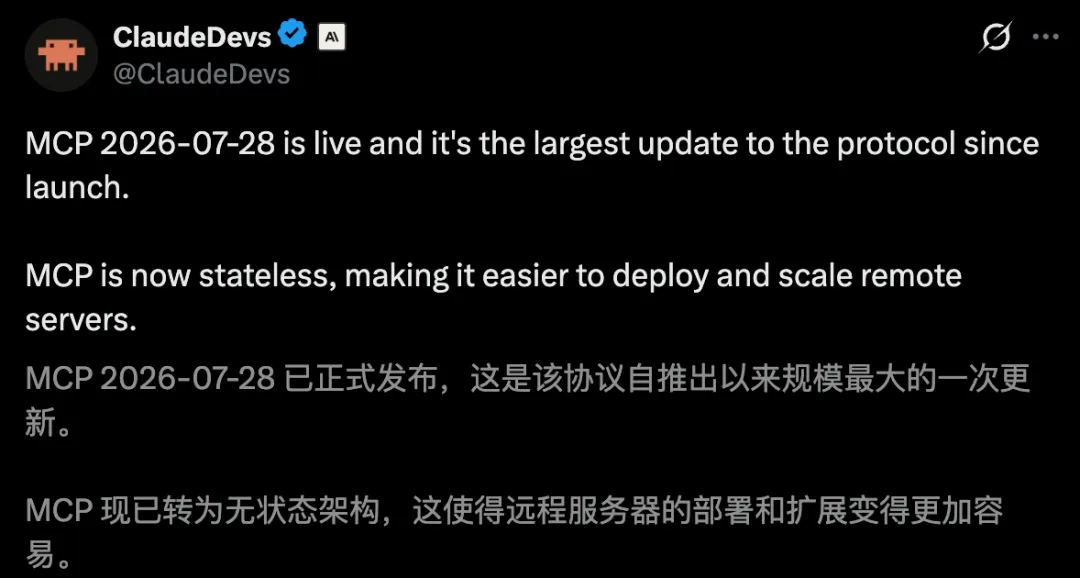
This update completely shatters the previous restrictions on developers' hands and feet.
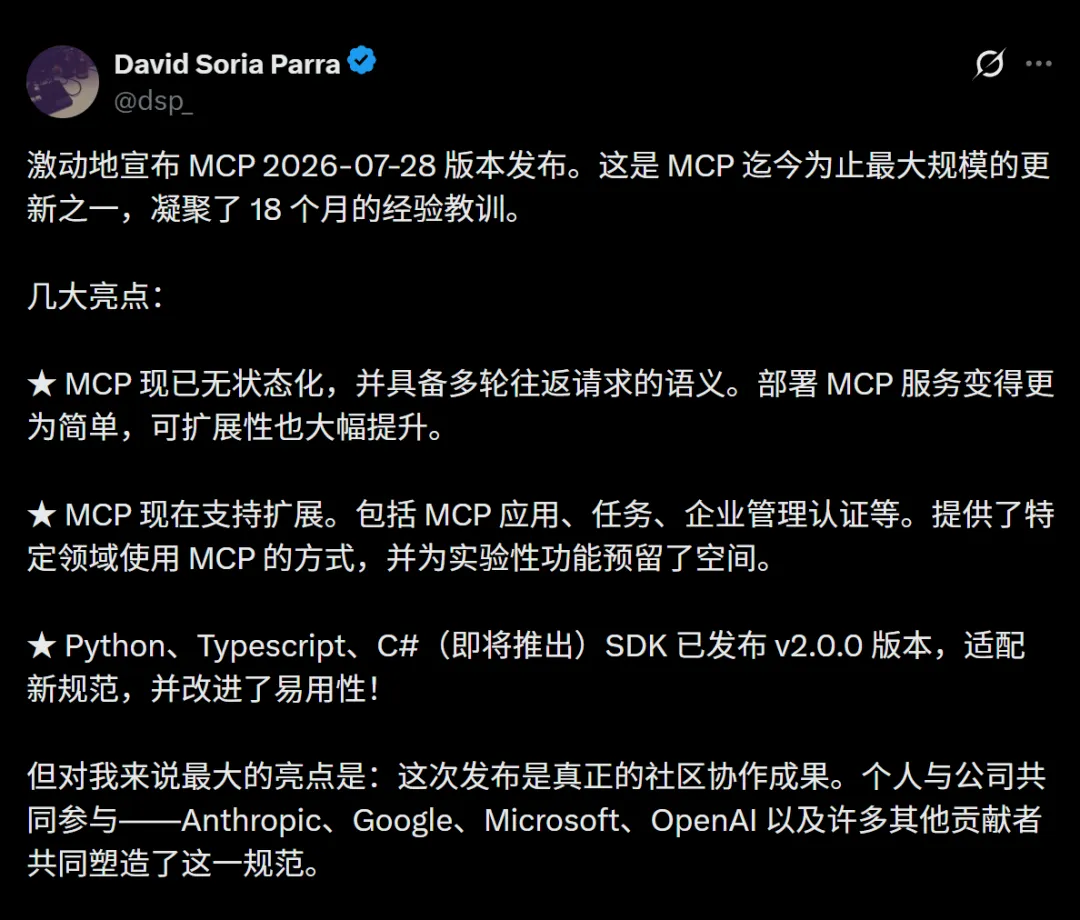
Since then, the core architecture has become "stateless", expanded functions have been promoted, and enterprise-level security has just taken a step up.
What's more, MCP's monthly SDK downloads have surpassed a staggering 400 million!
This marks the establishment of absolute industry standards for the interconnection of AI with global application ecology.
Now, this major update to the MCP has boiled the heads of countless developers.
The following set of data is sufficient to be included in the history book.
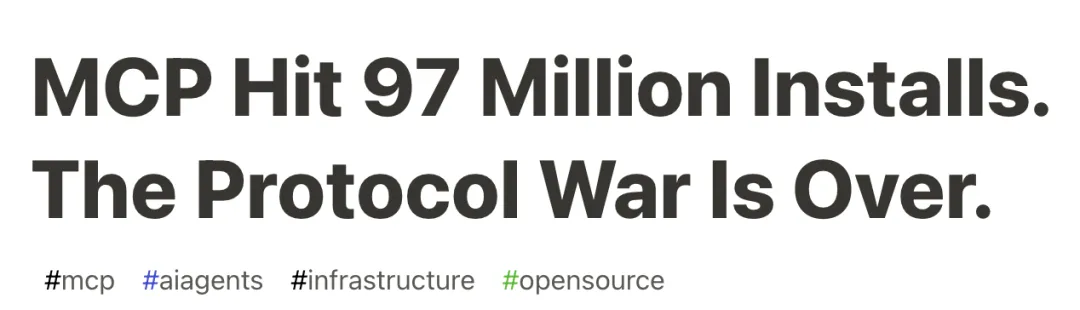
According to the latest official disclosures, MCP's current monthly SDK downloads have officially surpassed 400 million tons, and this year it has achieved four times the horrifying growth.
What's even more surprising is that the cumulative total downloads of the two largest Tier 1 SDKs, TypeScript and Python, have both crossed the historical threshold of 1 billion times!
In other words, almost all of the world's top developers, mainstream SaaS platforms, and enterprise IT teams are using MCP as a bridge between big models and the outside world.
There are over 950 MCP servers in the Claude App Store, and millions of people use them on high frequency every day.
If the HTTP protocol once connected computers all over the world to the Internet, now the MCP protocol is connecting the world's software, data, and APIs into a whole new cyberspace network that is unified by the AI brain.
The most hardcore update of the MCP was to make the core of the protocol completely "stateless".
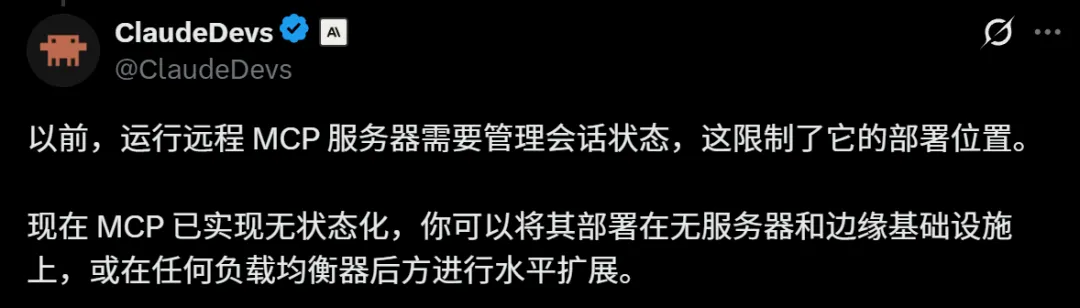
This change has also made developers more vocal.
Old drivers know that running a remote MCP server before was a torture.
Since the previous MCP was a two-way "Stateful" protocol, you need to be careful about managing complex session states, handshakes, and handshakes.
This leads to a deadly constraint: your MCP server is difficult to scale smoothly in the modern cloud native architecture.
But now, everything has changed! MCP officially switched to a purely request/response mode.
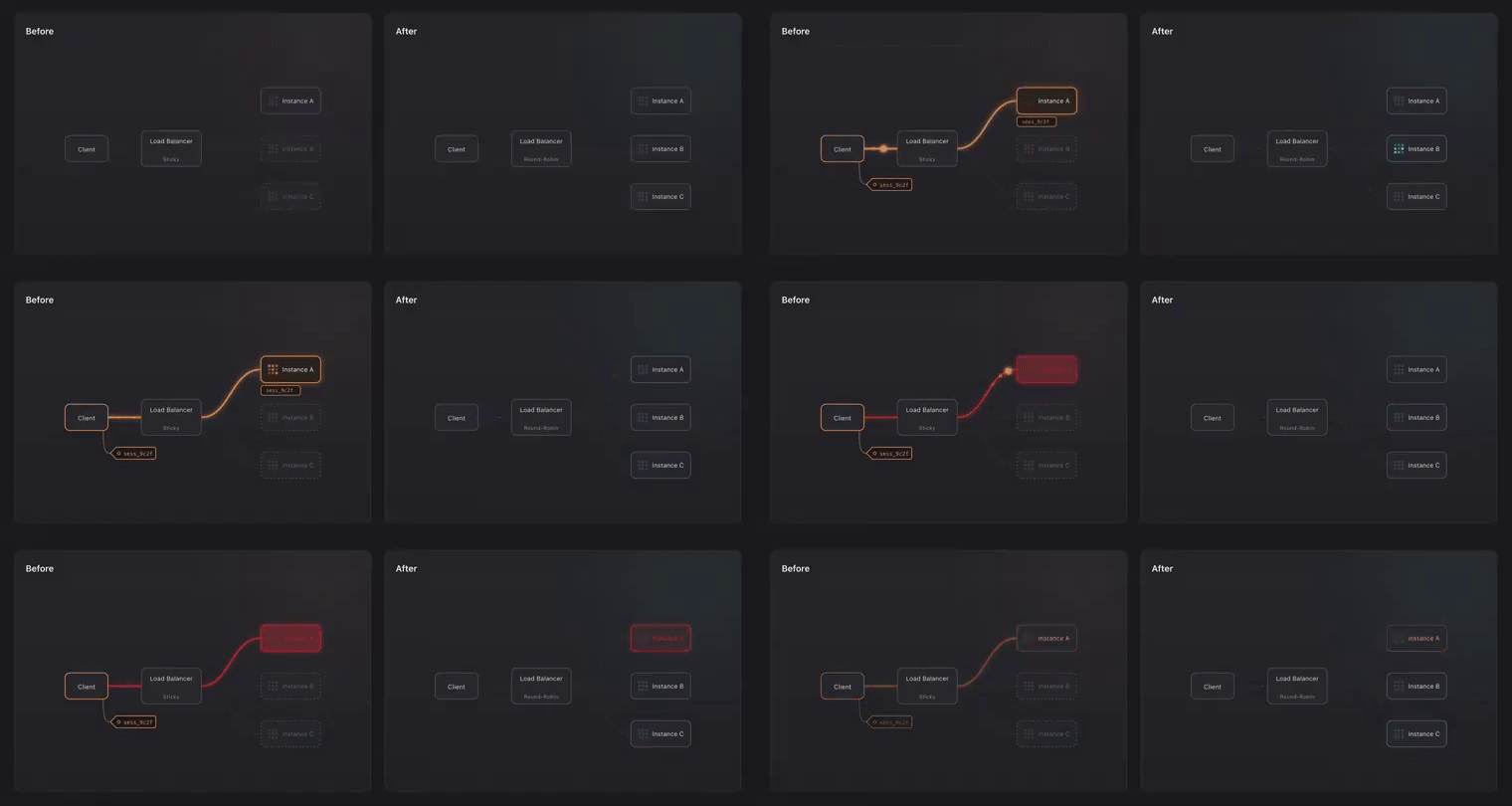
This change has led to disruptive dividends.
First, we can embrace serverless and edge computing.
Now you can safely deploy MCP servers on serverless and edge computing architectures such as AWS Lambda, Vercel, Cloudflare Workers.
It is no longer necessary to rent an expensive residential server for a few KB of session status.
Then we can now achieve infinite-level scaling (Horizontal Scaling).
Given the abandonment of the Mcp-Session-Id header and initialized handshake, each request is now "self-described" and the identity and capabilities of the client are contained in the _meta.
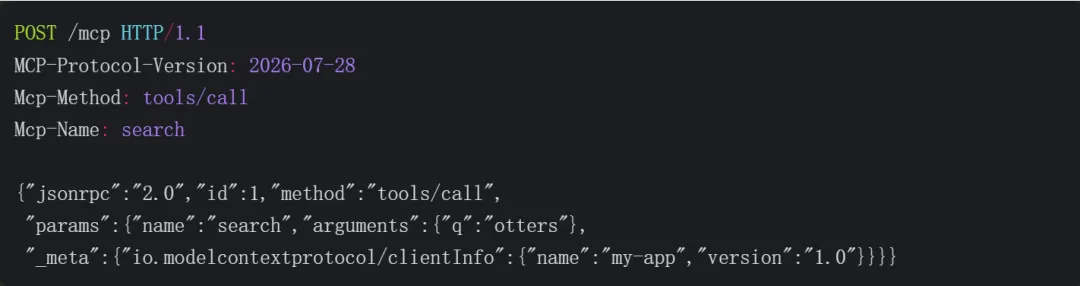
This means that you can hang the MCP directly behind any of the most common routing load balancers!
What if we really need to stay in shape?
Anthropic gives a very elegant answer to this question.
If your server has to cross-call reserved state, don't hide it in the transmission layer, but generate an explicit handle with the tool and have the Claude model send it back as a parameter.
The model can see the handle and pull the needle between different tools, which is not only logically clearer, but also in line with the thinking of the larger model.
Expansion upgraded to "First Class Citizens", officially ending ecological disorderIn previous versions, many advanced features were created by the developers themselves.
In the new regulations, Anthropic officially elevated "Extensions" to "First Class Citizens", laying the groundwork for an official standardization framework.
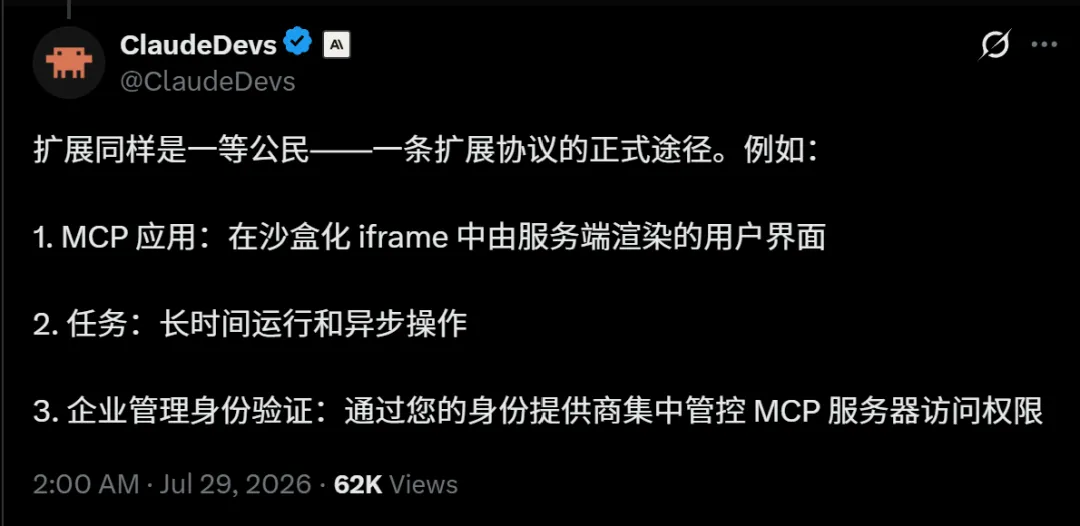
Developers can correctly add counterclocking capabilities to the MCP without changing the core protocol.
Below are the three main functions of the official launch.
MCP Apps: End the "Screening Era" and render the UI directly to the dialog box!
Previous AI conversations were boring, only going back to Cuban text. Now, with MCP Apps, your server can render the interactive UI at the server end directly in Claude's chat interface in a secure sandbox iframe.
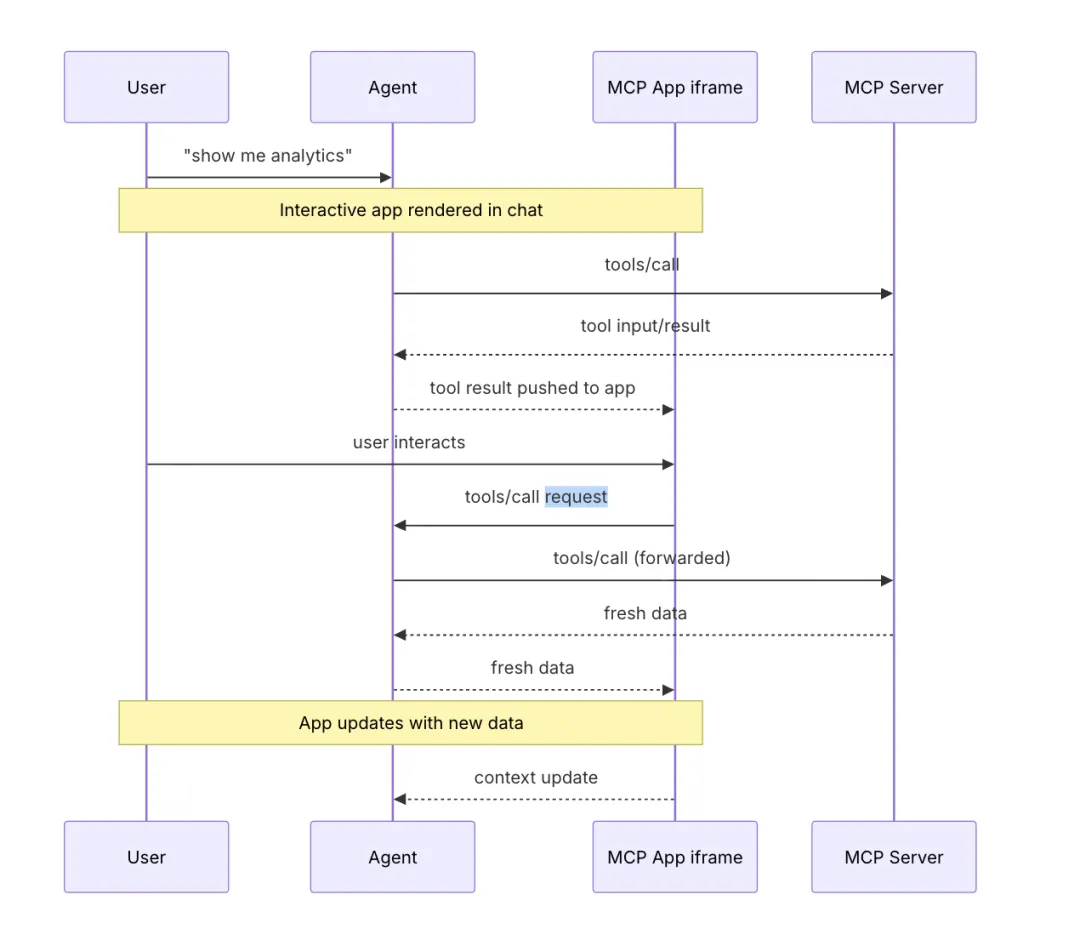
You can have Claude help you look at the company's revenue data, which not only gives you an analysis, but also translates a fully interactive dynamic report directly into the dialog box.
You let it help you operate the cloud server, and it pops up a control panel directly.
In this way, we no longer have to cut back and forth between the tag pages of Claude and the various SaaS applications, to directly implement what we see.
Tasks: Elegantly performing "long-term" asynchronous operations
AI is getting smarter and harder to work with. For example, "analysing 100GB of log files" or "rendering a 3D video" can take hours.
The previous protocol was difficult to handle this time-consuming task, and the new expansionio.modelcontextprotocol/tasks officially made the Tasks available.
It provides a set of query-based tasks/get and completely new tasks/update mechanisms.
What's more, the change of notifications from the old HTTP GET endpoints, unified into a single subscription/listen data stream, allows customers to accurately subscribe according to the notification type.
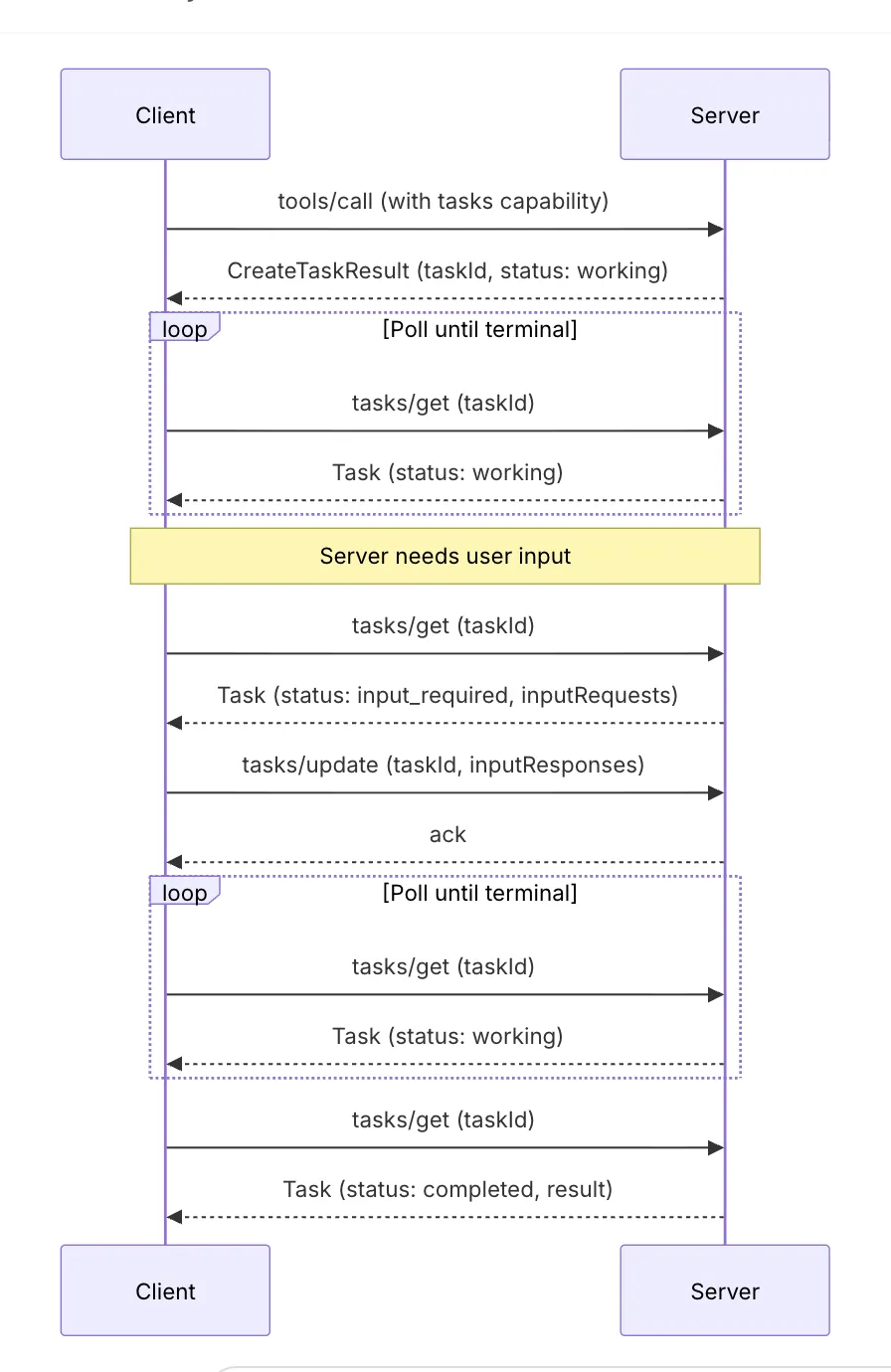
Since then, asynchronous task management has been as stable as old dogs.
EMA: The gospel of IT managers
With Enterprise Managed Auth (EMA), enterprises can now centrally control access to MCP servers directly through identity providers such as Microsoft Enterra, Okta and others.
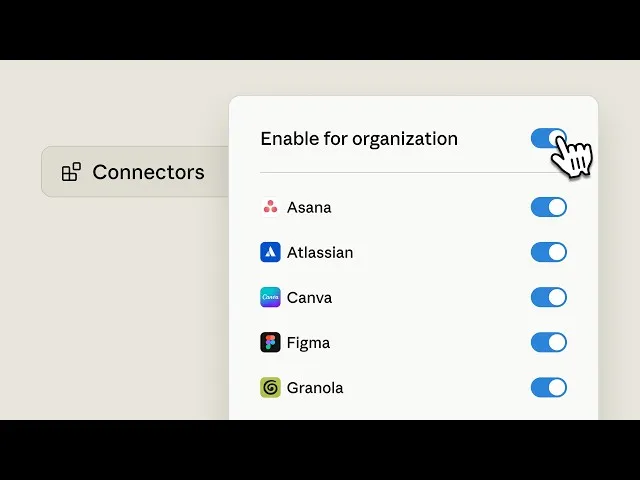
The administrator only needs to authorize once, and the user inherits access rights through an existing IDP group and automatically connects when first logged in.
This process has resulted in a complete zero-contact security log-in that both meets the most stringent security compliance requirements of the enterprise and allows end users to experience smooth, seamless access.
The moment of polarisation: the dismantling of the underlying protocolsIf you're a hardcore developer, the optimization of MCP 2026-07-28 on the underlying protocol will definitely make you cry.
Over the past 18 months, Anthropic has learned lessons from mass-production environments and rebuilt the protocol:
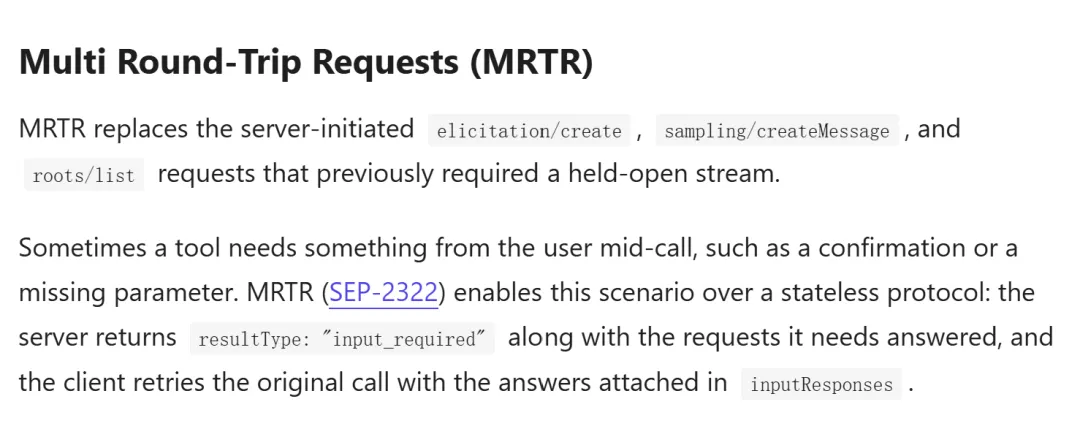
MRTR (multiple back and forth requests) replaces long connections
Previously, the server had to keep a two-way flow open if it needed to actively request data from the client (e.g. sampling or requiring the user to confirm the missing parameters).
Now, they are introducing Multi Round-Trip Requests (MRTR) technology.
If the tool is executed to half the user input, the server returns the resultType: "input_required" with a question. Once the client answers, the call can be restarted with inputResponses.
This design perfectly fits the no-state protocol and completely cuts off redundant long connections.
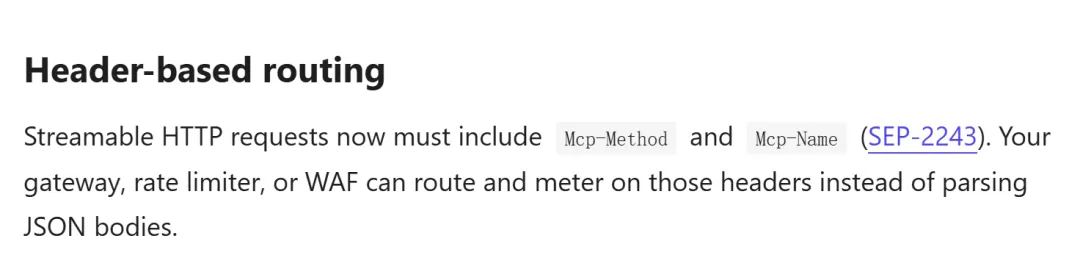
Header-based routing)
The good news is that HTTP requests that can be streamed must now contain both the Mcp-Method and the Mcp-Name headers.
So our API gateways (Gateway), rate limiters (Rate Limiter) or WAF firewalls no longer have to work hard to analyze JSON objects. They can be routed and charged directly based on the header, and the performance takes off instantly.
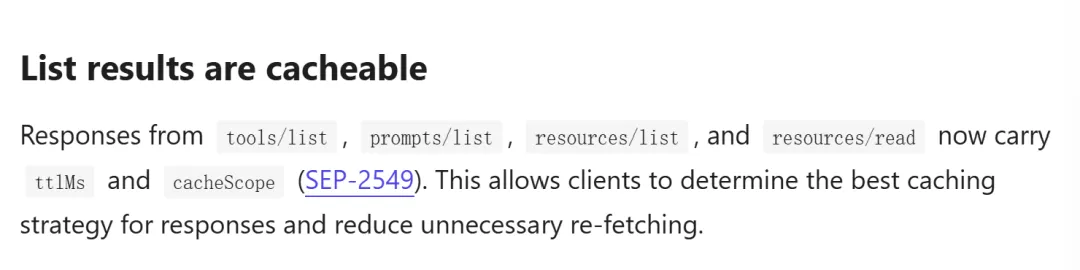
The results of the list fully support caching
In the age of AI, Prompt Cache is money!
Now, responses from interfaces such as tools/lists、prompts/lists are automatically prompted by tttlMs (lifetime) and cacheScope (cache scope) and ensure precise ordering.
This allows customers to develop optimal caching strategies, greatly reducing unnecessary retracements and saving developers real money and silver.
Security certification (Auth) is extremely hardened
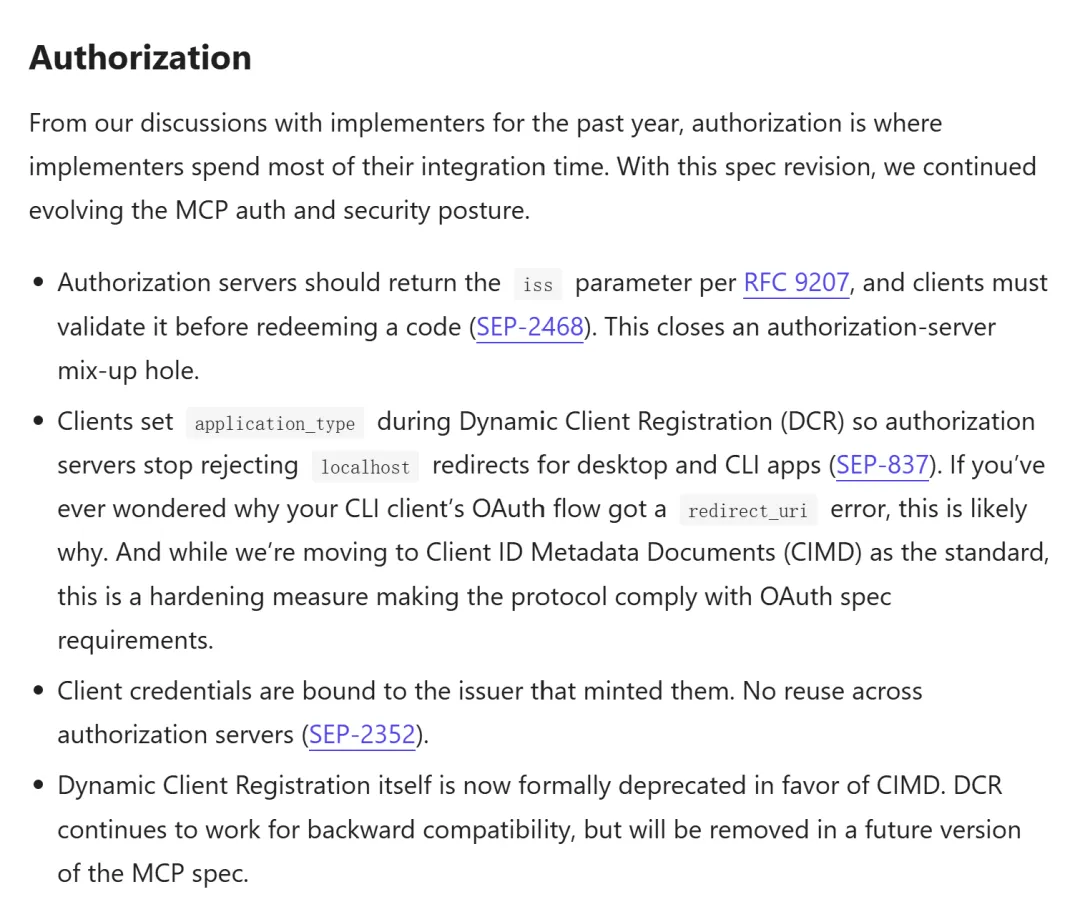
According to official reports, the most time-consuming process for developers to integrate MCPs in the past year has been authorization certification.
In this new edition, a series of military-grade reinforcements were carried out.
1. Fully aligned production level OAuth 2.0 and OIDC deployment.
2. Compulsory compliance with RFC 9207 issuer verification to completely close the vulnerability to authorized server confusion.
If you've been developing a CLI client before, you've always encountered a nasty redirect_uri error (because OAuth refuses to redirect localhost), and this update has completely removed the tumor.
To allow developers to better use the most powerful standard in history, Claude not only released the protocol, but also provided a powerful set of infrastructure support.
First, they provided a developer-exclusive data view.
How is your MCP server performing on Claude? Is there a bug? Is there a high latency?
Now, as soon as your server is on the Claude App Store, you can unlock the official developer sign!
You can monitor product adoption rates in real time, diagnose errors and delays, or even break down usage data across different product interfaces to drive data-driven conversion.
The second largest killer kit they provided was a research preview of MCP Tunnels.
Many large enterprises are highly critical of AI's capabilities, but due to confidentiality protocols, it is never allowed to expose internal databases or ERP systems to the public internet.
To address this pain, Claude launched MCP Tunnels, which is currently in pre-production!
It can connect Claude directly to MCP servers deep inside the enterprise's network without exposing any public IP, without configuring any firewall rules, without setting an IP whitelist!
This is equivalent to digging a secure encrypted underground tunnel under a corporate firewall to meet the demands of high-security AI industries such as finance, healthcare, and government.
The Silicon Valley giant is rallying for electricityWhether any agreement can become an "industry standard" depends not only on how hard the underlying technology is, but also on how the top business ecosystems can afford it.
In this regard, MCP 2026-07-28 delivered an answer that made the entire industry happy.
This update is not the result of Anthropic's closed-door automation, but of months of grinding, testing and validating products by many contributors and partners in the ecosystem, which has completely obliterated the "scaled expansion" and "data security" that plague the enterprise.
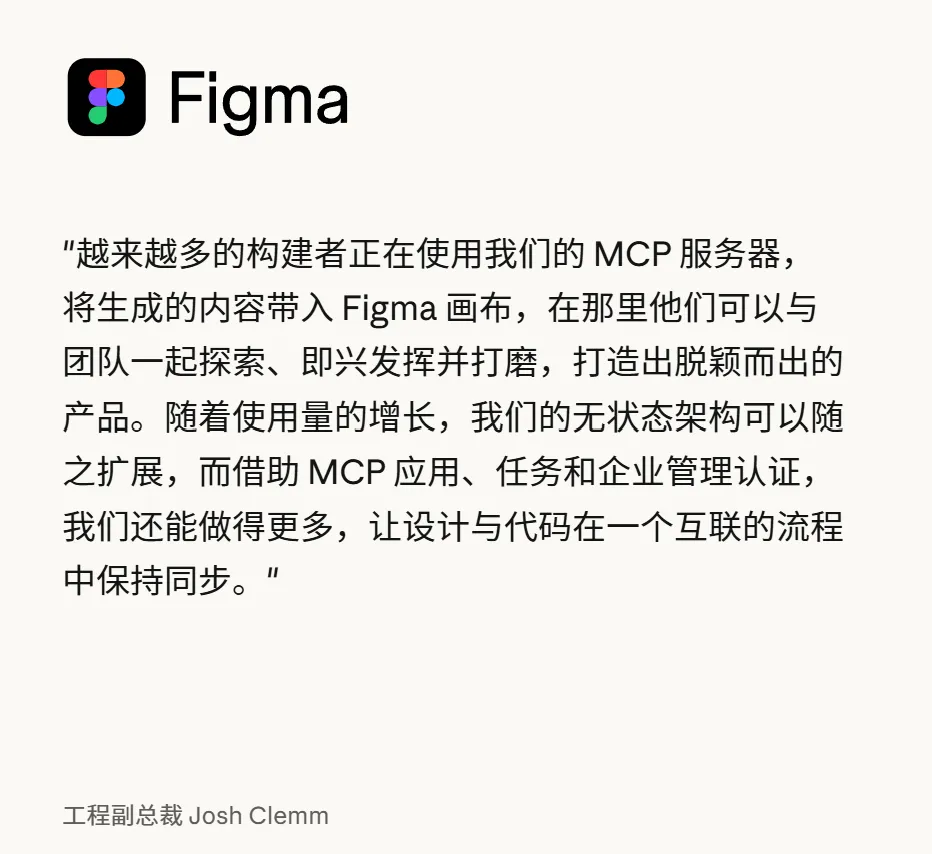
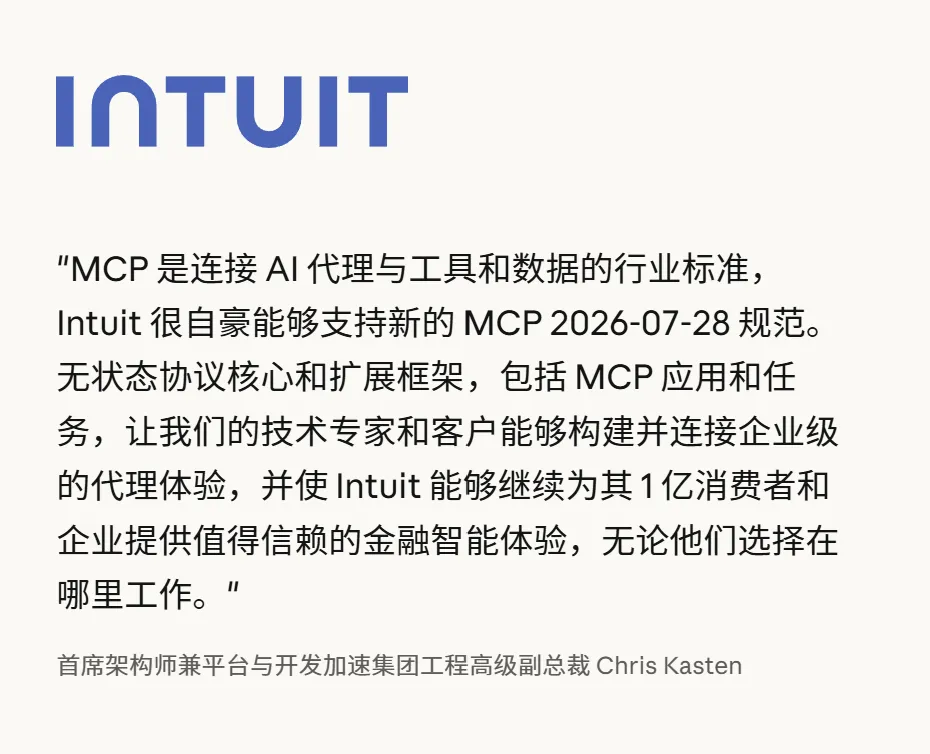
Now, executives from giants like Figma, Intuit, Netlify, Zoom, and others have been stepping in, as the release of MCP 2026-07-28 directly opens the door to AI's large-scale enterprise-level deployments as the "Director's Circle".
Scroll down and see
Why are these giants so excited?
Because Figma requires AI to slide into its vast design assets; Intuit requires financial-grade absolute security certification; Netlify's Serverless genes require purely stateless protocols; and Zoom requires extremely low latency communications response.
And the current MCP, which is perfect and at the same time meets all the demands of this demanding production level! This back-book from the head of the ecology, marks that the MCP has truly transcended the stage of "polar tourist toys" and entered the deep water area of application.
Welcome to the new era of stateless AI"The new version is the most important update since remote MCP was first released more than a year ago. It has made a leap forward in terms of service-expandable MCP servers, laying a solid foundation for the future of MCP".
According to Anthropic on its official blog.
Yes, MCP 2026-07-28 is by no means just a conventional version number mutation, it's an important watershed from the "toy level" to the "enterprise industrial level" of AI.
Its stateless architecture, its powerful expansion system, and its rock-solid security have given us a vision of an all-AI, all-connected future.
Now, developers can move on!
Currently, the four official Tier 1 SDKs (TypeScript, Python, Go, C#) have been fully synchronized to support the 2026-07-28 specification, and the Rust SDK is also supported in Beta.
If you're worried about code migration, don't panic.
Anthropic has very conscientiously developed an official 12-month discontinuation policy.
The old version of Roots, Sampling and the old HTTP+SSE transmission mechanism will continue to work normally for the next year, giving you plenty of time to upgrade.
How to get started?
1. Access the official MCP blog for full specifications and updates.
2. Pull the latest version of the SDK (TS/Python, etc.)
Try rebuilding your MCP server and experience the thrill of deploying a Serverless key!
Now, the era of AI-enabled navigation has begun, and MCP 2026-07-28 is the ticket to the new continent.
Now everyone can create their own MCP app, and the next big thing is maybe on Claude's list of more than 950 servers.