First learn to draw, then learn to listen. LLaDA-Image learns visual advances directly from images during pre-training and mid-training stages, with over 90% of cumulative production training samples using image-only supervision; graph pairs are focused on subsequent language alignment. Model weights, training code and complete formulas are opened simultaneously.
On the Qwen-Image-Bench, LLaDA-Image's English and Chinese scores were 53.53 and 53.38, respectively, ranking first in the open-source model listed in the technical report.

English synthesis in Qwen-Image-Bench. Models are ranked by average divided by two trajectories; LLaDA-Image is ranked first in the report's open-source model.
The list gives its quantitative coordinates in the mainstream model. Going back to the most intuitive generating effect, let's first do a real-life image puzzle.
In this compilation below, which are the real photos?
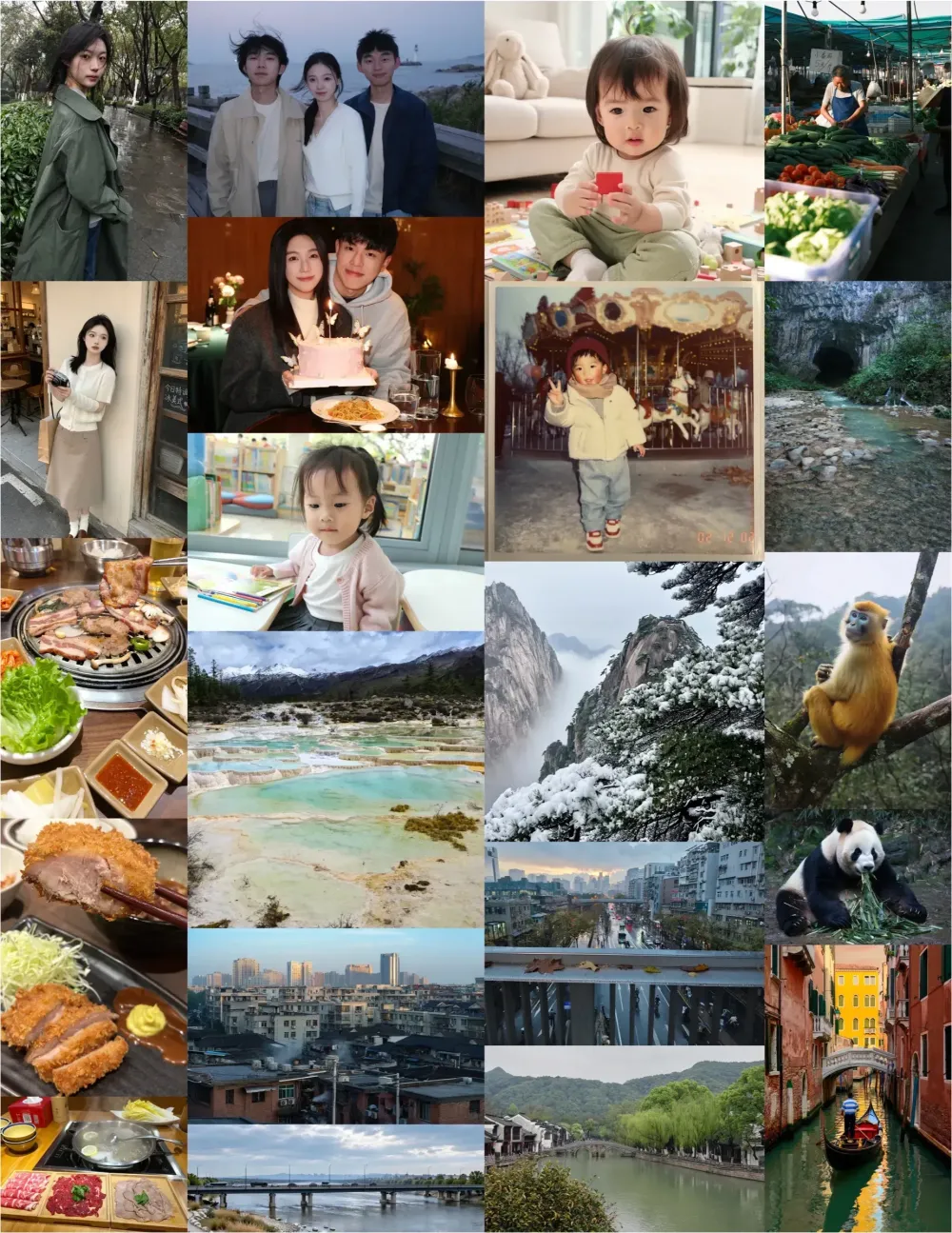
LLaDA-Image sample of people, animals, food and landscapes.
The answer is: not one.
More importantly, the team did not use captioning as a prerequisite for the 6B DiT's visual preview: more than 90% of the 220 million cumulative generated training samples were purely image-controlled.
From forest snapshots, family photos and street markets, to snow mountains, caves and Chinese gardens, all of which seem to come from mobile phones or cameras, are generated by the same model.
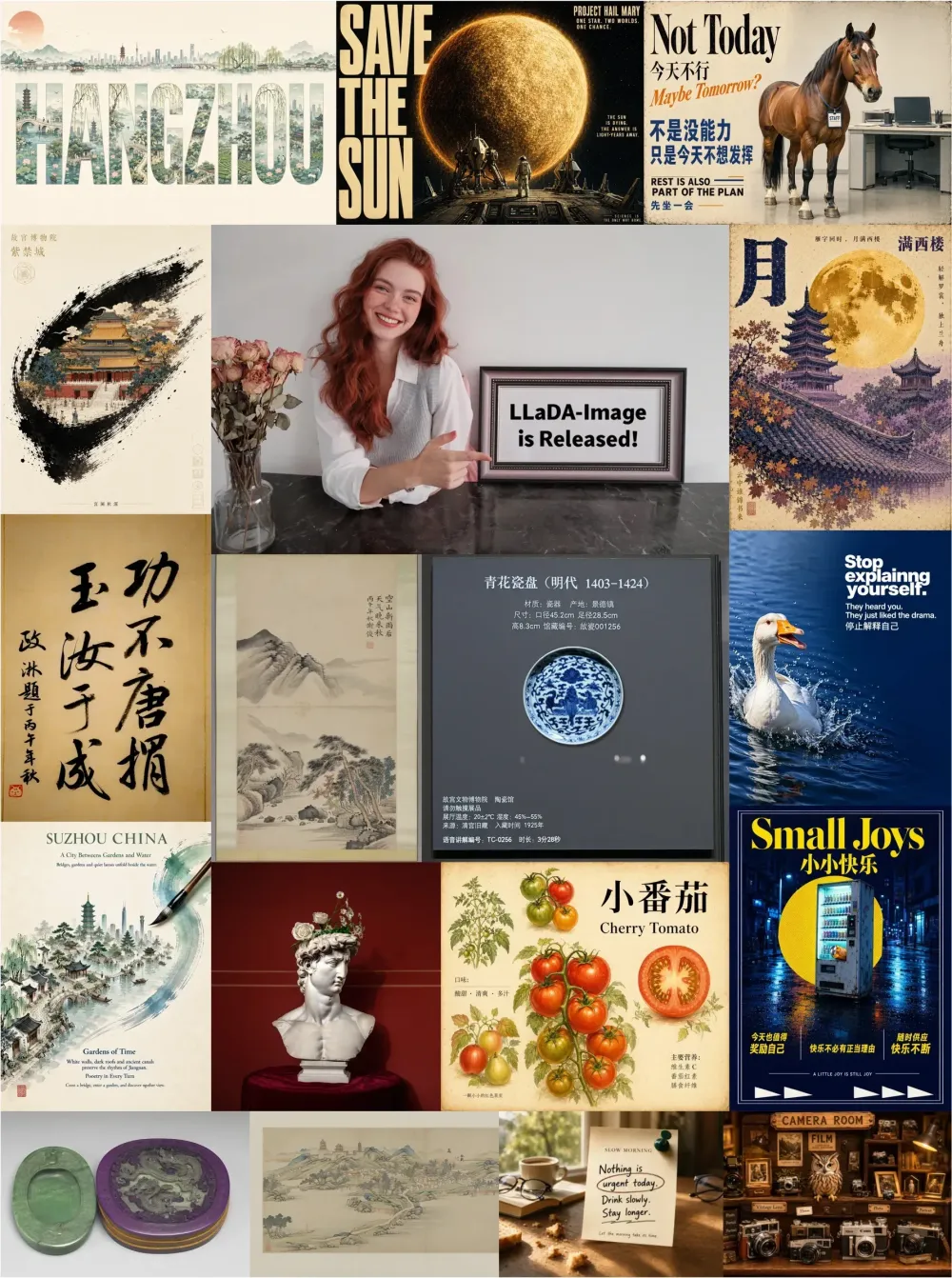
LLADA-Image posters, text rendering, art and design class production samples, showing the qualitative effects of the model covering a variety of visual creation tasks.
The model comes from Inclusion AI, called LLaDA-Image. Its core is a set of zero-trained 6B Parameters Diffusion Transformer (DiT), a weight-unified set that supports text graphics and instructional image editing; the further distilled LLaDA-Image-Turbo, takes only 2 ton4 sampling steps.
What really makes this work look different is that it re-answers a basic question: Do you train high-quality text graphics models, and do you have to be present from the first day of pre-training?
The answer given by LLaDA-Image is that it is possible to build a visual forerunner from the image itself, and then in subsequent SFTs to use images that have been described and checked for consistency to complete language alignment. In other words, to learn to draw first and then to listen.
This path extends from pure image pre-training to language alignment, lifelong blending, editing training and less-step distillation. Approximately 220 million samples were processed at each stage of the production training, ultimately yielding the first Chinese-language bilingual open source result shown in the opening list.
GitHub:github.com/inclusionAI/LLaDA-Image
The model:https://huggingface.co/collections/inclusionAI/llada-image
The Witch:
arxiv:
Back end and generation are scattering models
LLaDA-Image uses a full-distributed architecture from understanding to generating: understanding side uses LLaDA 2.0-mini, a hybrid expert with 16B total parameters, activating 1B parameters (MoE) spread language model (dLLM), responsible for understanding instructions; generating side uses zero-trained 6B DiT, responsible for converting understanding results into images.
The graph is right, and may not generate a trained entrance ticket.
Traditional text graphing routes typically link images to text descriptions from early in training. To match the data to the training requirements, detailed captions must be generated or added manually and filtered through hallucination testing, text transcription testing, and graphic consistency.
LLaDA-Image changed a division: pre-training and mid-term training did not use the caption as a condition, but the conditioned signal was generated by the image itself; at the SFT stage, which required language supervision, the image was introduced to the finished text. The report showed that the team used Qwen 3.6-35B-A3B and Qwen3-VL-235B-A22B-Instruct for image-generating descriptions and further examined the objects, attributes, relationships and text transcripts.
In this subset of work, the two types of data are placed in their better positions. The original image retains complete visual information such as material, shadow, local structure and small objects; the text description is good at refining semantics and accessing the concepts of natural language to the visual space that has already formed.
Pure images are responsible for creating a visual world, while images are responsible for bringing language into the world.
Particularly in early low-resolution training, extracting the conditions directly from the actual cutting area allows the conditions to naturally correspond to the training goal of 256 X 256, while retaining more effective detail. Thus, undocumented images can also participate directly in the visual learning phase with the highest throughput, while high-quality matching resources are concentrated for subsequent language alignment.
This division of labor also corresponds to a more flexible way of organizing data: first allowing images to be directly involved in visual learning, and then configuring the paired data centers into language alignment stages.
The entire process can be summarized in six stages:
1. Mind-chain supervision of the understanding of the spine is first moderated (CoT SFT);
2. In the following paragraphs: Purely image pre-training under a pixel budget;
3. What is the meaning of the Bible? Purely image-medium training on a pixel budget and multi-width barrel;
4. The following is a list of some of Jehovah's Witnesses in the United States. and
 Introducing image pairs under the pixel budget to complete text alignment and high-resolution migration;
5. Mixed training in text graphics (T2I) and image editing (I2I) 1:1 to obtain a unified LLaDA-Image;
6. Using TwinFlow distillation, the LLaDA-Image-Turbo is derived from the 2-step 4-step logic.
The key here is that the first two generating stages get conditional signals directly from the image itself. From the method interface, the image can only participate in pre-training and mid-term training after basic quality screening; large model captioning and image alignment lines play a role in subsequent SFT stages.
One picture, while providing a puzzle title puzzle and a puzzle answer puzzle
Given a trained image, the system uses a frozen SigLIP-VQ visual encoder to turn it into an image token and then randomly obscure part of it. The remaining rare visual token enters the frozen multi-modal understanding model together with a fixed auxiliary instruction, forming the conditions for DiT; the VAE sub-variable of the complete image serves as the generating target.
In other words, the image is both the source of the condition and the goal of complete generation: the model needs to complete a task of restoring a complete image from a local visual clue.
The conditions and objectives are derived from the same actual training image, and are naturally aligned.
Random shading ensures that the model needs to infer the full content from the context;
The goal of recovering missing content drives DiT to learn the laws of structure, context and visual composition of objects;
Freeze the visual encoder and understand the backbone, update only the Residual Query Adapter (RQA), connectors and visual generators.
Due to the conditions of extracting directly from the image after the cut, the team could randomly intercept the resolution of the natives from the high-resolution prototype.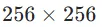 Or a larger local area, used only after moderate scaling.
 Training, thus retaining more local details in low-resolution pre-training.
By mid-season training, the pixel budget had risen to about $500,000. The training continued along the image self-conditioning and overlapping, and began to adopt more width and height than the barrel. The model first adapted to higher resolution with different frames, then switched to text conditions, dividing the resolution adaptation and condition model conversion into two phases, making the transition more smooth.
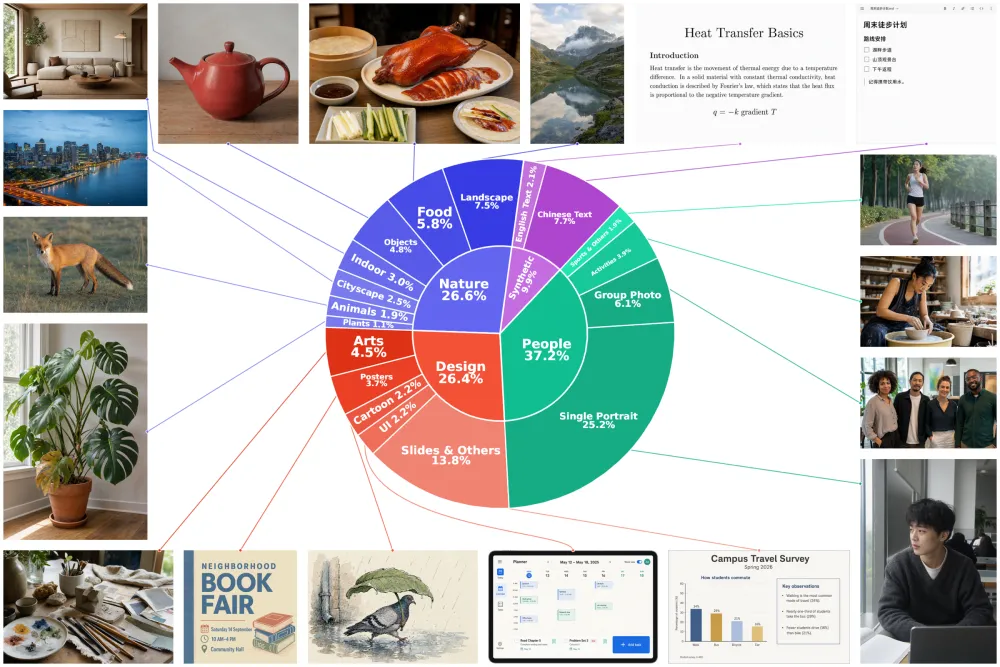
SFT overweight data distribution estimates given in the technical report. Training content covers nature, design, personality and a small amount of synthetic data; image pre-training and mid-term training use only real images.
This path of blurred vision prioritization gradually demonstrates the advantages of real images as the training progresses. The report states that a formula based on real images can continuously improve the production of a sense of reality and exhibit higher long-term capability limits. The SFT stage has therefore always made real images the absolute majority, while in the later stages it tends to add text-dense images and human data.
From a statistical perspective, the 220 million samples reported are the cumulative sample processing of each stage of the image-generating pipeline; the CoT SFT, which understands the spine, uses independent quality statistics.
How can a model be created and edited at the same time?
The model subject of LLaDA-Image can be divided into three parts: the dLLM visual language model responsible for understanding the conditions, the light interface for connecting understanding and generating spaces, and the single-stream DiT that actually generates images.
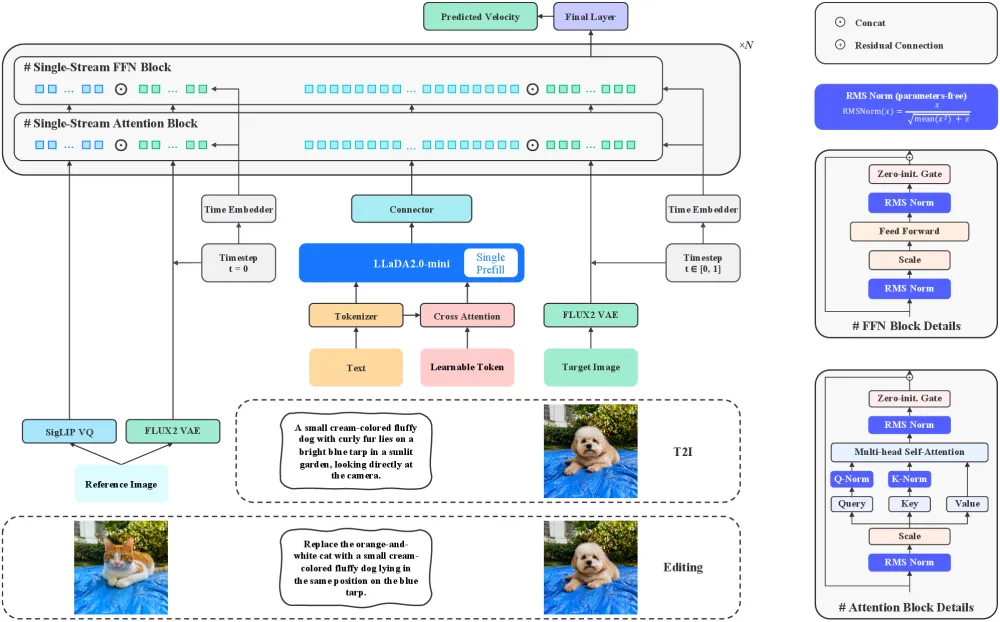
LLaDA-Image architecture. Text-based RQA, LLaDA 2.0-mini and Connector enter single-stream DiT; editing tasks additionally receive semantic characteristics of reference images and a clean VAE sub-variable.
First understand and then give it to DiT.
The comprehension module is based on the LLaDA 2.0-mini spreadsheet language model. It not only embeds prompts into a set of static text, but acts as a unified multi-modal semantic interface, processing text, training visual conditions, and structured reasoning information.
Language models and image generators are geared towards semantic understanding and visual noise, both of which require a dedicated interface to complete representational conversion.
RQA puts in a set of learning queries prior to understanding the model to extract and generate the most relevant information from the input through cross-attention;
Transformer Connector then projects the hidden state of the model to the condition space required by DiT to understand it.
The visual generation part is a set of pure single-stream DiT. Text condition tokens, time information and image tokens enter the same set of Transformer modules, interacting directly at each layer, and ultimately predicting the Flow Matching (flow matching) speed field.
When editing, reference images do not pass through language models
Producers and editors share the same understanding of the interface with the mainstream DiT, but the image reference is a separate channel.
The edit instructions are still processed by the RQAdLLMConnector path; the reference diagram completely bypasses the language model while providing two types of complementary information:
SigLIP-VQ features provide high-level semantic information to help the model identify what a reference string is;
Clean FLUX2-VAE sub-variables provide pixel-level evidence directly to help preserve the original identity, structure, texture and background.
These two types of signals complement each other: high-level semantics help models understand editing objects and instructions, and pixel conditions enhance identity, structure, and texture consistency. The two reference signals enter the same DiT together, allowing a set of weights to simultaneously support open generation and editing by reference.
During the editing training phase, the team used a 1:1 mix of T2I and I2I data. The text sample here is equivalent to the ability to play back the mouse, continuously consolidating the model's open generation, graphics and text alignment capabilities, allowing the generation and editing to evolve in collaboration on a shared mainframe.
The following are examples of four groups of editors in the report:
Directions for editing | Input of images | LLADA-Image output |
Transformed into a Ghibli animation style |  |  |
Keep / Fresh to keep / Fresh to keep |  | 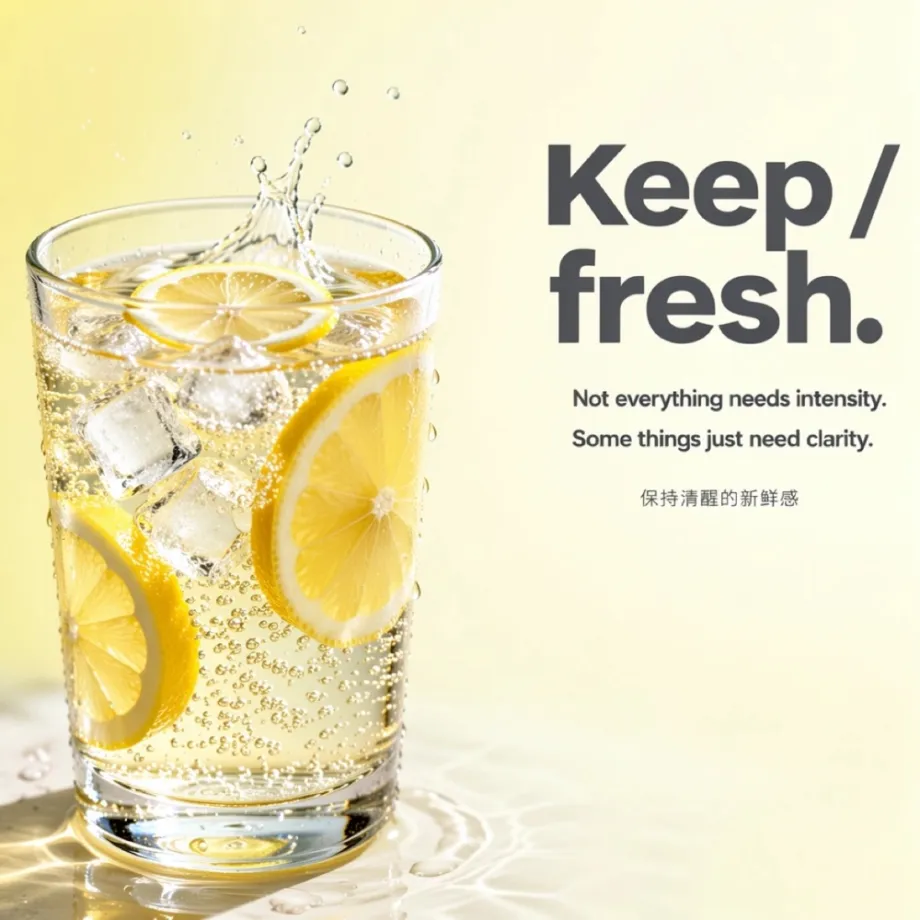 |
Remove the red bags on women |  | 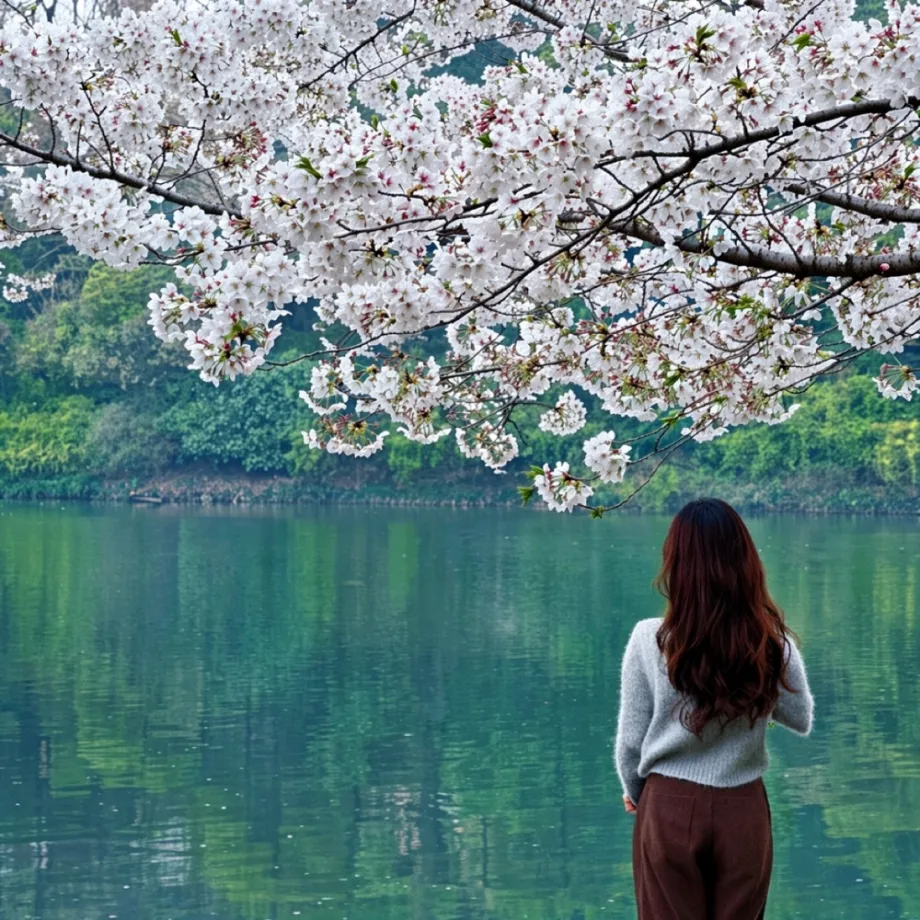 |
Color: Girl's fleshy skin, black hair, brown bear |  |  |
LLaDA-Image is an example of an image editing instruction.
Training Stability: Why take the learning parameters out of Norm?
For a 6B parameter DiT that requires long-range training, stable network scaling and gradient norm are the basis for continuous expansion of the entire project.
In long-range training monitoring, the team found that the learning parameters in LayerNorm or conventional RMSNorm continued to change characteristic scales; this change, after accumulation in deep networks and long training cycles, could manifest as scaling fluctuations, resulting in a rapid rise in the gradient norm later on.
Based on this finding, the LLaDA-Image will be classified as a unified layer in the form of unimitated radiation parameters, using RMSNorm, a non-learning parameter that is unified in the entire set of DiTs. This change looks small but is directed to the gradually accumulated scale drift in long-distance training: it unifies the characteristics according to the homogeneity and maintains the scale consistency in a fixed form.
For optimizers, the team uses Muon at all stages of generation training to position it as an engineering choice in the training system; unparametrically layered design is directly responsible for improving the stability of scaling and the later gradient norm.
The training plan was similarly progressive: image pre-training, multi-width-to-mid-level training, text alignment, resolution migration, orientation enhancement, and then generating and editing co-training. After entering SFT, the team also tilted the time-step samples to the high-noise area, as this determined the overall structure of the early noise, and errors were more likely to accumulate along subsequent trajectories.
When closing, the team combines the weights of the adjacent training states to smooth out the indicator fluctuations that make up the different mini-batch data. These progressive training, time-sampling and checkpoint processing together make up the entire engineering process; RMSNorm, which has no learning parameters, is specifically designed to improve the stability of scaling and gradient norm in long-distance training.
From 50 steps to 2 steps to 4 steps: the same DiT has two classes of pumps.
The basic version of LLaDA-Image pursued a complete multi-step generation capability, with the technical report listing it as a 50-step sampling. When deployed, the team used TwinFlow to distill it as LLaDA-Image-Turbo and compress the reasoning to 2×4 steps.
TwinFlow is based on distributed matching distillation (DMD). Traditional DMD training usually requires simultaneous:
a frozen real distribution score model;
A fake-score model that tracks students distributed online;
A real generator to deploy.
Traditional DMD maintains a corresponding role for generators and online fake-score estimators, respectively; TwinFlow further considers whether it can do both with a set of shared leads.
TwinFlow can be summarized as two classes of positive-negative generators of the same DiT: real-time generation and negative-time tracking of student distribution. Specifically, indicating generator updates, indicating fake-score updates; the two share main roots; using two output heads, the training alternates between the generator and fake-score branches in a 1:2 ratio.
At the reasoning stage, the system retains only the generating head, the fake-score output head withdraws after completing the training mission, and deployment spending is consistent with the single generating head.
On the Qwen-Image-Bench, the total English and Chinese scores for the base version were 53.53 and 53.38; the 4-step Turbo scores were 50.98 and 50.27 respectively. The same model family thus formed two complementary deployment ratings: the base version focused on overall quality and the Turbo focused on reasoning speed.
What was the end result of the nine percent sample without text?
The technical report uses the Qwen-Image-Bench as the main comprehensive generating benchmark. The benchmark includes 1,000 tiered pronouns, examining image quality, aesthetics, pronoun alignment, real-world authenticity and creative generation, and provides English and Chinese assessments, respectively.
Below is a further comparison of some open-source and closed-source models that are close to scores in the report:
The results of the Qwen-Image-Bench model are partly based on technical reports. Each model uses standard reasoning settings and comparisons with the original pronouns.
The most intuitive reference is to put the open-source and closed-source models in the same list, and the LLaDA-Image total score on two Chinese-English tracks is between GPT Image 1 and Imagen 4.0 Ultra.
In the open-source model listed in the report, LLaDA-Image's total score in English leads the second Z-Image-Turbo by 1.87 points, while Chinese leads by 0.67 points; quality, aesthetics and punctuation align the three, and it is also ranked first in the Chinese-language open-source model.
In terms of text generation, the LLaDA-Image reaches 0.923 and 0.913 respectively in the LongText-Bench English and Chinese sections. In CVTG-2K, which contains multi-text areas such as ads, posters, expressions, and street scenes, the average word accuracy is 0.875, the integration editing distance (NED) is 0.945, and the CLIPScore is 0.818, respectively.
In terms of instructional editing, the LLaDA-Image total score on GEdit-Bench English and Chinese orbits is 7.336 and 7.294 respectively. This set of results demonstrates a set of shared weights for the ability to simultaneously edit text graphics and bilingual images, reflecting the value of the Unified Model Route.
The report also gives two traditional diagnostic benchmarks: GenEval's total score of 0.85, DPG-Bench's total score of 87.48. GenEval's single-object and binary-object scores of 1.00 and 0.98, respectively, and attribute-bound scores of 0.84; counting capacity is currently 0.53, which is a direction for further improvement.
What exactly is open this time?
The results of the list provide a remarkable result, and the full open training chain further expands the research value of this work. LLaDA-Image connects the path from how silicon images become visual precursors to how silicon models are compressed to 2×4 steps.
Specifically, the opening covers five key areas:
Model Weights: Provides FP8 weights for the basic version, Turbo version and the corresponding two, covering different use scenarios such as 50-step quality priority, 2-step 4-step low-step reasoning and low-precision deployment;
Training and reasoning code: the core implementation of open model training and reasoning;
Data building with pure image training formulas: including image screening, pre-training with approximately multi-width, high-to-medium training;
Throughout its lifetime, it has a variety of editing formulas, including text alignment, high-resolution migration, and T2I, I2I, combined 1:1 mixed training.
TwinFlow distillation scheme: Open path from the 50-step base model to the 2-step 4-step Turbo.
The 6B parameters here correspond to the core DiT; the complete system also includes the frozen LLaDA 2.0-mini understanding of the backbone, visual encoders, VAE, RQA, and Connector. The module boundaries and the formula for each stage are given together, allowing the researcher to observe how the entire system synchronizes and to reproduce the pure image pre-training, unified editing, or less-step distillation modules according to their needs.
The quality of the open-source SOTA kit is equally clear: it refers to the LLaDA-Image model and standard evaluation setup in the technical report, achieving Qwen-Image-Bench open-source model 1 in English and Chinese. At the same time, the same set of weights also covers bilingual text rendering and instructional image editing, forming a complete verification of the ability from integrated generation, word processing to editing.
The report also gave the following direction: to continue to expand world knowledge, improve the stability of long-text and multi-regional editing, and promote native 2K production. For the community, this open framework also leaves a clear interface for further exploration.
SGLang Day-0 supports LLaDA-Image reasoning
At the time of the LLaDA-Image open source, InclusionAI and the SGLang community collaborated on the Day-0 logical adaptation. The multi-component logical link for the model was completed, with the two parties completing small-step sampling, sequential parallel and FP8 logical adaptations. Based on SGLang Diffusion, users can deploy Base、Turbo and the corresponding FP8 versions of the same logical framework, support text and image editing, and provide services through compatible OpenAI Images API interfaces.
What is the meaning of this verse?
The core route of LLaDA-Image can be compressed into eight words: learn to draw and learn to listen. Pure images undertake large-scale visual advance learning, images complete language alignment centrally; generation, editing and rapid deployment continue into the same set of systems.
Model weighting, training code synchronization with detailed formulas, allowing this 6B DiT to start with images, go through language alignment and unified editing, and ultimately end up with 2×4 deployments as a technological pathway to research and further advancement.
When graphics are no longer pre-trained entrance tickets, pure images become the protagonist of pre-training by waiting for the data to be added to the text.