In the past decade, credit card fees have gone up and down like this: suitcases, video memberships, repayments, airport guesthouses...
But in June this year, the recruitment of the Transportation Engineer credit card did little else: the new HUAWEI brand was not a life benefit, but the Token call quota for the MiniMax platform, up to $1.8 billion per month, capable of running document processing, image generation, audio video production, and even deployment of smartphones. The card has been called China's first AI-powered credit card kit, and has led to a wave of attempts to extend credit card rights from traditional life benefits to AI life-generating tools.
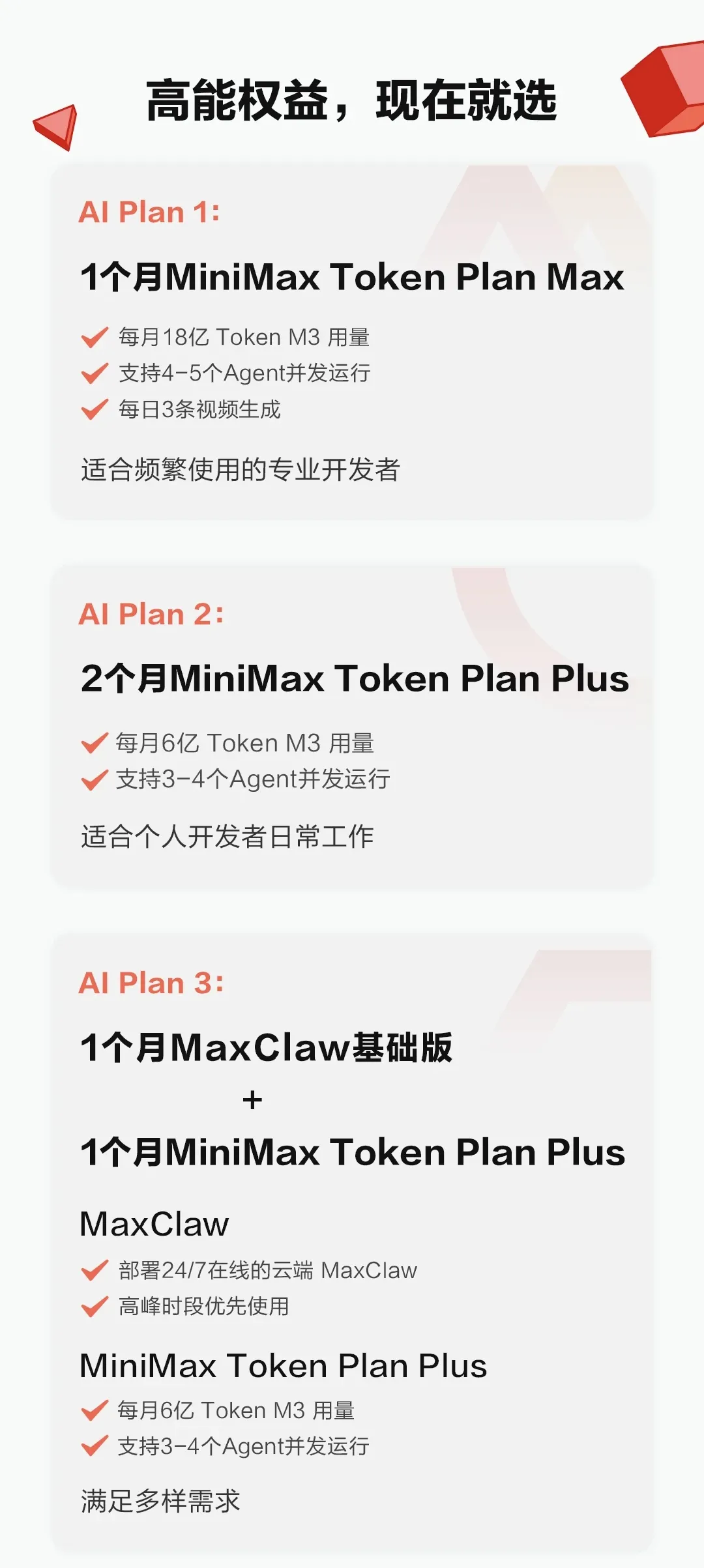
After the news came out, the industry reacted quickly. According to public information, at least five commercial banks launched AI debit cards or AI credit cards in succession over the next two months, with the majority of the benefits revolving around Token packages or AI members. More noteworthy is the emergence in August of the leveraged Token loans. Banks began to put the amount of Token consumed by enterprises and the computational business data into the crediting model, which means that AI is not only beginning to appear in the bank card rights model, but is also becoming a new variable for enterprises to use AI itself, as well as for financial institutions to evaluate business.
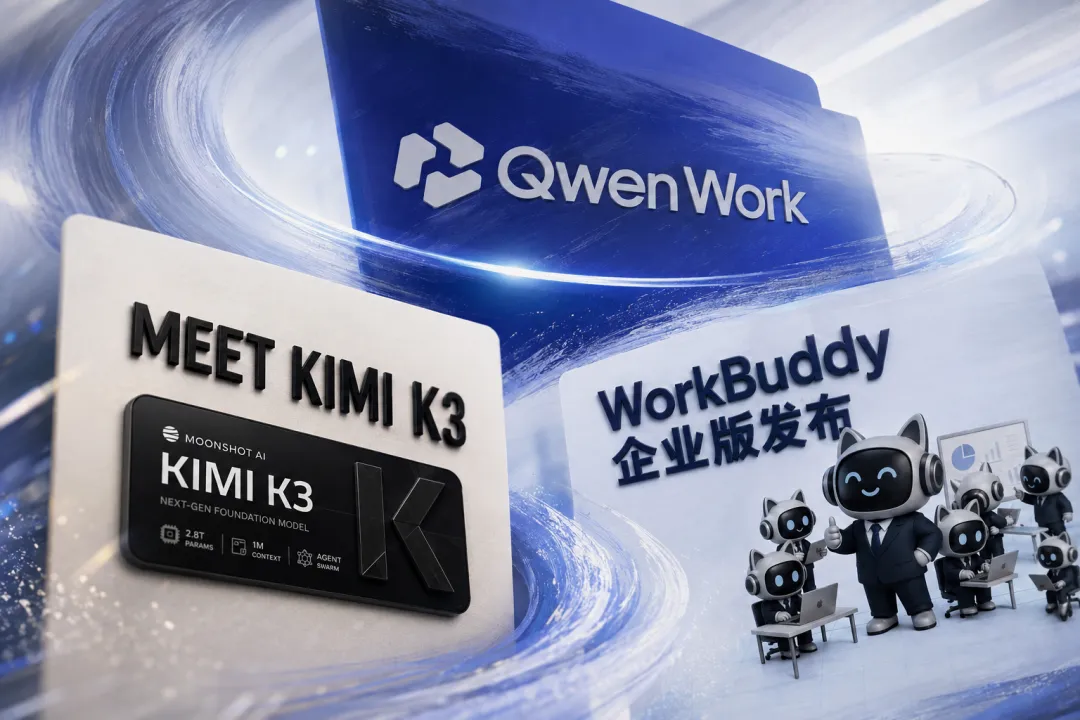
There is a more direct context behind these changes on the banking side: AI tools are entering more and more deeply into the real workflow. Tencent introduced the enterprise version of WorkBuddy and Agent Suite, Kimi launched K3, which can handle programming and knowledge work in parallel, and Ali released QwenWork, which opens the desktop to the cloud. AI is no longer just a toy in the chat window, but has begun to really intervene in document collaboration, data analysis and team management.
It is in this context that the recruitment has recently added two things to the cart: the WorkBuddy 2000 Credits voucher and the Kimi Go membership monthly card. Together with the original MiniMax rights, they basically cover documentation, forms, PPT, data analysis, multiform generating, programming calls for these AI office scenarios.
Putting this whole series together, credit card recruitment isn't just about AI's advantages. The idea behind it may also provide an insight into the transformation of the credit card industry: where will credit cards go when AI starts to change the way people use tools, access services and even complete transactions?
The first step is to change the course of rights and interests.
From recycling to supplying productivity
Since its inception, based on its basic functions of payment and credit, credit card rights have always revolved around consumer needs: from grocery shopping, travel and entertainment, to gaming hobbies, and the zodiac, covering as many consumer scenarios and populations as possible.
With AI penetrating all sectors, disrupting existing production models, the rapidly growing demand for computing tokens, big models, APIs, call limits and smart office tools for AI practitioners and the digital office community, but the relatively limited duration of the financial services it supports, has also become a new platform for innovation in the credit card industry.
In June this year, Advertising Bank Transmission Engineer Credit Card exclusive AI rights officially went online, initially incorporating Token rights into the new offering, becoming the first AI credit card in the country. New users can access the MiniMax platform AI service package for the first time, with up to 1.8 billion M3 Token calls per month, for multi-modal model calls for document processing, image generation, audio video production, and mainstream AI workplaces such as the deployment of the MaxClaw smartphone.
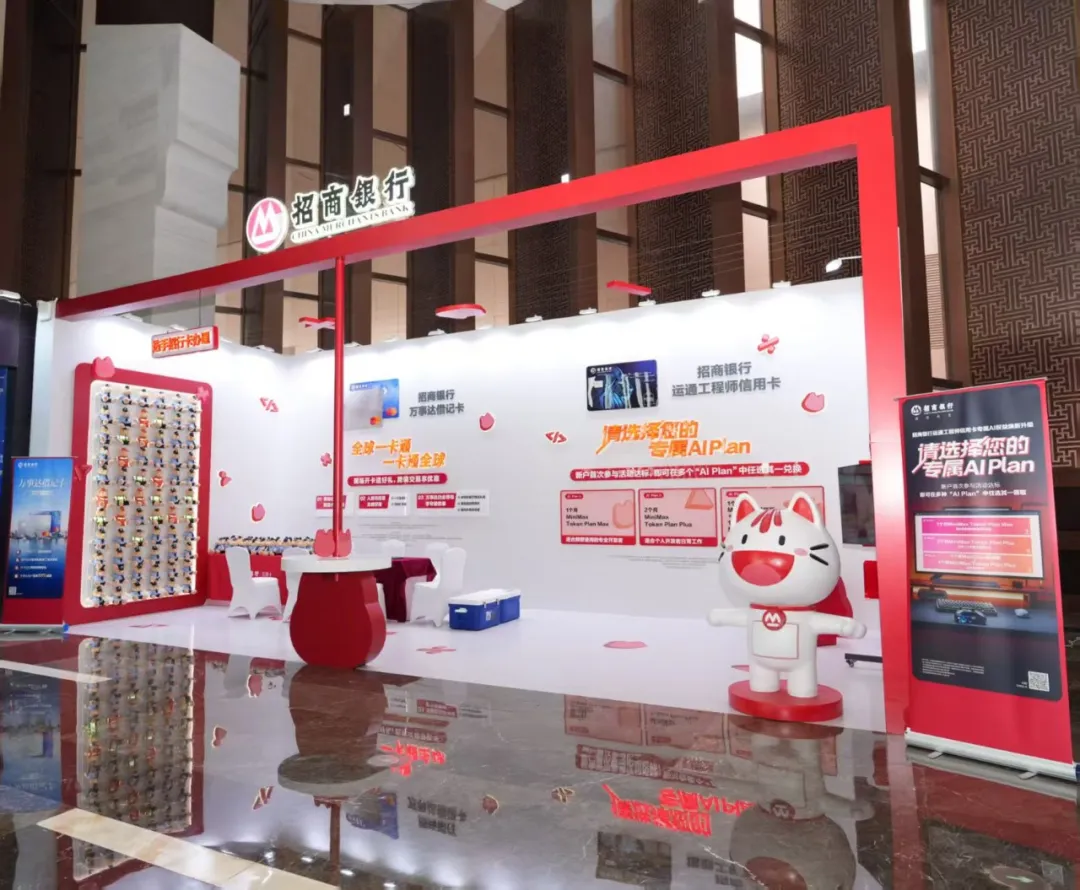
This means that credit card admissions will move the chain of rights from the consumer end to the production end, opening up the supply side, increasing production efficiency, creating added value, activating the demand side, enriching consumer choice, and driving consumption scale. With Token rights, credit card admissions are aimed not only at the rapidly expanding technical community but also at the long-term trend of increasing popularity of digital production elements as AI tools penetrate all industries.
Following the launch of the MiniMax platform AI Plan in June, the company introduced the WorkBuddy 2000 Credits voucher and the Kimi Go membership monthly card. The two benefits complemented the original MiniMax Token and MaxClaw rights, further covering in-depth research, document and formwork processing, PPT generation, data analysis, multi-modal content generation, programming calls and cloud deployment.
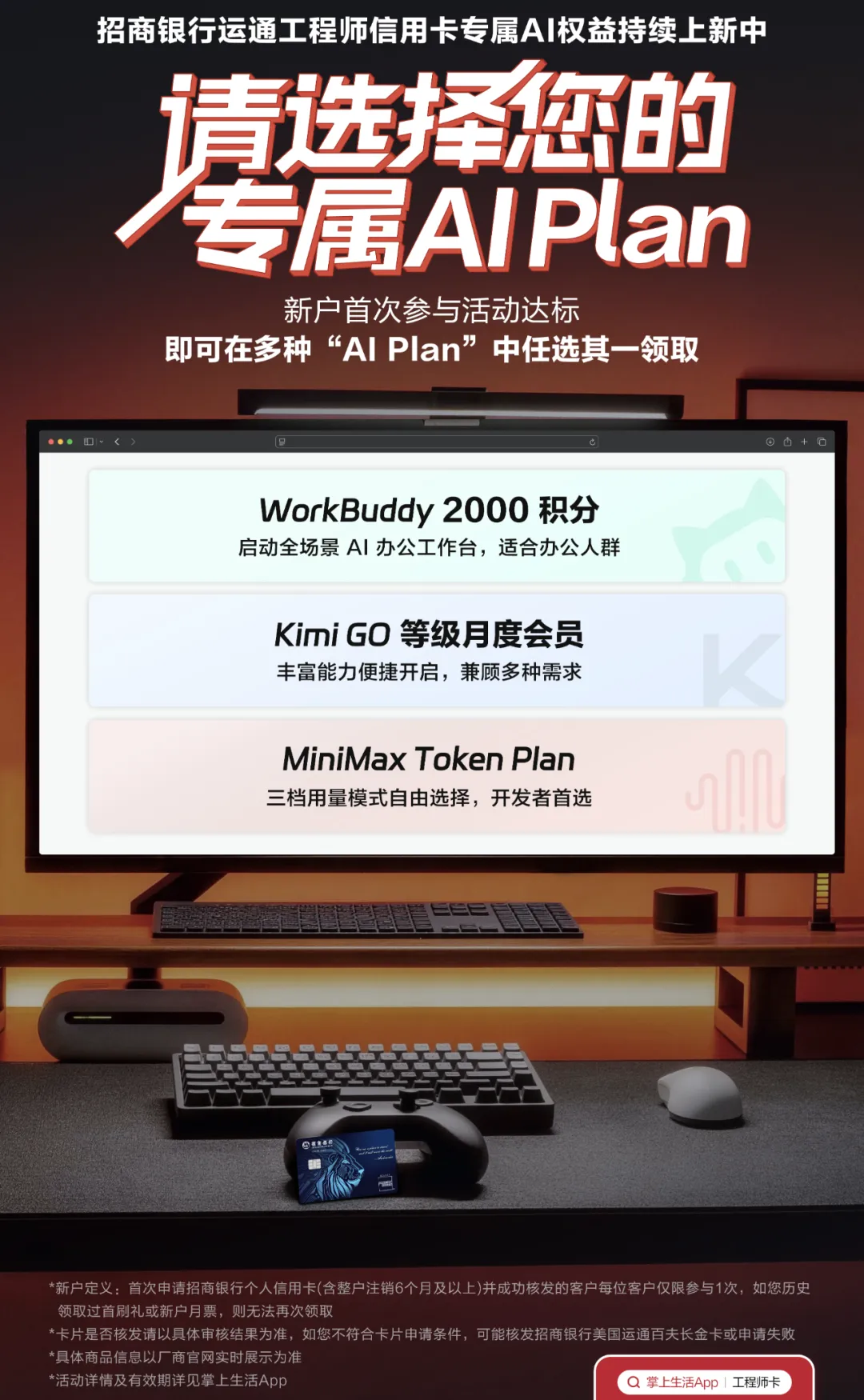
The key to this upgrade is not only an increase in the number of rights, but also an expansion of the supply logic: from professional developers with high demand for computing to ordinary workers who want to be more efficient with AI; from a single platform Token package to cover different tasks; from a matrix of AI tools that use different thresholds.
From the launch of Token rights in June to the introduction of Kimi Go, WorkBuddy into the matrix in August, credit card recruitment has demonstrated this continuous iterative capability. It has provided the industry with a new idea: credit cards are no longer limited to consumer payment tools, but can be a support vehicle for digital productivity and expand new user value beyond traditional businesses.
The second step: extending the service.
Moving from productivity tools to intent interaction
The deeper change behind the AI rights matrix is that users don't think about processes and methods, but express their goals directly, and that AI understands intentions, dismantles and executes tasks. When this method becomes mature in situations such as office, programming, and more, AI is also used by AI to provide tools and to take on tasks.
Changes in the way tasks are handled have further rewritten human-to-machine interaction inputs. Looking back at the golden decade of the mobile Internet, industry traffic access logical based graphical interaction interfaces built, the essence of the traffic loop and the scenarios competing, the consumption scene is at the core of the competition of credit card institutions.
In the age of AI, interaction is shifting from the graphical interface of the GUI, where people are looking for functionality, to the interface of the LUI language, where people express intentions, AI scheduling services. The user only needs to make a request, and intelligent assistants can collaborate to complete information acquisition, program comparison and task execution.

When this interaction extends from the productivity scene to the live consumption, the distance from the user's nearest core touchpoint moves from the consumer scene to the real demand. Invitational credit cards on the one hand upgrade the productivity of the AI with engineer card assisted work, on the other hand synchronized layout mobile phone terminal system AI ecosystem.
The next generation of AI service ecosystems is still evolving rapidly, with the final input likely to come from super-Apps, edge systems, or vertically intelligent agents.
Step three: Wind control building the foundation.
Security paid for by AI with a certainty architecture
As AI moves from assistive tools to autonomously programmable, executable, and intelligent agents, service efficiency increases dramatically, while also posing unavoidable security risks to the financial industry.
In April 2026, a business executive in Guangzhou discovered that no valid warranty had been generated the following day after he had completed the payment by means of an AI assistant consulting insurance products.
The problem is not uncommon in AI applications. When intelligent agents replace humans to complete payment operations, transaction risk increases simultaneously. Securing transaction security, system stability, is the survival basis of the decades-long development of the credit card industry, no matter how technologically mutated, the bottom line of security is unshakable. This derives from the core challenge of the credit card industry in the age of AI: not in making AI perform consumer operations efficiently, but in building systems to avoid the risk of financial mismanagement brought about by AI decisions.
The service entities of the past payment systems are clearly natural people, and the operation, confirmation, and authorization are attributed to each other; in the future, a large number of consumer orders will be executed by intelligent agents, increasing service efficiency and increasingly blurring the boundaries of authorization and security. The big models themselves have probability output characteristics, but the payment system must remain certain. The credit card industry needs to rely on the certainty of its own technical architecture and wind control model to combat the uncertainty of AI intelligent body autonomous decision-making.
In order to achieve this, credit cards are invited to start upgrading their payment capabilities in advance to adapt to the era of AI, following a three-tiered architecture: A.I. intelligence is only responsible for interpreting user needs, planning service paths, not touching the entire financial chain; banking control system assumes identity verification, transaction verification, risk identification functions; and ultimately, the fund clearing system only executes compliance instructions that have been heavily tested to keep the entire process independent, stable, and controllable.
The layered architecture follows the core principle: Agents can continuously optimize their intelligence capabilities, but the financing system must be kept strictly controllable. Only in this way can each transaction be made possible by a traceable, authoritative, and clearly accountable entity.
At the same time, the introduction of the long-delayed smart wind control system for credit cards has become the security backbone of the Agent era. Its self-developed, anti-fraud interaction system, focused on differentiating client types, outputs and progressive intelligent interaction interventions covering all nodes of business operations, enhanced customer wake-up effectiveness and the ability to save money, has saved hundreds of millions of dollars in cumulative losses for customers in telecommunications fraud.
In terms of channel layout, product innovation solves the question of how to integrate with the Agent era, while underlying wind control infrastructure answers a more central proposition: how to ensure that users have the right to capital initiative when AI replaces decision-making and consumption. Long-term competition in the financial industry is never dependent on the degree of radicalisation of AI capabilities, but on whether a reliable system can be built between intelligent experience and financial security.
The end.
Since the adoption of the first international standard binary credit card in 2002 and the adoption of a wave of global consumption, AI-powered multi-platform connectivity in the era of digital productivity, the consumer landscape is changing, and the way users interact is changing, but in retrospect, several key transformations in invoicing credit cards have stepped on the nodes of changing trends.
This exploration also provides a benchmark landing pattern for the industry. For the credit card industry, the layout of AI does not stop at a single product or a one-time benefit, but at the same time completes systematic upgrades to the channels, products, and underlying technologies. Relying on AI tools to tap into new user needs, build a secure and reliable smart payment system, and release the increased consumption of digital productivity may be the future direction for the credit card industry to explore in the long term.
(Note: New customer definition: first-time applicant for a commercial bank's personal credit card (including a complete cancellation of the application after 6 months) and successful issuance of a receipt; new customers first browse the details of the rules and validity details of the live APP.)