
It's the first time in the history of the world.
Recently, OpenAI CEO Ottman was quoted as saying:
There is no need to go to university for four years, and two years have reached the limit of income.
And the "Golden Internship" of the once disgusting elite looks incredibly bad today.

This is by no means a coming-of-age fairy tale, but a cruel fact based on underlying logic.
Today, AI has balanced productivity, and the elite promotion model of the traditional "famous four-year+ top internship+Wall Street/Big Factory VP" has completely collapsed.
Because the logic of how the world works has changed.
In the past, you had to prove to a huge system that you were "compliant" and "mature" to get a ticket.
Today, you only need one person, a room, and enough tokens to build your empire directly in the cyberspace.
Traditional qualifications and titles are losing their gold content.
The Marginal Effects of College and the Out-of-School Movement in AIOttman spoke about this through his own personal experience.
In 2005, after two years at Stanford, he dropped out of school to start Loopt, and later joined the first Y Combinator projects, eventually becoming OpenAI's mastermind.
In 2026, he told an internship group of Silicon Valley tech giants:
It's been a good two years. Continue reading and the profits will decrease significantly.
This is because, from the point of view of knowledge and mental socialization,Four-year universities have a serious marginal effect on buying and selling。
The first two years of college were a golden age.
You learn to leave your parents to live independently, build social connections in one of the most dynamic networks with hormones, the highest density of your IQ, and work on a number of projects.
And the next two years are a waste of time.
The teaching content began to fall into "extremely severe marginal effect reduction". The traditional four-year curriculum, which uses the following two years of rigorous curriculum, turns the destructive beast into a compliance tool that meets the standard torque specifications of large enterprises.
"As the world evolves, universities shouldn't have lasted that long", said Ottman.
The big model is changing every week, and the college curriculum can only be updated every five years. When you spend the next two years of your golden life in exchange for a red-collar diploma, you give away more choice.
That's why a new generation of Silicon Valley AI leaders are showing a strong, off-campus "focus".
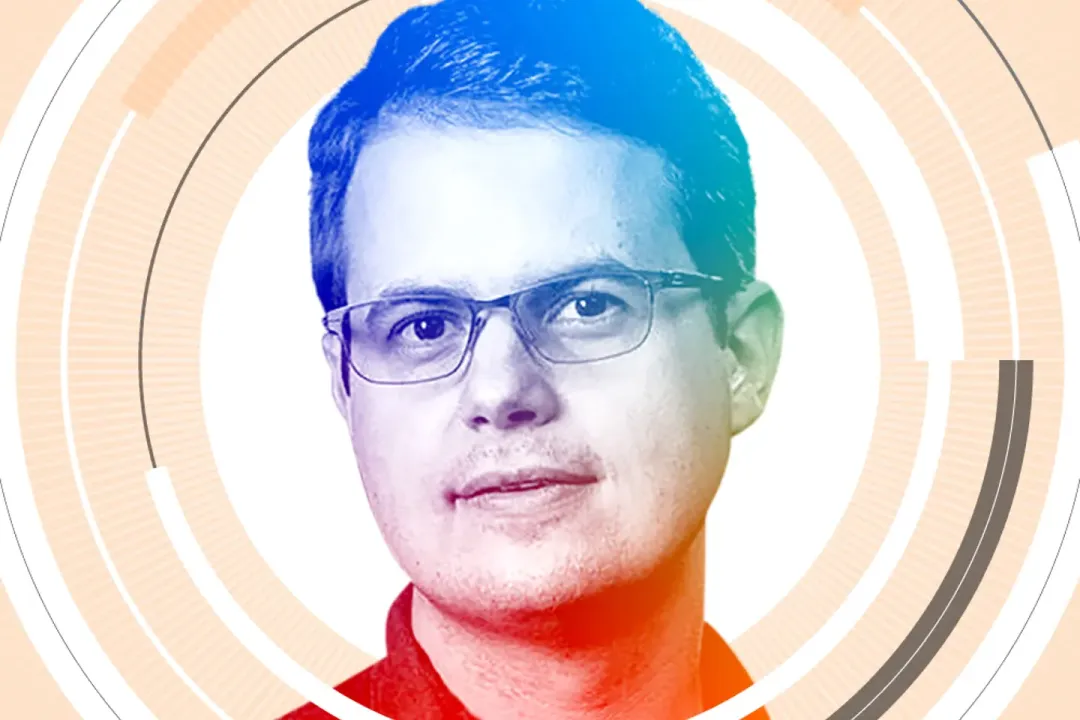
Co-founder of Anthropic, founder of AI stability and explainabilityChris OlahThat year, he chose to leave the campus to join the Thiel Fellowship to directly analyze the very bottom of the neural network.
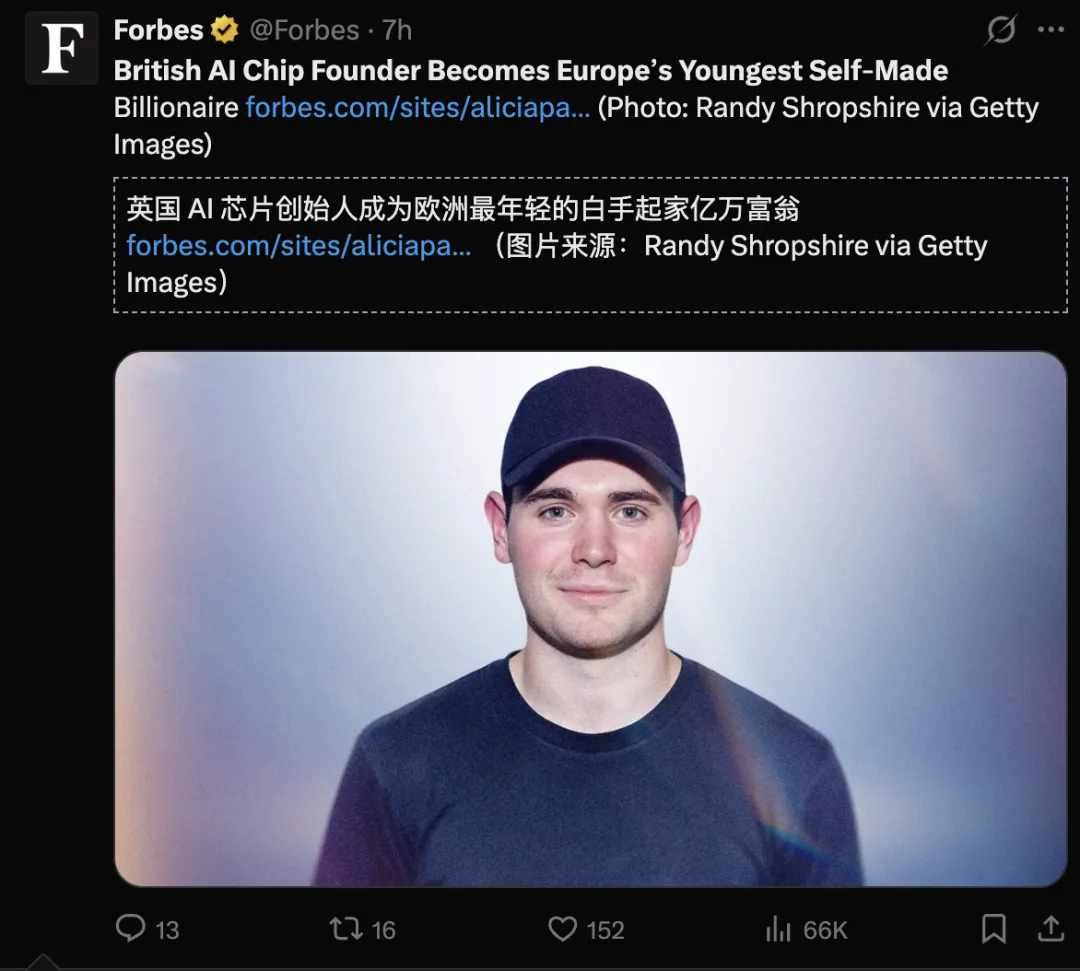
In the field of computational semiconductors, Olix, the founder of the chip company that challenges Ingrid's dominanceJames DacombeAt the age of 17, he dropped out of business school.
Today, the 25-year-old is the youngest white billionaire in Europe, with a net worth of up to $3.3 billion, as he handles the brain interface and AI chips of two frontrunners.
For these fanatical minds, university teaching is like chasing the speed of light in a bull carriage.
At the application level, the phenomenon of being forced out of school by the gravity of the times has become the norm:
Meta's AI chief Alexander Wang, 19, dropped out of MIT and founded Scale AI, now an AI data services giant, becoming the world's youngest self-made billionaire at age 25.
Rudy Arora and Sarthak Dhawan are young entrepreneurs who started a $13 million startup at the age of 21.
It was the right choice to drop out of college, and what I regret is that we dropped out too late.
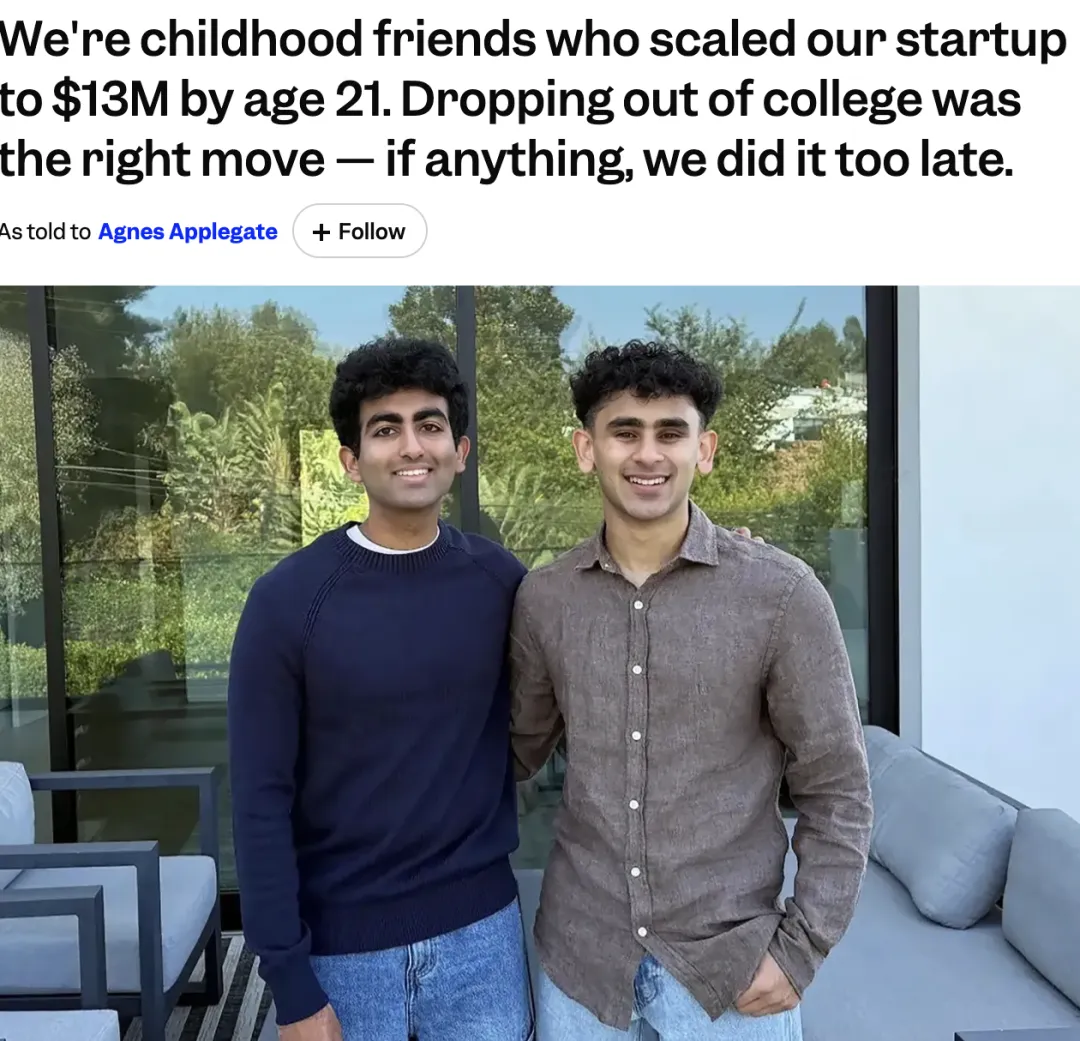
When they decided to drop out, they said: "Keeping in school pretending to be a part-time student has become an unwise decision".
American universities are increasingly losing their monopoly on the American Dream.
Of course, the name of the school is aware of this and plays a word game.
Ottman recalled that the smartest branding that Stanford University has ever done was to repackage drop-outs into new products."Stopping out"Students are allowed to leave school unconditionally, no one will ask more than one question in eight years, and they can return to school at any time.
"Outsourcing an old dog".In addition to reflecting on the university system, Ottman also shares a highly disruptive workplace law:
Young entrepreneurs spend too much effort to get others to "take themselves seriously" and often do nothing.
At the age of 19, Ottman had just dropped out of Stanford to start Loopt.
He has to negotiate with the big, historically conservative companies to reach the business-level sales of location services.
At that time, smartphones and mobile internet were not yet popular.
The big companies look at this hairless teenager on his face like they're looking at a lost child.
"I spent too much energy trying to make myself look like an adult, trying to make them take me seriously, but I found that it didn't work at all", Ottman said.
After a number of failed disguises, he decided not to prove himself in traditional rules.He was hired directly by a 50-year-old middle-aged man.
He had this well-dressed, emotionally serious 50-year-old professional manager with a public briefcase knock on the door of conservative big companies for him.
Othman, who truly controls the core algorithms, product strategies, and business dominance, hides behind the scenes as a "greedy listener".

"The desire to be taken seriously" is the first strain on young people.
Many young people, after entering society, spend too much effort in imitating the clothes of adults, in practicing the "sweet" black reporting, and in the workplace with caution, only a little knowledge.
They think it's "growth", but it's actually just a test of conformity.
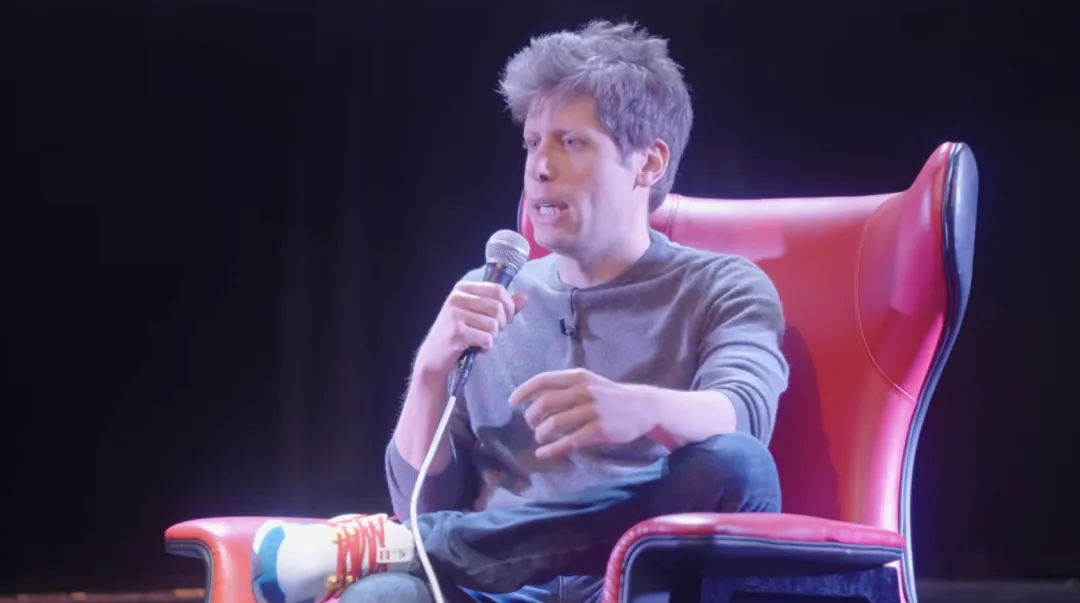
"You can go a long way if you're really going to do things -- by doing stuff", Ottman said, leaning on the chair.
If some old corner of the world is still forcing you to trade resources with "social capital" and "false qualifications", the smartest way is not to integrate it, to internalize it, but to do it like Ottoman:It's just a matter of getting it out of the box.。
At the lowest possible cost, hire an agent that complies with the rules and put all your mind to the development and conversion of core products.
When computing replaces human resources, the myth of big business is dyingWhy did Ottman think "don't try to follow the rules"?
This is because the structure of productivity has been completely disrupted.
In the traditional industrial era and the early Internet era, entrepreneurship was a battle of wits and capital. You needed to rent an office building, hire front-end, back-end, legal, financial, HR, and build a huge sales team.
The size of a company is the highest indicator of an entrepreneur's strength. Under that paradigm, a large company's hierarchy is a barrier to entry because it monopolizes the ability to organize and collaborate.
But today, with big models and automated intelligences sweeping through everything,"Headcount" is accelerating its evolution from assets to liabilities.。
On the stage of Internapalooza, Ottman pointed out in a bloody tone:
You can even stand alone in a room and build a whole startup with a lot of AI tokens and almost nothing else. And you don't need anyone to take you seriously to do that.
The essence of the big model is "extreme compression of organizational costs". You no longer have to convince others to hold long, inefficient cross-sectoral meetings, and all your instructions can be converted into executable code or automated workflows in a matter of seconds through frictionless computing.
A person who has mastered the cutting-edge model prompts, knows how to call on APIs and accumulates the maximum productivity of a 20-year-old with enough tokens is equivalent to a medium-sized software company with 30 top developers twenty years ago.
In the past, young people had to be attached to giant institutions, through the approval of layers, in order to mobilize even a little bit of social resources.
And the most critical gap between ordinary people and truly great entrepreneurs often occurs after the results of these experiments.It's called "Connecting Nodes". 。
"The mistake that people really make is that it's easy to make mistakes", he said.
When you've figured out what you're most confident about, where you're most confident about, you're retreating.
You have to start doing that painful thing right now.It's like removing a tumor, coldly, painfully pulling yourself out of everything else, cutting off the branching tasks that make you feel safe, and then putting all your money on it.

This is an extremely rare mental ability.
Most people are deceived by false prospects and possibilities when faced with multiple setbacks.
They could not afford an internship at a large company, could not afford a startup project, and could not afford a graduation certificate from Stanford.
They try to score in all areas and end up spending the rest of their lives on a flat average.
A true ambitious man is more like a hungry wolf looking for prey in the wilderness than anyone else.
But once they had locked up their prey, they had to show extreme resilience, pull out the sword to monopolise all retreats, and go forth with all their might.