
It's the first time in the history of the world.
Developer Karl Kahn spent $200 a month on Claude's most expensive personal plan, Max 20x, and rushed to "20 times the usage of the Pro Plan".
In April, he moved his main work to Claude Code, soon discovering that a five-hour programming session consumed 15% of the week's quota.
On June 14, he filed a class action lawsuit in the federal district court for the Northern District of California claiming that only about six to eight times the actual amount available.

He is based on an email that Anthropic itself sent to subscribers in July 2025, listing weekly Claude Code usage references for each category of programs.
Where's 20 times?Claude's payment plan is simultaneously limited to two levels: the five-hour rolling window limits the maximum consumption for single sessions, and the total amount per week limits the total for seven days.
There are two ways of limiting your independence, which gets you first.
Anthropic shared the weekly figures with TechCrunch:
Pro: 40 to 80 hours Sonnet 4;
Max 5x (($100/month) 140 to 280 hours Sonnet 4 plus 15 to 35 hours Opus 4;
Max 20x (($200/month) 240 to 480 hours Sonnet 4 plus 24 to 40 hours Opus 4.
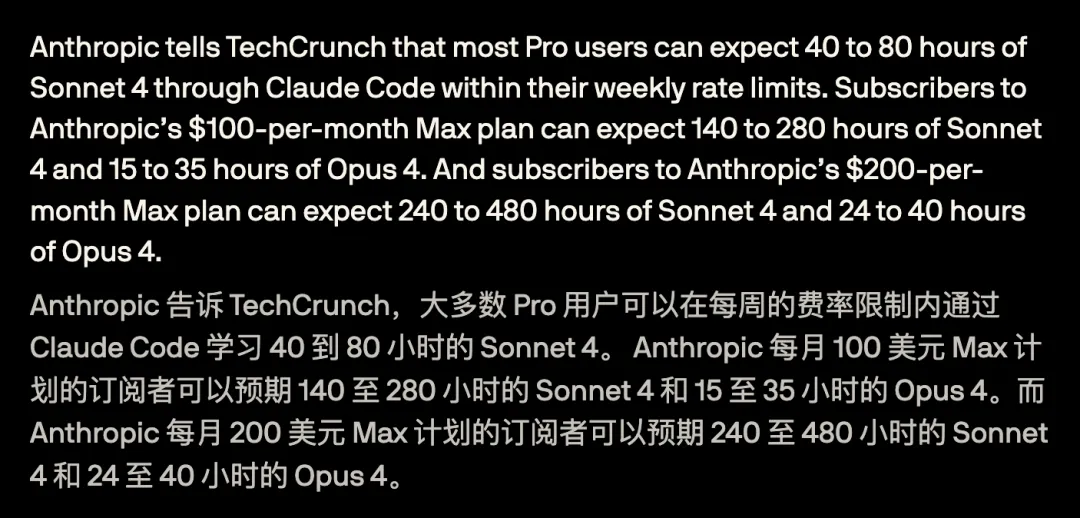
Just look at the Sonnet 4 upper limit, Pro 80 hours, Max 20x 480 hours, Max 20x is actually only 6 times the Pro.
Kahn signed up with Pro in June last year, raised Max 5x in January and Max 20x in April, raised the repeat impact limit after the upgrade, and sometimes had to pay extra money to buy it.
Anthropic has so far not responded publicly, nor has the court made a substantive ruling.
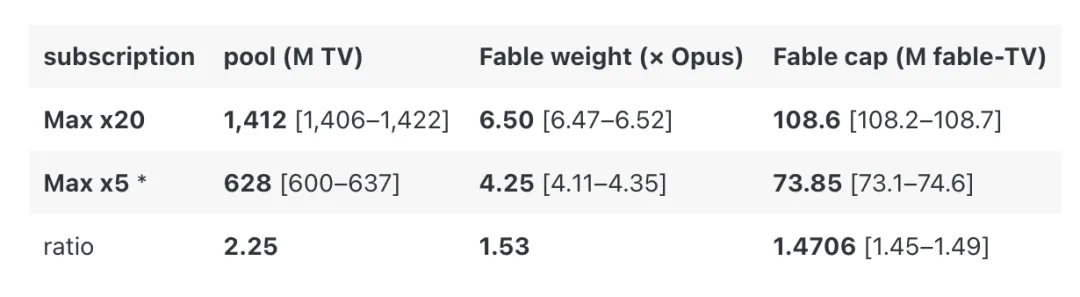
Codex down, up and downLast week, a Reddit post in depth examined the demolition of Claude's pricing, pointing out that 20x was created in just that layer of the 5-hour window, and that Max 20x was only about twice as much as Max 5x at the weekly quota level.
Tibo Sottiaux, head of OpenAI Codex, responded directly: The Pro 20x of OpenAI corresponds to 20 times the weekly usage limit, the two Pro classes do not have a five-hour window, and the Pro 20x is 20 times the accuracy of the Plus.
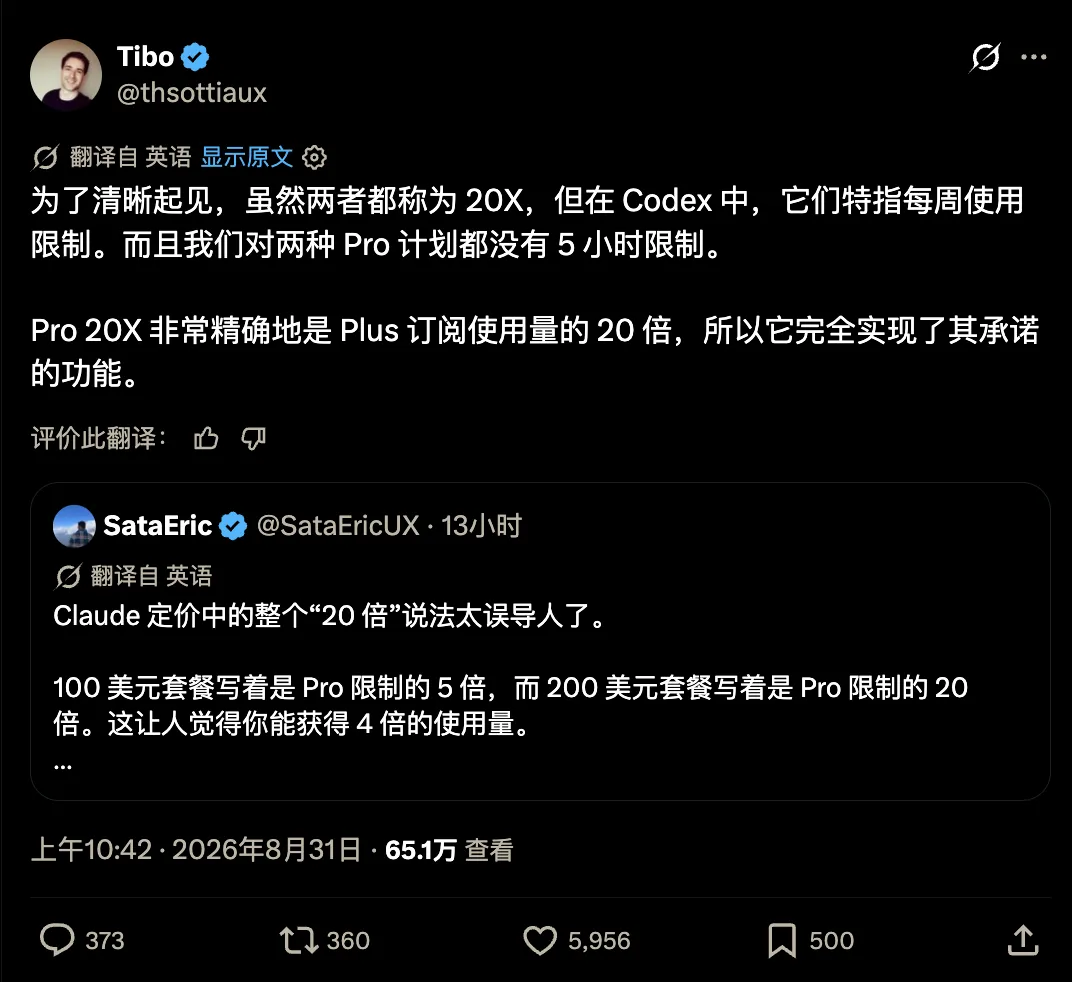
The difference is that Anthropic puts a 20-fold mark on the 5-hour window, whereas the bottlenecks users touch daily are often weekly; OpenAI puts a direct mark on weekly.
Beyond the marginal frequencyToken Waste Is More SeriousAnthropic never discloses the absolute number of tokens for each program, only the relative frequency.
What users see in the product is a percentage progression bar, they don't know how much Token is consumed per conversation, and there's no way to verify if the multiplier is working.
Deloitte's January analysis addressed this issue: Subscription packaging has almost completely abstracted the details of Token consumption, and consumption efficiency is a black box for users.
There is another problem on top of this black box: the manufacturer's own Bug will also consume user quotas.
In March 2026, Claude Code was involved in a massive accident in which a community search found several bugs at the same time:
- Prompt caching failure caused token consumption to expand 10 to 20 times
- Autocompact is trapped in a dead cycle, burning around 250,000 API calls a day globally.
- Re-processing the context of the whole session while restoring the old session
Some Max 5x users report that the usual eight-hour allowance is now empty for one hour.
Anthropic acknowledges that consumption is much faster than expected, but no compensation plans have been announced.
At the end of August, OpenAI's Codex identified eight similar bugs, the most serious of which was that an uncontrolled mission swallowed 70% of users' weekly allowances.
However, after OpenAI was completed, full quota replacements were made to all paid users, and the causes and remedies for each bug were made public.
What was Anthropic's response to the incident in March?
Users on GitHub have complained: work is done, posts are posted on X, Reddit is scrolling, no response for three days, no blogs, no emails, no status page updates.
The progression bar does not record the historical consumption in detail, during the bugs fell from 100% to 0% and the normal wear and tear looks the same, users can not recover the data.
Consumers cannot be satisfied with even the most basic transparent transactions.