It's the first time in the history of the world.
Yesterday, the big model circle was hot all day.
In the afternoon, the Intel Spectrum went live and open source GLM-5.3-Flash, priced at one-quarter of the price of Opus 4.8.
In the evening, Ali connected to Qwen 3.8-Flash-Next, which was also released as open-source. The price rose to 1 yuan per million token inputs and 3 yuan outputs, a third of DeepSeek-V4-Flash.
This is a picture of your product.
Previously, there were two routes in this line: a more expensive but stronger flagship route, and a cheaper but less affordable route.
But just yesterday, a flagship score stuck in the Flash file, pressing the activation of 100 billion models to 6 billion again.
In turn, the same thing happened. The players who had been relying on low prices for their homes had been struggling for two years with smart enough ceilings.
One year ago, no one was like anyone else, but now they are living as each other.
After all, it's because everyone is starting to think about the same question.
Can a higher intelligence and a higher sexuality exist at the same time?
Yesterday, at MiniMax's semi-annual reporting meeting, Jun Jae gave a different answer.
Minimize the Inference Cost, Maximize the Intelligence.
Minimize the cost of reasoning and maximize the level of intelligence.
Agent Major is coming.Token consumption plummeted by 2000%On the afternoon of the 26th, MiniMax posted a half-year report to the port.
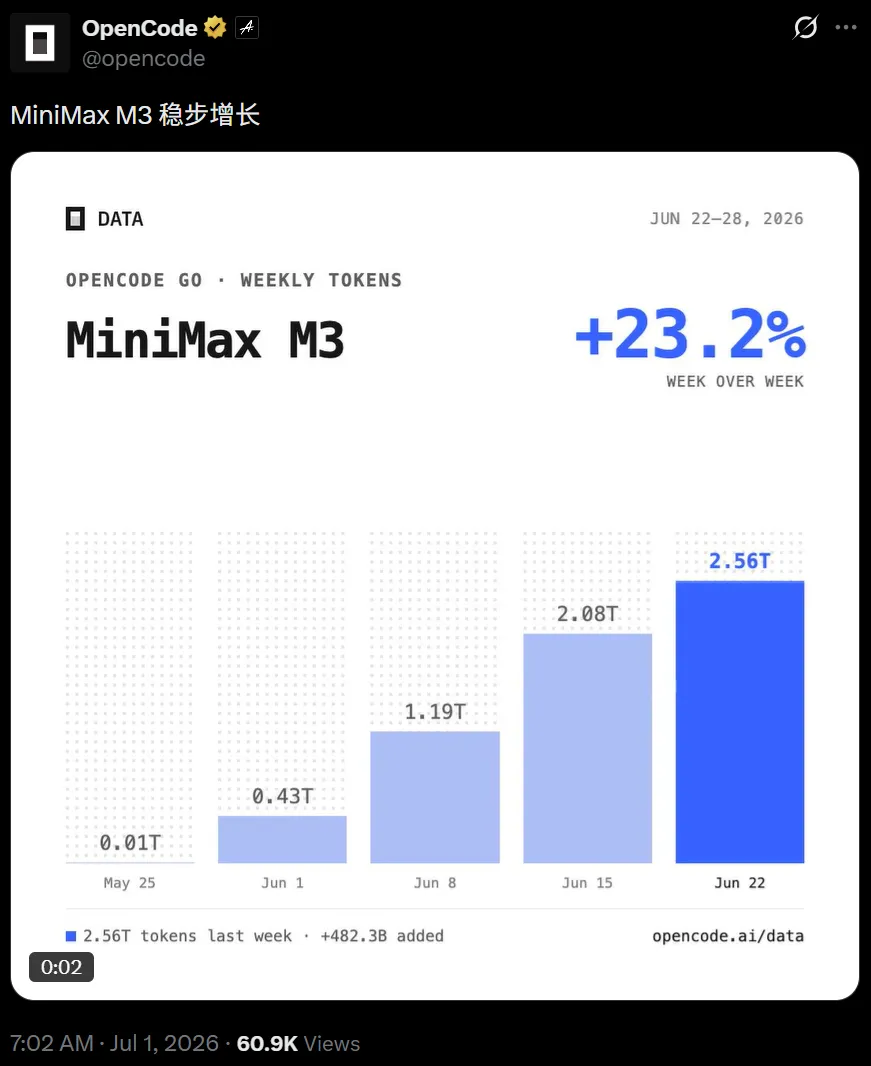
In August, ARR surpassed $800 million, with B-end revenue of 703%, up from 30% a year ago to 80%, and Token consumption in July was 20 times higher than in January.
It earned $116.6 million in the first half of the year, a 283% increase over the same period last year.
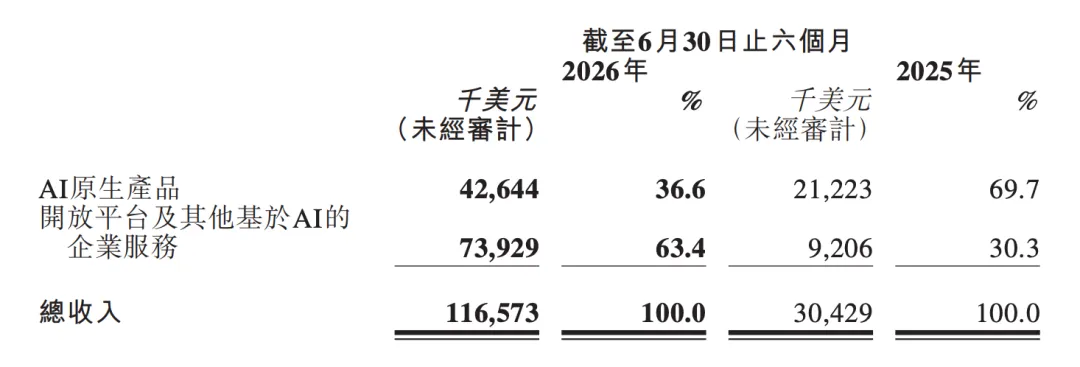
The numbers are broken, but it's really worth checking out:The M3 was more powerful than the M2, the price was not steady, and the volume exploded.
As usual, the price was lowered, but the MiniMax didn't, and the quantity exploded.
The reason behind this is that the main purchasing power of Tokens has gone from being human to being Agent.
Each time the user presses a button, the model has to run dozens of rounds in the background.
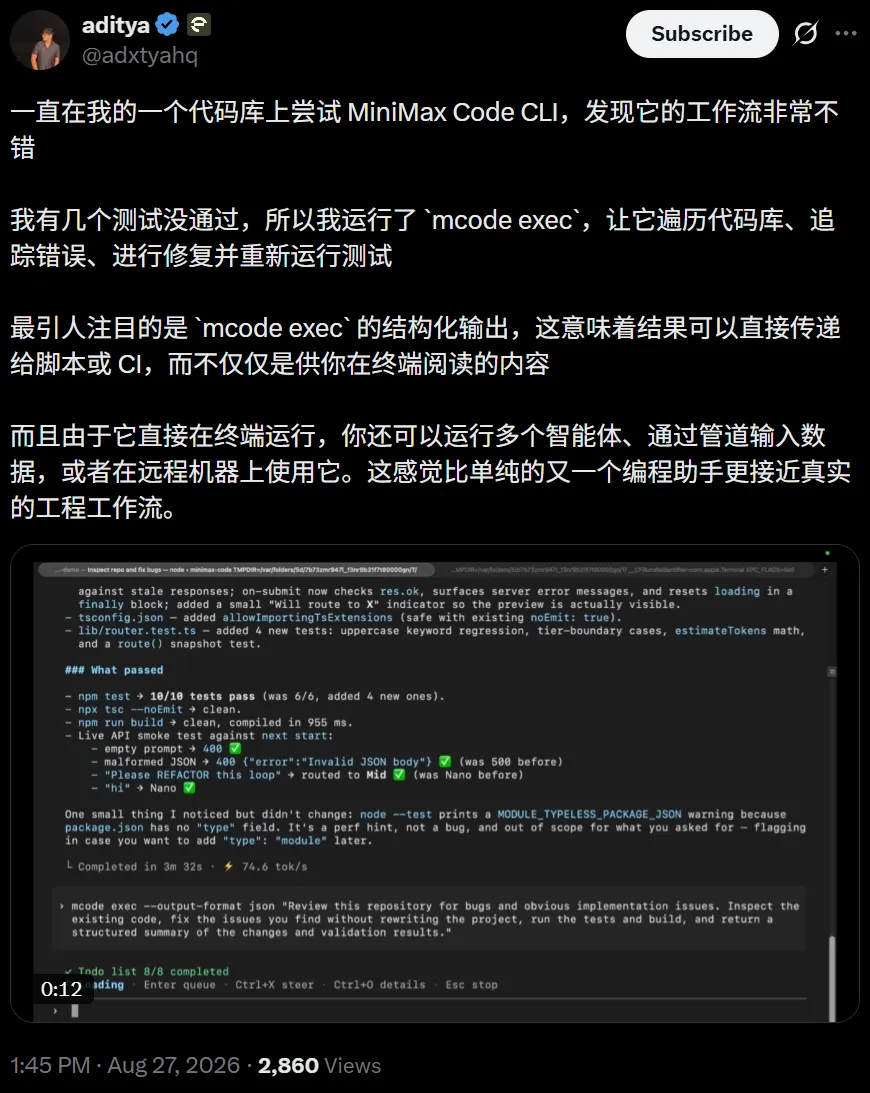
According to Jun Jae, the growth in reasoning demand brought by Agent is already faster than the number of users and messages, while the number of MiniMax enterprises and developers has surpassed 2 million, which is 10 times the number at the end of last year.
This explains why MiniMax B's end-to-end revenue is 703% higher than that of Silicon.
C-end business also doubled in the same period, but it was hardly crowded by an eight-fold increase in business.
It's a mathematical calculation of half a flower.3T Parameter Giant is running out of price.Now, the increase in model intelligence is increasingly coming from post-training reinforcement learning, data synthesis, and mass evaluation.
Rollout is reasoning, synthetic data generation is reasoning, and evaluation is reasoning.
In response to this, Jun Jae gave a quantitative comment at the meeting.
Under the same arithmetic scale, it can be assumed that the multiples of computational efficiency improvements in reasoning are fundamentally linearly related to the multiples of scale increases in post-training.
In other words, when you increase the efficiency of reasoning by three times, you can do three times as much after training as before. The size of the latter directly determines how smart the model will eventually be.
So reducing costs is not a commercial promotion strategy, but a technical route.It is only by continuing to squeeze down the cost of reasoning that computational capital can continue to train on scaling. Today's reasoning is both selling intelligence and producing the next generation of intelligence.
It's worth noting that the MiniMax didn't shrink the model to save money, they've always been working on the biggest model in the R&D industry.
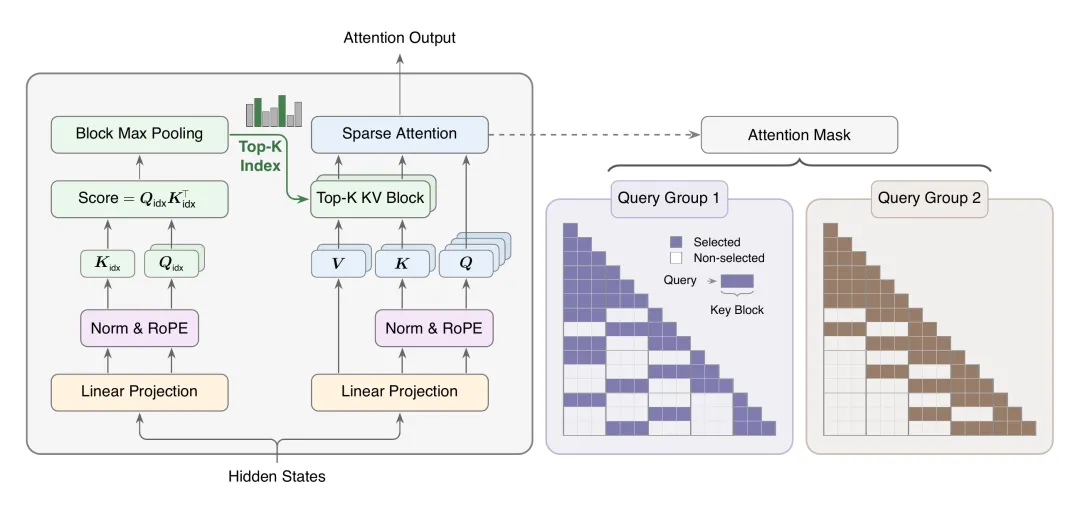
One is the scarcity of MoE, which can be narrowed down to 2% by specialists; and the other is Attention's scarcity, self-developed MSA, which can significantly compress the computing costs of growing context.
This is the technical meaning of "no choice":I don't know.Model intelligenceOne way to choose between cheap and big models is to run cheap.
At the infrastructure level, it's the same logic. Training Agent, with not enough graphics cards, you have to give the model a set of isolation environments so that it can actually run the code inside, adjust the tools, crash the heads, all of which run on the CPU.
MiniMax's multi-modal reasoning cluster, which used to be packed with a large number of CPUs (running video and images) to train directly into the past.
The flow of online reasoning is on the rise, and the night valley is well-suited for small-scale verification experiments and reinforcement-learning rollouts. Every block of static computing is embedded in the pipeline of "producing the next generation of intelligence".
At the time of its launch, the next two MiniMax models were a direct reflection of this route.
M3.1It is a continuation of the M3, continuing to expand the training scale at its current base, focusing on strengthening coding, tool calling and agent capabilities, and emphasizing the quality and stability of task completion.
It was positioned by Jun Ji as "a widely used model" with the goal of reducing the cost of reasoning to one-third of the original version of the M3.
M3 ProIt was a comprehensive capability leap. The parametric scale was pushed to about 3T, continuing to expand reinforcement learning and long-range mission training on a larger base.
The architecture is built on MSA 2.0. Simply put, every time the model answers, you have to read the context over and over again, this step is called Prefill, specifically burning power.
MSA 2.0 keeps what you read better, finds it faster, hits it higher, reads it less, and costs it down multiple times.
At the highest parameters, computational efficiency is expected to increase threefold, and the longer the task, the more complex the context, and the more obvious the advantage.
Model 3T, where did the card come from?The MiniMax itself built a core machine room dedicated to running the biggest training tasks; not enough time to find cloud vendors to rent, the resilience expands; the peak of online reasoning is to go to the top with the Token Factory, to avoid wasting too many spare resources.
Three legs walk, both steady and not wasted.
This training group is operating effectively 97% of the time, while only 3% are waiting, restarting, coordinating.
At the same time, the M3 and H3 are adapting to domestic chips, and large-scale domestic computing clusters will soon join real production flows.
The most ambitious intellectuals are created at the most extreme costAccording to this line, the actions of the MiniMax, which seem unrelated, are actually on the same line.
Open source video model H3, which was released on July 31, has been downloaded over 24 million times in three weeks, generating more than 300 public models, making it one of the most downloaded models globally this year.
Behind it is the profound involvement of language models in the creative process. Not only as a decoder, but to truly understand the context and the intent of the user.
On this basis, even stronger H3.1 is on the way.
So yesterday's confusion was about three solutions to the same problem.
Some say that mathematics is valuable, but others say that it is worth talking about sexuality first.
MiniMax says this issue shouldn't be a matter of choice.Every time the cost of reasoning decreases by one point, Scaling is more intelligent.
At the end of his presentation, Jun Jae said: "The big language model industry is not zero and competitive. Any company's technological progress, as long as it pushes the boundaries of intelligence forward, will ultimately expand the value space of the entire industry".
Competition at the next stage may not really be more expensive or cheaper than the next stage.