This year, the WRC is looking at physical intelligence again, and one significant change is that the industry is increasingly lacking in robots that are capable of powering hydrogen.
Walking, grabbing, interacting, even punching, dancing, moving, which used to be the ability to be a conference protagonist, is quickly becoming a staple of the game.
This also means that the competition of robots is entering a more difficult stage.
As the body's capabilities become more and more consistent, the demos become more and more, and the real thing that determines the limits of a company may no longer be which robot has several degrees of freedom and runs faster in a matter of seconds, but whether it has the ability to keep the robot gaining new capabilities.
In this new set of competitive coordinates, Figure is an unobstructed global reference.
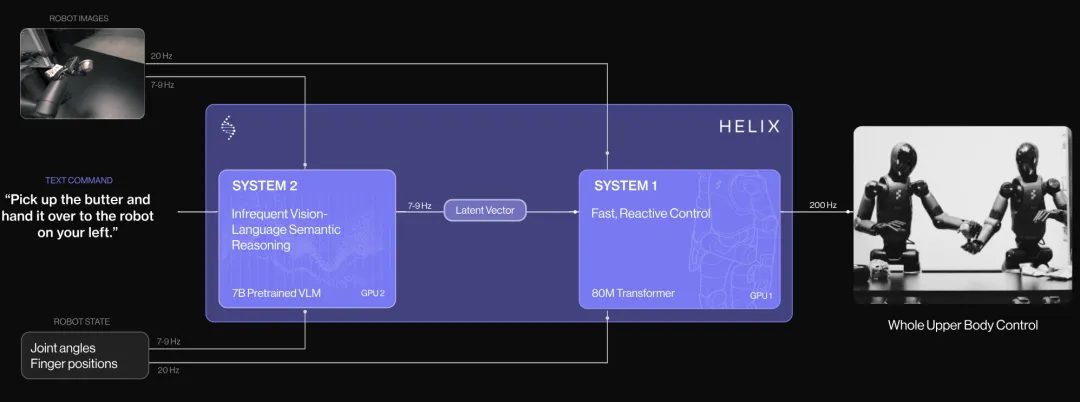
Over the past few years, it has expanded from humanoid robots to models, manufacturing, and real-world scenarios: Helix has taken the model capabilities to a more central position, BotQ has begun to replenish scale manufacturing, and robots continue to enter the BMW factory for verification.
And that's why, if a company in China emerges in the future that can really challenge or even surpass Figure, it probably won't win with a stronger robot.
According to this standard, super-dimensional dynamics, which was established only in July 2025, is an example that is difficult to ignore.
For about a year, world models, high-performance humanoids, first-person shooters, first-person shooters, and AI-enabled Infra (a physical data processing platform) have appeared simultaneously in its technical edition.
It's worth comparing, not just a single parameter, but the two companies are heading towards a similar end: the ultimate puzzle is not a robot, but a whole set of systems that can continue to learn and evolve.
01.
The first card: prioritize the model, freeing intelligence from a single body
Over the past year, the technological focus of Figure has been clearly extending to the model layer.
Helix put vision, language understanding, and robot controls in the same system; this year's release of Helix 02 further connects vision, touch, sensation, and whole-body execution to allow robots to complete a long sequence of tasks that include walking, operating and balancing.
The super-dimensional dynamic is also a pioneering model of dynamic pathways.
Among them, KAI World Model revolves around the simulation of physical worlds through virtual world generation, 4D space modeling, action interaction and model evaluation, allowing models to learn physical laws in the real world while supporting generation and reconstruction, and has combined millions of video data for pre-training, covering mobility, operations, and combinations of mobility and operations.
It's not just about understanding images, it's about getting robots to understand the relationship between objects, space and motion.
In real robots, super-dimensional power also uses another set of modeling capabilities to verify that AI can't really run. In this year's WRC, super-dimensional power moved this capability directly to the table.
They built a standard table tennis interaction area on site, where SMASH 2.0 humanoid robots can play directly with the audience. From ball recognition, trajectory prediction, to action planning and full-body control, the entire reaction chain is self-contained.
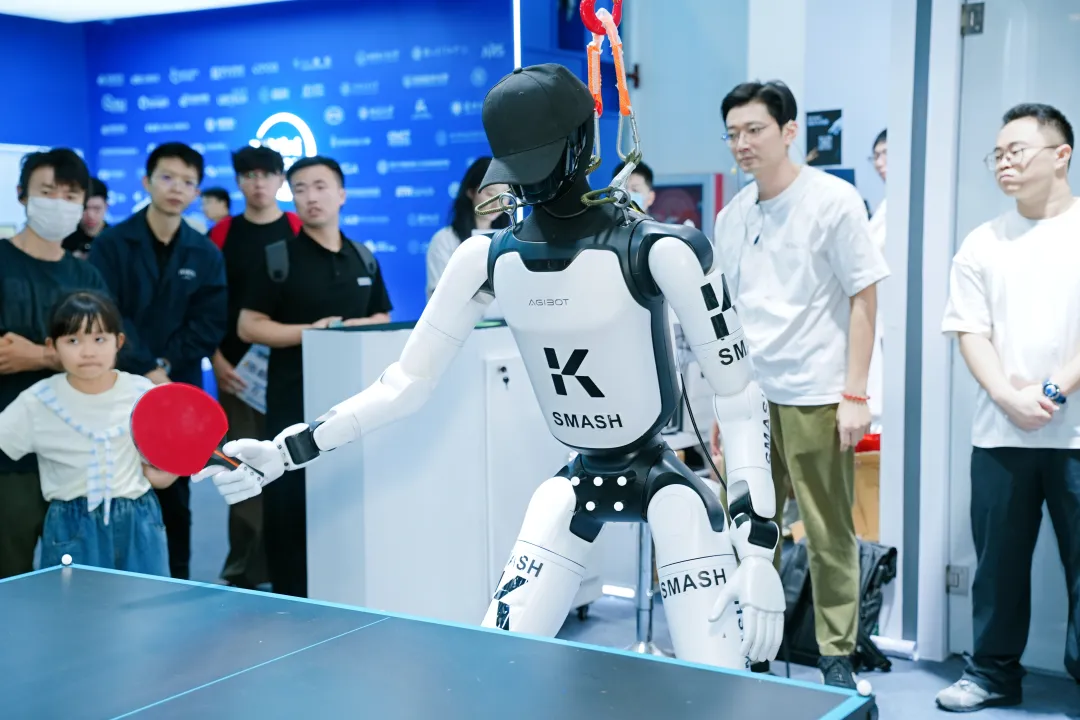
More interestingly, the same core SMASH algorithm has already been deployed on different robot bodies, such as the Utrecht G1 and the Chiyo Mission A3.
It is said that the KAI World Model is responsible for the training of the World Cup, and SMASH has begun to verify the ability to swim across the body.
Robyn, the co-founder of Superdimensional Power, once said: "The users of Zen language models are ordinary people, and the users with brain sizes are robots".
From the current technical layout of the hyperdrive, this phrase actually points out the company's clear path to platforming and diversification. The robot itself can change, but the model will gradually become the backbone of a more reusable and sustainable generation of smart models.
This is also where the super-dimensions and Figure 1 are really worth seeing together. They do not completely lock their long-term competitiveness in a single robot, but instead push the modeling capabilities behind the robot further.
02.
The second card: Enhancing human identity, making human experience easier for robots to access
Getting rid of a single body as much as possible does not mean that the body is not important. On the contrary, a smart model with a body will eventually enter the physical world through a body.
For superpowers, the body needs to be human-like enough first, and KAI Bot is their answer.
It is 173 cm tall, weighs 70 kg, has 117 degrees of freedom, covers about 80% of its body with touch skin, has about 18,000 touch points, and can be perceived at a touch of less than 0.1 N. In real life, the humanoid robot is equipped with a custom semi-solid battery that normally lasts for more than 3 hours and runs slowly for 2 hours.
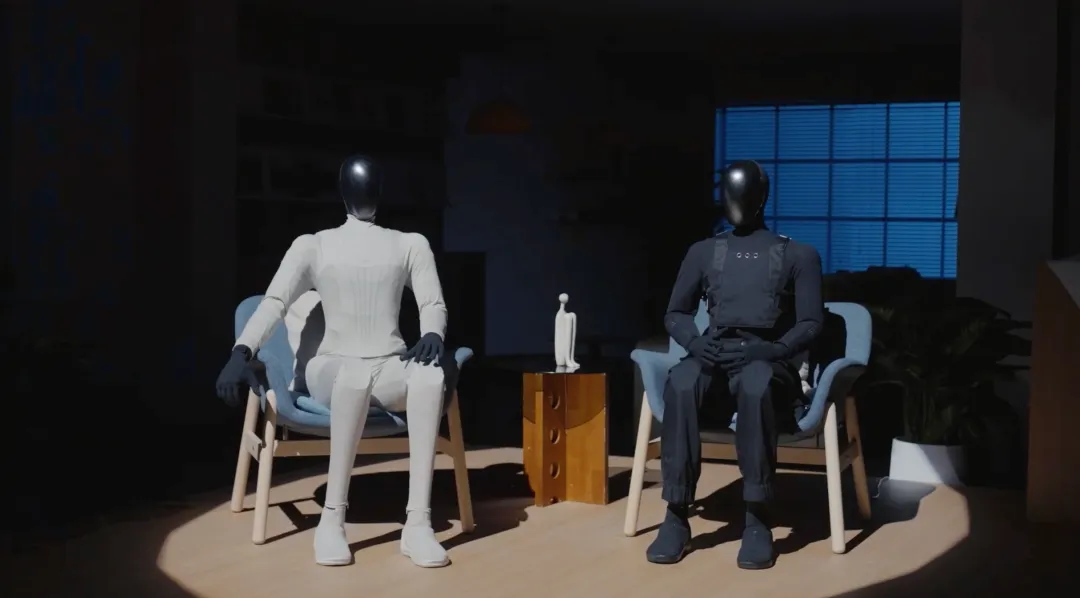
On the WRC site, the KAI Bot can walk autonomously and interact with the audience in real-time, while performing fine-grained object-grabbing and gift delivery operations.
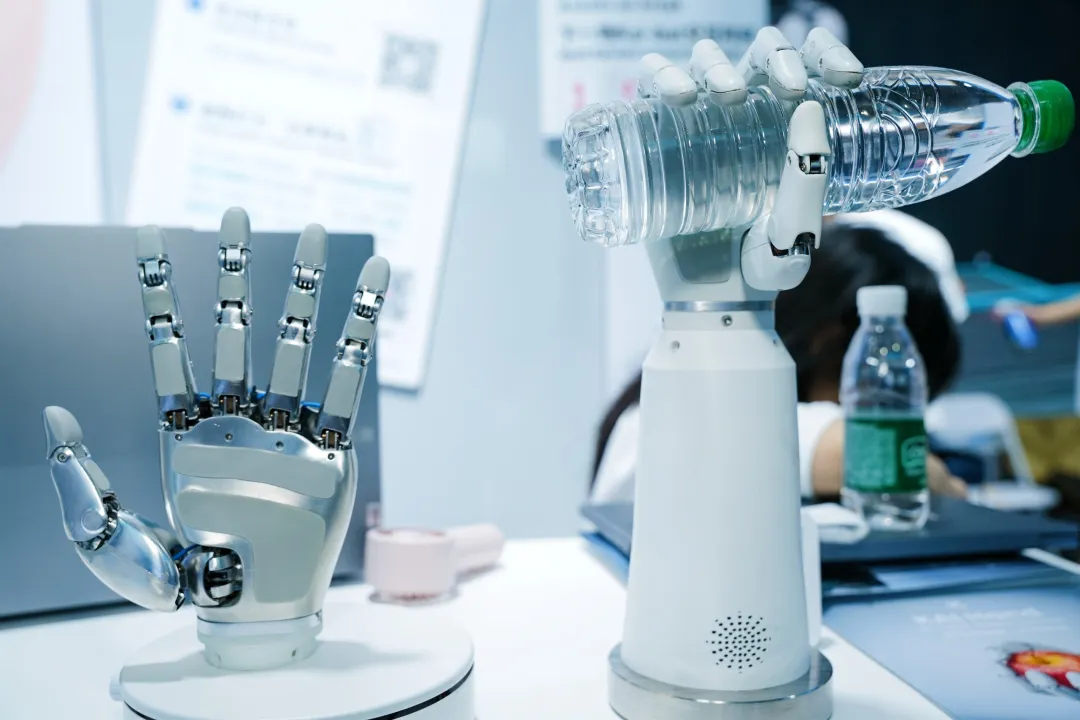
On the more sophisticated end of the spectrum, the superdimensional hand also produces a flexible KAI Hand that is close to real-life. It has 37 degrees of freedom, including 20 degrees of active freedom, 1 passive freedom and 16 degrees of soft freedom, and adds touch and visual perception to the fingers and wrists.
But the superpower is so attached to humans that it's not just to make robots look more like humans.
The reality is that homes, factories, commercial spaces, and even the vast majority of tools are designed to measure the human body. More importantly, today the world's largest manufacturer of furniture and body data is also the world's largest producer of human-made Internet videos, first-person view data, human movement and operation trajectories, which document how people interact with the physical world.
This means that the closer a robot's body is to humans, the more it is theoretically able to handle the massive action experience that humans have accumulated.
Therefore, a high-performance human mouse is a hardware choice on the surface, looking deeply, but it is also a problem of data and learning efficiency. The cost of translating the body structure of a mouse into a robot is what the human experience wants to reduce.
This also explains a set of seemingly contradictory choices: models should try to reduce their binding to a single body as much as possible in order to allow their capabilities to be replicated by more robots; the body should try to get as close to humans as possible in order to make it easier for robots to absorb human experience.
How to bring in a solving experience, how to reuse a solving ability.
03.
The third card: data closure, really compared to learning efficiency
If only Figure had a robot, there would be a robot in the super-dimensional; if Figure had a model, there would be a model in the super-dimensional; at most, the path would be similar.
What really determines the future gap is the robot's learning efficiency.
This is also the meaning of the KAI Halo head ring.
The first-person perspective data collection device, which weighs only about 300 grams and integrates a fourth-person camera and an IMU, can record human vision, movement, and operation. According to data disclosed by the superpower, it has now accumulated more than 100,000 hours of multimodal human first-person perspective data and organized hundreds of collectors into real-world environments such as homes, supermarkets, commercial spaces, and small factories.
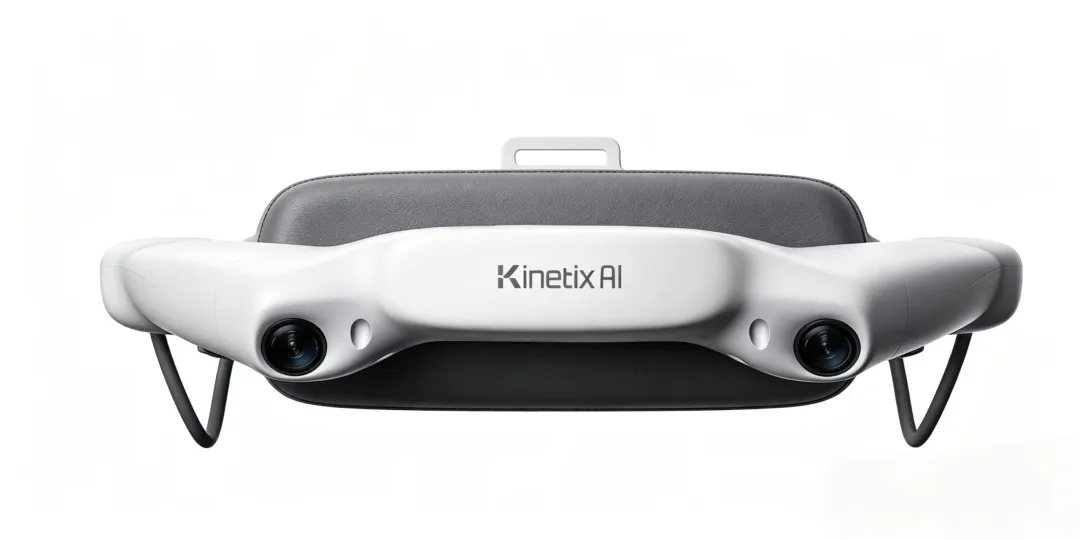
100,000 hours isn't the most important number here, because the number of hours spent shooting back doesn't matter how much the robot learns. In the middle is a whole chain of mass testing, marking, positioning, weight-orientation, model training, simulation evaluation, real-world deployment, and back to the real data flow.
This is where KAI Embodied AI Infra comes in.
According to the over-dimensional power disclosure, its data processing pipeline runs through the entire process of data collection, processing, training, simulation and real-machine deployment, improving the efficiency of high-quality data production by 10 times, supporting 1000-degree simulation tasks in parallel, Train Turbo training is accelerated by 40%, model evaluation speed is increased by 7 times, the overall training speed is increased by an average of 5 times, and it is able to deploy batches of trained models to real-machine to allow real running data to flow back.
At this point, the seemingly dispersed capabilities of the super-dimensional began to really connect: KAI Halo brought in real-world experiences; KAI World Model expanded the space for robots to learn and interact; Embodied AI Infra transformed data into models and sent models back to real-world machines.
Robots run in the real world and generate the next round of data -- data, training, deployment, feedback -- and then the cycle begins.
This is the supersonic aircraft that really deserves to be seen.
04.
Fourth license: Full-speed braking, one year of intelligent braking system braking capability
Here, looking back at the timeline of the two companies, you will find that the real observation dimension is not only the capacity structure, but also the speed at which the system is being built.
Figure was founded in 2022. Over the next three years, it expanded its manufacturing capabilities from a humanoid robot core to a Helix model, a BotQ, and continued to enter the BMW factory verification process, gradually shaping a technological system covering the core, models, manufacturing and real deployment.
Established in July 2025, KAI World Model, KAI Bot, KAI Hand, KAI Halo and KAI Embodied AI Infra are now on the table, while SMASH further demonstrates the deployment of core algorithms across different nationalities.
Over the course of a year or so, it has integrated several key capabilities of the model, body, agility, data and training infrastructure into the same business model.
Of course, that doesn't mean it's already following Figure.
Figure's advantages today are still evident: it has longer R&D time, stronger capital support, a more mature body, and real deployment experience on the BMW production line.
But it's also because the gap still exists that the speed of the super-dimensional power this year is more worthy of consideration. In the direction, it has moved towards a technological endpoint similar to Figure; in capacity, the model, the body and the continuous learning system have also built up the skeleton.
At the same time, there is also a unique advantage of hyperdimensional power. It is known that the team of hyperdimensional AI Infra has operated Huawei's self-driving Infra platform, with extensive experience in delivering from 0 to 1 million volumes.
Looking at these coordinates, SuperDimensional Power, which was founded just over a year ago, has become one of the most watched players in China's smart corporations.
05.
Beyond the Figure, the real thing to follow is the speed of evolution.
With the increasing number of humanoid robots, the real watershed of the body-intelligent industry will change as well. Figure is the leader today, never just a robot. It's really hard to replicate the system behind that connects bodies, models, data and the real world.
So any Chinese company that really wants to go beyond Figure cannot rely solely on more freedom, more flexibility, or a more surprising demo. It needs to build a system that learns faster, evolves faster, and is able to replicate faster.
If physical intelligence is ultimately a competition about the speed of evolution, then it is becoming one of China's most promising challengers to surpass Figure.