"I want to know when I can push this button, as long as I think it's the right time". says Tibo, product manager at OpenAI Codex.
Tibo, whose real name is Thibault Sottiaux, has also been given many nicknames by netizens, including but not limited to "the ancient Greek god who controlled the repositioning", "the cyborg father who controlled the additional repositioning of the Codex", "Mr. button repositioning"...
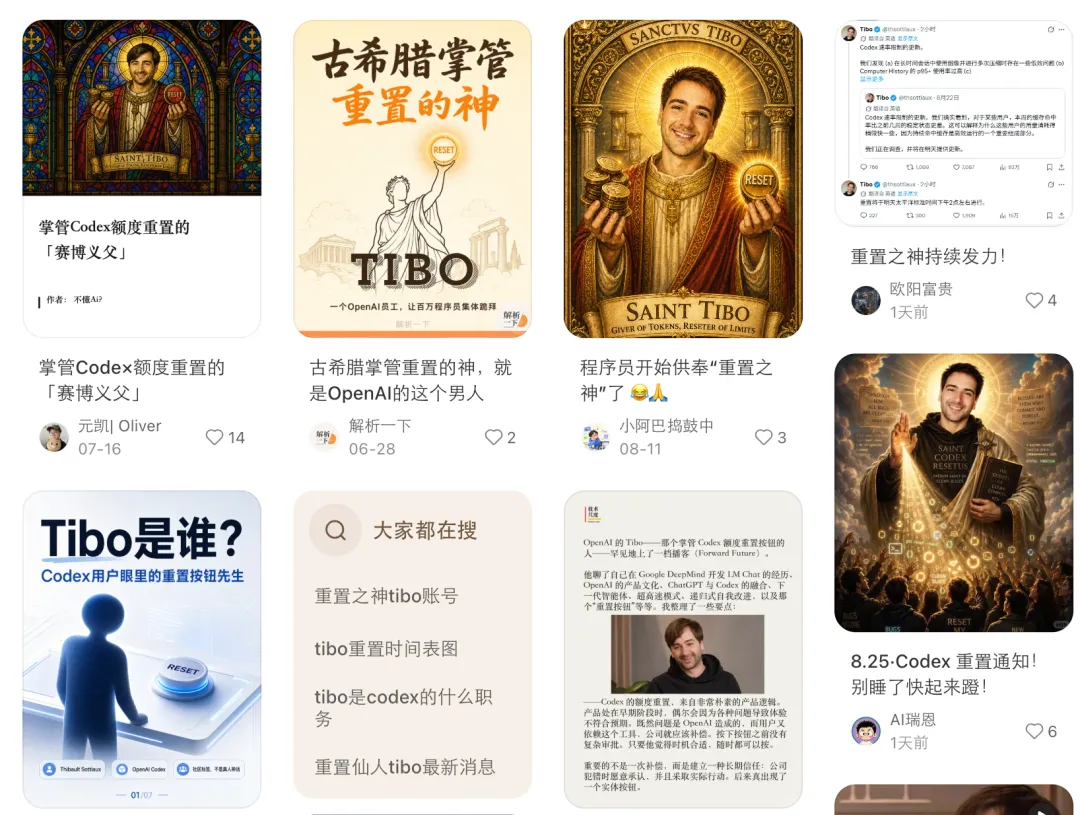
The reason for these titles is simple: when the usage limits of Codex users are rapidly depleted for various reasons (such as system bugs or policy adjustments), Tibo responds to X on social media and manually performs a "global reset" for all users, allowing everyone to instantly restore their usage.
This operation won him the favor of many Codex users, many of whom paid close attention to his dynamics, and even jokingly said, "Tibo doesn't reset everyone for a week". In addition, he often interacted with users on X and listened to feedback.
Recently, Tibo was featured on a podcast, with netizens shocked to say, "We've finally met the guy behind the huge reset button".
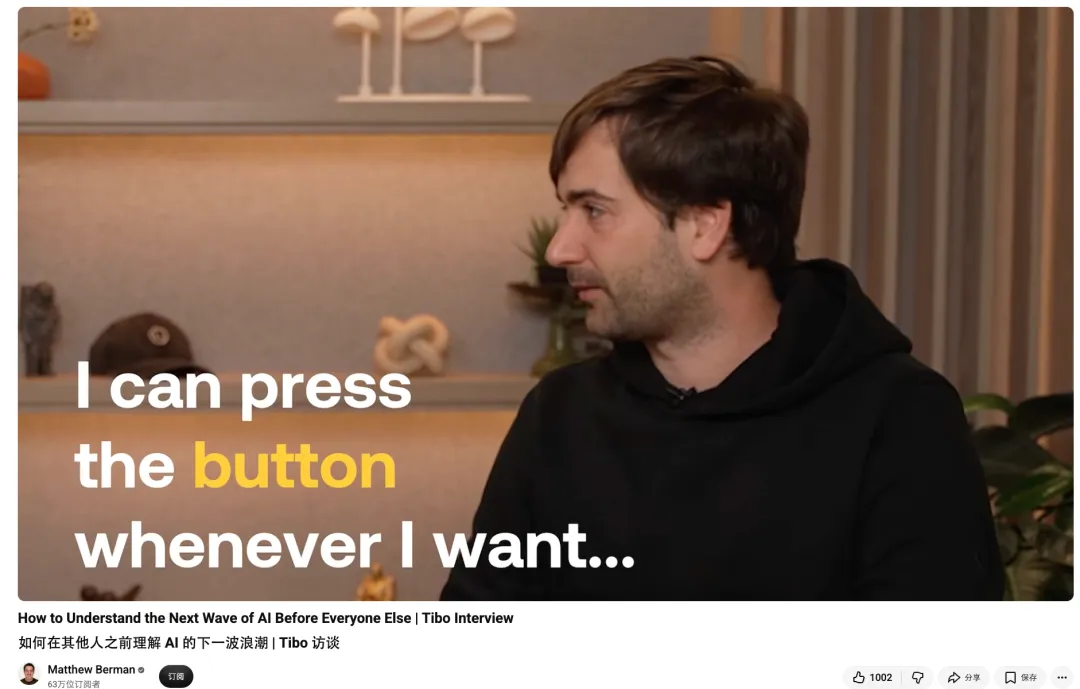

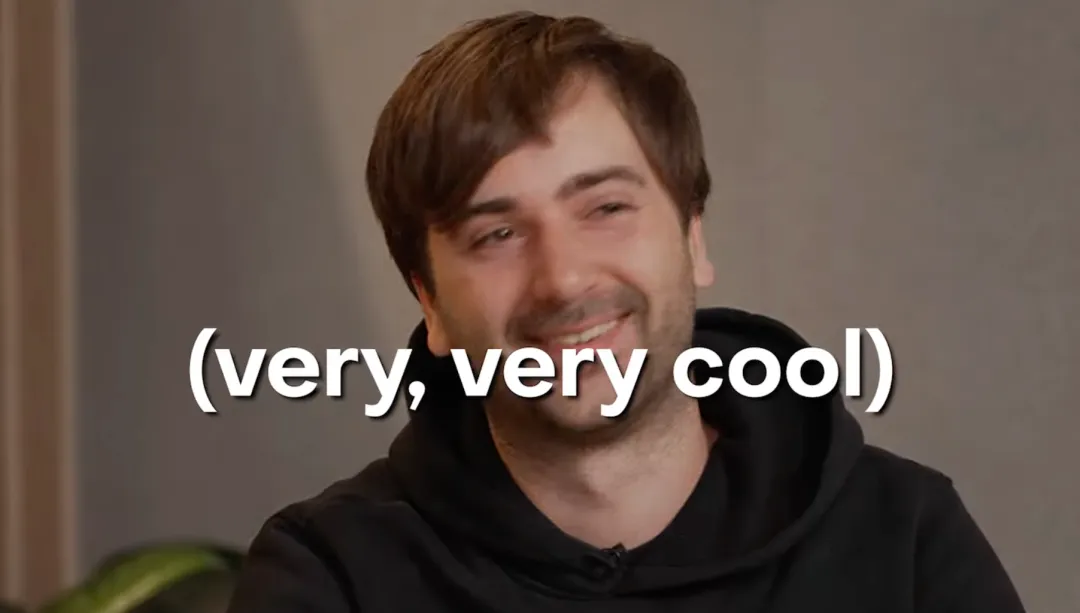
On the show, Tibo revealed that the reset button was actually a physical entity, "very, very cool".
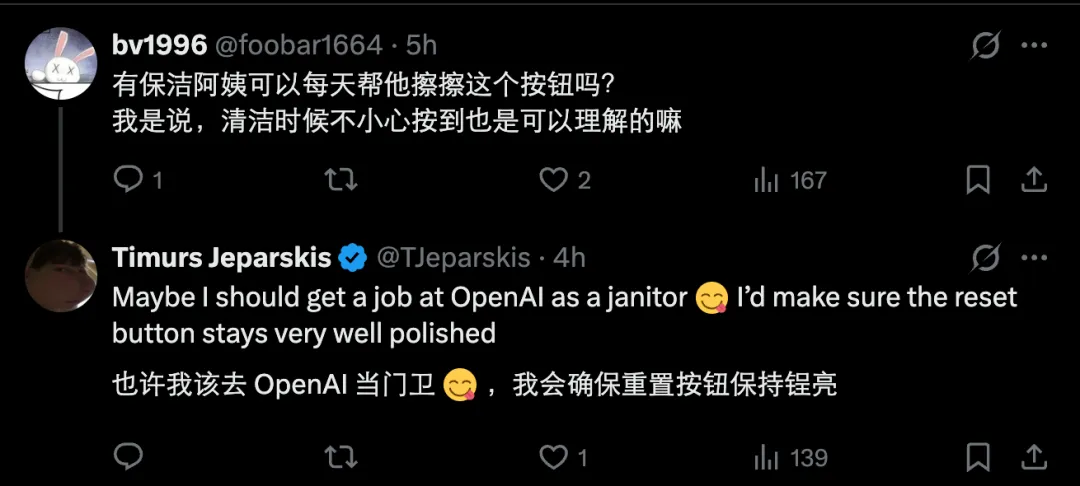
Some people joke about going to OpenAI when the doorkeeper, cleaning, and working like this, "not being careful" is the same thing as pressing the button...
Of course, the show was long, and Tibo talked about other topics, such as what the next generation of smart bodies should look like, what role self-improvement is playing, why OpenAI is suspending model training...
In this article, we have systematically organized the interview, hoping to inspire you.
The culture of OpenAI: people can "do things".
But the product can't be a mess.
Tibo describes OpenAI as a very bottom-up organization. Employees can come up with ideas, form temporary teams, and make products in a very short time.
There is rarely a "stop energy" within the organization that prevents the launch of new projects. But he soon gives the other half of the answer: just having a rush can be a mess, so it has to be covered with simplicity, a sense of quality and a sense of overall direction. He believes ChatGPT's iOS App is one of the best apps on the market and should continue to focus on "pleasantness, performance, efficiency, simplicity".
His advice to entrepreneurs is simple: have faith, stick to user feedback that changes quickly, and dare to subvert yourself. The third most difficult thing. New research, new ideas keep popping up, and you have to decide when to pull resources off the main battlefield. Big companies especially can't do that, because cash is too scented.
He also reveals an anti-intuitive detail: OpenAI itself has trained the model to find out what it will be. Benchmark tells you it's limited, and the team has to repeat the "play" model and be surprised, "Oh, it used to be this way". The new voice model is an example.
In the next generation of products he envisioned, AI should gradually become an "environmental" entity. The user writes an idea on a whiteboard that AI can see; the user asks questions that can be combined with tone, context, and previous information to continue the discussion. Words, sounds, images, gestures, and real-world environments are put into the same interactive process. The goal is not to teach humans a more complex set of AI operations, but to make the technology adapt to the way humans originally knew how to express themselves.
AI is rewriting the development process.
The new bottle will attract people's attention
Today, people who are skilled in programming intelligence have actually adapted to many "unnatural" operations: maintaining Skills files, manually adding memory, simultaneously launching multiple sub-intelligences and continually checking their status. Tibo believes that these methods are only a transitional phase. Ideal programming intelligence should understand users, goals, day-to-day work and team progress in the long run, be able to execute as requested, and be able to actively make recommendations at the right time without requiring users to maintain it repeatedly in the context.
As models become stronger, laptops themselves become constraints. Conventional computers are designed around the speed at which people work: how many applications can be opened, how much content can be entered, and how many tasks can be processed at the same time. But models can simultaneously explore programs, write tests, compile code, and analyze logs, and in the future may even operate hundreds of applications at the same time.
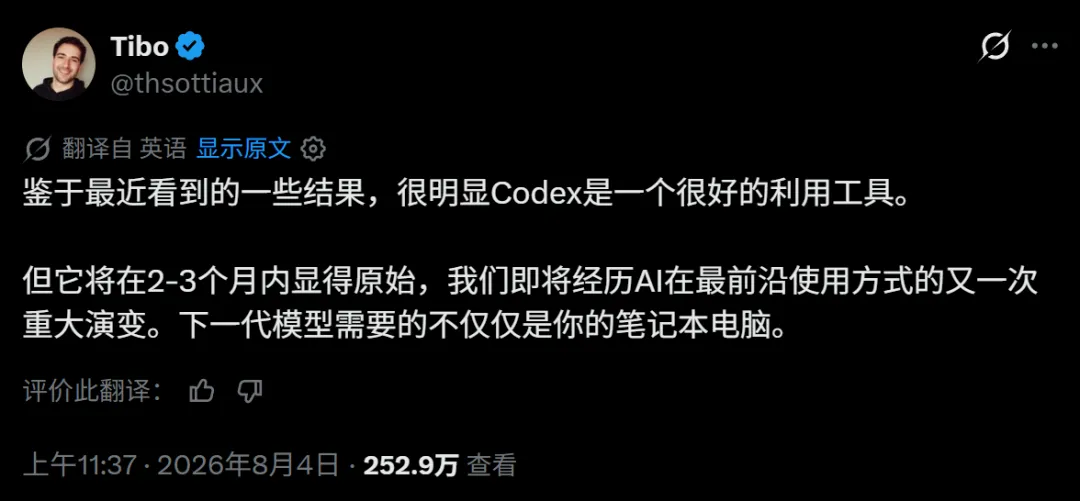
Recently, Tibo made a "outrage" on X: within 2-3 months, the Codex was a raw tool, and the future notebook was not enough.
In the past, developers could start dozens of smart objects at a time, waiting for three and a half minutes to be accepted, but this model would generate huge up-context switching costs. When a model can return results in real time, developers do not have to rely on a large amount of time to fill up the waiting time, but can persist in the same thought process, coming up with ideas through the voice, looking at the prototype, modifying the direction, and immediately getting the next version of the results.
Tibo also distinguishes the application into two directions: one is highly personalized "personal AGI", which understands the user and works with the user; the other is end-to-end automation systems, such as continuous inspection of production logs, automatic optimization of performance, or the creation of patches immediately after a security scan detects a vulnerability.
ChatGPT merged with Codex:
In the future, there will be no longer a distinction between "technical users" and "ordinary users".
The merger of ChatGPT and Codex initially raised a number of questions: Since the two product services have different users and tasks, why do they have to be put together? Tibo's answer was, "Future models require them to be combined". In OpenAI's conception, writing code, doing research, processing documents or arranging everyday tasks should not be inherently the responsibility of different intelligent systems.
This also means that future software interfaces may no longer require users to label themselves first. One does not have to declare oneself as a programmer, designer or product manager before entering the corresponding product. Because these occupations are just abstractions created by humans to understand complex tasks, real individuals often have multiple needs at the same time and are on a continuous spectrum of different capabilities.
In this sense, both professional developers and ordinary users who don't fully understand the code may end up using the same input. Two people connect to different tools, pose different questions, the interface and capabilities of the system will be different, but behind it is the same individual intelligent body that continues to understand the user. Tibo's "perfect illusion" is that the underlying complexity gradually disappears: users no longer feel that they are managing models, memories, tools and multiple intelligent agents, but only in cooperation with a partner who truly understands themselves.
Why is OpenAI always resetting quotas?
That button actually exists.
Codex's frequent re-allocation of use has become a recognizable phenomenon in the community. Tibo explains that this was not initially a marketing plan, but a direct user compensation mechanism. It is difficult to completely avoid config errors, short-term failures or experience declines when a product is in a rapid turnaround. Since users rely on it to do important work, OpenAI should compensate for the extra use of the inconvenience instead of just issuing an apology.
As the number of times increases, "reset allowance" is becoming a community ritual. In addition to compensating for failures, OpenAI celebrates this when important features come online, giving more people the opportunity to experience new capabilities.
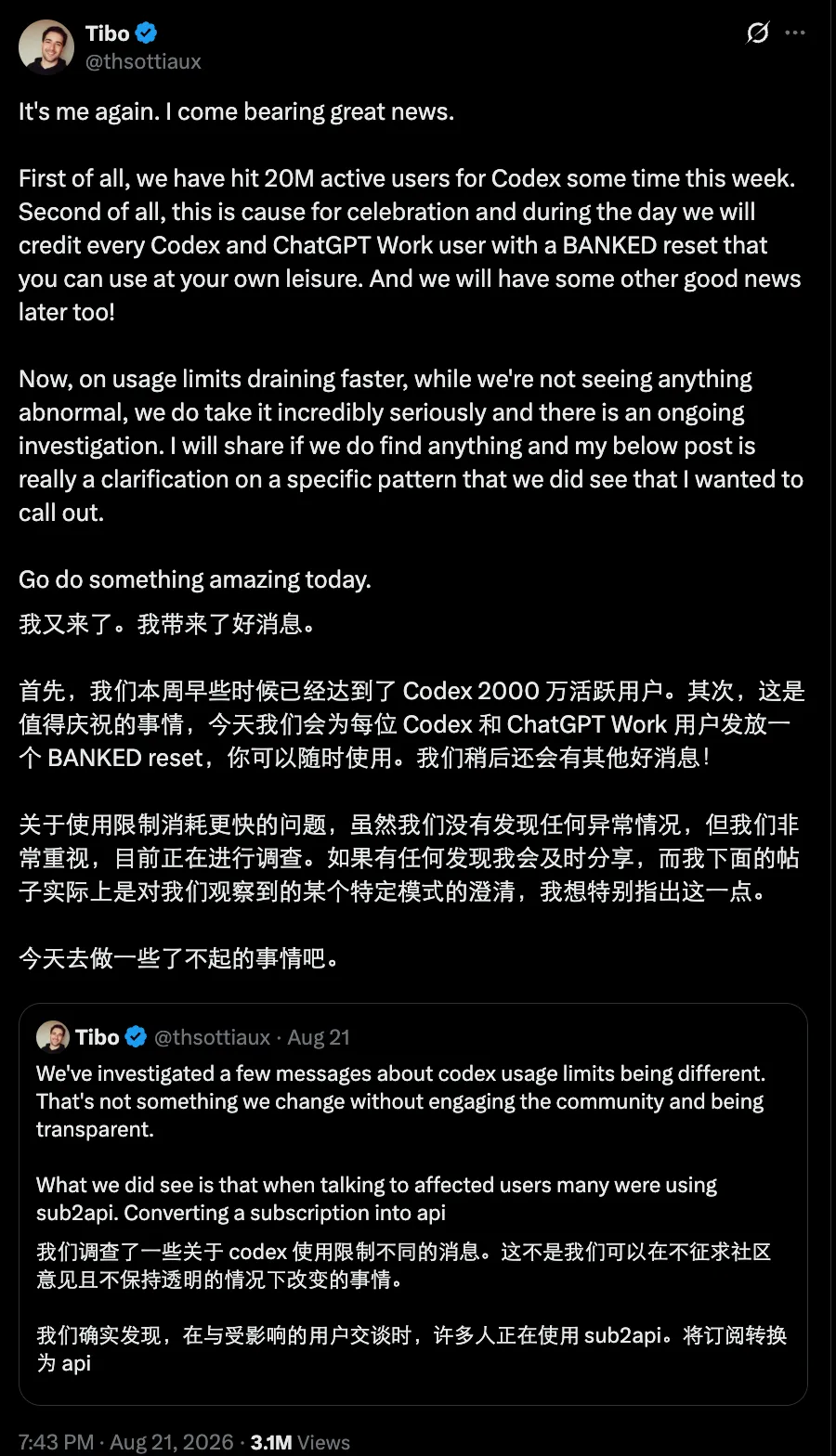
Tibo admitted that it did accumulate a large amount of user satisfaction, but stressed that it did not need to be co-planned with the market or financial sector: he had the authority to directly press the button when he saw fit.
This seemingly arbitrary approach requires adequate computing and long-term capacity planning. OpenAI has been challenged for previously investing large amounts of computing resources, some of which are now used to train the next generation of models, while others support the rapid growth and quantitative compensation on the product side. "Return buttons" have become part of the product culture, not just because of the generosity of managers, but because the company is prepared in advance to turn this generosity into an infrastructure.
It's the beginning of self-improvement, the beginning of self-improvement.
It's just not where you want it.
When people talk about "recurring self-improvement", they often think of a model that trains the next generation of models to be stronger. Tibo believes that the concept should not be limited to model research itself. OpenAI is currently redesigning the most powerful models in use to support these models' reasoning systems, including logic, underlying algorithms, CUDA kernels, and product interactions. Models help optimize infrastructure, infrastructure, and make models run faster and cheaper, and then release more resources to continue driving model and product progress.
In the interview, the host mentioned that the efficiency optimization of Luna by Soul resulted in an 80% decrease in the price of Luna and a decrease in the price of Terra as well. Tibo added that the improvement was not just about the cost: the speed of conventional reasoning has been improved by about 60% compared to three months ago, excluding the Ultra Fast model.
This cycle extends to the product level. If the cloud intelligent body can handle more tasks at the same time, humans can call the model more efficiently; higher productivity can also help the team improve the next version of the intelligent body. From this perspective, recurring self-improvement is not a single event of a model's sudden "self-awakening", but the model, the reasoning infrastructure, the products and the systems that make up the human organization begin to accelerate their own optimization.
The "suspension" was:
Why OpenAI actively stepped on a brake
Speaking of Sam Altman's previously mentioned "suspension of cutting edge RL training", the host questioned the decision-making context. Tibo's logic was that the importance of model capability at every step, coordination and safety follows at every step, and there's no hesitation about OpenAI. The purpose of the suspension is to let the team and everyone really get through, reinforce, and then restart the training with a complete sense of control.
When it comes to restarting standards, it's not the basics of "in time, it's natural to know": the security team went through a series of debates and searches in the process, ultimately settling for a fairly clear set of principles, which means restarting standards. Tibo Special emphasizes that he has never seen OpenAI hesitate in such decisions, and that in the future, if necessary, the company will never step on such brakes again.
In a year or two, "extreme speed" may no longer be a luxury.
Ultra Fast belongs to the hardware of OpenAI: the accident commander and the response team get the privileges when they fail online, because every second is money; the team that is committed to doing key things will always apply for a grant, for example, to decide before Monday not to go to DevDay for a new idea. There are exceptions: the company's indoor electronic pet, although people love it, is attached to the screen, but it does "doesn't matter at the same time as the critical task".
Technically, there is a practical limit: the tool calls fewer scenarios. For example, a mouthful of gas generates a large amount of code, packs a website or a game prototype. The tool can eat up to ten times the speed; and when the linking tool calls densely, it spends three to four times the sensitivity on the network and other links of the agent trajectory.
Tibo's judgment is that within a year or two, this speed, even if it's not the default, will be very close to the default. A generation of Zen models is advancing faster than a generation of provincial tokens, and the reasoning hardware is also continuing to progress. He is especially looking forward to unlocking non-text interaction: sharing canvases to generate several schemes in real time, picking one, and then using voice chat. But he also left half a sentence: there will always be "a more expensive set, because you can always use more expensive hardware to exchange a little extra".
Tibo also mentioned that efficiency is the same thing as universal service. The lower the service cost, the more people can use it. Luna is small and efficient, six months ago it was a frontier-level model, and today it is cheap to almost white delivery.
For more information, please see the original video: