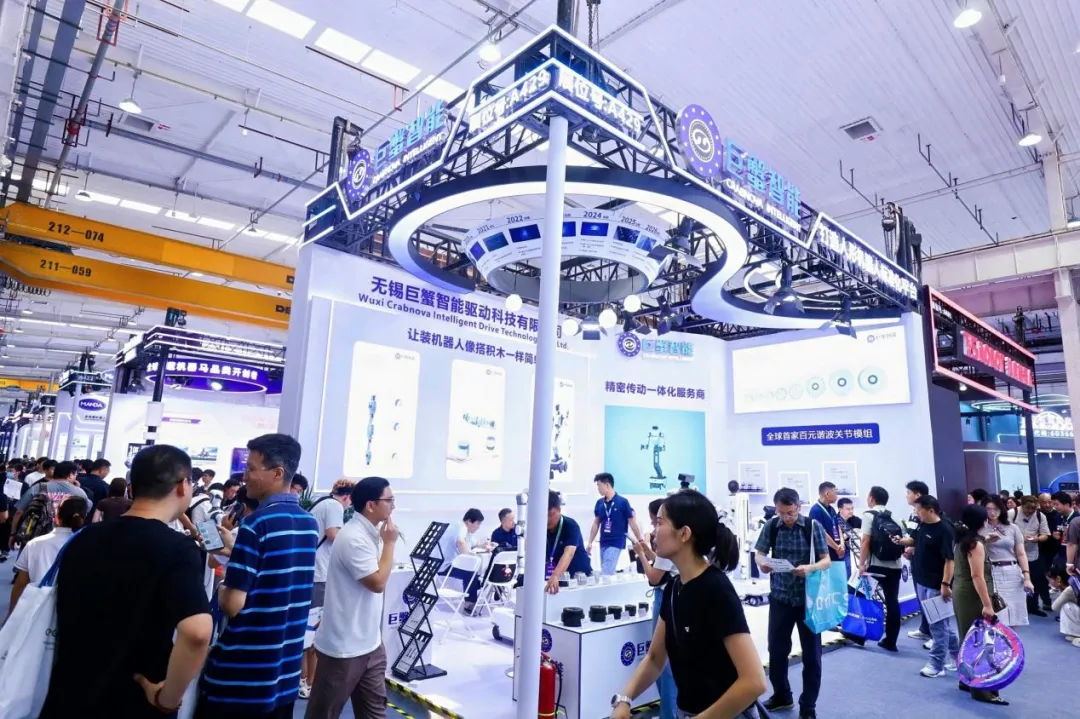
The R58 Lite and R68-Lite expansions are no exception. The R58 Lite and R68-Lite for 899 yuan and the R68-Lite for 999 yuan are all priced under a thousand yuan.
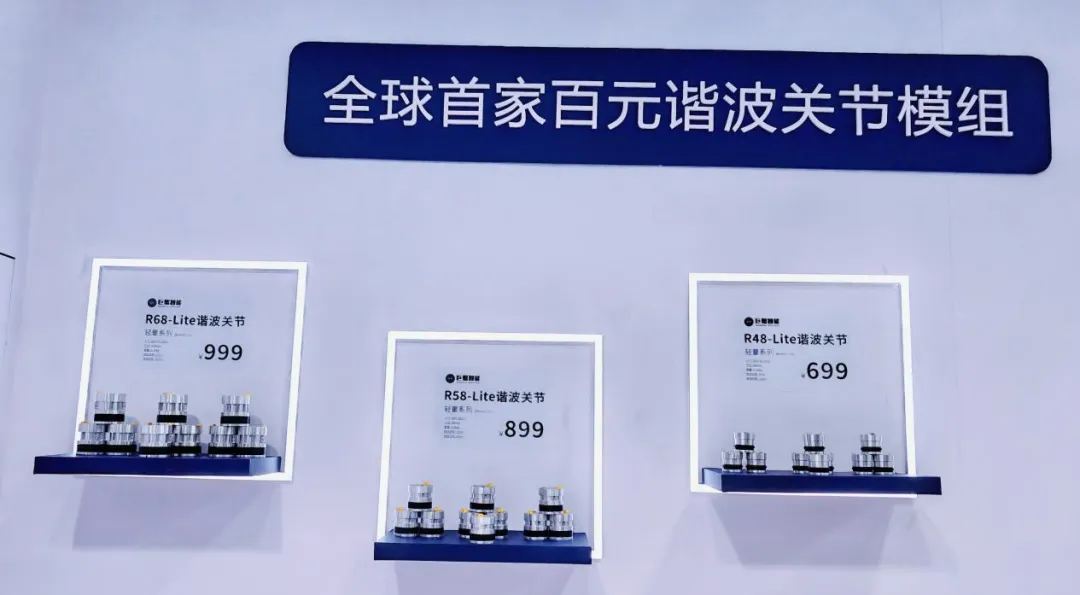
Magento Intel revealed that the feedback from the R48-Lite after the release of the R48-Lite has far exceeded expectations: one class of customers is the manufacturer of humanoid robots, which have largely evolved the models for the wrist and ankle joints, and many customers directly include Lite in the BOM option list; another class is universities, scientific research institutions and small and medium-sized developers, who used to be bound by the cost of joints difficult to build a complete prototype, which can now quickly run multi-freedom schemes.
The Lite series calculations are intuitive: compared to traditional integrated solvent joints of the same specification, a single module of solvent joints can save customers hundreds of yuan. For a human robot with multiple lightweight joints, the entire BOM can explore thousands of yuan directly.
This is one of the most frequently asked questions since the release of the Lite series. The answer given by Big Bang Smart is not a one-point decomposition, but a multi-dimensional reconstruction of Big Bang.
Structurally, Giant Intel re-deployed motors, drive boards, encoders and filters, reduced excess structural parts and connectors, while reducing the number of parts and assembly processes, as well as squeezing down the axis size; in the supply chain, thanks to core components such as filters, drive boards, the Lite series is fully self-produced, eliminating the premium of external purchases; finally, in the process, Giant Intel has increased profitability and thinned manufacturing costs by replicating mature production lines and platform designs to replace large-scale simulation models.
Meanwhile, Magnetic Intelligence has identified four red lines that are firmly against deceleration: one is the precision of the transmission and the back gap, which directly determines the robot's mobility; two is the encoder feedback performance, while Lite retains 23bit high-resolution binary magnetic encoder, which ensures precise control of the robot; three are reliability and life, fatigue life, overload shock, wide-temperature work must pass a complete set of reliability tests; four are interface standardization, communication protocols and installation interface compatibility with the mainstream CANOpen/CANFD, which can be integrated with customers.
In the eyes of Magnetic Intelligence, 699 yuan is not a marketing figure, but a strategic pricing: both breaking the psychological thresholds of developers and breaking the high-performance filtering joints must be more than a thousand yuan inherent in cognition, reversing industry reductions. More importantly, this price still has a reasonable gross under mass production, able to support continuous generation, rather than short-term lead.
The real meaning of Lite is to make lightweight joints the first to have a price base for large-scale applications. It reduces not only the cost of materials, but also the R&D and trial-and-error thresholds, which is exactly what the industry needs most.
The RBV3 series:
Putting the force control and braking into shorter joints
If Lite is playing a nickel price card game, RBV3 is playing a nickel integrated card game.
In the past, the mainstream practice in the industry was to pair brakes with torque sensors, and the previous RBV1 series was no exception. However, the feedback collected from the manufacturer's customers is clear: for mass-produced humanoid robots, safety and force control are hardness requirements.
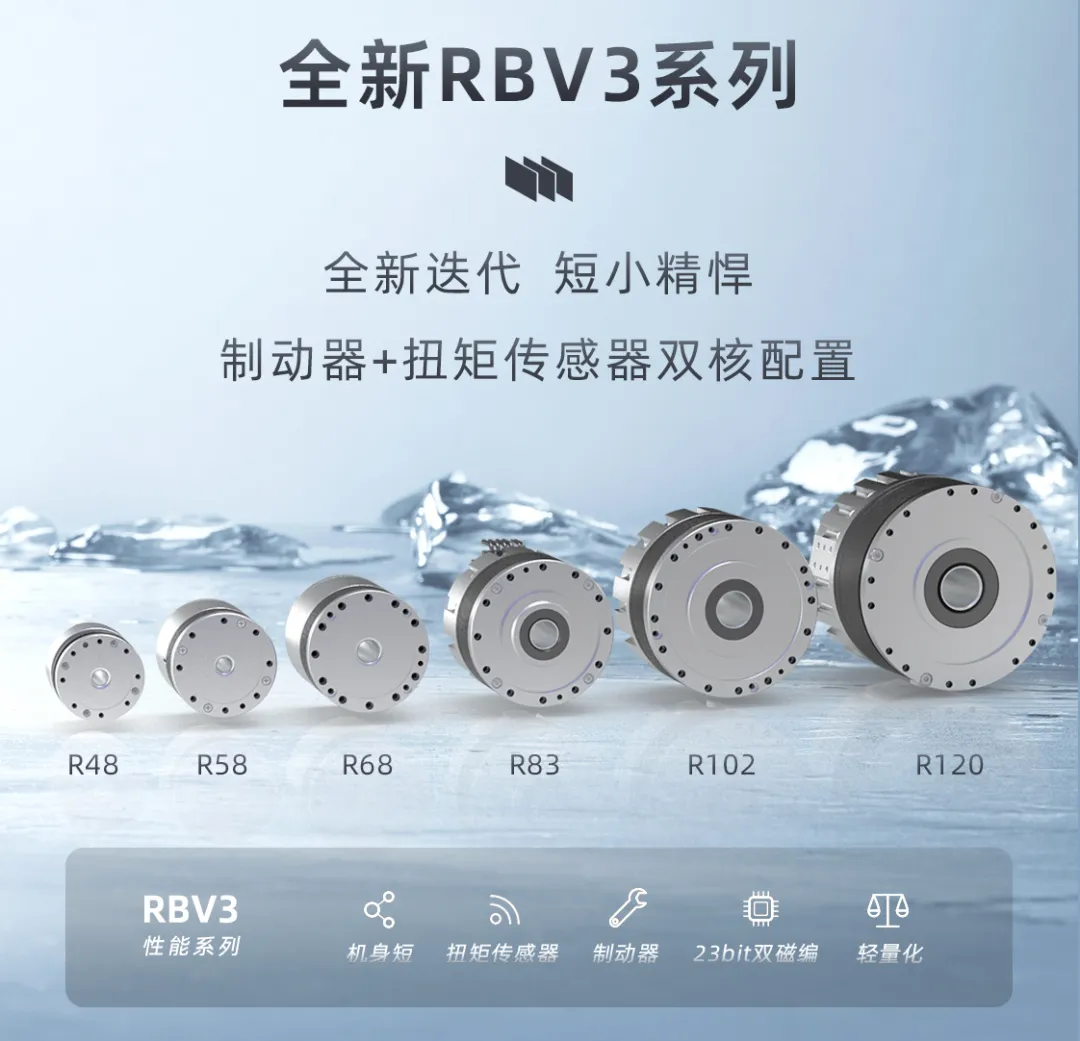
In order to save these troubles in order to use high-tech human-powered robotic assembly plants, Massive Intelligent incorporated brakes and torque sensors in RBV3 as samples native to the factory, completing the basic labeling, ensuring the delivery to the customer is a full-featured power control connector.
The difficulty arises when the two components are inserted into the originally tight filtering joints and the engineering difficulty is very high. The torque sensors are also easily disturbed by the motor, the decelerator stresses, and the assembly gap directly reduces the accuracy of the collection.
The solution to the Magnetic Intelligent is not a simple stack, but a complete topological reconstruction: customizable ultra-thin flattening brakes and torque sensors, eliminating surplus switches; deformed layout of the board, utilizing the path to the stationary space; part functional integration, compressing the axis to the length under the assumption of rigidity. Finally, the torque torque and position are marked on the factory side, and each module downline must run fully in front of the brake force control, brake life and test, consistency problems are solved at the end of the production line, not the brake customer.
These solutions ultimately resulted in a seemingly contradictory result: the RBV3 series had shorter joints on the premise of adding two components. For the assembly plant, shorter joints meant a series of dividends: for example, the same arm-length connectors and wire spaces were larger, the weight fused to the roots, a decrease in end-to-end rotational inertia, dynamic response and improved control stability.
At the configuration level, the RBV3 covers a total of six specifications from R48 to R120, corresponding to the full-point requirements of humanoid robots from the wrist to the knee, a full-scale calibration of the 48V voltage platform, a 23-bit dual-magnetic encoder, compatible with CANOpen, CANFD and EtherCAT, a back gap of 30 seconds, a design life of 10,000 hours, and a power gain accuracy of 0.5% FS.
The RMV3 series:
Industrial modules can also be short and light.
The RBV3 series is integrated into the Lite series, while the RMV3 series is integrated into the industrial scene.
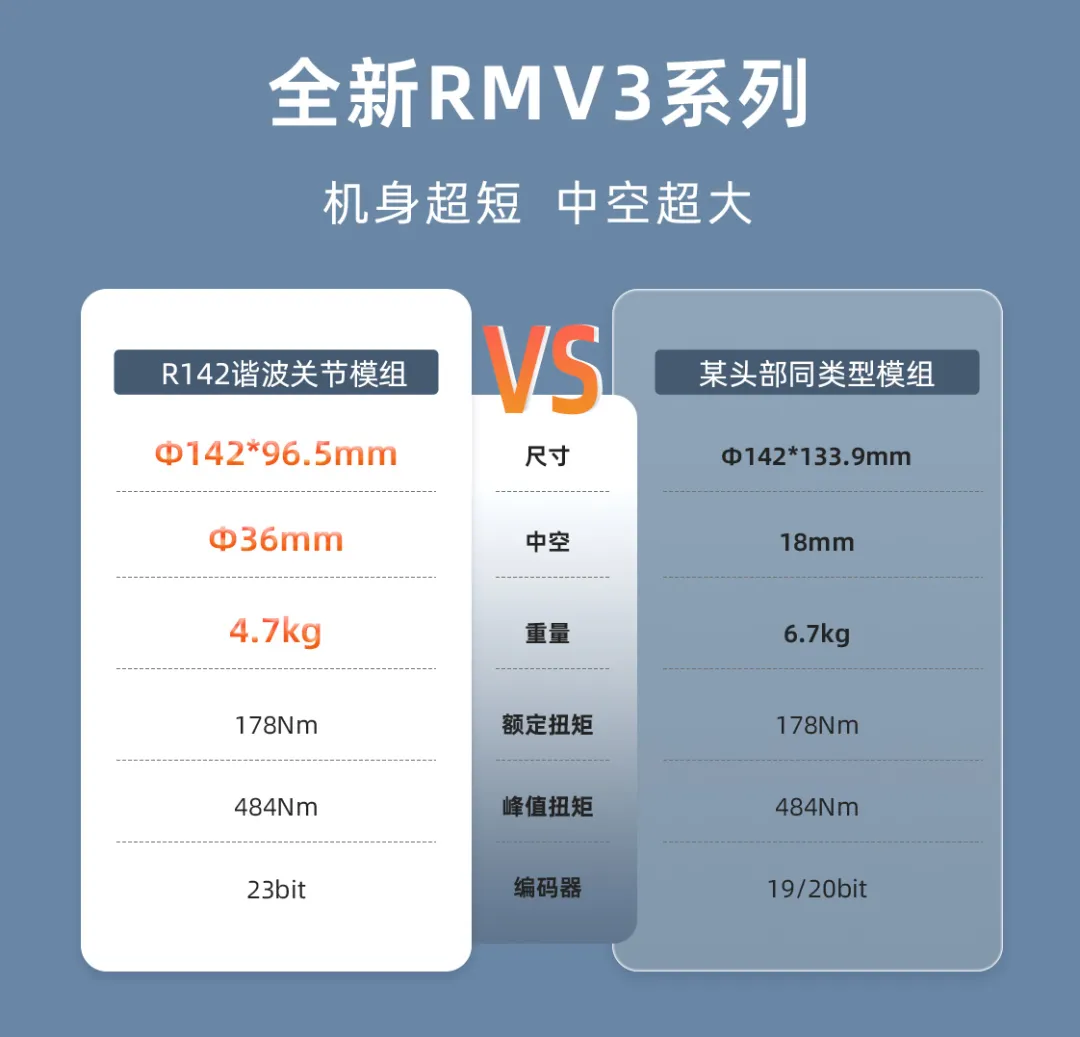
The key positioning terms for the RMV3 series are the ultra-short body + ultra-large mid-air brakes. Under the same diameter, under the same torque, the RMV3 designs ultra-short body to extremely compress the axis of installation space while retaining the ultra-large mid-air structure.
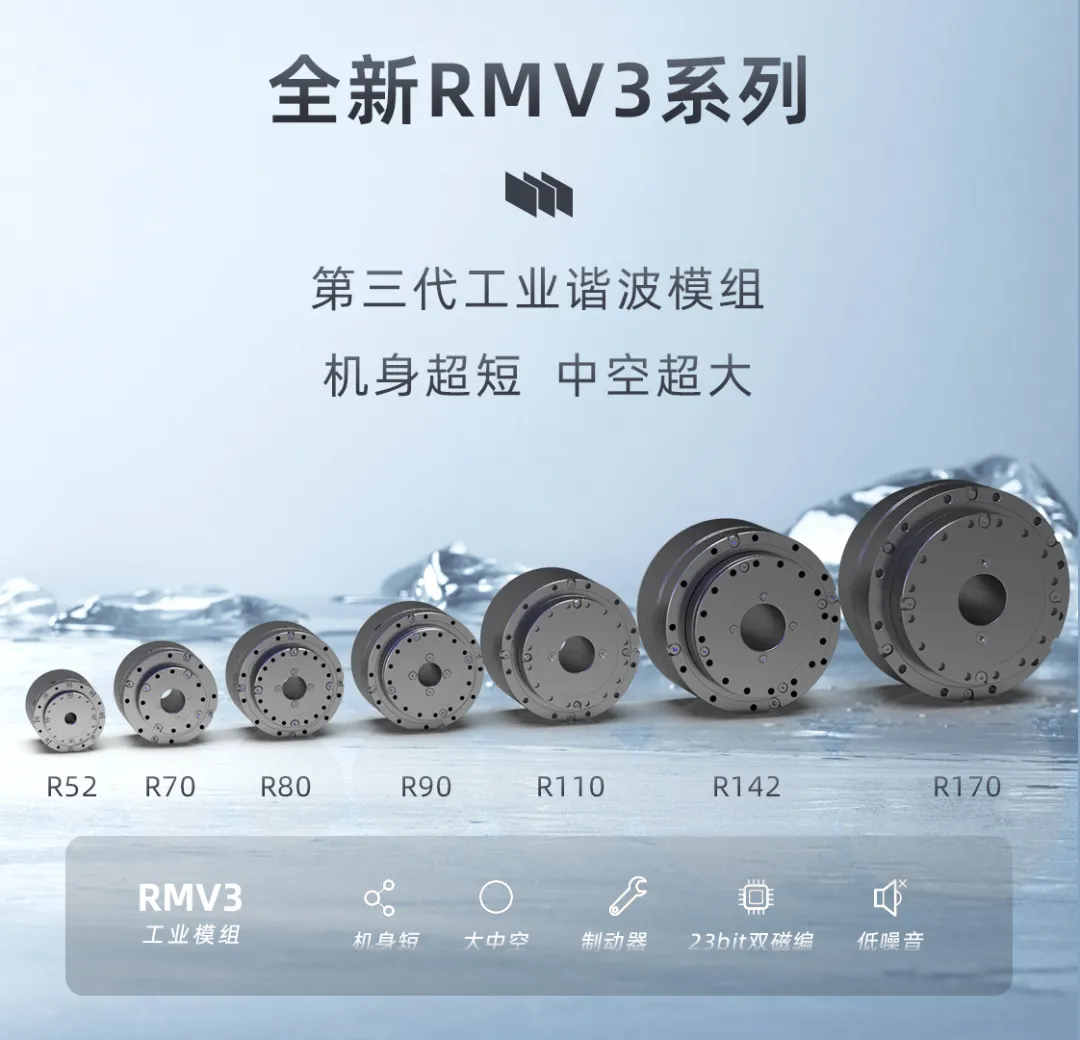
Its greatest technological breakthroughs were in the balance of high-voltage and high-torque densities, with traditional schemes often sacrificing torque; RMV3 was designed to optimize the torque of the torque reducer by simulating the torque structure of the cylinder, while maintaining the nominal torque in high-voltage space; the torque of the cylinder and the torque of the cylinder was optimized to reduce weight and shorten the axis direction under the assurance of rigidity and shock resistance.
Specifically, the RMV3 covers a total of seven specifications from R52 to R170, with rated torque of 3.5Nm to 382Nm, peak torque of up to 841Nm, and a median bore of up to 40mm.
The advantages of big space are particularly evident in industrial scenarios, where cables and pipelines can pass directly through the center of the joints, greatly simplifying machine wiring. Therefore, RMV3 focuses on collaborative robots, industrial robots, rotary workstations, and other equipment, with a focus on flexible assembly, inspection of workstations, precision drilling, and special operations.
It is worth mentioning that RBV3 and RMV3 share a third-generation pump wave module, a simulated pump wave simulation system, a new generation of binary magnetic coding sensing technology, a drive control hardware and algorithm platform, an output line standardized test system. The difference is in the direction of scene strengthening, RBV3 strengthening braking, force control and falling impact resistance, RMV3 strengthening medium space, resistance to vibration and long continuous service life.
At the bottom of the arrow
At the WAIC conference in July, the RBV1 series was promoted by the Giant Viper. Why is it that a month later, the giant Viper Viper Viper will have a one-off rally at WRC 2026?
Intel explained to high-tech robots: the three series have already completed internal verification, reliability touchdown and small batch delivery, completed engineering verification, and have the conditions to be released to industry customers. The selection on the WRC is aligned with the hope of releasing a complete product matrix, allowing the factory to complete the full-point option at once, covering the three scenarios of man-made lightweight joints, man-made high-performance joints, industrial loading modules, directly matching the demand for mass production rather than the release of fragmented units.
At this point in time, it is also due to the fact that the turning point of the industry is coming. Many integrated customers have entered the bulk production, the order cycle has been extended, there is a demand for lock-in spare parts, and the order has doubled this year.
The largest gap in the current supply side of the pump wave module is not in the capacity of the decelerator parts, but in the stability of the production capacity of the entire chain of the integrated joint module: system integration, marking, consistency, production line capacity gap for full process testing; high-integrated module production capacity of torque sensors, brakes is scarce; performance costs and standardised mature products of the delivery cycle are equally scarce, and many products remain in the engineering sample stage.
This is precisely the essence of the giant intelligence that dares to shoot three arrows.
With full self-development and control of the upstream, the Magnetic Intelligent Wave Decelerator, frameless motor, encoder, drive board are all self-developed, self-produced, heat-processing, and precision-processing processes. This ability has also been verified at the industry level.
On the manufacturing base plate, in October 2025, it announced the completion of its nearly billion-dollar A-Round financing, providing ammunition for its expansion and advancing its million-tonne annual capacity target. In quality control, it constitutes a complete set of quality closures, including full process simulation, automated assembly and labeling of production lines, full downline testing, temperature cycle and fatigue life.
In terms of capacity planning, the company is building a multi-line flexible manufacturing base: Lite reserves the maximum flexibility capacity to cope with prototypes and small and medium-sized customer orders; the RBV1 and RBV3 human-powered series prioritizes the expected production and small batch orders of the head unit; RMV3 on demand for expansion.
Who will remain at the table for the next three years?
In Magento's view, over the next three years, the industry will accelerate the rebranding, ultimately leaving three types of players: manufacturers of fully automated production models with large-scale stable manufacturing capabilities; vertical specialty players focused on segmentation racing; and internal supply chains for integrated machinery supporting only their own machines. Manufacturers that only make samples and lack core automation and mass production capabilities will be phased out.
Magnetic Intelligent's goal is clear: to become a fully self-developed platform-level supplier of pump junction modules with the capacity to deliver mass production, while servicing humanoid robots and high-end industrial equipment on two racetracks.
By the time robotics crossed the mass production bend, the competition for joint modules was no longer just a digital game on the parameters table. Price, integration and delivery, the three cards played at WRC 2026 by Giant's Intelligences, happened to be the three key words in the new phase.