From this year's WRC exhibition, we discovered something very interesting: robots are starting to change their bodies to adapt to the environment.
Some have folded it, others have raised it to better adapt to more complex work environments such as commercial and industrial scenarios.
In the past, the industry's main topics of discussion have been big models, world models, smart people, smart hands, and robots that can't walk, can't run, can't perform complex operations. In contrast, folding and lifting are more like questions that mechanical engineers will discuss repeatedly at product design conferences.

But once robots get off the stage and into the real world and start doing something on the ground, these problems suddenly become important.
A 1.7-meter-high robot, which looks good in a wide showroom, reaches the elevator gate and the height becomes a problem; a set of mechanical arms capable of performing complex operations, facing different heights of laboratory decks, shelves and equipment, also encounters the limitations of working space.
Human beings are rarely aware of these difficulties because our bodies have adapted to the world.
If you walk up an elevator, you will be naturally sideways, if you walk through a narrow door, you will shrug your shoulders, if you put things high, you will get your feet up, if you lower your table, you will get bent.
Robots don't have that instinct.
It has to actually write these changes into mechanical structures, motion controls and perceptual systems.
But at this year's WRC exhibition, we suddenly found that people were beginning to worry about how the robot was deployed, who was developing it, who was buying it, and how it could not work long after it entered the real world.
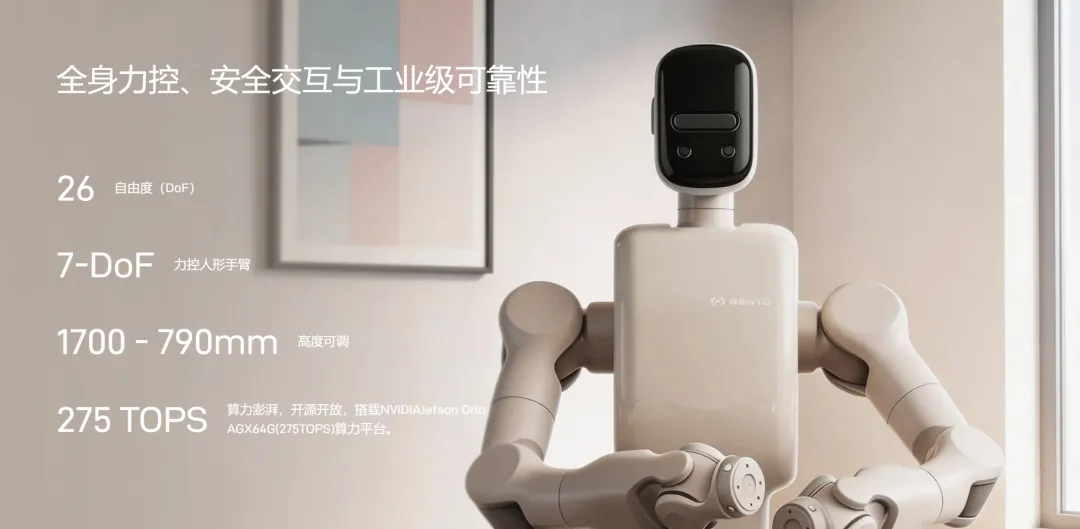
It's also in this context that many companies have embraced the Marvin humanoid arm of the Skyplane as the first choice to build the high-performance control robot body needed for physical intelligence to improve robotic flexibility.
For example, its two previously released new products, the Gento Luna can be folded, the Gento Skye can be upgraded, and the core is to allow the body of the robot to change with the environment. In addition, the Luna's arms can be adapted to the Marvin M6S Lite, the armrests can be added to the 680/750, and the Skye's arms can be adapted to the Marvin 696, which can also be adapted to the 809,920, with rich options that are easier to meet the needs of intelligent multi-scene operations.
01.
Space becomes a problem after robots enter the real world
In the past, industrial robots had a very comfortable working environment. Workplaces were designed in advance, equipment was set up in advance, the robot's position was fixed, and the workpiece's position was fixed.
It's the opposite. It's trying to put robots in a world that already exists. Tables in this world won't come at a uniform height because of robots, shelves won't be rearranged, office doors, elevators and corridors won't be rearranged to the size of a robot company.
Space becomes a problem for the first time from the background itself. How much freedom a robot has is of course important; how many tasks a model can understand is also important. But if it doesn't even reach the target location, the ability behind it is meaningless.
This is why wheel mobility has always had its place in the world of indoor robots.
Wheels are very efficient at moving on flat ground, and the mechanical structure is relatively mature. The problem is that wheeled robots used to be good at moving, but not very good at operating; and humanoid robots, although they have a more human-like operating structure, need to take on the complexities of bipedal movement.
Gento Luna tried to put two things in the same system.
It uses four-wheel drive, four-wheel-drive and all-wheel-drive; the two arms have a 7-frequency structure with a single-arm rated load of 5 kg, a repeating positioning accuracy of ±0.03mm, and a power-repeating accuracy of ≤0.15N.
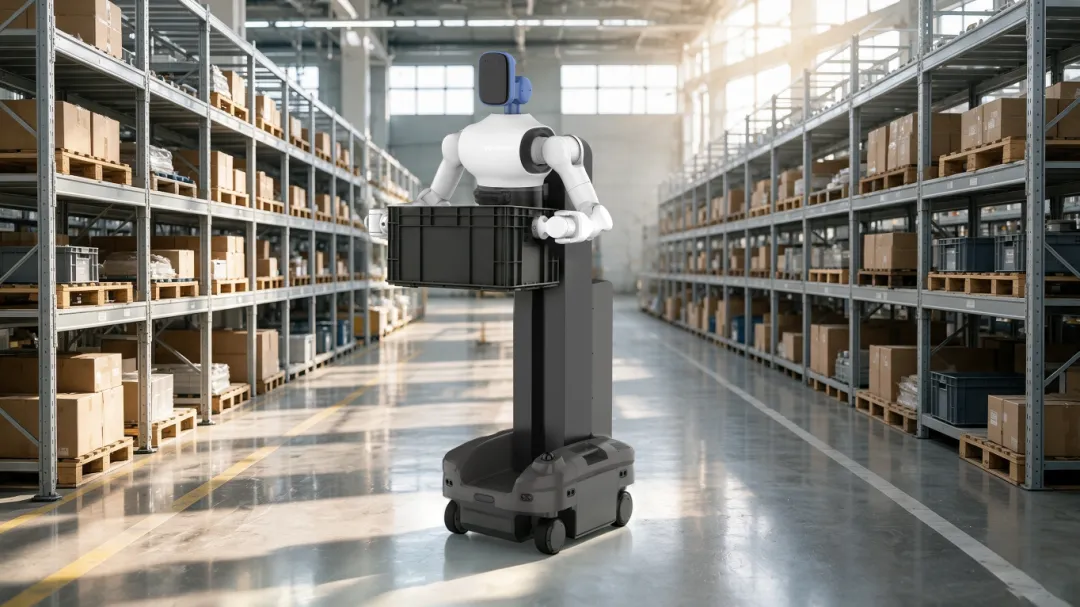
More interestingly, its body. The Luna stands at a height of about 1700 mm and the minimum height after folding is about 790 mm. The product uses elevators, narrow space transport and storage as a folding structure. The 790 mm figure appears to be just a line in the parameters table.
While robots can only accept a fixed body size, there is now a choice: to stand up when they need to work, to collect themselves when they need to travel through a narrow space or transportation.
The technical significance behind this is much greater than the two words themselves. It means that the shape of the robot begins to enter the task planning. In the past, we discussed robotic movements, usually asking how to turn the joints and where the chassis is going; in the future, motion planning may also include a variable shape of the robot to complete the movement.
This is a troublesome thing, because once the body can be folded, the center of gravity, joint state, collision boundary and dynamic models change. Folding is not so simple as adding a chain, it has to work with the control system.
Gento Luna therefore placed the force control at the overall machine level. The Robotics Workshop learned that its two arms were synchronized to the joint force control, and that several degrees of freedom in the waist and legs also adopted the force control joints, supporting resistance control and mixed force control; it could adjust motion status based on real-time sensor feedback when exposed to external collisions or load changes.
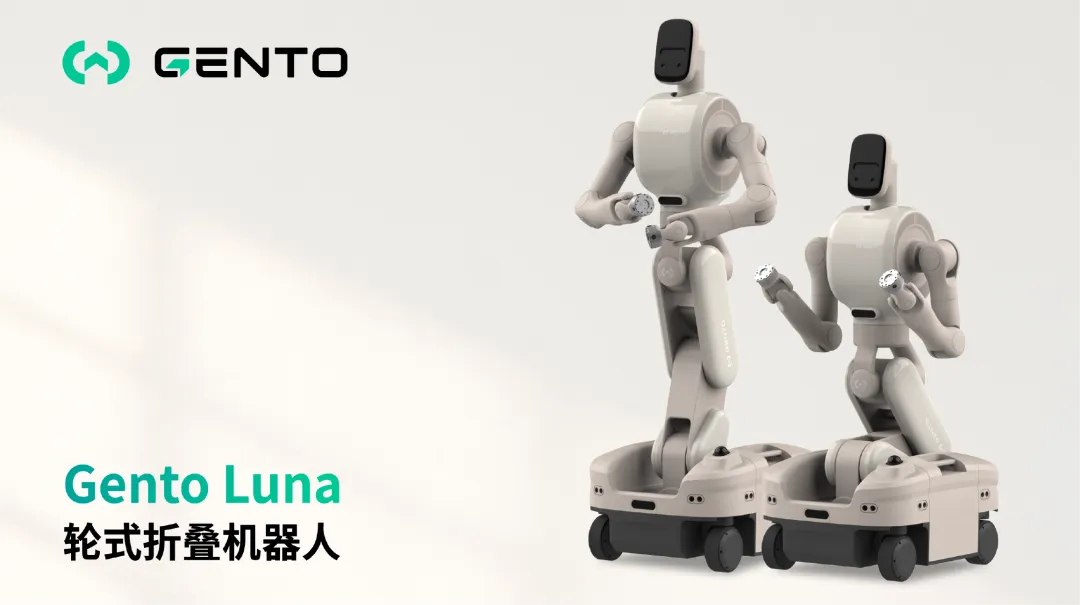
In addition, Luna offers two AI computing platform configurations for NVIDIA Jetson AGX Orin 64GB and NVIDIA Jetson Thor T5000 to provide powerful edge computing capabilities for visual perception, deep learning, motion control and physically intelligent applications.
The NVIDIA Jetson AGX Orin 64GB is equipped with high-performance AI computing and multi-modal sensing capabilities to meet the computing needs of mainstream physical intelligence applications; the NVIDIA Jetson Thor T5000 is based on a new generation of architecture that is geared towards higher-complexity AI models with physical intelligence applications, offering stronger AI computing performance and energy performance. Compared to the NVIDIA Jetson AGX Orin, the Jetson T5000 AI is up to 7.5 times more powerful and up to 3.5 times more efficient.
At this point, you'll find that folding is actually just the part that's the easiest to see. The real difficulty is that after folding, the robot will still be a robot that can run steadily.
02.
Luna solves the big problem of how to get into the tank.
In the past, the robotics industry has enjoyed discussing moving speeds - 1m/s or 2m/s, being able to climb, being able to cross obstacles. These indicators are important, of course, but in many indoor scenarios, one often overlooked indicator is that robots can't reach their target location successfully.
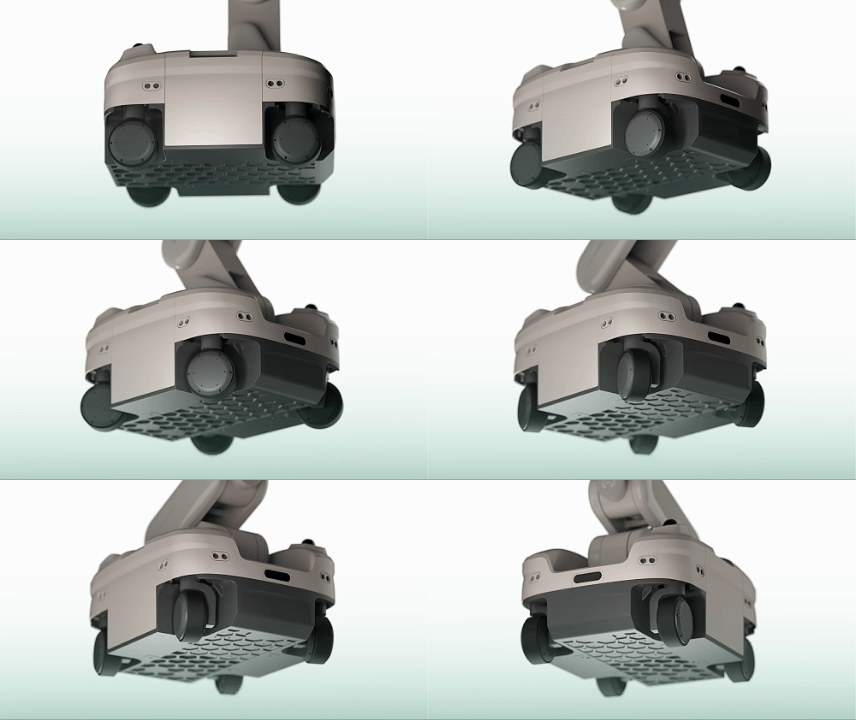
Compared to most humanoid robots in the WRC, the wheeled chassis is undoubtedly more stable. Luna's chassis combines stability and mobility with speeds of up to 1.5m/s, uses 3D SLAM navigation, 3D laser radar and ultrasonic radar for environmental sensing, can complete autonomous positioning, map construction, dynamic avoidance and route planning. The chassis has a nominal load weight of 100kg, stopping accuracy of position ±20mm, angle ±1°. Its battery capacity supports 4×6 hours of continuous operation, and offers three modes of manual charging, automatic charging and fast charging.
When these parameters are put together, Luna isn't actually a walking mechanical armor, it's more like a mobile operating system.
The robot moves from one end of the lab to the other, passing through a narrow area, entering the target site, adjusting its posture, and then letting its arms start working.
This is the reason why wheeled structures are still valuable in an age of physical intelligence.
The advantage of a humanoid is that it can inherit a large number of environments and tools designed for humans. The advantage of a wheeled robot is that it does not have to assume the complexity of the human legs themselves.
The ground itself is flat enough for laboratories, office buildings, commercial spaces, and some factory environments. At this point, if the wheels could make the robot more stable, more efficient, and hand the operation over to the arms, the entire system wouldn't have to rely on a complete replicator's lower leg.
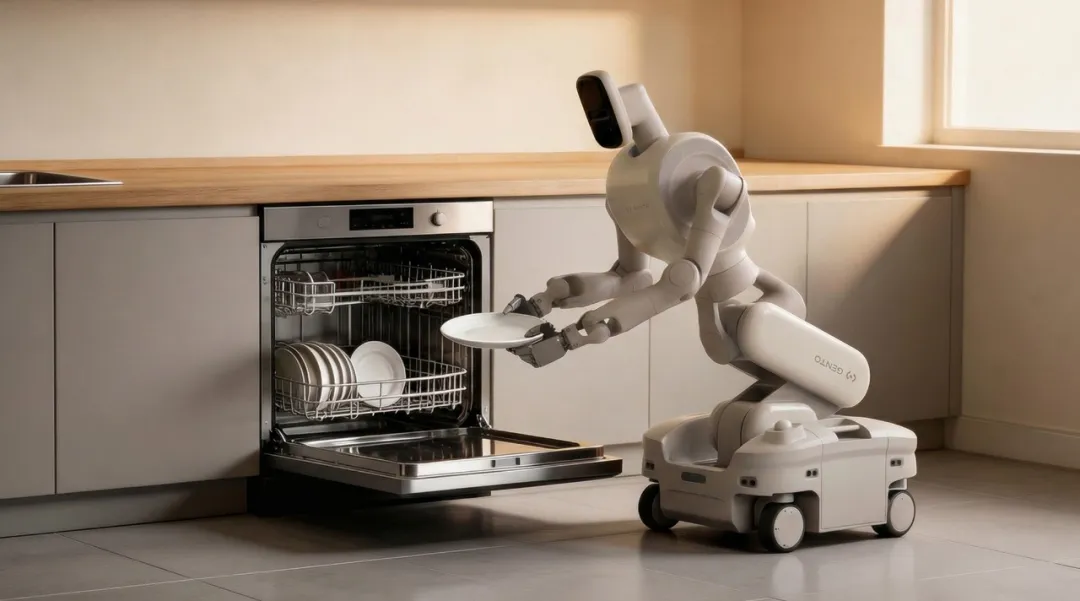
After all, the robot is not taking a biology exam. It will eventually complete the task. Therefore, Luna's value is not in proving that rotary robots can replace humanoid robots, but in offering another idea: that robots can reassemble their physical abilities according to their environment.
This also allows Gento Luna's two-arms architecture to integrate remote operation and data collection software with open SDK, API, ROS2 and EtherCAT interfaces, each of which is equipped with self-developed MEMS power matrix sensing, power control, resistance control and power-position blend control, which can achieve responsive contact detection and full-body smooth movement, making it easier to develop, learn, evaluate, and real-world operations.
Because if the wheels are enough to solve the problem of mobility, then more mechanical complexity is left to the parts that really affect the completion rate of the task, such as the arms, power control and perception. This is also the reason why the robotic form has become increasingly rich since we discovered it today.
03.
If we continue to push the landing issue one step further
If Luna solves traffic, then Skye solves another very practical problem: working altitude.
Height varies widely in industrial sites. A laboratory may have both desktop equipment, ground equipment and high-level instruments; storage environments have different levels of shelves; and production lines may have different heights of workstations.
It's very simple to face these differences.
The robot needs to adapt its arm's range of motion and position very strictly. Sky opts to add an elevator.
It can adjust the height of the robot's body according to the task, allowing the mechanical arm to cover different operating areas. Product information shows that Skye uses adjustable lifting devices and is designed for laboratory, industrial scenarios and multi-purpose task verification.
This design has an important place. It does not require the environment to change first, but rather robots themselves. This is a marked difference from previous automation systems.
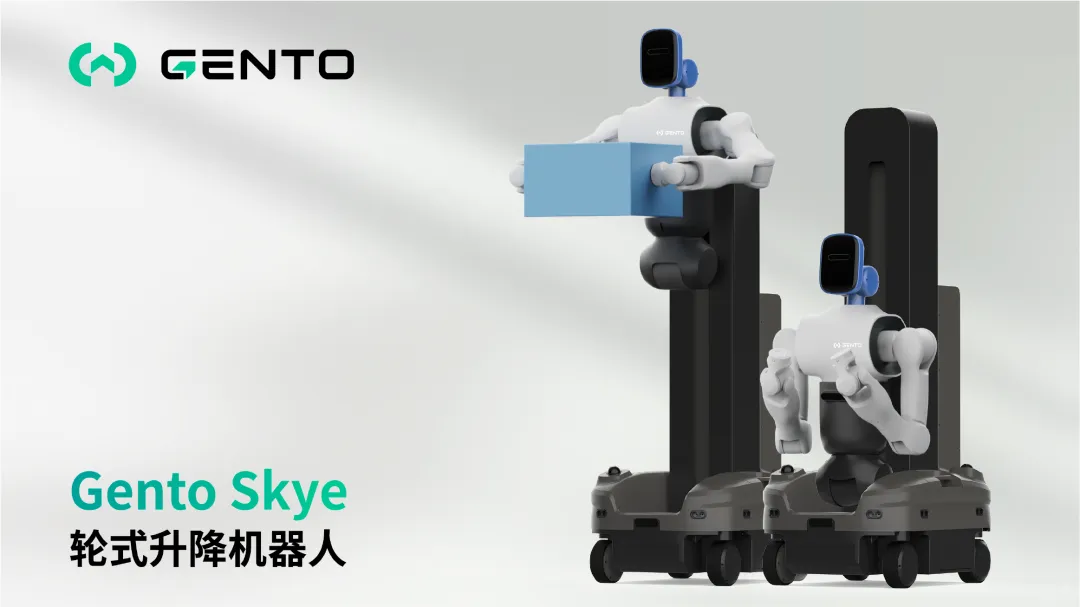
Fixed mechanical arms are highly efficient because the entire system builds a standardized space around it. However, when the robot begins to face an open environment, the environment is difficult to standardize again, and the robot itself must undertake more adaptation tasks.
The elevator structure is actually changing the working coordinates of the mechanical arm.
The same set of arms can cover more work space by changing the height of the base. This ability is particularly important for platforms that require repeated task verification, data collection and reinforcement learning training.
Because training robots doesn't just require a product that can act.
Researchers also need to consider the mission conditions. Changed altitude, changed load, changed target location, changed external equipment, can robots re-execut? Are strategies still in place? Can data be continuously collected?
Skye's positioning is therefore more in line with the needs of scientific research, training and engineering verification. It supports multi-dimensional data collection such as position, speed, torque, and joint axis voltage, end voltage, while being able to access camera, touch and other surfaces, and emphasizes consistency of motion under different operating conditions.
This involves a very important but core issue of physical intelligence: in situations such as the home, model training does not require accidental success, but a large number of repeatable real-world experiences.
The success of robots today in capturing an object does not mean that the system has actually learned to catch it.
If a change in time, a change in temperature, a change in load, a change in the state of a robot and the movements are completely different, it's hard to tell whether the changes in the training data come from the task itself or from the instability of the robot itself.
So Skye combines stability, data collection, and control of openness, not additional functionality. It solves the basic problem of cognitive intelligence from one-on-one demonstration to repetitive training.
04.
After entering the next stage of physical intelligence
From WAIC to WRC, a problem that can easily be overshadowed by model heat begins to surface.
We've all been talking about VLA, world models and multimodal data before, but in the context of landing, we're beginning to realize that robots are ultimately going to turn the output of a model into real action through joints, sensors, and performers.
Models can complete a reasoning in milliseconds or less. Robots have to endure continuous operation for hours, days or even longer.
Therefore, the state of the hardware itself becomes a part of the data. Temperature changes affect sensors, load changes affect the dynamic response, collisions change the dynamic state of the mechanical structure. Different joint gaps can also result in different results from the same control instructions.
This is why the Gento series repeatedly emphasizes power control, stability and open data interfaces.
The Robotics Workshop learned that Luna's power control is based on real-time sensor feedback and is not highly sensitive to model errors; even if folding joints or load changes cause a deviation of the dynamical parameters, the robot can still adjust itself to maintain stable operation.
Skye further extends the issue to long-term training. Product information emphasizes 7×24-hour continuous operation and consistency in the training process in terms of hardware heating, long-term stability of critical devices, and sensor temperature drift.
This could be worth more than a beautiful DEMO.
Because once the data that physical intelligence really needs is scaled up, the uncertainty of the robot itself quickly becomes a cost. If each move is accompanied by a different degree of random error, it is difficult for the model to establish a stable causal relationship.
And if the robot is able to control its state within a relatively stable range, then each execution is truly comparable.
From this point of view, power control isn't just a security feature this year, it's becoming an interface between models and the physical world.
In a future system with physical intelligence, models are responsible for generating behavioral intentions, robots perceive the environment through visual, cognitive and physical states, and control systems adjust behavior to the extent that it can be executed in the real world.
This is why the spacecraft does not limit its capabilities to the robot's own body.
At the model level, the spacecraft is also self-developing the VA-dex model and the Anygrasp model, continuing to extend to its visual, operational and crawling capabilities.
At the component level, the spacecraft has developed its own MEMS motion sensing and control system, which enables robots to have multi-dimensional perceptions, helps the body's intelligent body to respond to sensory contact and behave confidently around people and objects.
The body, control, perception, data, and models will eventually become increasingly difficult to completely tear apart to form a more organic unity.
05.
The shape of the robot begins to rub against the sacred makeup.
There is a very good reason why humanoid robots have become the mainstream of the industry in the past few years.
Human societies were designed according to the human body. The doors, tools, shelves, cars, production lines, and vast infrastructure were all based on human height and mobility. Therefore, allowing robots to have a body close to humans can indeed reduce the barriers to entering these environments.
But as robots really start to make their way into industry and land, another fact is being discovered by more and more people that the human body is just a viable solution, not necessarily the best solution for robots.
Humans need two legs because they don't have wheels. Humans can't fold because the biological body has its own boundaries. Humans need to bend and kneel in front of different heights of the workbench because the body size is fixed.
There is no need for robots to inherit all these limitations.
From the exhibition of the WRC, it can also be seen that the types of robots are not only human-shaped, and that robots in the future may not be more unified, but more diversified.
Human-shaped robots continue to solve complex mobility and general operations, with wheeled robots taking on indoor mobility tasks, elevated structures covering multiple elevations, fixed arm platforms dedicated to scientific research, training and high-precision operations, and robots that are more adapted to various scenarios, such as pipelines, climbing walls, etc.
This doesn't mean that a certain route has failed. It's just that the robotics industry has begun to move from looking for standard bodybuilders to looking for the right bodybuilders.
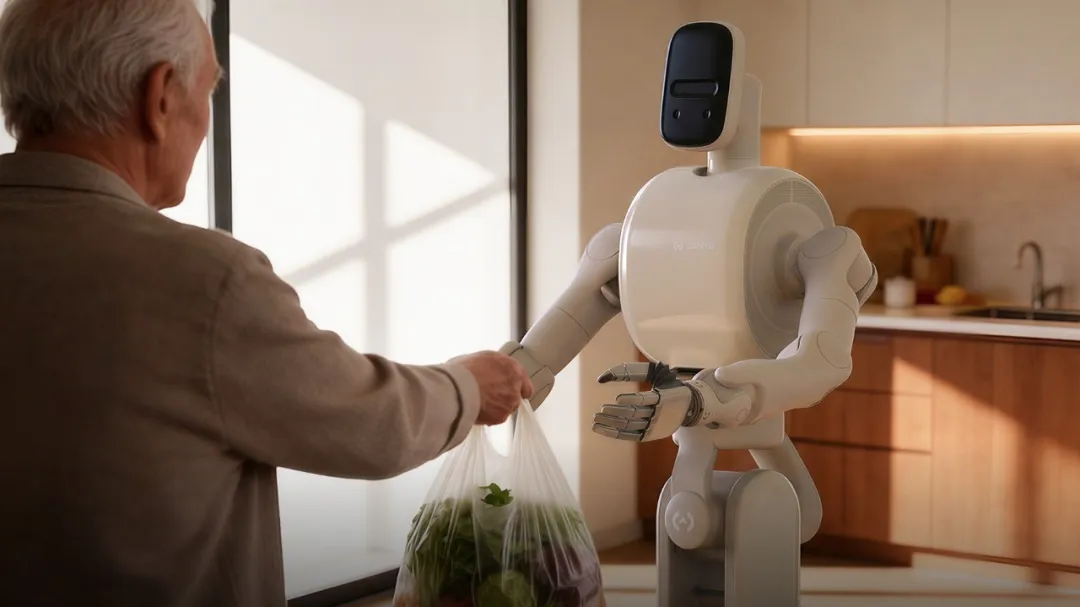
The value of Gento Luna and Skye is also here. They don't try to solve all problems with the same mechanical structure. Luna focuses on mobility, space navigation, and arm operations; Skye emphasizes high adaptability, multitasking, and training and data collection.
Both formats are accelerated by high-performance, reliable hardware and meet two different reality requirements.
This is closer to the problem that the robotics industry will face when it really enters large-scale applications than merely pursuing outward-looking humanisation.
06.
The body can change, but the underlying capabilities persist.
From this point of view, the Gento series can be found in the entire product system of the aircraft, which has been trying to find a variety of products that are more adapted to the scenario.
For example, Gento Luna emphasizes mobility and operation, Gento Skye focuses on training, data collection and multi-location verification, while Marvin is more committed to hand-to-hand operations in fixed scenarios.
The body can be different, but the underlying capabilities need to be able to accumulate continuously. Thanks to the delivery of 30,000+ industrial robots, serving 1,000+ corporate customers, 99% on-time manufacturing success rate, and product failure rate below 1.5%, Tianjin is actively building a power control robot platform for physical intelligence.
This is also the main reason why Skyline is positioning itself as a smart infrastructure platform.
The future of robotics is going to be difficult with only one form. An enterprise, a platform, that is really worth considering, should be the ability to replicate across forms: motion control, power control, perception, data acquisition, development interfaces, and model capabilities.
The more mature these capabilities become, the more freely the robot can change.
Today it may be a wheeled robot, tomorrow it may be a humanoid robot; today it needs to be folded, tomorrow it needs to be upgraded; one task may need two arms, another task may need only one arm.
If the underlying system is open enough, change in form does not mean that technological capabilities start from scratch every time.
In the past, the robotics industry was more like building a robot. In the future, the industry may be increasingly like building a system of capabilities that can continue to produce robots.
This year, the WRC has separated release, procurement, and developer into different themes, which have already illustrated the stage at which the industry is at: AI has learned to see, talk and reason, robots are moving from products on the platforms to systems that are shared by supply chains, developers and real users. While Gento is trying to empower more robotically controlled robots to be able to move naturally, react to touch, and interact securely with the physical world, accelerating current development and supporting future real-world operations.
Looking back at the folding plates and the lifting plates, they are no longer just two mechanical structures. They represent a very specific change, a more specific kind of need. It also means that robotics companies are starting to take a serious look at the ground, because the real world will not be neat for robots. Doors are as narrow, shelves are as high, workstations are as high.
So robots need to change themselves. This could be a very simple but very important change from 2026 when physical intelligence moves from the laboratory to the industrial scene.
07.
Link to the Future
In the past, people asked robots when they could be like humans.
It's probably a common question now, when will robots really adapt to the human world and come to all sorts of scenarios and even thousands of families?
If the answer starts to appear in a folding robot, an uplifting robot, then the robotics industry is entering, perhaps no longer a mere puppet era.
At a more complex stage, the machine began to have the ability to rearrange its body as a task.
At this point, robots don't seem to be as important as humans.
It can't get in, it can't get in, it can't work steadily, it can't turn a success into a success that can be repeated ten thousand times, and it really determines how far away it is from being physically intelligent.