The model's capabilities are changing and the way it is used needs to be updated.
Recently, Addy Osmani, a member of the Anthropic Claude Code team and former director of engineering at Google, wrote a long post about a habit many users may have: writing too many tips and instructions to Claude.
The title of the article is "Excessive Tipping": you've probably been "exaggerating" Claude. As the new generation of models improve, it's time to rearrange the way things have changed in the past, and the way things have been used in the past.
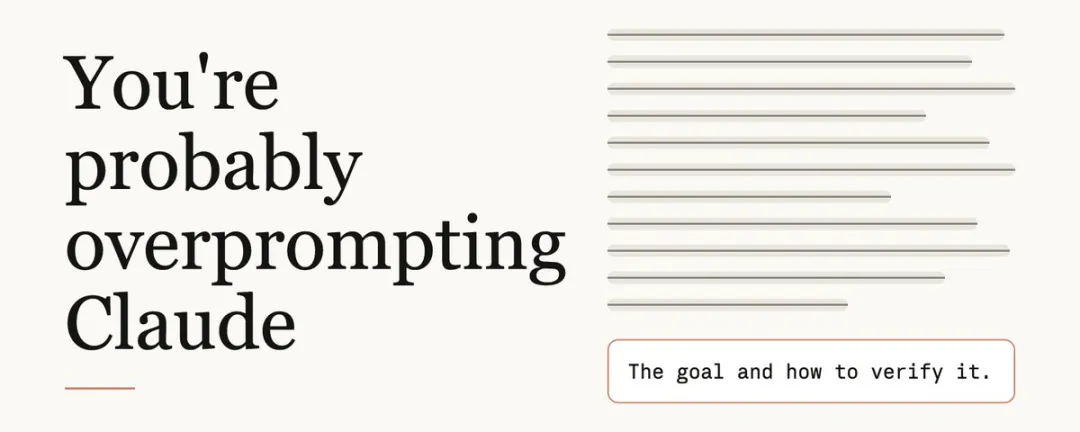
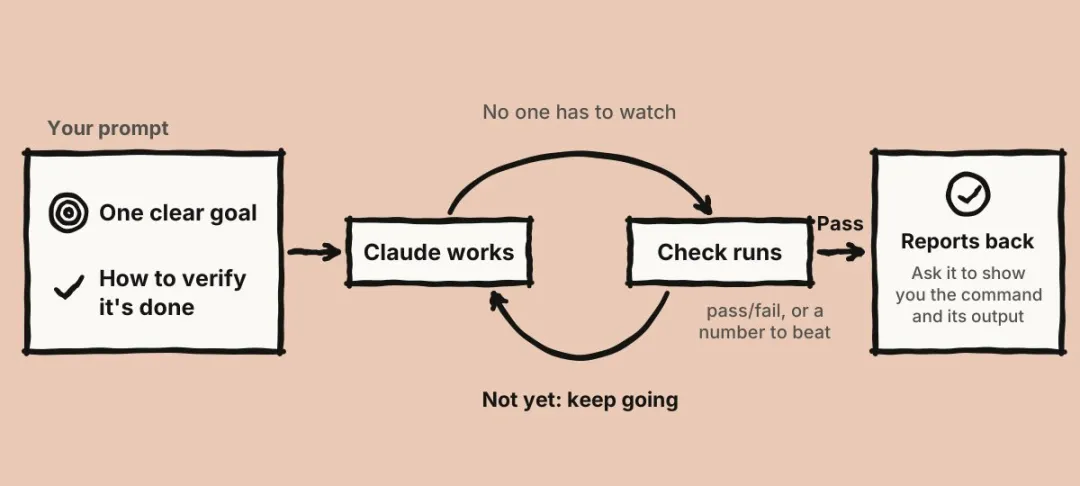
When using Opus 5.5, Osmani suggested a simple method: using a hint to make clear what he wants to do and how Claude should check if he has completed the task and then let it do it. The intensity of reasoning can be adjusted from the /effort medium to the actual situation.
If the user doesn't understand the needs themselves, Claude can ask questions until he has enough information to write a request statement and start a new session to work according to this statement.
The acceptance criteria are worth more thought. Claude believes that when the task is completed, it will stop on its own; if it can run a check, judge the results with a "pass or not pass", or verify around a definite numerical goal, and can read the check report, it can continue to modify and check according to the results.
With an executable acceptance standard, the model can proceed with the task more independently and the user can reduce intermediate intervention. For tasks that require a long time to run in the background, the /goal can also be used to determine whether the task is completed by another model at the end of each round.
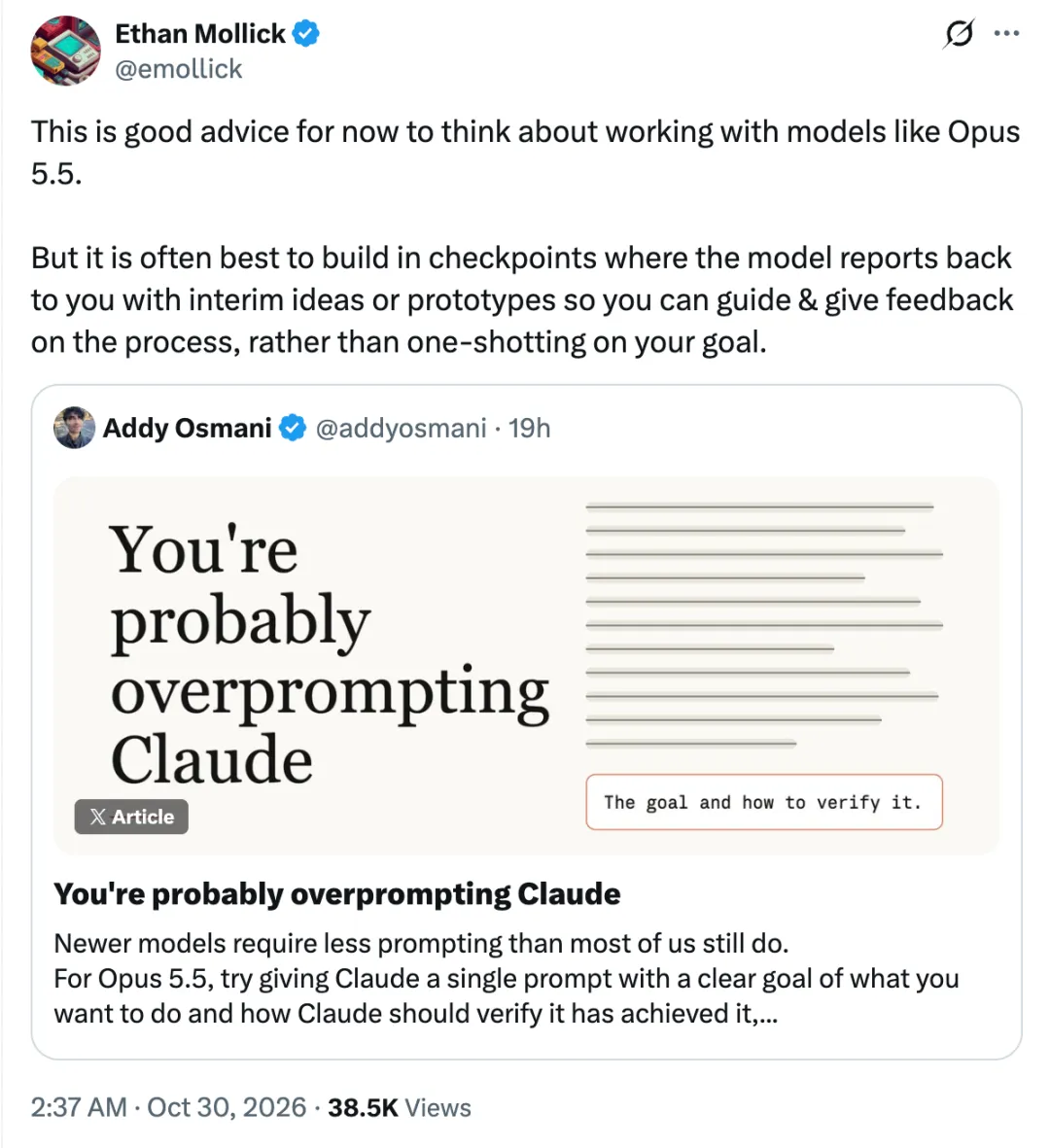
As for when users intervene in the process, Ethan Mollick, associate professor of management at the Wharton School of Business, added a suggestion: set a phase checkpoint in the task, and have the model report initial ideas or demonstrate prototypes.
So how much can the prompts be simplified?
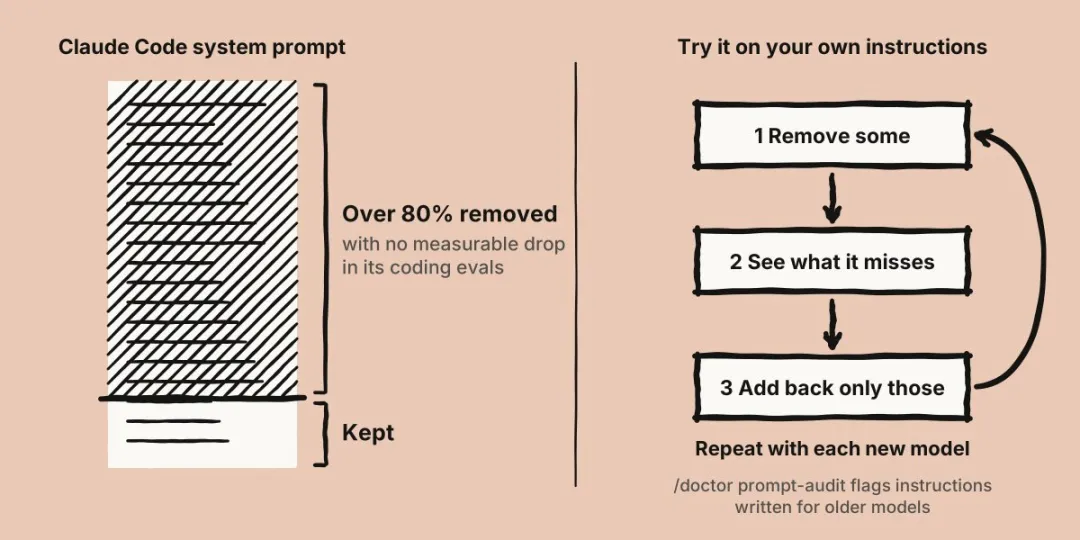
In the text, Osmani mentioned that for models such as Claude Opus 5 and Claude Fable 5, Claude Code removed more than 80% of system prompts, with no measurable decrease in programming evaluation performance. He also suggested that users do a similar experiment with their own prompts after the new model is released: remove the part first, see where the model omits the request, then replenish the relevant instructions, and/or the doctor prompt-audit command can help find the prompts written for the old model.
In short, the prompts also need to be cleaned regularly, and long-term accumulated rules can be re-validated.
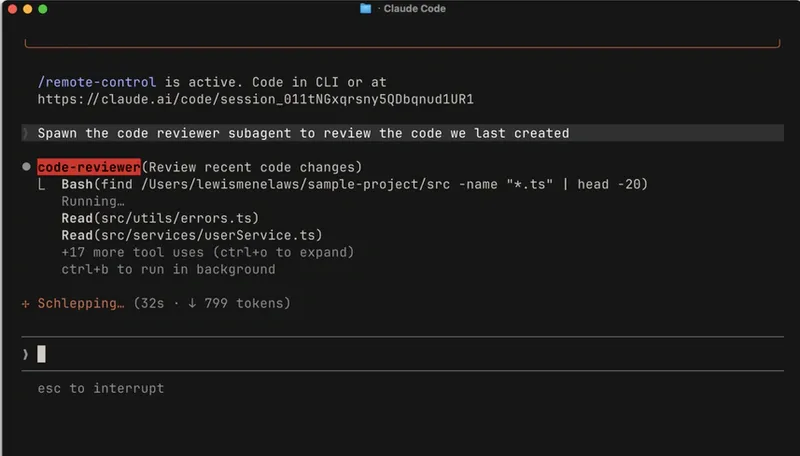
A similar adjustment applies to sub-intelligible entities, where Claude has been able to allocate work on his own and can usually arrange it himself. When faced with extensive scrutiny, large workloads such as code migration, and tasks that can be carried out independently, he explicitly requires that it be disassembled and handled in parallel. For small tasks, calling multiple sub-intelligible entities increases costs and waiting time, so it is still necessary to see if the task itself is worth disassembling.
In Osmani's view, a sub-intelligent body is suitable for parallel processing tasks, providing a second opinion, and the amount of use needs to be matched to the scale of the task. According to his observation, when users build a smart body themselves, a smart body equipped with the right skills may achieve better results, and cost less, and respond faster.
If you want the post-computing task to continue, Osmani recommends using Claude's cloud session. Users can start from the claude.ai/code、Claude app, or via claude --cloud. The cloud session will clone the code repository on an independent virtual machine, so you need to push the local submission to the remote before starting. You can then use your phone to see progress, answer questions posed during the session, and finally check the code differences and create PR.
Further, when multiple sessions are running simultaneously, the management work will also increase with each session: what is being done, what has been completed, and what is waiting for a response will need to be tracked. Therefore, Osmani suggested that one session be able to complete tasks independently first, and then consider running multiple sessions simultaneously. If each work requires frequent intervention, multiple sessions will also increase the time for users to switch back and coordinate.
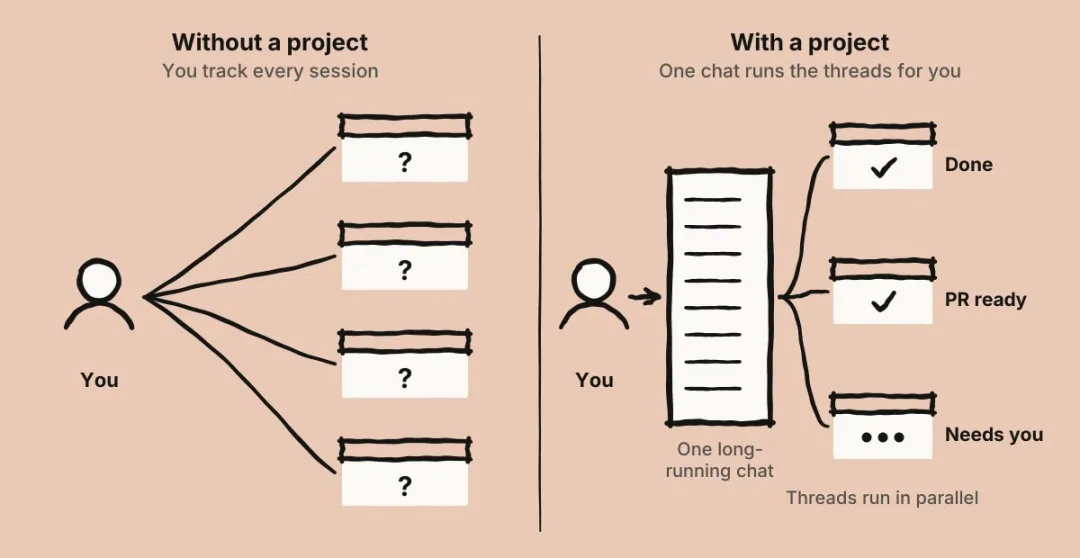
Claude Code's Projects function handles part of the management work. A project is the equivalent of a long continuous conversation, in which users can paste in successive issues and tasks, and Claude creates separate threads for each task, usually through a cloud session. User-switched project requests are applied to subsequent new threads; overview pages focus on presenting task progress, reviewable PR, and waiting for user response.
As more execution work is handed over to the model, users need to pay attention to verification of results. Recent versions of Claude Code have set the automated mode as the default way to start interactive terminal sessions, and the classifier evaluates Claude's operations. Osmani reminds that the automated mode is still limited, and the step-by-step approval permission prompt requires careful judgement. He suggests that when the Claude report is completed, it should show executed commands and outputs, or provide snippets to facilitate verification of actual results.
Code review can also be done first for Claude. Osmani reveals that in the Claude Code team, most changes will be reviewed and corrected by Claude at least once, and then handed over to a manual review. Users can use Code Review in the Team and Enterprise packages, or use a lighter /code-review to allow a sub-smart body that has not seen the current conversation to check for code differences.
At the end of the article, Osmani advises users to re-check how they work every few months: which tips can be streamlined, which tasks can be assigned to the model to complete independently, and which results still require verification.
© THE