In the demo, we can see robots performing like flowers, but in the factory, the mechanical arm replaced a model of the workpiece and the engineers had to reprogram three hours before the production line.
The same industry, as if it were in two parallel worlds. In the past two years, the narrative of being physically intelligent has been driven by inherent characteristics: more freedom, more movement, more flexibility, and more surprises.
On August 19, the opening day of the 2026 World Robotics Congress (WRC), Lumos NexCore launched its intelligent evolution engine, the Lumos NexCore, which is attempting to create a complete production and operation link between data, models, skills, and robots so that robotics can no longer exist as a one-time project, but as a "skill asset" that can be trained, evaluated, deployed, reused, and continuously evolved.
He is trying to prove a point: for a robot to land, its capabilities need to be called, trained and verified like cloud services.
The second half of the battle for physical intelligence is not a real war, but a mission-closed competition.
NexCore
A "skill infrastructure" for the industry
Today, with physical intelligence entering the second half of the industrial landscape, understanding the ever-changing physical world has become the most direct and important challenge.
The value of a skilled worker is that he is able to understand tasks, adapt to environmental adjustment methods, and transfer experience to new jobs. In order to truly enter the factory workforce, robots also need the ability to learn.
This also means that the next stage of competition will no longer be a competition between model parameters and physical shapes, but around data, models, skills, and infrastructure capabilities that form a complete closed loop of equipment. The latter will need to be able to support the continuous learning and evolution of robots, so that physical intelligence can move from single-point capabilities to large-scale applications.
Based on the above judgments, the company has built an industry-oriented robot evolution engine, the Lumos NexCore.
To understand the meaning of NexCore, we need to look at the bottleneck of a physically intelligent scale-down: today's way of producing robotic skills is essentially a "hands-on workshop". With each new scenario, the team has to complete a whole process of data collection, data processing, model training, modeling, real machine deployment, failure to return to work.
More importantly, the accumulation of data and experience from one scene is difficult to migrate to the next, and every project is like starting from scratch.
In the field of technology, the scale-up of new technologies is often accompanied by the construction of systems: cloud computing transforms server management into usable services, MLOps transforms large model training into manageable processes, while physical intelligence still lacks such a layer of infrastructure. The production of robotic capabilities: from data to skills, from training to deployment, from verification to feedback, has not yet been systematically undertaken.
This is what NexCore wants to do. It integrates data assets, model training, evaluation verification, skill packaging, and device operations into a set of platform services, with core positioning in one word: allowing robotic capabilities to be called, trained, and verified like cloud services.
In these five skill production lines, the data asset platform solves the problem of "raw materials", indexing real data, simulation data, and video data, so that each data can be retrieved, tagged, and replicated; the model training platform hosts the training process, tasks are organized, parameters are optimized, and process tracking is undertaken by the platform, and customers do not have to create their own environments; evaluation solves the problem of "acceptance standards" through multi-dimensional evaluation and capability diagnostics, making model performance quantifiable and replicable; skill management packs well-trained models with code, parameters, and execution strategies into deployable and replicable skill units; and the robot operation connects real equipment, enables current state logs, and high-quality data to flow back to the platform, supporting a turnaround.
The entire link combines the ability of the past to be scattered in the various engineering links into an observable, traceable closed loop. Users can even use natural language to describe task objectives and platforms to organize follow-up processes.
It can be seen that NexCore is addressing the efficiency problem of producing intelligent skills. When production-level verification and reuse no longer depend on the manual construction of individual projects, it is possible for robotic capabilities to scale up the supply like cloud services. This is why NexCore is defined as an "engine of evolution".
A good body
An evolutionary engine
One thing that is worth noting is that it doesn't see model training as the end point, but instead focuses on how to get general capabilities into specific scenarios and continue to immerse itself in replicable skills.
In his communication with his clients, he repeatedly addresses three questions.
The answer is usually yes, and you want these skills to be able to quickly adapt to your business.
The answer is usually yes, but once you really get into a specific scenario, you find that there are a lot of differences between different plants, different processes, different processes, and general capabilities that still need to be adapted to the actual task.
The answer is to continue learning. Because the industrial landscape is not static, the tasks will change, the environment will change, the production requirements will change.
The core contradiction behind these problems is that the general model solves the problem of "robots unable to learn", but when it really enters the industry, it also solves the problem of "how robots quickly learn specific tasks and continue to accumulate learning abilities".
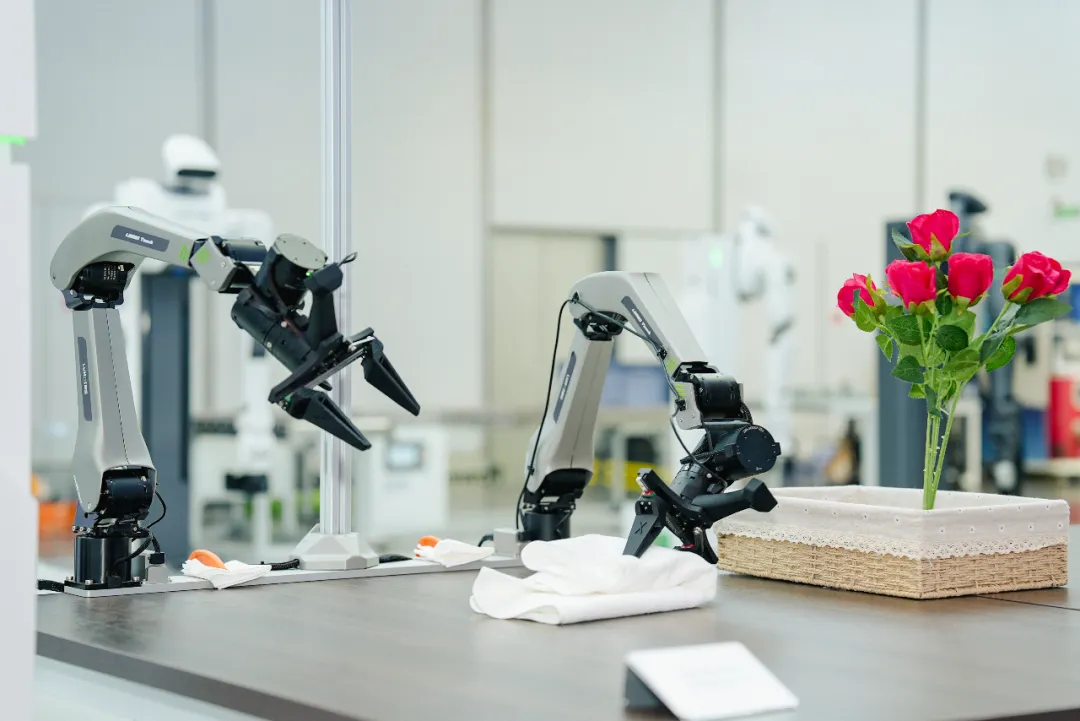
Industrial systems vary in form and in the same industry; there are exclusive requirements for models and skills; production line scenarios, processes, and operations change, and more frequently. Thus, robots that are able to land in real industrial scenarios do not need a one-time model adaptation, but a system capable of constantly absorbing new data, training new skills, and continuous generation.
Faced with this reality, the company hopes to build a platform that opens up multi-source data inputs, achieves one-key model training, and supports local deployment of skills based on the ecosystem of the robot and non-the ecosystem of the robot. Each time robots complete a real task, they have the opportunity to generate new training data for subsequent training and skill optimization.
In this way, models are no longer just the result of a training session, and robots are no longer just a deployment of equipment. Users can continue to train, verify and master skills based on real industrial sites, allowing robots to acquire new capabilities in continuous operation.
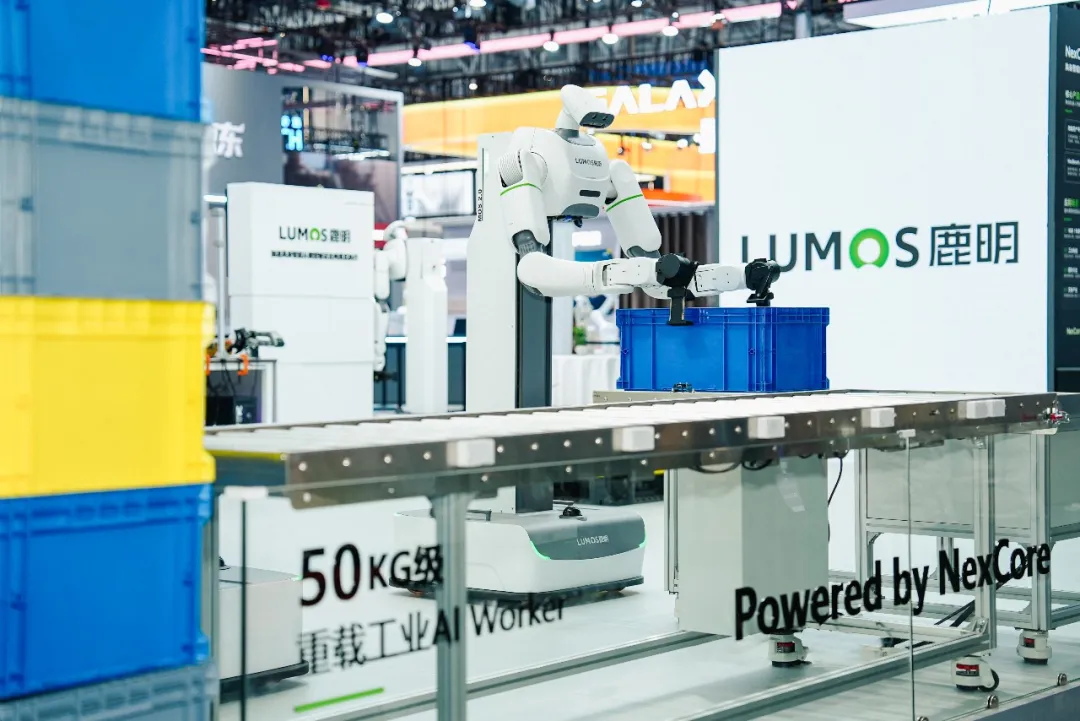
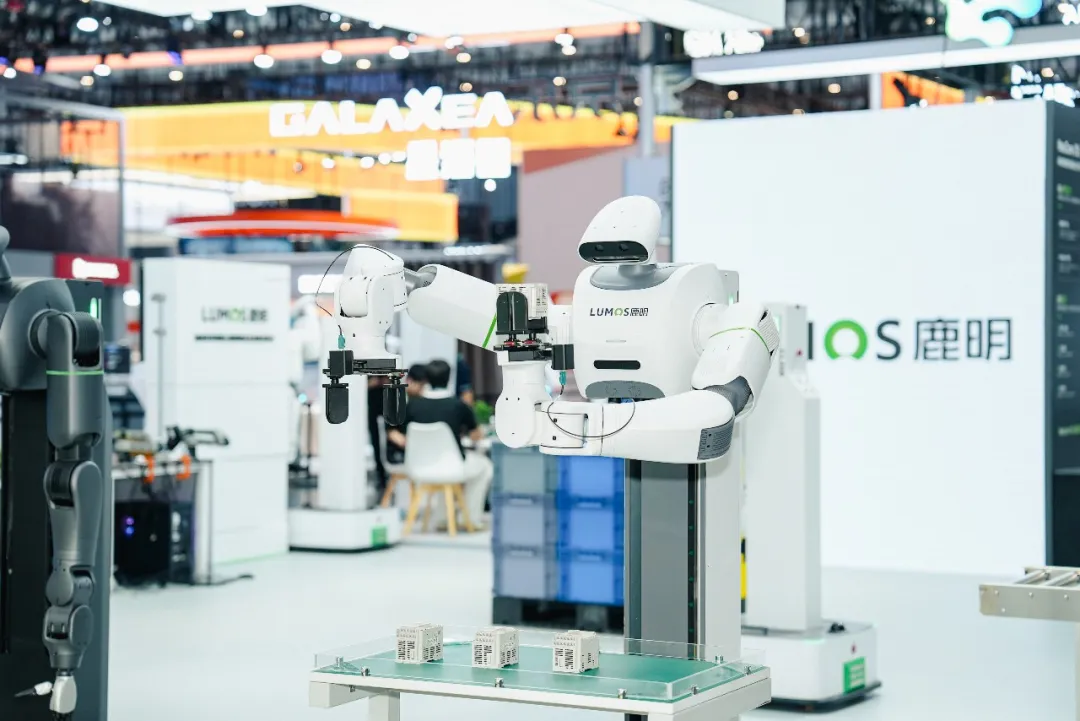
Last week, the company released the second-generation heavy-duty wheeled arm-mounted intelligent robot MOS 2.0. This is a deep shift towards commercial landing after the MOS1 has been confirmed in first-line industrial sites such as the Samsung motor.
In the factory of Samsung Motors, the robot began with the initial PLC quality testing, and gradually expanded to cover various aspects of quality testing, logistics, transportation, etc. The feedback from these actual production lines constitutes the basis for the upgrade of MOS 2.0.
With a smart landing, customers are most concerned about five things: whether they can't do anything else, whether they can do it faster, how long to deploy, whether they can't maintain it, whether they can work for a long time.
MOS 2.0 has been targeted around these feedback: a 50-kilogram dual-arm load to accommodate overloading and transportation, a dual-cell heat exchanger to achieve near continuous service life, a full-directional dashboard and multi-sensor configuration that improves reach and perceptual reliability in narrow channels. In short, industrial customers' expectations for robots, which can be summarized as: fast execution, learning and a hard-working body.
But these hardware upgrades mainly answer the question of "how to do it".
The combination of MOS 2.0 and NexCore, from hardware to platform, solves the problem of continuous evolution of physical intelligence. The core provides data inputs with powerful kinetic performance and real-world tasks, platforms undertake skill training, deployment scheduling and continuous optimization, and when combined, the robot is no longer just a specific task-performing device, but begins to have the ability to continuously acquire new skills, gradually evolving into an AI Worker that can continue to create value in real-world production environments.
How to play the "second half" of a physically intelligent game
The NexCore was developed by the founder of the robotics company, Hirogami. The underlying logic of the system, derived from his judgments of the development stage of the body-smart industry, is a complete chain of arguments: first to clarify the focus of industry competition, then to dismantle the current common cognitive bias, and finally to point to the technological path towards solving the problem.
The first judgement about the shift in the focus of competition was that the second half of a physically intelligent race was a task-closing race, the core being the basis, and that the ultimate victory was decided by multiplying four variables: data acquisition efficiency, model generalization capacity, general hardware costs and industrial delivery efficiency.
The industry background behind this judgement is that in the past two years, companies have been rapidly aligning in terms of physical freedom, speed of movement and demonstration effects. Hardware parameters alone have made it difficult to establish long-term differentiation, and the main battlefield of competition is shifting to allowing robots to actually land, continuous optimization.
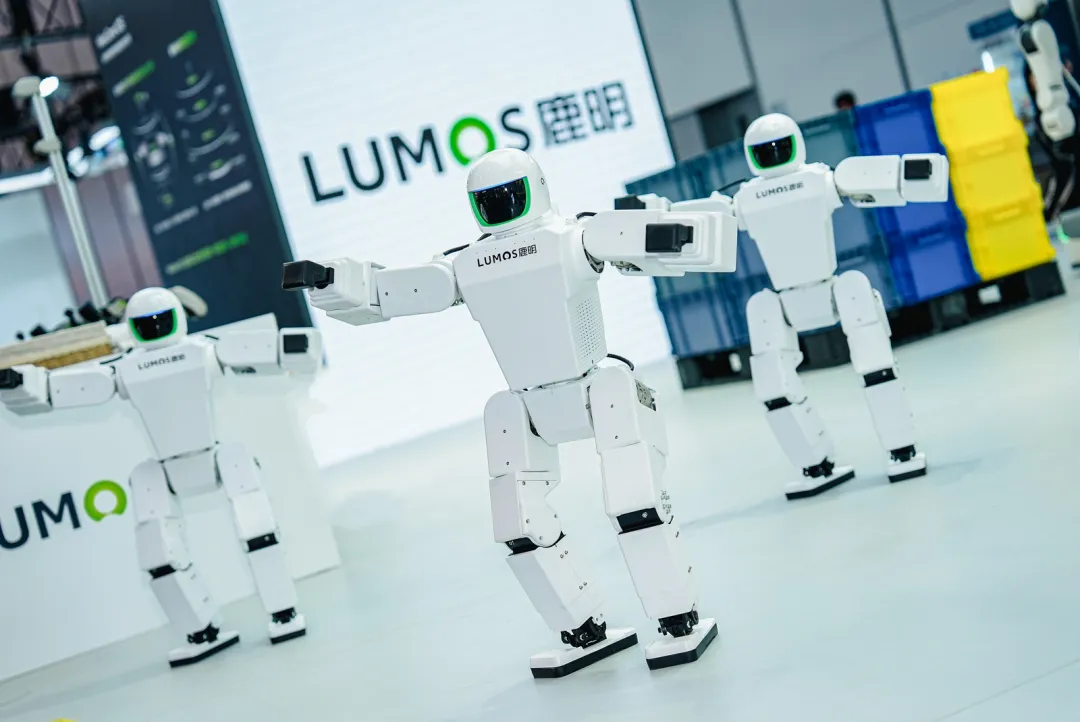
The next two judgments were a revision of the industry's mainstream narrative. The first was not to use robotic performance to define industrial progress: dancing, getting up, running can demonstrate robotic mobility, but the industry value eventually needs to fall to the five sets of numbers: continuous working time, task success rate, production rate, deployment cycle and return on investment. Surprise and reliability on the production line at the show are two completely different rating systems, while the latter is overshadowed by the voice of the former in the long run.
The second is that "industrial robots don't have to be human-like first": two-legged, humanoid, wheeled arms, and heavily loaded mechanical arms are hardware carriers subject to different tasks, and the correct order is to first find high-value tasks and then decide which robot shape is best suited for the task.
This also explains why the robot uses both legs and wheels at the same time: the core technology is portable, reusable, and the shape is just a function of the task.
The third level of judgement on data and Scaling Law is also the most worthy of the attention of tech practitioners. The industry is currently competing on the number of hours of data collection as an indicator of competitiveness, but real-world data must move towards "effective data volumes", the key being whether it covers the task distribution, whether it contains failed and recovered samples, whether it can migrate across robots, whether it really improves model success rates.
Accordingly, the true Scaling Law of physically intelligent people occurs in the experience of tasks. What is valuable in the future is not just how many hours of data collection a robot has completed, but the accumulation of task data, skill models and failure experiences after tens of thousands of actual tasks. This actually redefines the "scale" of physically intelligent people, not only in terms of model parameters and data quantities, but also in terms of task experience.
The last thing to be judged about is the mobility of the tech giant.
It is widely believed that the biggest change in this generation of automation with physical intelligence versus traditional automation is the ability to solve open-scenes problems through continuous learning with data-driven as the core, with a common hardware platform as the carrier.
The keyword lies in "the ability to solve open-scenes problems", which is also the reason why the core technology of ERM has always remained consistent: the operational capabilities exercised in industrial scenarios can be transferred to service scenarios and home scenarios, the shape of the carrier will change, but the underlying data-driven skill systems can remain continuous.
Building a fully equipped infrastructure
The release of NexCore completes the final puzzle in the Developer Ecology, and of course it means more than that.
From an industrial chain perspective, there are different chains of physical intelligence data: Ego Vue, Station Lite, etc. address different forms of data and task acquisition; these pipelines are responsible for organizing and transferring data; on top of that, models like Prime R0 are responsible for transforming data into physical intelligence capabilities; and the newly released NexCore connects tasks, data, models, skills, evaluation, and robot deployments.
This type of vertical integration is uncommon in the industry. Most companies either do the work as a whole, or as a model, or as a tool chain, and the interfaces between the layers and the data formats are not interconnected.
Prime R0's performance on the MolmoSpaces list is a corollary of the system's effectiveness. In June this year, Prime R0 captured the world's number one overall mission spectrum success rate in this zero-sample intelligence assessment benchmark, beating teams such as Cosmos, MIT and Princeton University in the UK.
It's worth noting that Prime R0 is the first flagship brain of the NexCore system, and its design goal is not merely to pursue parametric scales, but to address the complexities of the industrial field, improving model generality, timeliness and reliability.
This performance demonstrates the triumph of systemic capabilities: when the industry competes around single model capabilities, the entire chain of data, training, evaluation, and deployment runs better.
Of course, NexCore is not a closed system, and it is not tied to a single brain. On a commercialized path, NexCore uses a fee model that combines platform subscriptions with training, authentication and skill authorization. The essence of this model is that customers pay for the "efficiency of skill production".
Currently, the platform covers a wide range of scenarios from research, industrial manufacturing, service and entertainment industries, from R&D experiments to real business operations.
For the deer, the deeper the customer is, the more skills accumulated, the more rigid the platforms are and the networking effects are stronger; for the industry, if this model runs out, it means that the delivery of robotic capabilities will shift from project design to platform calling, which will be a key turning point in the landscape of physically intelligent scaling.
"System moments" with physical intelligence
In its narrative, the ultimate problem that NexCore has to solve is the ability of robots to evolve continuously, and NexCore really wants to bring intelligence into the industry.
The product of this evolution is called "AI Worker": an ever-growing industrial worker who is able to enter new environments, learn new tasks; complete new jobs, accumulate new experiences; each time it is executed, it promotes the next capacity upgrade. It is not limited to form, but is really important to be able to understand tasks, adapt to change, and continue to create value.
The release of NexCore predicts that physical intelligence is entering the era of system-building from models to exploration. At a time when the industry is still struggling with robots that are more like humans and more capable of running, the company chose to build infrastructure that will allow robots to continue to evolve, a path that is much more difficult than a surprising demo, but it points to the industry's willingness to pay for it.
It can't run, but it takes time and verification of real-life scenarios. Now, the first to give a complete answer is a robot that can continue to evolve and will experience the baptism of every real mission in the factory.