On May 20, 2026, OpenAI issued an announcement that shocked the entire mathematical community.
Their unpublished model of AI overturned a conjecture put forward by the Hungarian mathematician Paul Erdős in 1946. This was the first time AI had produced a historically significant mathematical proof.
Within a few weeks, human mathematicians made further improvements to AI-based thinking. Within a few days, related technologies were being used to solve other important problems.
On August 1, OpenAI also announced that their model, called Astra, had taken a breath of 10 mathematical advances, including answers to three more questions posed by Erdős. See the next generation of Astra that OpenAI had just unveiled.
Noga Alon Liu, a mathematician at Princeton University who has handled dozens of Erdős problems in his decades-long career, said that these models "are dramatically changing the way we study mathematics".
If you don't know who Erdős is, it might sound like "AI won again". But why is it his problem to become the core arena of the world's most powerful AI company?
(Note: This article has been reprinted from the Quantum Magazine, with the original link at the end of the article)
A freak with a wallet.
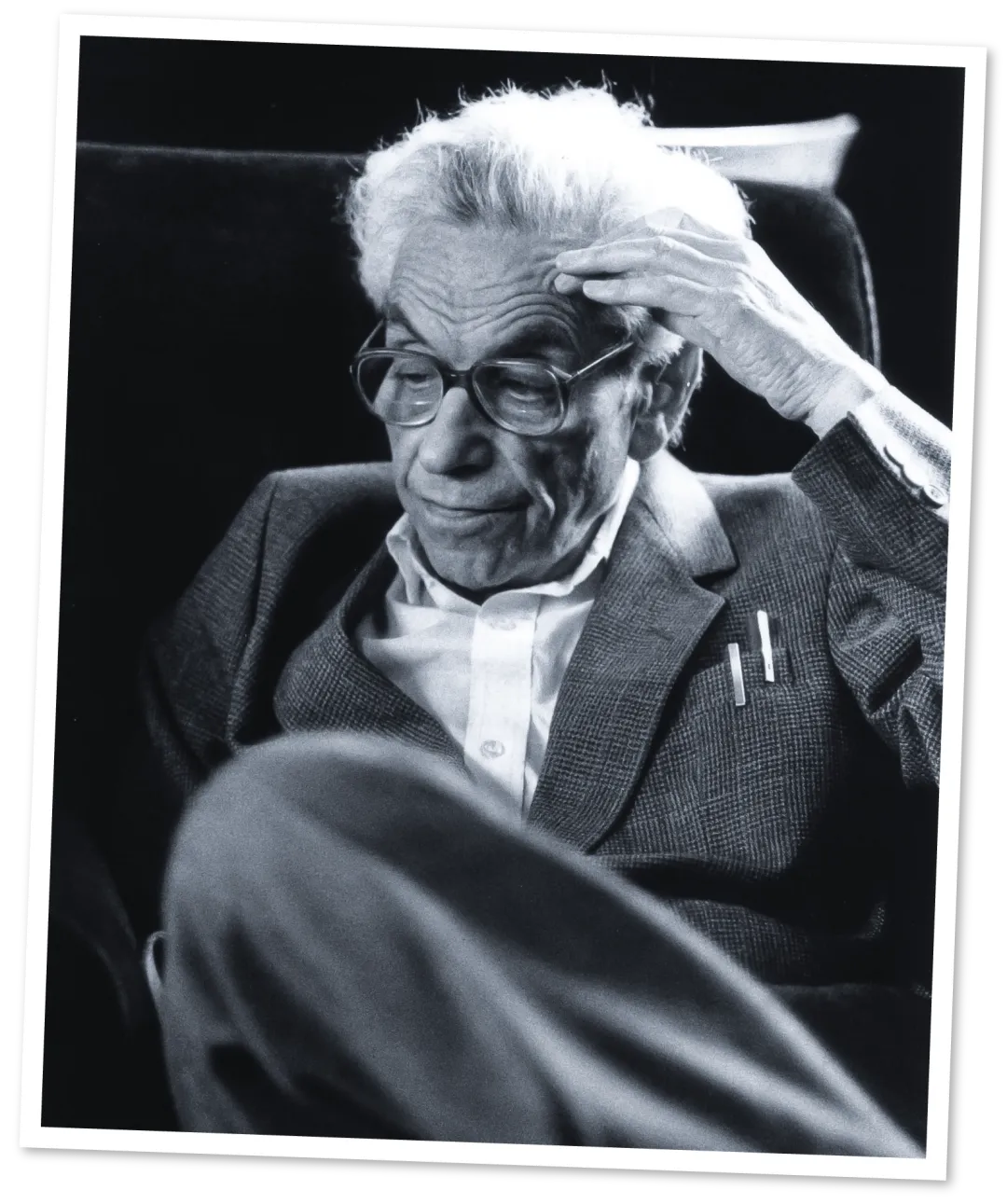
Paul Erdős is one of the most prolific mathematicians in history. He published more than 1500 papers in his lifetime and worked with more than 500 collaborators.
But what is most special about him is not the number, but the way he lives.
He had no permanent residence, no permanent job, almost nothing. He kept a purse, stayed at a friend's house, drifted from one university to another, wherever he went. He donated most of his income, financed by a friend.
He wore only silk. He avoided physical contact with humans. He was deeply distrustful of authority, calling God a "Supreme Fascist".
He also has a habit of throwing mathematical problems everywhere. In papers, in letters, in chatter, he writes the next question with his hand, and then marks an amount next to it: $10 or $25, and sometimes thousands of dollars. The first person to solve the problem gets the money.
In 1996, Erdős died of a heart attack while attending a mathematical conference in Warsaw. But his problems did not die. A nonprofit foundation in Iowa has pledged to continue to honor him.
Now, the solutions to these problems are being priced in a different currency, which is how many tokens each problem consumes.
The legacy of an anti-authoritarian nomad has become a public relations weapon for the world's most powerful tech company.
A site that accidentally became a testing ground for AI
If it hadn't been for a British mathematician named Thomas Bloom, this might not have happened.

Bloom studied arithmetic and combinatorics at the University of Manchester. He liked Erdős's style from an early age, but there was always a problem: the problems of Erdős were scattered everywhere, which were solved, which were still pending, and it was not clear at all.
At the beginning of 2023, he decided to collect these issues as much as possible in a list. It was meant for his own use, but he felt it would be more convenient to access them anywhere at any time, so he created a website called Perdosproblems.com.
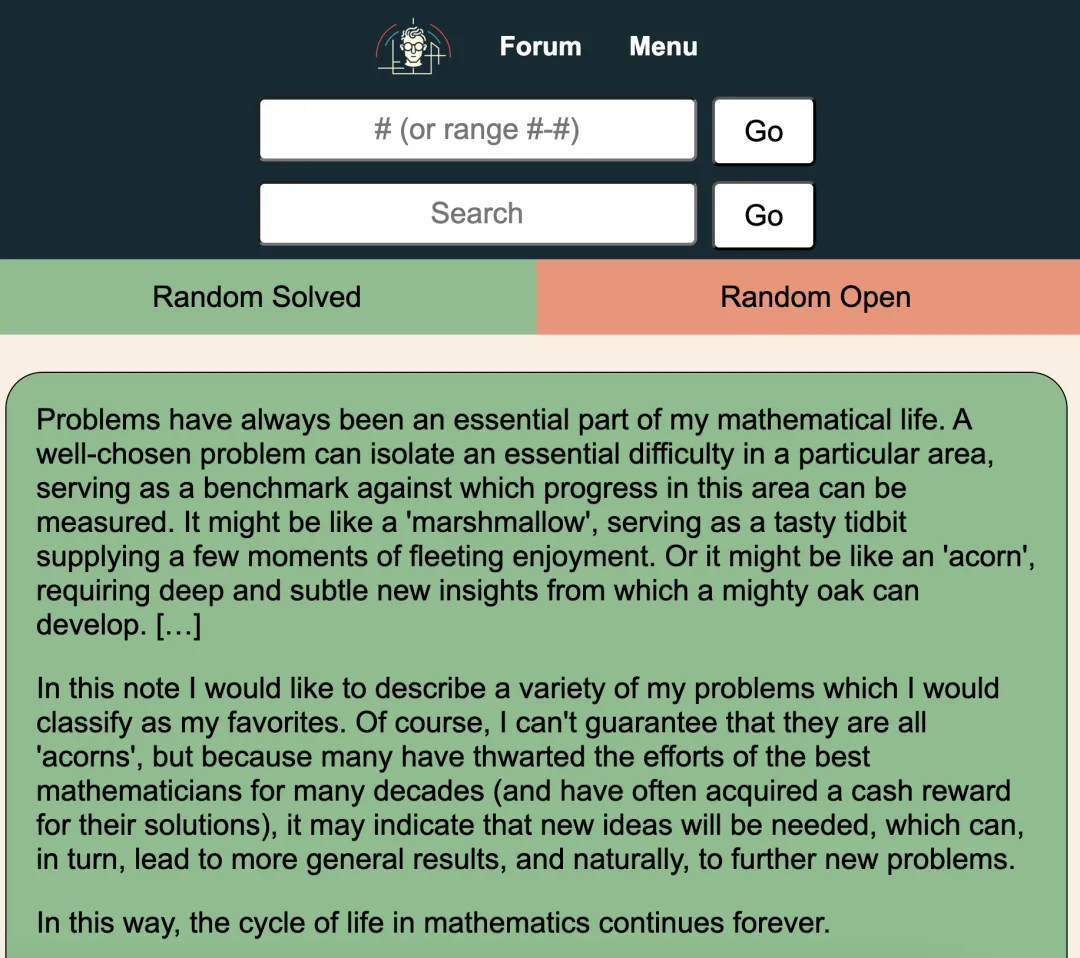
Interestingly, he wrote the Python code for this site, using ChatGPT. At the time, the big language models that could help him write a website were pretty good.
Bloom doesn't just collect questions. Erdos is sometimes ambiguous in the way he presents them, and Bloom looks for the most reasonable version of each question. He keeps adding and the audience keeps growing. By August 2025, he has listed nearly 1,000 questions.
Then he did a little thing: he added a comment area. Since then, a community has really been built.
Younger Brother and Fields Award winners
What is happening in the comments section is the best example of the universal value of the Internet.
Whether you have a life-long teaching career, whether you're not at a top university, or whether you're a mathematician, as long as you have good ideas, you can find people to work with.
Wouter van Doorn is the fourth most active commentator on the site. His official job, in his own words, is to work for "a company hired by other companies to do customer service support". But he is also not a pure amateur.
In 2024, seeing the rapid growth in the ability of big language models, he took a six-month break to focus on mathematics. His thought at the time was: "I'm still better at math than AI, but who knows what will happen in a year, two years, five years? If I want to complete these projects, now is the time".
In October 2025, van Doorn left his first comment on the page 1102 of the Erdős question. In early November, he did not rely on AI, found some progress and shared it in the comment section.
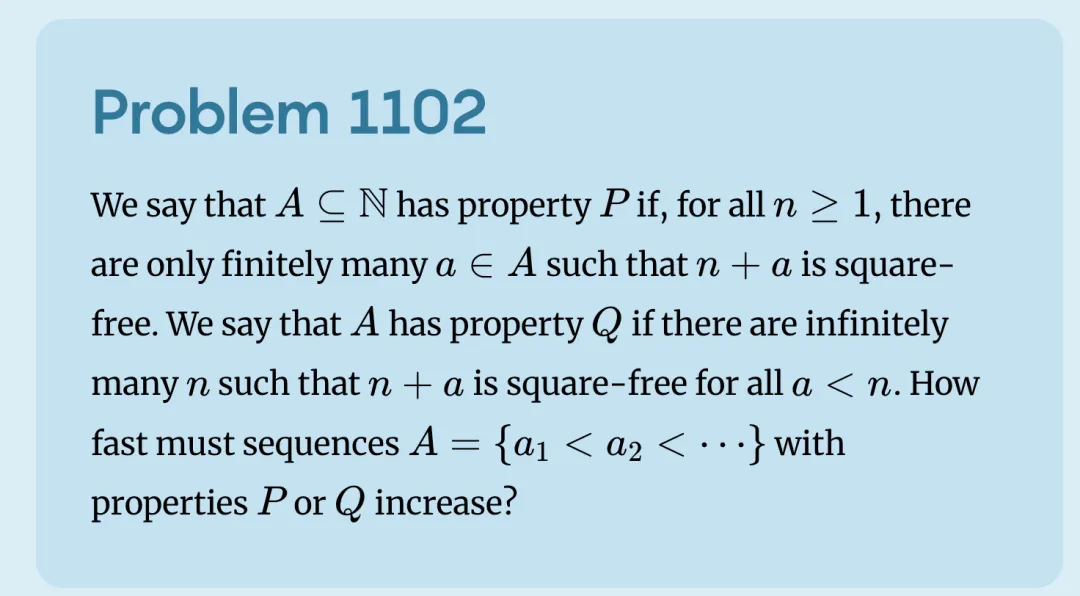
Later that day, someone replied that he had found a flaw in the argument. The two quickly collided, and Van Doorn convinced each other.
"I understand your argument now. Beautiful!" replied the mathematician.
He is a mathematician, professor at the University of California, Los Angeles. He and Erdős date back to when he was a 10-year-old boy, when he met Erdős himself. In 2015, he and his Polymath 5 project colleagues solved the Erdős bias problem ("Erdős Discrepancy Problem") and won a $500 prize.
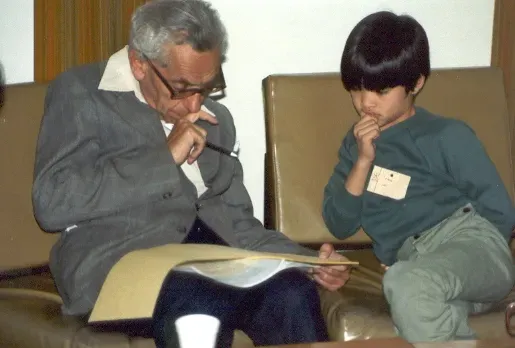
Erdős is explaining mathematical problems to young philosophers.
The Christmas Owl
In the summer of 2025, Kevin Barreto and Liam Price became friends on an AI enthusiast's Discord server.
In December, they were convinced that the latest AI model could solve some of the Erdős problems, so they began bulking the problem to the model.
They soon discovered a threshold: if you told GPT-5.2 directly that "this problem hasn't been solved yet", it didn't make much progress. But if you change the word "threshold" to make it think the problem is easier than it actually is, it works much better.
On Christmas morning, Barreto posted a statement on his website claiming that it was "the first case of LLM solving the Erdős problem entirely autonomously".
A few hours later, someone noted: "Erdős himself gave the answer in a 1977 paper".
Barreto frankly admitted his mistake and wrote: "I formally ask all members of the site to pay more attention to the retrieval of documents currently marked as unsolved. As a person who has made this mistake twice, it is rather frustrating".
But they didn't give up. On January 4, 2026, they solved another problem with GPT-5.2 Pro (Erdős 728), which no one could find. Barreto also used another AI tool called Aristotle to validate logic.
Price explored a methodology: first let AI give a solution, then give the solution to a new instance of AI so that it checks and iterates until it comes up with a seemingly viable solution. This is actually what many companies do internally.
A problem that cannot be avoided
There's a subtle question here.
In Price's own assessment, he lacked the mathematical foundation to verify whether the final solution given by AI was correct.
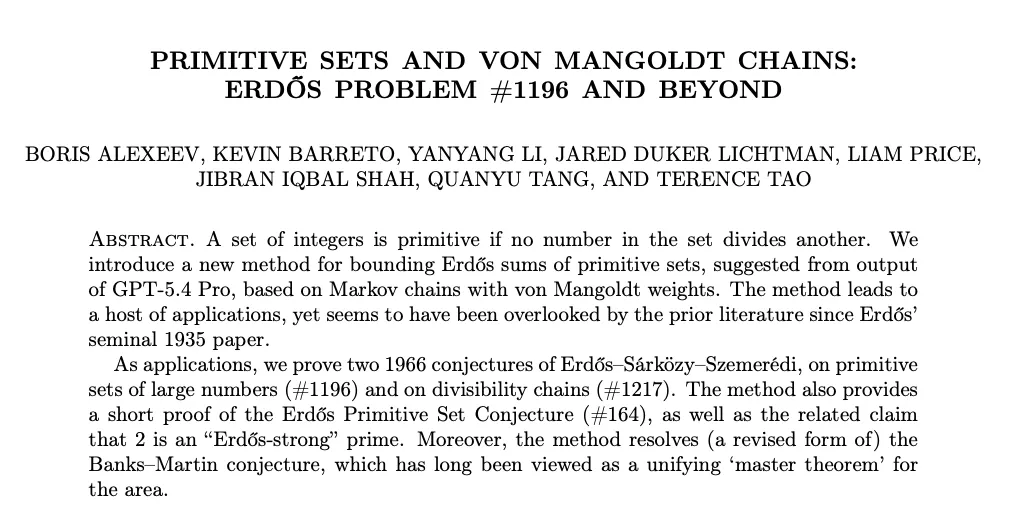
With Barreto's help, they found Price and Barrett, who eventually became co-authors of a paper published in May 2026 by Stanford philosopher Jared Duker Lichtman and others, that solved a more important Erdős problem.
Bloom is concerned about this. "One big problem is that AI is used heavily by many non-mathematicians who have no deep mathematical background or the ability to validate output results", he said. "They are pursuing the pace of advancement, allowing their AI to be validated, and the scope of results is expanding. Today we see more and more 100- to 200-page papers like this".
When big companies start coming in
At the beginning of 2026, large companies began to enter the market.
In January, a team of 24 people at Google DeepMind used Gemini to systematically evaluate 700 "open" speculations in Bloom's database, solving four of them, and finding nine forgotten old answers.
In May, another team of 21 from DeepMind announced that they had solved nine of the 353 problems, "costing hundreds of dollars each".
Then, on May 20, OpenAI announced that it had found a counter-example to the "unit distance" problem.
The question is simple: if you put n points on the plane, how many pairs of points are exactly 1?
For nearly 80 years, mathematicians have argued that the best solution is roughly similar to a square grid (which is also consistent with our intuition), and the big model of OpenAI has overturned this belief and found a whole new family of constructs that perform better. It is the first time that AI has solved a core unresolved problem in a mathematical field on its own. To do this, it has also used a mathematical branch called "algebraic number theory".
Tim Gowers, winner of the Joan Fields Prize at the University of Cambridge and the French Academy, wrote in the commentary: "If this paper was written by humans and submitted to the Annals of Mathematics, and I was asked to give a quick comment, I would not hesitate to suggest accepting it. There has never been any evidence of AI production approaching this level before".
The author of the paper wrote only the name of one company: OpenAI.
Why is Erdős so popular with AI agencies?
Why do people with AI like to take the problem of Erdős with them?
There are a number of reasons.
First, the problems of Erdos focus on mathematics, combinatorics, and graph theory. These are the areas of mathematics where large language models are the best. Their problems can often be described in a concise language, without much background knowledge, but with deep structures.
Second, the difficulty is wide. Some problems are relatively easy and some are difficult to spell out. This is perfectly suited to a new technology that is capable of interacting with each other.
Thirdly, Bloom's website gives everyone a ready-made input. Problems are focused, the status is clear, and they can be discussed. For AI companies that need benchmarks, it's just a natural testing ground.
In Lichtman's words: "This is a single resource library that anyone can access, and every laboratory realizes that it can be used as a benchmark test".
When AI is stronger than humans
Noga Alon has solved dozens of Erdős problems in his career. Now he doesn't. "It doesn't make sense once AI starts solving them", he said.
He also left the Erdős problem community to focus on other work.
Van Doorn is quite lucid. He says that the LLM "is clearly stronger than I am in thinking and doing mathematics. I'm no better than the current AI system at all". But he also notes that "the proof I finally wrote was simpler, more general, and easier to read than what ChatGPT had imagined".
Then he said, "If you want to play the piano, you're not going to hire a better piano player than you are. You're going to play the piano because you like to play the piano. I enjoy thinking about numbers, doing math, writing papers. I'm not going to hire a machine to do papers for me".
In July 2026, Jacob Tsimerman of the University of Toronto was awarded the Fields Medal, the highest honor in mathematics. On the same day, he announced his departure from academia to join OpenAI.
Alon said that some of the top mathematicians left academia and went to AI companies not just for money, but "perhaps this is the real direction".
A roaming mathematician leaves behind a bunch of price-fixing problems. Decades later, these problems have become the arena of AI, drawing a connoisseur boy and a Fields Award winner into the same commentary area.
Erdős would probably find it interesting if he were still here.
The link is as follows: