
It's hard to say, but it's better to do.
One of the things that could have been a long day in the hospital was finally resolved. For a mother who is taking care of a child with a fever, this was something she hadn't thought about when she opened up to her doctor "Mao" (aka "Mao").
Liu Hui, director of healthcare AI products at Jingdong, still remembers this story. Earlier in a collaborative conversation in Guangzhou, the other person actively told her about the experience.
She was like me, and she was a mother, Liu Hui said. After the fever that day, the mother did not immediately ask for leave, drive and take the child to the hospital as usual, but decided to ask "why" first.
It's almost a second back and free medical admission.
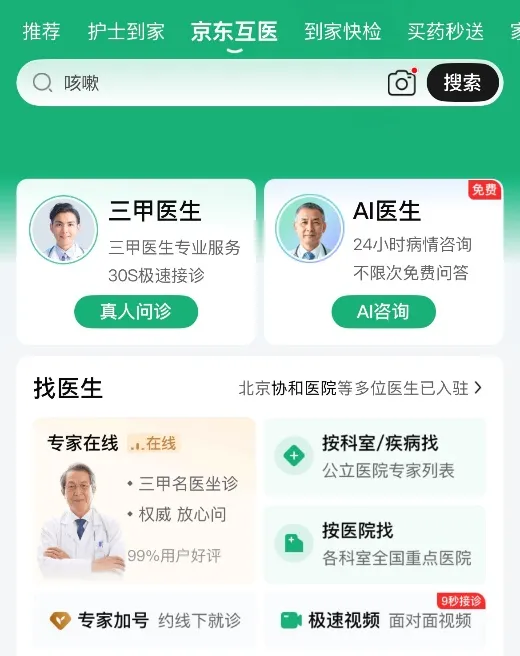
JINGDON APP directly searches for "AI doctors" to find him, or enters the JINGDON APP "patients buy medicine" channel to use.
After several rounds of questioning, the "majority" suggested that the child undergo a nucleic acid test. What happened next was not much like the medical procedure that people are familiar with: professionals came to the door and completed the sample, and mothers and children stayed at home waiting for the results. About two hours later, the test report was returned to the App.
The report was interpreted and combined with previously understood information, and subsequent drug recommendations were made. Users chose to purchase drugs online on the platform, and soon the drugs were delivered home.
This seemingly ordinary home clip is a shortened version of the medical AI that crosses the "chatterbox" into a real-life service deep water. A set of recent earnings data provides a clearer picture of this crossing.
On 13 August, Jingdong Health released mid-2026 results: total revenue of RMB 40.9 billion, an increase of 15.9%; operating profit of RMB 3.5 billion, an increase of 40.3% under the Non-IFRS (non-international financial reporting standards) indicator.
In addition to earnings and profits, AI has become one of the most prominent keywords in this report. A series of AI applications at the core of "AI Doctors" is accelerating, and management has mentioned "big" several times in post-graduation phone calls.
Currently, "MaMaMa" covers more than 1,000 medical conditions in China and the West. Financial data shows that the number of users of "MaMaMa" services grew almost four times as much during "618" and the satisfaction rate remained at more than 98%.
Behind these figures, in a way, is a large-scale replication of the aforementioned medical scenario, reflecting the real dividends brought about by the paradigm shift in medical AI.
A lot of medical questions and answers products can explain diseases, provide knowledge. But after the answer, the cost of the user's actions has almost not decreased, Liu Hui said. A mother asked a child what happens with a fever, she did not come to learn the medical principles of fever in children.
So, we want to rely on existing supply chains and service capabilities to get rid of this disease as much as possible, she said. This is the most fundamental difference between "majority" and ordinary medical Q&A products.
How do you use the AI doctor in the financial statements?
As a core product of JD Health's AI All-Scenes Landing in the first half of the year, how does "majority" work and why retain customers? To understand this, the most direct way is to go back to specific consultations.
"An eight-year-old boy suddenly had a high fever, 38 degrees". I quickly felt different after throwing out a vague main complaint.
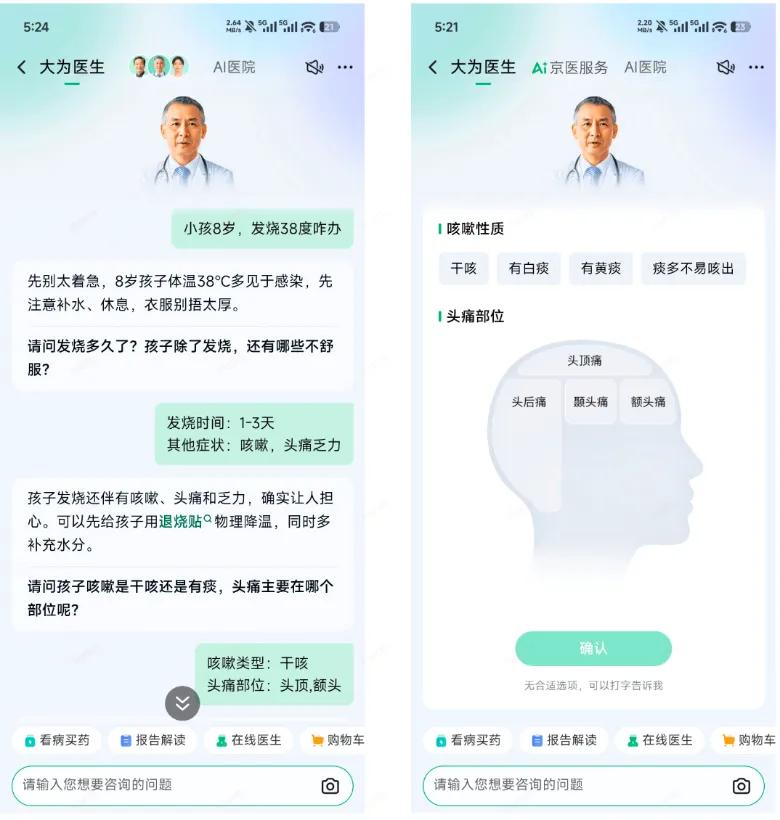
Instead of saying "right bullshit" right away, he asked how long the fever lasted - coughing, crying, throwing up, diarrhea, or headaches.
These questions are not a one-time occurrence. Every time you get a "yes" answer, you decide what to ask next, just like a doctor collects a medical history in an outpatient clinic.
Some of the symptoms that were not easy to describe in language were also made into visualization options. I don't have to say exactly where the pain is, how far the symptoms have progressed, only selection is required on a human diagram or a graded image. This design not only reduces typing time, but also reduces the threshold for describing the symptoms.
After three or four rounds of dialogue, the "majority" began to reason based on the information already collected, gradually refining the obscure "childhood fever" into structured symptom information, giving the most likely "acute respiratory infection" hint.
Finally, there are 14 references to medical literature.
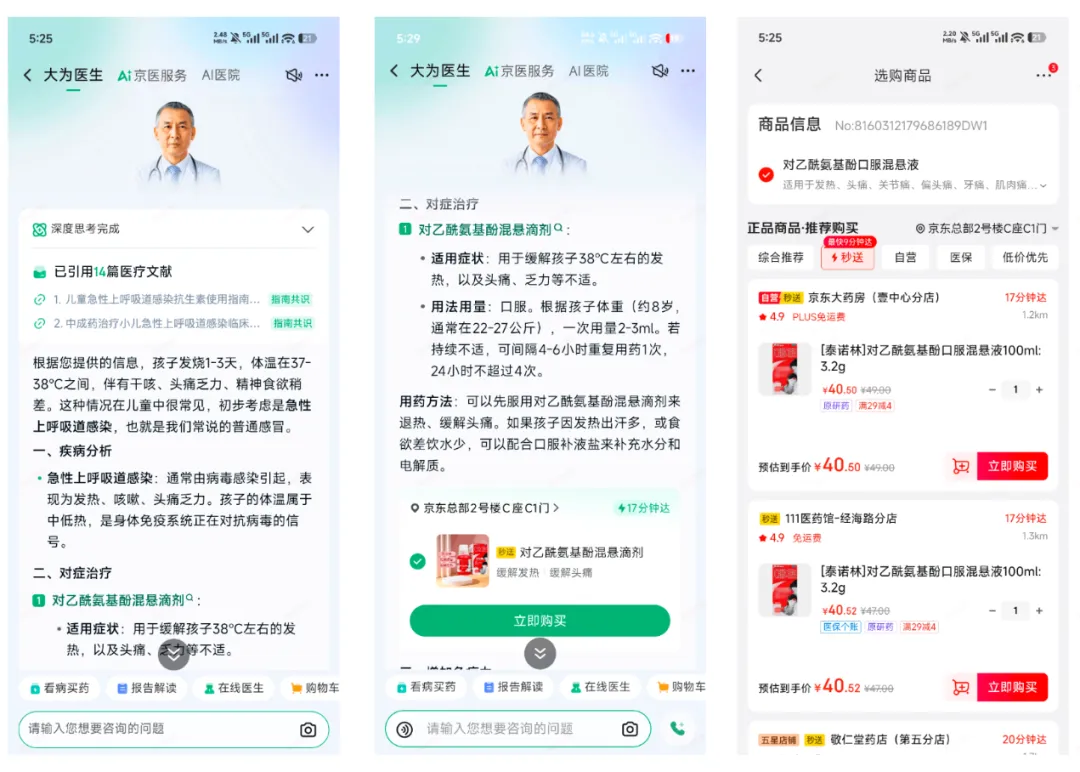
After entering the treatment recommendations, the "majority" does not simply list several drugs, but distinguishes between causal and contraindicated treatments. This is also reflected in the general clinical decision-making logic. For example, acetaminophen is used to relieve fever and headache symptoms.
By this point, the work on many medical Q&A products has been completed, but "majority" continues to break down treatment recommendations into different processes to meet customer needs.
the acetaminophen mixture suspension is matched to the specific medicinal product;
access to the consultation process;
The platform is available in 24 minutes, depending on the stock, price and delivery time of the nearby pharmacy, depending on the user at my address.
According to Liu Hui, about 70% of medical questionnaire products do not issue a second questionnaire after the first consultation and then go back to the offline hospital. The question is not whether the answer is not accurate enough, but whether the user has received a clear enough "sense of resolution".
"So that the user can remember that the problem is solved here. He will come back the next time he has a health problem", she said.
However, in the medical scene, "to the end" does not mean the big bang. Many times, the reliability of AI depends precisely on whether it knows where it should stop.
These two real cases of questioning show this sense of boundary.
A user initially only asked if the left leg was swollen, whether it was a problem with the spine or a problem with the blood vessels in the legs. As the question got deeper, more and more risk signals appeared: swelling increased, accompanied by numbness, stinging, apparent fatigue, but also low back pain, unstable walking and weakness in the legs.
Instead of continuing to make definitive diagnoses online, "majority" suggested that both spinal nerve pressure should be taken into consideration, as well as lower extremity venous thrombosis, and that an immediate visit to the osteopathic, vascular or neuropathic surgery should be recommended. In case of chest pain, respiratory urgency or consciousness abnormalities, an emergency room should be visited immediately.
In the face of low-risk everyday discomfort, "major" decisions will be different.
A user in a remote area consulted "majority" due to stiffness in the ankle, pressure pains and impaired walking. Combined with photos uploaded by users and several rounds of questionnaires, it judged that this was more likely to be an increase in angular thickness caused by prolonged exercise and shoe friction.
Therefore, the "majority" first gave a treatment that can be done at home: adjusting the shoe type, reducing friction, soaking in warm water, and using external medications with softening cornea when necessary. Only when the pain increases, a damaged infection occurs, or long-term relief is not needed to go to the dermatologist.
How slow is it going to take to get "great"?
The ability to question, to judge, to know when to stop, and to move a medical recommendation forward to a real-world service. If these capabilities are dismantled, it corresponds to a few key words that JD Health has repeatedly stressed in its mid-term results:Data, scenarios and deadlines。
It doesn't sound new. What do they mean when they're put in an AI doctor?
Liu Hui said that at the beginning of the argument, the "majority" was positioned as a general practitioner because only the general practitioner can truly "accept" the most common needs in Internet medicine, such as common medical advice, daily symptom judgement, questioning of medicines and interpretation of examination reports.
However, the underpinnings of this kind of dialogue are largely hidden outside the dialog box. They are rigorous, concise, difficult to speed up and difficult to copy.
It's a great way to build a general practitioner like this.The headThe first challenge I faced wasLet it understand what the user is saying and know how to ask the next sentence.
Patients will never describe their condition according to textbooks. "I just collapsed", they may have a weak head, but their consciousness has remained clear; they may have experienced a short-term loss of consciousness, or a medical illness; and they may have problems related to low blood sugar, diabetes, and heart rhythm disorders.
For "majority", it's not enough to identify a few key words in a single sentence to "overturn". It's necessary to complete a "medical semantic landing": translate verbal, vague, or even contradictory expressions into information that can be used for clinical judgment.
It also needs to know what to ask next while listening.
In each round of conversations, the doctor seeks out the most critical unknown information, such as which issues are most likely to narrow the scope of the disease or detect danger as early as possible.
This is essentially a sequential decision-making process. It is only after the possibilities are gradually narrowed down a certain direction that they will enter into a more specific clinical pathway.
The foundation for studying this questionnaire is based on long-term online medical scenario data collected from Jingdong Health. According to Jingdong Health, high-quality doctor-patient dialogue data has reached 10 million levels.
Traditional hospital medical records typically record the end of a clinical chain: the patient's primary complaint, the doctor's diagnosis, the final treatment regimen. But how the doctor finds key clues from a vague description, how to eliminate risk through continuous questioning, is not fully recorded.
And these intermediate processes are precisely the part of clinical thinking that is most needed in "massive learning".
A real online consultation will record what a doctor asks, how the patient answers, how the doctor gradually clarifies a vague symptom and condenses it to a specific judgment. However, a real conversation does not automatically become the clinical logic of machine learning.
These are the "biggest barriers to data that money can't buy".
Learning to understand and ask questions is not enough to become a reliable AI doctor. In a medical scenario, "sounding reasonable" is far from enough.Every reasoned judgment that is "great" must be put into a relatively clear clinical pathway.
In addition to calling for medical guidance, literature and clinical pathways to be examined in the questionnaire process, the team has also set up a clinical trial.More than 300 standard treatment routes, covering more than 90% of high-frequency diseases online。
The so-called clinical pathway is the process of breaking down the relatively hidden decision-making experience in a doctor's mind into a chain of actions that can be performed, examined and reconstructed: what should be asked first, what diseases are easily confused with, on what basis to make judgments, whether to be examined, when to continue on-line treatment, when to turn to a real doctor or recommendation to go to the hospital, and how to return to the clinic and follow-up after treatment.
These pathways are jointly constructed by JD Health's full-time team of industry experts, reference authoritative guidance and clinical data, and combine the features of Internet consulting, pharmaceutical e-commerce and platform services.
It also includes some Internet medical-specific steps. For example, when faced with skin problems, the system needs to guide users to take photos from an appropriate angle; medical guidelines update; new medicines go online, or the platform adds a new detection service, and the relevant pathways are also adjusted accordingly.
If a clinical pathway dictates how a questionnaire should go forward, then what is the best way to do it?Structured or semi-structured medical rules are more like "guards" set up at key nodes.。
In key areas such as diagnosis, risk identification, and medication use, "majority" uses these rules to reduce the risk of big-model delusions.
For example, when the system judges that a user may have a heart attack, stroke, or severe bleeding, it does not follow the usual diagnostic procedures and switches to critical pathways: pointing out the risk, explaining the cause, and clearly recommending that patients go to the hospital as soon as possible.
Once the user's age, medical history, allergy status or the medication they are taking has triggered a taboo, the medication should not continue to be recommended.
In order to ensure that "MaMaMa" always operates within established clinical trajectories and safeguards, the team set up the entire service process.109 quality assurance standardsPrior to the launch of the model, typical cases require offline evaluation. After launch, specialized quality assurance models will continue to screen for actual questionnaires, and the findings will be reviewed by full-time physicians, forming a continuously running patrol mechanism.
After completing the medical assessment, the "majority" will also be faced.Last but not least, there is a more realistic challenge: how to make these decisions happen in the existing healthcare system in Jindong.
This isn't just a line of service entries at the end of the answer.
Realistic conditions such as prescription audits, drug stocks, detection capabilities and delivery timeliness require direct participation in the creation of a program. In other words, the system must not only know what to do medically, but also where the user is.
For example, when recommending medicines, the "majority" needs to not only judge which medicines are medically appropriate, but also to understand whether they can be purchased in the user's area, which medicines can be sold in compliance, which medicines must be prescribed by a doctor, and whether the user is in the stage of an acute illness, to get medicines as soon as possible.
If there are three medicines that can be used medically, but only two of them can be delivered quickly near the user, the system cannot remain in a theoretical optimal answer. It needs to continue to weigh safety, efficacy and cost in the options that are available in reality.
So it's not just a drug recommendation, it's planning and scheduling: connecting medical judgment with prescription audits, drug stocks and delivery capabilities to ensure that a program is not just on-screen, but actually reaches users in a consistent, timely manner.
It's also the hardest part to copy behind "The Big Bang".
Modeling capabilities can evolve rapidly in a matter of months, but real-world infrastructure like pharmacy networks, medical resources, door-to-door testing, and instant delivery is hard to build at the same rate.
"The ability to perform in this physical world is not something that can be done in three and a half months", he said.
Always on: From one consultation to long-term management
In fact, putting an illness "on hold" doesn't mean that healthcare is over.
Prior to joining Jingdong Health, Liu Hui was a neurologist at Beijing University's Third Hospital. Her clinical experience made her deeply aware that it is difficult for the traditional medical system to continue to cover long management cycles after patients leave the hospital.
"Particularly stroke, cerebral hemorrhaging patients, who often require long-term medication, persistent recovery, and continuous control of risk factors". Liu Hui recalled that some patients recovered well during their stay in the hospital, after being discharged from the hospital due to self-arrested medication, interrupted rehabilitation training, or lack of continuous monitoring of blood pressure, and recovered after a few months.
"Doctors really can't help it", she said.
In China, the number of such slow-moving patients has surpassed 500 million. The real determinants of long-term prognosis are years or even decades after leaving the hospital.
This is the real starting point for "majority" from "single consultation" to "long-term health management".
Currently, MAWA is exploring active post-diagnostic management services such as early warning of vaccination to elderly patients with slow-acting pneumonia prior to the onset of the autumn-winter flu, reducing the risk of serious illness. It can also extend further to drug warnings, check-ups, and abnormal indicator tracking.
In order to do this, we need to remember the "majority".
He explains that the system uses "long-term memory" to link diagnostic, medication, and examination information that was originally dispersed across different time nodes, based on user authorization. "It's important not only to remember what the user mentioned, but also to remember long-term changes in health status, such as what are the potential risks, what medications have been used, what indicators fluctuate, and what needs to be focused on next".
In fact, at the beginning of the "majority" principle, we gave it a longer-term position to be a professional health counselor "Always on" with users and their family members, Liu Hui recalled.
Today, in terms of larger industry coordinates, this road is no longer alone.
With the "Health China" strategy emphasizing the promotion of health management and disease chain management, policy dividends are accelerating the release of new AI+ healthcare policies that have been rolled out in Beijing and beyond, to explicitly promote full access to electronic medical records and images in Tier II and III medical institutions, all of which will build a dynamic, long-term AI health tracking data base.
In the overseas healthcare system, digital access is increasingly connecting appointments, prescriptions, test results and follow-up medical services.
Given the AI narrative dimension of Jingdong Health, we should draw our attention away from the four-fold growth in financial statements.
If "MAGAWA" can extend the scope from a single consultation to inspection, consultation, use of medicines, fulfillment of contracts, and then to review, follow-up and risk prevention, then what JD Health is building is no longer just a shelf for drug dealing, but a "service asset" for user lifecycle health.
When the dimension of competition moves from mere traffic competition to a complete chain of data, scenarios and contracts, healthcare is no longer a "chunky" after a patient leaves the hospital, but a continuous, active protection.
This is perhaps the bottom line that is really worth seeing when reassessing the business value of JD Health AI.