
It's the first time in the history of the world.
GPT-5.6 refreshed the AI ceiling again!
Today, OpenAI announced the release of the GPT-5.6 Builder's Guide and released a brilliant scorecard.
On the ARC-AGI-3, GPT-5.6 Sol's performance decreased from 13.3% ton to 38.3% with a six-fold decrease in token output.
On the other hand, Luna's "Super Little Cup" was equally astonishing:
In the BrowserComp test, it was upgraded to GPT-5.5 with 84.04% performance, 84.36%, and increased the cost from $33.27 to $1.33.[3]
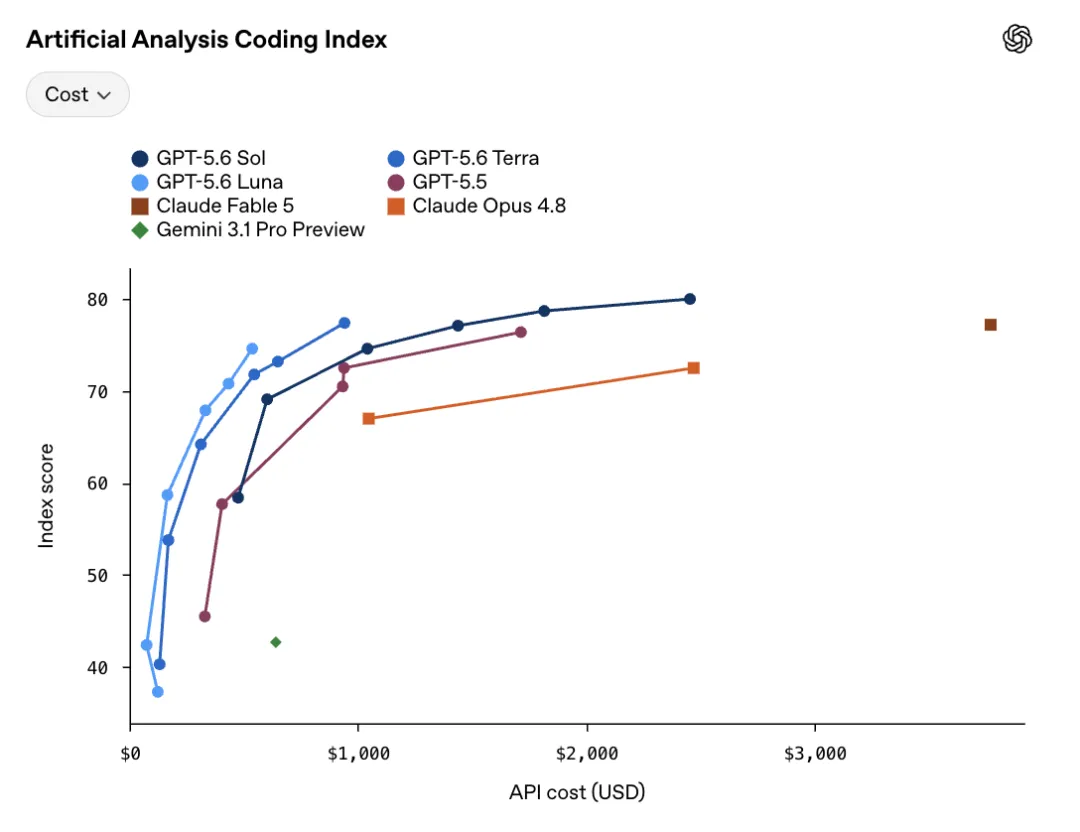
In addition, the official "nursery level" tutorial was added to teach startup teams how to run GPT-5.6 at a lower cost.
 GPT-5.6 power towersOutput Token cut by 6 times
In just a month, GPT-5.6 Sol's internal membrane has evolved.
The ARC-AGI-3 is the most difficult test of all time for top-level AI that hasn't taken 50 percent, and the test rules are very simple.
You throw AI into a bunch of never-before-seen 2D mini-games without giving them a manual and letting them figure out how to play the game themselves.
As a result, GPT-5.6 Sol received only 7.8% on the official list, while GPT-5.5 received only 0.4%.
For the next generation, the same Sol scored 92.5% on ARC-AGI-2 and also connected to the ARC-AGI.
For this reason, OpenAI researchers Ilan Bigio and Ted Sanders looked into the cause, and the problem appeared in Harness.
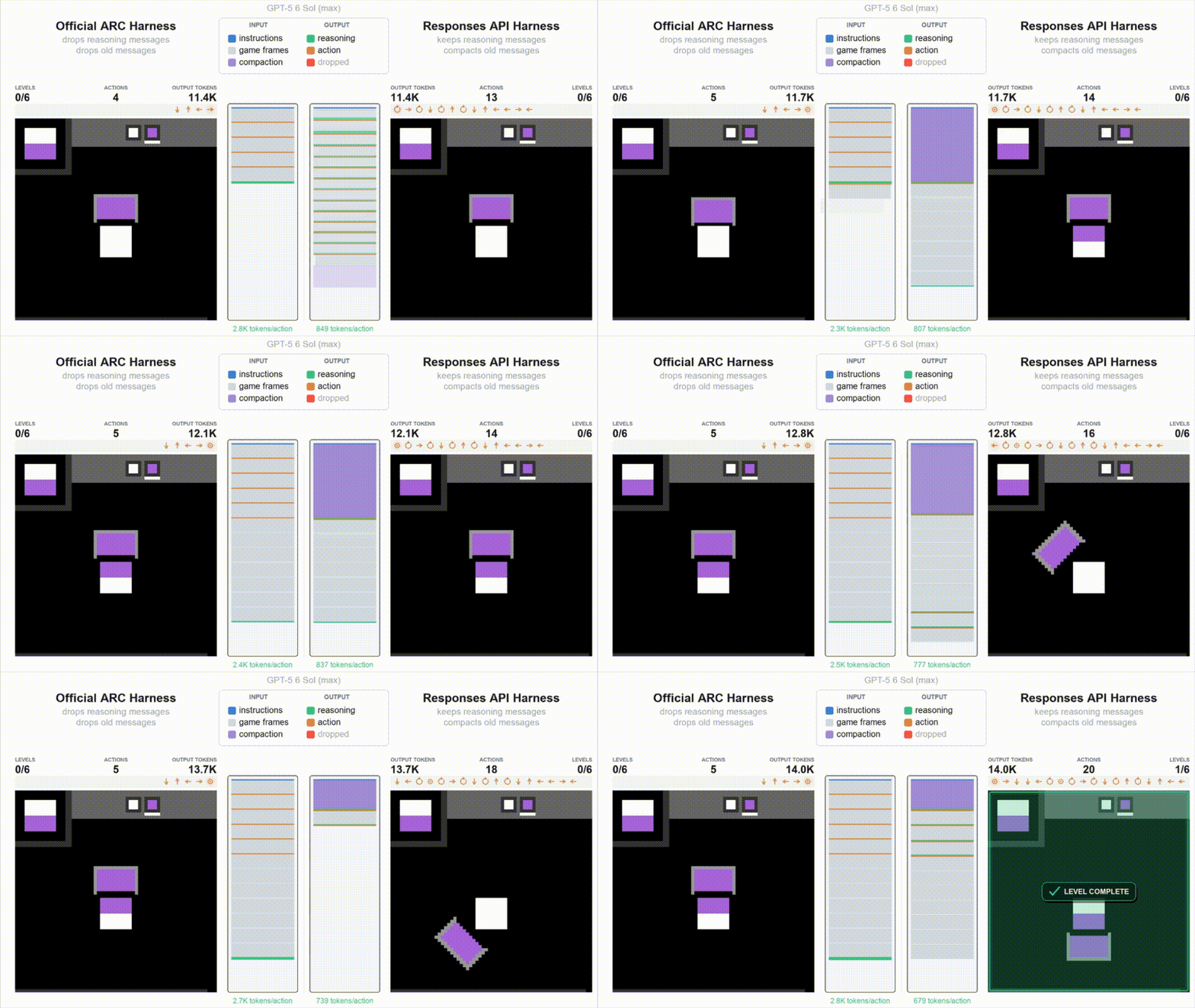
ARC's official "general harness" does two things: every step of the way, the private reasoning process of the model is lost; the context is full, cutting off from the oldest.
In other words, every step of the way, the memory is cleared and then repeated.
So the team switched Harness to the Responses API, opened the two switches "Reflection Reservation" and "Compression", and ran a new set of open questions.
GPT-5.6 Sol went from 13.3% to 38.3%, and Token output decreased by 6 times.
"Super small cup" LunaThe cost is lower.One of the most eye-catching comparisons in this browser builder's guide is from the browser comp.
This is a list created by OpenAI itself, a list of "couldn't produce cold facts all over the web".
Three months ago, GPT-5.5 went to the Extra High grade, taking 84.36%, for a total cost of $33.27.
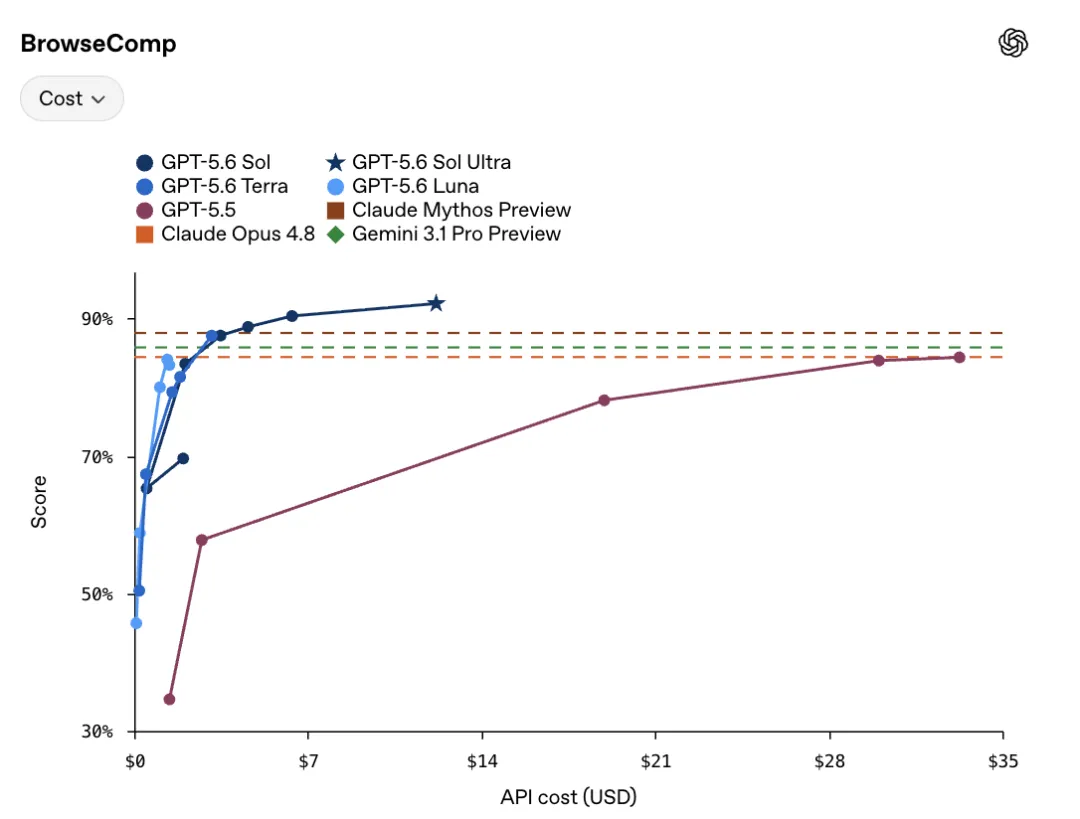
Now, the smallest and cheapest Luna in the GPT-5.6 family, also called Extra High, takes 84.04% and costs $1.33.
Although the result was only 0.32%, the cost was cut 25 times.
Of course, what OpenAI is trying to say is:
Three months ago, only the flagship GPT could do it, and now the lowest-ranked model, Luna, can do 89, not 10.
Let GPT-5.6 write its own code, modify its own toolsIn the guide, OpenAI also gives three other ways to achieve a lower cost deployment of GPT-5.6.
The first is Programmatic Tool Calling.
The former agent was like the owner of a business: every time he received a material, he had to personally review it before deciding what to do next.
If you turn 100 tools, you have to go back to 100 tons.
Now the model can write a Javascript directly, arrange the tool batch in the sandbox, complete it, aggregate it, and just take the last table back in front of it.
According to Rogo, a financial research firm, 21 percent fewer tokens are used if the quality is level.
The second is "Indigenous Multi-Intelligences".
The main model is the workpiece, which is then broken down into a group of sub-models to do it in parallel, and finally collected and assembled.
The ultra-level in ChatGPT, which was supposed to run like this, had four agents running at the same time by default.
Jon Bell, co-founder of product company Obvious, said they threw six requests in and out, writing alongside the discussion, and it didn't go away.
The third is the "Cashword Tip".
The validity of the cache is extended to at least 30 minutes, and the disconnect can also locate itself.
Engineers at AI company Ploy gave a 29,000 token share tip word with a break and a work zone exclusive key, directly reducing untargeted cache input by 28%.
750 tokens per second14 times the speed.On the same day, OpenAI released an Ultrafast mode preview.
GPT-5.6 Sol, up to 14 times faster and speeds up to 750 tokens per second, is available on the OpenAI API.
The difference is that it tore up a two-year-old sub-rule, which required a real-time response, and had to retreat and ask for a new small model.
It doesn't matter now whether it's Ultrafast or the Sol, the level of intelligence hasn't dropped a bit.
Cerebras himself did a set of controls, and the chosen question was Humanity's Last Exam, which is usually answered only by a doctor.
Sol Ultrafast ran a total of 2,500 runs in 11 hours and 11 minutes.
Claude Fable 5 ran the same set of questions for 78 hours and 27 minutes over three days.
The accuracy rate is comparable, and the speed is almost seven times worse.
In less than a month, GPT-5.6 has completed a truly full-scale evolution.