
“ The brain-machine interface has also begun to roll out the scaling law.
The next competition for brain-machine interfaces is probably not just who has more electrodes, but who gets enough neural data first.
On August 6, 23-year-old former OpenAI researcher Naomi Bashkansky announced her new direction on X.
Two weeks ago, she had just left OpenAI. She is now a founding researcher at Conduit, a start-up company with only a handful of brain-computer interfaces.
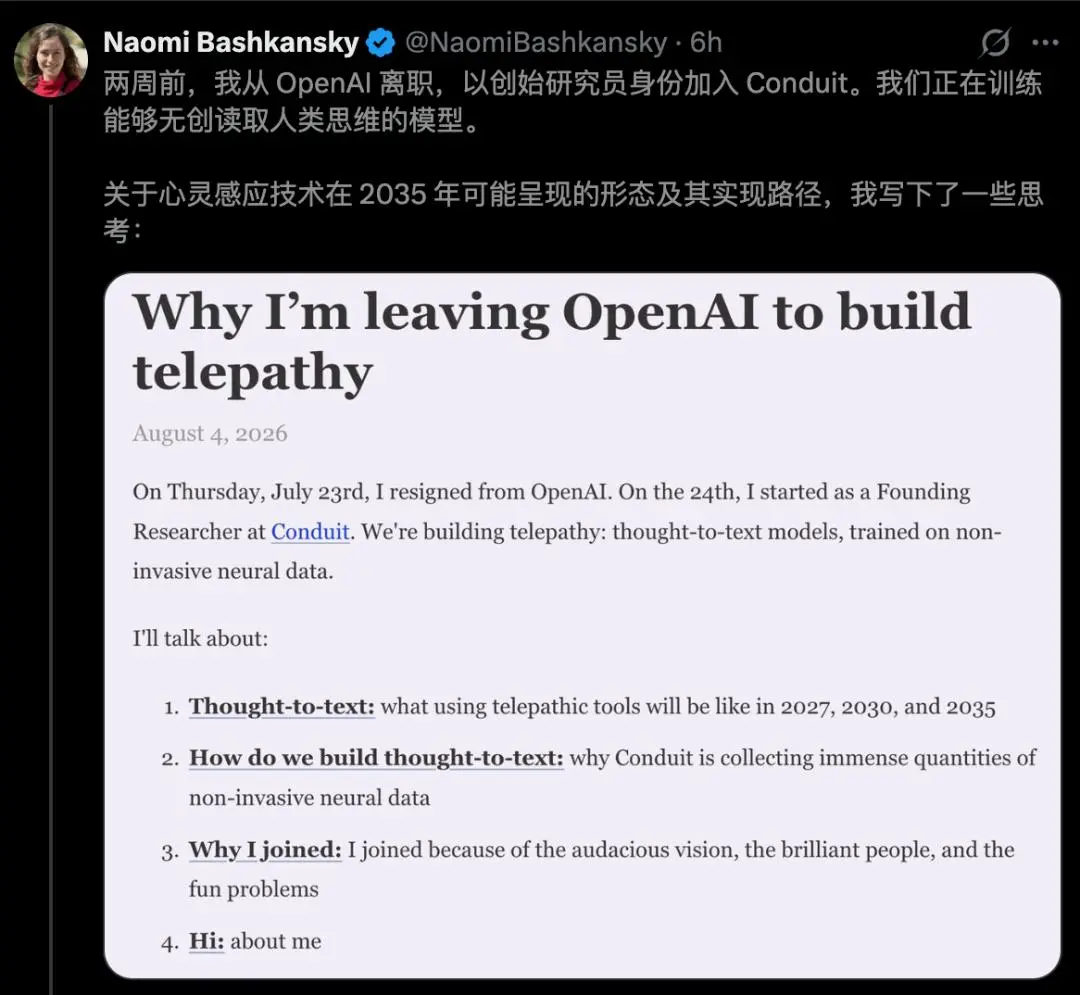
New work by a former OpenAI coordinator points to a direction that sounds like science fiction:Thought-to-text,It's just a matter of thinking.
More specifically, it's aNon-invasive brain-machine read-through pathways.
Conduit wants to use non-invasive neural signals to enable AI to capture the meaning it is ready to express before a person actually speaks or utters a sentence.
In order to verify this, only a handful of companies have signed contracts.10,000 hours of neural tube language data。
Naomi is more radical in her judgments about what she is doing now:It's still in the GPT-2 phase.
If the scaling law could really extend from big language models to neural decoding, then 10,000 hours might be just the beginning.
01.
Why leave OpenAI
I'm going to start a brain machine with just a few people.
Naomi's resume is not so ordinary in itself.
She began playing chess at the age of five, won the International Master title at the age of 15, and later attended Harvard to study computer science. In January 2025, she graduated from Harvard Law School and joined the OpenAI coordination team as a resident researcher.
In addition to her core research, she has been involved in the production of AI training materials within OpenAI and advised the OpenAI Foundation on AI Resilience.

A year and a half later, she chose to leave, and in her blog post, she gives a direct reason why I left OpenAI to create an inspirational blog post.
Conduit's vision is big enough, the team is small enough, and a large number of research questions are still in a state of "greenfield dilemma" with almost no standard answers.
Instead of solving a relatively specific problem in a mature large model system, limited by the existing technical architecture, joining an early start-up means that she can participate in the construction of the technical system from data collection, model training, etc.
She chooses:A space with a greater degree of freedom for research.
Specifically, she joined Conduit, which is not a typical brain machine company.
The company was founded in San Francisco in 2024 with a small core team. Co-founder Rio Popper, who was blinded as a child and later attended Oxford, had a long experience of human-to-machine interaction unlike ordinary users, which kept her thinking about how to bypass traditional input devices such as keyboards and mice; another co-founder Clem von Stengel had a background in mathematics and AI research, focusing on complex systems and bio-intelligence.
A search for more direct human-machine interfaces, a study of artificial and biological intelligence.
But Conduit didn't follow Neuralink's route of improving the implanted bandwidth. It wanted to verify another assumption:Non-invasive signals are noisy, but if the data is big enough, if the model is strong enough, can it still read people's intentions?
Naomi has even put the future of the route on the line a decade later.
She predicted,The year 2027,Neural headbands may first enter high-level contextual scenarios, such as programming, allowing users to knock less and not even complete Prompt;The year 2030A large model, or a skip-the-mill idea, converts text to a mouse, directly processing neural expressions; toThe year 2035AI could become the sixth sense muscle of a similar person and the extra limb muscle of a similar person.
02.
Interface of the brain machine
And the scaling law has begun.
Conduit isn't the only player that has moved the big model approach to the brain machine interface.
In fact, by 2026, this is already an increasingly clear path.
Recently, Hemispheric released the 6 billion-parameter NeuroAI model Descartes 1.0, which claims that it has 250,000 hours of training data, covers 100,000+ participants, and explicitly suggests brain decoding as well as scaling laws, hoping that the model can be cross-user, cross-task, and generalized.
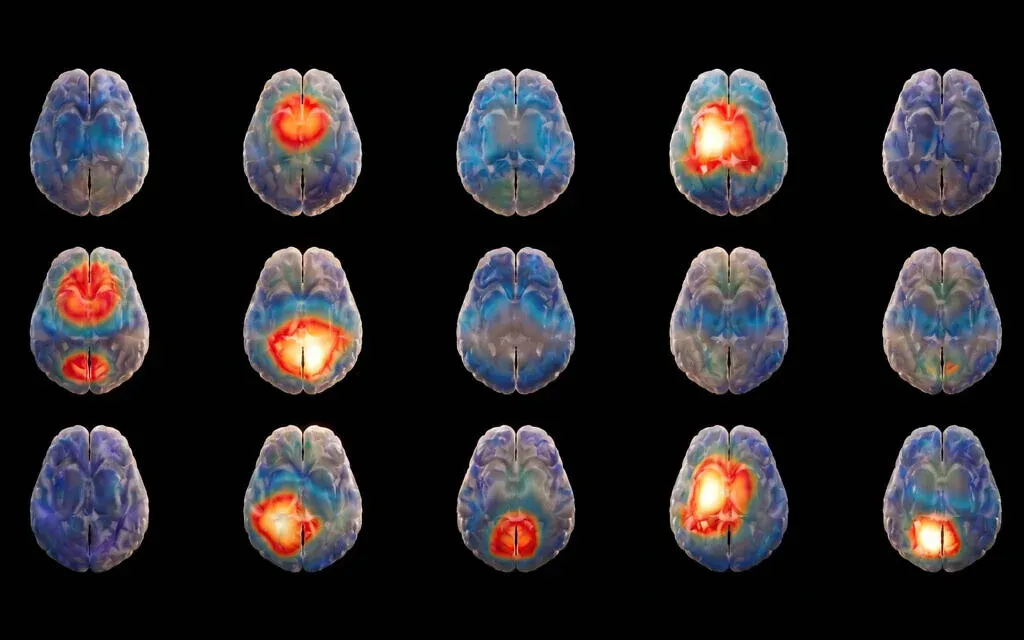
In February this year, Zyphra, an AI company, released the 380M parameter EEG base model ZUNA. The first edition collected about 2 million channel-hours of public EEG data, and after updating to ZUNA 1.1 in July, the training content continued to increase to about 3.5 million channel-hours, with one goal being to make a model adapt to different devices, different amounts of electrodes, and even more confusing real brain electrical data.
Zuckerberg's Meta is moving in this direction.
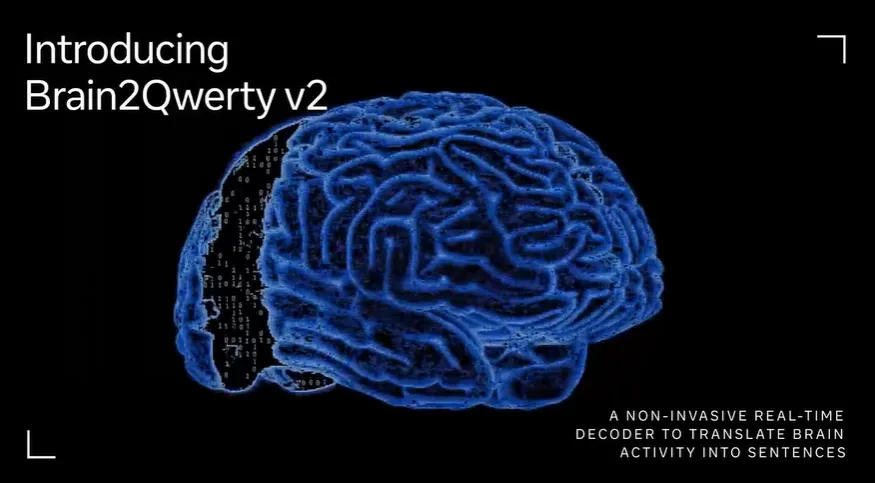
Brain2Qwerty v2, which was released in late June, used about 10 hours of MEG data from nine participants, a total of about 22,000 sentence training models, with an average word accuracy of 61%.
They pointed to one thing together:The competing variable for brain machine interfaces is how many roots are in the brain from the hydrogen electrode, increasing to how many people the hydrogen model has seen.
What makes Conduit really different is that it does this very thoroughly.
It didn't even wait for someone else to build the data set, it built a neural data factory itself.
03.
In the basement of San Francisco
A neural data plant opens up.
Conduit took about half a year to extract these 10,000 hours of data, and the method is a little bit different than the brainstorming company.
It transforms the collection of neural data into a stream of water.
In a subterranean space in San Francisco, participants wore headscarves and chatted freely with large language models for two hours. People listened and said that some people read and wrote.
That is, they're actually producing a bunch ofThe activity of the brain prior to the expression of urine is followed by the utterance of urine or urine.The data is correct.
In order to scale up the data, Conduit has almost moved its Internet company's growing operating methods into brain-machine interface experiments.
They recruit long-term experiment participants on Craigslist for up to $50 for two hours; data collection centers run about 20 hours a day, seven days a week; and to avoid data being concentrated on a handful of skilled hackers being tested, the company also limits the number of participants from the same person, because training across user models requires not tens of thousands of hours of individual contributions, but the brains of as many different people as possible.
Even the reservation system has been rewritten by them.
Cold-time dynamics increase subsidy, hot-but-chill time dynamics exceed expectations; the background predicts the attendance probability of different participants based on historical records. Even the amount of money needed to earn an hour of effective neural data becomes an indicator of Conduit's internal focus optimization.
From May to October 2025, the company called itThe marginal cost of effective data per hour decreases by about 40%; one rewrite of the data in the background decreases the marginal cost by about 30%, increasing the amount of available data to about 1.5 times the original.
If one of the most important infrastructures of the GPT era is Token, then Conduit is trying to answer:How exactly should the Token factory be built?
04.
After more than 4,000 hours of data
They turned the power on again.
A more counter-intuitive scene occurred in the process of data collection.
The brain electricity has a fear of noise, something that almost everyone who does an EEG knows about.Human movements, contact with electrodes, surrounding electronics, and even the 60Hz AC of the American grid.It's possible that the signal is contaminated.
Conduit initially made noise cancellation a top priority.
The team added insulation measures to the equipment, tried cleaner power supplies, and later even directly turned off the municipal electricity in the collection area, powered by tens of pounds of battery alternators.
The result is a new problem. Some devices are difficult to fully rely on direct current power, and about 10% of the data can be lost as a result.
Then the amount of data continued to increase -- to about 4,000 to 5,000 hours -- and they observed a change:After the model has seen enough people, different rooms, poses and gathered environments, the robustness of these changes began to improve and the benefits of some extreme noise reduction measures became less and less.
In the end, they justTurn the power on again.
If you look at the industry as a whole, this detail is worthy of attention because the typical idea behind non-invasive brain machine interfaces is to process signals as smoothly as possible.ConduitThis is an entirely different engineering philosophy:Instead of spending a huge amount of money to build a perfect laboratory, it's better to let the model see in advance enough bugs that aren't perfect in the real world.
But at least it shows that in non-invasive brain-machine interfaces, there is too little data before the chip itself, which may be an underestimated problem.
This is exactly the background of what Naomi called the "GPT-2" phase. Today's ability to see is probably only the first half of the Scaling curve.
05.
The so-called "heart-reading"
It's more like a supercomplete with a language model.
But after 10,000 hours of data, has Conduit really been able to read your mind?
It's a far cry from the scientific fantasy of the word.
The company has disclosed zero-shot results to several groups of new participants. For example, the real idea is that the cockpit room appears to be cooler, with the model predicting a meaning close to the cockpit microwave; another is the expression of the cockpit's favorite website or app, which is predicted by the model to be near the cockpit of the cockpit's favorite robot.
They have one thing in common:It means it's close, and the text isn't quite right.
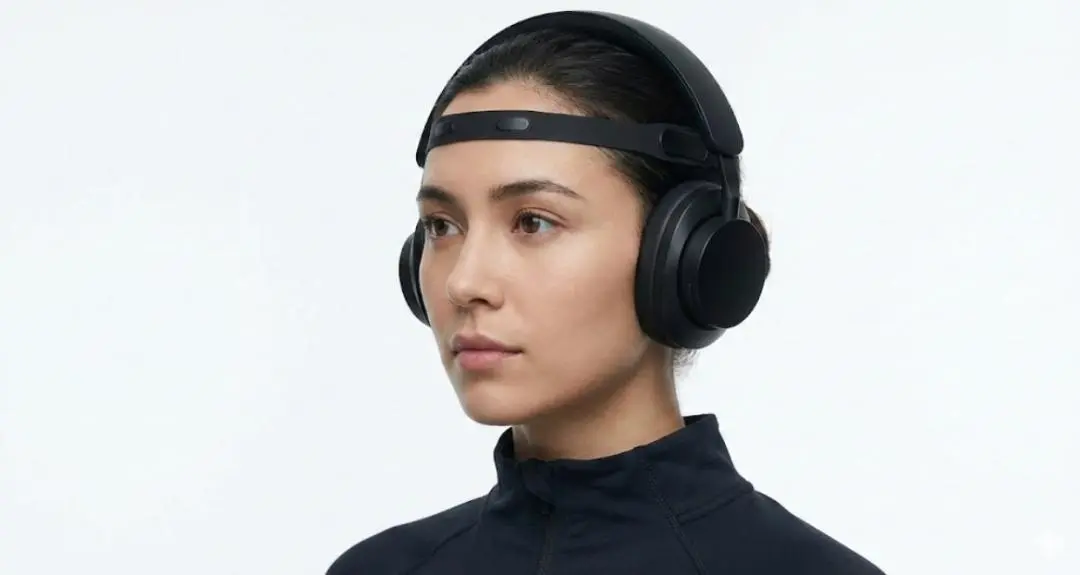
What Conduit is trying to do now is to use neural signals to determine where the person's intentions are at the moment, and then let the language model take over.
This is also the most noteworthy change in non-invasive brain machine interfaces since the big language model was added.
In the past, brain signals had to carry large amounts of information on their own.
In addition to the screen the user is looking at, the previous round of conversations, the current state of the software and the task environment, the candidate's answers could have been compressed very little.
This is a completely different story from the fantasy-thrillers in science fiction, but in the AI Agent era, it may have been commercially valuable enough.
There is a very primitive bottleneck between today and AI: machines can execute tasks in a matter of seconds, and people have to sort their minds into a Prompt, and then knock it out one word at a time.
If brain-machine interfaces can skip a part of that process, even if it starts with just a few words, it's already competing for more than just the healing market.
It is the next generation of machine-to-machine interaction.