For the past two years, the ability of AI to produce images and videos has been refreshing people's perceptions.
Today, it is easy to create a picture, a video.
But what's really hard is another thing: getting AI to understand and do things according to the creator's true intentions.
For example:
Modify a line of text while maintaining the font, layout and visual style.
Remove redundant elements from images and videos, but do not see any cracks.
Free to change hairstyle, clothing, lighting, scenery, but to maintain personality consistency.
Modify the local content of the video, adjust the lighting effect without affecting the overall continuity.
The model should be tested while ensuring that the material, texture and shine remain intact.
The second half of Prompt is a long string of hints, such as "keep consistent, avoid falsehoods, don't change" and other restrictions on avoiding model errors, and is a "conventional suite" in the process of AI creation. Ideally, however, we expect AI to be understood and executed directly, rather than learning how to use hints correctly.
The evolution of AI in visual creativity is a continuous breakthrough in many directions, such as visual understanding, spatial modeling, timeline coherence, aesthetic expression, which is difficult to achieve through a single model upgrade, but requires long-term accumulation around visual technology.
In the past few years, as a "long-term player" in the field of AI imaging, MT Lab has been continuously researching the real pain points around high frequency creation scenes. Since 2026, MT Lab has received 11 papers from international conferences such as ICLR, CVPR, ICML, ECCV, ACM MM, covering video editing, character editing, intelligent interaction, visual understanding, etc.
More importantly, these findings continue to transform AI imaging capabilities that serve real creative scenarios through product deployment.
It's a way for AI to make more powerful editing possible.
In professional creations, generating is just the beginning, and people often need to repeatedly try and adjust to get closer to the "ideal effect". Thus, whether it's the background, the lighting, the shape of the characters, the molding, the text in the images, or the clothing, the models need to be consistent, authentic and controllable at the same time, which is also one of the most critical capabilities of an AI image from "generate" to "create".
At ICML 2026, the MIT Lab proposed the Multiscale Vision-language features for reference-guided video Editing (MiVE), a unified framework for reference-guided video editing, the core of which consists of multi-level visual - language-based context extraction, reference-sensory sub-space coding, and unified auto-attention domains. MiVE is designed to integrate multi-dimensional VLM conditions with unified modeling, solving structural shortcuts that currently exist in instructional understanding and spatial precision in video editing.
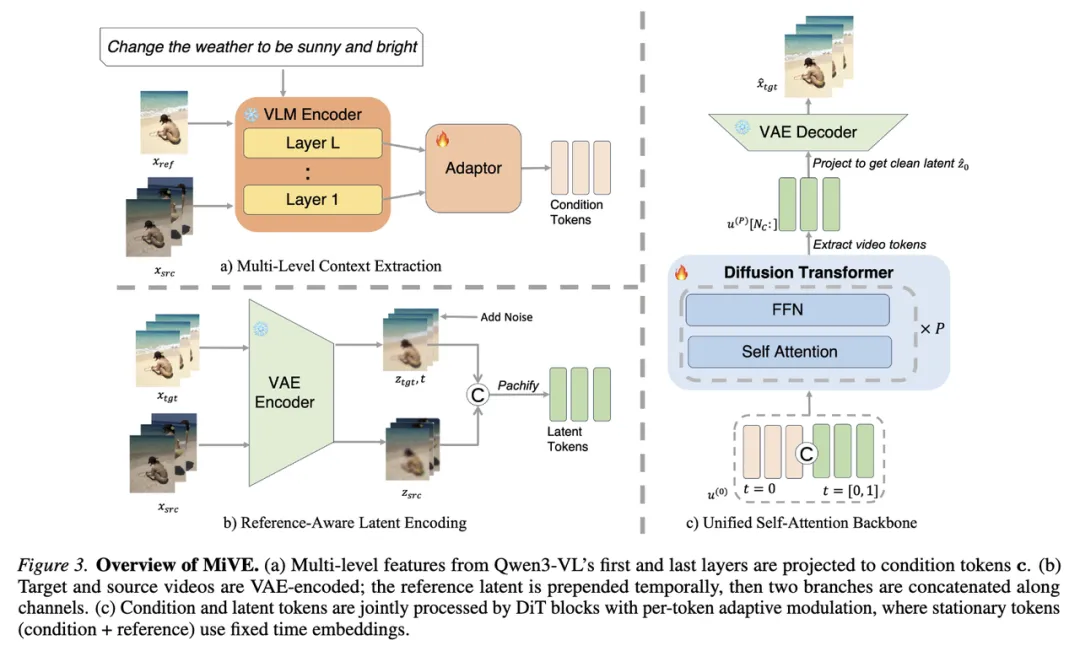
Link to the paper:https://arxiv.org/abs/2605.14664
The main page of the project:https://mivepaper.github.io/
MiVE is able to maintain the original video movement structure and naturally extend the editing information of the reference frame to the entire video in high-difficulty scenarios such as heavy movement, complex shading, and cross-shading style consistency; MiVE also demonstrates stronger stability and greater precision in maintaining identity characteristics, detail density, color consistency, and newly added shading area appearance restoration.
Combined with MiVE's V2V editing workflow, "changing the whole film", and creative editing capabilities to fine-tune human scenes, video editing capabilities, including changing hairstyles, changing clothing, shading, re-lighting, changing backgrounds, changing weather, and local optimization, have now been achieved.
MiVE performs well in fine thread processing, clothing adhesion, and material photography, and is able to accurately reproduce details about characters, threads, clothing materials, lighting, and more.
For example, in video shooting scenes, compared to mainstream models, MiVE has a clear advantage in both the dimensions of personality and environmental consistency, due to the capability of the upcoming on-line MET Show APP and the "atmosphere light" features of the Wink APP.
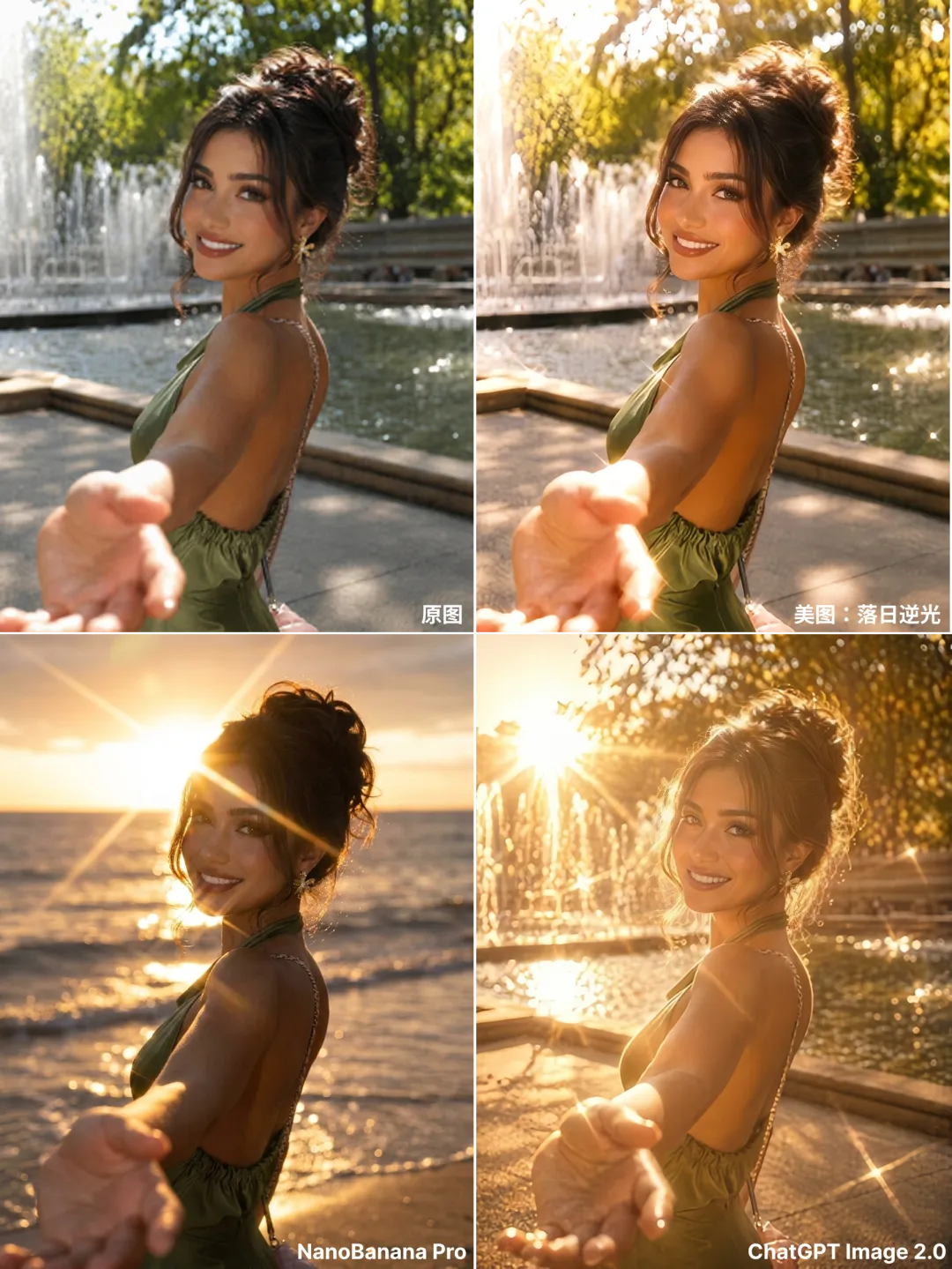
The ability to control changes in photosynthesis is also extended to static image creation scenarios, and in ECCV 2026, the American Film Institute (MT Lab) proposed a consistent feature transfer and re-lighting program called Consistent Feature Transport (CFT).
Since the current AI re-lighting program is prone to lighting instability, shadow direction distortion, and even the problem of "repairing another person's face", it is difficult to achieve the change of light efficiency as a common video editing requirement.
CFT combines large-scale human retouching data sets to achieve extreme consistency of identity, posture, and background in complex lighting scenarios by expressing human retouching as "the problem of transmitting features consistent with lighting", explicitly learning between the source chart and the target chart distribution in the Rectified Flow framework.
Link to the paper:https://arxiv.org/abs/2607.17833
The main page of the project:https://github.com/Dixin-Lab/CFT
In contrast to mainstream models, CFTs have better stability and rationality in lighting effects, and show high consistency in lighting effects even in complex scenarios. For example, in morning light scenarios, CFTs can accurately distinguish between morning and evening sunlight, presenting better overall atmospheric sensation and light realism.
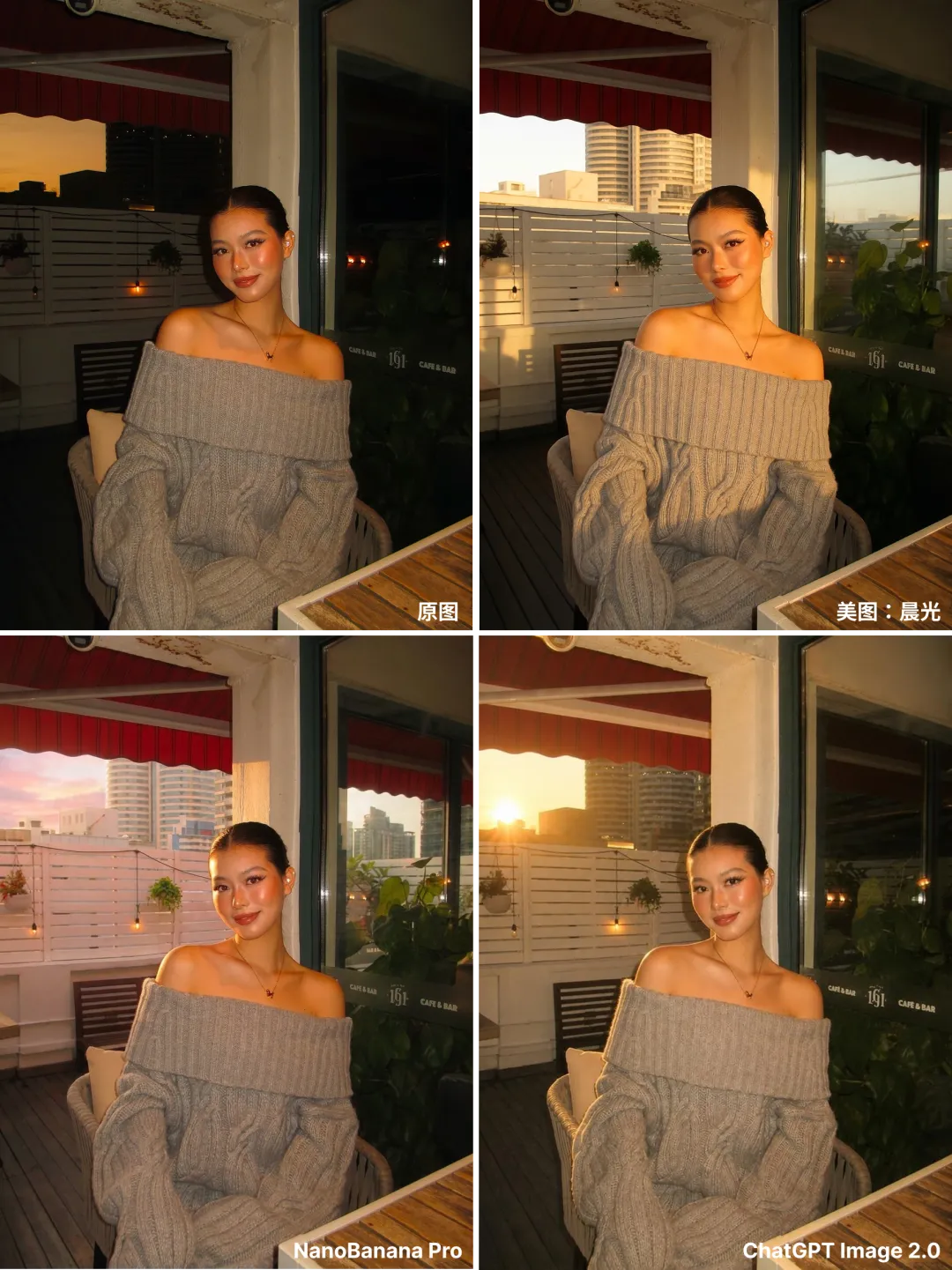
In combination with CFT, you don't need to enter long prompts to play a variety of light effects.

The all-new "image shining" feature has been uploaded to the map with the new AI product Picchi, "Learn How to Draw", which is available overseas via AirBrush and BeautyPlus.

Since the launch of "AI flashlight" last year, the American Institute of Photography (MT Lab) has developed more than 50 different lighting effects to help "Remaining Hands" save waste.

In addition to editing and adding content, there is another critical capability to image editing. Elimination. Whether it's daily shooting or professional creativity, cluttered travelers, obscured backgrounds, or eight-door garbage are common. The key to "AI elimination" is to both eliminate targets accurately, and to reasonably fill in all the areas that were obscured in a dynamic video scene, and to ensure the stability between continuous frames.
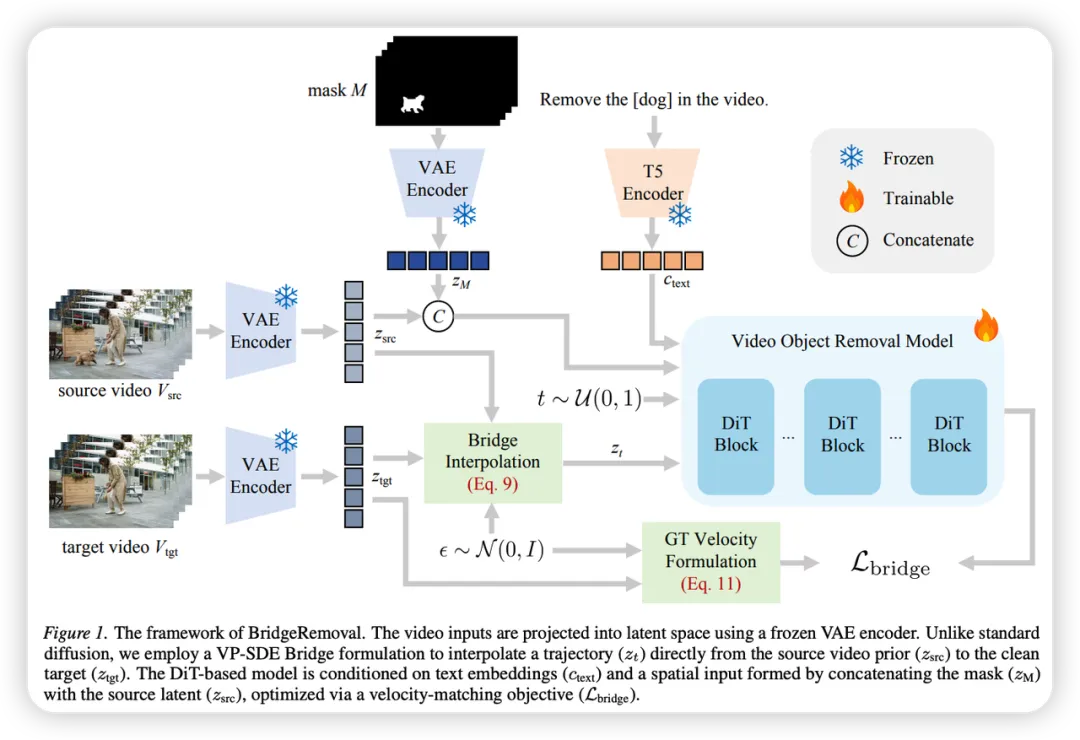
For this purpose, MT Lab proposed a new framework based on the Random Bridge Model at ICML 2026 called BridgeRemoval, which for the first time defines "video target removal" as "video-to-video translation task" by building a direct generation path based on the Random Bridge (VP-SDE Bridge) to achieve a better balance between background accuracy and generating flexibility, significantly improving the accuracy and timing consistency of video target removal, achieving the expansion from AI image removal to AI video removal.
Link to the paper:https://arxiv.org/pdf/2601.12066
The main page of the project:https://bridgeremoval.github.io/
Unlike the standard scattering model, which starts from random Gaussian noise, BridgeRemoval uses a differential-based bridge model that maintains a random differential equation (VP-SDE) to selectively change only the covered area and achieve maximum fidelity to the uncovered area in the background content.
Combined with the significant advantages of BridgeRemoval in target removal, background accuracy, and timing consistency, the Wink APP introduced the "Video Body Beauty Protection" feature, which addresses the embarrassing problems of leverage distortion and background distortion in normal video beauty tasks such as skinny faces and skinny bodies.
Based on the advantages of BridgeRemoval, which has also led to significant improvements in video removal capabilities, the overall performance of the mainstream model, reduced processing time by about 80% and differentiated by a 10-second video processing limit, BridgeRemoval can support unlimited video removal time.
Bridge Removal has been shown to have excellent elimination effects for all types of text, especially in text scenes, even with special lighting subtitles.
The ability to automatically recognize and eliminate video text, support up to 5 minutes of video input, achieve image loss-free effects, 30 seconds of video input and less cost compared to mainstream models.
For text in an image, removal often requires new content, which requires the model not only to generate accurate target characters, but also not to disrupt the original font, layout, color, and background texture. For the difficulty of reconciling character accuracy with visual style, MT Lab proposed a method for self-prompting-based image text editing in ICML 2026 to achieve a multilingual "traceless letter".
In contrast to modeling that relies on image repair and relies on OCR or a fixed typeface, this method can achieve end-to-end editing by directly extracting style information from the input image and combining it with the target text to generate high-fidelity font hints, unifying the two with the prototype without the need for additional introduction of specialized style or font encoders.
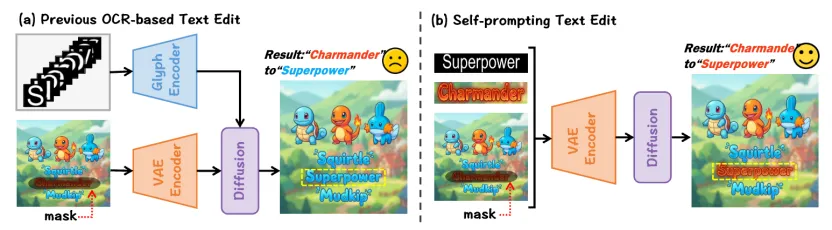
Link to the paper:https://arxiv.org/abs/2605.15523
The main page of the project:https://hongxiii.github.io/mstedit/
Thanks to Transformer's multilingual proliferation literacy capabilities, the method provides a unified and scalable solution for multilingual scene text editing, while maintaining the original font style, color and texture, and provides an important foundation for style consistency editing in a truly complex environment.
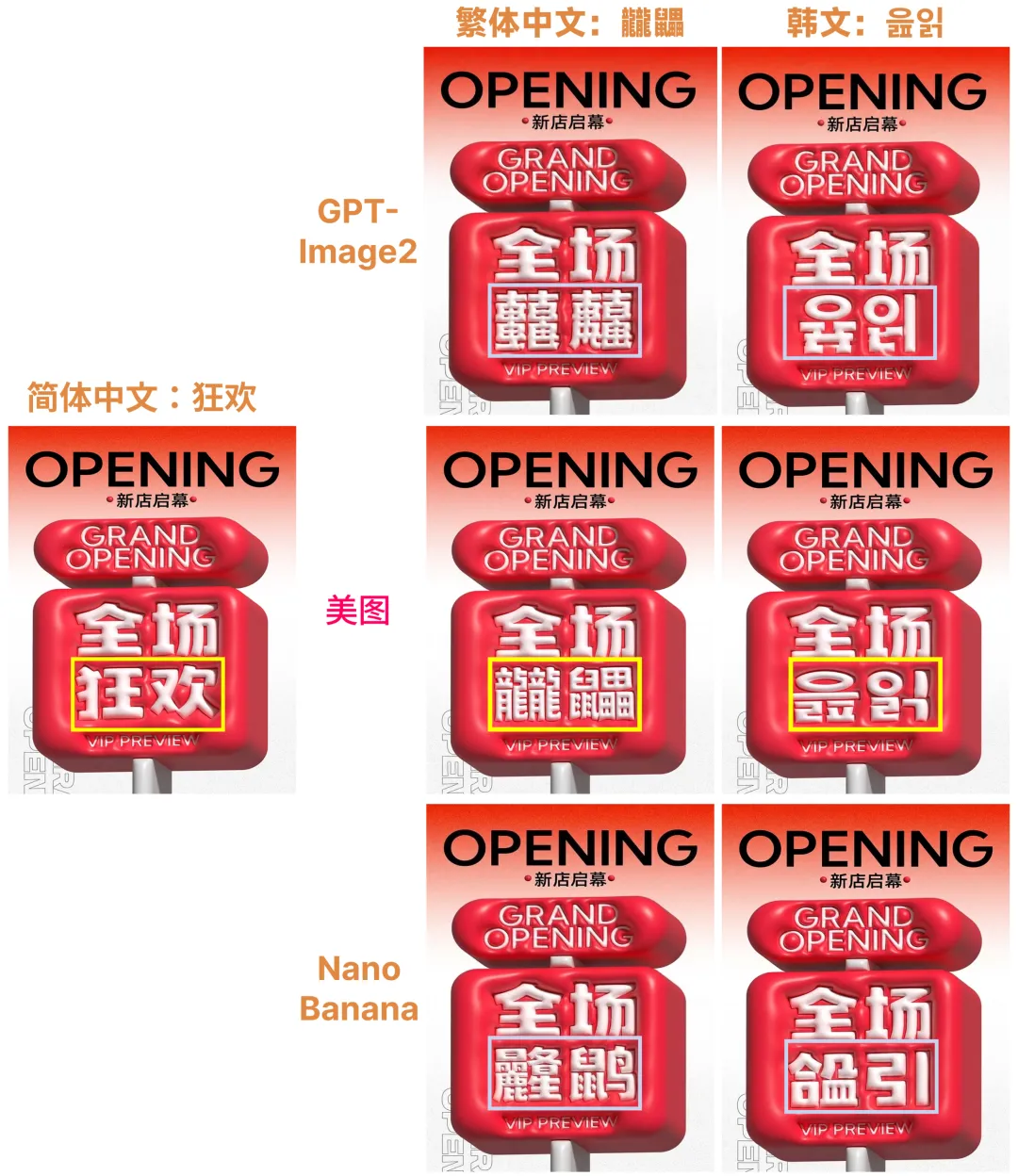
Compared to mainstream models, MT Lab's unmistakable word-changing capabilities, from editing accuracy to style consistency, have demonstrated the best performance. It has also shown extreme stability, especially in complex script scenarios such as complex Chinese, Thai, Japanese and even special symbols.
The capability is currently available through the "Strainless Writing" on-line PC edge, covering the world's five mainstream writing formats, including alphabet, Latin, Arabic, Urdu, and Cyrillic, even with special non-literal symbols.

Returning to the field of human representation, where shaping is a key part of human representation, the difficulty lies in the need to simultaneously understand materials, textures, lighting, and the relationship between people and scenes.
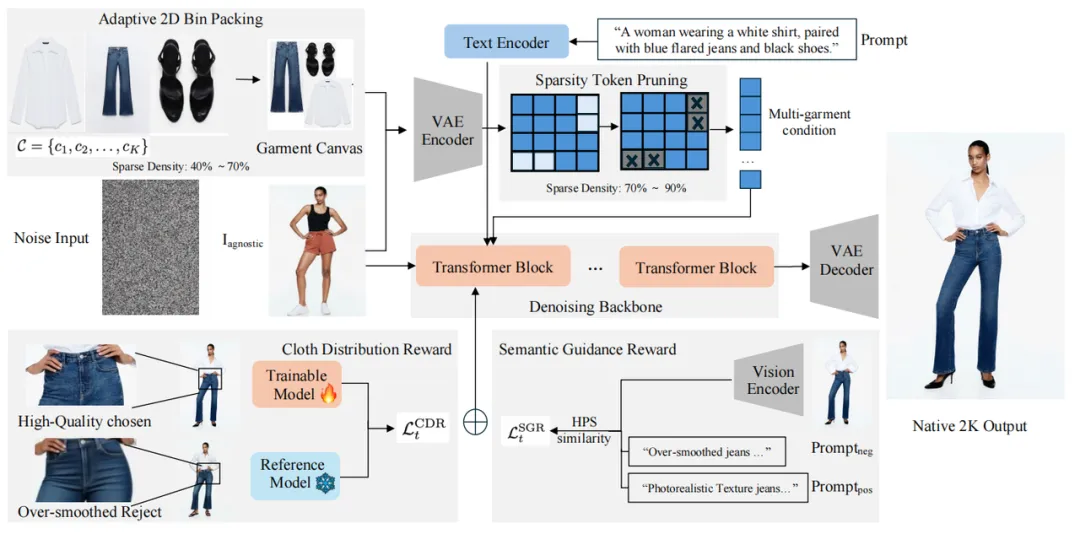
Address of the paper:https://arxiv.org/abs/2607.19923
2K resolution is currently used by e-commerce images to display details and texture of clothing hats, but when multiple clothing hats are imported together, Virtual Try-On's test-suit scheme can lead to a significant increase in both storage consumption and wear time, and poor performance.
While widespread models are prone to textural degradation at high resolution, special materials such as wool, jeans and knitting have a distinct "plastic feel", although these schemes are basically able to "wear against clothing", there is a large gap between them and real commercial ones.
With Adaptive 2D Token Packing (ATP), WearWow solves the problem of computational efficiency, achieving end-to-end multi-clothing generation, and using the Multi-dimensional Try-on Reward (MTR) to further adjust the model generation direction. Based on an accurate understanding of the wear relationship, WearWow upgraded the suits program from "replacing clothing" to "true wear, even at 2K high resolution, that still retains the authenticity of clothing materials such as wool, cotton, knitted matter, and more.
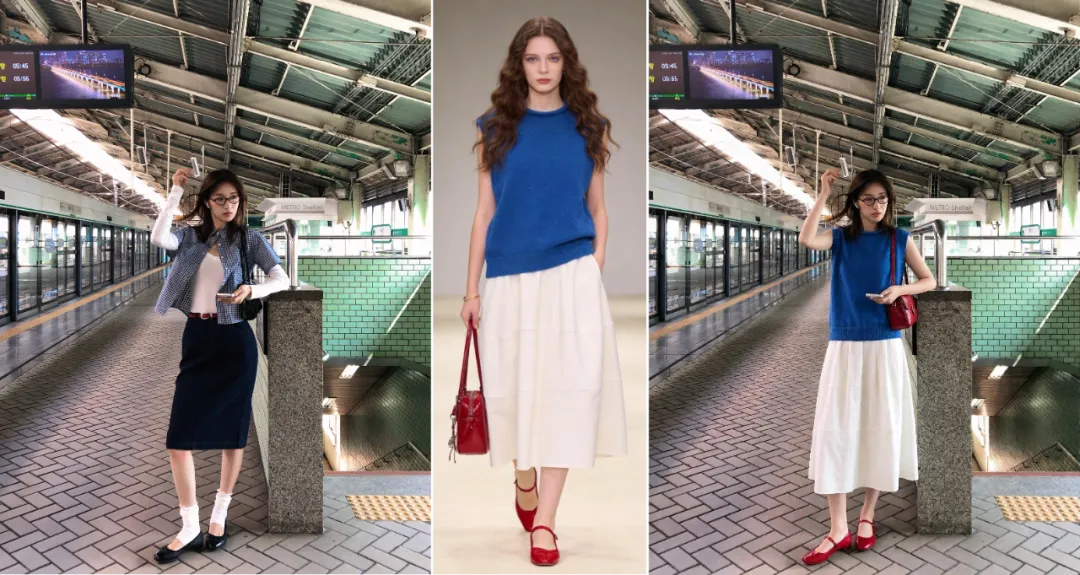
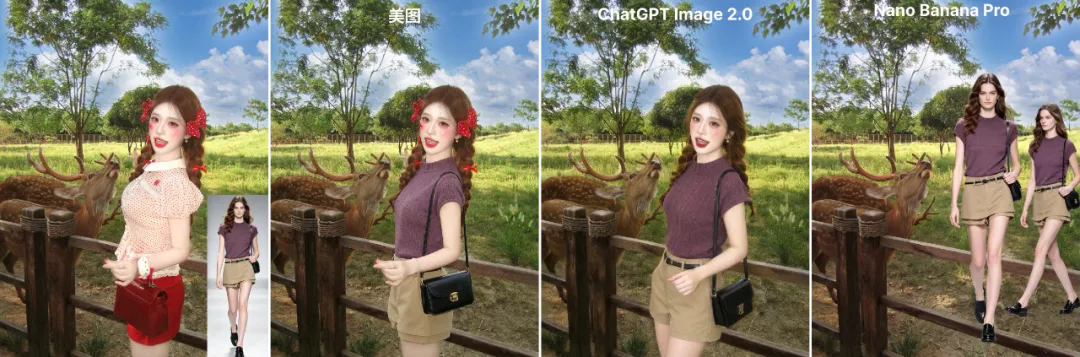
Under the different single-piece input conditions, such as multiple outfits, shoe caps, and models wearing elaborate outfits, WearWow can also avoid overlapping confusion and wear confusion, enhancing the sense of authenticity and stability in complex test scenes.
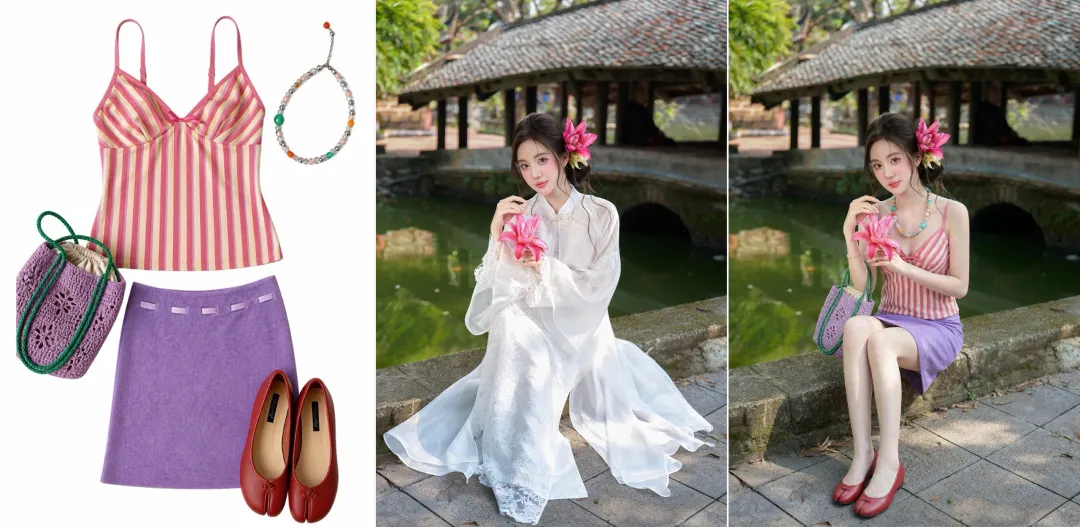
In the face of complex scenarios such as large coverings and special gestures, WearWow is able to produce clothing that fits naturally and truly restores clothing materials, textures and textures.
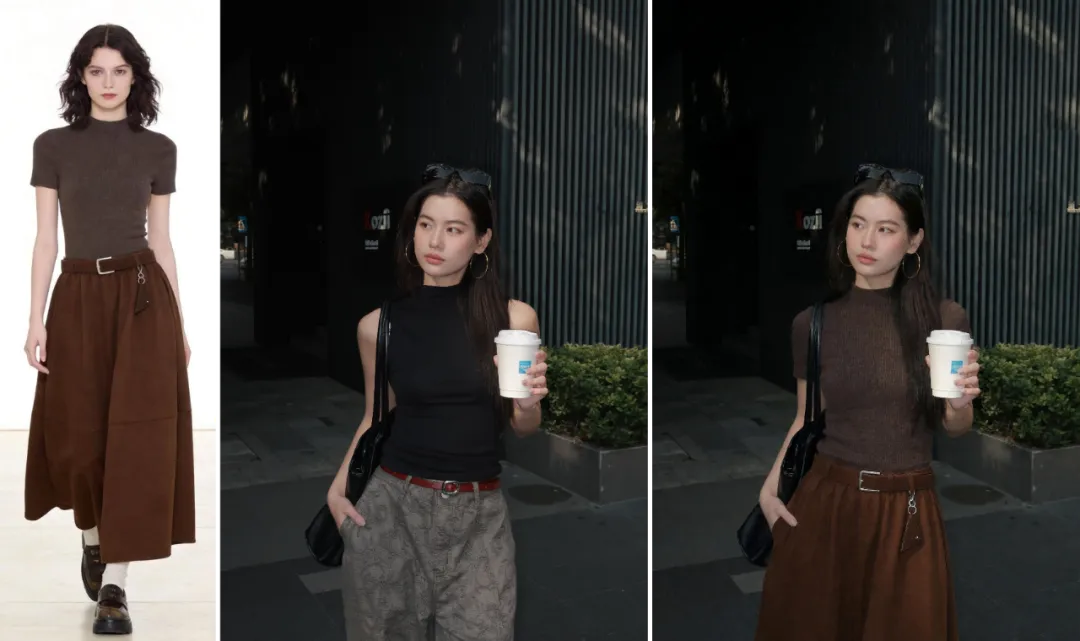
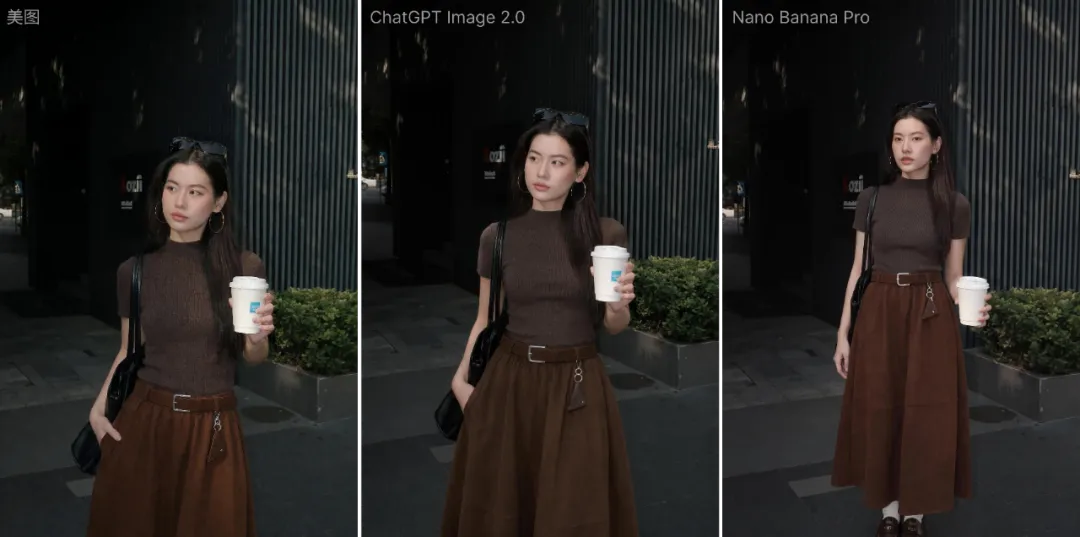
In contrast to the mainstream general model, WearWow combines intelligent scene recognition capabilities, even if there are interfering elements in the wear target, such as shoes in the wear chart, but the model is a half-body scene, and WearWow's test effects will not mistakenly change the posture of the character.
With the gameplay functionality of AI test suits being rolled out globally, the ability of AI test suits is also expanding further into the commercial scene, with the "AI change" functionality and the "costume wear" and "AI test suits" functionality of the AMC Camera APP now available online.
From video editing, photo editing, goal elimination, to text replacement with AI testing, MT Lab focuses on complex tasks in high-frequency creation scenarios, in-depth optimization of model capabilities. At the same time, MET also explores the common needs for different attribute editing tasks to explore unified control methods.
At CVPR 2026, MT Lab proposed an All-in-One Slider, expanding the One-for-One mode of "one attribute to one slider" into a unified multi-attributes control framework that enables continuous control of multiple image attributes such as age, smile, complexion, hairstyle, support for free multi-attributes combinations and the generalization of zero-samples of attributes not seen in model training, while better maintaining personality identity, background and other non-target content consistency.
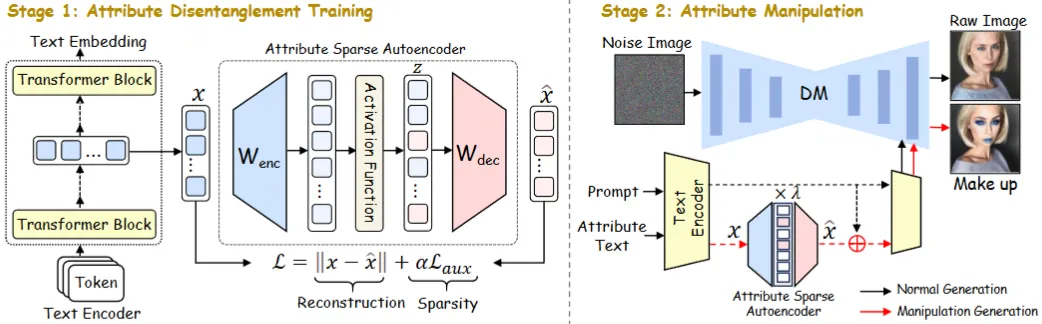
The All-in-One Slider provides a new technical foundation for unified, fine-grained attribute controls for more flexible combinations of scheduling and editing of different images, which also enables the Picchi APP, where users only need to give instructions to the AI, like chat, to accurately execute image editing ideas, including an "ambient sense" of "look at these relatively abstract image editing instructions, and Picchi can provide a full-fledged solution based on multidimensional analysis of images".

As you can see, MT Lab's advancement of AI imaging capabilities is not only about expanding the boundaries of the capability, but also about providing greater freedom and more extreme and stable visual effects. The more open the boundaries of AI capabilities, the higher the demands on models for understanding images, constraining changes, and this also depends on another layer of the model's ability to understand and control.
Let AI achieve more precise understanding and control
If the editing ability of the model determines which tasks the AI is able to handle, then the understanding and control of the model affects whether the AI is able to perform as intended by the creator. For example, many times we are just "changing a little bit", but the model needs to complete a complex understanding, "knowing where to change", "knowing what can't change", "knowing what the picture really represents", which is sometimes more difficult than generating itself.
When it comes to specific creative scenarios, this understanding and control involves multiple levels, and for this reason, MT Lab continues to improve models from different directions in terms of accuracy, authenticity and controllability at the level of understanding and control.
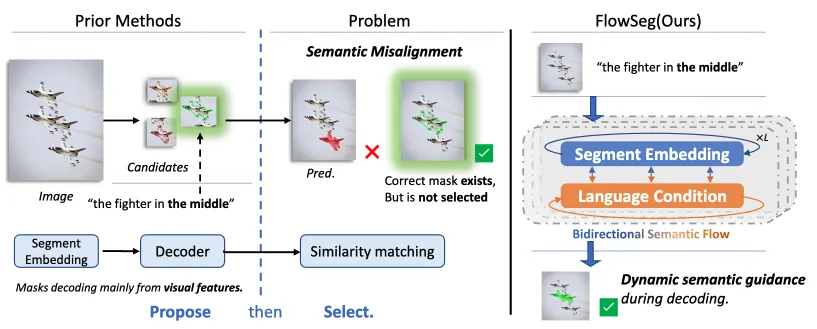
In ICML 2026, MT Lab proposed a conditional partitioning method based on two-way semantic flows for the problem of "splitting right but choosing wrong".
Link to the paper:https://arxiv.org/abs/2605.29461
The main page of the project:https://zkzhang98.github.io/FlowSeg_page
Conditional division based on LLM's natural language descriptions is now able to precisely "pull" out target areas, but the mainstream "proposal-then-select" framework is almost dominated by visual characteristics, and language conditions only "intervene" in the final step, so the correct Mask is often generated without being selected. This makes it easy for the model to choose the wrong object when performing the task, especially for local editing of the specified object.
FlowSeg redefines the role of "language" in the LLM conditional partition, guiding query characteristics to update with language conditions in each decoding layer, so that Mask is always consistent with the language description during the generation process, while continuously absorbing visual evidence from the decoder, and dynamically updating as Mask becomes clearer.
FlowSeg allows "language" to be deeply involved in every step of the dynamic process generated by the mask, and to evolve alongside visual in the decoding process, forming a true two-way loop of interaction, even in extremely complex scenarios. FlowSeg is able to precisely align image objects with language instructions and accurately determine editing objectives.
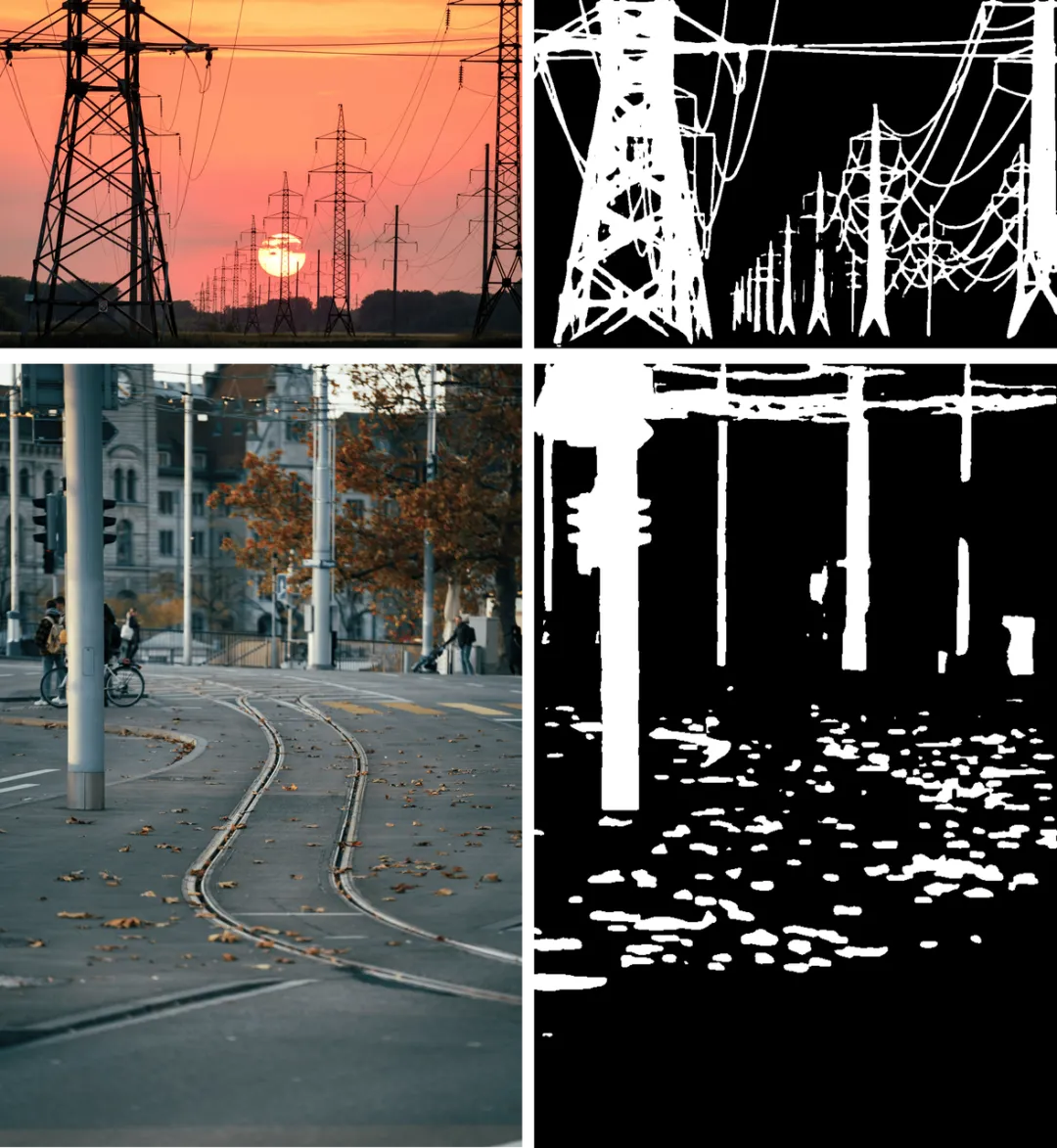
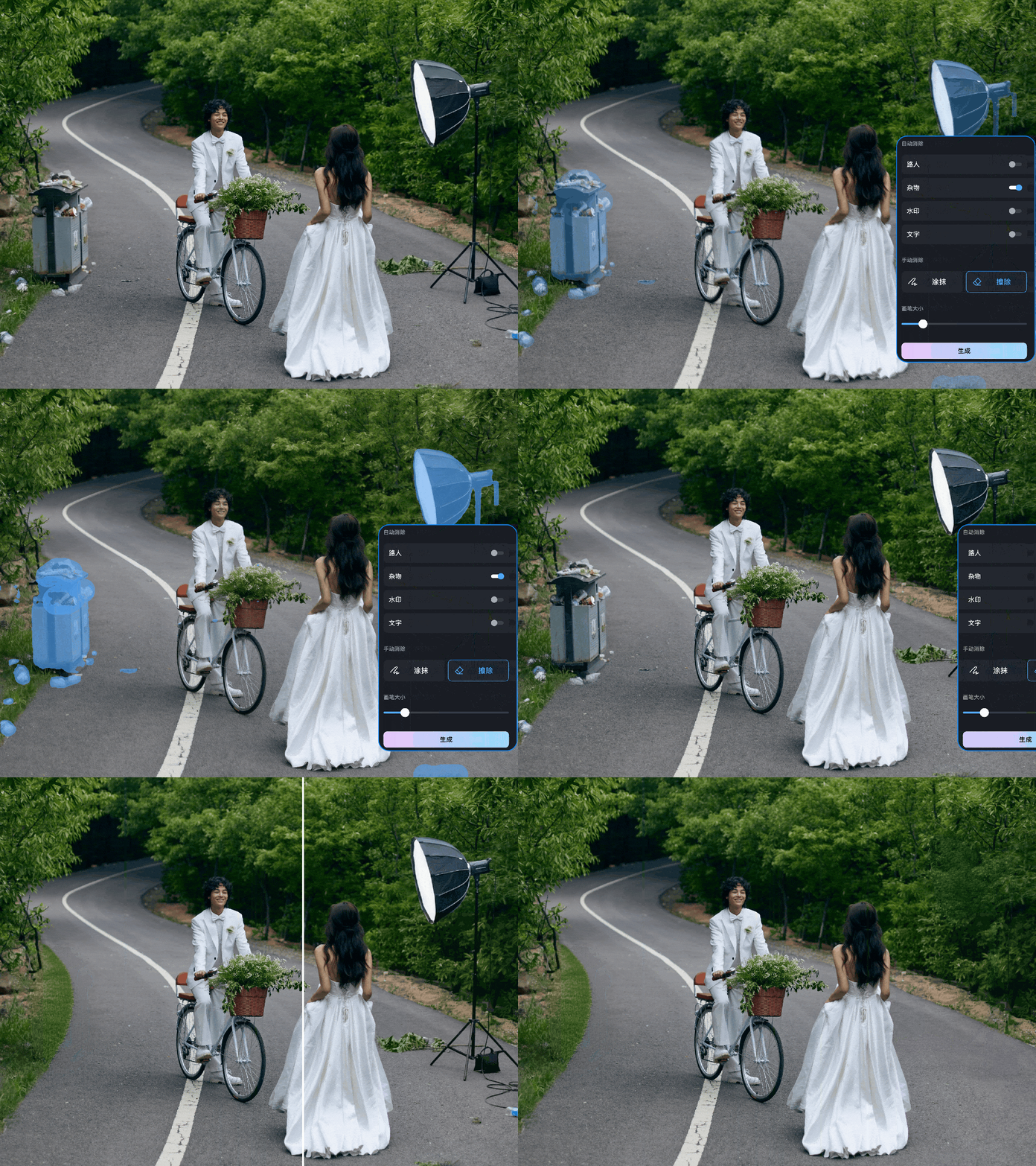
It combines AI image removal capabilities with FlowSeg to synthesize and divide rich categories of objects in complex scenarios.

Without the need for manual selection, AI can intelligently identify and eliminate all impurities, including wires, road signs, alerts, emergency exports, foliage, garbage, etc., and achieve "spot elimination".
In local editing tasks, precise target selection is a type of problem; in spatial editing tasks such as changing perspective, object rotation, dealing with more complex spatial changes is another type of problem.
At ICLR 2026, MT Lab proposed the DiT-based 3D location encoding framework, the "Positional Encoding Field" (PE-Field), based on the finding that the image space structure in DiT is largely organized by location encoding, expanding traditional 2D location encoding into a 3D location encoding field with deep information, and further refining space control from patches to smaller local areas through multi-level location encoding.
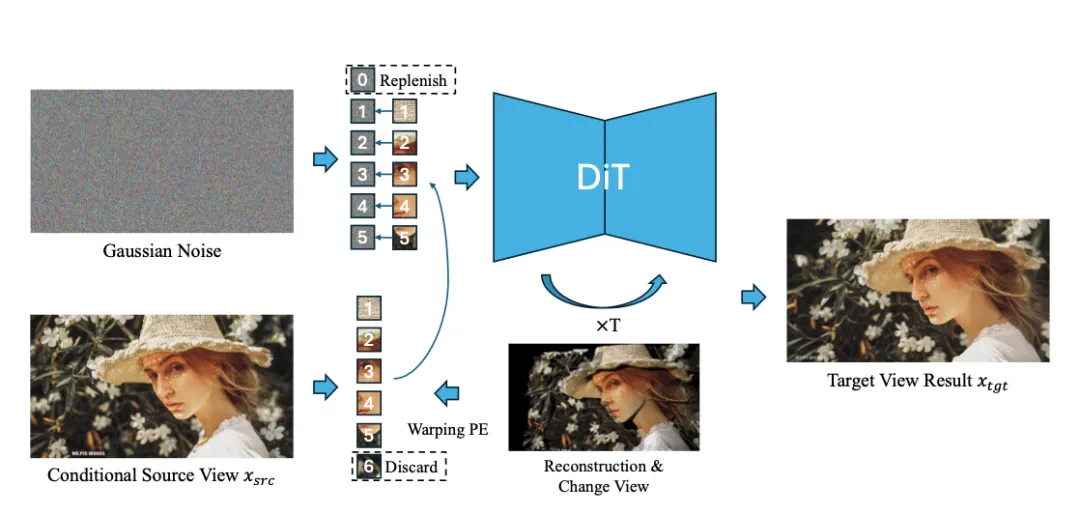
Link to the paper:https://arxiv.org/abs/2510.20385
The main page of the project:https://github.com/MTLab/PE-Field
This enabled the model to more accurately handle changes in perspective, shadowing relationships and spatial structures in tasks such as new perspective generation, object rotation, spatial position adjustment and target removal, further expanding the direction, and providing a solid technical foundation for multi-point visual material production and spatial controllable editing.
In addition to spatial creation, MT Lab also focuses on real-life issues in dynamic images. For example, the movement of soft materials such as character hair, clothing in dynamic videos often has a major impact on the image's credibility.
Due to the high frequency, fine-length structure, self-collision and complex light interaction characteristics of hair, it is difficult to control explicitly in video generation. However, in existing video generation technology routes, text drives make it difficult for the transmitter to oscillate according to specific direction and intensity descriptions; gesture driven bone signals do not contain the transmitter information, and the hair can only rely on the model's predecessor "self-play".
For this purpose, the MT Lab proposed the ControlHair dynamic hair dyeing framework at ECCV 2026, which ranks physical simulators with video scattering models to achieve controllable, real dynamic hair dyeing through physical simulation and image-generated decomposition, which translates the effect from "looking in motion" to "according to physical laws".
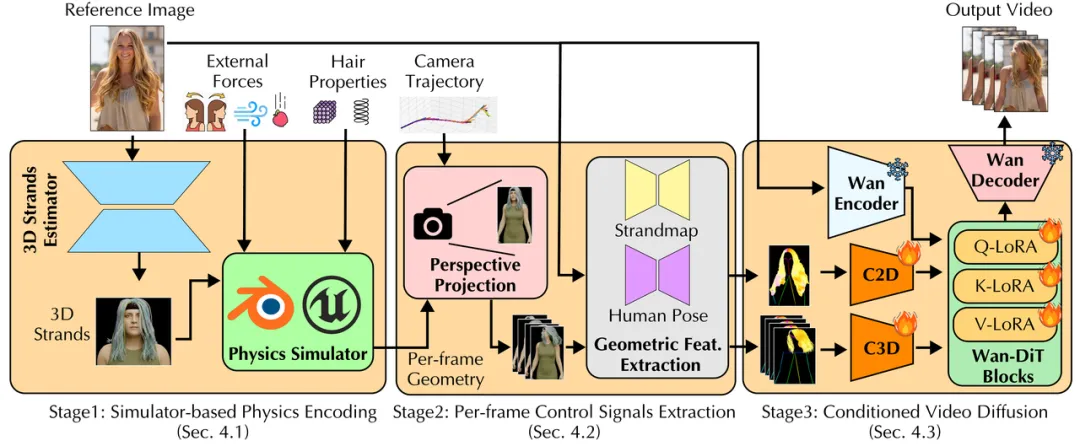
Link to the paper:https://arxiv.org/abs/2509.21541
The main page of the project:https://linwk20.github.io/controlhair-web
At the same time, the long-term accumulation in the direction of fiber structure, materials and visual performance, MT Lab continues to transform it into a product capability in the field of fiber scenery.
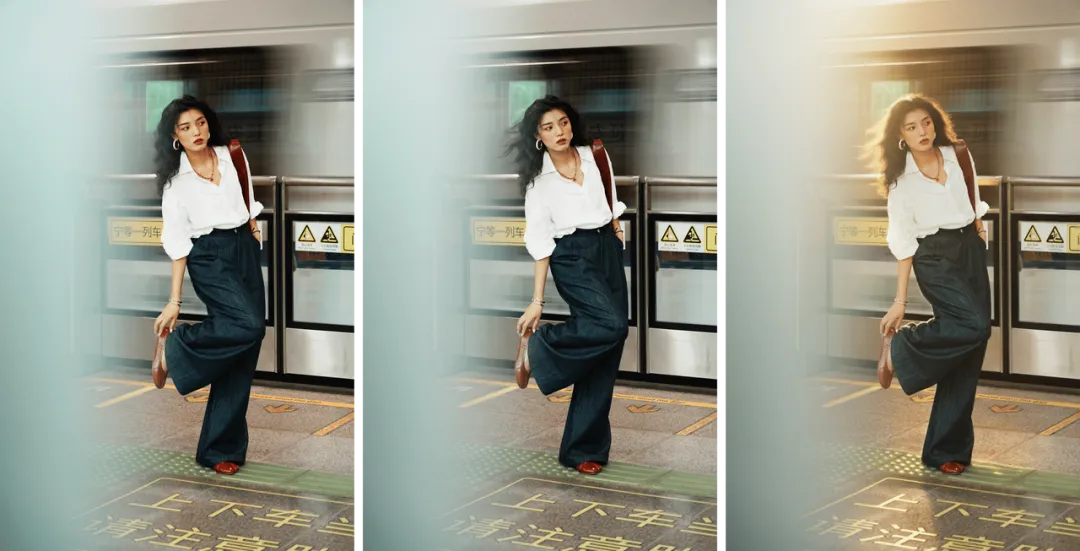
Hair, as a complex editing task that combines textures, lighting relationships, motion laws, and geometrical structures, is a test of AI's ability to fine-tune. In the first half of 2026 alone, MT Lab developed more than 50 hair styling features, covering hair extensions, hair extensions, and hair dyeing, hair styling, and hair quality optimization.

There is also a critical ability to enter video scenes, which affects visual expression, such as the language of the footage. For example, people who are gradually magnified in the image may come from the subject's approach to the lens, the camera's push or the focus of the footage changes, but they convey completely different spatial sensations, narrative focus and emotions. As AI video moves towards more professional creation scenes such as MVs, shorts, video, and more, it is far from enough to generate "moving images", and models still need to truly understand the language of the footage.
In the past, camcorder understanding has often been considered an ancillary problem in video understanding, with the MET imaging institute first establishing "natural language camera motion understanding" as an independent research problem in MT Lab ECCV 2026, the system bridging the five major failures of the visual language model (VLM) in natural language camera motion understanding, and constructing the first simultaneously covering 17 categories of camcorder, covering the evaluation benchmark for real and synthetic video.
Based on this, the MET imaging laboratory at MT Lab refined the VLM with heavily sampling and targeted data, compiled more balanced training data from 270,000 categories, and validated its significant improvement in understanding of model cameras.
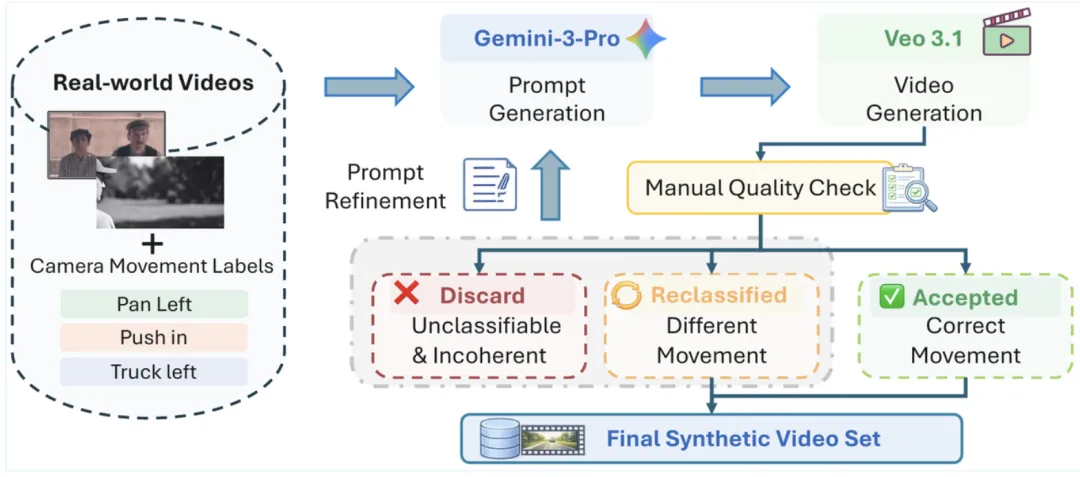
Link to the paper:https://arxiv.org/abs/2607.03043
The main page of the project:https://1yuwen.github.io/ACaM-Project-Page/
ACaM has established a data and evaluation foundation for the video model "learning cameras" and "judging cameras accuracy", where we can see that from the semantic alignment of the editing objectives, the spatial organization of the images, to the local dynamics and professional lens language, the MET imaging laboratory at MT Lab is continuously digging up user pain points from real creative scenarios and continuously advancing model capabilities through data construction, methodology research and evaluation systems.
How to make AI interact more freely
As the model's ability to understand, control, and generate continues to grow, single interactions have become difficult to accommodate all creative tasks, and often complex needs are difficult to explain in writing.
For example, in many creative scenes, specific locations, directions, shapes and widths of changes are included, but pure text instructions are difficult to describe these fine-grained changes clearly, and difficult to locate spatial locations, and are easy to generate spatial ambiguity; and pure sketch input is easy to cause uncertain editing intentions.
In ACM MM 2026, MT Lab proposed the SI-Edit synchronous image editing framework, which combines the syntactic information of text instructions with the spatial structure of the sketch, effectively mitigating the syntactic ambiguity and spatial ambiguity in single-mode guides, allowing users to express "where to change", "where to change", "where to extend", and "where to extend", both through language explanations.
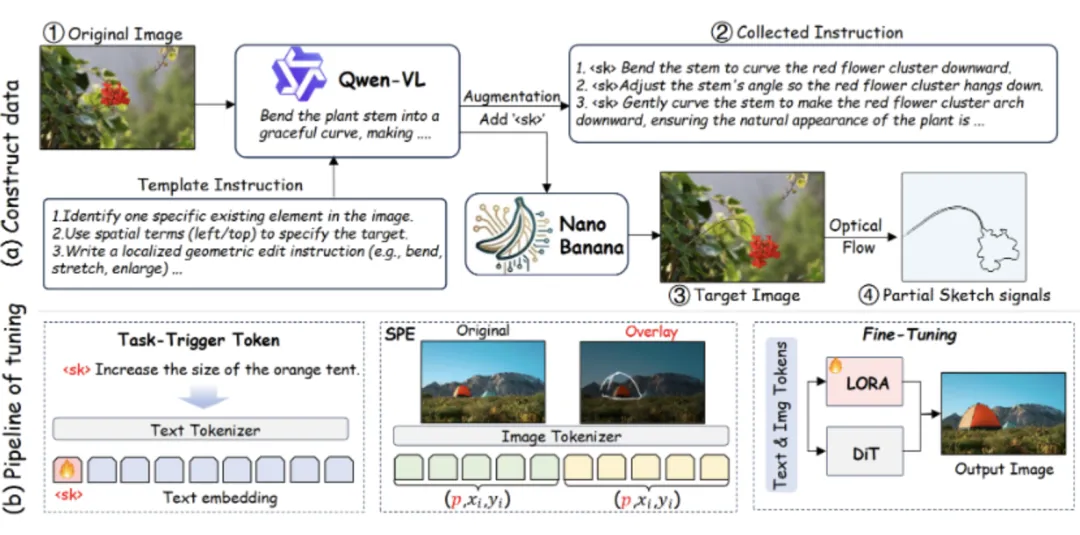
To make language and diagrams truly synchronize, SI-Edit introduces learning task triggers that enable the model to actively establish a link between text action and diagram signals; while adopting a shared location coding strategy to create a clear mapping of the diagram and its corresponding location in the prototype, reducing spatial drift in local shapes, and building a training base for approximately 6,500 groups of "source diagrams, target diagrams, curve diagrams, curve diagrams, instruction diagrams", for precise local editing, such as stretching, bending, loosening, and gestural adjustment.
With SI-Edit, flowers can be arbitrarily enlarged and shortened, branches can be bent at a specified angle, flames can be burned in the desired shape, making the editing process more free and the results more accurate.
As generating capacity evolves into a more general underpinning capability, AI imaging really begins to take a deeper dive into real-world creative scenarios, and the M.T. imaging laboratory (MT Lab) is tightening up the cutting edge of research, professional data, model evaluation, engineering landing rings to create a truly landing product power for the map, while the long-term value of AI imaging is also reflected in these details, while continually raising the thresholds on model capabilities, allowing AI products to truly move from "availability" to "love".