In recent years, the global competition for dexterous manipulation in the field of robotics research has begun to return to the physical structure of the robot itself.
According to the IEEE Robotics and Automation Society's related papers statistics, a steady increase in the number of papers on robotic touch perception, soft robotics, tendon-driven, and visual touch integration has become one of the important areas of research at robotic summits such as ICRA, IROS, and others between 2025 and 2026. More and more researchers are beginning to realize that the ability of robots to operate in the real world depends not only on the size of the model, but also on whether they have the physical ability to match tasks.
Trends in the industry are equally evident. In the first half of the robotics conference, 311 robotics financing events found that core parts were financed by 68%, with a 21.8% share, overwhelmingly overtaking speciality, service and industrial robots. The big model gave robots brains, motion control algorithms made them stand on their feet, but in the second half of the arms race, capital markets were concentrating at an unprecedented rate on machine manufacturers and parts companies.
Because whether it's the general worker of Figure AI or the home service robots of the leading domestic manufacturers, most of its end executors are still stuck in the initial stages of the hydrogen-capable clutch. Hardness of contact, high risk, power saving heat, heavy-volume superhuman specifications... This traditional transmission system based on the hydrogen-powered vacuum cup motor + accelerator clutch has become a human-powered robot that can go from hydrogen-powered to hydrogen-powered to the largest hydrogen-powered servo-human clutch.
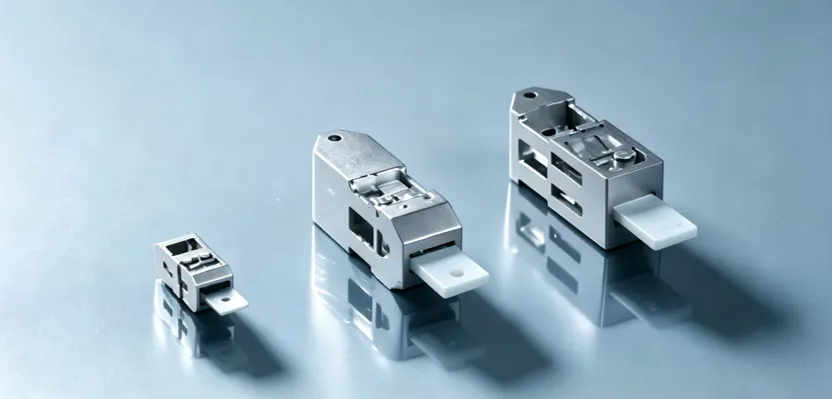
It is in this context that direct-drive mechanics has entered the public eye. It is not simply a new type of executor that replaces traditional motors, but redefines the way robots gain power. This new technological path means that robots have the first opportunity to break free of the motion logic that relies entirely on mechanical motion and make materials themselves part of the power system.
Zhengzhou Zhengjiang Robotics and Technology Co., Ltd. ("Zhengjiang Zhengjiang") is a global pioneer in the exploration of this technological route and an early industrialization enterprise, which has rarely formed a comprehensive technological path from electrical complex materials, dedicated drive chips, to closed-loop control and modular applications.
The Robotics Workshop recently learned that the company's underlying technology, which revolves around straight-drive muscles, has been developing products such as life-changing hands, synthetic data gloves, flexible eyes and super-real-life simulation faces in an attempt to build a life-changing end-to-end technology system that covers robotic execution, data, perception and interaction, which will be presented in full at the World Robotics Congress opening on August 19.
01.
Why is it a muscle strain instead of a motor?
Understanding the subversion of the path of intelligent straightening and straightening technique requires going back to a basic physical fact: human hands, no motors, no speed reducers. The human hand relies on the smooth coordination of the bone + straightener + muscle, achieving precise operations such as grasping, pinching, tapping, while maintaining posture for long periods of time without consuming energy. While the essence of the traditional vacuum cup motor + speed reducer is the electromagnetic sensation→ rotation→ multi-level mechanical conversion, the physical cost of this chain is structural straightening, overweight, energy-consuming, and highly asymmetrical to the model of human motion, directly causing the model training to face a data gap.
Because human hand grabbing an object is not a simple motion planning problem, but an integrated system problem involving vision, motion, touch, mechanical structure, and environmental feedback. Humans simply perform repetitive operations on a fixed track, requiring continuous interaction with various unstructured objects in an open environment. In the process, the problems of traditional machine-driven systems gradually emerge. Complex mechanical transmission chains increase volume weight and maintenance costs, while rigid structure makes it difficult for robots to achieve smooth contact as well as living organisms. This is why in recent years some overseas robotics companies have begun to rediscover pathways similar to muscle-driven technology. For example, in the design of a new generation of robots, companies such as 1X have attempted to move muscle-driven, fingerprint-driven, and fingerprint-driven units out of their hands in a way that brings them closer to the end of their movements.
If in the past the agile hand industry solved the question of how to implement the agile hand, then in the next stage the industry needs to answer the question of how to get the agile hand to have a way of moving closer to life.
02.
Full-drive simulation: the world's only muscle-driven simulation program
In this direction, the core breakthrough of Intelligent Design is the mechanism of contraction of the muscles of the human body by electrically simulated composite materials. The material undergoes this transformation by electric field stimulation, directly converting electrical energy into mechanical displacement, completely eliminating the intermediate links such as accelerators, silks, rope, and biodynamic direct drive, and truly creating the only commercially viable handheld and non-motor-driven handheld products worldwide.
The change in this underlying logic is not a gradual improvement, but rather an intergenerational performance leap. The object of direct-drive particle control is the state of the material. The material transformation is influenced by voltage, current, frequency, and environmental factors, and requires dynamic regulation through a dedicated drive system. Therefore, direct-drive particle control is not simply a replacement for a power component, but a re-construction of a control system.
Around this direction, the Intelligentsia has deployed dedicated drive chips and closed-loop control systems to form a complete chain of material responses, motion states and feedback information. From a technical point of view, this is similar to the relationship between the human nervous system and the muscles: the muscles are responsible for generating power; the nerves are responsible for controlling power output. For robots, the truly advanced execution systems of the future will not only have greater output capabilities, but will also be able to adjust their state in real time according to environmental changes.
Therefore, when we compare the direct-drive mechanical brake system of Intel with the industry-mainstream brake and centrifuge + deceleration brake system on the same engineering scale, the intergenerational differences are apparent, and I list several key advantages here.
(a) Impact resistance: from precision fragile to rubber resistant
The deadly weakness of the traditional system is the precision of its transmission chain. The high-speed rotation of the vacuum cup motor and the gearbox inside the decelerator, the planetary shelf dependent on the micrometer-level coupling gap. In industrial fixed scenarios, this precision system can still operate steadily; but once transferred to the human robot in clever hands, in the face of instantaneous impact when grabbing hard objects, accidental collisions or vibrational work conditions, the turning surface is extremely vulnerable to microbial wear and even fracture, and the bearing maintained under axle impact can also cause plastic deformation. These damage are often irreversible, and will gradually enlarge, eventually causing the transmission gap to increase, control precision drift, and even complete scrapping.
When the external impact load acts on the fingertips, the force is transmitted along the force to the core of the composite material, the material's own elasticity and resistance properties can be directly absorbed and dissipate the impact energy, rather than concentrating the stress on the roots or shoulders, as with rigid turbines. This tube has the physical properties of a juxtaposition of rigidity, which allows the direct impact load to be applied to the hands in the face of vibrational collisions, even minor falls, and has a natural systemic robustness that radically reduces the maintenance frequency caused by accidental impact and maintenance costs.
(b) Volume size and structural complexity: from multi-layered stacking to single shaping
The essence of the vacuum cup motor + accelerator brake system is a multi-layered stacked mechanical module. The motor body, accelerator casing, encoder, drive board, output brake... each level of functional components require separate installation space and connection interfaces. Within the finger joints with a diameter of just over ten millimeters, the system requires a multi-level axis or radius to the layout, often resulting in significantly thicker than human body proportions, and additional movement interference when the joint curves occur.
This means that the volume of the entire drive unit is almost equal to the physical size of the material itself, with no deceleration mechanism, no bearing supporting structure, no additional French transitions. In the finite space of a flexible hand, the direct drive muscle can be used as a real muscle along the axis of the surface of the bone, to drive a single distributed layout on the inside of the handlebars or forearm cavity, completely avoiding the engineering contradictions between the transmission parts of the motor and the joints of the program.
At the same time, due to the extreme refinement of the parts (wheelless, bearingsless, seamless, lubrication-free system), the total number of BOMs (material list) decreased from the traditional program, the assembly process was simplified from multi-level precision pressurization to position attachment to electrical connections, failure rate and maintenance costs decreased exponentially. Finally, the total weight control of the smart hand is about 300 g, for only 1/3 of the traditional program, the overall size is close to the level of the adult hand, without convex drive modules, which can be directly embedded in the wrist space of the humanoid robot.
(c) Combination flexibility: from specification solidification to block expansion
The output characteristics of conventional motor schemes are consolidated with the torque and torque at the selection stage. Once a model is selected, its rated output power is locked against the speed of the air load. If the drive or course is adjusted to suit different operating scenarios, such as precision assembly requires low precision, heavy loading requires very low speed, engineers often need to reshape, change the installed size of the machine seat, or even redesign the finger connectors.
Direct-drive mechanics exhibits completely different engineering flexibility. Its basic drive unit can be seen as a standard power-by-pass modulation pump, with linear overlapping output through synchronization, and a series of incremental paths through synchronization. This built-in combination logic does not require any complex mechanical modification, and only needs to be configured accordingly at the circuit and control levels, i.e. to achieve the width of the drive and path adjustment on the condition that the geometric dimensions of the fingers remain unchanged.
Combining the above three advantages of impact resistance, extreme simplicity, and flexibility, Intelligent Cube ultimately combined it into a higher engineering indicator: the degree to which it was naturally adapted to this particular application scenario.
It is not a specific technical flaw, but a structural mismatch between its underlying physical logic and the need for agility. It requires multi-freedom synchronization within the millimeter space, flexibility in force control when grabbing vulnerable objects, and the ability to withdraw safely in the event of a sudden collision. These are precisely the dimensions that rigid gear transmission systems are not the best at handling. In order to clutter the clutch with the clutch, engineers have to sacrifice the symmetrical proportions of the clutch, the compression sensor's installation space, and the maximum bending angle of the joints. Each compromise is the physical communication between the robot's hand and the human hand.
Direct-driving muscles are designed from the bottom up to meet the true needs of the dexterous hand. Their flexible driving characteristics naturally support the mixed force control. They provide sufficient support through the rigidity of the material in contact with hard objects, and achieve micro-strength resolution by electrical regulation in contact with vulnerable objects; their distributed layout capability allows them to drive the unit away from the finger joints, allowing the fine size and full range of the fingers themselves to be copied; their material-grade resistance to frequent collisions in open environments provides them with the ability to buffer their muscles without the need for additional protection of the muscles.
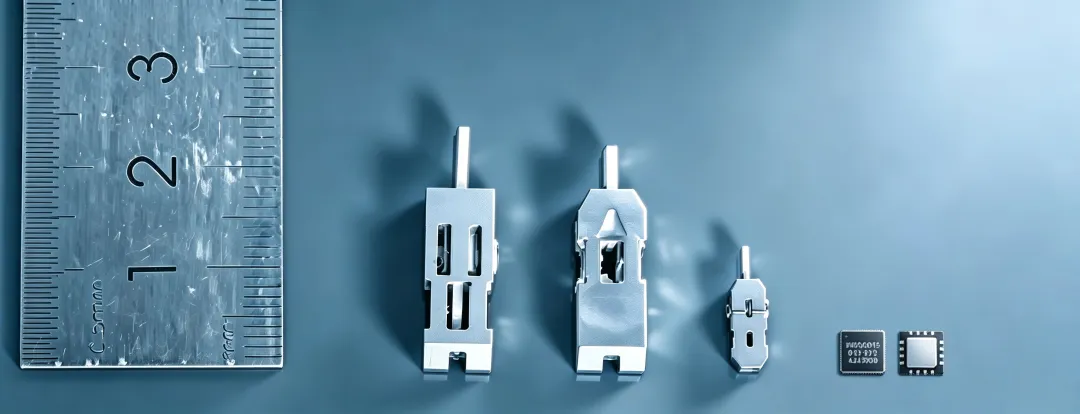
In the future, with the evolution of packaging technology, the drive circuit and the drive material are expected to be co-shaped and integrated into the interior of the fancy hand clutch, achieving the true meaning of the fancy drive-performing smart fancy module. At that time, fancy hands will no longer differentiate the fancy drive part from the fancy execution part, and the entire electrical interface will only require power supply and communication lines, and the number of external wires will shrink from dozens of roots in traditional programs to a single bit.
It is understood that in the product line, the smart handset has been built and covers three distinct models: mini-type (mainly emotional interaction with educational robots), slim type (mainly precision assembly with microscopic surgery), standard type (mainly industrial scenes with special operations). Under full-loop position control, its repeatable positioning accuracy can reach up to 5 microns, and the industry-common millimeter-level accuracy sensors lead by more than one degree of quantity, allowing the application of multi-muscle-driven screens to extend from emotional accompaniment to high-end industrial scenes such as precision manufacturing.
03.
More than Hands: Matrix of Co-Sourced Products and Commercialized Value
Direct-drive mechanics is also a technology with product universality, and any scenario that requires high-precision displacement control in a tight space can essentially be replicated with the same technology underpinnings. Around this technology route, smart mechanics has synchronized the layout of three derivative product lines.
(1) Constructing data gloves
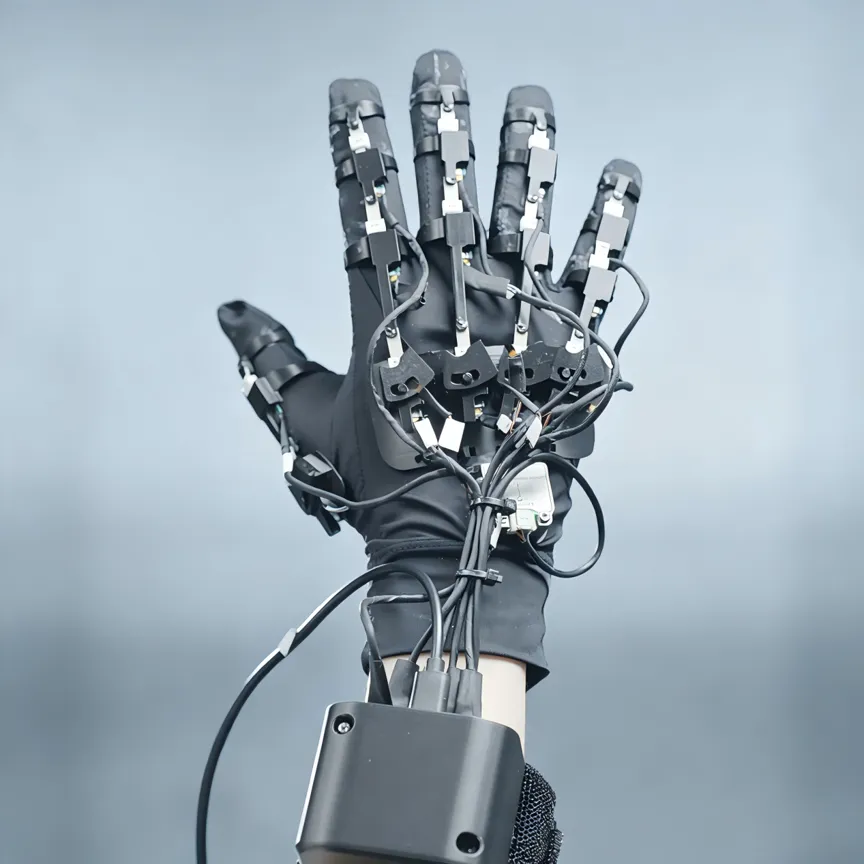
The product uses pure physical structural measurements, no algorithmic adaptation, direct perception of finger remote joints (DIP) angles, and output of timelessly drifting silicon physics real-value silicon data. In the age of physical intelligence, the scarcity of high-quality training data is being re-valued in the market, and these two gloves are the mining tools for silicon data mining. Its application scenario covers AI model training data collection, remote manipulation, medical rehabilitation evaluation, etc.
(2) Inspired by life's eyes
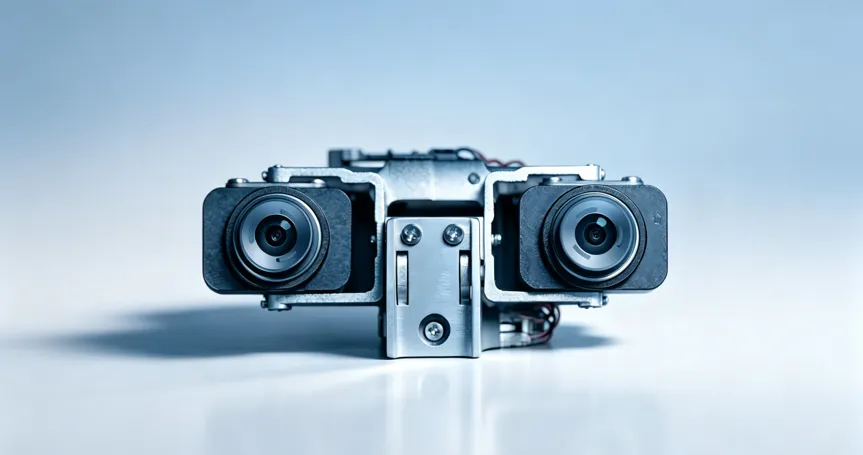
The product is based on a direct-drive mouse-driven simulation of human eye movement, small size, dynamic parameters without drift. It supports a hand-eye integrated system, which can be used to produce high-quality hand-eye collaborative data sets, serving high-simulation robot faces and serving robot emotional interaction scenes.
(3) Overwriting a fake face
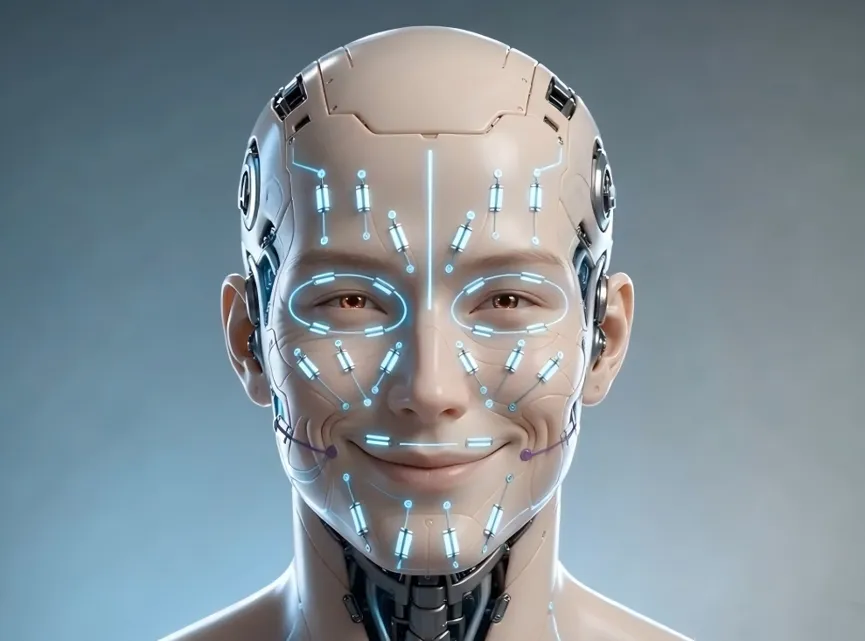
The product supports 32+ to 40+ facial freedoms and can replace more than 200 human micro-expressions. It is currently the only drive program in public reporting that can fully simulate human striped, ringed facial muscular structure, breaking the horrors of Silicon Valley.
In terms of market fundamentals, the simulation drive trajectory of Intelligent Design is on a steep growth curve, and the market space for the four products is very impressive. For example, the total production of humanoid robots in the rigid procurement demand for the formation of core components, the stock replacement opportunities brought by industrial automation to the transformation of flexible manufacturing, the space for the increase in the intelligence of medical and rehabilitation equipment, and the systematic guidance of industry policies for the autonomous formation of core components of robots at all levels bring about a significant increase in demand. According to third-party industry research, the global simulation robotics market is estimated to be about $119 billion in size by 2024, and is expected to increase to $60 billion by 2030, with a compound annual growth rate of 67.5%.
At the same time, the emotional economy trajectory is expanding at an even more surprising rate. According to industry forecasts, the global emotional economy market will reach 45.8 trillion yuan by 2030, and the emotional companion smart hardware unit is expected to surpass 100 billion dollars. The core shortcoming of the current market is that the emotional expression of interactive hardware is severely lacking, and the vast majority of products remain at the level of pure voice interaction.
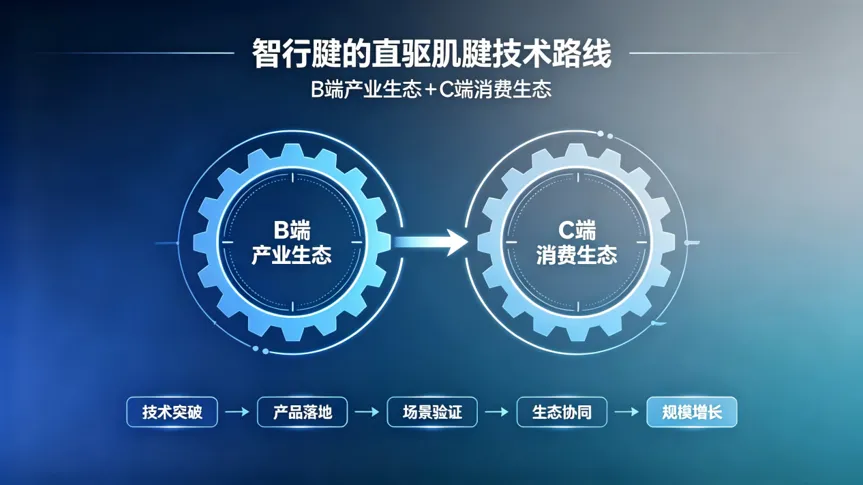
Faced with these two growth poles, Intelligent Edge's direct-drive myopic technology pathway has taken the first step in building a business model of twin-wheel-drive B-end industrial ecology + C-end consumer ecological myopic bicycles. In the B-end market, the company's core products are smart and synthetic data gloves, targeted at large corporate smart model companies, robotics manufacturing plants, research and education institutions, offering full-chain solutions from hardware execution terminals to data acquisition tools and model training services. The strategic value of this model is that once customers complete model training with synthetic data systems, their assets will be deeply tied to Intelligent Edge's computing hardware and conversion costs will be extremely high.
In the C-end market, the commercialization of consumer-grade products such as super-real-life simulation faces, agile simulation eyes, and AI games, through the sale of consumer hardware, the outsourcing of core drive components, emotional interaction value-added subscription services, and so on, is becoming a key technological puzzle in the evolution of emotional economics from hearing aids to hearing aids to visual expressions.
04.
The physical underpinnings of human-machine interaction redefined by pure Chinese forces
It is worth noting that behind this disruptive technological path is a team of original research led entirely by native Chinese doctors and professors.
Based on the Intelligent Robotics Research Institute, from the breakthrough of core electromechanical complex materials, to the autonomous development of open-source multi-phase gate-pole drive chips, and to the complete set of high-precision closed-loop control algorithms, the construction of an Intelligent Cube in the four dimensions of materials science, chip design, drive control, modeling engineering simultaneously establishes technical barriers, no overseas technology interfaces, 100% derived from the thickness of domestic scientific research power.
In addition, as opposed to overseas technology-introduced aluminum-following innovations, Intel has chosen an aluminum-defined innovative aluminum path from underlying materials. This path is more difficult, the cycle is longer, but once passed, the established standards will belong to itself. As human robots move from aluminum-based aluminum to aluminum-based aluminum, the flexibility and safety of their hands will become the core benchmark for user evaluation of product value. This path is imitating aluminum-based aluminum from a marketing term, as well as its physical reality.
05.
Link to the Future
Overall, the route chosen by Intelligent Robotics is not simply to build a more sophisticated robotic hand, but to build a suite of robotic end-of-life infrastructure around a direct-drive mouse. Behind this strategy, perhaps, is a judgment of future robotic shape changes: future robots need to address not only how the mouse moves, but how the mouse moves like life.
Around this goal, Intelligent Eye has built a product system that covers execution, data, perception, and interaction. Among these, Intelligent Hands solves the problem of interaction between robots and the physical world; Constructed Data Hands solves the problem of robots obtaining human motion data; Intelligent Eye solves the problem of robotic visual perception and hand-eye synergy; Superwritten Face Simulation further explores the ability of robots to express emotions in human-machine interactions.
These products seem to fall into different directions, but the underlying logic is highly consistent, that by driving this core technology of direct-driving muscle mass, the body structure, movement and data expression of robots are brought closer to the human body. This also makes the end of future robot competition, perhaps not to make robots more like humans, but rather to make robots start to have bodies closer to life.
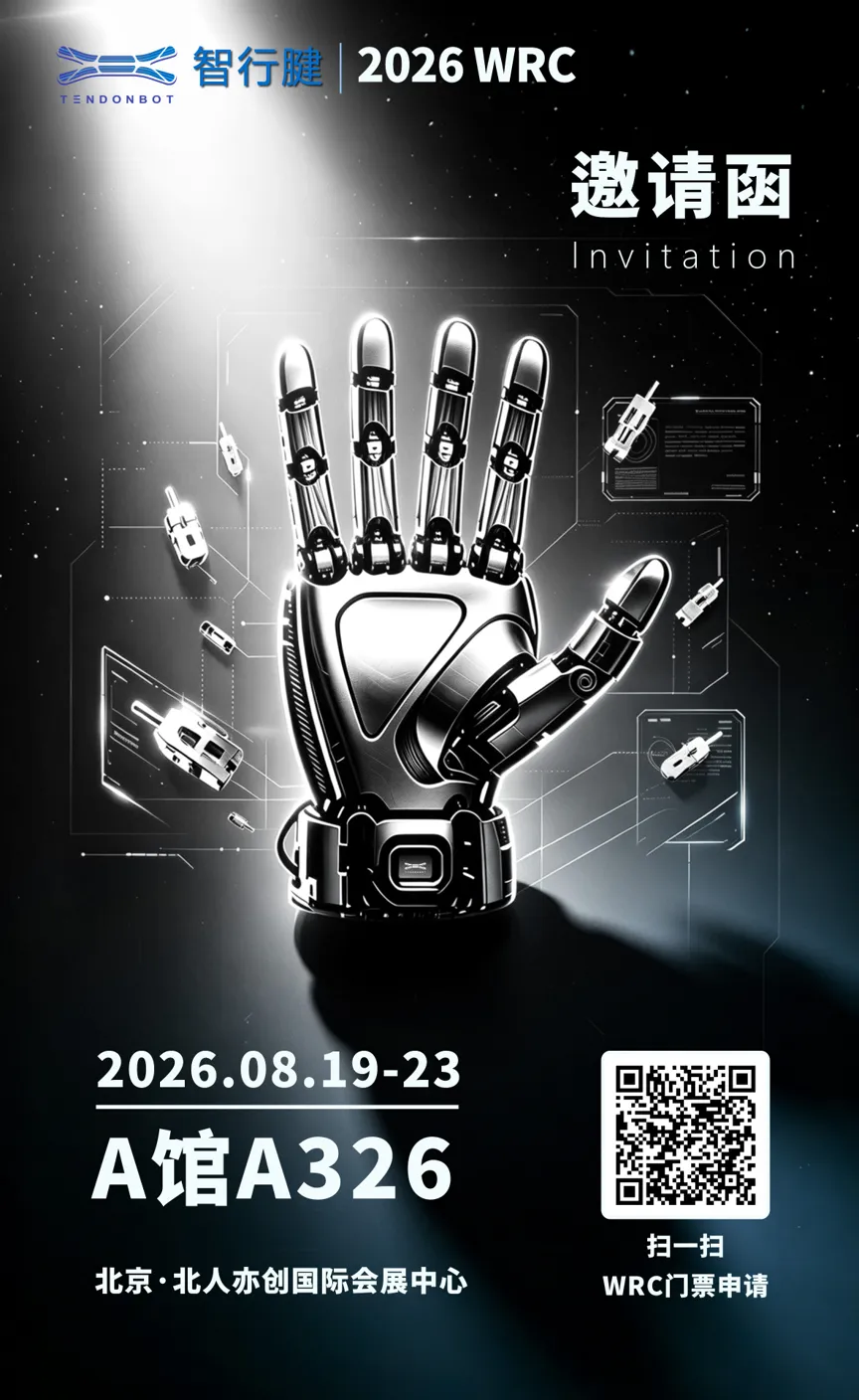
On August 19, 23rd, the World Robotics Congress in Beijing, China, will make its first public appearance with a full range of synthetic muscle building products (stand: A326). The venue will have a real opportunity to capture the experience and expressive interaction demonstration link, welcoming industry partners and investors to the stand to witness the underlying paradigm shift from the grinding machine grinder to the grinding muscle grinder.