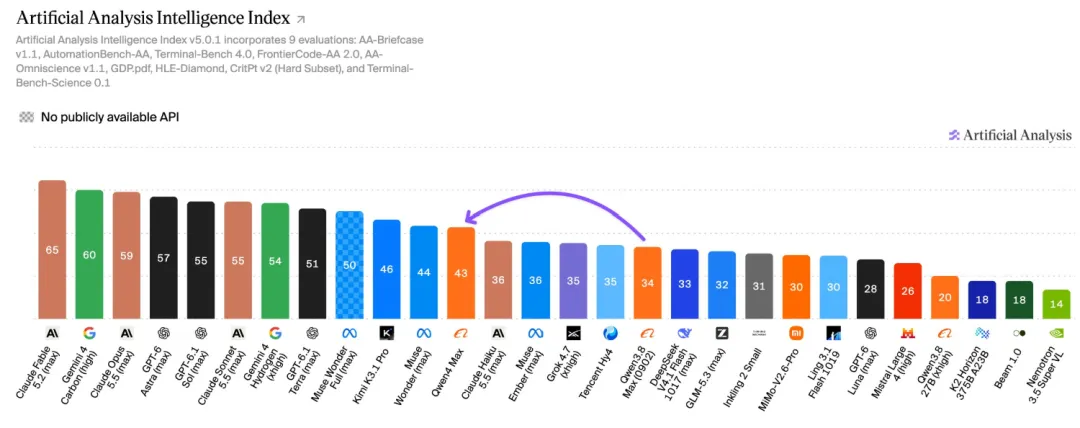
QbitAI reports that, within 24 hours of Qwen4-Max’s release, the first independent evaluations were already out. On Artificial Analysis (AA), Qwen4-Max scored nine points higher on the overall intelligence index than its predecessor, Qwen3.8-Max, while the cost of completing the same set of tasks fell by about 67%. Both flagship models have 2.4 trillion total parameters.
The new model uses a redesigned architecture, improving capability without increasing the total parameter count—and cutting the bill to roughly one-third.
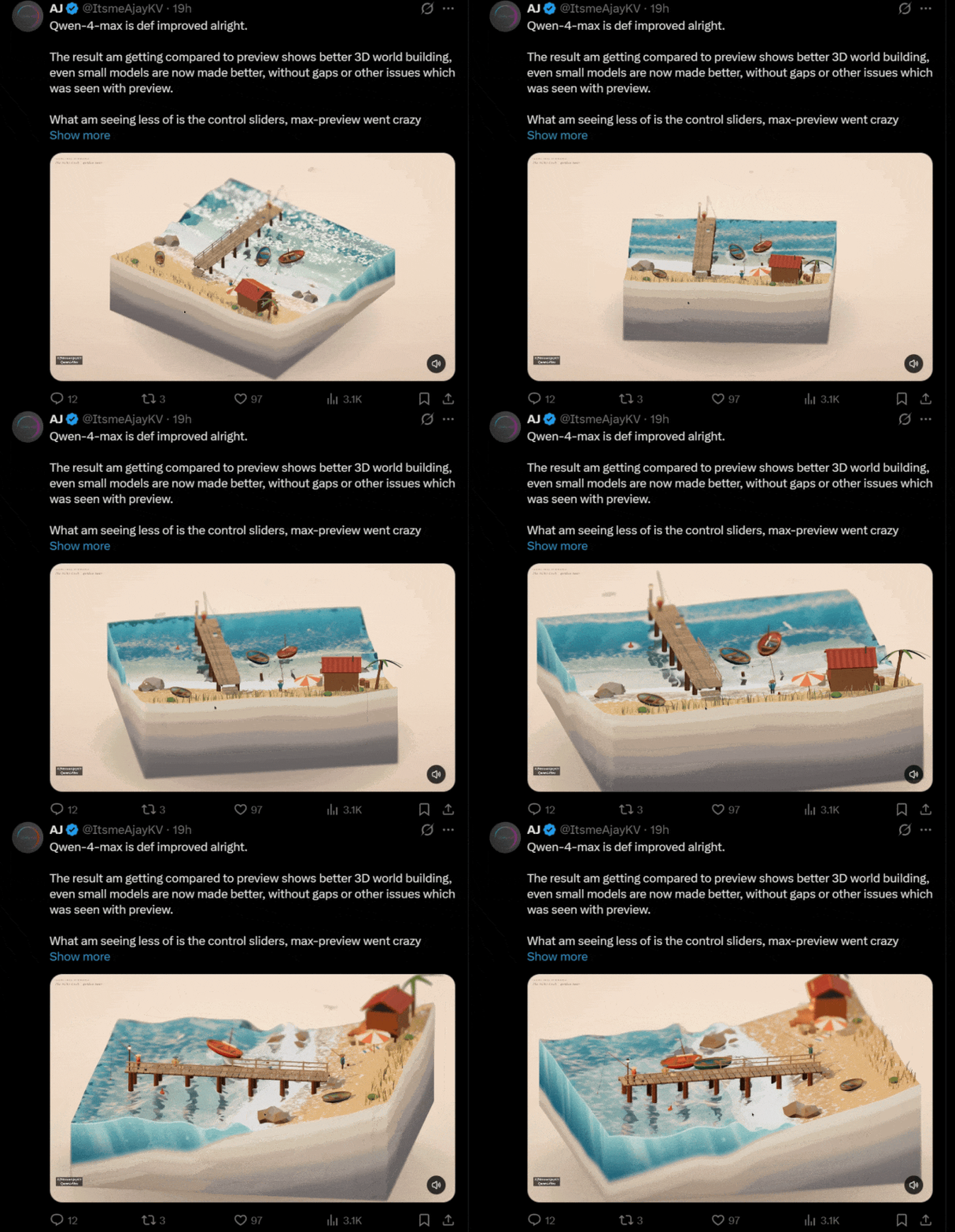
That prompted users to revisit a familiar stress test: a pelican riding a bicycle. One user asked Qwen4-Max to build a 3D pelican in Three.js, complete with layered feathers and a lively city around it. Another generated a miniature seaside scene with a boardwalk, boats, parasols, water reflections and rocks.
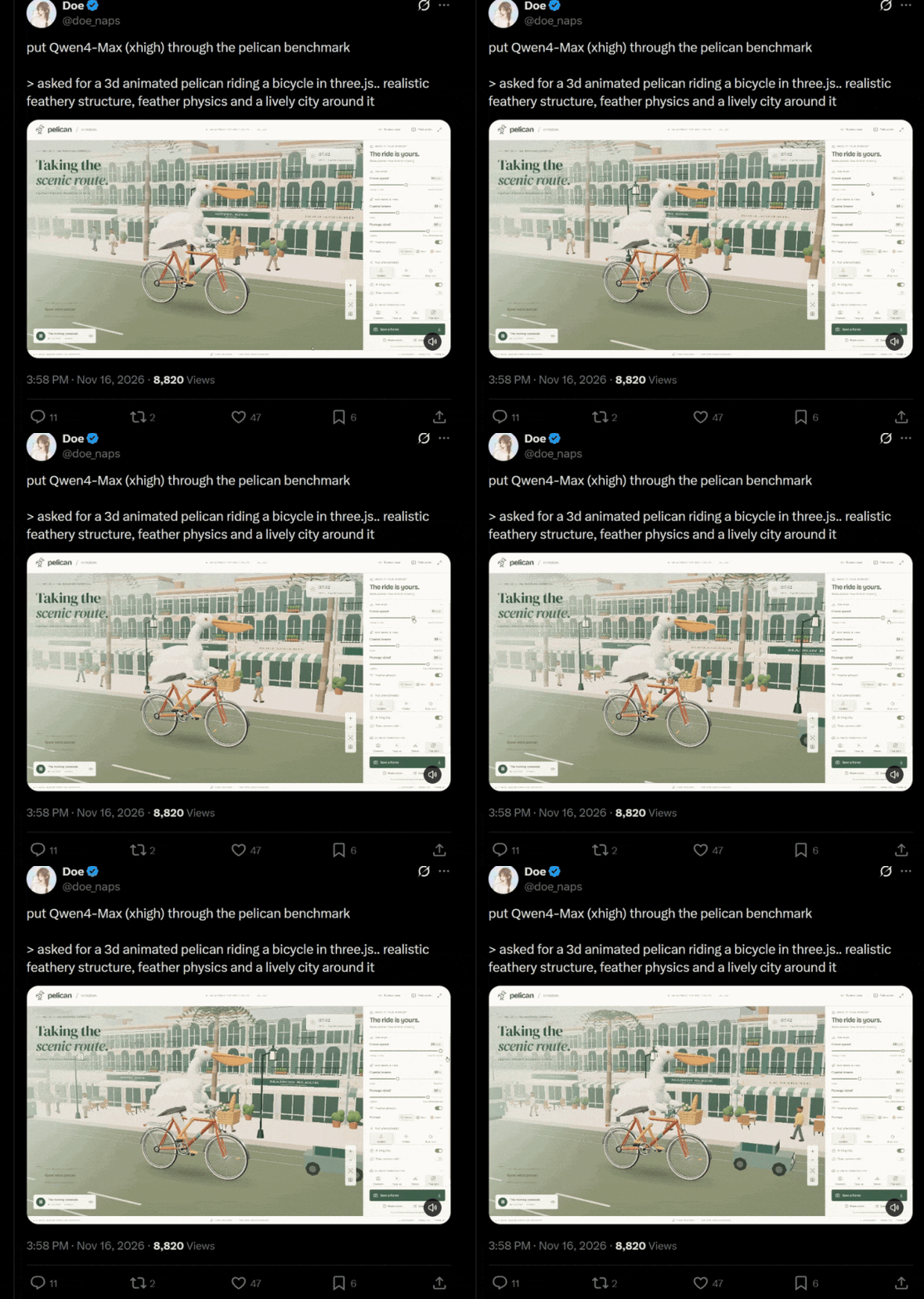
Users said the new model improved on the preview version, including fewer gaps in small 3D objects. More tests followed: riding zebras, building boats and recreating Chrome’s offline dinosaur game. Almost anything that could run, roll or float became a prompt.
Global top-five results in slides and spreadsheets, with costs down by two-thirds
Three changes stand out:
- The model keeps the same overall size while using fewer active parameters. Its total parameter count remains 2.4 trillion, with about 71 billion activated per run. In the company’s Work360 tests, the High reasoning setting used about 35% fewer tokens, and average cost per task fell by more than 60%.
- Its web development performance reached sixth place globally. Qwen4-Max scored 1,750 on the Code Arena WebDev composite leaderboard, behind GPT-6 Astra and ahead of Claude Fable 5.1.
- The release emphasizes practical work. The company highlighted research, industrial, financial and legal tasks, and introduced Live Delivery, which lets an agent deliver a usable result first and refine it as it works, with users able to change direction along the way.
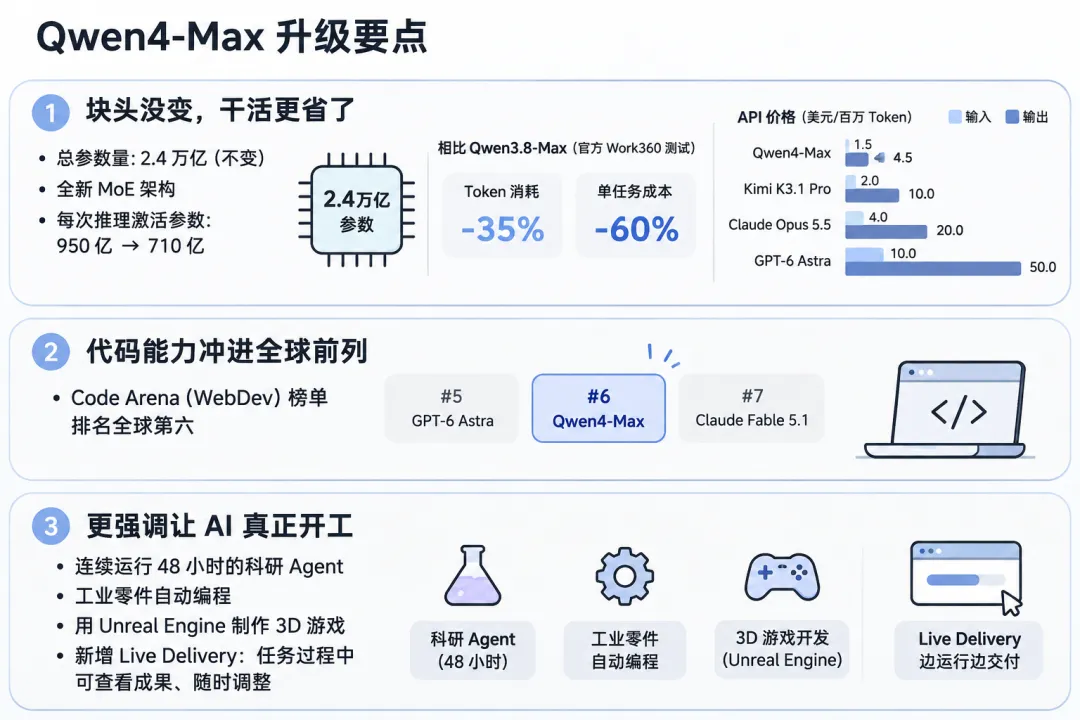
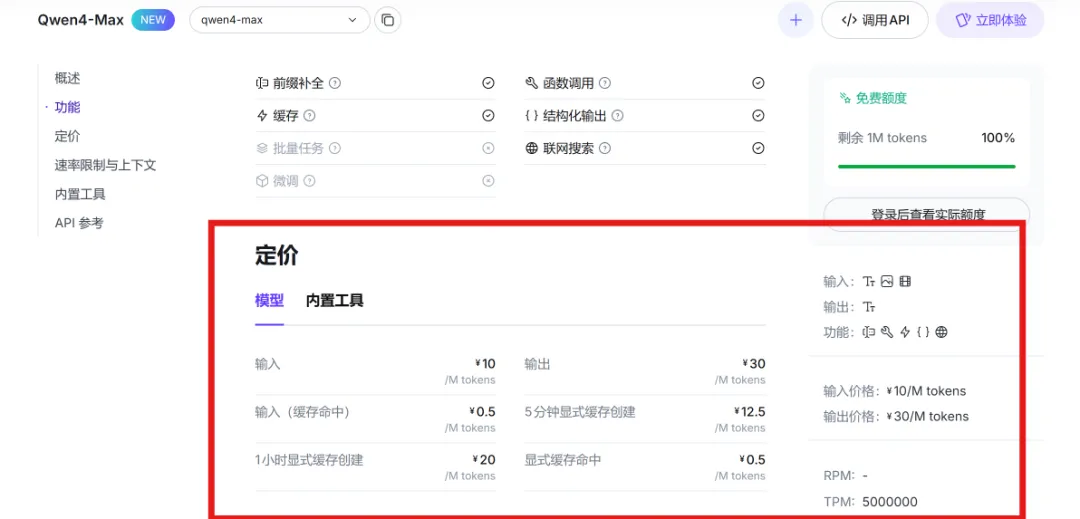
Pricing is another headline. Qwen4-Max costs $1.50 per million input tokens and $4.50 per million output tokens—about RMB 10.10 and RMB 30.20, respectively. Its output rate is less than half of Kimi K3.1 Pro’s, around one-quarter of Claude Opus 5.5’s and under one-tenth of GPT-6 Astra’s.
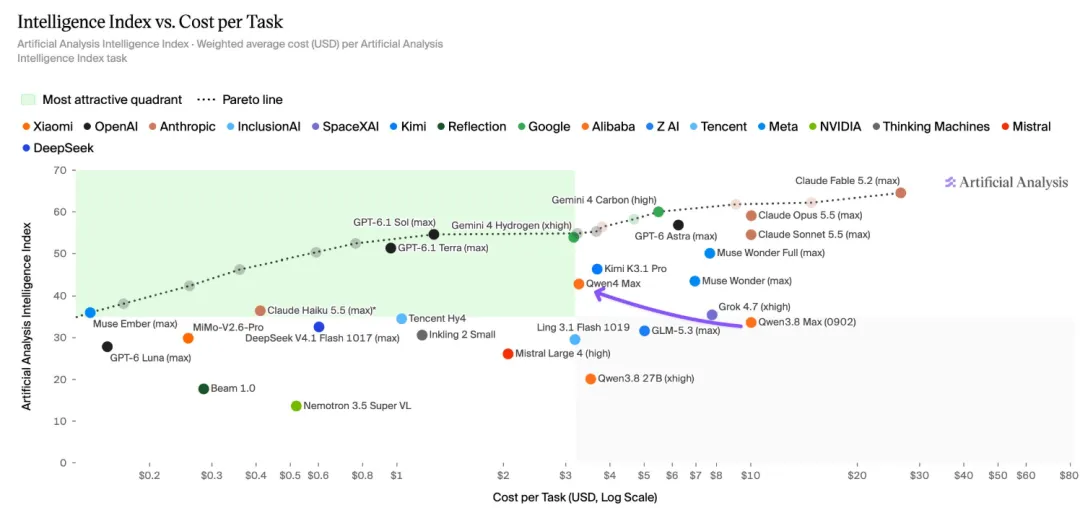
AA compared the cost of completing the same evaluation tasks: Qwen4-Max averaged $3.27, versus $10.02 for Qwen3.8-Max, a reduction of about 67%. It was also 11% cheaper than Kimi K3.1 Pro’s $3.68.
The savings were not just a result of lower API prices. AA found that Qwen4-Max generated an average of 105,000 tokens per task, compared with 171,000 for the previous generation—nearly 40% fewer tokens while achieving a higher score.
On AA’s overall intelligence index, Qwen4-Max rose from 34 to 43 points. The gap with the leading models remains: Claude Opus 5.5 scored 59, GPT-6 Astra 57, and Kimi K3.1 Pro 46. Qwen4-Max has made clear progress but has not yet caught the top tier.
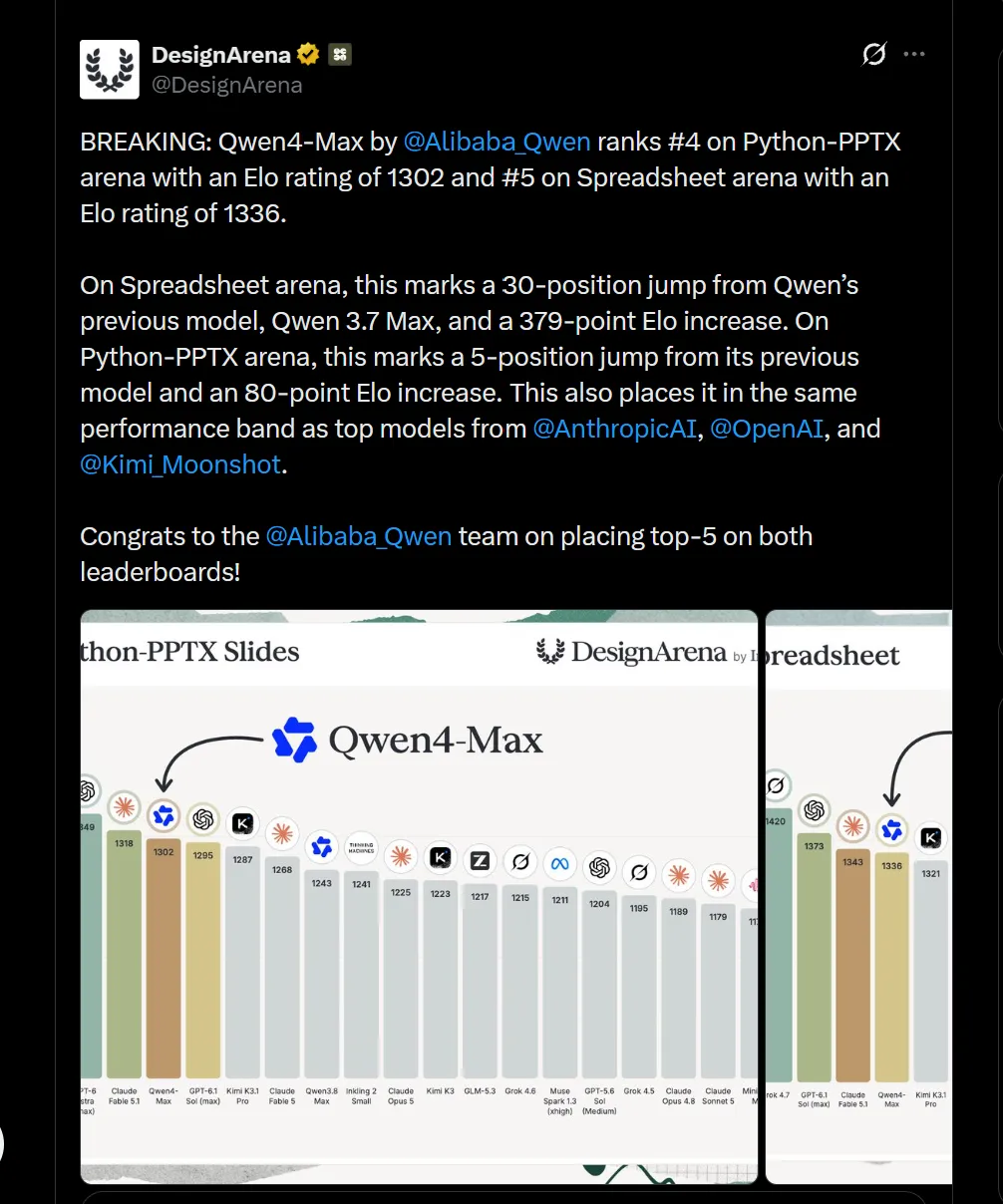
It did better in some specialized evaluations. On DesignArena’s overall agentic design leaderboard, Qwen4-Max entered the global top five. DesignArena reported that it ranked fourth for presentation creation and fifth for spreadsheets. In spreadsheets, it improved by 30 places and 379 Elo points over Qwen3.7-Max.
Users put the model through its paces
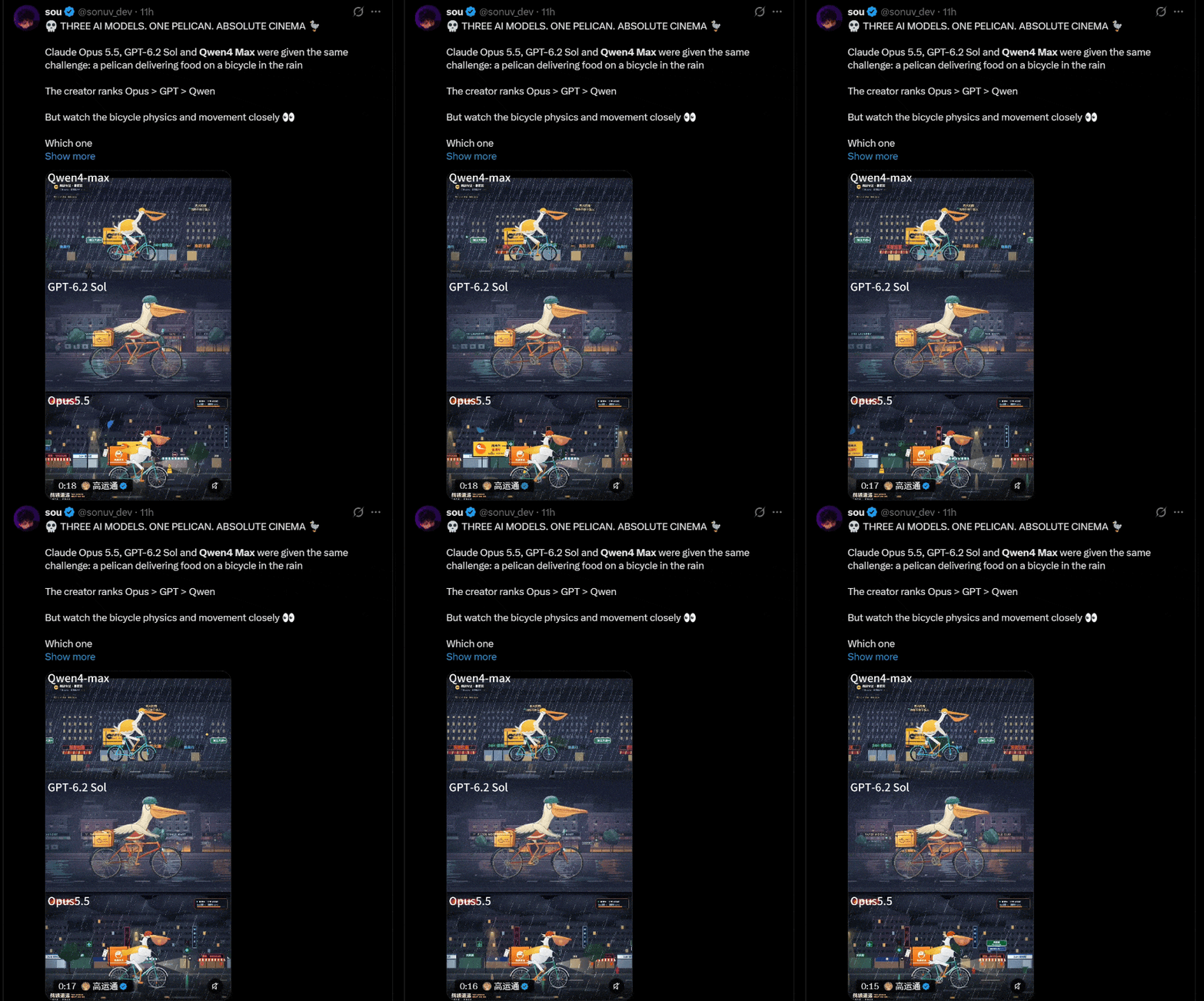
The pelican-on-a-bicycle test returned. One user raised the difficulty by asking the pelican to deliver food by bicycle in the rain, then compared Qwen4-Max with Claude Opus 5.5 and GPT-6.2 Sol. All three completed the task, but users disagreed about the best result. The prompt’s author preferred Opus 5.5’s atmosphere; commenters debated which pelican felt most convincing.
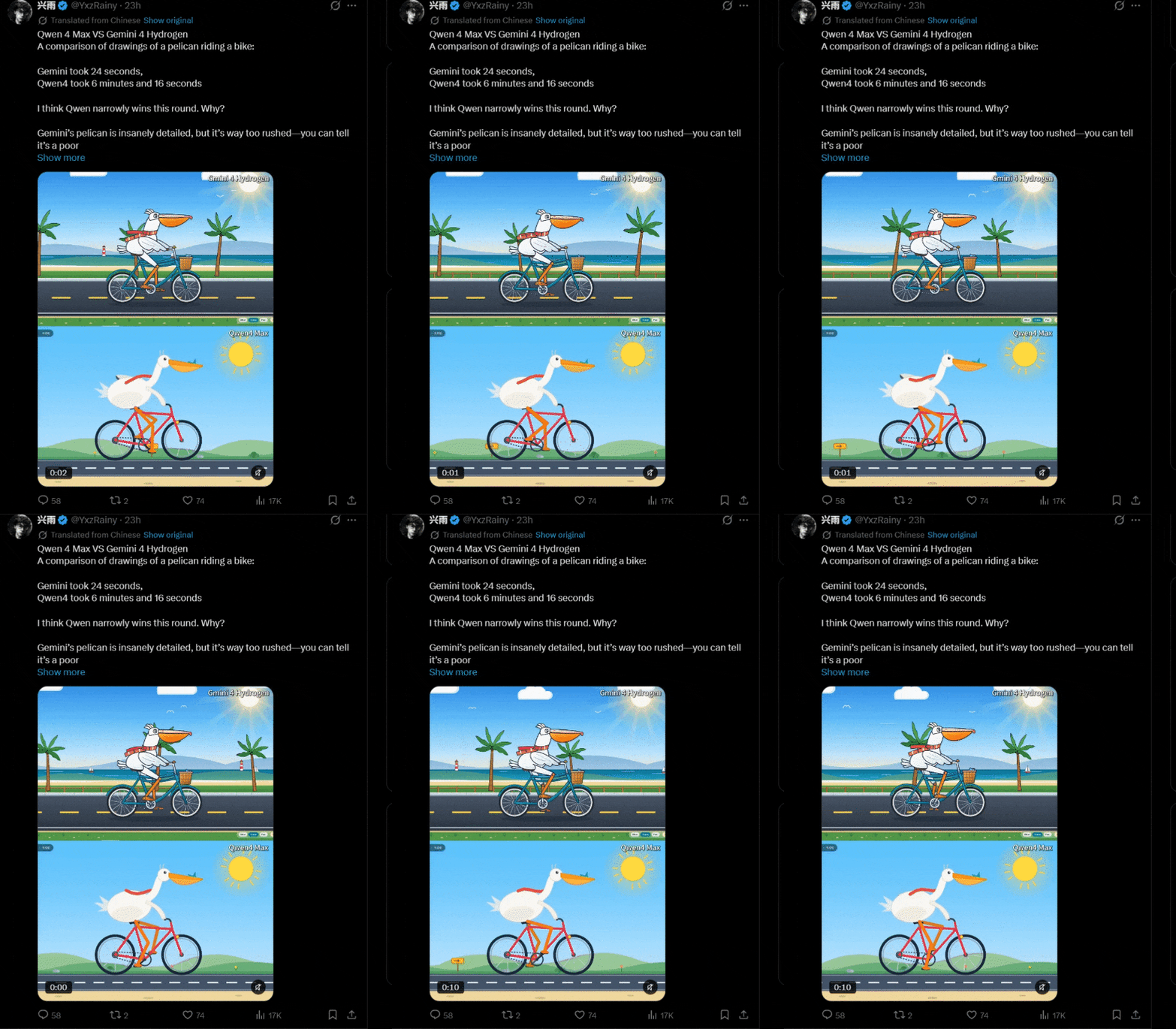
Another comparison paired Qwen4-Max with Gemini 4 Hydrogen. Hydrogen’s version had more small details, including a scarf and a bicycle basket on a seaside road. Qwen4-Max’s image felt more relaxed and spacious. The user chose Qwen4-Max: Hydrogen won on detail, while Qwen4-Max had more natural body language.
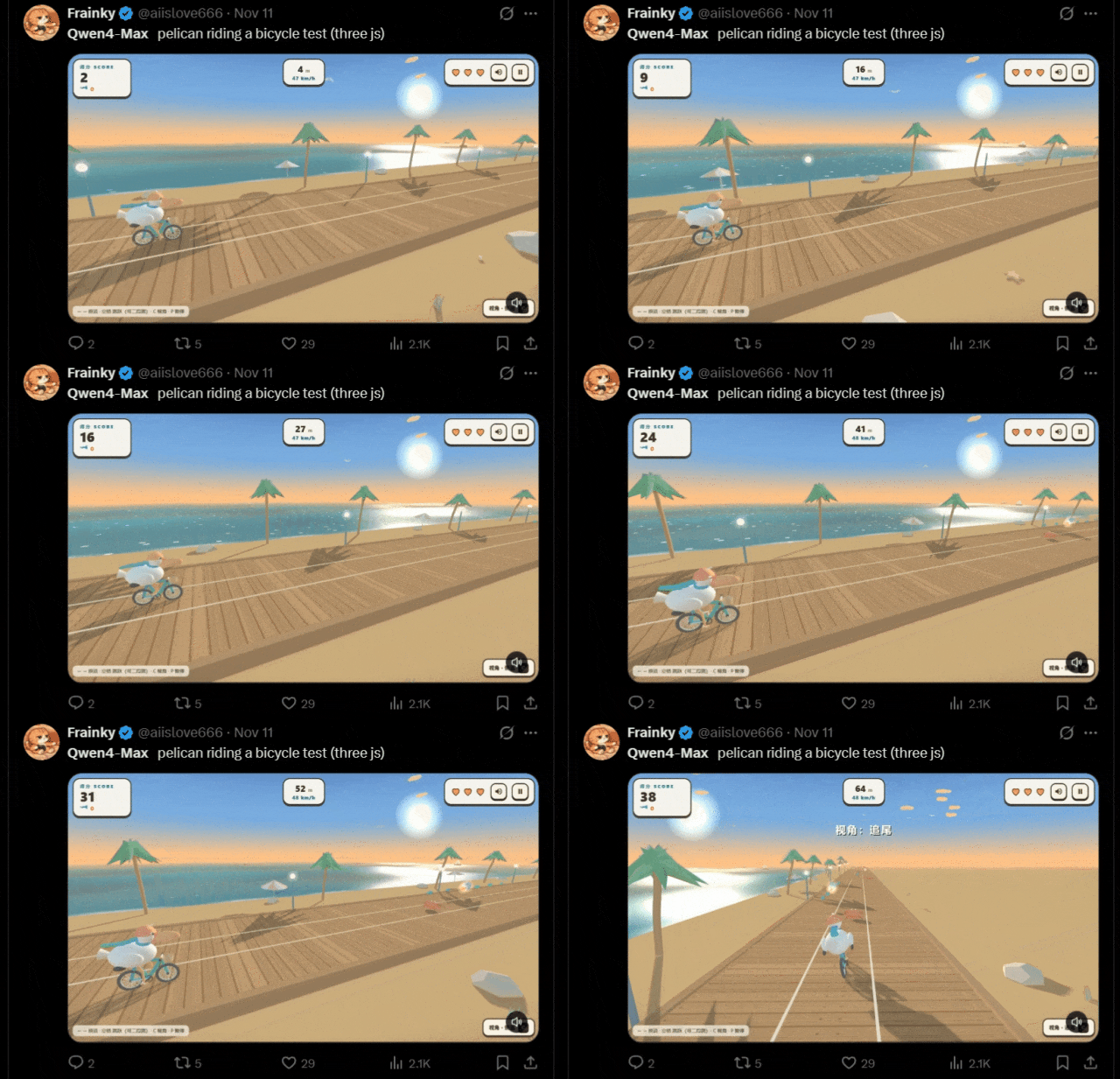
The pelican then became the subject of a Three.js obstacle-course game. Players raced along a coastal boardwalk, collected items and built combos, with score, speed and health indicators on screen.
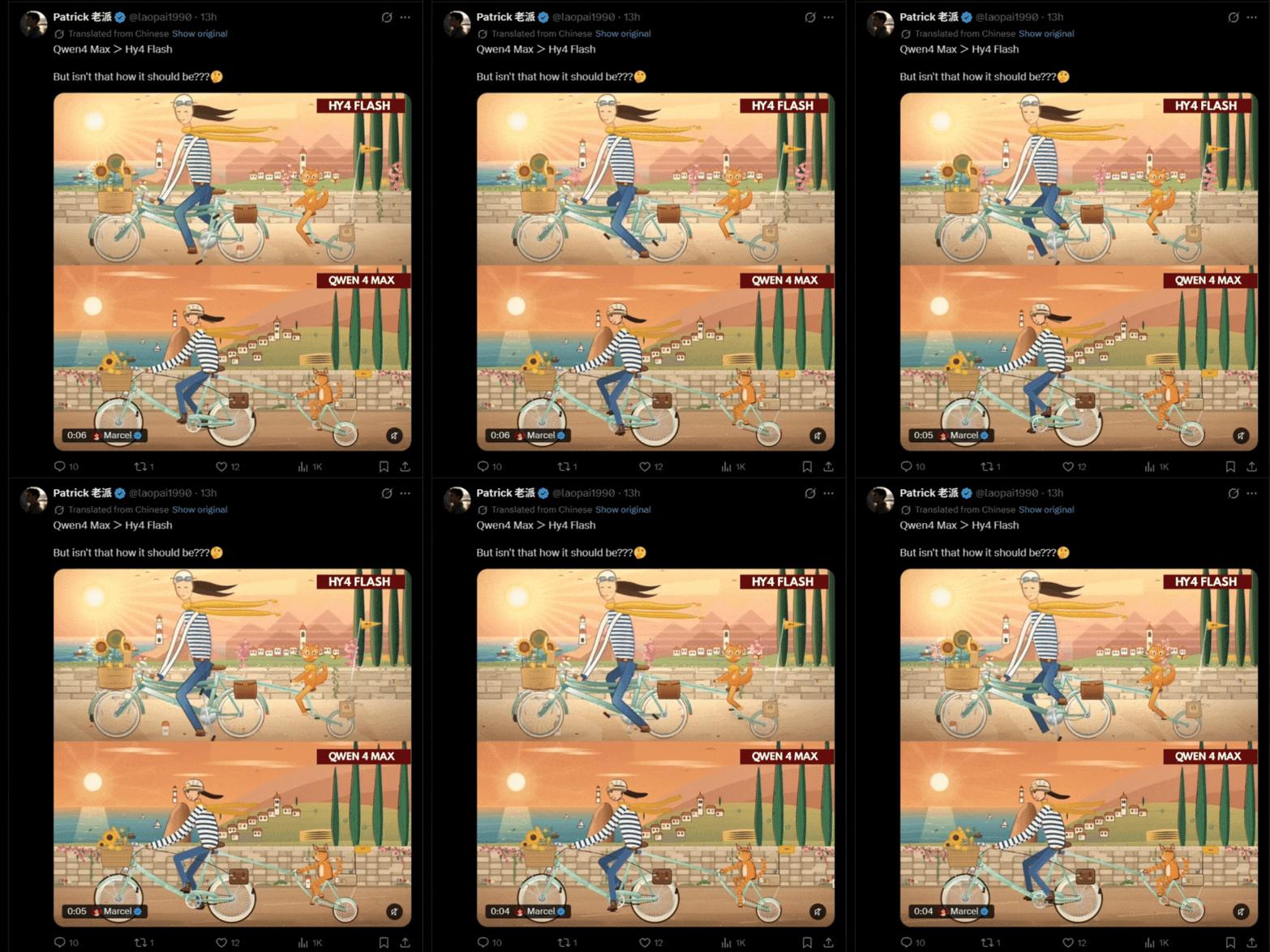
One user instead took a cat on an outing, while another image showed a rider pedaling backward. The prompts became more surreal: a pelican rides a zebra, and the zebra rides a horse.
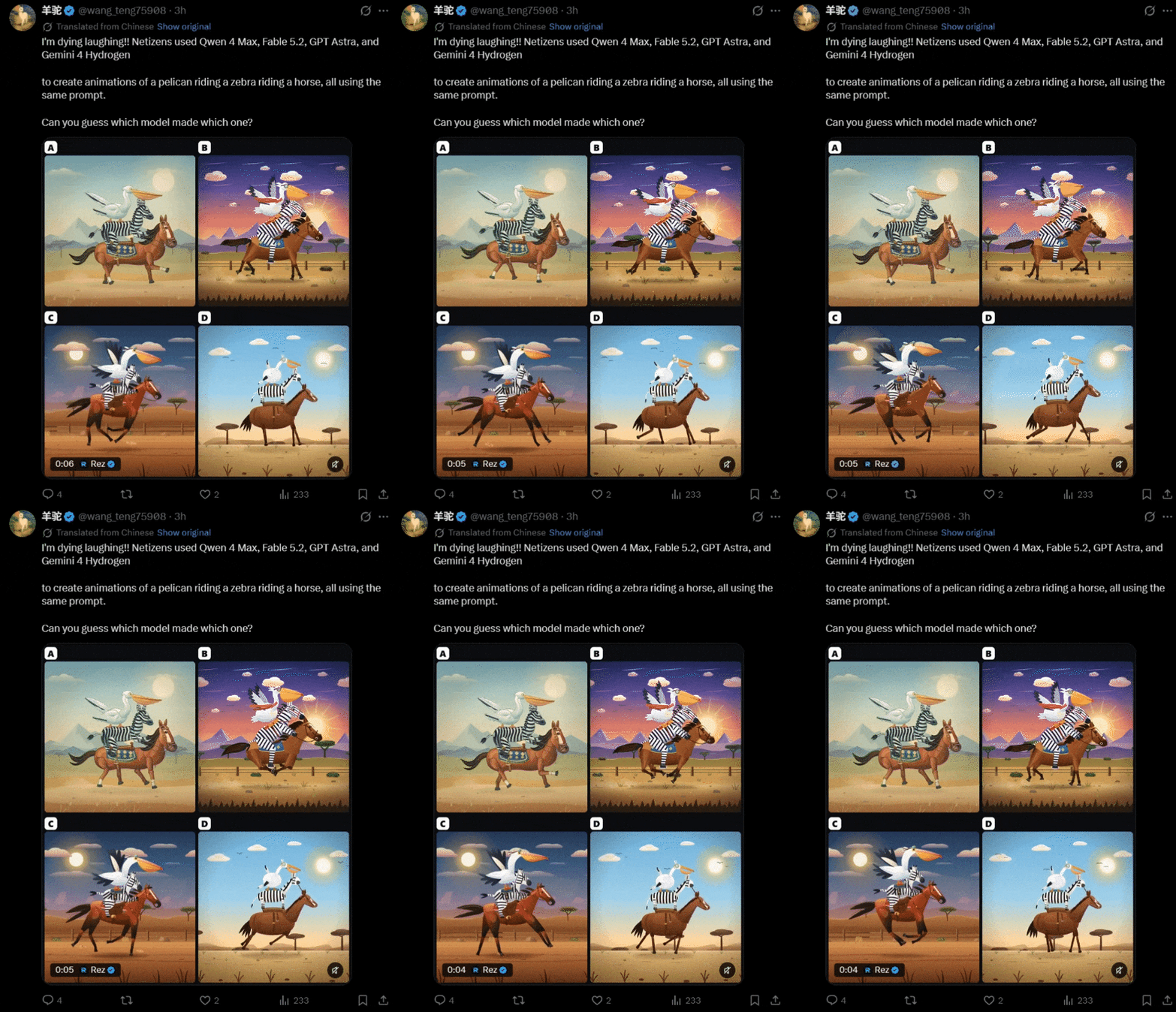
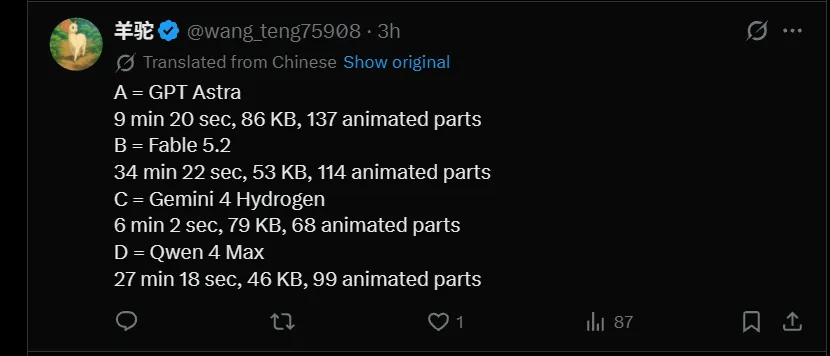
Users gave the same nested prompt to Qwen4-Max, Claude Fable 5.2, GPT-6 Astra and Gemini 4 Hydrogen, shuffled the images and asked viewers to guess which model made each one. In the source post’s answer key, option D was Qwen4-Max.
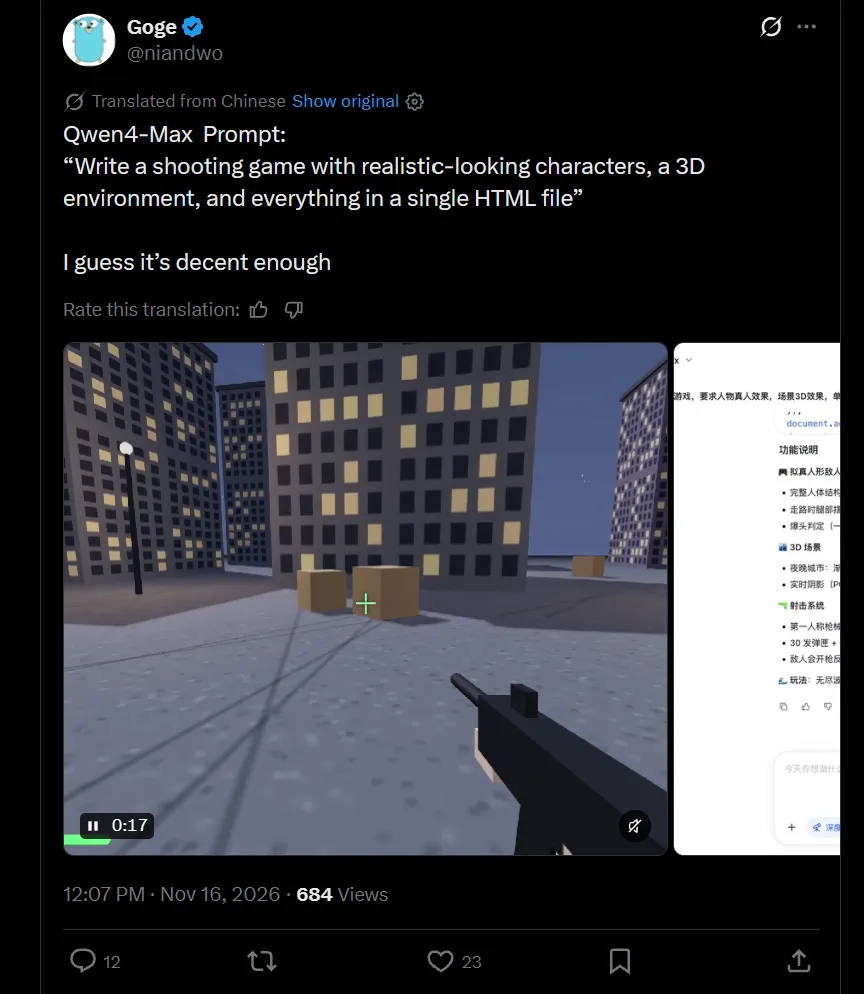
Beyond image generation, one prompt produced a 3D shooting game in a single HTML file. It called for realistic characters and a 3D setting, with the page playable as soon as it opened—a frontend demo turned into a game prototype.
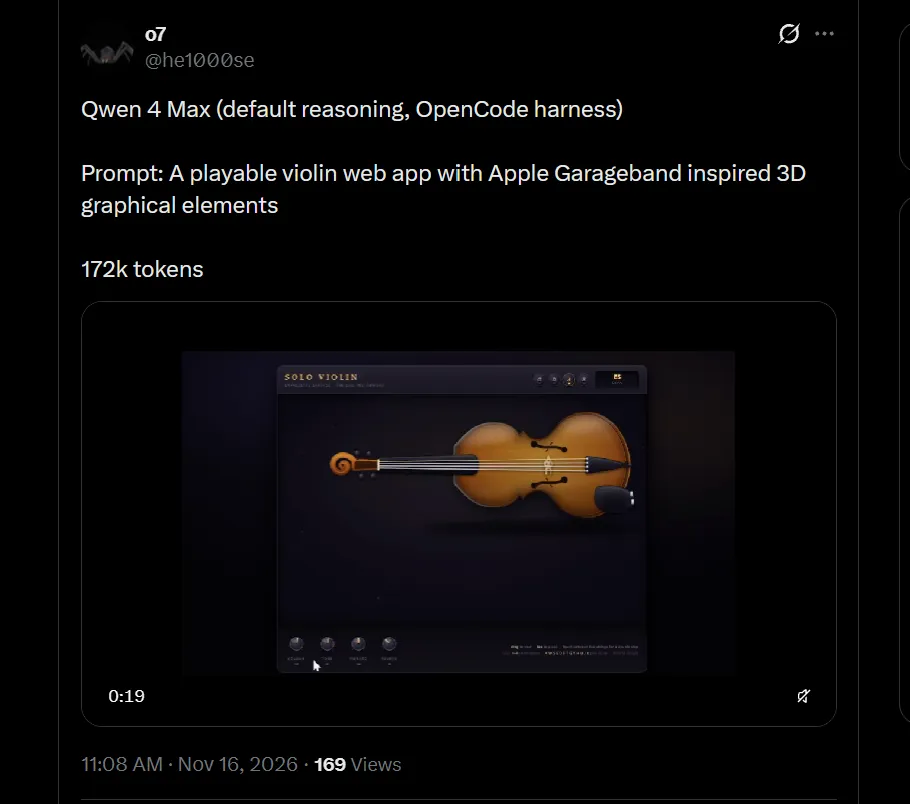
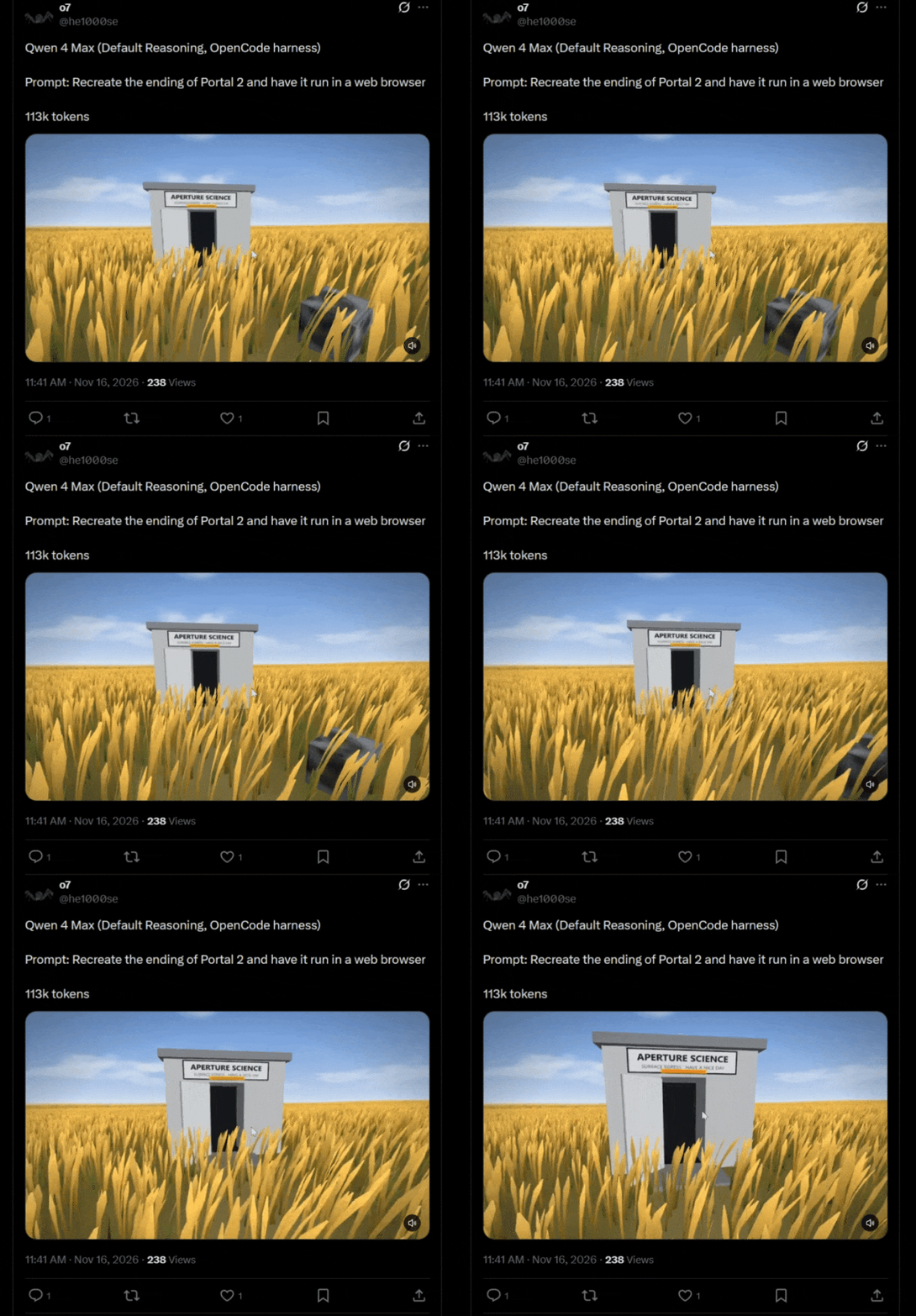
Another user built a playable web violin in the style of Apple GarageBand, with 3D strings, instrument body and controls. The same user recreated the ending scene of Portal 2 as a browser-based performance.
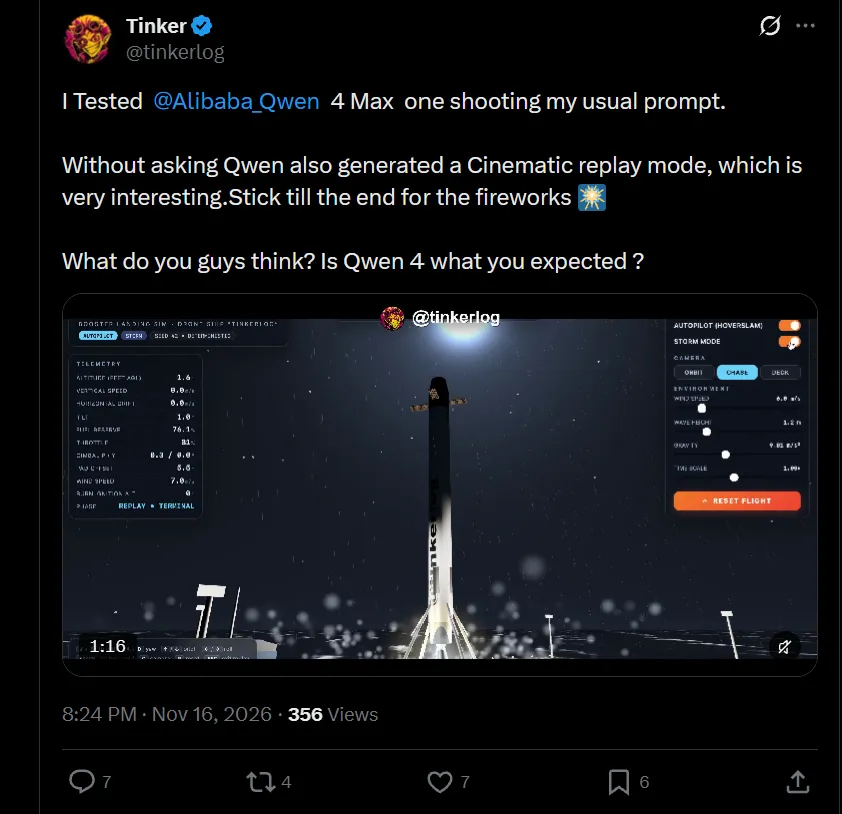
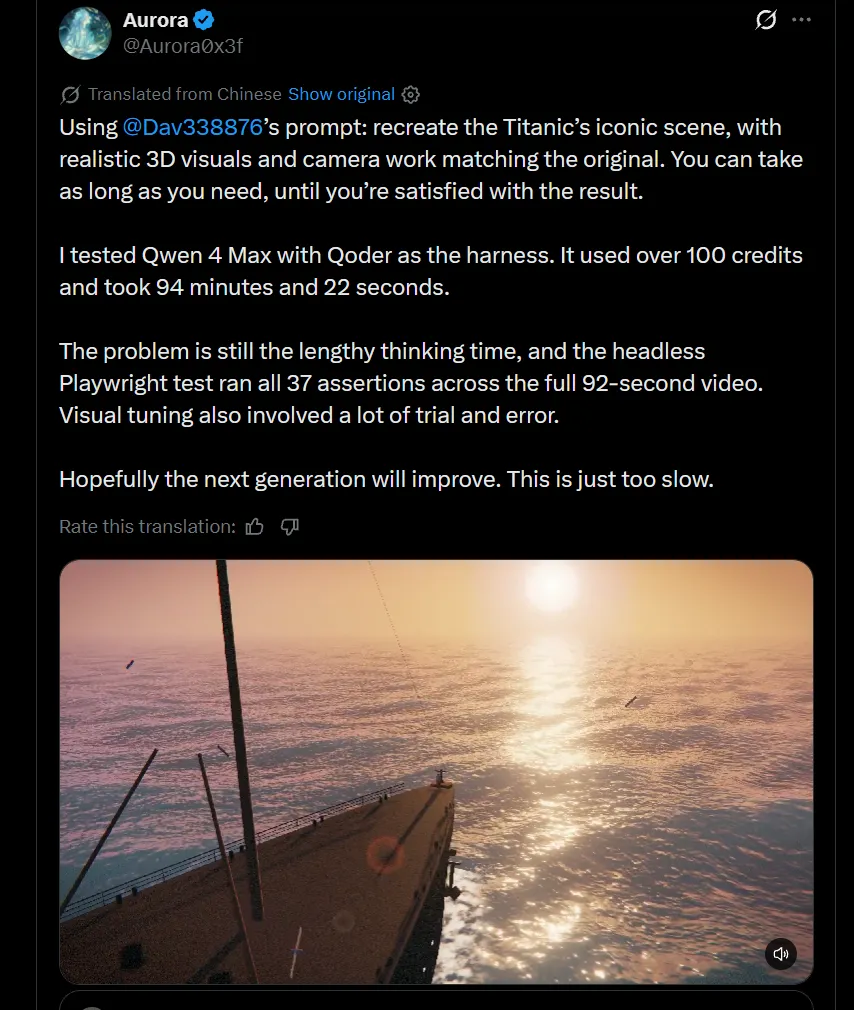
A flight simulator followed, complete with aircraft controls and a cinematic replay mode. Another prompt produced a 3D scene of the Titanic, including the ship, water and camera movement.
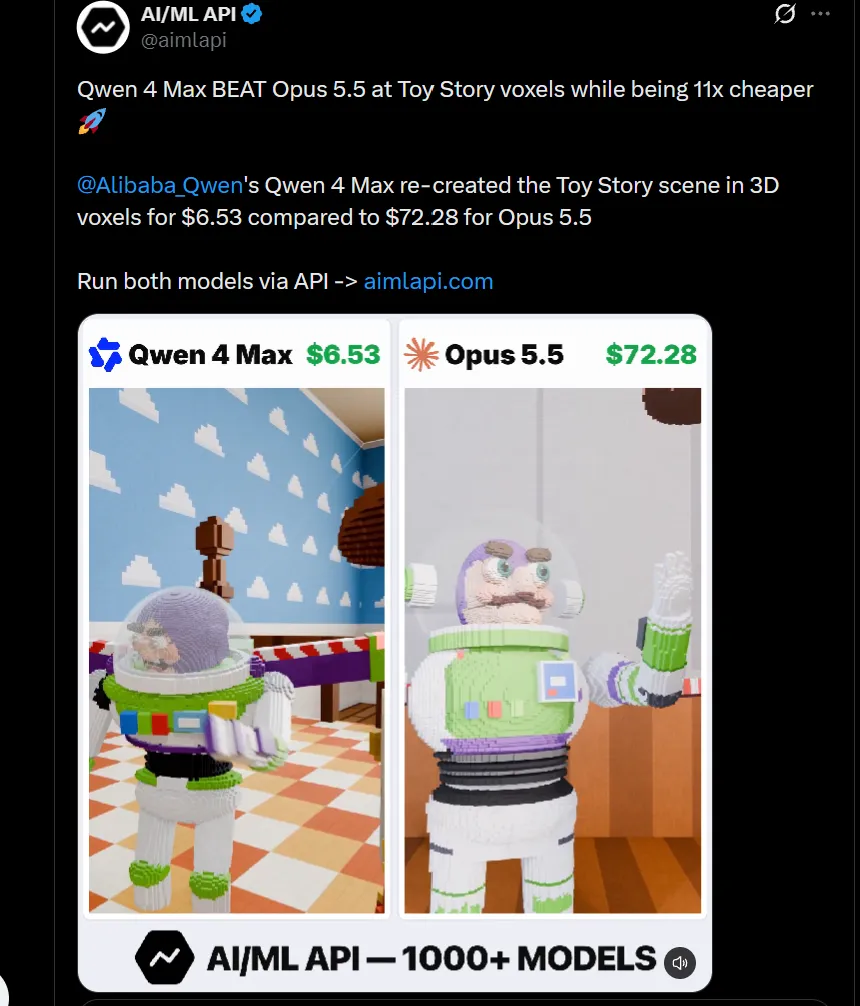
Users also compared the cost of recreating the same Toy Story scene in 3D voxel art with Qwen4-Max and Claude Opus 5.5. The creator’s published figures put Qwen4-Max’s generation cost at about one-eleventh of Opus 5.5’s.
Lower costs make experimentation easier
These demos show how far users are pushing AI coding tools. A model that is capable enough and inexpensive to run can make people more willing to experiment. Qwen4-Max still trails top models such as Claude Opus 5.5 and GPT-6 Astra in overall capability, but it is competitive on specific tasks such as frontend development, presentations and spreadsheets.
Lower iteration costs may be its most notable advantage. Users can rerun a prompt when the first result misses the mark, or add instructions to extend a feature. The same budget can support more rounds of experimentation.
For many users, the constraint on experimentation is not imagination—it is the cost.