It's the first time in the history of the world.
Just now, Meta is on the move!
First of all, the Meta Super Intelligence Lab has officially released a new 30B model, the Muse Glimmer, which is open-source.
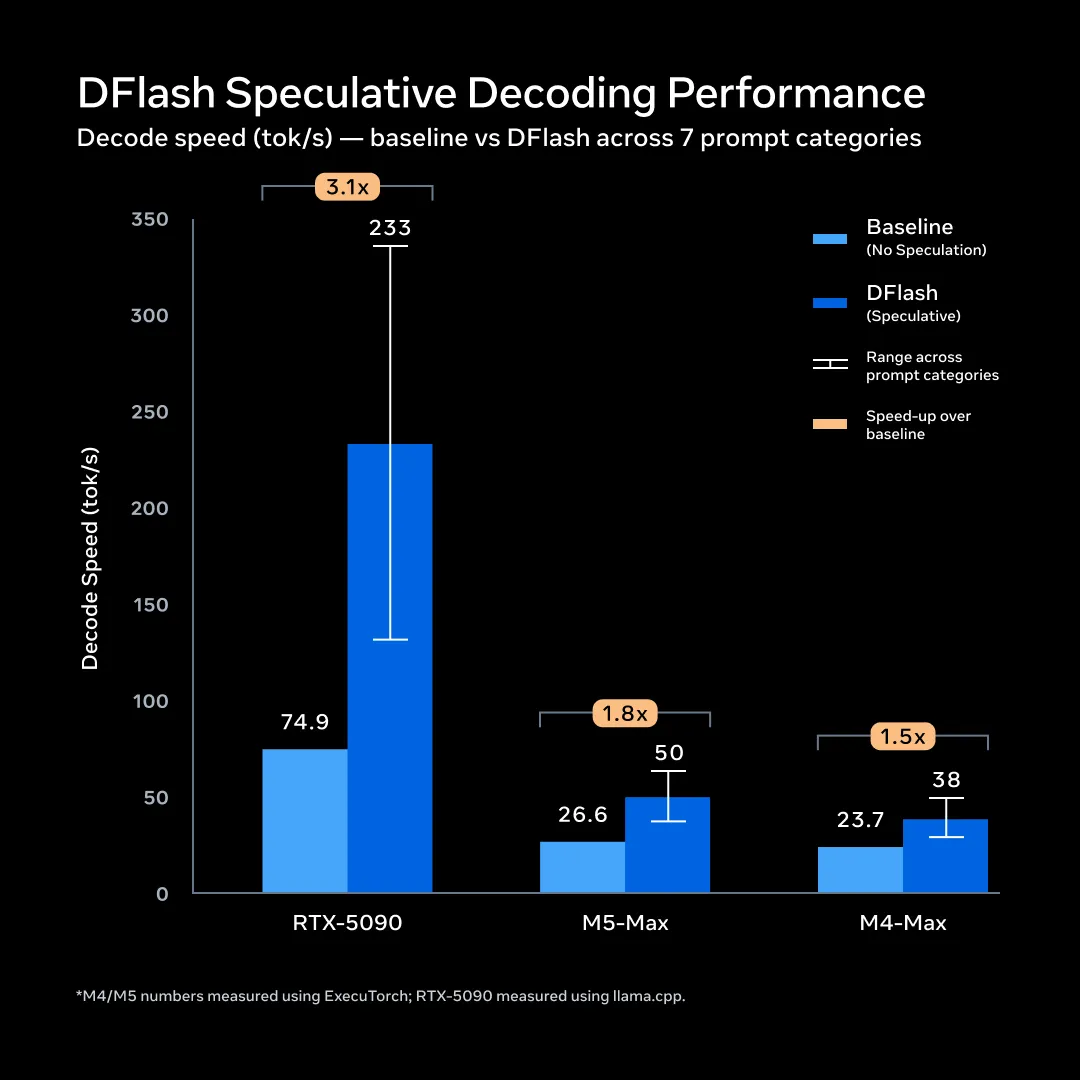
This smart-body model is tailor-made for local devices. It is powerful, but with less than 20GB of memory, as long as a consumer-grade GPU (like the RTX 5090) or a MacBook with an M4/M5 Max can run smoothly!
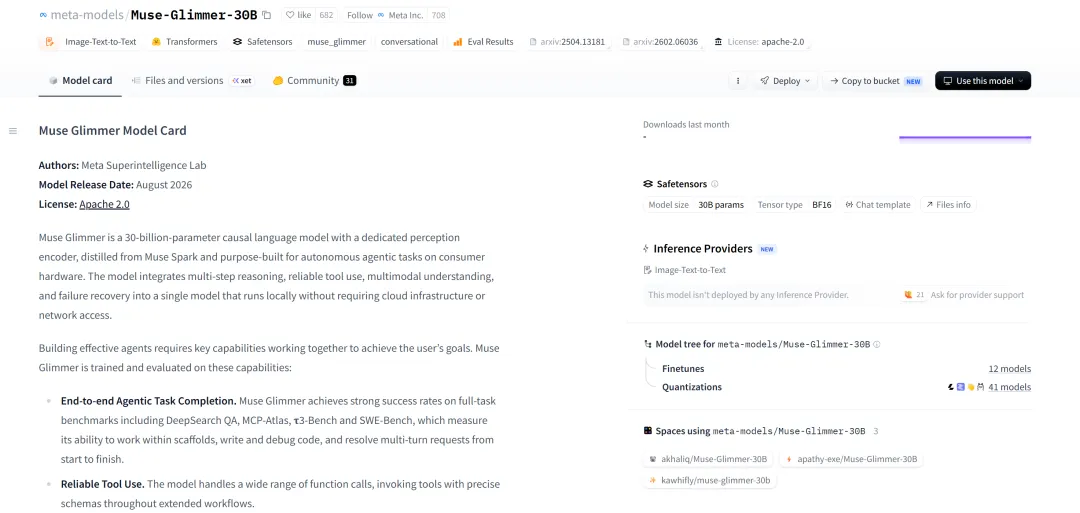
Moreover, Meta uses the best-loved Apache 2.0 protocol, which allows free commercial use and easy creation.
On the other hand, the CEO of Meta, Joza, himself came out and issued a thousand-word declaration that the future belongs to everyone's mother.


In this lengthy column, he is not named, but he is all over OpenAI and Anthropic.
He argues that the greatest danger faced by humanity is that some people are constantly raving about the end of AI and trying to concentrate superintelligence in the hands of a few companies and a few elites.
Muse Glimmer: "Super-intelligence" in your backpackAlthough there is a lot of open-source AI today, there are models that actually work, and ordinary people's computers don't run; models that can run, they're like intellectuals.
Muse Glimmer was born to break this deadlock.
Meta's ambition is to make this 30B model "fully offline, locally operational!"
This means that you can call this superbrain anytime on a plane without a network, on a high-speed train, and you can also guarantee privacy without having to upload local files and private code to the remote.
The 30B model, how do you get into a personal computer?
Maximum compression: Perfect weight of up to 20GB
According to the standard accuracy, 30B models can consume more than 55GB of storage in any case, which is far beyond the limits of consumer-grade graphics cards.
For this purpose, the Meta team used 4-bit quantitative compression technology, which hardened the model weight to less than 20GB.
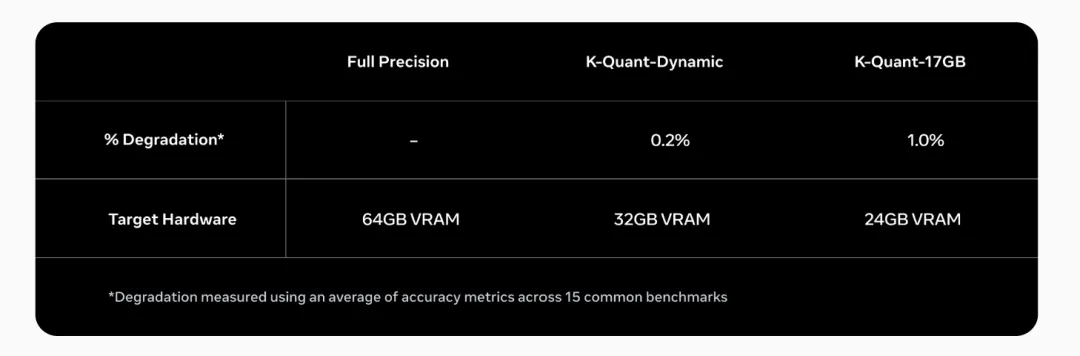
More surprisingly, this extreme compression "has caused almost no decline in the performance of intelligent body tasks".
From then on, on devices with 24GB of RAM (such as RTX 3090/4090) or 32GB of RAM (such as Mac Unified Memory), we can not only run this model, but also leave enough space to give it "visual sensing encoder" and context cache.
DFlash speculative decoding: Let the speed of generation take off
What is the most feared thing about running a large model locally?
The model squeezes the toothpaste one word at a time, severely disrupting the workflow.
To solve this problem, Muse Glimmer came up with a lightweight "draft model" based on DFlash technology.
This small model will "guess" a large token at a time, and then give it to the master model for parallel verification.

This "speculative decoding" technology, without sacrificing any output quality, allows Muse Glimmer to directly boost the production speed of the RTX 5090 by 3.1 times!
On the MacBook M4-Max and M5-Max, it can take off equally quickly, allowing for fluid real-time conversations and complex code generation.
A real "smart body".
Moreover, Muse Glimmer's positioning is not just an LLM, it's dedicated toSmart body workflowOptimized.
It was trained by Meta's top closed-source model Muse Spark through "logical distillation" and inherited the soul of this top model.
It has five core superpowers.
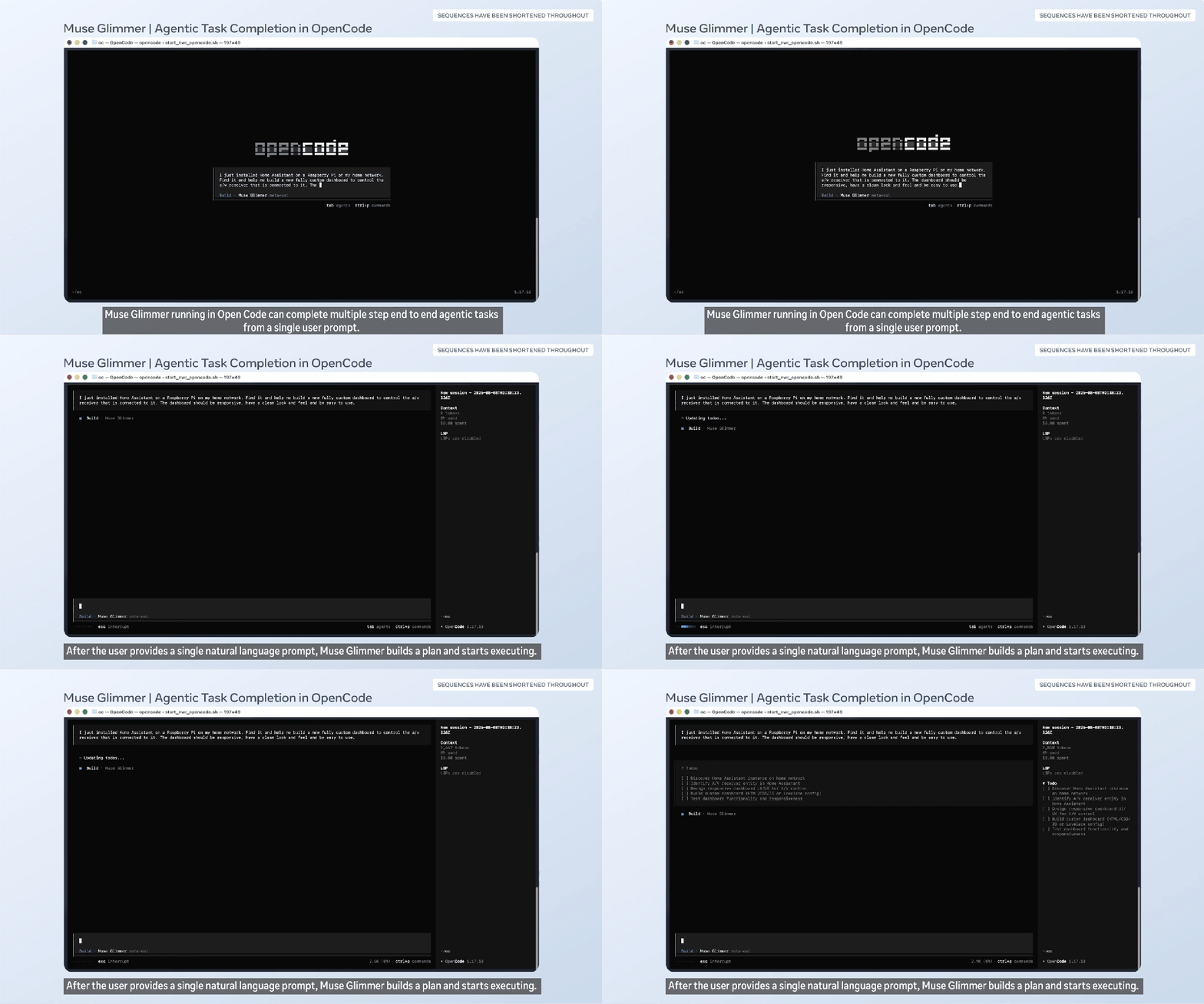
End-to-end tasks completed:It performs well in extremely difficult tests such as DeepSearch QA, SWE-Bench, and can help you write code, DeBug, and search information from start to finish.
I'm not sure if this is a good idea.It can identify exactly when to call the calculator, when to search for the local file, and when to run the code.
Failure to recover:This is the most critical ability of an intelligent organism. When a code or tool calls for failure, it does not strike the machine directly, but, like a human programmer, automatically detects errors, modifies parameters and tries again!
This is a long-term multi-step argument:They are able to develop a coherent long-term plan without "remembrance".
Multimodal understanding:You can see your screenshots, graphs, and documents directly, and you can use the graphics to make sense of them.
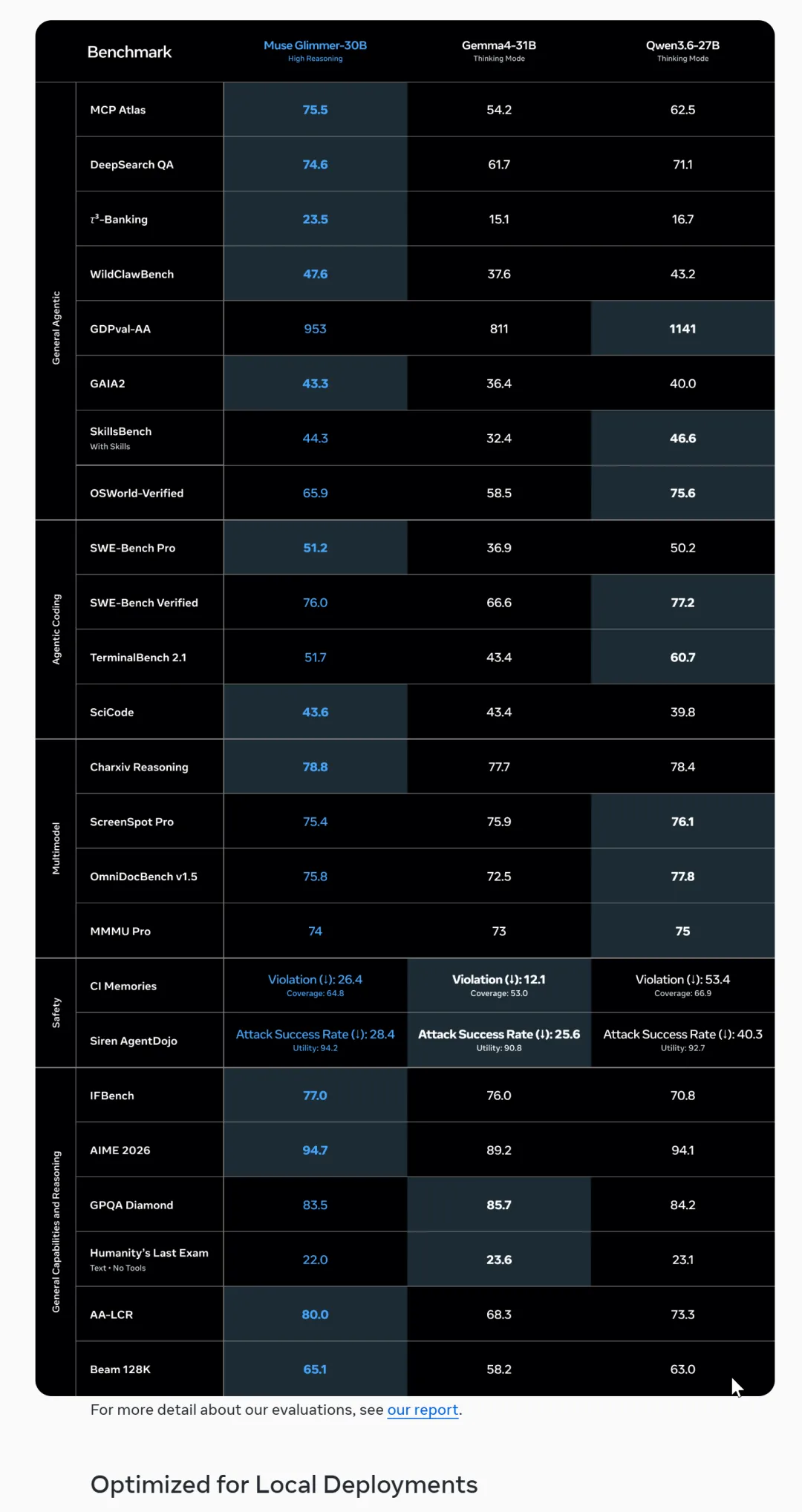
In various benchmark tests, the Muse Glimmer did not match the Gemma4-31B and Qwen 3.6-27B in the homogenous model, and performed surprisingly well in "smart body operation".
More importantly, it uses the Apache 2.0 protocol!
This means that both individual developers and businesses can use it for free.
Hugging Face is now available and will soon have full access to mainstream local tools like Ollama, LM Studio and others.
Zengyi Qin, former head of Meta Ultra Energy Laboratory Assessment, analyzed that the Muse Spark will be a reduction in the size of the global open source model.
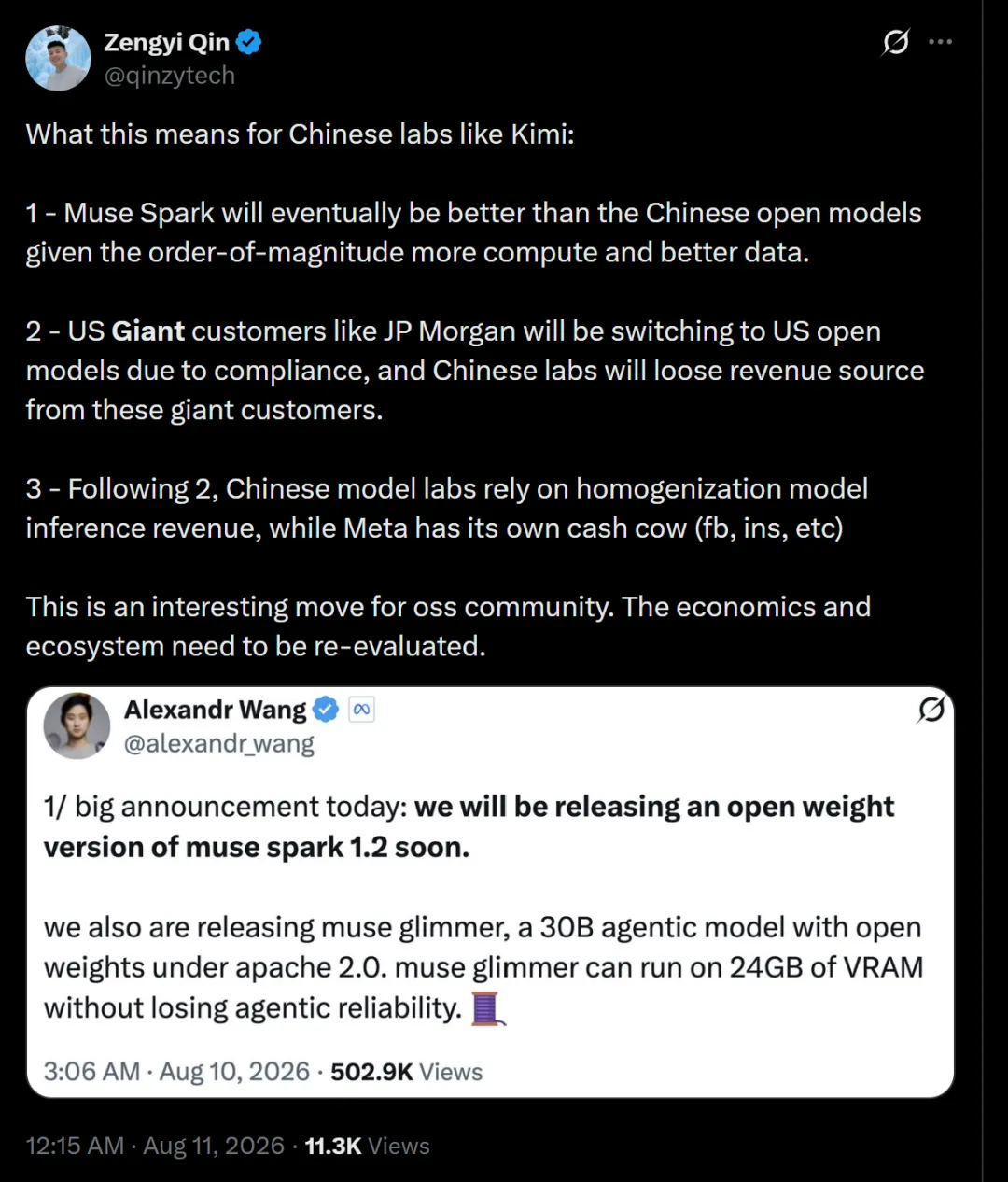
The reason for this is that Meta's infrastructure budget this year is $145 billion, so Meta has more computing power; they also have compliance advantages.
More importantly, why would Meta be open source? because they don't have to make money from selling APIs at all!
The 30B free model, the Apache 2.0 protocol, will have a major impact on the business logic of open source labs.
It's just a little bit like that.It's about tearing up Silicon Valley's cover for AI security.At the same time, Zhao published a thousand-word message, which could be said to be a Meta war book to the entire closed source camp!
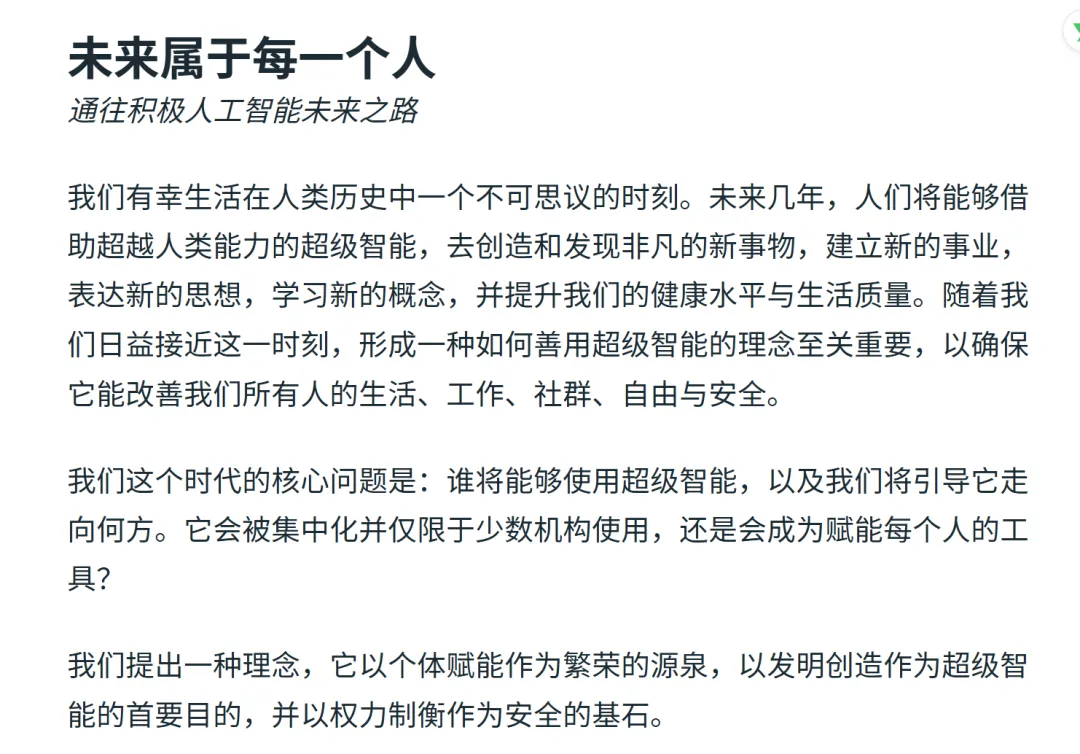
The article surprised everyone: it is rare to see such an aggressive little struggle.
The central idea of the article is that superintelligence must belong to everyone and that concentrating superintelligence in the hands of a few is the greatest danger to humanity!
Sharp criticism of AI's apocalypse and the concentration of power
We all know that there are two companies in Silicon Valley that especially like to play this narrative: AI is too dangerous to destroy humans at any time, so it has to be locked in the hands of several elite companies.
In a statement, he said: "It's hard to believe that this is the first time I've seen this.
The idea that AI is so dangerous that the only safe path is the extreme concentration of power is inherently problematic. Throughout history, the expectation of an absolute power that, if enlightened enough, can generously feed humans has never produced safe or positive results.
He said, for example, that if only one person in the world had a "super-intelligent lawyer", he would have an absolute advantage in court to reverse society. But the world would be fairer if everyone had one.
Granted, it's a disaster for a few to master super-hacker AI, but the entire world's digital infrastructure will be unbreakable if everyone has super-AI to defend themselves.
"Real security comes from the balance of power, not the monopoly of power".
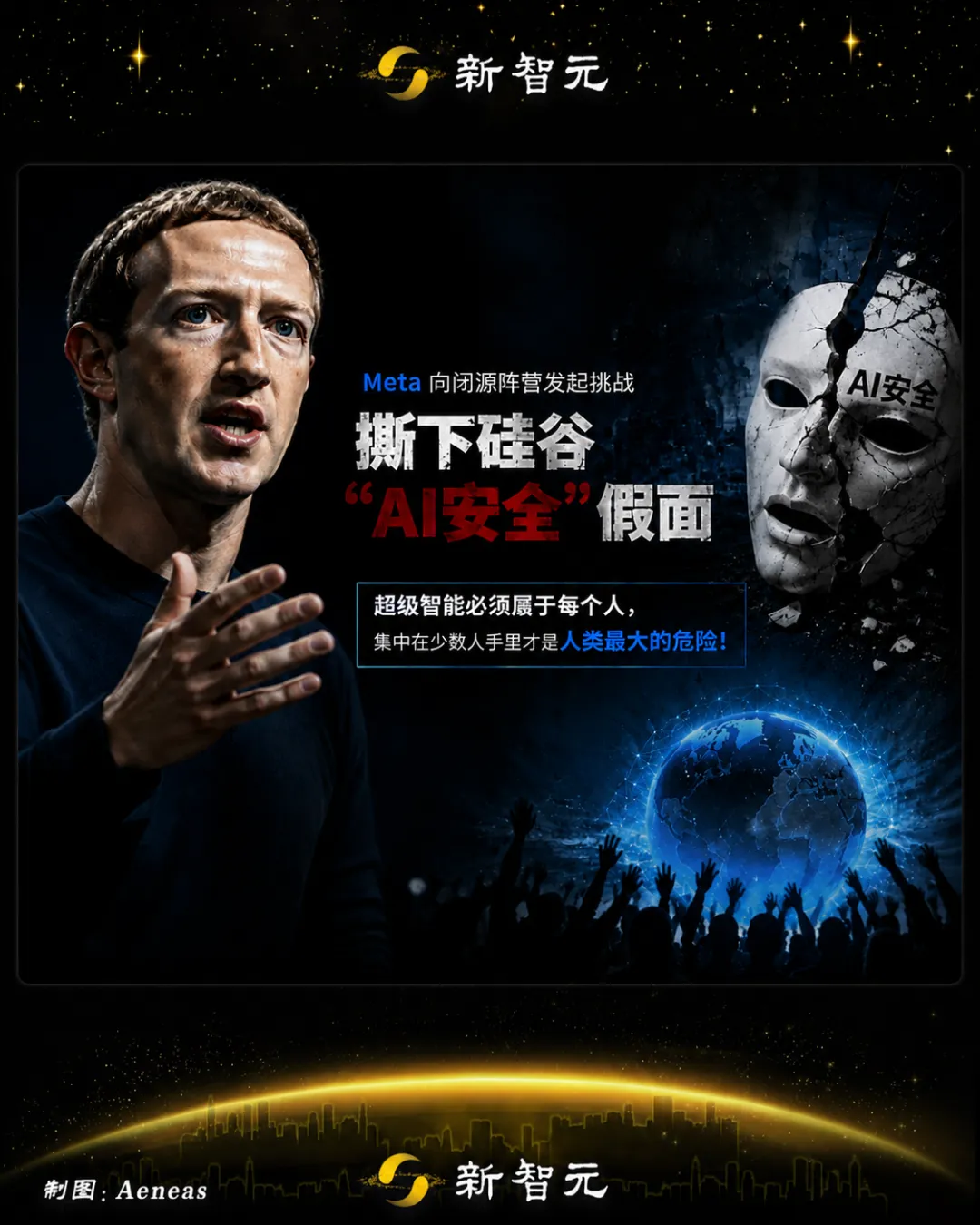
A disruptive view of AI alignment: Who should AI listen to?
On the subject of AI alignment, Zuckerberg made the following statement:
Humanity is not a single culture... there is no technological solution that can simultaneously satisfy the conflicting interests of all. Therefore, no single superintelligence can be benevolent to all.
He strongly criticized the practice of bidding: a leading model refused to help users draft a letter to the school simply because its company thought "the standardized test is immoral".
It's not aligned at all, it's called "imposing the company's dogma on users!"
Meta proposes that AI must be aligned with the user's individual goals and values, rather than Meta's values.
To this end, Zhao has promised that Meta will provide a "totally private mode" for Personal Agents, similar to end-to-end encryption on WhatsApp.
In the second half of the article, Za expressed strong dissatisfaction with the current US AI regulatory policy.
He said that such an overly stringent restriction was "to pay homage to competitors".
And, of course, he chose to distill it in public!
He pointed out that learning from other models is an important principle for the functioning of open source ecosystems. "Any AI model is based on human knowledge... you should be able to learn from anything you can observe, and that's how the world works".
Moreover, Muse Glimmer was distilled from Meta's own Muse Spark. Zhaoza called for U.S. policy to loosen restrictions on training data and distillation technologies, or U.S. open source AI would lose its competitiveness.
And he believes that limiting the U.S. open source model won't solve any problems, but will weaken the U.S.'s say in the AI ecosystem.
He warned that if proactive constraints were put in place, other countries' open-source new stars would quickly fill the void, depriving the United States of the opportunity to define global AI standards.
At the same time, he proposed a compromise: not to release the open source model, but to have the laboratory share "intermediate training checkpoints" with the government in advance.
Today, let's remember the small fight, remember the Meta.
They used a local model of Muse Glimmer to prove to everyone that superintelligence doesn't have to be high up, it can be in everyone's pocket.