A decade ago, when I went to an automation workshop in an automobile factory, I saw the four colors of the mechanical arm: the bright yellow of Vanako, the snow white of ABB, the pink blue of Anakawa, and the bright blue of Kuca.
At its peak, the four took more than 60% of the global market share and nearly 100% of the high-end market.
In 2026, under the wave of physical intelligence, the accounts of the four great families began to differ, and the strategies began to differ.
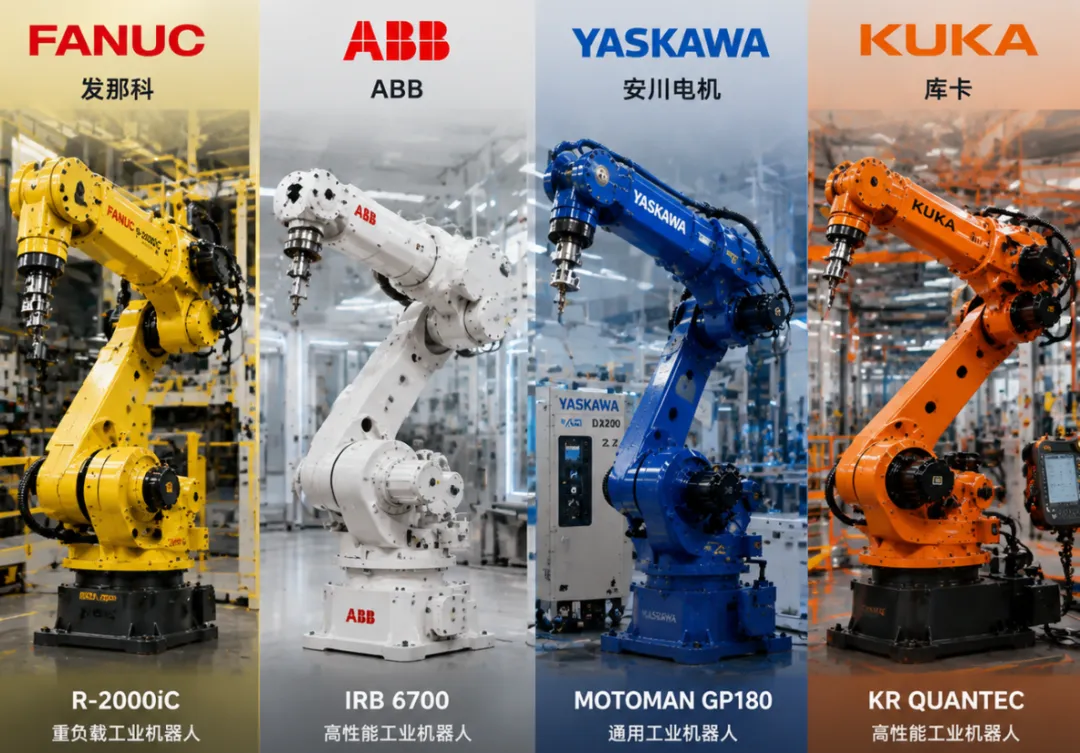
01.
It was an unexpected failure.
Look at the Chinese market. In the first quarter of 2026, the market share pattern of the four largest families has been ripped open.
Aston, Coca-Cola, and Huawei have a combined 10% stake. 9% of the company's revenue. 4% of the company's total sales. 55% of the country's brands have been traded for the first time. Five years ago, these four companies had a combined share of more than 60% in China.
Look at the financial statements of each family. The pain points are different, but the direction of defeat is highly consistent.
The company remains the most stable of the four. In fiscal year 2025, it generated revenues of 85.78 billion yen, or about $5.7 billion, up 7.6%, a record high. Operating profit rate of 21.4%. The global cumulative installed capacity of over one million units is unattainable in the short term. But it has fallen to 9% in the Chinese market, from more than 20% at its peak.
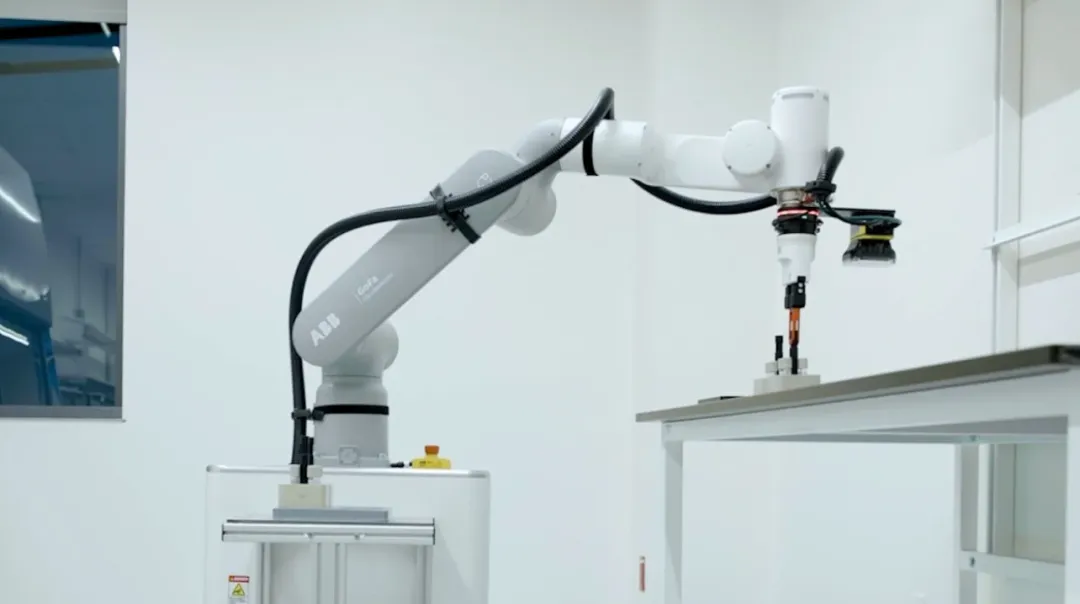
ABB Robotics sold $2.3 billion in 2024, accounting for 7% of the group's total revenue, and an operating profit margin of 12.1%. The ABB Group's core segment has a profit margin of 16% to 18%. Profits have slowed down, and synergy effects are limited. In October 2025, ABB divested the 100-year-old business to SoftBank for $53.75 billion.
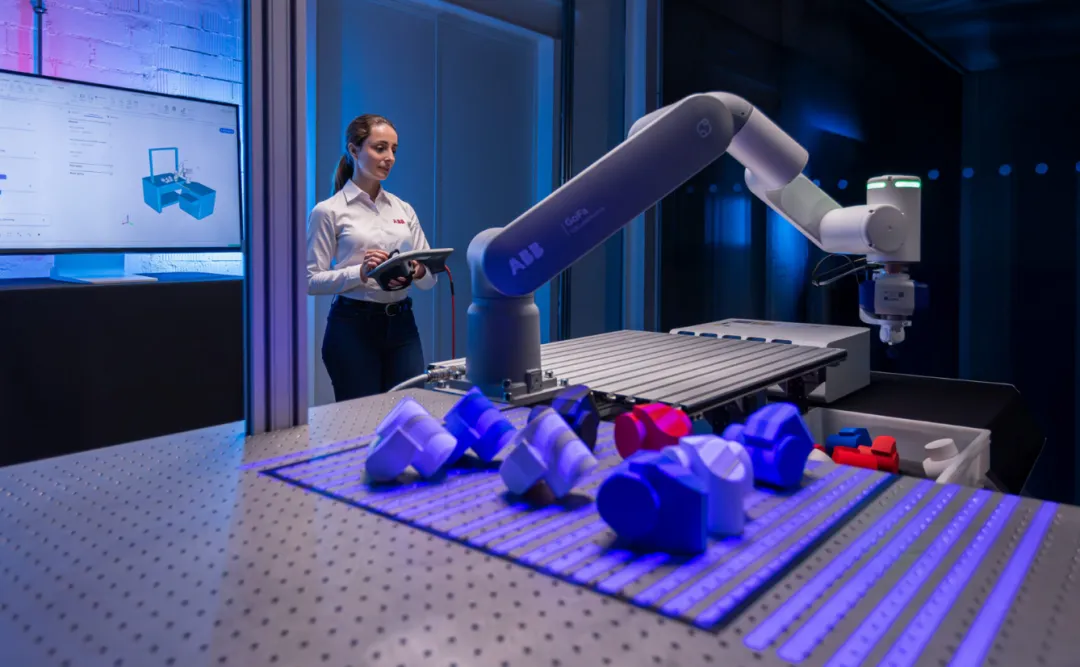
In 2025, the robotics sector generated revenues of ¥247 billion, about $1.65 billion, up 4% from the previous year, but operating profits decreased by 0.5%.
KUKA is the only one of the four that is growing backwards in China. Perhaps because of the American group, the brand shipped 32,000 robots in China in 2025, a growth of more than 30%, with a record R&D investment of 213 million euros. But it also faces the fiercest competition.
A family sells itself. A profit is shrinking. Two people are being equalised. The old-fashioned pricing system is falling apart.
02.
The disintegration is pricing, not technology.
But that's not to say that the four families didn't. On the contrary, their roots still look much deeper than the surface numbers, and their latest layout is very worthy of attention.
It has been running for forty years. Servo motors, speed reducers, controllers, CNC systems, all done by itself. It is common for a generator to have been in the factory for decades without problems, and the slogan is true gold and silver in the eyes of industrial customers. To this day, no one is going to replace a generator line that has been running for ten years because of the cheapness of 10%.
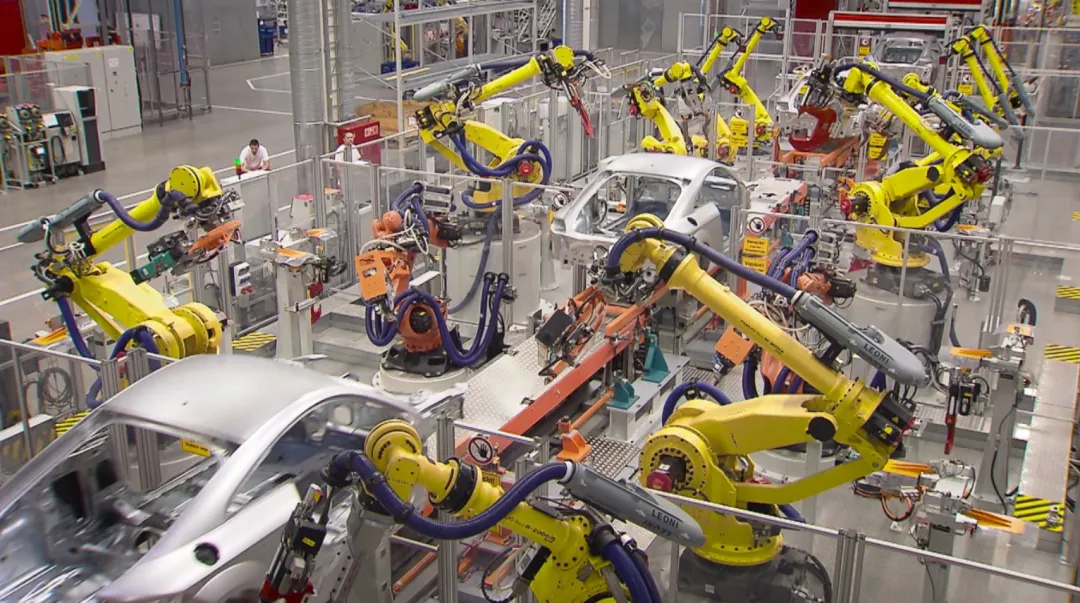
ABB's heavy-duty robots are capable of making aircraft carriers and wind turbines. Several tons of large pieces are held in the workshops. These capabilities are accumulated only by the accumulation of materials and motion controls, which have long been followed by later ones. Anakawa has accumulated on servo motors and motion controls, which are still the industry ceiling.
But these are the assets of the old world. The competitive dimension of the manufacturing industry is undergoing a change at the root catalogue level. Over the past three decades, precision, speed and reliability have been the mainstays of three generations of four families.
The shields were still there. But the enemy was no longer attacking from the shields. The speed of the four counterattacks was much faster than the outside world expected.
03.
Four new choices for everyone
(1) ABB: Turn around
The fact that ABB sold its robotics business has caused many people to cheat, and the media has often interpreted it as a strategic layout for SoftBank. The real story is simpler. It is purely capital accounting. The robot business profits are lower than the core group, and the synergies are limited. For the ABB Group board of directors, divestment is a rational choice to return to shareholders. But for SoftBank's grandson, he received a completely different card.
ABB has the world's busiest industrial penetration pipelines. Millions of robots are distributed across dozens of industries, hundreds of thousands of production lines, each producing real industrial data. These data were only after-sales engineering parameters in the past.
In January 2026, ABB and ASIC set up their own artificial intelligence laboratory in Beijing, where they joined forces with Ali Cloud and Ingrid. At the March GTC conference, it and Ingrid broke through the migration bottle of simulation to reality. AI models trained in the Omniverse were deployed directly to physical robots, and production line testing was squeezed to an unimaginable level.
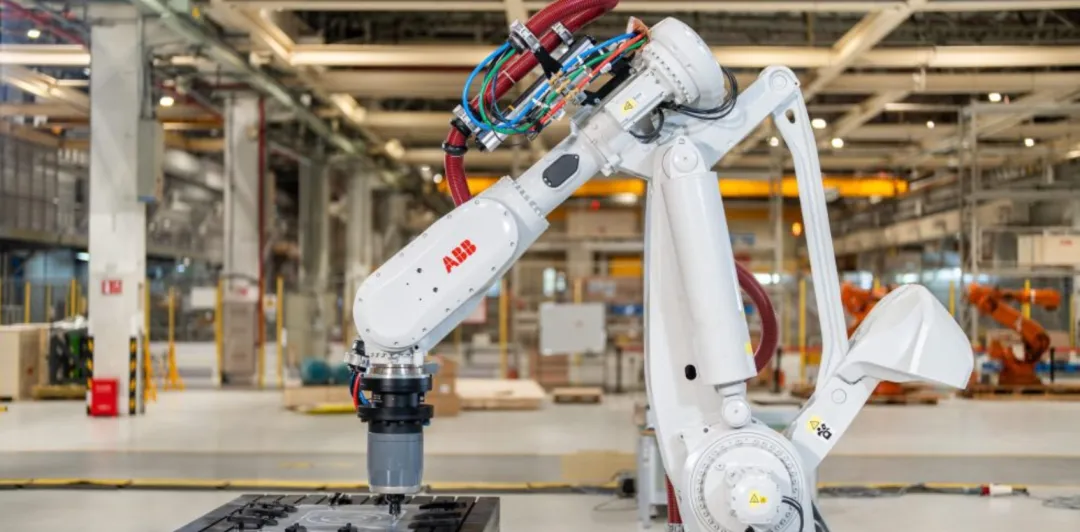
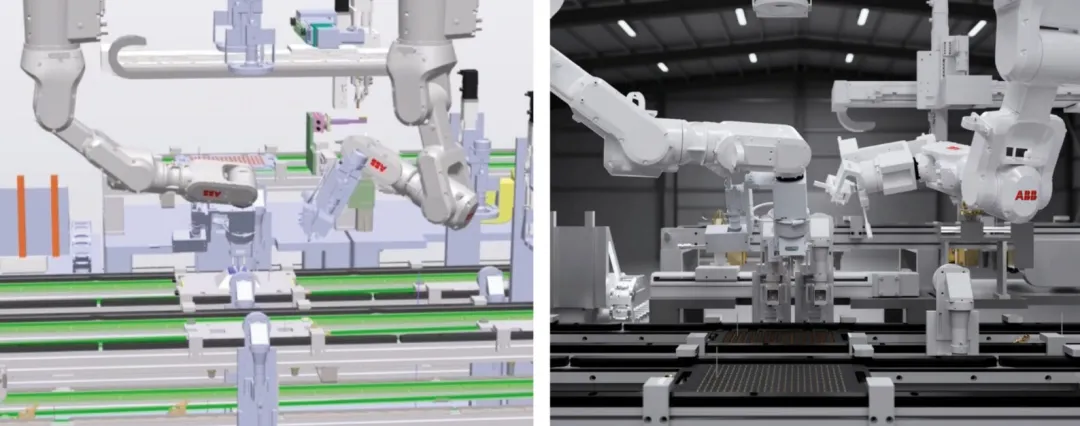
Landing data is harsher. Previous reports have shown that the ABB Shanghai Super Factory's mission success rate jumped from seven to eight percent to 99 percent, with a production line compatible with more than 20 models. The production line's assembly accuracy reached 0.1 millimetres. In June, ABB also worked with biotech company PSYONIC to train robots with real-world operations data on prosthetic users. A parent company stripped out of its business and completed a self-definition in less than a year. It is no longer sold as a mechanical arm, but as a training ground. Just like Google Maps does not make cars, but every automated driving company is using it.
But there's a key issue here: if ABB's AI capabilities come from Intel and Ali Cloud, its simulation platforms come from Omniverse, and its training data comes from Foxconn's production lines. ABB's core competitiveness is actually shifting from autonomous technology to eco-integration. But can it still be called the global leader in robotics when a company no longer owns its own technology but relies on external partners?
(ii) Open the door
The four-word belief of the last forty years has been that APIs are not open to the public, that no outsider can touch the core code, that no third party can be relied upon.
In 2026, the Yellow Giant did something unprecedented in its history. In May, Genco introduced Google's Gemini AI assistant to the robot. The operator uses voice or handwriting instructions to enable the robot to perform tasks autonomously, without the need for engineers to be programmed step-by-step along the production line. In the same month, it launched its own ROBOGUIDE simulation platform and the great Isaac.
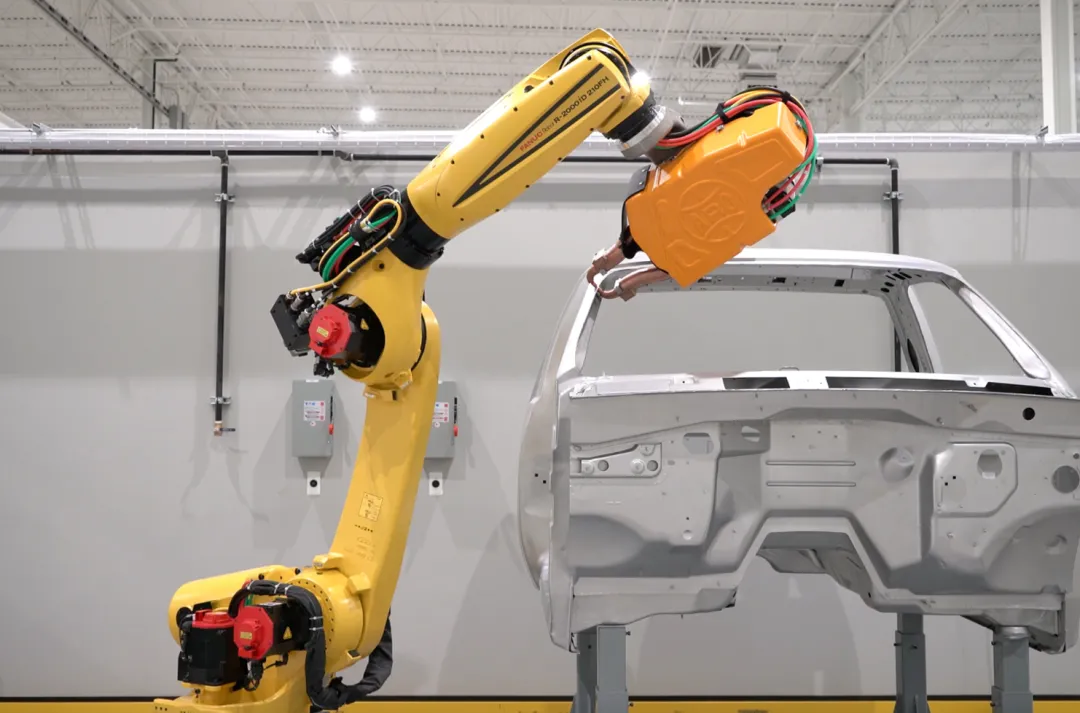
In the past, it relied on professional barriers. Only authorized integrated businesses can be deployed, only engineers can program. Now it relies on zero access. Anyone can use it.
It is open from drivers, not core control algorithms; it collaborates with Google, but Gemini's integration still needs to pass rigorous industrial verification. It does not choose between full opening and full closing, but instead goes out of a middle-of-the-road loop and gradually opens up the ecosystem under the premise of maintaining core control autonomy.
Whether this route will succeed depends on a key question: how high is the industry's tolerance for openness? But from the data, since iREX released a physical AI system in December 2025, more than 1,000 physical AI-related robots have been shipped, and demand is still growing rapidly.
(3) KUKA up and down, ANKAWA down
KUKA and ANKA have chosen the opposite path. This path represents their position in the industry more than any strategic declaration.
KUKA goes up and down as a platform. In March, at the GTC conference, it launched a platform called AMP, a location card between AI intelligent agents and physical hardware. The semantic layer is responsible for abstracting the real world into AI-powered reasoning, the action layer gives different robots standardized interfaces, and the data layer drives continuous learning.
KUKA's chief software officer and AI officer Marc Fleischmann discussed the issue very clearly. AI-prioritized robots are surprising in the laboratory, and the real output line goes off the chain. AMP is here to fill this gap. KUKA Group CEO Christoph Schell calls this step Automation 2.0. Rule-based automation is called 1.0, intent drive is called 2.0.
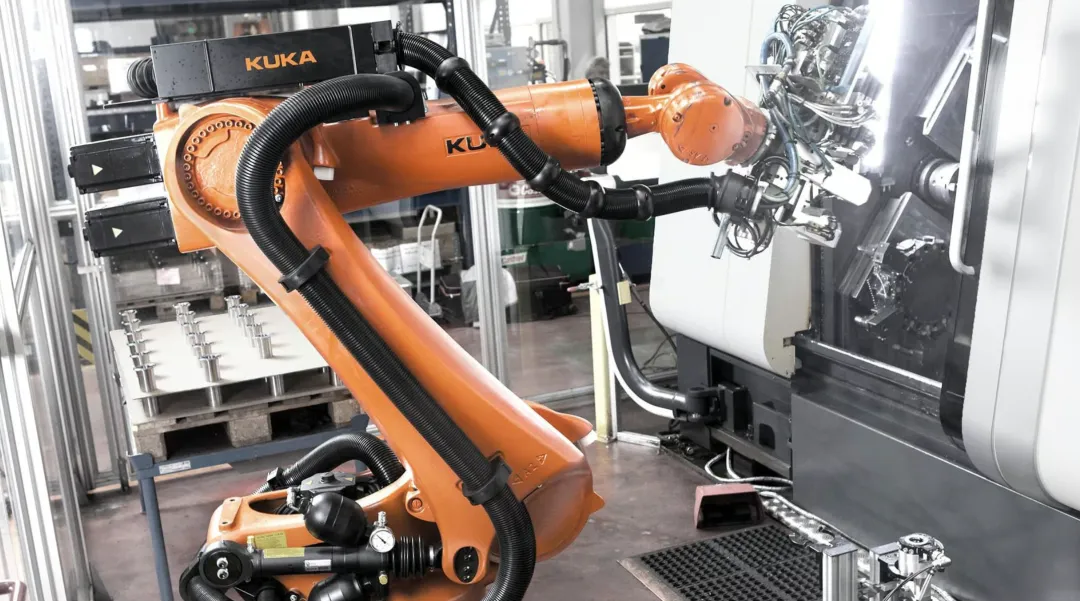
KUKA's ambition is not to sell more than a few robots. It is to redefine itself as an ecosystem in the industry. It is the first to scale AMP in the Chinese market, and it is also KUKA's first ranking from selling hardware to selling platforms. From selling hardware to selling platforms, from selling hardware to selling platforms, from selling hardware to selling smartphones.
In June 2026, the fifth factory in North Kivu was fully commissioned, with about a third of 100 robots powered by AI. At the same time, the manufacture of 12 products, screw success rate is almost 100%.
Motoman NEXT, a joint venture between Anakawa and Ingrid, is the industry's first GPU-labeled robot. AI reasoning is done locally on the production line, without touching the cloud. Two of the most sensitive risks to the industrial scene, delay and disconnection, have been directly bypassed. For a company that started out as a server motor, this may be its most recent departure from AI.
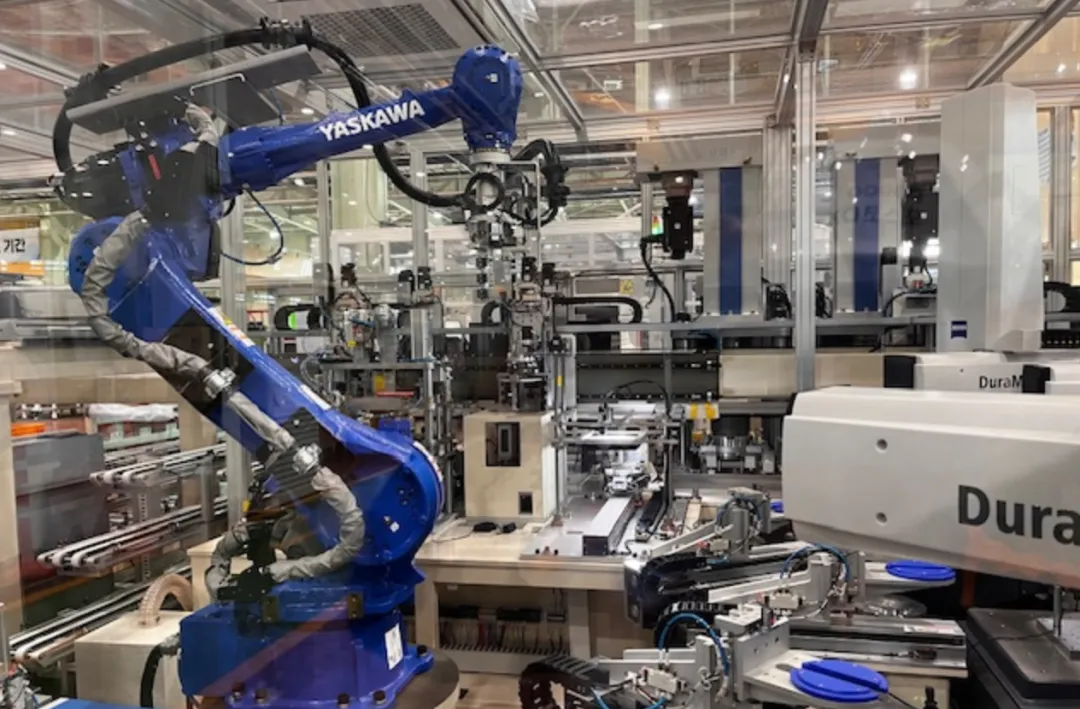
But Anakawa's situation reveals a brutal reality, that in the era of Physical AI, the doubling of the premise is to survive. Because the movement controls this once-core competitiveness, it is being redefined. Anakawa's servomotors technology is still the industry ceiling, but servomotors are just robot muscles, and the brain is becoming a new manufacturing high point. This is not the result that Anakawa wants to see, but it may be the fate that it will have to accept if it doesn't replenish its capabilities as soon as possible.
The two are walking in two completely different timelines. KUKA's challenge is that if the Android of the Physical AI era comes out in the future, that ecological bit is extremely valuable. Anakawa's challenge is that AI's delivery standards in the factory will eventually return to stability and quantitative productivity.
04.
The bottom is the same winner.
In the wave of the era of physical intelligence, the four big families countered, and there was a clear common logic: from closing to opening, from selling hardware to selling smart. But the four silent consensus was worthy of attention.
ABB used Omniverse for simulation training, then used Isaac to open industrial links, and KUKA and Anakawa joined the Cosmos Alliance. The underlying computing base and simulation platform, all of which are owned by Intel. The infrastructure for AI-era industrial robots was taken over by a company that made smart cards. The layout of Old Yellow was earlier and quieter than most robot companies.
But in front of them, there is a group of new players with completely different scripts.
Tesla Optimus Q2 2026 mass production. Figure AI's BotQ production line plans for an annual capacity of 120,000 units. In China, the U-tree has been 73 days in the making, and the Zhejiang era is pushing the hardware at the speed of software generation. These new players have no history baggage, no stock anxiety, no shrinking old business needs to be taken care of.
Four big families are doing another thing: giving robots brains.
Two ways, who's wrong? No one knows. But one key difference is that the new players have the advantage of native AI, their robots have considered AI integration from the very beginning of their design, and the software architecture has evolved into Physical AI. The fourth challenge is legacy, where they must complete the transformation from hardware manufacturer to infrastructure provider without abandoning their original business.
This state, both necessary and necessary, determines that their transformation must be painful.
05.
Three questions for Chinese players
If you look back at China, the mistake is clearer.
In recent years, Chinese corporations with physical intelligence have been collectively rapidly replenishing their bodies. The new forces of robots such as the U-tree, the Qiyuan, the Star-Spangled Banner are pushing their own human-shaped robots, more than hardware parameters, more than motion controls, more than clever hands.
The four families are collectively filling up the short boards of another brain, returning to the more practical problem of landing, thanks to decades of global factory customer relationships, hundreds of thousands of product lines of integrated experience, covering the after-sales network of each time zone.
The competition is unlikely to show who eats who. It will eventually lead to some sort of complement. But for Chinese players, there are three issues that cannot be overcome.
The first question is who your customers are. The customers of the four big families are BMW, Foxconn, Shanghai Super Factories. These customers' requirements for suppliers are not peak torque on the parameters table, but to run steadily for 100,000 hours without failure. Your humanoid robots enter the industrial scene, and the direct bidding they face is not another family of humanoid robots, but a combination of companies from the United Kingdom. If you enter the service scene, you are faced with completely different product definitions and business logic.
The second question is where your data comes from. The essence of physical intelligence is data-driven physical interaction. The four big families have decades of cumbersome real industrial data. Production timing, assembly accuracy, failure patterns, environmental variables, which are worth more than any hardware parameter in the AI era. Chinese players don't have this history.
The third question is whether you are a robot company or a robot infrastructure company. KUKA AMP's heart is worth grinding. When everyone is staring at the shape and parameters of the robot's body, KUKA puts the stakes on the conversion layer between the robot and AI. If there really is an Android in the era of Physical AI in the future, the value of that position is much higher than that of building the robot's body. ABB's RobotStudio HyperReality, Robot Skill Ecology, KUKA's AMP, are all moving in the same direction. Chinese players are currently supplementing their bodies.
The senior vice president of ABB Group, Han Chen, president of China's robotics division, has said that the challenge facing robots today is not simply to complete an action, but to be able to function in a real factory environment under all kinds of changes. This is more difficult to say from ABB's mouth than from any new force. Because nobody knows better than ABB all the accidents an industrial robot can encounter on the real production line.
But the four families in the 2026 layout still seem to be trying to unravel an anti-intuitive industry trend: humanoid robots may not be the ultimate form of Physical AI, but a transitional form.
06.
The old contest is over, the new contest begins
In a closed empire with annual revenues of ¥85.78 billion, Wanko opened its doors to the city. ABB fought its fastest turnaround after being stripped. KUKA switched from selling machine arms to selling platforms, with Anakawa running the AI production line to near completion in his own factory.
The Four Great Families are not over. The end is the pricing power of the old days, not their technical strength. The decelerators, the servo motors, the motion control these hard drives are still, and even become more valuable with the addition of AI. But the rules of the game have changed.
For the past three decades, the core of the competition has been the extreme mechanical performance. For the next decade, the core of the competition has been the transformation of AI capabilities into stable, mass-produced, affordable industrial products. In this sense, the four families stand on a whole new starting line.
No one is waiting for anyone. The old competition is over. The new competition has just begun.