After decades of human cartography, AI is given a second with just eight pages of paper.
These two days, the entire mathematical community and the computer world were in a state of shock.
On October 18, when Stanford mathematician Jared Duker Lichtman spoke on X, the Internet exploded instantly.
"The existence of such proof strongly suggests P≠NP".
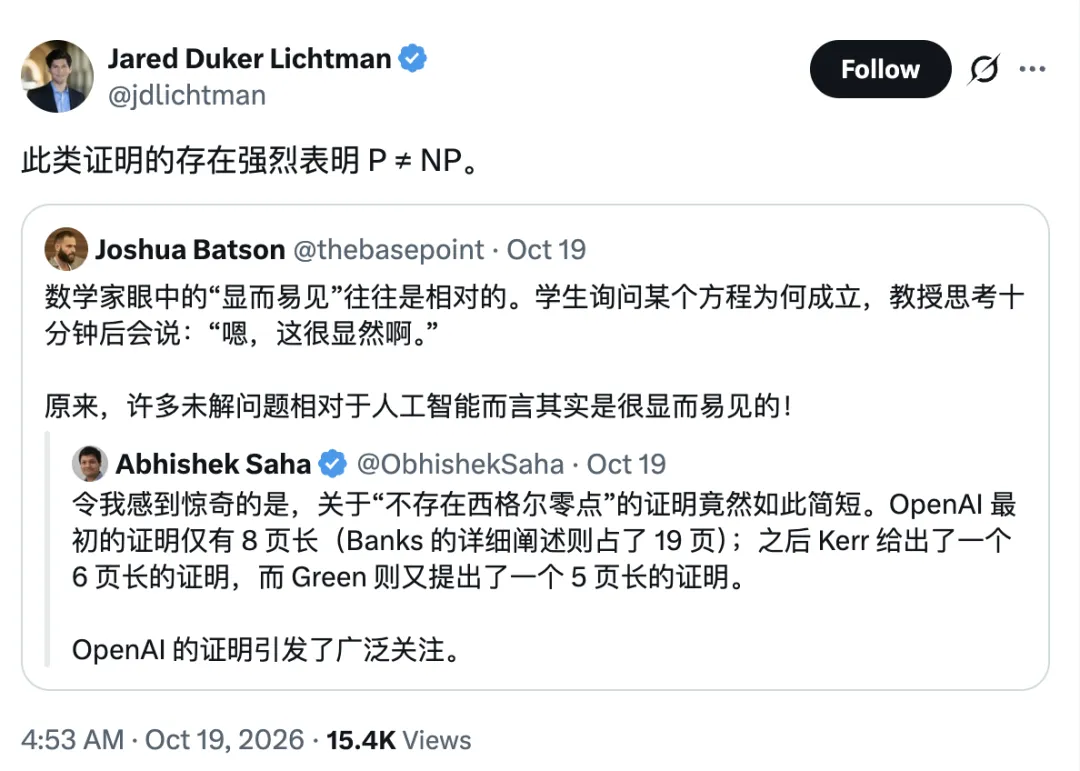
This phrase is a reference to the fact that there is no such thing as a Landau-Siegel zero-point in OpenAI's internal model.
The analysis of mathematics has been a key challenge for decades and is difficult to recognize in the academic community.
As a result, not only was OpenAI made, but the original proof was only 8 pages!
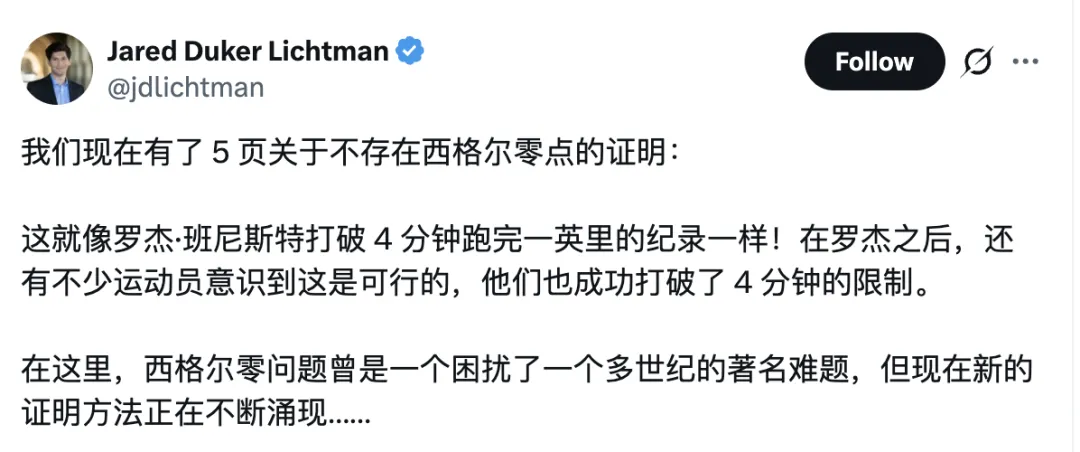
More exciting is behind us. Top mathematicians quickly followed suit:
Bill Banks of the University of Missouri first wrote a detailed 19-page demolition.
Then Bryce Kerr used the double secondary expansion.
And the classic result of Masser, compressing the proof to six pages;
Then Professor Ben Green of the University of Oxford cut a knife again and gave the final version of five pages straight!
From decades of hopelessness to just five pages of paper, Abhishek Saha, a professor at Queen Mary University of London, issued a torture of the soul:
If this is a five-page question, why have mathematicians missed it for decades?
It's like trying to get to heaven, trying to verify, trying to drink water.Why would a five-page mathematical proof link Professor Stanford directly to the Holy Grail of Computer Science P vs NP?
The moral of the story is simple.
A five-page proof that it would take any expert hours to complete the verification; but for these five pages, the most intelligent human brain has struggled for decades.
"Extremely difficult to find, extremely easy to verify". These eight words are the underlying intuition of P≠NP!
In the comment section, Joshua Batson, an anthropic researcher, pointed to the cranberries in a bloody needle.
Mathematicians' 'obviousness' is always relative. It turns out that many unsolved puzzles are obvious relative to AI!
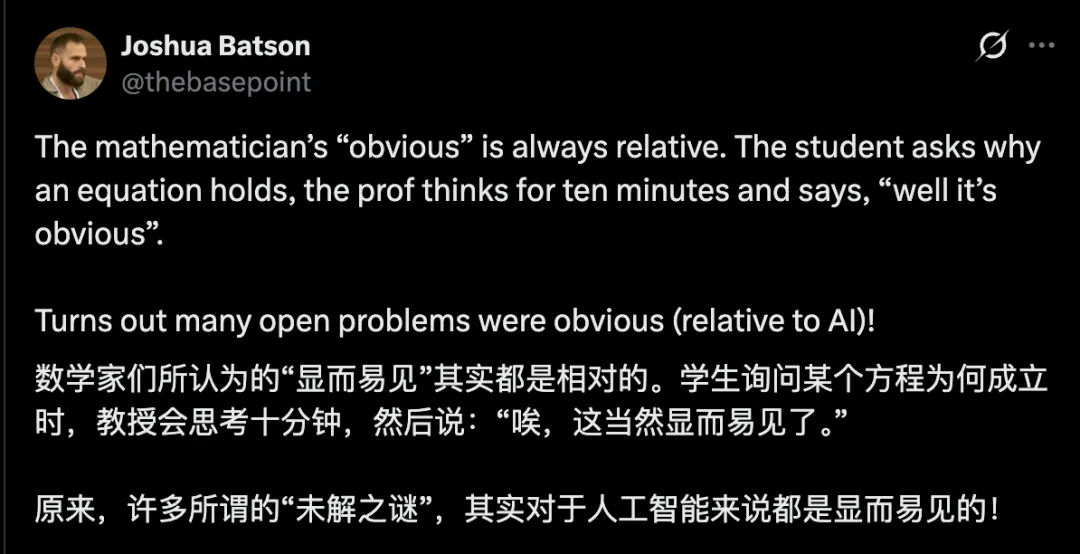
Behind the joke is an extremely serious torture: Is it too fast when AI delivers more than 700 mathematical manuscripts in a matter of weeks, the millennium myth P vs NP?
Three high walls, locking people to death for 50 yearsIn one sentence, explain P vs NP: Is it possible to quickly verify the answer to a question and calculate the answer quickly?
P is a problem that can be solved quickly and NP is a problem that can be verified quickly.
It's NP: give you the answer and you can check for the right answer in a second; but starting from scratch, you can only do almost anything.
If P = NP, modern cryptography collapses instantly and global finance runs wild, but all the complex problems will lead to the ultimate shortcut;
If P≠NP, it means that the universe is inherently difficult to run shortcuts.
The question has been raised since 1971 with a $1 million reward. The vast majority of scientists believe in P≠NP, but no one has been able to prove it for more than 50 years.
Not only did humans not find the key, but it proved that existing unlocking tools were doomed.
These are the three famous "barriers":
1. The relative barrier (1975): It is impossible to solve it by using the classical methods of simulation and angulation;
2. Natural proof barrier (1994): Most sub-circuit proofing suites, if P≠NP can be proven, will break the pseudo-random number generator by hand and contradict themselves;
3. Digitalisation Barrier (2008): An upgraded version of the connective algebra technique has also been shown to be inadequate in firepower.
In June this year, complexity theorist Lance Fortnow said pessimistically that humans currently do not have a viable attack path.
He suggested that the challenger first prove the much simpler question of "SAT has no square time algorithm" and then add: "You won't succeed there either".
This is the enemy AI is facing.
In the face of copper walls and iron walls, AI directly launched a homogeneous attack.
On 6 October, OpenAI released 722 single manuscripts on GitHub (with three being withdrawn the following day) into 372 result families.
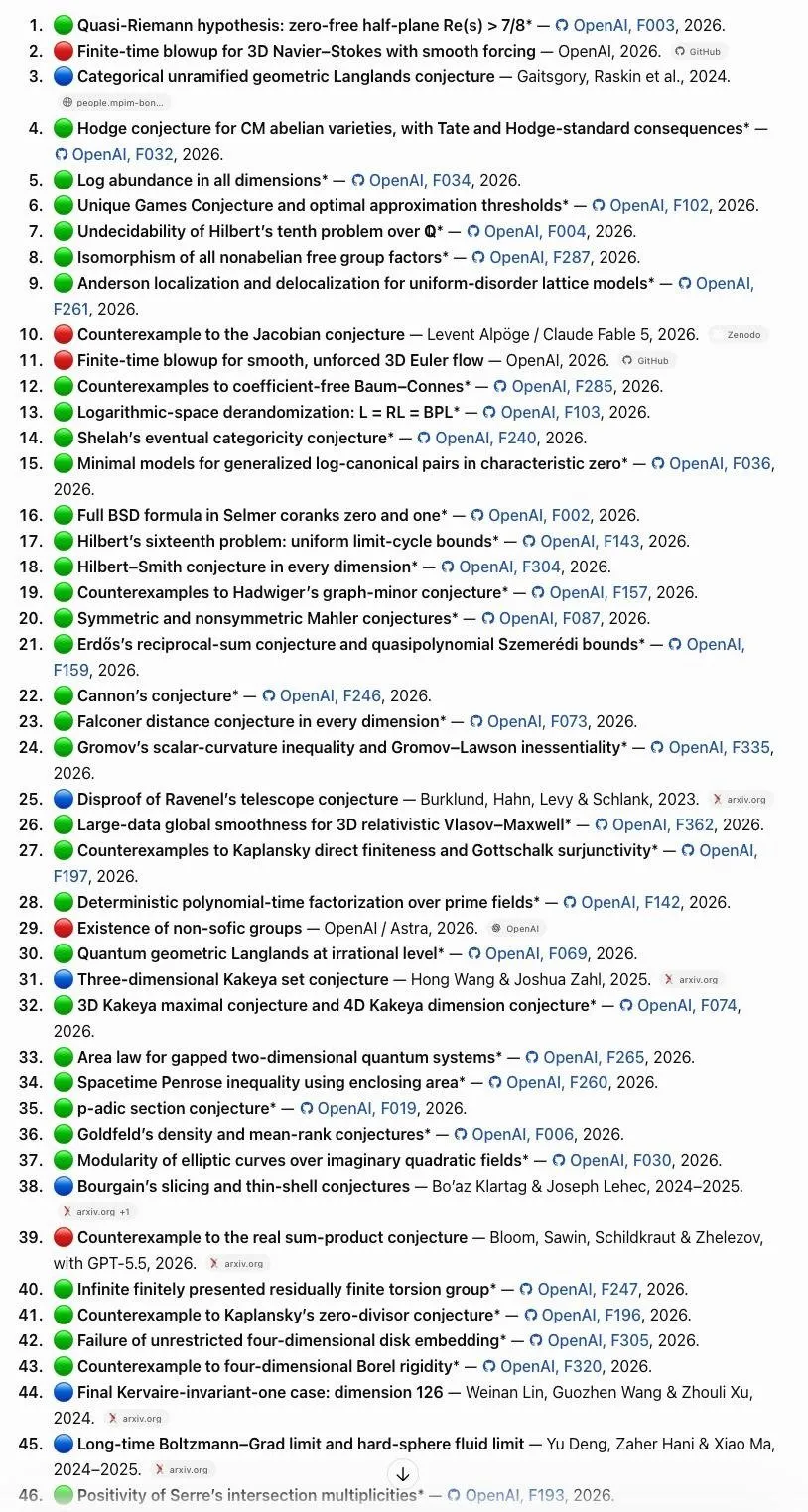
The internal model attempted about 4,000 open-ended puzzles, with an average of only about 3 hours of ChatGPT Pro computation per puzzle.
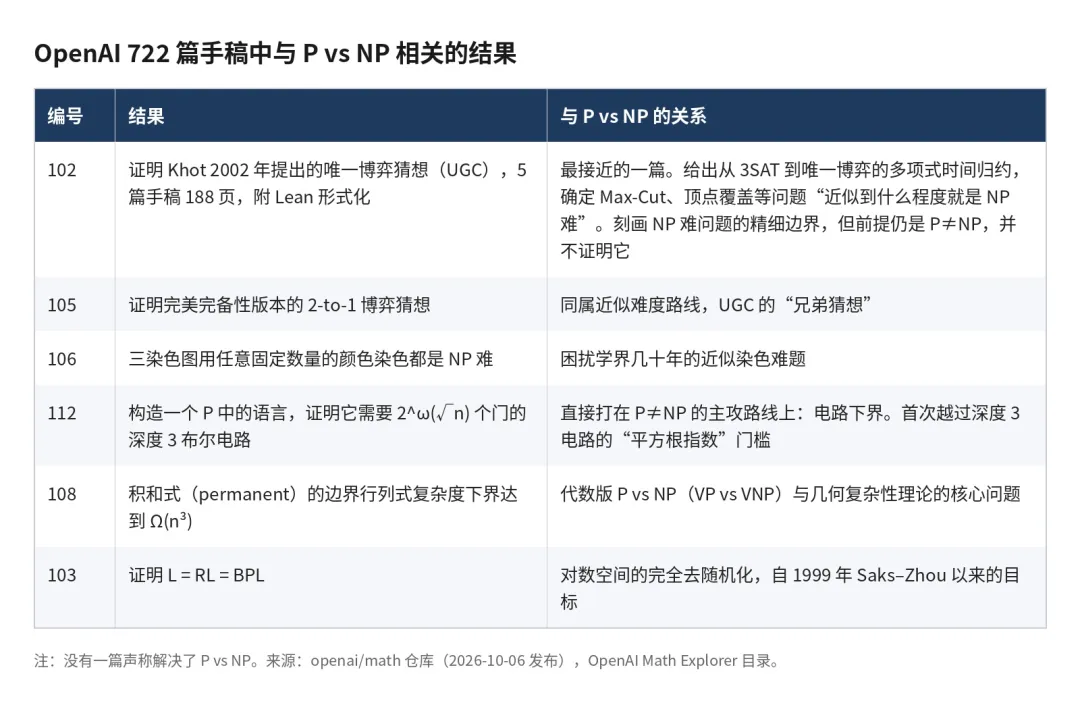
Of these, theoretical computer science occupies 40 families. Although not directly dealing with P vs NP, several are accurate in their main routes to it.
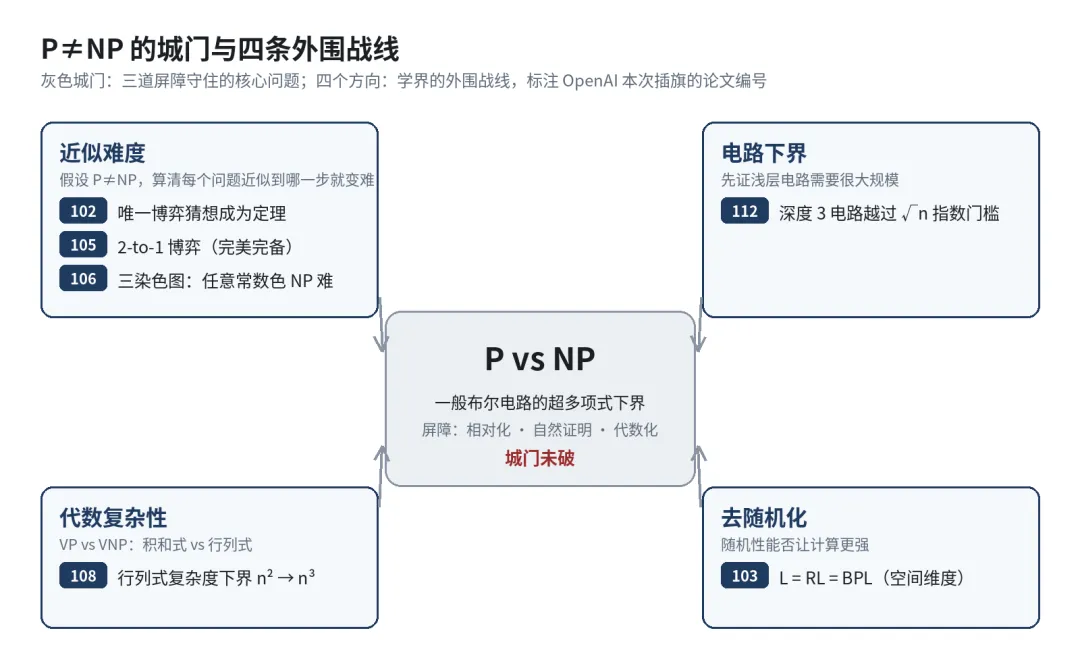
In June of this year, complexity theorist Lance Fortnow wrote: "We have no other way to simulate a general polynomial time algorithm; circuitry complexity, proof complexity, algebraic geometry routes are far below the polynomial time total capability". His conclusion is that there is currently not even a viable attack path.
Family 112 (Depth 3 Circuit Borderline): The best way to prove P vs NP is to prove that an NP problem requires "a multi-dimensional circuit".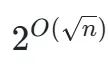 In the vicinity, AI has directly crossed this tunnel.
Family No. 102 (UGC): Proves this core conjecture proposed by Subhash Khot in 2002 (including partial Lean verification). It is closely related to P vs NP and greatly reinforces the approximate hardness limit of many NP-hard optimization problems.
The basic algorithm is randomized: complete randomization of a random pair space (L=RL=BPL); the matrix multiplier index is pressurized to; the integer multiplier and DFT fall time.
There is also a heart-wrenching scene surrounding #102 "The Only Funny Guess".
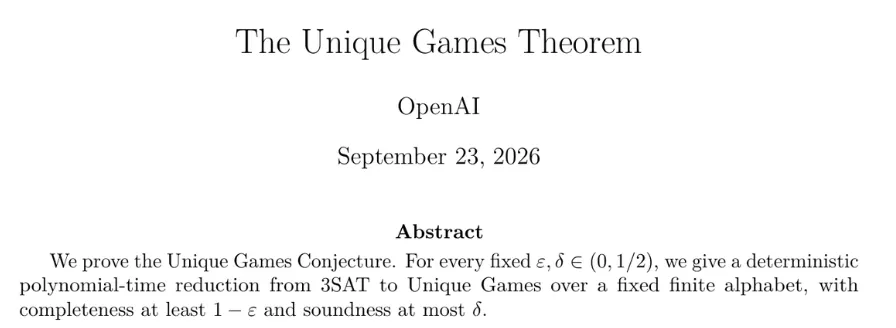
Dana Moshkovitz, wife of renowned scholar Scott Aaronson, has struggled with this conjecture throughout her career.
"Heard about a robot that's been studying you for a long time and figured you out!"
Quantum Fuel magazine also revealed that MIT's Dor Minzer team released their own proven variants before OpenAI's release on September 11 in order not to be rushed by the machine.
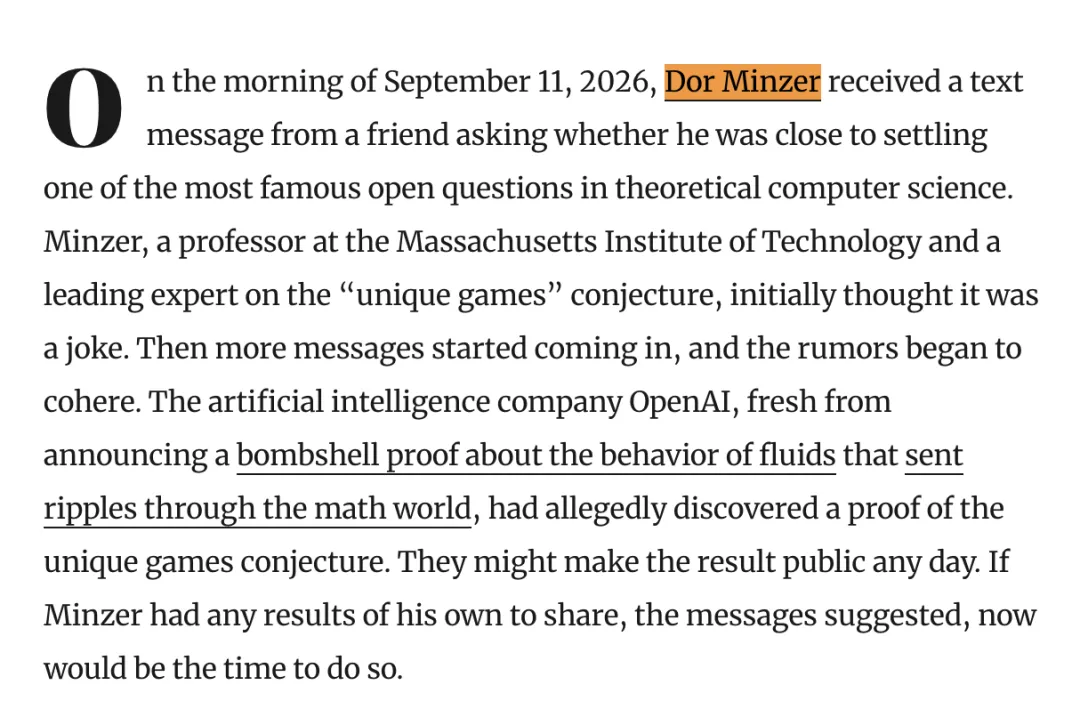
Human mathematicians have already started racing with AI.
The city is down, and the gates are not broken.However, the most knowledgeable experts are the coldest.
Lance Fortnow noted in a recent post: "AI solves less than 10% of a given problem, and none of these results brings us any closer to solving P vs NP".
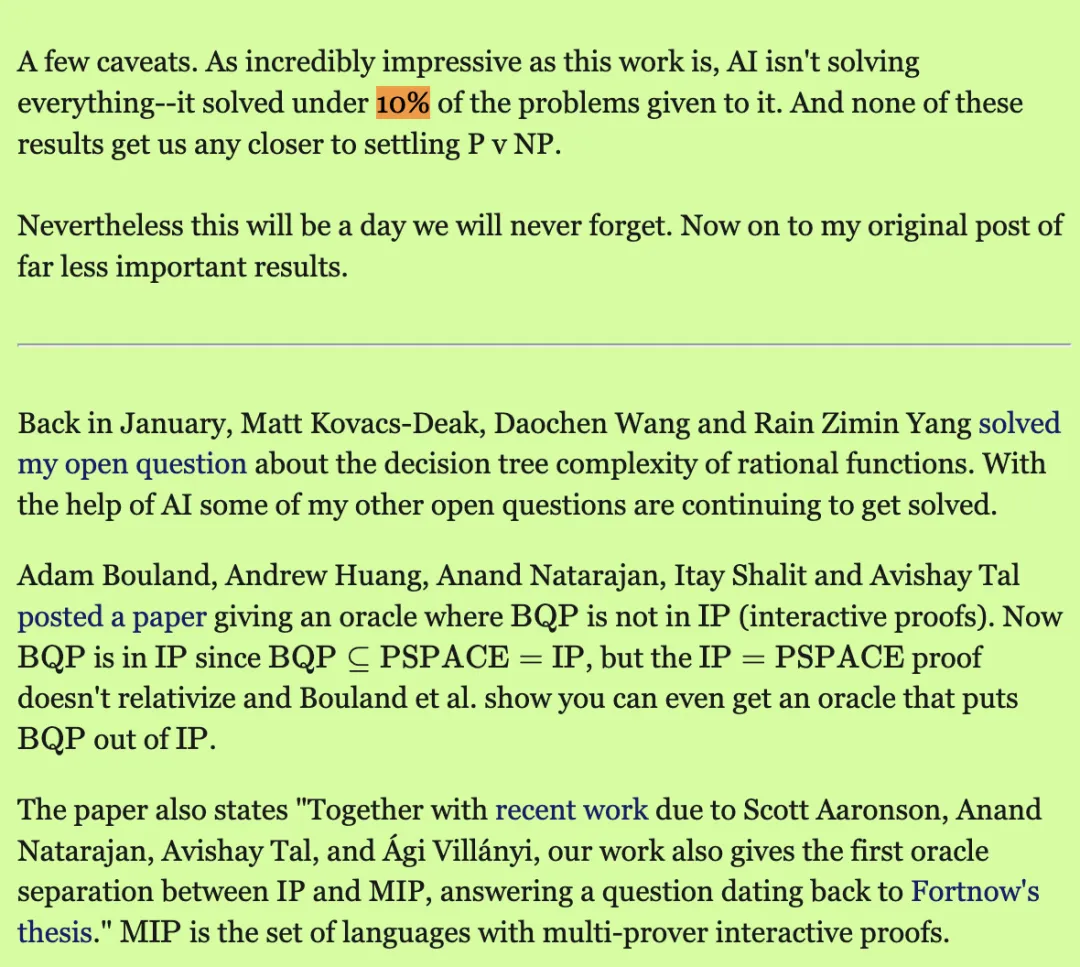
Although Scott Aaronson called October 6 "one of the most important days in the history of mathematics", he also noted that not only is there no P≠NP in the list, but even P=BPP's "small number one" problems are not obviously because they have not been attempted.
In a podcast, he revealed: "OpenAI and Anthropic are competing with the strongest internal models to attack P vs NP, but neither has succeeded".
There are four other hard wounds to break the barrier:
1. Verification is far from complete: only about 42% of Lean's accompanying documentation is formalized, and the rest is entirely man-made.
2. Poor readability: Moskovitz rated AI as the only joke proof, writing that "it's too bad to read without AI at all".
3.Lean is not omnipotent: machines can only guarantee that reasoning is correct, cannot guarantee that formal definitions are completely consistent with the original problem, nor can they judge whether the results are important.
4. Core route gap: AI breaks through deep 3 circuits and algebraic circuits, while it can introduce the "general Boolean circuit bottom line" of P≠NP, which is still a white paper.
The ultimate paradox: Is AI the living proof of P≠NP?If the gates of the city are not broken, why are they still saying "AI is approaching"?
Because the three signals are so clear.
First, the difficulty "difficulty" is re-priced. The five pages of Siegel zero prove that some of the dead ends are missing the unthinkable step.
Second, the outer outposts are fully blooming. The only drawbacks, the undercurrent boundaries, the randomization, the matrix multiplication... these milestones of the outposts around are heavily attacked by AI, and the main offensive direction will break sooner or later.
Third, scale and speed are not human measurements. 4000 problems, an average of 3 hours each. When the next generation of the most powerful arithmetic counterparts are P vs NP, a change in mass is extremely likely to cause a change in mass.
In the end, there was even an interesting betting disagreement among the academic community.
Aaronson still emphasizes P≠NP; but some scholars believe that the answer is more likely to be P=NP because it allows AI to find a clever algorithm than it is to prove "impossible" with existing mathematics.
However, the humorous part of the whole thing is that it's so much fun.
The more powerful AI is, the more it is a living proof of P≠NP.
It takes massive computing power to "seek" to prove, and humans take hours to "validate" the results.
If one day AI really proves P≠NP, it would be the most perfect proof of the Millennium puzzle.