"The dexterity of a hand is mostly about the brain, not the hand."
Matthew Mason, the father of robotics, wrote on his personal homepage: "Intelligence is in the brain, not the hand".
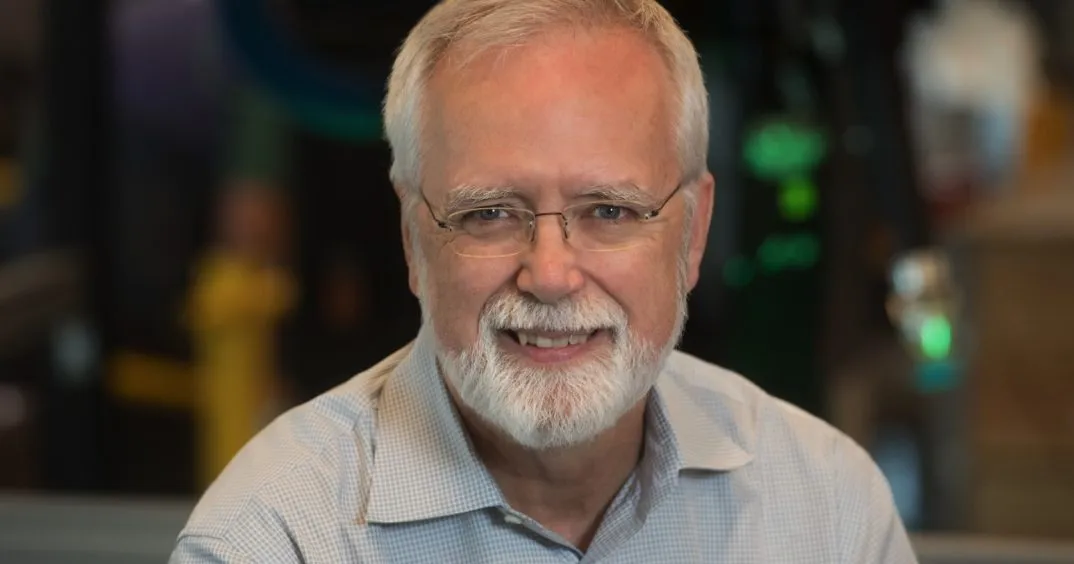
Matthew Mason is a professor at the University of Carnegie Mellon, where he pioneered research in the field of robotics operations, with students from leading robotics research institutions and industries around the world. Image source: www.ri.cmu.edu
This phrase correctly explains the critical problem of physical intelligence today: robots are having increasingly complex hands, but when robots actually enter the real world, the two hands are not the same as the real hands.
The problem may never be just in the palm of your hand. There is a really lacking body, a brain that understands physics, understands interaction, and can drive both hands.
On August 10, AI robots officially released the world's first tactile grounded world model, the Daimon-TWM (Tactile-grounded World Model), which runs through the entire phase of physical cognition, decision-making, and instantaneous reaction with native touch.
Daimon-TWM demo showing
In high-difficulty contact-intensive multi-tasks, the average success rate for Daimon-TWM was 64.0%, while the position-adjusted category success rate was stable at over 80%; in disruptive environments, the operational success rate for Daimon-TWM was even ten times higher than π0.5.
Behind the model's surprising capabilities is a world-leading robotic tactile research team.
The company was founded in 2023 with the goal of making robots agile in the real world. Its founder and chief scientist, Matthew Mason, is the first doctoral student of the father of robotic agility. He has worked in robotics for 40 years and is also the founding dean of the Hong Kong University of Technology's Robotics Institute.
How to create a model that drives sophisticated operations? The answer they give is: let the touch really be the entrance to this tangible physical interaction.
Daimon-TWM technology and architecture
We all know that touch is important.
I don't understand why robots are still crawling around.
Touch is the key to robot operation. This has become an industry consensus this year. For example, the recently signed T-Rex paper by Li Feifei demonstrates that touch can improve robot operation.
The logic here is not difficult to understand. When you pick up a paper cup, the eye can tell us where the cup is, what shape it is, but it can't tell us directly how much force to use. The vision is responsible for seeing the world, the touch is responsible for interacting with the world: whether the cup wall changes, whether the cup slides, whether the force applied by the fingers is enough, the continued force will not pinch the cup... any real interaction with the physical world, the last centimeter must be given to the touch.
So why hasn't touch been applied on a massive scale to body models?
When we describe the sensation of holding a cup, it involves a number of dimensions, such as soft hardness, friction, deformation, slippage, etc. To use soft hardness, softness and hardness are just two extremes, and the real world is more about softness, softness and hardness than hardness.

For objects that are visually similar, models must learn to distinguish their physical properties by touch
Therefore, the first thing that AI solved was not how to make robots move, but how to make robots really read touch.
Daimon-TWM has learned to translate complex changes such as forces, shapes, and friction in primitive touch into model-comprehensible unified physical definitions, covering tens of thousands of objects and over 10 million sets of physical interactions across different materials.
More importantly, it is not enough to let the model guess the answer, but to train the model to complete the reasoning process on the basis of touch perception, touch perception, touch comparison, and touch. This ability is especially important when vision conflicts with touch. It is possible that the lens can be judged as plastic, the smooth surface of the pattern can be judged as rough, and only models that truly understand touch can accurately judge physical properties and physical states, thus planning the next steps.
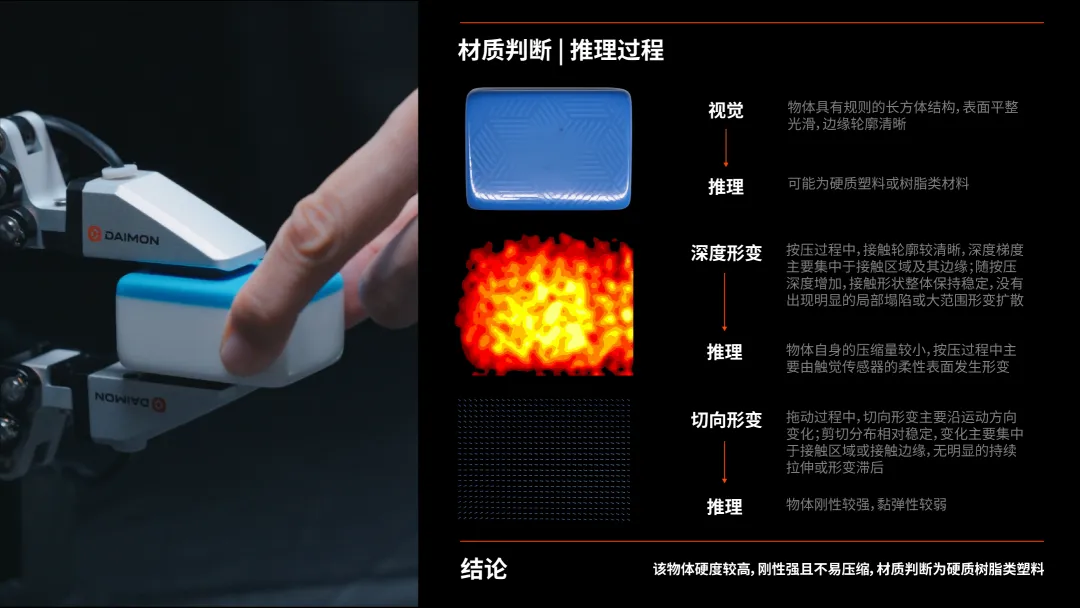
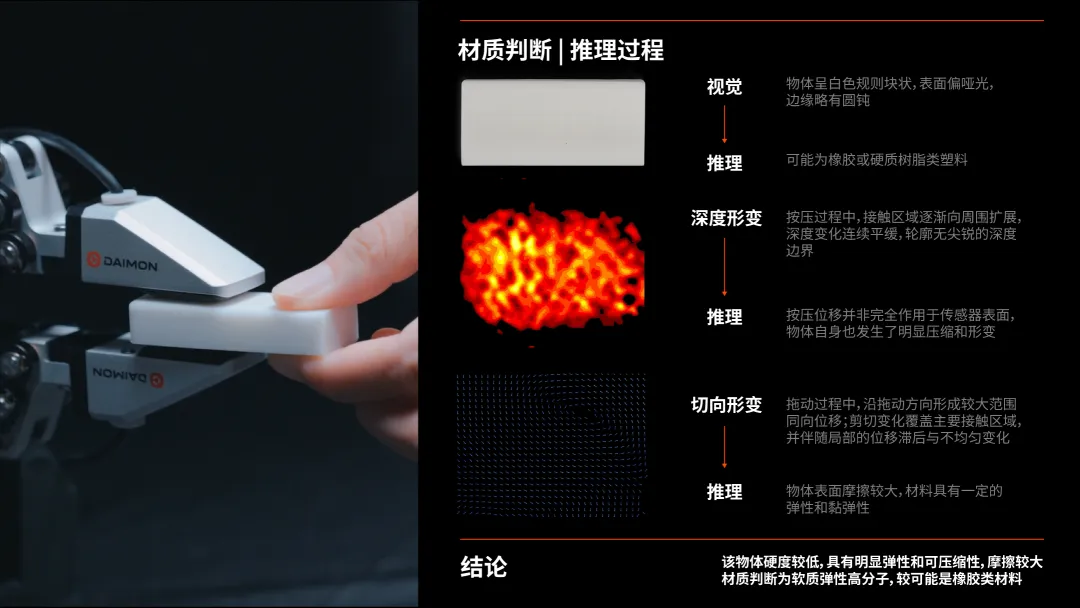
Daimon-TWM is able to reason on the physical properties of objects based on touch (slide to see more)
In other words, what robots have achieved is no longer a simple tactile model input, but a set of common knowledge about the physical world. The results are directly reflected in the results: Daimon-TWM is first in all nine core indicators of physical cognition, with an overall score of 60.1, not only leading the touch-specific model SToLa by 12.6 points, but also leading the GPT-4o by 24.7 points.
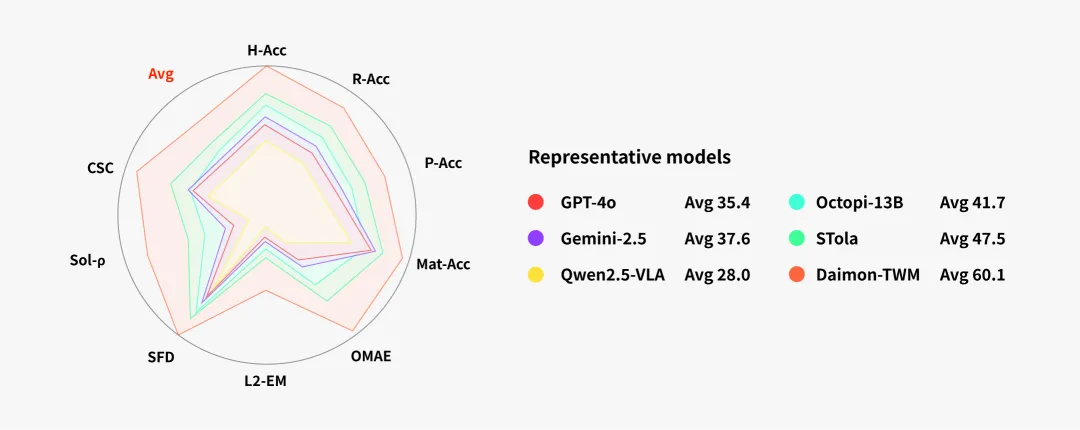
Daimon-TWM scores the best on several core indicators of physical cognition
This also reveals a problem that can be easily overlooked: General Models read mass text, watch countless pictures, but never really touch or touch an object.
From predicting the next picture to predicting the next interaction
If physical common sense is grounded, the real killer of Daimon-TWM is prediction.
In Lee's T-Rex, touch can help the model to correct in time after contact occurs. However, the physical interaction in the real world without Ctrl+Z is distorted, the turret is twisted, the cup wall is cracked, and can no longer go back.
This is where Daimon-TWM goes even further. As the entire industry uses the world model to predict the next big picture, AI has shifted the world model's capabilities to the touch: interaction has not yet occurred, and the model has taken a step forward to showcase the dynamics of future change.
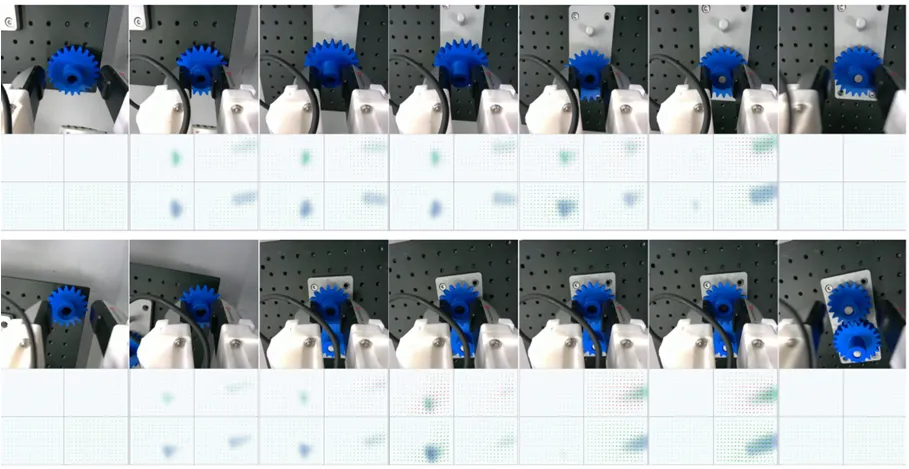
In the twin-turbine assembly task, the predicted touch signal (above) is similar to the observed touch signal (below); image source: Reference Technical Report [2]
Through unified touch characterization, touch thinking chains (T-CoT) and rough to subtle future touch prediction mechanisms, Daimon-TWM is able to project around the touch stage, contact state, and potential risk of failure. More subtly, the Daimon-TWM does not allow robots to stare at touch forever, but only when the robot actually touches objects, touches become dense, and the weight of the characterizations is adjusted, making touch the key evidence to determine the next step.
In comparison to the results, the tactile changes predicted by the model coincide almost entirely with the actual measurement value. With the ability to predict prophecy, Daimon-TWM completed this high-difficulty task of mounting twin turbines, not only by inserting two turbines of different sizes in succession, but also by causing the teeth to bite tightly together.
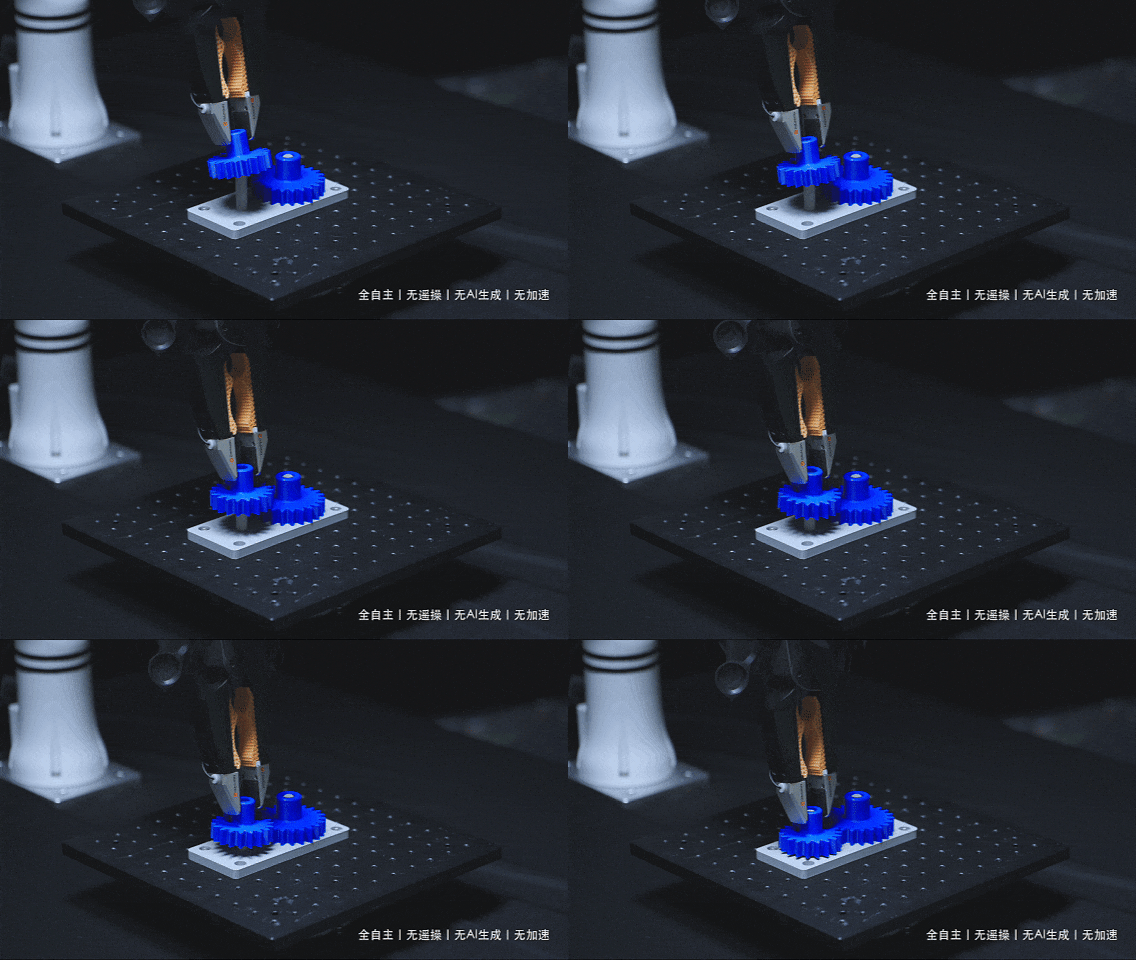
Think farther and react fast enough.
Physical interactions in reality can encounter various disruptions, and changes often occur very quickly, and models must be able to receive feedback instantly and adjust their movements in a timely manner in addition to being able to predict.
For this purpose, Daimon-TWM employs a layered mechanism of slow planning, rapid bias correction: the upper layer is responsible for understanding the task and predicting the overall strategy; the lower layer's touch-to-action controller serves with 100Hz high-frequency, and makes millisecond corrections to the action based on real-time touch feedback.
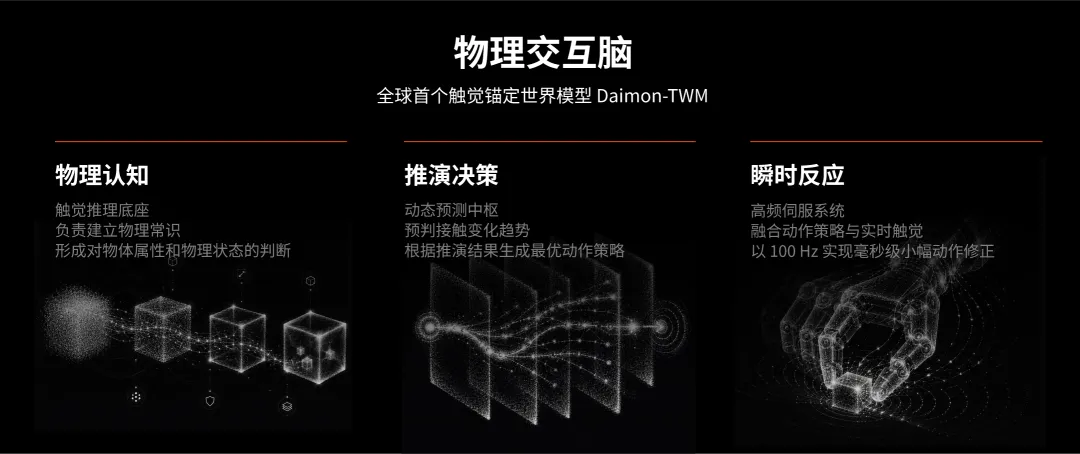
The architecture of the Daimon-TWM model
The three modules co-operate to form a complete closed loop, which is sensed from the fingertips to the brain's reasoning and then returns to the spinal cord.
Understanding current contacts → Predicting future changes → Planning next steps → Real-time perception of results → High frequency correction actions.
The decomposition experiment published by Daiichi demonstrated that this was a systemic advantage, eliminating anything that would lead to a decrease in success rates. The model released a contact-intensive operation demo that translated this capability into a visual image.
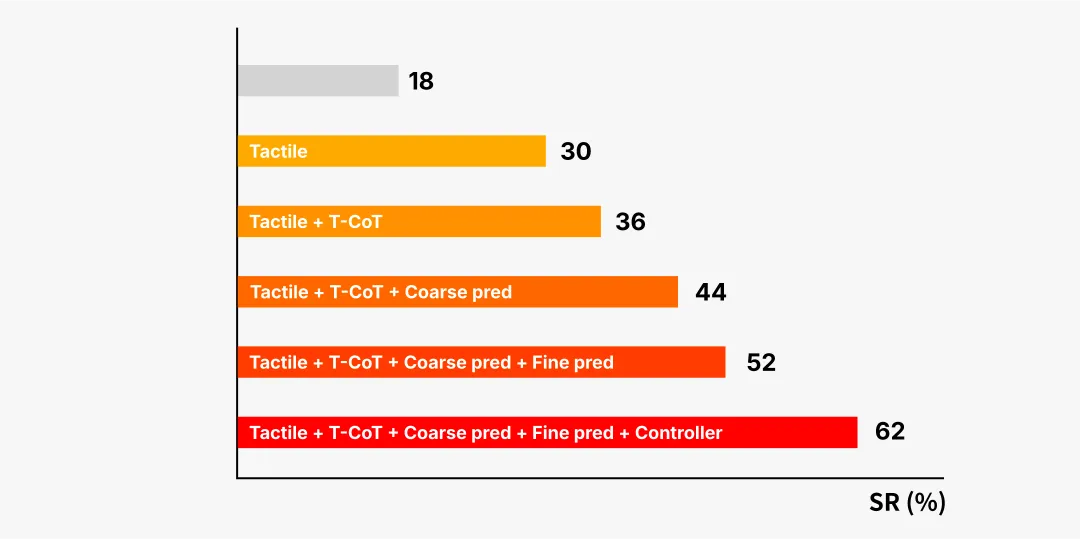
Melting experiments: success rate verification of systemic advantages of Daimon-TWM with USB plugging
For example, when USB is inserted, the vision is responsible for finding the approximate location, but when it is actually inserted, it must rely on the touch to judge whether it is aligned. If the side voltage suddenly increases, which means that the USB may have been tilted, the model must immediately lift up, adjust the angle, and not the hard drive; after inserting at the end, the model senses that the USB is in contact with the interface and must stop in time to avoid damaging the interface.
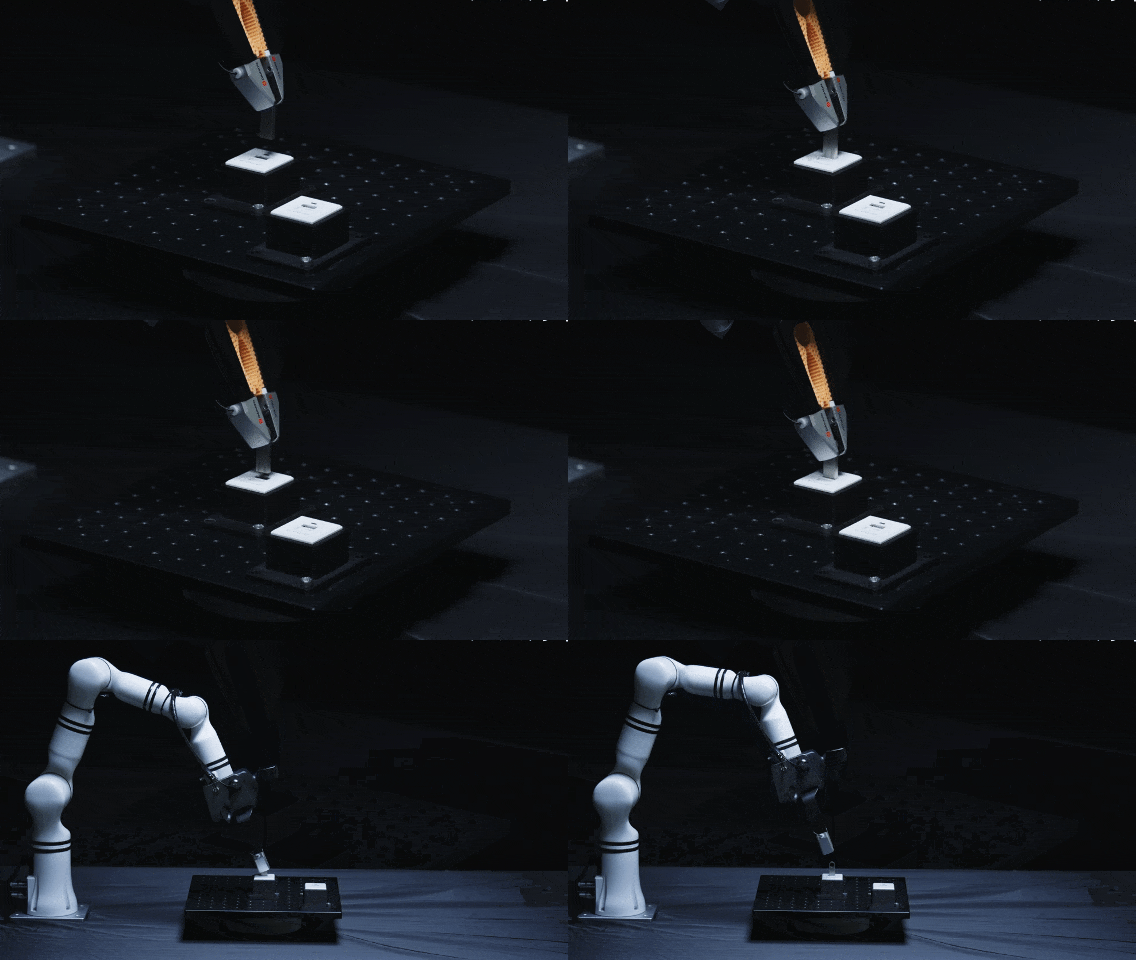
When plugged into the USB, the model can adjust position and power based on real-time tactile feedback.
The same applies to wiping the bottle: the sponge must always be attached to the convex curve and cannot exert too much force; when the position of the bottle changes suddenly and the planned trajectory fails immediately, the Daimon-TWM must simultaneously predict the change in contact status, while controlling the continuous correction movements by high frequency, in order to keep up with the constant change of the bottle.
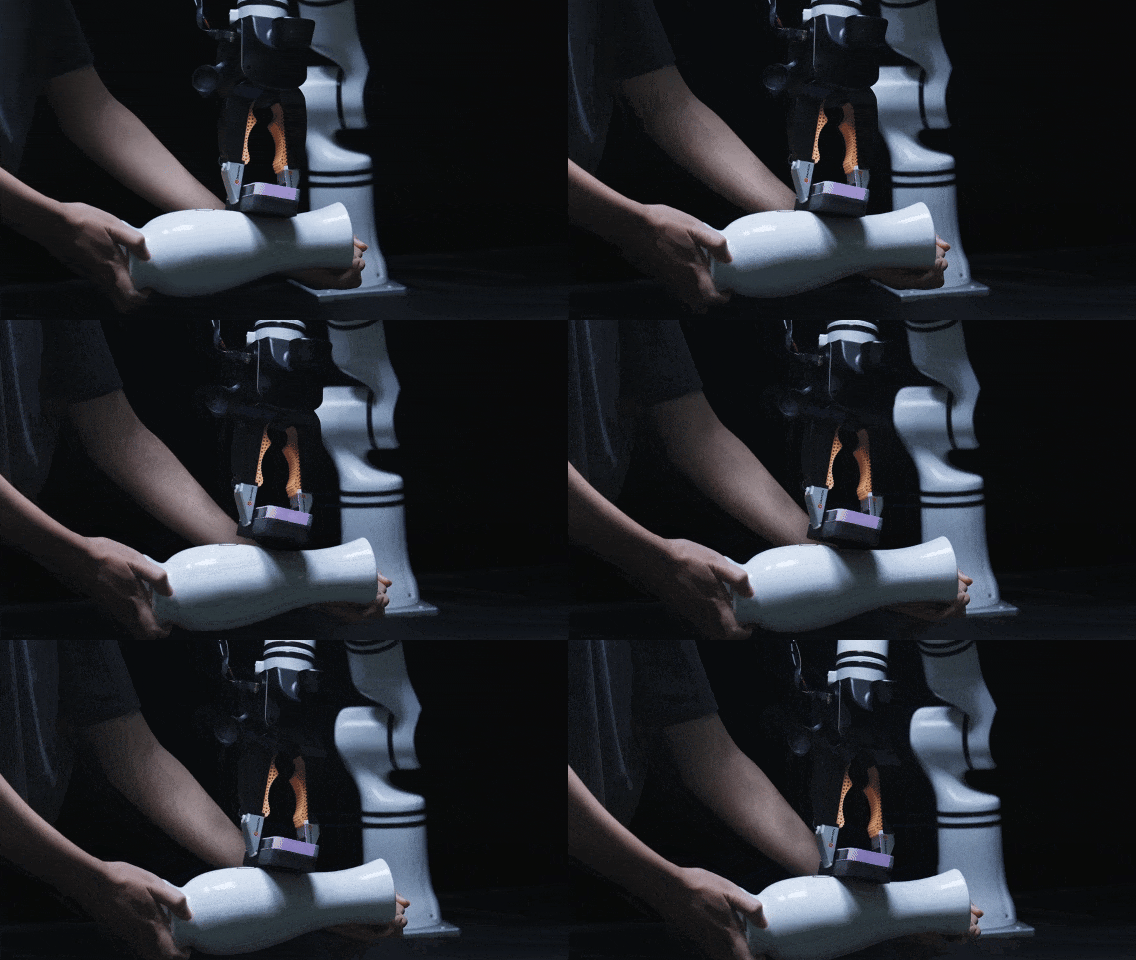
Random man-made disruption, changing the position of the flask, the model quickly adjusted the wiping trajectory according to sequential feedback and predictive planning capabilities
This also explains the most important part of the initial set of data: in contact-intensive operations, 64% of Daimon-TWM's uninterrupted operations are already remarkable compared to 26% of π0.5; but only 53% to 6% of the uninterrupted operations are truly watertight. The real gap is not that robots can make standard actions, but that models can't change randomly in the real world where there are always unexpected events.
In a variety of tasks such as adjusting pens, test tubes, wiping blackboards, bottles, inserting USBs, plugs, turbocharging, etc., Daimon-TWM has a π0.5 success rate (cln: uninterrupted; ptb: uninterrupted).
It's the key to robots moving into the real world.
True physical intelligence is more than just a model.
Daimon-TWM's capabilities come not only from model structures, but from the long-established Physical AI Infra built by Daimon Alliance.
From touch sensors, to data collection networks, to data processing pipelines, to physical interaction capability benchmarks, AI has built a physical intelligence infrastructure that sustainably produces high-quality, real interaction experiences.
Among them, the self-developed multi-dimensional high-resolution high-frequency visual touch sensors, which can fully access multiple touch modules such as shifting force, directional force, friction, sliding motion, and texture, provide high-quality full-mode touch data; the multi-mode physical world data set Daimon-Infinity, which is over a million hours in size, provides the model with a continuous source of training fuel.
Image of the community's homepage
This set of basic capabilities is based on AI's tactile-operating gene pool across academic research and industry settings:
Wang Yi, founder and chief scientist of AI, is a global authority in the field of robotics operations, ranked in the top 1% of the Lifetime Science Influence Index and the Lifetime Science Influence Index published by Stanford University. At the International Conference on Robotics and Automation (ICRA) in June this year, Wang Yi delivered a keynote address on the topic of Touch Physical AI, proposing the physical interactive capabilities of touch-driven body models to gain wide industry recognition.
Another founder and CEO, Zhengjiang Liu, was one of the first robotic operators in the country and has long been active in research, entrepreneurship and industrial practice. Formerly an expert in multi-modal large model research at Arithmetic Laboratories, he has published more than 40 papers at NeurIPS, ICLR, CVPR, ICRA, and other top conferences on industrial intelligence, including Oral and Highlight.
In the meantime, we're going to have to build a robot with a physical interaction bracket.
The dexterity of a hand is mostly about the brain, not the hand.
Daimon-TWM is truly worthy of attention, not only for improving the success rate of certain missions, but for improving the cognitive, predictive, decision-making and control capabilities of robots in all directions.
From seeing and acting on the mouse, to reacting to the mouse contact, to predicting contact and actively adjusting the mouse, the robot is moving from performing pre-set actions to real physical interaction.
The miracle of language models comes from trillions of texts on the Internet; the miracle of physical intelligence, perhaps, comes from every real touch.
When a robot has a brain that truly understands physical interaction, a brain that truly understands physical interaction, and a physically intelligent ChatGPT moment, it may be closer than we think.
Technical reports: