A core challenge of industrial physical intelligence is not to perform single demonstration movements in a controlled environment, but to deal with complex physical interactions between objects in open scenarios. Large numbers of algorithms excel in simulating environments in the laboratory, and once they enter the real physical world, the chain effects of force transfer, transformation, collapse, etc., become an insurmountable obstacle.
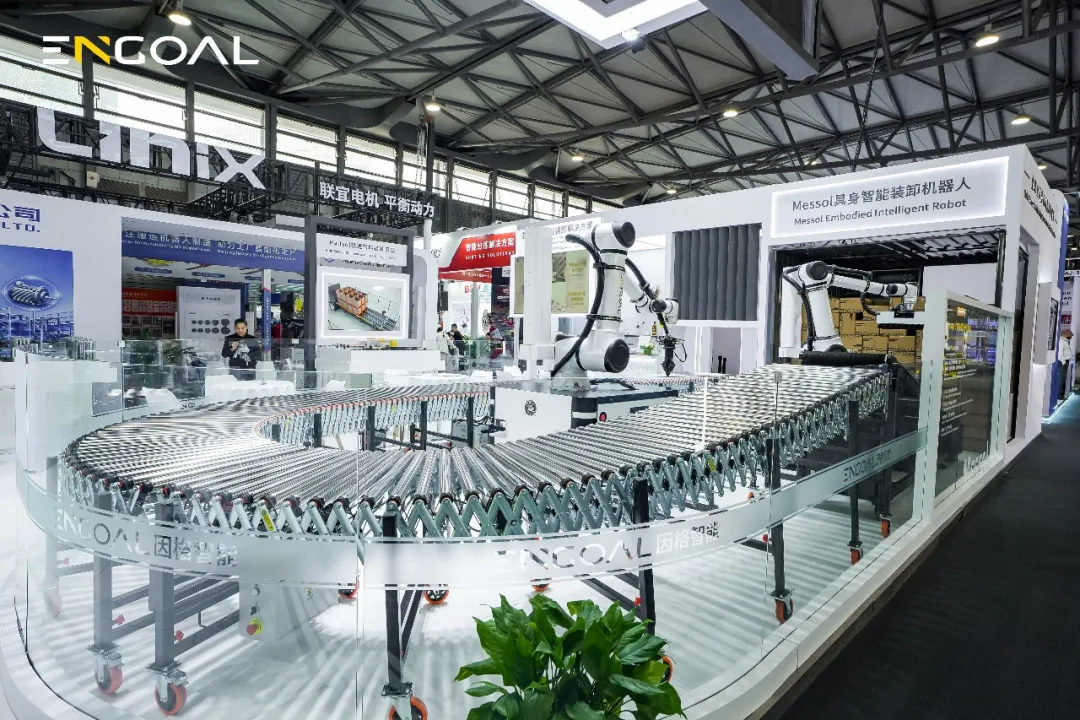
There are no uniform rules for placement in the container, and each crawling move changes the distribution of the load within the container, with all subsequent operating conditions changing. This is not a mere identification, crawling task, but a physical game of continuous dynamic evolution. At the CeMAT Asia Logistics Exhibition, the Intelligent Messol integrated body-intelligent system combines the vertical world model with the entity-executing entity, providing a technical example for studying this type of body-operation under open working conditions.
01.
Dynamic Composite Stacks: The Limits of Traditional Automation
Traditional automation systems are based on the premise that the environment can be predicted. The size, posture, relative position of objects are pre-determined, the trajectory of motion can be predetermined and cyclically reused. This logic can operate efficiently in standardised container storage areas, but is not entirely applicable to container mixing situations.
The contents of the container container container container container container container container container container container container container container container container container container container container container container container container container container container container container container container container container container container container container container container container container container container container container container container container container container container container container container container container container container container container container container container container container container container container container container container container container container container container container specifications, materials, positioning is completely random and there is no standardized stacking pattern.
The nature of the industry's past solutions is to avoid uncertainty at the physical level. Either relying on artificial intervention, pre-ordering stacks, and transforming open working conditions into controllable working conditions; or doing highly customized development, adapting only to limited box configurations. Neither path faces this root problem of dynamic physical interaction.
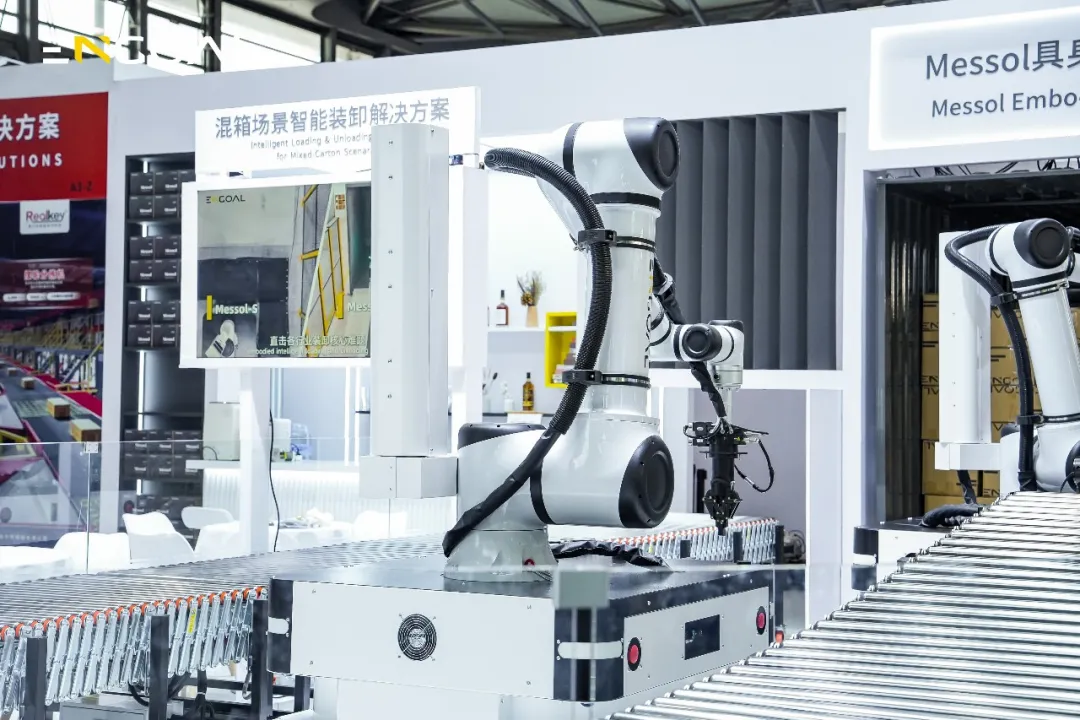
From this it can be seen that the bottleneck of the scene is not mechanical execution hardware. The engineering maturity of the mechanical arm, the transmission unit is sufficient, and the real shortcut is that the system lacks the ability to drive the physical chain reaction. Traditional 3D vision belongs to the snapshot perception, can only read the state of the cargo pile at a certain moment, cannot predict the environmental evolution induced by the movement.
02.
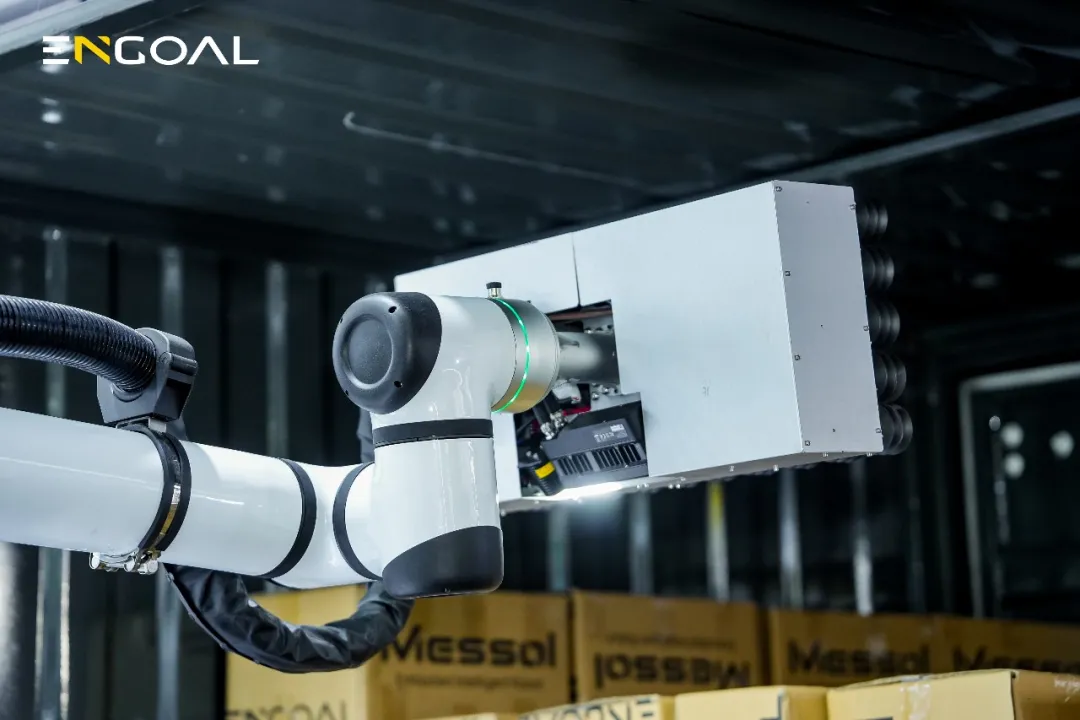
Messol-equipped intelligent unloading robot: an execution system as a physical interaction medium
Messol cannot simply be understood as a dedicated unloading mechanical arm, but as a means of interacting with the physical world through intelligent algorithms.
Traditional automation logic is that the environment is regulated first, and robots then execute the pre-set process. The design of this set of bodies, which directly accepts the carriage's native disorder, does not standardize goods as a prerequisite for operation.
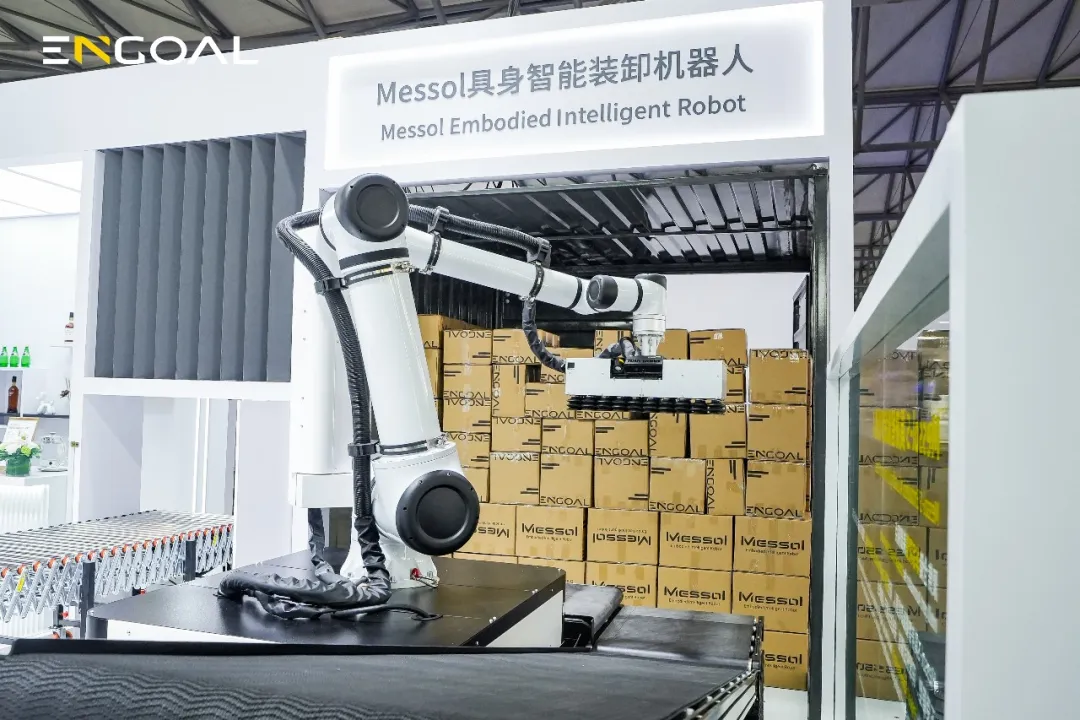
In the overall system architecture, the entity assumes a two-way function. On the one hand, it receives dynamic decisions from the output of the upper world model, completing grappling, posture adjustment, obstacle avoidance; on the other hand, it relies on real-world feedback such as on-board perception of continuous re-transmission stacks, contact with forces.
This reflects the core characteristics of physical intelligence: not only does the body passively execute instructions, but it continues to feed back physical changes in the real world to the algorithm layer, which is based on real feedback reversal follow-up strategies.
03.
OmniPredict 2.0: a vertical world model that transcends instantaneous decision making
The normal 3D visual paradigm is the observation of instantaneous images, based on the current point cloud, which completes the detection, partitioning, position computation, and planning of actions. The inherent limitations of this paradigm are: only to understand what a mouse now looks like, not to evaluate what a mouse will look like after completing the action.
Faced with continuously evolving mixed-box stacks, the absence of physical induction brings with it a series of real-world problems: grabbing inducing gravitational deflection, box squeezing, collapse, system failure, and subsequent shutdowns. From instantaneous snapshot observation to post-evolution of the environment, this is the core area of traditional perceptual programming and model world routes.
OmniPredict 2.0 is not a direct replicator of the general physical simulation engine, but a vertical world model oriented towards the unloading scene, focusing on the physical interaction between container stacks. It relies on dual 3D visual reconstruction of the three-dimensional state of the container stacks, inserting the size of the container, posture, contact relationships; combined with the physical precedents of the complexity of the scene, it derives the corresponding force changes of different grappling points, anticipates the risk of slippage and collapse, and weighs the risk and operational efficiency in multiple candidate operations.
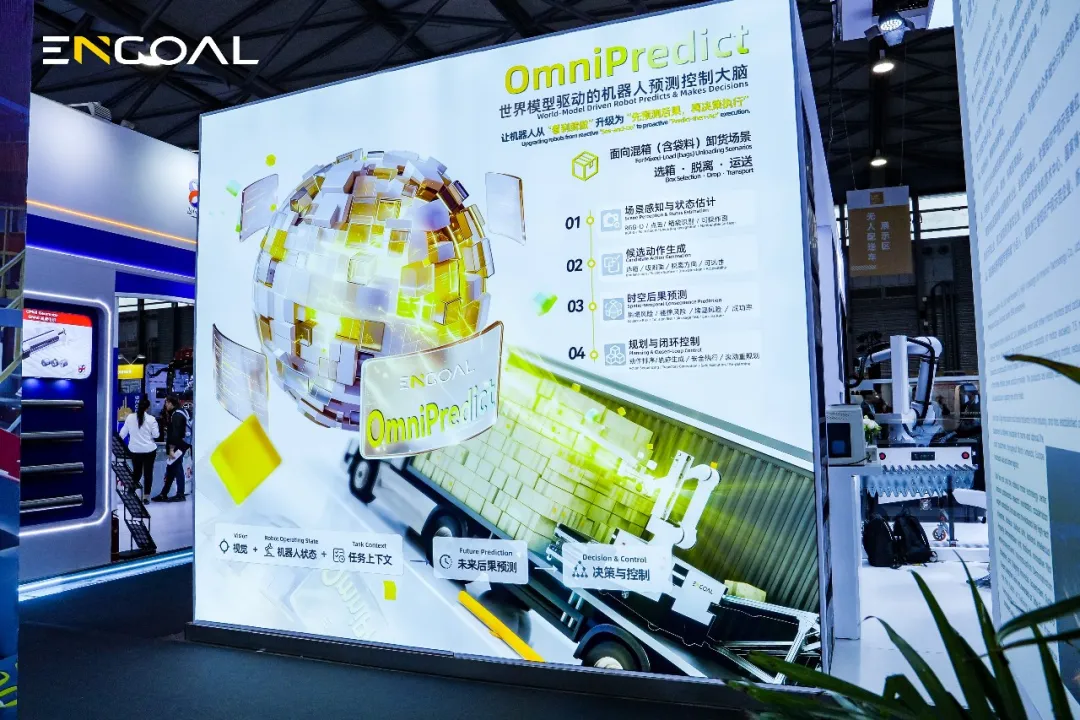
Unloading is a typical long-term task, and the local single-step optimal is not the same as the complete vehicle task. The model does not output the entire sequence of movements all at once, but is continuously rolling updates. Each time the load stack structure is changed, the system generates the next step strategy based on the latest perceptual and refreshing environmental assessment, taking into account the chain impact of the rear-end transmission links.
Depending on this closed-loop mechanism, the system will not only respond to images that are currently observed, but will incorporate the physical consequences of capturing them into decision-making considerations. This is the fundamental difference between a fixed program and a static identification program.
Many of today's industrially intelligent products, which remain in a simulated or simplified experimental environment, must face complex mechanical connections in the open physical landscape if they want to truly land.
Mixed-box unloading is a high-value testing ground that tests not a single point of identification or capturing performance, but an integrated engineering capability of perception, physical modeling and motion control synergies. The combination of Intel's physical and vertical world models provides a technical paradigm for physical operations in dynamic cargo stack scenarios.
To put it in a larger industrial dimension, the central proposition of the industrial smart landscape is often not about completing a brilliant demonstration, but about how robots understand the physical realities of uncertainty and continue to complete operational tasks under the conditions of dynamic gambling.